
In short
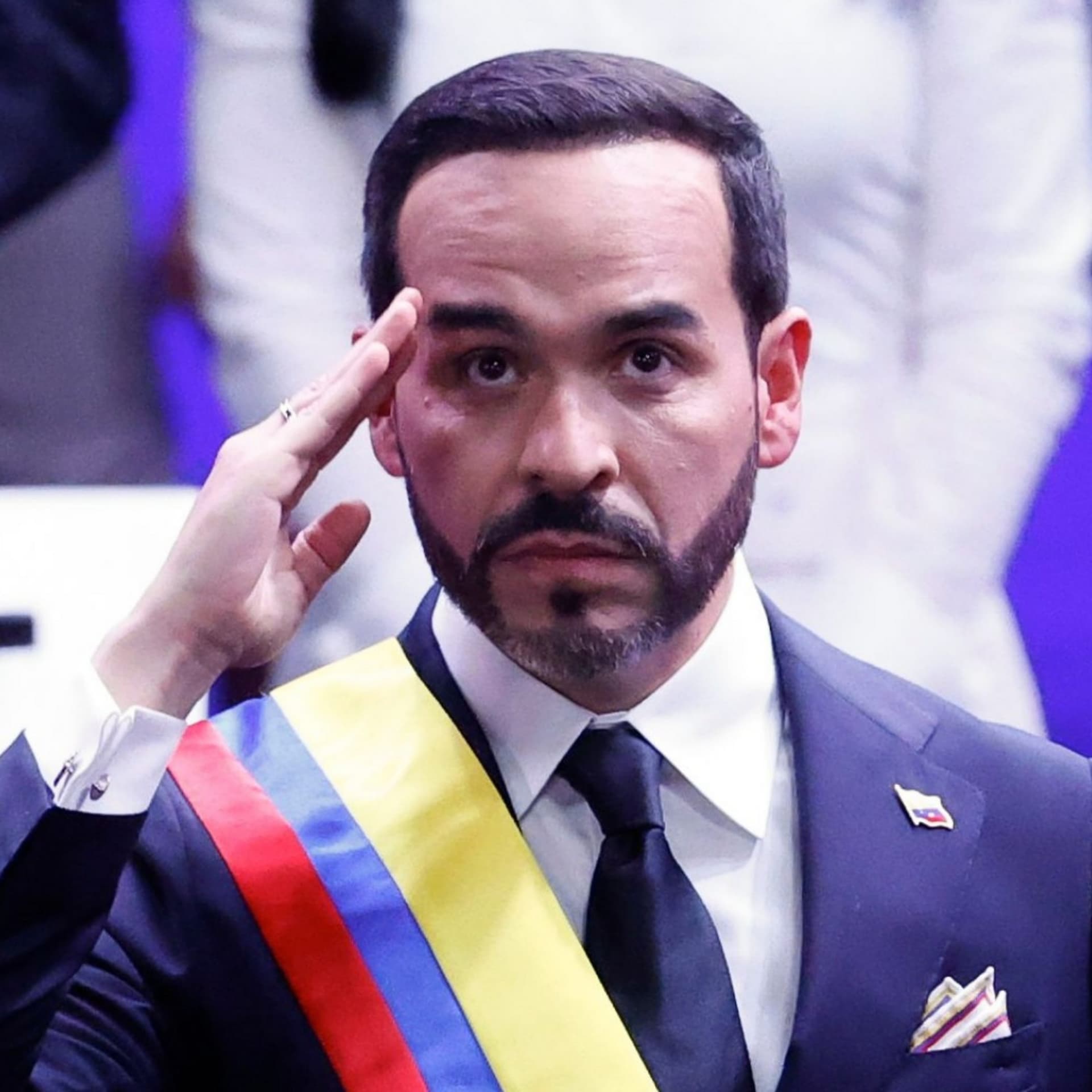
This BBC Global News Podcast episode covers four main stories. In Colombia, right-wing lawyer Abdelardo de la Espressella was sworn in in Cali, promising to “restore order” and hunt drug cartels and armed groups, using a military-style approach. BBC Mundo’s José Carlos Cueto López says De la Espressella was largely unknown until launching in July 2025, brands himself a political outsider, and admires Donald Trump; Trump endorsed him.
Key claims
armed groups regrouped after the 2016 FARC peace accords due to inequality and weak state presence, including remote coca-growing areas. Notable example: the “hunt cartels like rats” pledge and echoes of Trump’s 2025 South American waters strategy. Next: a US court orders Trump to halt a $400m White House ballroom. Then: BBC tracks down Assad-era intelligence chief Hossam Luka (“the Spider”) in Russia. Finally: Spain/Italy border checks over migrants to Ceuta; Save the Children warns about ~1,000+ children needing child-protection.
Guests
José Carlos Cueto López; Alice Cuddy; Catalina Parraza; Charles Haviland; Paddy O’Connell (interviewing Hunter Biden); Adrianne Murray; Rika Holm-Peterson; Kasper Icke-Rommer; Hunter Biden.
Written by AI. May contain mistakes. Listen to the episode to check what was said.
Chapters
Tap a time to open that second in VOColombia's New President
0:54 to 1:39
Overview of Colombia's newly sworn-in president and key issues.
“I'm Charlotte Gallagher and in the early hours of Saturday 8th August, these are our main stories.”
Abdelardo de Les Preyes' Vision
1:39 to 2:46
Discussion of the new president's plans for security and drug trafficking.
“We start the podcast in Colombia, where Abdelardo de la Espressella has been sworn in as the country's new president.”
Political Outsider and Trump's Ally
2:46 to 3:51
Insights into de Les Preyes' background and relationship with Trump.
“He describes himself as a political outsider and a high-profile lawyer who built much of his public profiles through the media and social media.”
Concerns about Crime and Inequality
3:51 to 4:52
Analysis of ongoing crime issues and voter concerns in Colombia.
“And you mentioned there this relationship with Donald Trump.”
Shift Towards Right-Wing Politics
4:52 to 6:03
Examination of the regional political shift towards right-wing governments.
“The reality is that since the peace accords were signed between the state and the FARC rebel groups in 2016, Pretty much shortly after that, in 2018, armed groups started to regroup again and become more powerful.”
Trump's Ballroom Controversy
6:03 to 8:34
Details on Trump's halted ballroom construction and related issues.
“Donald Trump is pursuing an ambitious makeover of Washington DC, but his renovations are not going to plan.”
Hunting the Spider: Assad's Henchman
8:34 to 14:00
The investigation of Hossam Luka, a feared figure in Syria's regime.
“In 2024, after 13 years of brutal civil war, Syria's then president Bashar al-Assad was overthrown and fled to Russia.”
Upcoming Topics Overview
14:04 to 14:26
Learn about the topics that will be discussed in the podcast.
“The good deed in Copenhagen is to come out, help us clean up the waters, and the reward is to get a boat ride in return.”
Spain and Italy's Border Tensions
14:51 to 15:42
Discussion on the border checks between Spain and Italy amid migration issues.
“Spain has imposed controls on Italians for one month at its borders, ports and airports.”
Children's Care in Ceuta
15:42 to 18:33
Insight into the care and protection of unaccompanied children in Ceuta.
“Catalina Parraza is Director of Advocacy and Regional Development for Save the Children in Spain.”
Show all 15 chapters
Hunter Biden's Reflections
18:33 to 22:02
Hunter Biden discusses his father's political decisions and health challenges.
“That was Catalina Parasso speaking to my colleague Ben Wright.”
Sustainable Tourism in Copenhagen
22:02 to 26:37
Exploration of sustainable tourism practices being implemented in Copenhagen.
“Over the last few decades, cheap flights and package holidays have fuelled a boom in mass tourism.”
Sustainable Tourism in Copenhagen
27:07 to 27:44
Exploration of sustainable tourism practices being implemented in Copenhagen.
“You can even get help from a dedicated advisor.”
Sustainable Tourism in Copenhagen
27:47 to 28:00
Exploration of sustainable tourism practices being implemented in Copenhagen.
“I'm the host of You're Dead to Me, the BBC comedy show that takes history seriously.”
Exploring Historical Topics
28:00 to 28:17
A glimpse into upcoming episodes covering diverse historical subjects.
“about a different subject from world history.”
Transcript
Automatic transcript. May contain errors.0:00This BBC podcast is supported by ads outside the UK.
0:30an award-winning behavioural scientist and author of the best-selling book, How to Change, as she shares true stories from Nobel laureates, authors, athletes and everyday people about why we make the choices we do and how to make better ones to help avoid costly mistakes. Listen to Choiceology at schwab.com slash podcast or wherever you listen.
0:53This is the Global News Podcast from the BBC World Service. I'm Charlotte Gallagher and in the early hours of Saturday 8th August, these are our main stories. Colombia's new president has been sworn into office and promises to hunt down cartels like rats. Donald Trump is forced to hit pause on his plan to build a$400 million ballroom in the White House. The BBC tracks down the spy chief of Syria's former dictator, Bashar al-Assad. Also in this podcast, the thousand child migrants currently stuck in the Spanish territory of Suta.
1:39We start the podcast in Colombia, where Abdelardo de la Espressella has been sworn in as the country's new president.
1:57The ceremony was held in the southwestern city of Cali, rather than the capital, Bogota. In his speech, the right-wing president, who's a supporter and ally of Donald Trump, vowed to improve security and tackle drug traffickers and armed groups. From Cali, a city so closely linked to national life and the capital of a province that has suffered the scourge of terrorism, drug trafficking and the actions of violent groups. I send a firm message to the Colombian people. The time has come to restore order, authority and freedom. Some of the region's other right-wing leaders were there, including Argentina's Javier Millay.
2:40BBC Mundo's Colombia correspondent, José Carlos Cueto López, told me more about the new president. He was pretty much unknown in the political sphere before launching his presidential candidacy in July 2025. He describes himself as a political outsider and a high-profile lawyer who built much of his public profiles through the media and social media. He describes himself as an admirer of Donald Trump. They both share the preference for a tough approach to crime, free market economic policies and conservative and often religious speech. In fact, Trump endorsed him during the campaign and many analysts now expect a new chapter in the relationship between Colombia and the United States.
3:22And that relationship is important not only economically, but also in terms of security, because for decades Colombia has been one of Washington's closest security partners in Latin America. Both the Lesbians Trump share, as I was saying, preference for using the military to tackle organised crime and drug trafficking and approach that has also attracted criticism from human rights groups. So, yeah, I would say that he's a figure who attracts strong support, but also strong opposition. And you mentioned there this relationship with Donald Trump. I wondered if anything had been said then about Colombians that were killed by the US military, you know, for allegedly being drug traffickers off the coast of Colombia.
4:03Has that come up in the campaign at all? De Les Preyes himself has promised to bomb drug trafficking camps, drug trafficking vessels, and that strategy pretty much echoes the one that Trump is developing right now that has left more than 200 people killed in South American waters since last August in 2025. So I would say that De Les Preyes is willing to take a very strong stance against armed groups in the country. I think I read that he said he was going to hunt cartels down like rats. And is the security situation and the power of cartels in Colombia, is that very concerning for just normal voters, the impact that it's having on their lives?
4:45Yeah, it has been a primary concern in Colombia pretty much since the armed conflict started 60 years ago. The reality is that since the peace accords were signed between the state and the FARC rebel groups in 2016, Pretty much shortly after that, in 2018, armed groups started to regroup again and become more powerful. And part of that is because there are profound, deep situations that have not been solved and serve as a fertile ground for the proliferation of crime, which is the extreme inequality and what is called here the absence of the state and the institutions in many remote areas that have, for example, many hectares of coca leaf crops.
5:32And does this victory represent a general shift in that region towards right-wing politics, do you think? Yes, definitely. If you look at the political map right now, the only two countries, at least in South America, that don't have a right-wing government at the moment are Brazil and Uruguay. But definitely with all these right governments in the region, Donald Trump will be closer to succeeding his strategy to have more influence over the region with what is called the Don't Row Doctrine. Jose Carlos Cueto Lopez in Bogota. Donald Trump is pursuing an ambitious makeover of Washington DC, but his renovations are not going to plan.
6:14A US court has now ordered the Trump administration to halt construction of a$400 million ballroom on the site of the demolished East Wing of the White House. The president called the ruling a national disgrace and vowed to appeal. Our North America editor Sarah Smith reports from Washington. Donald Trump still essentially thinks and behaves like the property developer he used to be. Three months ago he was proud to show off the construction site where the East Wing previously stood. Its sudden demolition last year shocked many and sparked a lawsuit aimed at stopping and building his massive new ballroom.
6:53Today he's been told he does not have the authority to dramatically alter this historic landmark. The ballroom has become something of an obsession for President Trump. He carries pictures of how he wants it to look on Air Force One. A lot of people are giving it really good reviews. Some are giving it reviews without even seeing the building. After a gunman caused him to be evacuated from the White House Correspondents' Dinner in April, he argued that showed the need for a secure ballroom. It's drone-proof, it's bulletproof glass. We need the ballroom. That's why Secret Service, that's why the military are demanding it.
7:25Today he complained on social media. The military and Secret Service are viewing this horrendous, politically motivated and unlawful ruling as a national security threat. There is a state-of-the-art military bunker being built underneath the ballroom. Work on that is allowed to continue. You can see building work is still going on in the ballroom today with cranes that are operating above the White House. And President Trump's got two weeks in which he can carry on while he appeals to the Supreme Court, hoping they will rule that he can finish the construction. If that fails, though, he can go to Congress and ask them to vote to give him the authority to finish the ballroom.
8:01But it's far from certain that he would actually win that vote. There is some mystery about what's going on behind the scenes with the funding for this project. President Trump has raised hundreds of millions of dollars from private donors, but won't tell us how much they've given or what he may have promised them in return. The disastrous refurbishment of Washington's reflecting pool has become a deeply embarrassing flop for Donald Trump. Now he has to ask the courts or Congress to let him complete his renovation of the most famous house in America. Sarah Smith in Washington. In 2024, after 13 years of brutal civil war, Syria's then president Bashar al-Assad was overthrown and fled to Russia.
8:46Many of his top henchmen also escaped the country. One was former senior intelligence officer Hossam Luka. Known as the Spider, he's considered one of Assad's most feared men and is accused of orchestrating atrocities and systematic torture. When the regime fell, the BBC gained access to an abandoned apartment in Syria where a reporter found a notebook that has now led her to track him down. Alice Cuddy reports.
9:16It's a Muslim holiday Eid. Parents and children are enjoying a rare moment of fun at a playground in the Syrian city of Homs amid the civil war in 2015. Seven-year-old Weil is gardening in the play park his father Mohammed had created when a bomb hits.
9:43This ground here, it was painted red with blood There were body parts everywhere The tragedy that killed as many as 17 children is known as the Eid Massacre In the aftermath, one man's name was on everyone's lips Hassan Luka, who was nicknamed the Spider, was a feared senior Syrian official under the Assad dictatorship. And he would go on to hold one of the most powerful roles in the country as head of one of its feared intelligence agencies. Rebels celebrate the end of the regime of Syria's Bashar al-Assad. In December 2024, Assad's brutal dictatorship collapsed. For the first time in years, journalists could enter a country long closed off from the world.
10:32I was there in Damascus, and in an abandoned apartment, I stumbled across a forgotten address book, cast aside next to a smiling photo of the spider, warmly shaking the hand of Azad. It was the start of a more than year-long hunt for Hassam Luka. Inside were the numbers of doctors, shopkeepers and friends in the regime. I wanted to know more about what Luca was accused of. My hunt for Hossam Luca has taken me to a hotel in central Homs, where I'm told he used to meet with his associates. It feels really bizarre that today I've been meeting with men who've been telling me over coffee and cigarettes that they were victims or witnesses to his crimes in this city.
11:22Hossam Luca was an evil genius. The siege of old Homs was the first siege of its kind in Syria. It became the blueprint of other sieges across Syria. Motaz was a trader before the revolution and then joined rebel forces fighting the Assad regime. He should be executed at the very least. He was behind the murder of many. It reached a point where the death of 10, 20 children wouldn't matter to him for as long as the regime's objectives were fulfilled. From speaking to people like Motaz, it was clear that Luka was skilled in infiltrating rebel operations. But where had he gone? There were rumours that he had fled via Lebanon, but something offered a lead.
12:08As I started to dig further, a source gave me a recording that gave me a clue as to how he operated and what his voice sounded like. In the recording, Luka can be heard leading talks with rebels alongside a Russian official. It raised suspicions that he could be in Russia. For months, we drew a blank in our hunt for Luka. We spoke to personal doctors of the family and neighbours, but no one would tell us where he was. At one point, we found his personal bodyguard, who said he was angry Luka left him when he fled, but he wouldn't share his contact details. So, my name's Alice, I'm a reporter at the BBC, I'm not sure how much he knows about...
12:53But then finally I found a route to Luka. A source called him, but he wouldn't answer my questions. Then we found a phone number, which we tracked to the outskirts of the Russian capital, Moscow. We've located Hossam Luka in Russia now, so I guess the final step of this... It was what we'd been looking for, a chance to speak to him directly. I called with my Arabic-speaking colleague. After ringing once with no answer, Luca picked up.
13:31The phone call lasted only long enough to confirm it was him. But when we said we were the BBC, he hung up. I sent him questions on WhatsApp about his alleged crimes, but he never responded. Like other Assad officials, by hiding in Russia, Luka has so far evaded justice. We reached out to the Russian government about Hassan Luka's location, but they didn't respond. Alice Cuddy reporting. Still to come in this podcast. The good deed in Copenhagen is to come out, help us clean up the waters, and the reward is to get a boat ride in return. One country's new strategy to make tourism more sustainable.
14:26This is the Global News Podcast. Spain has brought in temporary border checks on people travelling from Italy, escalating a migration route between the two countries. Last week, Italy announced similar measures applying to travellers from Spain, saying the partial suspension of the EU's border-free Schengen arrangements was in response to a surge of migrants into the North African territory of Suta. Charles Haviland reports. Spain has imposed controls on Italians for one month at its borders, ports and airports. Madrid's been angered by Italy's response to the sudden influx last week of tens of thousands of would-be migrants.
15:04Moroccans and others including sub-Saharan Africans and Egyptians into the Spanish territory of Ceuta, an enclave on the Moroccan coast. Italy promptly imposed border restrictions on travellers from Spain. Spain's foreign minister called this a torpedo fired at the hull of European unity. Critics say the Italian Prime Minister, Giorgio Meloni, has overreacted given that Ceuta isn't part of the Schengen open borders system shared by 29 European nations. Most of the migrants who swam or scrambled around the border from Morocco into Suta have now returned. But more than a thousand children remain there.
15:42So how are they being cared for and what happens next? Catalina Parraza is Director of Advocacy and Regional Development for Save the Children in Spain. We are worried that it's not fast enough, the identification that it's being done of children, you know. But there are still children who are in the streets, the forests and the beaches. So we are worried that they're exposed to violence, mainly girls we're worried about. And we think that we need to prioritise the child protection response. And what will your priority be when you get to the city? We think there are about a thousand children. Is that right?
16:22Are they on their own? They've been separated from their families or did they cross individually as children? Do you know how they ended up there? Well, we have both cases. I mean, the government said 1 ,200 children so far who are unaccompanied. They crossed on their own. They are within the child protection centres. And then there are children who are also with their families. We don't know the number of those ones. and then there are also still children alone in the streets and that's the number we don't know because there are no estimations yet but it could be a thousand more. The Spanish government says they'll transfer many of these children maybe all of them to the mainland.
17:09Would you be involved in that? What we are offering because we have these children to move programs and we are specialised in forming teams who have a cultural mediator, someone who speaks the language, which is very important in order to connect with these children, and then child protection officers. And what they do, they work with the children in order to kind of like carry out an interview so they can identify their needs and register all the information. And with this, we submit like a report that the authorities can use to carry out the procedure faster, to be more agile, to decide what's the best solution.
17:52Presumably there are parents in Morocco waiting to hear from missing children. Indeed, indeed, yeah, definitely. That's why when you carry out the interview and get to know what the child situation is, one of the first operations or procedures that you have to carry out as a child protection system is to contact the family if it is in the birth interest of the child and see together with the country of origin if it is possible to carry out reunification. But at the moment, there are vulnerable children there who quickly need your help. Well, yeah, all the help they can get. And that's what we are offering, yes.
18:35That was Catalina Parasso speaking to my colleague Ben Wright. Hunter Biden, the son of the former US President Joe Biden, has opened up about his father's politics and his presidential pardon. Joe Biden pulled out of running for a second term after scrutiny about his cognitive abilities and age. The BBC's Paddy O 'Connell asked Hunter why the family didn't stop him before the campaign. Joe Biden made all the decisions. There was no taking the keys away from a president that had done more for the American people in a four-year period of time than any single one of his predecessors had since FDR.
19:15Watching the 2024 presidential debate, where were you, Hunter, when your father failed to complete a sentence on primetime television during a presidential election campaign? Where were you watching that? The total initiative relative to what we're going to do with more Border Patrol and more asylum officers. President Trump? I really don't know what he said at the end of that sentence. I don't think he knows what he said either. Look. I wasn't alone. I was at my house here in California. And like everybody else, I was shocked. I could tell as soon as my father came out that something was wrong.
19:53I've never seen him with kind of the 100-yard stare that he had. And, you know, everybody has their questions. But the reason that we know about that is not because Joe Biden wasn't on TV or in public a million and a half times before and after. The reason that was so shocking is because it had never happened before and it hasn't happened since. So here's here's another of his own decisions, which is attracting controversy as well, which is a pardon for his son, for you, Hunter. It looks like a favor to the family, which is another word for critics for a corruption, which you've criticized the Trump administration for.
20:37Do you think that he went too far as a dad in issuing a pardon to you? Well, here's what all I know is that I am the most privileged person as it relates to that that could possibly be. I was one of one. And I am eternally grateful for it because I think that Donald Trump has proven to be exactly who my dad thought he was going to be as it relates to the revenge and retribution that he would seek on his political enemies. And that's the decision that my dad made. Was it good for our Constitution? Was it good for the American people? Was it good for my dad's legacy? No, on all counts. I asked you if I could end by talking about your father's health.
21:21He has prostate and bone cancer and will forever live with cancer. How has the family taken this diagnosis? It's really tough, Patty. That's the real answer. The only thing that I say about my dad, about his health right now, is I wish he would complain more. Because it's not good. The cancer has spread. It's metastasized into his bones and further. It's very painful. It's very debilitating in many respects. But he's still out there. He's still doing this thing that he so believes in this country. and as long as he's alive, I promise you he's going to continue to fight. Hunter Biden speaking to the BBC.
22:04Over the last few decades, cheap flights and package holidays have fuelled a boom in mass tourism. In fact, the World Bank estimates around one in ten jobs around the globe are now supported by travel and tourism. But it's also led to increased pollution and waste and some areas are becoming overwhelmed with visitors, upsetting local residents. So how can tourism have a more positive impact? Our reporter, Adrianne Murray, got on her bike to find out more about one idea in the Danish capital, Copenhagen. More tourists are choosing this green way of getting around. But as a local resident, I can tell you many of them struggle with the busy cycle lanes.
22:46And it can cause us commuters a lot of frustration. To help, the city is holding cycling safety workshops and offering a free bike rental session for visitors who take part. Don't forget to look over your door. Oh, OK, got it. Otherwise you're blindly going into a corner, right? There might be somebody coming. Yeah, OK, thank you. The sessions are part of a city-wide scheme called Cope & Pay, which essentially rewards tourists for good behaviour. Visitors can earn perks, like a free drink or a museum tour, by doing some volunteering or travelling around by bike or public transport. Rika Holm-Peterson from the local tourist board says the scheme has encouraged tourists to move around sustainably.
23:31We've been running Copenhagen for two years now and we've seen bike rental increase of 59%, which is huge. And for sure we need to make sure that people are safe so it really become a great experience both for the visitors and the locals. I got chatting to a few of my fellow cyclists to see what they thought, starting with Bo, who was visiting from New Jersey. I stumbled across it online. It didn't occur to me that we could do this in Copenhagen, but now that I'm doing it, I'm definitely going to rent a bike and see the city that way. You cover a lot more ground, it's great. I'm Shefali Sajteva.
24:06I belong to India. We wanted to experience the bike culture here, and it was a very pleasant experience, I would say. But do you think it's a good approach that Copenhagen, the colourful hoarding, tourists for doing positive things? Absolutely, it is a great thing. I mean, you know, rather than restricting places for tourists, which, you know, some of the cities do. The Copenhagen scheme started in 2024 with 24 local partners. It's now expanded to more than 100 partners, and they range from cafes and restaurants to museums and even a ski slope. Another partner that's been involved since the beginning is GoBoat, a Danish company that rents out battery-powered boats on Copenhagen's canals.
24:54I met up with GoBoat co-founder Kasper Icke-Rommer to try out their activity. The good deed in Copenhagen is to come out, help us clean up the waters, and the reward is to get a boat ride in return. The company uses the scheme to fill quieter morning slots and says it's become a valuable marketing tool. So far it's been sold out the two other years, so we've had 1 ,200, I think, guests out there helping cleaning up the waterways. So that's remarkable and nice. Should we get ready with these nets? We've got a bag here for collecting the rubbish in. Let's do our best. Go for another one. Yeah, we've got it.
25:34Rika from Copenhagen's tourist board says all the activities are shaped to help tourists think a bit more about their impact. I mean the reason why we did it was creating awareness about the choices we make when we travel or when we are at a destination. So when we've been interviewing our visitors and asking them about Copenhagen, three out of four say they want to change, they will change behavior when they go back home or when they are back home. We've had 30 ,000 participants doing Copenhagen during the past two years and of course we hope a lot more participants or people will join. The one thing we've been hearing over and over again is like every city should have this.
26:14Rika says that since Copenhagen was launched two years ago, 100 other tourist destinations have been in touch to find out how it works. Last month, Germany's capital ran a pilot called Berlin Pay. We cannot save the world here in Copenhagen, but imagine if we next year see 40 cities having implemented this. Then we sort of started a global movement. That was Adrianne Murray reporting from Copenhagen. And that's all from us for now. If you want to get in touch, you can email us at globalpodcast at bbc.co.uk. You can also find us on X at BBC World Service. Use the hashtag Global News Pod. Don't forget our sister podcast, The Global Story.
Read the full transcript
26:57This edition of the Global News podcast was mixed by Rebecca Miller and the producers were Alfie Habershon and Charles Sanctuary. The editor is Karen Martin and I'm Charlotte Gallagher. Until next time, goodbye.
27:29You can even get help from a dedicated advisor. That's full-service wealth management. Mix, match and change your mind whenever you want. Because at Schwab, you can invest your way. No matter your goals or appetite for investing, Schwab has everything you need all in one place. Visit schwab.com to learn more. Hello, Greg Jenner here. I'm the host of You're Dead to Me, the BBC comedy show that takes history seriously. Every episode, I pair up a top historian with a fantastic comedian and we have a lovely, funny, fascinating chat about a different subject from world history. And in this new series, we're beginning with an epic voyage through the story of Homer, the Iliad and the Odyssey.
28:09And that's with Kyle Smith-Bino joining us. And then we'll be learning about Francis Galton and the racist, discredited pseudoscience of eugenics with Desiree Birch. We'll meet many medieval saints in their bone boxes with Rachel Parrott. So if that sounds like your sort of thing, listen to You're Dead to Me wherever you get your podcasts. Thank you. Bye!
From the publisher
Colombia's new right-wing president, Abelardo de la Espriella, has been sworn in, pledging to "relentlessly defeat narco-terrorism". Also: A US appeals court orders the Trump administration to halt construction of a new ballroom at the White House. The BBC tracks down the spy chief of Syria's former dictator Bashar al-Assad. Spain is bringing in border controls for travellers arriving from Italy, as a bilateral row over immigration grows. Hunter Biden, the son of the former US president Joe Biden, acknowledges that his father's decision to pardon him just before leaving the White House two years ago was "not good" for America. And how one country has come up with a new strategy to make tourism more sustainable.
The Global News Podcast brings you the breaking news you need to hear, as it happens. Listen for the latest headlines and current affairs from around the world. Politics, economics, climate, business, technology, health – we cover it all with expert analysis and insight. Get the news that matters, delivered twice a day on weekdays and daily at weekends, plus special bonus episodes reacting to urgent breaking stories. Follow or subscribe now and never miss a moment. Get in touch: globalpodcast@bbc.co.uk Photo: Abelardo de la Espriella salutes after being sworn in as president of Colombia Credit: EPA/Shutterstock