In short
Global News Podcast Episode Summary
Episode Title
Concern in Europe after Trump and Putin agree to start Ukraine talks
Main Topics Covered
- Trump's Concessions to Russia
- Accusations from European leaders regarding President Trump's negotiations with Russia before formal talks on Ukraine.
- Germany's Boris Pistorius highlighted concerns about concessions made by Trump regarding Ukraine's NATO membership and territorial integrity.
- US Secretary of Defense, Pete Hegseff, emphasized the need for a negotiated settlement while maintaining that the US has not betrayed Ukraine.
- NATO's Response
- NATO ministers convened in Brussels to discuss the implications of Trump's new diplomacy with Russia.
- Jonathan Beale reported that NATO's unity has been strained, with the US taking a more prominent role in decision-making.
- Concerns were raised about NATO’s previous position of allowing Ukraine to dictate the terms of its own war.
- Ukraine's Perspective
- Timothy Milovanov, former economy minister of Ukraine, expressed worries about Trump's unilateral decisions affecting negotiations.
- James Waterhouse reported that Ukraine is feeling pressured in light of American diplomatic shifts and the ongoing conflict with Russia.
- Gaza Ceasefire Developments
- Reports of a breakthrough in talks to restore a ceasefire agreement in Gaza, with Hamas agreeing to release three Israeli hostages.
- Yolande Nell provided updates on the evolving negotiations and Israel's response to the hostage situation.
- Incident in Munich
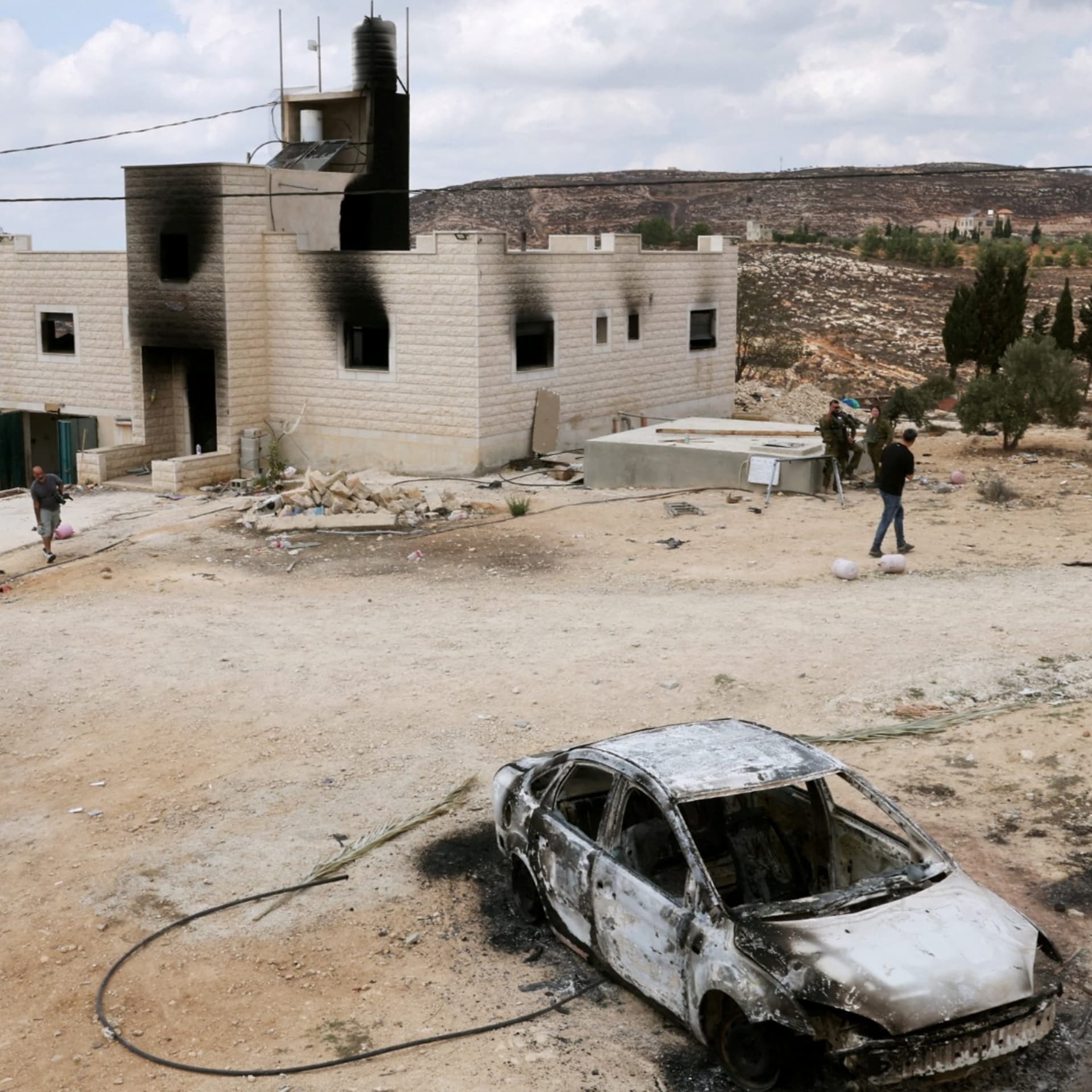
- A car drove into a crowd during a trade union rally in Munich, injuring at least 28 people.
- The incident is being treated as a deliberate attack, raising concerns in the context of upcoming elections in Germany.
- Climate Change and Crocodiles
- Researchers in Australia observed changes in crocodile behavior due to rising temperatures, implicating climate change effects on animal behavior and ecology.
- AI and Security Concerns
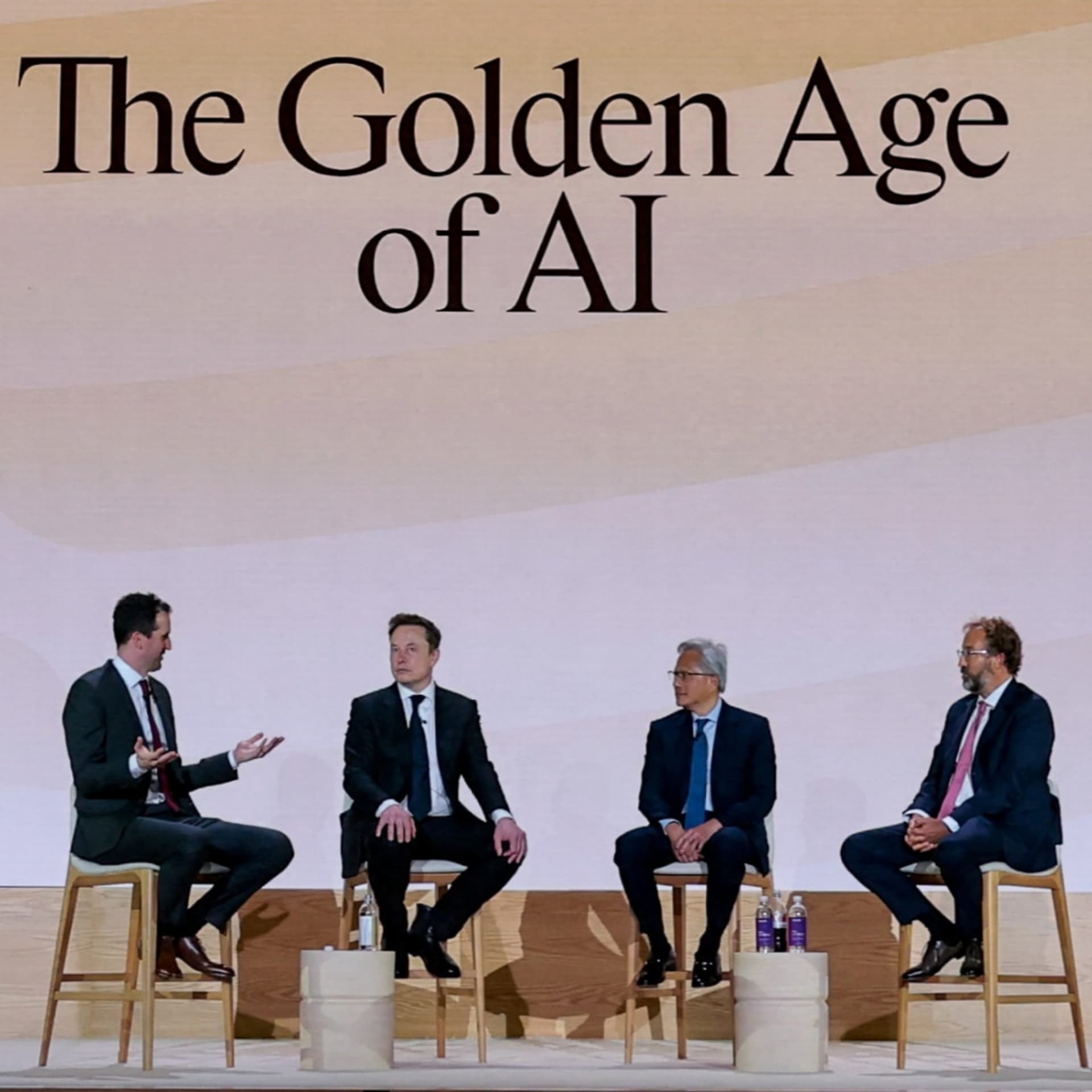
- Former Google CEO Eric Schmidt spoke on the potential dangers of AI, including its misuse by malicious actors.
- He emphasized the need for regulation and oversight in AI development to prevent risks associated with advanced technology.
Key Takeaways
- International Relations and Diplomacy
- The ongoing negotiations between Trump, Putin, and Zelensky highlight the complexities of international diplomacy, especially regarding territorial disputes and alliances.
- Tensions within NATO
- The episode underscores the shifting dynamics within NATO and the significance of the US leadership in maintaining a united front against Russian aggression.
- Domestic Implications of International Actions
- The Munich incident demonstrates the interconnectedness between immigration debates and public safety concerns, particularly in light of legislative elections in Germany.
- Environmental and Technological Challenges
- The impact of climate change on wildlife behavior is a reminder of the broader implications of environmental shifts. Concurrently, the discussion around AI emphasizes the importance of proactive measures to mitigate potential risks.
Conclusion This episode of the Global News Podcast provides a comprehensive overview of significant geopolitical events, focusing on the evolving situation in Ukraine, NATO's response to US diplomatic initiatives, and the intersection of domestic issues with international policies. As the global political landscape shifts, the consequences for countries involved, especially Ukraine, remain critical.
For further questions or comments, listeners are encouraged to reach out via email at [globalpodcast@bbc.co.uk](mailto:globalpodcast@bbc.co.uk) or on X with the hashtag #GlobalNewsPod.
Written by AI. May contain mistakes. Listen to the episode to check what was said.
Transcript
Automatic transcript. May contain errors.0:00This BBC podcast is supported by ads outside the UK. If journalism is the first draft of history, what happens if that draft is flawed? In 1999, four Russian apartment buildings were bombed, hundreds killed. But even now, we still don't know for sure who did it. It's a mystery that sparked chilling theories. I'm Helena Merriman, and in a new BBC series, I'm talking to the reporters who first covered this story. What did they miss the first time? The History Bureau, Putin and the apartment bombs. Listen on bbc.com or wherever you get your podcasts. This is the Global News Podcast from the BBC World Service.
0:47I'm Jackie Leonard and at 14 hours GMT, these are our main stories. The US Defence Secretary has denied that President Trump has betrayed Ukraine by pushing for a peace deal with Russia. Meanwhile, Germany has accused Mr Trump of making concessions to Russia on Ukraine before peace talks have even started. And a breakthrough has been reported in talks to get the Gaza ceasefire deal back on track. Also in this podcast, a man has driven a car into a crowd of pedestrians in the German city of Munich in what officials suspect was a deliberate attack. The fact that there are many injured is a slap in the face.
1:24We feel for the victims, we pray for the victims, we very much hope that everyone will make it. And researchers in Australia say a warming planet is changing the behaviour of crocodiles.
1:40We begin with Ukraine. As the third anniversary of Russia's full-scale invasion approaches, there's been a flurry of activity from the US about ending the conflict. As you'll have heard in our last edition, Donald Trump has had a long phone call with President Putin of Russia and says he plans to meet him in person, reversing years of the US isolation of the Russian leader. Mr Trump has also spoken on the phone to President Zelensky. The news of these conversations has been front and centre at a meeting of NATO defence ministers in Brussels. Boris Pistorius of Germany accused the US president of making concessions to Russia before peace talks had begun.
2:18He said the possibility of Ukraine joining NATO should remain, as well as the issue of losses of territory.
2:27Putin is constantly provoking the West and attacking us in a hybrid manner. It would be naive to believe that this threat will actually subside as a result of any peace agreement whenever it comes. On Wednesday, the US Secretary of Defense, Pete Hegseff, said it was unrealistic to expect Ukraine to return to its pre-2014 borders and he downplayed the prospect of Ukraine joining NATO. But today he insisted the US isn't betraying Ukraine and it's time to move towards a negotiated settlement. We recognize the incredible commitment that has been made over many years. And no country, as the president Trump has pointed out, has made a larger commitment to the Ukrainian mission than the United States of America, north of 300 billion dollars.
3:11So the United States has invested in stabilizing those front lines after the aggression of Russia. There is no betrayal there. There is a recognition that the whole world and the United States is invested and interested in peace. a negotiated peace. So what does all this mean for NATO and its position on Ukraine? Our correspondent Jonathan Beale is in Brussels at the NATO meeting. I think really what's changed is that, you know, NATO here have been presenting a united front, that it supported Ukraine, it was providing military support in concert with the former US administration. And it was going to let Ukraine decide how this war would end essentially.
3:55that if there were going to be talks, that Ukraine had to be involved in those discussions and those decisions. And what we're getting now with a new administration is that the US, the White House, Donald Trump is in the driving seat. He's calling the shots, not NATO as a whole, so that unity has been frayed somewhat. And we know that while the US administration has set preconditions on Ukraine, that it can't, for example, join NATO. They don't believe that they should not expect a return of all the territory they've lost to Russia, that there will not be U.S. boots on the ground if there is some kind of ceasefire in which it needs to be policed.
4:42That will not involve the U.S. No security guarantees on that front. We haven't heard any same preconditions given to Moscow. And, you know, what's happened here over the last few years, as far as NATO is concerned, is most NATO countries have isolated President Putin. And Donald Trump has, in effect, rehabilitated to some extent President Putin by this phone call and by this meeting. And the question still, the insistence here from NATO headquarters is that it must involve Ukraine. But at the moment, both NATO and Ukraine are on the sidelines. And just briefly, what else can we be expecting to see from this meeting?
5:25You know, Mark Rutter has a difficult job trying to hold this 32 member alliance together. And he knows that to build bridges with the Trump administration, he is going to have to persuade allies to increase defence spending, particularly European allies. Now, they have actually increased defence spending overall with more countries, the majority now spending at least 2%. But Donald Trump wants them to spend 5%. That's going to be a much harder task. But he needs to build bridges and he sees that as a way of doing it. But to expect countries to come up with 5%, I think, is unrealistic. That is not going to happen.
6:00But he is trying to push them further in how much they spend on defence and also how much support they give to Ukraine. But they are not, at the moment, NATO, in the driving seat. That was Jonathan Beale in Brussels. So how is Ukraine reacting to the discussions about its future? Here's the view of Timothy Milovanov, who's a former economy minister. Before even the negotiations start, President Trump, without consulting with Ukraine, without consulting with the EU, makes decisions and accepts, gives out already to the demands of President Putin. So, you know, this puts everyone in a very actually vulnerable position.
6:43Our correspondent in Kiev, James Waterhouse, is following development. I think it's only been Ukraine really that has felt the pressure in what's been a bruising opening salvo from America in terms of how it sees lasting peace in this war. And I think privately, the long held fears that Ukraine wouldn't be involved in the negotiations sufficiently are being realised. When you look at the warm language between Washington and Moscow, when you look at the proposed meeting in Saudi Arabia, when you hear Donald Trump say it's interesting on whether Ukraine, on the question of whether Ukraine is an equal partner, because we are ultimately talking about the future of a country.
7:27That said, the missing detail on Ukraine being free with Russia within its borders, the very question of how a conflict line will be policed by foreign troops, there is missing detail. America said it's nothing to do with us, but Ukraine will still, you know, I think politically still has plenty to play for. What can President Zelensky do now to make sure that he stays in the conversation? This is now the diplomatic challenge because at the moment it's hard to see how. If you have a summit in Saudi Arabia where you see Donald Trump with Vladimir Putin, who will be delighted that he is able to bypass Ukraine in these negotiations, a country he denies the existence of, it'll be very hard for President Zelensky to then get his elbows up and get to the table and start asserting his wants and needs for a ceasefire.
8:27And I think it is a reflection of geopolitics where superpowers wield the influence they do because of Ukraine's reliance on American aid, notably because of the scale and speed it can be provided. America is therefore able to impose its terms on Ukraine more easily. The US is still going after Ukraine's natural resources in a deal in exchange for continued military aid. So it's really quite difficult. I guess the only positive from yesterday for Ukraine is that this is the start of a very complicated path to peace. and when you've been in a full-scale invasion, when you're on the tail end of 11 years of war, people do want peace.
9:13Of course they do. People are tired of worrying whether their sons and husbands will come home. They're tired of wondering whether they'll survive the night under artillery. So, of course, peace is desired, but it's the terms of that peace which is so crucial for Ukraine. Well, meanwhile, James, we have seen some reports that the Ukrainian military are saying that there were 140 Russian drone attacks last night. What can you tell us? Little more than that, other than that this is, you know, in the scale of things, it's a larger attack than normal, but it's still something that Russia sustains.
9:49The night before there were ballistic missiles landing here in Kiev. The week before, 14 people were killed on a missile strike, this missile and drone strike on the central region of Pultava. This is what happens. And so it is true that there is a heightened talk of peace, but Russia, you know, you cannot see it from within Ukraine as Russia continues to act out its invasion. James Waterhouse in Kiev. As we record this podcast, details have been coming in of an incident in the southern German city of Munich where a car has been driven into a group of people at a trade union rally. Officials say 28 people were injured, some very seriously.
10:29Speaking at the scene, Bavaria's state premier, Markus Söder, said it was most likely an attack.
10:38It is simply terrible, ladies and gentlemen, when you get the news that someone has once again driven a car into a crowd of people. The fact that there are many injured is a slap in the face. We feel for the victims. We pray for the victims. We very much hope that everyone will make it. Our correspondent, Damien McGuinness, is monitoring events from Berlin. What appears to have happened is that this was indeed committed on purpose. What the motivation is of the perpetrator, we don't know. But what appears to have happened, according to police, is that a beige Mini Cooper was driving behind this trade union demonstration, which was surrounded by police cars, so there was security around the demonstration.
11:22Then the car, the Mini, started speeding up as if to overtake the police car, And then as it did, it rammed at high speed into the crowd of demonstrators. And so we now know that at least 28 people are injured, many of them seriously and some critically. And we're finding out more information about the suspect as well, who appears to be a 24-year-old Afghan asylum seeker, whose application for asylum had been rejected, but he was legally in Germany. He had a legal status here, but quite a temporary one, which meant his situation here was rather precarious. And now police are really talking to him to try and find out why he carried out such a terrible act.
12:07There are elections in Germany in, what, 10 days from now? And immigration is a key issue, isn't it? Yeah, that's right, because over the last few months have been a number of attacks involving asylum seekers. And most notably in January in the Bavarian town of Aschaffenburg, where a kindergarten child was was stabbed and a passerby also was killed by an asylum seeker. And that sparked a huge debate around migration connected to criminality. hadn't really been the case before then, because I think mainstream parties had tried to calm, you know, this quite controversial debate and the polarised atmosphere around migration.
12:49But after that attack in Aschaffenburg, the Conservative leader, Friedrich Merz, who wants to be Germany's next chancellor, went very hard line, because his argument is he wants to undermine the poll numbers of the far-right AFD, which appear to be gaining traction on the back of these terrible attacks. And since then, we've seen a ferocious debate around migration. A lot of people have criticised it, saying it's very one-sided, this idea of connecting migration to criminality. So obviously, it stigmatises people with migration background. But either way, it's certainly a big, big debate in the political run-up right now.
13:26And the fact that we've now had another terrible incident will certainly play into the debate and could well have an impact in the election results in 10 days' time. Damien McGuinness. China is the world's biggest emitter of greenhouse gases, accounting for around 30 % of the global total. But new research shows that the country's coal plant construction surged last year to its highest level in almost a decade. This appears to conflict with President Xi Jinping's promise that carbon emissions would peak before 2030. Here's our China correspondent, Laura Becker. There has been a lot of coal construction, in fact about 95 gigawatts of power within the early half of 2024.
14:12Now that's the most coal-fired power plants that China has built since 2015. However, this report also notes that there has been an unprecedented surge in renewables, in wind and solar in particular. In fact, the report notes that China has installed more in wind and solar in almost one year than the United States has done in total since records began. And what this analysis seems to suggest is that they are concerned that the solar and wind capacity is being layered on top of coal production. It's not being installed instead of. And they fear that the net zero target, President Xi has pledged that China will be net zero by 2060, might slip away from China unless that changes.
15:04That was Laura Bicker. Still to come, a warning from the former chief executive of Google about artificial intelligence models being misused by terrorists and rogue states. An example would be the ability for the system to fool us. Another one, if it developed a desire to get access to weapons, especially nuclear weapons.
15:32If journalism is the first draft of history, what happens if that draft is flawed? In 1999, four Russian apartment buildings were bombed, hundreds killed. But even now, we still don't know for sure who did it. It's a mystery that sparked chilling theories. I'm Helena Merriman, and in a new BBC series, I'm talking to the reporters who first covered this story. What did they miss the first time? The History Bureau, Putin and the apartment bombs. Listen on bbc.com or wherever you get your podcasts.
16:13Hamas has said it will now release three Israeli hostages on Saturday and is committed to the ceasefire deal with Israel. The announcement follows mediated talks in Cairo. The group had said it would postpone the release, accusing Israel of breaching the terms of the ceasefire. Israel has said it will resume the war against Hamas if the hostages aren't released. Our correspondent Yolande Nell is in Jerusalem and has been following the story. Through the day, we've had various positive signs that this latest crisis in the Israel-Hamas ceasefire deal can be overcome. We know that Egyptian and Qatari mediators have been working on the areas Hamas has complained about.
16:50the amount of fuel going into Gaza, numbers of shelters, Egyptian sources indicating more heavy lifting equipment to move rubble is to go in. Hamas did put out a statement saying it didn't want the deal to collapse. It reaffirmed its commitment to implementing the agreement as signed, including the exchange of prisoners. That's what it's calling Israel's hostages being exchanged for Palestinian detainees, according to the specified timeline, the statement says. So under that, we'd expect there to be these three hostages released on Saturday. And Israeli media was signalling earlier that the message that gone from Israel is that it would accept three hostages being handed over and not stop the ceasefire, despite, of course, President Trump having proposed that high stakes ultimatum, bring back all the hostages or the fighting starts.
17:36So we've heard from Israeli media. Are we getting anything from the Israeli government about what's been coming out of Cairo? I mean, nothing officially from the Israeli government at this stage. I think it's still a bit wait and see. And, you know, it may be that we find ourselves at the same stage tomorrow, waiting to see, you know, if Hamas does publish this list of three names as we're expecting. I mean, it's worth pointing out as well. At the moment, you know, negotiations on the more sensitive second stage of the ceasefire deal are supposed to be fully underway in Doha. That's supposed to see a permanent end to hostilities, the return of remaining hostages.
18:14Instead, mediators have been really sort of tied up with just trying to shore up. This part of the ceasefire, the initial part of the deal, the Israeli negotiating team returned from Doha on Monday after just two days. You know, negotiators also envisaged there would be a third stage to the ceasefire, reconstruction of Gaza. But now what you've got is so much uncertainty about the future that's just increased under President Trump with his post-war plan for Gaza that envisages emptying it of its two million residents, building a kind of seaside travel destination there, of course, totally rejected by Arab countries and many others around the world.
18:49That was Yolande Nell. Just how concerned should we be about the advent of artificial intelligence? Very, says the former chief executive of Google, Eric Schmidt. He's been speaking on the subject at the AI conference in Paris. He told my colleague Amol Rajan why the rapid development of the new tech is so groundbreaking and challenging for humanity. I actually think, and I know you'll think I'm insane, and maybe I am, that AI is underhyped. We don't know yet if AI can build an AI Einstein, but we think that the computer can get pretty close to it. And that means that each and every one of us would have literally Einstein and Leonardo da Vinci or pretty close in your pocket on your phone.
19:36It's a pretty big deal. Well, I'm very, very struck by the fact that anyone who's followed your career will know that as boss of Google, go back to nearly 25 years ago, you've generally been an advocate of technology, an optimist, someone who tries to use technology to advance human goals, human ends to satisfy human demands. And yet in your recent remarks, Eric, I'm very struck by the fears that you have about the potential of AI. For instance, you said in December 2024, the AI systems might need a kill switch. What did you mean? Basically, there's a set of things that we shouldn't really allow.
20:11An example would be the ability for the system to fool us, to deceive us. Another one would, if it developed a desire to get access to weapons, especially nuclear weapons, imagine that it starts to make copies of itself. It decides that it wants to propagate itself even if we plug it off. There's a set of such things that we need to watch for in this technology. It's not capable of doing it right now, but there are signs that it might be capable in the future. There are people, Eric, who fear that actually the whole dynamic that we've got for AI is the wrong one. It's a race. It's a competition.
20:49It's one that pits the US against China, against Europe. It's one where we don't have a system of global regulation. And it's also one where most of the innovation is being driven by companies rather than by states. What's your concern, if you do have one, about the current dynamic? The truth is that AI and the future is largely going to be built by private companies. It has to do with the incentives and the money and where the talent is and how the world works. They're not going to be built in the equivalent of a Manhattan project. So it's really important that governments understand what we're doing and keep their eye on us.
21:24We're not arguing that we should unilaterally be able to do these things without oversight. We think it should be regulated. The real fears that I have are not the ones that most people talk about AI. I talk about extreme risk. There's evidence that the models have knowledge that could allow, for example, a bad biological attack from some evil person. And I'm sure no one listening is evil, but there must be at least one evil person in the world who could take advantage of that in a really bad way. We want to make sure that doesn't happen. Part of the reason that we're all alive today is because people in the 1950s developed a whole strategy around nuclear containment.
22:00The same is not true in computers. The current best idea we have for controlling this proliferation is to make it hard for other countries and evil people in general to get access to the most powerful hardware. That's why the U.S. export controls are so important. That was Eric Schmidt, the former chief executive of Google. Researchers in Australia say a warming planet is changing the behaviour of crocodiles. A study of 200 wild crocodiles found that as temperatures have risen, so too have the reptiles average body temperatures. Simon Atkinson reports from Cairns. Unlike birds and mammals, crocodiles can't regulate their own body temperatures.
22:40So, when they get hotter, they need to change their behaviour. Scientists have been analysing data from sensors on wild crocodiles in far north Queensland since 2008. In that time, peak temperatures locally have jumped by 0.5 degrees Celsius and the body temperatures of the animals has risen by more than 0.1 degrees. Previous studies suggest hotter crocs don't dive for so long, giving them less time underwater to ambush prey and that devoting extra time to keeping cool means activity for reproducing and staying safe from predators is reduced. The researchers from the University of Queensland and the Steve Irwin Wildlife Reserve at Australia Zoo will now focus on how a hotter planet is impacting the overall health of the region's crocodile population.
23:27Simon Atkinson in Cairns. Let's return now to US politics. Well, sort of. President Trump has made no secret of his desire to take over Greenland, an autonomous territory in the Kingdom of Denmark. And since his re-election, he's also said he wouldn't rule out using military force to seize it. Now a satirical petition has appeared online offering to buy the US state of California for Denmark. Harry Bly reports. The petition on the website Denmarkification.com promises to bring some Scandinavian charm to America's golden state. It offers to introduce bike lanes and smerbwer, which are traditional Danish sandwiches, as well as changing the name of Disneyland to Hans Christian Andersenland, a nod to the famous Danish fairy tale author.
24:18It also claims to have reciprocal benefits for Denmark too, boasting California's 300 days of sunshine per year, its tech sector Silicon Valley, and the state's plentiful crop of avocados. Already, the petition has attracted more than 230 ,000 signatures. Its creator claims to have the cast of Borgen, the Danish political drama, ready to lead negotiations. California already has a connection to Denmark. The city of Solvang, which means sunny fields, was founded by three Danish immigrants in 1911 and promotes itself as the Danish capital of America. And that was Harry Bly. Now before we go, in our last edition, our science editor, Rebecca Morrell, was reporting on a major archaeological discovery, a 2 ,000-year-old Roman basilica found beneath an office block in the heart of London.
25:11And we were so excited about it, we completely forgot to mention that the person showing her around was the marvellous Sophie Jackson from the Museum of London Archaeology team. Sorry, Sophie, and thanks. And that's it from us for now, but there will be a new edition of the Global News Podcast later. If you'd like to comment on this edition or the topics covered in it, do please send us an email. The address is globalpodcast at bbc.co.uk. You can also find us on X at BBC World Service. Use the hashtag Global News Pod. This edition was mixed by Charlotta Hadroy-Tosymska. The producer was Vanessa Heaney.
25:48Our editor is Karen Martin. I'm Jackie Leonard. And until next time, goodbye.
Read the full transcript
25:59If journalism is the first draft of history, What happens if that draft is flawed? In 1999, four Russian apartment buildings were bombed, hundreds killed. But even now, we still don't know for sure who did it. It's a mystery that sparked chilling theories. I'm Helena Merriman, and in a new BBC series, I'm talking to the reporters who first covered this story. What did they miss the first time? The History Bureau, Putin and the apartment bombs. Listen on bbc.com or wherever you get your podcasts.
From the publisher
Senior figures in Europe have accused President Trump of making unnecessary concessions to Russia ahead of peace talks on Ukraine, and a breakthrough is reported in talks to get the Gaza ceasefire deal back on track.