In short
Global News Podcast - Episode Summary
Episode Title
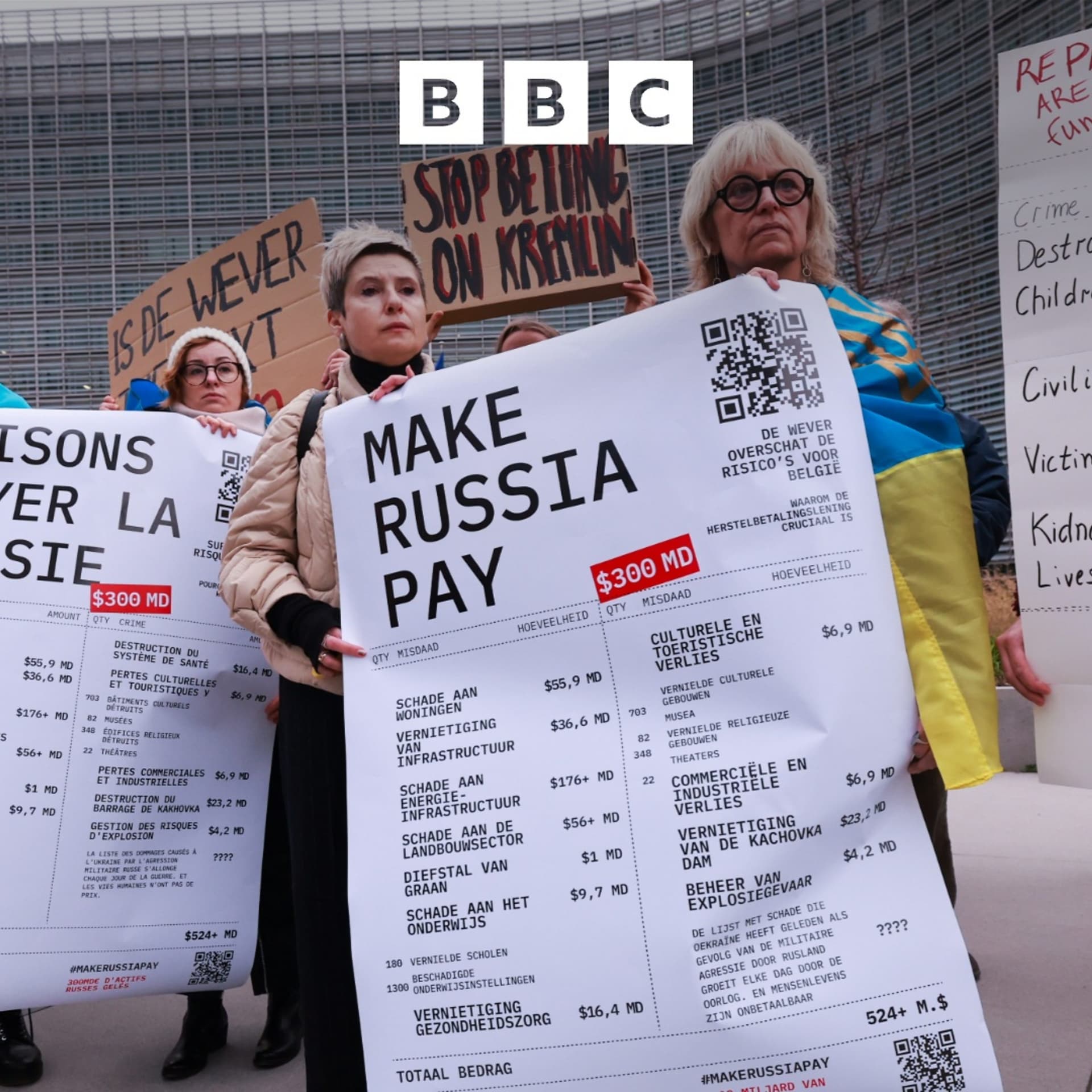
Crunch talks in Brussels on Russia's frozen assets
Podcast Description The Global News Podcast provides breaking news and analysis across various domains including politics, economics, climate, business, technology, and health, twice daily on weekdays and daily on weekends.
---
Key Topics Covered
- EU Negotiations on Russian Frozen Assets
- Context: European Union leaders are debating the use of approximately $245 billion in frozen Russian assets to support Ukraine's war efforts.
- Key Players:
- Belgium: Currently holds most of the frozen assets but is opposed to using them for Ukraine.
- Hungary's Viktor Orban: Criticized the proposal, arguing it could escalate the EU's involvement in the war.
- France and Poland: Advocated for the release of the funds to assist Ukraine.
- Arguments:
- Support for Ukraine: Proponents argue that unfreezing the assets could provide crucial financial support for Ukraine, which faces a €135 billion financial gap over the next few years.
- Legal Concerns: Opposition fears potential legal repercussions from Russia post-war regarding asset restitution.
- Ukraine's Arms Production
- Update: Ukraine is ramping up its own production of weapons, now producing over 50% of its frontline arms.
- Facilities:
- Secret factories are operational, producing long-range missiles and drones.
- The "Flamingo" missile has a range of 3,000 kilometers.
- Statements from Ukrainian Officials:
- Ukrainian forces stress the importance of self-reliance in arms production for security guarantees and military effectiveness.
- Civil Unrest and Violence
- Sudan Power Cuts: Major cities in Sudan faced blackouts due to drone strikes by the Rapid Support Forces (RSF). This highlights ongoing violence in the region and the humanitarian crisis.
- Australia's Bondi Beach Attack: The funeral of Matilda, a 10-year-old victim of a terror attack, draws attention to rising anti-Semitism in Australia. Prime Minister Anthony Albanese announces plans to strengthen hate crime laws in response to the incident.
- Crime and Justice
- Dr. Frédéric Péchier: A French doctor, known as “Dr. Death,” was sentenced to life in prison for poisoning patients, raising concerns about malpractice and medical ethics in France.
- Global Military Support
- US-Arms Sale to Taiwan: The US announced an $11 billion arms sale to Taiwan, which underscores the ongoing military tensions with China.
- Impact on US-China Relations: Analysts speculate on how this move may affect diplomatic relations between the US and China, as China views Taiwan as its territory.
- Notable Deaths
- Peter Arnett: The Pulitzer Prize-winning war correspondent passed away at age 91, remembered for his impactful journalism during key historical events, including the Vietnam War.
- FIFA and Gaming Industry
- New FIFA Game Announcement: FIFA is partnering with Netflix to launch a new football game, shifting away from its previous developer, EA Sports, due to a fallout over licensing fees.
---
Key Takeaways
- The EU's decision on Russian assets poses significant moral and legal dilemmas amid the ongoing war in Ukraine.
- Ukraine's shift towards self-sufficiency in arms production illustrates a critical adaptive strategy in response to external pressures.
- Rising anti-Semitism and calls for better regulatory measures highlight societal issues in Australia.
- The international arms dynamics, particularly in relation to China and Taiwan, reflect broader geopolitical tensions.
- The gaming industry's evolution, particularly for FIFA, showcases the changing landscape of entertainment and sports branding.
---
For further discussions or insights, feel free to contact the podcast at [globalpodcast@bbc.co.uk](mailto:globalpodcast@bbc.co.uk).
Written by AI. May contain mistakes. Listen to the episode to check what was said.
Transcript
Automatic transcript. May contain errors.0:00This BBC podcast is supported by ads outside the UK. If journalism is the first draft of history, what happens if that draft is flawed? In 1999, four Russian apartment buildings were bombed, hundreds killed. But even now, we still don't know for sure who did it. It's a mystery that sparked chilling theories. I'm Helena Merriman, and in a new BBC series, I'm talking to the reporters who first covered this story. What did they miss the first time? The History Bureau. Putin and the apartment bombs. Listen on BBC.com or wherever you get your podcasts. This is the Global News Podcast from the BBC World Service.
0:47I'm Alex Ritson and at 16 hours GMT on Thursday the 18th of December, these are our main stories. EU leaders are told to choose between money today and blood tomorrow as they debate giving frozen Russian assets to Ukraine. We visit one of Ukraine's secret weapons factories, now said to be making half of the arms used on the front line. Australia marks the funeral of the youngest Bondi Beach attack victim, 10-year-old Matilda. Also in this podcast... Hello and welcome to the FIFA 23 reveal trailer. Football's world governing body, FIFA, partners with Netflix for a return to the world of video gaming.
1:35We begin in Brussels, where crunch talks between European Union leaders are taking place as we record this podcast. Top of the agenda is whether to use frozen Russian assets to help Ukraine's war effort. Belgium, where most of Moscow's$245 billion worth of assets, opposes the move. And Belgium isn't alone. Italy and Slovakia also expressed their doubts. Shortly before the meeting began, Hungary's leader, Viktor Orban, who's very close to Russia's Vladimir Putin, gave his thoughts on the proposal. The whole idea is a stupid one, to take away the money of somebody. There are two countries which are in war, yeah?
2:15It's not European Union, Russia and Ukraine. And somebody, European Union, would like to take away the money of one of the warry's parties and then to give it to another one. It's a marching into the war. So the Belgian Prime Minister is right. We should not do that. France and Poland led calls to hand the money over to boost Ukrainian resistance. President Emmanuel Macron of France shared his thoughts as he entered the talks. Our willingness here during this council is to deliver a package of financing in order to provide visibility. And it's very important that we find the right compromise and I'm confident that we will find it.
2:54But the position of the Europeans is very clear. We support Ukraine in these war efforts. We want to provide visibility to Ukraine. And we do support a robust and solid peace. This is why we will follow up the negotiations in parallel. And we will finalise the work as well of the coalition of the women. Polish Prime Minister Donald Tusk said European leaders had a straightforward decision to make. Now we have a simple choice. Either money today or blood tomorrow. And I am not talking about Ukraine only, I am talking about Europe. And this is our decision to make, and only ours. Our correspondent James Waterhouse in Brussels explained what's at stake.
3:40At its heart is a proposal to unfreeze tens of billions of euros worth of frozen Russian assets to support Ukraine in the form of a loan. Kiev has a gaping hole in its finances over the next couple of years to the tune of 135 billion euros. Volodymyr Zelensky acknowledges that this proposal is crucial for his country's survival. And those in support of it, like Germany, like the European Commission, like the UK, like France, say this is crucial for Ukraine to survive long enough for a lasting peace deal. But there are growing opposers to this idea, not least with Belgium, where the majority of this Russian money is kept.
4:21There are fears of legal reprisals which have been promised by Moscow. So what is clear is that there are going to be some very long, drawn-out negotiations today. A plan B is being touted that could see Europe support Ukraine through its debt, through widening its debt and incorporating it into its budget. But that requires unanimous support, which is almost certainly not going to happen. So this is a crucial juncture if you consider where we are in the peace endeavours to try and end the war in Ukraine. From the European perspective, why is using Russian money, European leaders generally see Russia as the aggressor in this war, why is that controversial?
5:06because if you are belgium for example and you are you know hosting 200 billion euros worth of of russian cash you are worried about being legally compelled to pay moscow back once the war is in once the war is over now what europe is saying is well there's no legal mechanism for that you know it's not going to recognize moscow's courts and it's also saying that it would spread the risk but even euro clear which is the institution which houses this cash in belgium it has its own frozen assets inside russia so it's about vulnerability and to boot there is also another concern here which is that america has been lobbying european members to block it as well because there have been previous proposals leaked that's that shows washington wanting to get its own hands on this cash for future investments with russia so there are a lot of forces at play here.
6:00James Waterhouse. And as talks continue in Brussels, the war in Ukraine rages on. Kiev is making no assumptions about support and is moving to ramp up production of its own weapons. After being heavily reliant on the West, Ukraine now says it's producing more than 50 % of the weapons it uses on the front line. That includes long-range drones and missiles to hit targets deep inside Russia. Our defence correspondent Jonathan Beale has been given rare access to facilities now mass producing these weapons, which they say are the only way of providing Ukraine with reliable security guarantees.
6:41We're being driven to a secret location. It's all a bit cloak and dagger. Being asked to put eye masks on so we can't see where we are. We're going to the factory where they produce Ukraine's long-range missiles. This is where they're making Ukraine's own cruise missile, the Flamingo. And there is a finished product on a lorry ready to go. It's 12 metres long. It has a wingspan of two metres. It's got a rocket up on top. And it has a range of 3 ,000 kilometres. And this is the fuel here? It's a sparing fuel tank, not the main one. Denis Stillerman is Firepoint's founder and chief designer. And Irina Terach is the company's chief technical officer.
7:40Less than nine months. Less than nine months? Yes. Has that ever been done before? Does any other company produce missiles that quickly? The V-1. The V-1, so German rockets in the Second World War. And that's what war does. You just have to speed up that process, correct? Yeah, we are fuelled by anger.
8:03Denis says their weapons, which also include long-range drones, are already hurting Russia. So it's making a difference what you're doing with the weapons here, in the battle. But can it win the war? There's no game-changing. The only game changer we have is our will. If we have the will to win, we'll have to tire a day later than Russia. Before the war, Irina was an architecture student. Now she's trying to dismantle the Russian war machine. So your security guarantee is you producing your own weapons? Yes. And do you think that can make a difference in this war? I think that's the only way to really provide security guarantees.
8:52Another factory at another secret location is churning out less complex long-range drones. They've been behind 60 % of Ukraine's deep strikes. They're producing 200 a day. And Irina says they're deliberately trying to avoid foreign components. We have China-free policy and we don't use American components. You don't use American companies? Why? We are on emotional roller coaster. Tomorrow, somebody will want to shut it down and we would not be able to use our own weapons.
9:35Ukraine's long-range drone strikes, though, are having some success. The head of its armed forces claims that this year alone, it's cost the Russian economy more than$21 billion. dollars. Ruslan is an officer with Ukraine's Special Operations Forces, coordinating strikes. He admits it's been a challenge to match Russia's greater resources. I would like Ukraine to be able to launch as many drones as Russia does. However, we are scaling up very quickly and significantly. And I think in any case, the enemy will soon be surprised. It will be an unpleasant surprise for them. ukraine still needs western support intelligence and money but it's learned the hard way that you can't just rely on others jonathan beale it's not only ukraine that wants more weapons taiwan does too the trump administration has just announced a huge arms sale worth around 11 billion dollars to the island which includes advanced rocket launchers self-propelled howitzers and a variety of missiles.
10:45China sees self-governed Taiwan as part of its own territory and has steadily ramped up pressure over the island with military drills and regular incursions into its waters and airspace. To tell us more, here's Mickey Bristow. I think the first thing to say about it is the price. $11 billion worth of arms, that's a big deal. I think you have to go back 20-odd years since the United States sold Taiwan as many weapons as this, included rocket systems, anti-tank missiles, drones, medium-range missiles, all kinds of things, software, spare parts, a lot of kit,$11 billion worth. And it solidifies the idea that President Trump, who had seemed ambivalent about whether or not to defend Taiwan against China, China believes Taiwan is part of its own territory, President Trump had been quite ambivalent about whether he's going to support Taiwan.
11:43So it seems to suggest that he's decided that he does have to show his support. As you say, this is in the end all about Taiwan. Are these weapons defensive or offensive? Well, they're defensive, essentially. I mean, Taiwan is in no way going to threaten China. It's its biggest neighbour, China, over the last few decades, as we've been hearing year after year, has been building up its weapons systems. Also, over recent years, it's been targeting Taiwan with grey zone tactics, sort of like buzzing the island with aircraft and ships surrounding it. There have been dozens just near Taiwanese airspace over the last 24 hours or so.
12:21So, essentially, Taiwan is looking for weapons to defend itself against China because China, as I said, believe the island is part of its territory. It's not renounced the use of force. People believe President Xi Jinping of China is preparing the Chinese military to take Taiwan by force. So these weapons are to help Taiwan defend itself against China. It's publicly anyway, though. China is not going to see it that way, is it? No. In fact, China's already come out and said this is a terrible move on the part of President Trump. It essentially sees Taiwan as a domestic issue because it believes it's part of its own territory, doesn't like anybody interfering.
12:58And so, of course, it reacts angrily whenever anyone does anything like this. Might actually affect going forward the relationship between President Trump and Chinese President Xi Jinping. They met just a couple of months ago in South Korea. President Trump said they got on well, appeared to have a good meeting. I'm sure this kind of act by President Trump will undermine that bonhomie to a certain extent. Mickey Bristow. To Australia, where the youngest victim of the Bondi terror attacks, Matilda, has been buried in a funeral service in Sydney. She was one of 15 people killed on the Sunday when two gunmen opened fire on an event marking the start of Hanukkah at the popular beachside tourist spot.
13:42Mourners, including family and politicians, wore bee brooches and stickers as a tribute to the little girl who adored them. Critics have said not enough was done to curb anti-Semitism in Australia leading up to the attacks. Now, Prime Minister Anthony Albanese has announced that laws to crack down on hate will be strengthened. Matilda's aunt, Lina Chernik, has been talking to the BBC about her niece. She said the child's parents were bereft. I see my brother and his partner absolutely devastated, absolutely. I look on their faces. I don't know if they will be ever happy again. and imagine like lost your kid who just was happy playing around with the other kids and just full of life and smiles and suddenly with shots you know suddenly it's happened it's beyond understanding for any human being full of life happy kid who was always give other people love when you see here she gives you happy energy how someone in australia can understand if someone tell your kid was shot like you know i couldn't understand it i asked few times what i'm here and after the reality hit we definitely will need all support like especially when things slow down go quiet you know after like few weeks people start they live their life and this is when the pain will really hit.
15:11As much as I'm in pain, definitely something should be done, but I'm not in power. Like, you know, I'm in power, just spread happiness and love and memory for my lovely niece. Our correspondent in Sydney, Phil Mercer, told me more about the mood on the day of the funeral. Very sombre, probably the most poignant day since the shooting here at Bondi Beach, the funeral of 10-year-old Matilda. And we are at another Hanukkah event just a few meters away from where the attack took place. And the crowd is listening to a rendition of Waltzing Matilda, which is a very famous old Australian song and people holding up their mobile phones.
15:58And it is a sea of light. And this young girl was named Matilda by her Ukrainian parents to give her a typical Australian name. So great sadness. And of course, 10 years of age at primary school in the prime of her life. A small girl farewell today who will never see her 11th birthday. Yes, we can hear that commemoration behind you, Phil. What will the Prime Minister's announcement on hate crimes mean? It means that Australia's Prime Minister, Antony Albanese is desperately trying to reassert his authority. He has faced widespread criticism, especially within the Jewish community and the conservative side of Australian politics, over an alleged failure to curb rising anti-Semitism.
16:51His critics say that the measures he's announced today to curb hate and de-radicalisation should have happened far, far earlier. The Prime Minister said that he's not perfect, but that he was determined to stamp out this sort of hate and division. And he said now was the time to end this evil scourge of extremism. Phil, you've lived in Australia for a very long time now. Is the country changed forever by this? I'm not sure. It's a very difficult question to ask. It's certainly been changed this week. But when you spend time here at Bondi Beach during the day, the crowds that we're witnessing tonight do thin out.
17:33After sun sets, people do come out. When you go to the beach, there are people surfing and playing football. So for many, life is getting back into the groove. But of course, Bondi Beach will always now be known as this place of an atrocity. Eventually, life will get back to normal, but not for the people directly affected by the shooting. Phil Mercer. Still to come in this podcast We were in the middle of the most intensive actions and it's become a landmark for journalism ever since One of the all-time great war correspondents, Peter Arnett, has died
18:18If journalism is the first draft of history, what happens if that draft is flawed? In 1999, four Russian apartment buildings were bombed, hundreds killed. But even now, we still don't know for sure who did it. It's a mystery that sparked chilling theories. I'm Helena Merriman, and in a new BBC series, I'm talking to the reporters who first covered this story. What did they miss the first time? The History Bureau, Putin and the apartment bombs. Listen on BBC.com or wherever you get your podcasts.
18:57Now to France, where a French doctor known as Dr Death has been sentenced to life in prison after he poisoned dozens of his patients. Frédéric Péchier worked as an anaesthetist in the eastern city of Bessin-Saëns and was found guilty of poisoning 30 patients and killing 12. Our Paris correspondent Hugh Schofield has the story. In 2017, doctors, fellow doctors began to become suspicious. There was an incident in which a young woman was found to have had an emergency procedure as required during an operation because something had gone wrong. They looked into it and found that there was an excess of chemicals in her infusion bag of a certain chemical.
19:38And then they started looking further and found a pattern of events like this going back over nine or ten years. What was doubly suspicious was that Dr. Pesci had moved to another clinic for a time and then come back. And the pattern of problems like this had followed him. So they'd been at this one clinic, you know, at a high rate of these troubling events. They'd stopped and then moved to this other clinic where he was at. And then he'd come back and they'd resumed at this first clinic and then stopped when in 2017 he was he was disbarred from acting pending this trial. and in the trial they've established that yes the charges against him were true in 30 cases he was found to have put chemicals in the infusion bags of patients patients who have been looked after not by him directly but by fellow anesthetists and then he was able to intervene in many of them as the kind of savior he was the first responder when things went wrong and said i know it's this this is the problem here's the antidote his prestige was boosted that of his fellows was gravely damaged.
20:43And that, the prosecution said, was his motivation. He protested his innocence. The defence said there was no tangible proof of any of this. And obviously, it was quite hard to establish exactly what had happened in cases which were so old. But the court believed that he was responsible in all these cases, 30 overall, 12 of them resulting in deaths. And they've given him this very stiff punishment of imprisonment for life, basically. Hughes Schofield. Major cities in Sudan, including the capital Khartoum and its main seaport, Port Sudan, are without power after drone strikes hit a key power plant in the east of the country.
21:21Government forces have been fighting the paramilitary Rapid Support Forces, or RSF, for the last two and a half years, which has plunged Sudan into a massive humanitarian crisis. I heard more from our global affairs reporter, Richard Kegoy, in Nairobi. A military saucer has just told the French news agency that But the paramilitary rapid support forces, the RSF, carried out large-scale attacks in the east of the country targeting three cities. So the accusation has been coming from the army that this is the RSF because if you look traditionally, the RSF has been carrying out drone attacks targeting civilian infrastructure.
22:01It's quite a thing to take out power to the capital and to other major cities. Yeah, that's really quite devastating because if you look at Khartoum, that's the capital city in Port Sudan, which is the seat of the military government, this is quite disruptive and very devastating because residents in parts of Sudan say that they've been without power since 2 a.m. on Thursday morning. And this particular drone attacks did target a particular key power station in the city of Atbar, which is really responsible for redistribution of power across many parts of Sudan. So this is really quite disruptive to the populations there.
22:46This rather suggests that the rapid support forces in this civil war, which has been going on for a long time, they are moving forward, aren't they? Yeah, they have. And if you look at the trends for the past nearly one year since they lost control of the capital, Khartoum, they've been using drone attacks, you know, just targeting areas around the capital. And much even as they have been directing their focus towards the southwest part of the country. So they've really been, you know, intensifying attacks and stepping up pressure on the military. That's the Sudanese army and particularly in areas which are controlled by the Sudanese army.
23:25Are we any closer to knowing exactly where the RSF are getting their weapons from? The UN has accused the RSF really of getting support from the United Arab Emirates, which Abu Dhabi has really denied the accusations. But it's just indicating that possibly based on open source investigations that they have been receiving equipment or logistical support from the UAE. And that's really helped them to be able to advance and, you know, counter the army and even push forward in the territories where they've been operating in. Richard Kigoi. Peter Arnett, the journalist who spent decades dodging bullets and bombs to bring the world eyewitness accounts of war, has died at the age of 91.
24:13Born in New Zealand, he won the Pulitzer Prize in 1966 for his reporting for the Associated Press news agency from Vietnam. and in 1991 he was one of the few Western correspondents to remain in Baghdad during the First Gulf War. Richard Hamilton reports. Peter Arnett joined the AP Bureau in Saigon in 1962. Four years later he was with a battalion of American soldiers seeking out North Vietnamese snipers and was standing next to the commander when he paused to read a map. As the colonel peered at it, I heard four loud shots as bullets tore through the map and into his chest, a few inches from my face, Arnott said.
24:59He sank to the ground at my feet. He stayed in Vietnam until the fall of Saigon in 1975. In those final days, AP ordered him to destroy the Bureau's papers and photos, but he shipped them back to his apartment in New York. Here he is in 2015, looking back on that time. We were in the middle of the most intensive actions, so there was very dramatic print and photo coverage, remarkable in its quality and quantity, and it's become a landmark for journalism ever since. After the war, Peter Arnett remained with AP until 1981, when he joined the newly formed CNN. He became something of a household name ten years later when he broadcast live updates of the first Gulf War.
25:53And his reporting of US missiles striking Baghdad heralded a new era in TV news coverage. He also secured interviews with Saddam Hussein and later Osama bin Laden. He was covering the second Gulf War for NBC in 2003 when he was fired for criticising US military strategy. In 2007, he took a job teaching journalism in China and he finally retired to California seven years later. Richard Hamilton. And for our final story today, we're kicking off with one of the world's most popular gaming franchises. Hello and welcome to the FIFA 23 reveal trailer. Well, you can really feel the sense of anticipation as the players warm up for their big moment on the world stage.
26:48For years, FIFA was the big football game and one of the most profitable brands in gaming history, with around 150 million players around the world. But then football's international governing body fell out with games developer EA and they parted ways. Now FIFA, which has been facing criticism from fans over the high cost of tickets at next year's real Football World Cup, is launching its own new game with Netflix, which won't need a console. Ellie Gibson is a games journalist and comedian. She told Nick Robinson about why FIFA fell out with EA in the first place. We haven't had a FIFA game for a few years and it was huge for decades until FIFA and EA had this falling out, basically because FIFA wanted a billion dollars to allow EA to keep using the World Cup branding.
27:40And EA said that's that's a bit expensive, to be honest. We could buy loads of our own footballs for that money. So we'll cancel that. So EA put their own version of the game out, basically the same game with all their expertise, the same engine, the same gameplay, just without the FIFA name on it. And it's done really well. So now everyone's going, well, OK, FIFA's getting back into gaming. What's this new game going to look like? And the big thing that will look different is no box to play. You can just play on your telly or on your screen. Yes, that's right. On your phone. I think they're saying it's going to be a mobile game.
28:12So, yes. And that means the gameplay, I think, is going to be quite different because obviously with the EA Sports game, you've got a controller and you are the little man kicking the little ball. And we don't really know what this one's going to look like yet. It could be that it's again, you're the little man with the ball, but on your phone, or it could be more of a sort of management sort of thing, sim, like a sort of player's journey type thing. But it's a big it's going to do as well. Yeah, it's a big bet for Netflix, isn't it? The streaming company that we always say is doing so well. But, you know, sometimes the financial figures don't really suggest that is trying to get into this very, very big market.
28:48Yes. And lots of other sort of big companies, including companies as big as Google, have tried and failed to get into gaming. You know, their Stadia console lasted about three years because gaming is a really unpredictable, difficult, expensive market to get into. And I think often companies sort of think people who don't know about gaming, oh, it's just like it's just another pillar of media. And actually, games are really complicated, big things. And huge business. Yes, absolutely huge business. And indeed, again, the football market is a huge business. Even without the FIFA branding, the EA game sold like 11 million copies in the first couple of weeks.
29:25So you can see why FIFA are like, oh, we need to get back into this. But I think they've correctly realised it's not simply a case of slapping the FIFA name on a game that someone else makes. I think hopefully they've realised that the FIFA, they are the fluffy dice in the window of the Porsche. They're not the actual car. EA still own that. Games journalist Ellie Gibson. And that's all from us for now, but there'll be a new edition of the Global News Podcast later. If you want to comment on this podcast or the topics covered in it, you can send us an email. The address is globalpodcast at bbc.co.uk.
30:04You can also find us on X at BBC World Service. Use the hashtag Global News Pod. This edition was mixed by Lee Wilson and the producers were Adrian White, Michael Bristow and Madeline Lake. The editor is Karen Martin. I'm Alex Ritson. Until next time, goodbye.
Read the full transcript
30:30If journalism is the first draft of history, what happens if that draft is flawed? In 1999, four Russian apartment buildings were bombed, hundreds killed. But even now, we still don't know for sure who did it. It's a mystery that sparked chilling theories. I'm Helena Merriman, and in a new BBC series, I'm talking to the reporters who first covered this story. What did they miss the first time? The History Bureau, Putin and the apartment bombs. Listen on BBC.com or wherever you get your podcasts. you
From the publisher
European Union leaders hold high-stakes negotiations over whether to use frozen Russian assets to help Ukraine's war effort. Belgium - where most of the assets are held - is under pressure to drop its opposition. Without the funds, the Ukrainian president Volodymyr Zelensky said his country's drone production would have to be cut. Also: power cuts in major cities in Sudan are blamed on drone attacks by the paramilitary Rapid Support Forces. A French doctor is jailed for life for poisoning dozens of patients. Peter Arnett, the Pulitzer prize-winning war reporter, dies at the age of 91. And FIFA links up with Netflix to launch a new football game, which won't need a console.
The Global News Podcast brings you the breaking news you need to hear, as it happens. Listen for the latest headlines and current affairs from around the world. Politics, economics, climate, business, technology, health – we cover it all with expert analysis and insight. Get the news that matters, delivered twice a day on weekdays and daily at weekends, plus special bonus episodes reacting to urgent breaking stories. Follow or subscribe now and never miss a moment. Get in touch: globalpodcast@bbc.co.uk