In short
Global News Podcast Summary
Episode Title
Donald Trump threatens to sue BBC
Episode Overview In this episode of the Global News Podcast, major global news stories are discussed, including former President Donald Trump's legal threats against the BBC, a pivotal meeting between U.S. officials and the Syrian president, updates on climate change initiatives, and legal troubles faced by political figures in France and South Korea.
---
Key Stories Discussed
- Donald Trump vs. BBC
- Trump threatens legal action against the BBC over a documentary that misrepresented a speech he made on January 6, 2021.
- The BBC chairman, Samir Shah, admitted to an "error of judgement" regarding the editing of Trump's comments, which suggested he encouraged the Capitol riot.
- Trump’s response includes allegations of corruption against BBC journalists.
- Syrian President's Visit to the U.S.
- Syrian President Ahmed al-Sharaa meets with Trump; he is the first Syrian leader to visit the White House since 1946.
- Minority groups in Syria express concerns about the continuing violence and lack of protection under al-Sharaa's leadership.
- Nicolas Sarkozy's Early Release
- Former French President Sarkozy granted early release from prison after a conviction related to illegal campaign financing by Gaddafi.
- His lawyers argue the charges are unfounded and plan to appeal.
- COP30 Climate Summit in Brazil
- The COP30 summit emphasizes the urgency of climate change measures.
- Discussions focus on the need for nations to shift from fossil fuels and support developing countries in combating climate change.
- Former South Korean President's Legal Troubles
- Yoon Suk-yeol faces new charges for declaring martial law during a perceived threat from North Korea, which was seen as a constitutional breach.
- Exclusive Interview with Cyber Criminal
- Vyacheslav Penchakov, a former FBI Most Wanted cyber criminal, shares insights from prison on his hacking exploits and the mindset of cybercriminals.
---
Key Themes and Takeaways
- Media Impartiality and Accountability: The episode highlights the challenges faced by media organizations like the BBC in maintaining impartiality and the repercussions of editorial mistakes in politically sensitive contexts.
- International Relations and Conflict: The significance of diplomatic meetings, such as that between Trump and al-Sharaa, illustrates the evolving landscape of international politics and the complexities of addressing minority rights amid ongoing conflicts.
- Climate Change Action: The discussions at COP30 underscore the pressing need for global cooperation and concrete action to combat climate change, as well as the challenges nations face in transitioning to renewable energy.
- Political Corruption and Legal Systems: Sarkozy's case reveals the intersection of politics and the legal system, raising questions about accountability and justice in high-profile corruption cases.
- Cyber Crime Evolution: The interview with Penchakov sheds light on the motivations and methods of cybercriminals, indicating the ongoing challenges for law enforcement in combating cybercrime.
---
Closing Notes This episode of the Global News Podcast encapsulates critical global narratives threading together media accountability, international diplomacy, climate urgency, political integrity, and evolving cyber threats. The discussions are essential for understanding the complexities of current affairs and their implications on a global scale.
You can tune into future episodes for ongoing coverage of significant global events and insights. For feedback or inquiries, contact [globalpodcast@bbc.co.uk](mailto:globalpodcast@bbc.co.uk).
Written by AI. May contain mistakes. Listen to the episode to check what was said.
Transcript
Automatic transcript. May contain errors.0:00This BBC podcast is supported by ads outside the UK. If journalism is the first draft of history, what happens if that draft is flawed? In 1999, four Russian apartment buildings were bombed, hundreds killed. But even now, we still don't know for sure who did it. It's a mystery that sparked chilling theories. I'm Helena Merriman, and in a new BBC series, I'm talking to the reporters who first covered this story. What did they miss the first time? The History Bureau, Putin and the apartment bombs. Listen on BBC.com or wherever you get your podcasts. This is the Global News Podcast from the BBC World Service.
0:46I'm Nick Miles and at 16 hours GMT on Monday the 10th of November, these are our main stories. President Trump threatens to sue the BBC over a documentary which misrepresented comments he made to his supporters who stormed the Capitol building in January 2021. With the Syrian president in Washington for talks with Donald Trump, we hear from minority groups in Syria who say he's failing to protect them. We wanted to start new businesses, but there is no security. My dearest friends are dead. I will have to leave the country again. And as another UN climate change conference is getting underway in Brazil, for many delegates, it's personal.
1:26You know, I'm a new dad, my son's almost three, so the ways that I think about the climate crisis now is so wild. So my orientation to the climate crisis is so much more, and it's something that's often at the back of my mind, right? Also in this podcast... We set up fake websites selling fake goods. Did you ever feel guilty? We didn't think about consequences. What were you buying? I was changing cars like changing clothes. An exclusive interview with a former cyber criminal who helped swindle people out of hundreds of millions of dollars.
2:04It has been described as an extraordinary moment in the history of the BBC. The resignations of Tim Davey, who was in overall charge of the corporation, and his head of news, Deborah Ternus. As you may have heard in our earlier edition, It all came about after a leaked memo criticised a BBC TV documentary programme about President Trump, which was broadcast weeks before he won the election a year ago. The specific error at the heart of the crisis was about the editing of a speech made by the President on the day of the riots on Capitol Hill in 2021. The programme put two parts of the President's speech together, so he appeared to explicitly encourage the rioting that day.
2:48That wasn't made clear to viewers. Questions are now being raised about the impartiality of the BBC, one of its key commitments to its viewers and listeners. And there's been a furious reaction from Washington, where President Trump has said some BBC journalists are corrupt. In the last couple of hours, the BBC chairman, Samir Shah, has apologised on behalf of the corporation. He explained to the BBC's Katie Razzle what he was apologising for. The apologising is for the way the team edited President Trump's speech to his supporters on January 6th. And that was the wrong call? It was a mistake?
3:28Is that what you're saying? Yes. And are you apologising directly to President Trump personally on behalf of the BBC? We have received communication from President Trump and his people and we are considering how to reply to him. Has he said that he's going to be suing the BBC? I do not know that yet, but he's a litigious fellow, so we should be prepared for all outcomes. And since that interview was recorded, BBC News has learned that President Donald Trump has sent a letter to the BBC threatening legal action. When something goes seriously wrong at the BBC, it matters, not only because of the role the corporation plays in British public life, but also because of its reach and influence around the world.
4:14Rob Watson is our UK affairs correspondent. So what more has Samir Shah said and where does this take us? He spoke to Julian Warwicker. So the second part of his letter, you basically heard the first part there, which is an apology for editing Donald Trump the way that the BBC had. The second part is to say that memo, now infamous memo almost, Julian, that has leaked, which essentially was internal criticism of the BBC, whether it was reporting, it's reporting of Israel, trans rights. What he has said is that, look, we have addressed some of those issues because the memo basically said, look, all these reports went to the BBC senior management and they didn't implement stuff, they didn't seem to take it very seriously.
4:57He's saying, no, actually, a lot of the points made in there, we have taken action. So, for example, the letter talks about new leadership in certain areas, new editorial guidelines, people were disciplined, and that corrections were made. I mentioned President Trump's reaction. What of political reaction here in Britain to all of this? Well, it's varied along the political spectrum. So the more you go to the right is more the sense that the BBC has a fundamental problem that there is a systemic bias, that it's a sort of a liberal bias against Israel in favour of trans rights against Donald Trump.
5:33And then the more you move to the other end of the spectrum it's the idea that actually the BBC has been victim of a political coup and that those on the BBC's board who were appointed by the previous conservative government were somehow gunning for for Tim Davey and the director of news Deborah Ternas who's left so it's a broad spectrum I think that the sort of shred of good news for the BBC if one could put it that way is that a lot of the criticism has said look you know we recognize that the BBC is a national and international asset. It's by and large a force for good. So to that extent, you know, the BBC can maybe breathe a little bit of a sigh of relief, just a little bit, Julian.
6:10What of the timing of all of this with regards to the future of the BBC, and particularly the charter that has to be renewed at intervals, which establishes its commitment to what the government requires of it? I mean, the timing could not be worse for the BBC. All right, The BBC is an unusual organisation. It's not controlled by the government, but it's not a commercial organisation. It's established by a royal charter. And every 10 years that's reviewed. And what's meant by that review is what is the BBC's role here in the UK and in the world? How should it be funded? How should it be regulated?
6:43That case now needs to be made to British society, to Parliament, to parliamentarians, to politicians. Now it's going to be someone new making that case because the BBC has lost its director general and someone's going to have to make a pretty compelling case. And that someone, I mean, the challenge facing whoever takes on that role is enormous. It is. And one thing that Tim Davey had said, I don't know whether it's privately or publicly, well, I'm making it public now anyway. He had said if you look at his inbox as the director general of the BBC, it's just terrifying. And that's because although here we are on the World Service talking about news, Julian, the BBC is massive, right?
7:24It does drama. It does entertainment. It does sport. It's radio. It's television. It's online. and it employs lots of people, so things are going wrong, as well as right, all the time. So it's a pretty high-pressure job, that's for sure. But on the other hand, you have an awful lot of influence in British society in that job, and as you do at the BBC. Rob Watson. As we record this podcast, the Syrian president, Ahmed al-Shara, is due to be holding talks with President Trump. The US once had a$10 million bounty on Mr. Shara's head when he led a group affiliated with al-Qaeda. He will be the first Syrian leader to visit the White House since the country's independence nearly 80 years ago.
8:06Here's our US State Department correspondent Tom Bateman on the significance of President Sharra's visit to Washington. This makes history in more than one way. I mean, it is in fact the first visit by a Syrian president ever to the White House since the independence of the country in 1946. So that is saying something. And it gives you a sense, I think, of the embrace that the Americans are very keen to put around Ahmad al-Sharaa. And in particular, because what they see in terms of the win for the Americans and their allies in the region is trying to solidify the dramatic shifts we've seen. So the collapse of Russian and Iranian influence in Syria and try to try to shore up Damascus and the current momentum under Al-Shara's leadership to try and put Damascus firmly in the orbit of the Americans and their allies in the region.
8:59Since ousting President Bashar al-Assad last December, Mr Shara has promised to be a president for all Syrians, not just the Sunni Muslim majority, but minority communities in the country fear for the future, as our senior international correspondent Ola Garin now reports from Homs province in western Syria.
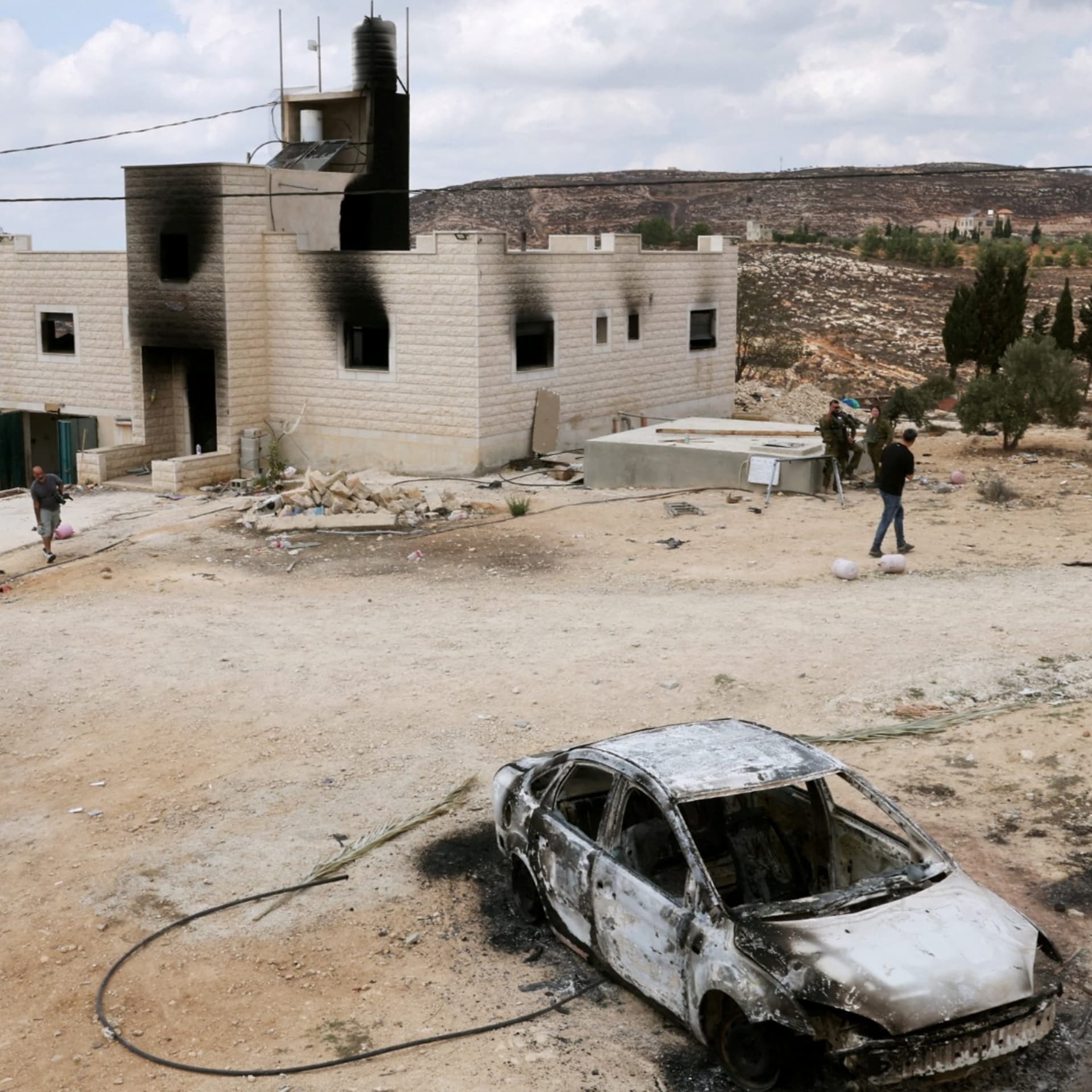
9:21This was the hail of bullets that killed Wissam and Shafiq Mansour, recorded on CCTV. Their friend was shot in the hand but escaped in the chaos, breaking his ankle as he fled. He agreed to speak to us but fears for his safety. His words are spoken by a producer. To this day, I don't believe what's happened. When the regime fell, we all came back to Syria. But there is no security. My dearest friends are dead. There are many extremist and hardline groups. I don't know where Syria is going. Many in the valley are now feeling vulnerable. Before the regime fell, they backed Assad, as many Christians did.
10:12and he backed them. Wissam was part of a local pro-Assad militia. Some here say that's why he was targeted. The two bodies have been brought through the streets to the church. There is a deep sense in this village of loss and grief. They're asking if their community will be targeted again and what the future is for them. in the new Syria. Less than an hour's drive away, we found another community in fear, Alawites, the sect of Bashar al-Assad. In the old days, that could bring benefits. Now, it's a curse. Alawites are the main targets for revenge killings. I'm in a family home in the city of Homs and there's a very large framed photograph.
11:13This girl was 14 years old and she was killed recently. I'm with her mum. Could I ask you to tell me what happened?
11:26We were on the balcony at around 11 at night with some neighbours. Suddenly a motorbike passed by and there was a lot of shooting. She tried to run into the house but couldn't make it. She'd been shot in the chest and died in my arms. Do you feel that you were targeted because your family are Alawite? Yes. Have you had any follow-up from the police or security services? Nothing. They never came back with any results. I'm standing in front of a supermarket and pinned to the front. There's a death notice for Shaban Ezzedin. This was his shop where he was shot dead. His brother Adnan says Shaban never harmed anyone.
12:19But being an Alawite in the new Syria can be a death sentence. They have been chanting sectarian slogans since the revolution began in 2011. They used to shout, Alawites to the coffins, Christians to Beirut. What's happening right now is the seed of forced immigration. It's just the beginning. I lost my brother, others lost their loved ones. If we are all going to get killed, it's better we flee. Adnan Azadeen ending that report by Orla Guerin. A court in Paris has granted the former French president, Nicolas Sarkozy, early release from jail just weeks after he started a five-year sentence. Mr Sarkozy was found guilty of conspiring to obtain election campaign funds from the late Libyan dictator Muammar Gaddafi.
13:13The former president insisted he was innocent and complained about conditions in the La Sainte prison in Paris. I got more from our Paris correspondent, Hugh Schofield. It's a twist, but it's a totally predictable twist and one that no one is surprised by. His lawyers, at the end of last week, lodged a plea before a judge who decides on these matters. That plea was that he should be released straight away because he has an appeal now scheduled for early next year. And it has surprised absolutely no one that this judge has ruled that, yes, he should be released. And to be quite clear, I mean, this is no special treatment for him or anything like that.
13:53This is perfectly in accordance with all sorts of procedure. But when we reported his jailing three weeks ago, we were all saying that he probably won't stay there very long because there will be this bid put in very quickly by his lawyers to get him out again. And that's what's happened. He was found guilty of criminal conspiracy to obtain election campaign funds from the late Libyan dictator, Mameh Gaddafi. What is the argument of Mr Sarkozy's lawyers with regards to his appeal? Well, he has argued from the start that he's innocent. His lawyers made out that they were very angry after the conviction because the judges in the first trial that ended three or four weeks ago ruled that he was to be acquitted on the main charges, that is, of having illegally financed his campaign, of having conducted illegal funding.
14:44but they found him guilty on what seemed to be at the time the lesser charge of criminal association. And the accusation was that he'd let his subordinates go and try unsuccessfully, as it turned out, to raise money from Colonel Gaddafi. Now, his contention would be, and his lawyer's contention would be, that that is ridiculous. The main charge was one of illegally financing his campaign. It never happened. Not a cent was proved to have arrived in his campaign's accounts. and he would say they didn't prove that he knew of what his subordinates were allegedly doing trying to raise money from Colonel Gaddafi's associates.
15:20So, you know, it's a very complicated case, but they feel that they've got a strong defence which they'll be putting at the appeal next year. And he will be out of jail until that appeal and possibly after. What's the time frame for him? Nothing surprising about this. He's 70 years old. French prisons are overcrowded. They do what they can to get people out of jail and that's what's happening. And then he'll be at home, presumably, on some kind of restricted movement and certainly not allowed to associate with any of his co-convicted people in the trial. And then, yes, the appeal trial will take place in the spring of next year.
15:53Hugh Schofield. Still to come in this podcast, we go to the Netherlands, where the electricity grid can't cope with green energy. Grid congestion is like a traffic jam on the power grid. So it's caused by either too much power demand in a certain area or too much power supply, so too much power being put on the grid.
16:24If journalism is the first draft of history, what happens if that draft is flawed? In 1999, four Russian apartment buildings were bombed, hundreds killed. But even now, we still don't know for sure who did it. It's a mystery that sparked chilling theories. I'm Helena Merriman, and in a new BBC series, I'm talking to the reporters who first covered this story. What did they miss the first time? The History Bureau, Putin and the apartment bombs. Listen on BBC.com or wherever you get your podcasts.
17:02The annual UN climate change talks, COP30, are starting in Brazil, with the host nation suggesting that the world's most developed countries are losing enthusiasm for the fight against climate change. Diplomats at the talks in Belém are trying to hammer out the finer details to plans to move away from fossil fuels, help poorer countries deal with the effects of global warming and protect rainforests. The UK's special envoy for climate, Rachel Kite, is among them. Sarah Montague asked her if the people were right to have a lack of faith in the COP process. There shouldn't be a lack of faith. There should be some righteous indignation that political leaders are not driving change as fast as they need to.
17:51But this is the first day. So President Lula called world leaders together last week and some came and some very important things were sort of signaled at that point. But now the world is arriving for the negotiations. And I think what's difficult for the public to grasp is that, well, first of all, we reached an agreement 10 years ago in Paris. And then for the last 10 years, we've sort of been negotiating how to do that and adding bits and pieces to the agreement. And now we've got to implement everything that we said we were going to do. You know, it's difficult to have like one big banner headline, because we're now into the, you know, messy, deeply political business of and how are we going to transform the energy sector?
18:33And how are we transforming our agricultural sector? And how are we investing to make sure that the storms don't cause extraordinary damage every year? And that's tough to report on. Okay, but is it too slow? Well, to be as effective as it needs to be? Yeah, we're not on track. So that's actually the conversation. Okay, so how do we go faster? Okay, can we speed up the way that we're getting methane emissions out of the economy? Can we speed up the way that we're changing the nitrogen cycle and fertilizers to be able to feed people but with less emissions? These are complex conversations and that's what's going on here.
19:07Does it matter that the US is pulling out? matters for Americans because they're going to start seeing energy price inflation, etc., because of the slowdown of their transition away from dirty energy. And the rest of the world is electrifying quicker than ever. It matters globally because we need everybody in this conversation because we only have one planet, as everybody says. But 195 countries who've signed Paris minus one is not zero, it's 194 and everybody else is getting on with it. Indeed. But it's not just the likes of President Trump. We've had others like you take someone like Bill Gates, who's arguing that climate change isn't going to wipe out humanity.
19:50Past efforts to get to zero carbon emissions have made progress. But he argues too much money is going into wasteful things. And actually, the money should be spent on disease and poverty. Those are the problems. Well, I think we have to be intelligent enough to hold two ideas in our minds at the same time. So, you know, there's no amount of investment in health systems in Jamaica that would have prevented Melissa from barreling through and causing, at last estimates, more than$10 billion of damage. So we have to reduce emissions. We have to build resilience. Resilience includes investing in health care systems and protecting people.
20:30And we have to be able to do both. It's not an either or. Do you think, though, that argument, which one hears increasingly, that net zero, that the focus on net zero, it's sucked up too much energy and that there should be a dilution? Well, I think there's a deliberate attempt to sort of weaponise net zero. But let's break down what net zero means. Net zero means, are you going to have access to clean, reliable, affordable energy? Because that's going to come, it is coming from battery storage and storage and renewable energy. And that gives us energy security as well. are you going to be able to invest in flood defences?
21:06Are you going to have access to clean air? Are you going to be able to have schools that can operate in the summer because we now have extreme heat at times of the year that we never had? That's what people want. That's what this is about. The moniker of net zero, which was negotiated, is something that has been weaponised politically. But what people want and what people need are still the same things. And that's what We're trying to work out how to deliver affordably here. Well, as the COP30 climate change conference begins in Brazil, a story now from the Netherlands about problems caused by the transition to green energy.
21:41The Netherlands has thousands of homes and businesses waiting to connect to its electricity grid and thousands more waiting to inject power back into the system via solar panels and other power generation methods. The reason? The grid cannot cope with the green energy transition. The BBC's John Lawrenson reports from Rotterdam. When we all use electricity at the same time, our power grid gets overloaded, explains this TV public service announcement. This can cause malfunctions, so use as little electricity as possible between four and nine. Flip the switch. 4 and 9, then we're going to go against the storm.
22:22Transport, heating, cooking, the host of rechargeable devices we now use, the Netherlands is electrifying extremely fast. It has the highest number of electric vehicle charging points per capita in Europe, for example. As for electricity production, the Netherlands has replaced gas from its large North Sea reserves with wind and solar, leading the way in Europe for the number of solar panels per person. More than one-third of Dutch homes have solar panels fitted. But the grid can't cope. Kiesian Rameau is the CEO of the Dutch energy producer and supplier Eneco, 70 % of whose electricity is now solar and wind.
23:01Grid congestion is like a traffic jam on the power grid, so it's caused by either too much power demand in a certain area or too much power supply, so too much power being put on the grid, more than the grid and the transformers can handle. The grid, he says, was designed when electricity was generated by a small number of big, mainly gas-fired power plants. Then we used to have a grid with very big power lines close to those power plants and increasingly smaller power lines as you got more towards the households. And nowadays we're switching to renewable power and that means that there's a lot of power also being injected into the grid in the outskirts of the grid where there's only relatively small power lines.
23:51Here we're in the virtual power plant of Eneco. At his company's head office in Rotterdam, Kiesjen Ramos shows me a very large control panel. It's their virtual power plant that uses AI to help balance the grid. The Dutch have been skilful in managing challenges to the grid so far, largely avoiding blackouts. When production is too high, they turn wind turbines away from the wind and turn off solar panels. They also offer special contracts which give customers a lower price in exchange for being able to stop or lower electricity supply when demand is too high. But for people and companies who want to scale up their use of electricity with a new or larger grid connection, that increasingly is just not possible.
24:36Eugene Buyings is in charge of grid congestion with Tenet, the company that runs the national electricity grid. We have about 8 ,000 companies who want to feed in electricity and produce with either solar panels or wind farms. And we've got about 12 ,000 organisations, so factories and the bakery and the larger industries, who want to take off and consume electricity off the grid. and for both categories the grid is congested. For some of the members of the Dutch Chemical Association for example whose president is Ninka Homan. Grid congestion is putting the future of the Dutch chemical industry at risk and in other countries it will be easier to invest and well the problem with chemical industry is they're all value chains and chemical processes are mostly combined processes And if you lose a part of that, then it can have a chain reaction.
25:34Grid company Tenet says it'll need$230 billion of investment in the grid to make it fit for purpose by 2040. That report by John Lawrenson. And you can hear more by searching for Business Daily, wherever you get your BBC podcasts. Back in December 2024, the former South Korean president, Yoon Suk-yeol, declared emergency martial law, citing threats from what he called North Korean communist forces and anti-state elements. It was seen as a serious constitutional breach and the decree only lasted a few hours before the National Assembly rejected it. He's been in and out of detention since then and now he's facing new charges related to that time.
26:19Our reporter Jake Kwon told me more from Seoul. The latest is that Mr. Yoon is now accused of aiding the enemy state by weakening or hurting South Korean military. So back in October last year, a couple of months before the martial law that you mentioned, North Korea accused South Korea of flying a drone and dropping propaganda leaflets over their capital city, Pyongyang. And many of us in Seoul were confused because one, South Korea neither confirmed or denied it. And second, it was very unusual for South Korea to drop the leaflets all the way up in Pyongyang and for what goal, it wasn't very clear.
26:50Now we're hearing from the South Korean authorities that it was in fact the President Yoon himself who ordered it. And it becomes even more difficult to believe the more we learn about it because the accusation is that Mr. Yoon wanted the North Korean to strike back, at which point there could be a limited war between the two Koreas, which would have been used as a pretext to declare the martial law and he would have eliminated his political opponents by imprisoning or worse, possibly. Now, Mr. Yoon is denying any of these accusations, including the insurrection charges for which he is standing trial.
Read the full transcript
27:23And he has maintained that he declared martial law only to bring the public's attention to his lame duck status and any wrongdoing by his opposition. It does seem extraordinary. He denies all these charges that would indicate a sort of desperate attempt to stay in power at all costs. How has that left South Korea as a society? Has it left it pretty divided still, or are things coming back to normal? Well, South Korea has a new president now, and he has been making it very clear that South Korea is back. I mean, he just hosted the APEC summit where a lot of the world leaders were in Korea, including President Trump, and his message has been consistent.
27:58South Korea is back from the chaos, its shops are open, and it's ready to engage the world. Not only the countries invited to the summit, but the one country that was missing, North Korea. He extended the olive branch saying, let's let bygones be bygones. We can forget the old president and his hostility towards the North and that his inauguration is a chance at a fresh start. However, North Korea had sworn off any contact with Seoul before, and we will have to see whether North Korean leader Kim Jong-un reaches out. That was Jake Kwon. A cyber criminal who spent almost 10 years on the FBI's most wanted list has been speaking to the BBC in an exclusive interview from prison.
28:37Vyacheslav Penchakov, known as Tank, was the leader of two separate hacking gangs accused of stealing hundreds of millions of dollars from people around the world. The BBC's cyber correspondent, Joe Tidy, spent six hours with him in prison in Colorado for a new podcast from the World Service called Cyber Hack Evil Corp. Here's a clip of the interview with Tank where he talks about starting out as a hacker. His words here are spoken by a producer. We set up fake websites selling fake goods. Then used stolen credit card details to buy those products from ourselves. The credit card companies would pay out like it was a real sale.
29:16It was a popular trick. Did you ever feel guilty? We didn't think about consequences. We wanted freedom, independence from our families. What were you buying? Beer, good clothes, expensive shoes. And I would show off the money at school. What teenager doesn't like to brag a bit? I was changing cars like changing clothes. How many did you have? At one point, I had six. All expensive German ones. Well, Joe Tidy told me more about his investigation. So he started off doing this sort of scamming as a teenager. And I found that part of it really interesting because I've obviously covered lots of attacks by teenagers around the world and particularly kind of English speaking.
29:56But there is that kind of mirror image really of his start in cybercrime coming from cheating on computer games like Counter-Strike and FIFA, moving into more serious hacking campaigns. And then eventually he went into this gang called Jabba Zeus, which he led in the late 2000s. And that's where they were stealing money directly from people's bank accounts, medium and small businesses going into their accounts and just siphoning off thousands. And obviously that money adds up. And then eventually he moved into far more serious, what we call big game hunting, where they go after multinational corporations with things like ransomware.
30:32Of course, ransomware is the most pernicious and problematic form of cyber attack of our lifetimes. The likes of Marks & Spencers in the UK, the co-op Jaguar Land Rover, we think, being hit by ransomware. So it's a really insightful interview that he gave us. And it's obviously still a process of the authorities trying to play catch-up with the hackers who are finding more and more fiendish ways of getting round security. What is the situation now? Are the authorities pretty much on the heels of the hackers? No, I wouldn't say so. I mean, if you look at this year, we have had some absolutely enormous cyber attacks on companies in the UK and around the world.
31:10We've seen a wave of new teenage cyber criminals, English speaking, coming up and using that ransomware technique to get into corporations, encrypt the data, steal lots of data and then hold them to ransom, usually for millions or tens of millions of pounds or dollars in Bitcoin. And I think what you get when you speak to someone like Tank and Penshakov is you kind of understand the mindset, really, because he was a man who caused a huge amount of damage and disruption and heartache for all those people, all those companies that we spoke to. And there was no real remorse there. According to him and a lot of the Russian-speaking cybercrime underworld, this is all rich Western companies.
31:51There's insurance. There's no real victims. The way they talk about it, there's no remorse there at all. and I think that is the problem we face around the world. Joe Tidy. And that is all from us for now, but there will be a new edition of the Global News Podcast later on. If you want to comment on this podcast or the topics covered in it, you can send us an email. The address is globalpodcast at bbc.co.uk. You can also find us on X at BBC World Service. Use the hashtag Global News Pod. This edition was mixed by Charlotta Hadroy-Todzimska. The editor is Karen Martin. I'm Nick Miles. And until next time, goodbye.
32:55I'm Helena Merriman, and in a new BBC series, I'm talking to the reporters who first covered this story. What did they miss the first time? The History Bureau, Putin and the apartment bombs. Listen on bbc.com or wherever you get your podcasts.
From the publisher
The BBC says it will respond in due course to a threat of legal action over a documentary which misrepresented a speech made by President Trump. The BBC chairman apologised for an "error of judgement" over an edit of comments Mr Trump made to his supporters who stormed the Capitol building in January 2021. Also: the Syrian president, Ahmed al-Sharaa, is in the US to hold talks with President Trump. The BBC has been speaking to minority groups in Syria who say he's failing to protect them. A court in Paris has granted the former French president, Nicolas Sarkozy, early release from jail, just weeks after he started a five-year sentence. The Cop30 summit opens in Brazil, as the host insists the summit must lead to implementation of critical climate change measures. The former South Korean president, Yoon Suk Yeol,is facing new charges, related to his decision to declare emergency martial law in December, 2024. And: A cyber-criminal who spent almost 10 years on the FBI's most wanted list has been speaking to the BBC, in an exclusive interview from prison.
The Global News Podcast brings you the breaking news you need to hear, as it happens. Listen for the latest headlines and current affairs from around the world. Politics, economics, climate, business, technology, health – we cover it all with expert analysis and insight. Get the news that matters, delivered twice a day on weekdays and daily at weekends, plus special bonus episodes reacting to urgent breaking stories. Follow or subscribe now and never miss a moment. Get in touch: globalpodcast@bbc.co.uk