
In short
A BBC Global News Podcast covering multiple stories: (1) Dwayne “Keefe D” Davis convicted of masterminding Tupac Shakur’s 1996 Las Vegas murder; (2) Nepal flood rescues of workers trapped in tunnels; (3) US debate over surveillance tech (Flock automated license plate readers) and privacy/ICE fears; (4) Lionel Messi retires from international football; (5) disinformation-linked mass migration to Ceuta; (6) cancellation of a John Galliano Met exhibition after racist/antisemitic remarks; (7) Chile’s healing suits for injured Humboldt penguins.
Guest backgrounds
Regan Morris (BBC correspondent, Las Vegas); Azdeh Mishiri (BBC correspondent, Nepal); Ellie House (BBC reporter, Texas); Guillaume Balaguet (sports journalist/biographer); Marcela Mora I. R. Ojo (football writer); Mimi Swaby (BBC global affairs reporter); Sebastian Usher (BBC global affairs reporter); Vanessa Friedman (NYT fashion editor); James Kumrasamy (interviewer); Stephanie Prentice (reporter); Tomas Pino-Damque (Humboldt Conservation Centre); Estefania Guidotti (Kimba textile marketing).
Key claims
Davis was convicted as “shot caller” despite no new DNA/forensic evidence, based on his own recorded statements; Nepal floods killed 900+ with 600+ trapped in tunnels; Flock cameras can be shared by local police, raising deportation concerns; Messi retires from international play after emotional post; Ceuta influx driven by social-media disinformation; Met canceled Galliano show amid backlash; Chilean copper/zinc healing suits speed penguin wound recovery.
Notable examples
Prosecutors played Davis’s documentary/memoir/police interview recordings; Nepal’s Chilime hydropower tunnel rescue attempts; Texas activists cutting Flock cameras; Messi’s 125 goals in 207 caps; Galliano’s “I love Hitler” and “Jews should be gassed” remarks; penguins treated after fishing-net injuries.
Written by AI. May contain mistakes. Listen to the episode to check what was said.
Chapters
Tap a time to open that second in VOTupac Murder Case Conviction
0:58 to 1:29
Discussion of the conviction of Dwayne Kiefer D. Davis in the Tupac murder case.
“But honestly, it's even worse when you buy business software.”
Tupac Murder Case Conviction
1:43 to 2:45
Discussion of the conviction of Dwayne Kiefer D. Davis in the Tupac murder case.
“I'm Charlotte Gallagher and in the early hours of the 1st of September, these are our main stories.”
Details of the Conviction
2:45 to 6:35
Exploration of the details surrounding the conviction and courtroom verdict.
“Davis wasn't accused of actually pulling the trigger, but the 63-year-old has been convicted of orchestrating the shooting.”
Nepal Flood Rescue Efforts
6:35 to 8:12
Coverage of ongoing rescue operations following devastating floods in Nepal.
“Rescue workers try to find the hydroelectric power workers still missing after devastating floods six days ago.”
Surveillance Concerns in the US
8:12 to 14:00
Discussion on the rise of surveillance technology and public concerns about privacy.
“but they said there was a lot of mud and it was impossible to go in any further.”
Federal Immigration Enforcement and Local Police
14:00 to 14:49
Explore the complexities of federal immigration enforcement's access to local police networks.
“So federal immigration enforcement can't access the FLOC network through you directly, but it can access the FLOC network should a local police officer choose to share their access.”
Introduction to the Podcast
14:49 to 15:19
Get an overview of the key topics covered in this episode of the Global News Podcast.
“These patients generally arrive with wounds in very poor condition.”
Lionel Messi's Retirement from International Football
15:19 to 18:41
Delve into the implications of Messi's retirement and his lasting impact on football.
“One of the greatest sports stars of all time, Lionel Messi, has announced his retirement from international football.”
Mass Migration Incident in Ceuta
18:41 to 19:43
Discuss the recent surge of migrants at Ceuta and the misinformation that fueled it.
“So Inter Miami fans will have a privilege of seeing the last few games of this international God status player.”
Political Reactions to the Migration Crisis
19:43 to 23:24
Examine the political responses and international accusations surrounding the migrant influx.
“Most swam around a border fence and at least 100 people died during the mass crossing.”
Show all 14 chapters
Cancellation of John Galliano Exhibition
23:24 to 26:52
Analyze the decision to cancel an exhibition honoring designer John Galliano amid controversy.
“A major exhibition celebrating British fashion designer John Galliano at New York's Metropolitan Museum of Art has been cancelled.”
Innovations in Penguin Conservation
26:52 to 28:00
Learn about new methods for treating injured penguins in South America.
“As you say, he was involved in these discussions to try and prove that his repentance for what he did in the past was genuine.”
Innovative Healing Suits for Penguins
28:00 to 30:22
Learn about a new healing suit designed for injured penguins in Chile.
“And while they face many of the same threats as other penguin species, they have specific challenges that make it hard for conservationists to help them.”
Innovative Healing Suits for Penguins
31:28 to 32:49
Learn about a new healing suit designed for injured penguins in Chile.
“Decisions made in Washington can affect your portfolio every day, but what policy changes should investors be watching?”
Transcript
Automatic transcript. May contain errors.0:00This BBC podcast is supported by ads outside the UK.
0:30We do the things we do. And how to make better choices to help avoid costly mistakes. Each episode covers the latest research in behavioral science and dives into themes like the power of self-control, shaping your mindset for success, navigating new beginnings, and why starting over can feel so hard. Listen to choiceology at schwab.com slash podcast or wherever you listen. Imagine buying a toy for your kid, but it doesn't come with batteries. That sucks. But honestly, it's even worse when you buy business software. You end up with fragmented, disconnected systems that cost a fortune and don't talk to each other.
1:12Odoo completely changes that. Odoo comes fully complete, with all your business apps perfectly integrated and working together seamlessly. It's everything your business needs in one place, saving you time, headaches and serious money. Stop paying for missing pieces. Go to odoo.com. That's O-D-O-O dot com to learn more. This is the Global News Podcast from the BBC World Service. I'm Charlotte Gallagher and in the early hours of the 1st of September, these are our main stories. A former gang leader has been found guilty of killing the rapper Tupac Shakur. Five days after floods in Nepal, rescue teams race to find hundreds trapped underground.
2:00And Argentina's Lionel Messi hangs up his boots and retires from international football. Also in this podcast, a new invention in penguin conservation and... By making this his choice, by saying I don't want to harm the museum, to harm the city, to add to the tension, he was protecting both his own reputation and that of the museum. Fashion designer John Galliano pulls out of a major New York exhibition over past racist remarks.
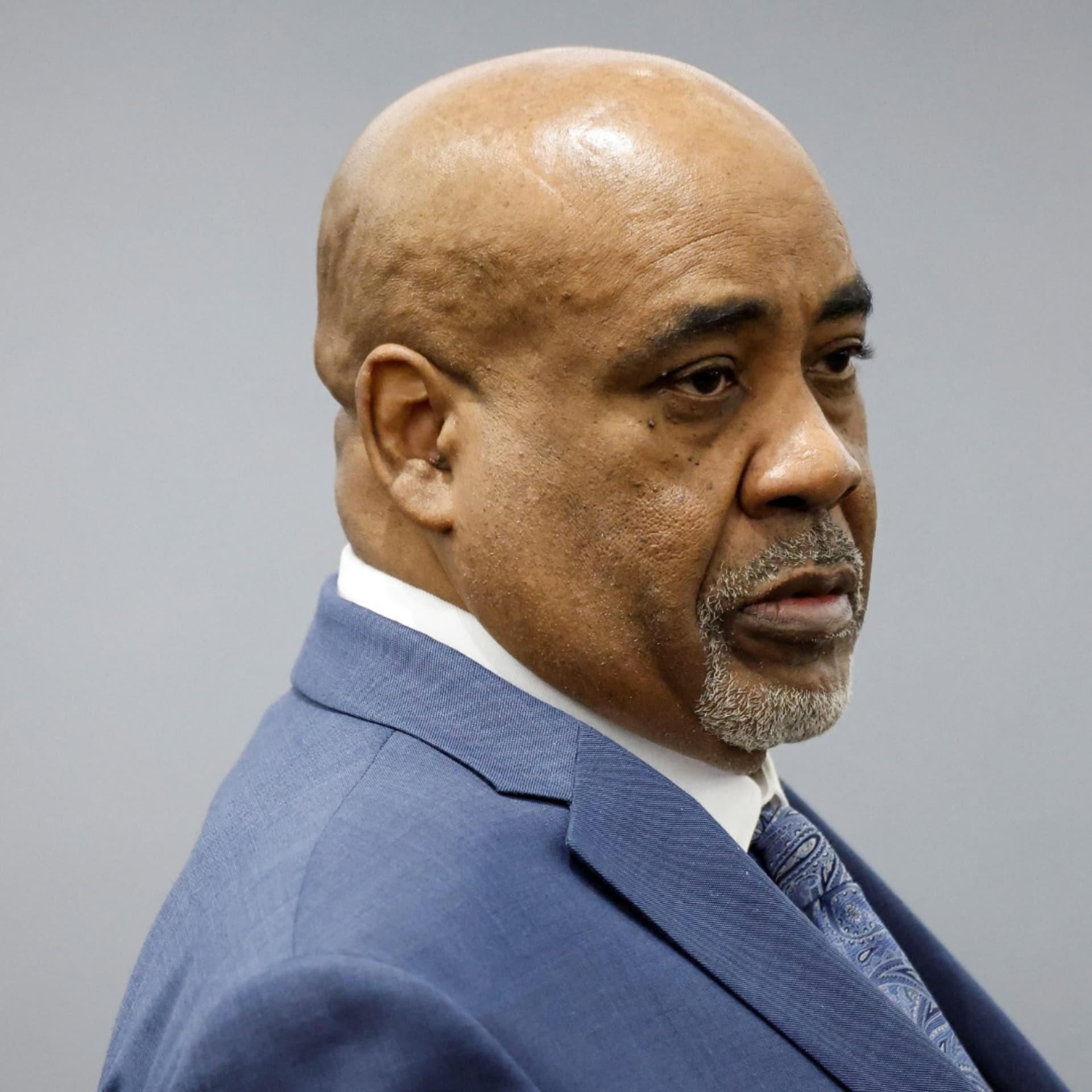
2:40A former gang member has been found guilty of masterminding the murder of the rapper Tupac Shakur in Las Vegas in 1996. Dwayne Kiefer D. Davis wasn't accused of actually pulling the trigger, but the 63-year-old has been convicted of orchestrating the shooting. Prosecutors argued it was a revenge attack after Tupac and his entourage attacked and injured Mr. Davis's nephew, Orlando Anderson. Mr. Anderson was killed in an unrelated shooting two years later. Here's the moment the verdict was read out in the Las Vegas courtroom. Count one, murder with use of a deadly weapon. Guilty of first degree murder with use of a deadly weapon dated this 31st date of August 2026.
3:25Ladies and gentlemen of the jury, is this your verdict as read, so say you won, so say you all? Yes. This is the first conviction in a case that has gripped the hip-hop world for three decades. Our correspondent in Las Vegas, Regan Morris, told me that Dwayne Kiefer D. Davis was found guilty not just of supplying the gun, but also calling the shots. Prosecutors repeatedly called him the shot caller. And traditionally on On a cold case after 30 years, you know, and this one especially being so high profile, you would think there would be some DNA or some new evidence, physical evidence. And that, you know, that's what Keefe D.'s lawyers kept going on about.
4:06There is no new evidence. There is no physical evidence tying him there. There's not even photos and video of him in Las Vegas on that day. And yet they, you know, it was his own words, Keefe D.'s own words in his documentary, in a memoir, in an interview he gave with police, where he is essentially bragging about his role in the killing of Tupac Shakur that, you know, was the evidence that worked against him, his own worst enemy. They played recordings of him talking about the night that Tupac was killed, and he claims that it was his nephew, Orlando, who did pull the trigger, that he passed the gun to the back seat, Orlando was in the right place, and that they were really shocked Tupac.
4:48They said, It wasn't an East Coast, West Coast rap battle. It was a Compton gang's rivalry. And because Tupac and his entourage had beaten up Orlando early in the night, and then Orlando, according to Kifi's interviews, fired that final shot that killed Tupac Shakur. And given, as you said, there's no forensic evidence, this happened 30 years ago, is it surprising that the jury were only deliberating for three hours? It was less than three hours. It was a little surprising. I mean, it really could have gone either way. I mean, you know, his lawyer was quite convincing that there was no new evidence.
5:27Why are we doing this? Why are we here? But I think they took Kifi D at his word. Prosecutors said this man says this, he's done this, he's bragged about this. And it's time. We need some justice for Tupac Shakur. And the jury clearly identified with that and believed that. And it didn't take them long at all. Are we expecting to hear from Tupac Chacol's family, given it's been 30 years of them been waiting for justice in this case? There was a lot of his family members in court today. His brother, Moprim, who we have spoken to just before the trial started, we met him and his wife in Los Angeles.
6:01And they have been there throughout the trial in Las Vegas. And, you know, for him, he said it's important to his family if Kifidi did call the shot that they did want to see him convicted. But he said there's no such thing as justice for them because Tupac Shakur is gone and he wants his brother back. Reagan Morris in Las Vegas. Next to Nepal.
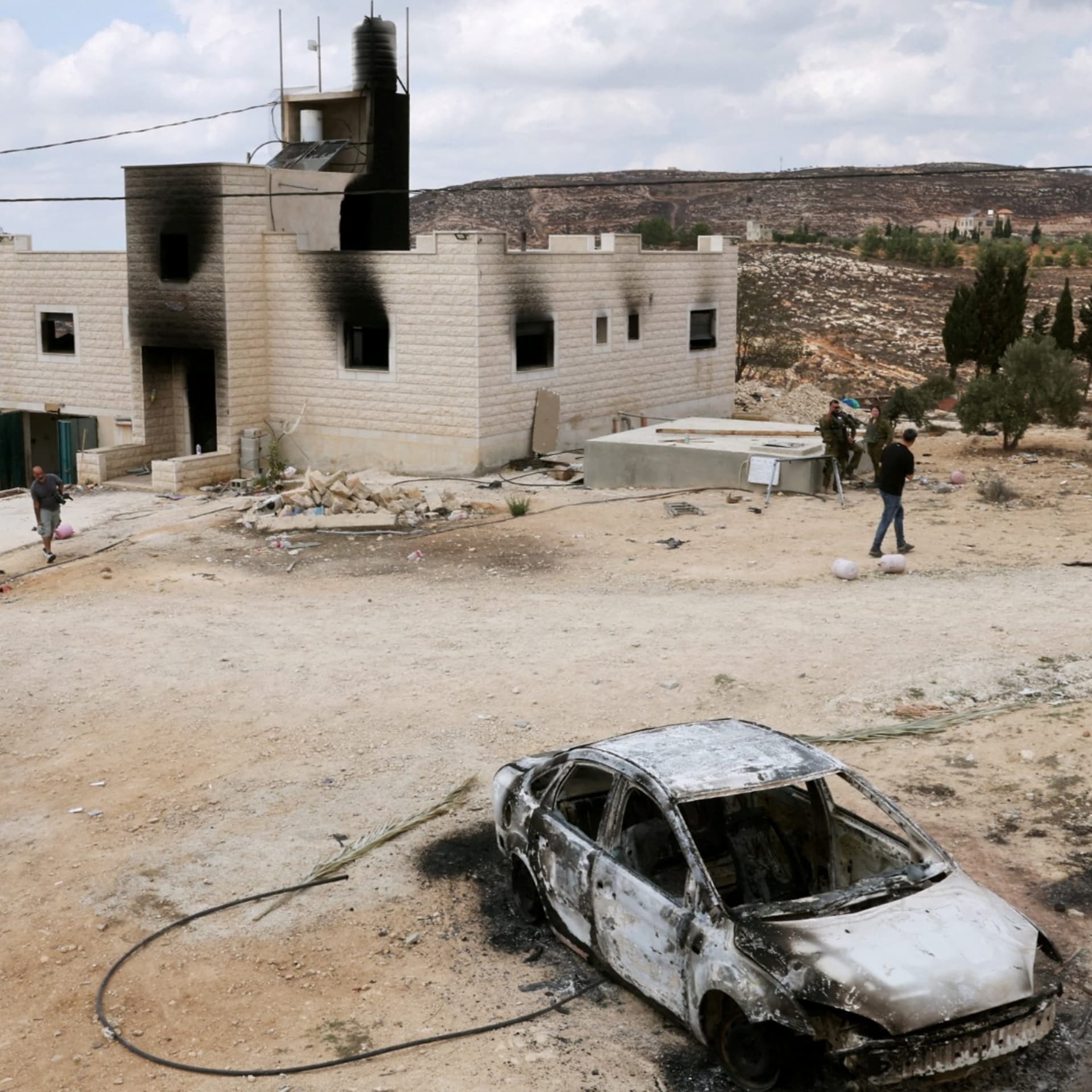
6:34Crouched down low and under the torchlight from their helmets, Rescue workers try to find the hydroelectric power workers still missing after devastating floods six days ago. More than 600 are believed to be still inside the vast network of mud-filled tunnels. Their families are losing hope. The authorities say some progress has been made using heavy machinery and controlled explosions to get deeper underground. More than 900 people in Nepal are known to have died and nearly 4 ,000 are still missing. Our correspondent Azdeh Mishiri reports from one of the worst affected areas. As we look over the Bote Kusi River, flowing from Tibet to Nepal, we see barren land.
7:18What was once a thriving trading town, Siabro Bisi has but a few buildings left. Roads tend to mud and debris, reveal the scale of last week's flood and the devastation left behind. Nearby is the Chilime hydropower tunnel. Multiple helicopters arrive, with emergency teams attempting yet another rescue. For days they have tried to travel deeper into the mouth of the tunnel to save the six workers trapped inside. Kancha Babu Tamang has been coming to watch over the rescue every few days, hoping his colleagues are saved.
7:53The tunnel was the only safe place to go. When there is a flood or an earthquake, it's usually the only safe place to stay. But this time it wasn't safe. The rescuers told me it's full of debris inside. They had come two days ago as well. They were able to get 90 metres inside, but they said there was a lot of mud and it was impossible to go in any further. Hundreds of people are trapped in tunnels across the most affected areas. At the Tsui Shuli 3A site, emergency teams are pumping in air, have carried out a controlled blast and used excavators to clear the mud and debris. Here in the district of Rasua, everyone we meet tells us they have lost loved ones.
8:37Some of them were themselves caught in the floods. Still thousands have been rescued, including hundreds of foreign nationals. But for those waiting on news of the missing, every day that passes is more difficult than the last. One of those helping with the rescue efforts is helicopter pilot Aman Budothoki. He happened to be flying over the worst affected area when the flood hit. He told my colleague Rebecca Kesby about that moment. The scale on which everything was unfolding, we never thought it would be this huge. It looked like a landslide in the beginning as there was debris all over and there was a thick cloud of dust all over the surface of the river.
9:19And then the next five to ten seconds we started seeing the whole scenario unfold. And how did you feel at that moment to be safely in the air and seeing this unfold on the ground? As soon as we realised what was happening, what was unfolding there, I looked at the other captain and I said, what do we do now? That was our first reaction. What do we do now? We were flying alone in that area. There were no other aircrafts inside that valley. And then we started making circles, orbits around the villages that we knew. And as we were having this conversation, me and the other captain, like I asked him, the people down there, they might be hearing sound of our helicopter and they might have this little hope of us landing right now and then rescuing them.
10:07But unfortunately, with that dust cloud, as I said, it was impossible for us to go and land at that exact moment. So the only thing we could do was contact Kathmandu and then inform all the security personals so that rescue can be initiated as soon as possible. It felt like a tsunami was unfolding. It felt like that firsthand. Now to the US, known as the land of the free, but where a growing number of people are concerned about the number of cameras watching them. Authorities have quietly built high-tech, increasingly interconnected surveillance networks, anything from drones to facial recognition.
10:45Licence plate readers made by one company, Flock, have spread quickly across the country. And now some critics have taken matters into their own hands. Our reporter Ellie House has been to Houston, Texas, to meet them. Oh, wow. That is completely severed in half. There's a black pole and the bottom half is still stuck in the ground. And then about a third of the way up, it's just been sliced in two. This is a license plate reader camera made by the company Flock, one of around 100 ,000 in the United States. And people here have been cutting them down. This is what we're fighting against. This is the automated license plate reader, but this one is powered by AI.
11:27If you have any identifying bumper stickers or dents or anything, That's something else that police officers are able to search in the FLOC database. Privacy advocates Christopher Rivera and Jasmine Jerem Gonzalez campaign against surveillance tech, not through vandalism, but with actions like this, a FLOC walk, where we stroll through a neighbourhood on the lookout for cameras. It's really building out this mass surveillance network that's from coast to coast. The real problem is the mass database that all of these kind of pictures go into. Flock's selling point is its centralised network, where its customers can search for footage not only from the cameras they own, but from other Flock cameras that have opted into sharing.
12:08So an officer here in Texas could see cars hundreds of miles away in Illinois. There's a growing number of stories of misuse. One police chief looked up his ex-girlfriend and her daughter's plates roughly 600 times. Every profession, there's bad actors. We have to hold those people accountable. But don't throw out a tool that is valuable, that can help recover a missing child. Ray Schultz is the chief of Memorial Village's police department, a small, affluent jurisdiction within the Houston area. Prior to us getting our ALPRs, we would recover an average of three stolen cars a year. Since 2019, our average number of stolen cars recovered has been 45.
12:52Every year. One of the biggest concerns of some anti-flot campaigners is the potential for surveillance tech to be used in deportation operations. Chief Schultz says he doesn't share his data with federal immigration enforcement agencies like ICE. But there have been instances of other police putting immigration or ICE as a reason when they run a license plate search. I would say fear is overwhelming right now. Maria is a US citizen, but her partner is undocumented, which means the government would class him as an illegal immigrant. She asked us not to use her real name. My main concern is that they're going to start pulling over people or tracking them through Flock and passing over that information to ICE, detaining them and deporting them.
13:38I do limit my outings and outings with my partner. It's heartbreaking. It's sad because we deserve to leave our homes and feel safe. I spoke to FLOC's founder and CEO, Garrett Langley, in his Atlanta office. Last year, we helped solve about a million crimes, over 10 ,000 missing people. Can ICE or federal immigration enforcement access FLOC cameras? Not through us. So federal immigration enforcement can't access the FLOC network through you directly, but it can access the FLOC network should a local police officer choose to share their access. So that would be near impossible. They would be either breaking our contract with them, or they would probably be breaking a policy internally.
14:25But it does happen. We've seen on audit logs, ICE being put as the reason. Yeah. And some police departments have standing agreements with federal law enforcement, whether it's a task force or another reason to work together. And in that case, as long as it's lawful investigation, we're not going to tell cities what laws they should or should not enforce. Ellie House reporting from Texas. Still to come in this podcast.
14:59These patients generally arrive with wounds in very poor condition. And then the challenge is how we treat those wounds in an animal that's wild. How a collaboration in Chile led to wound healing suits for penguins.
15:19This is the Global News Podcast. One of the greatest sports stars of all time, Lionel Messi, has announced his retirement from international football. The 39-year-old captained Argentina in this summer's World Cup, losing in the final to Spain. He is, though, expected to keep playing club football for Inter Miami. Guillaume Balaguet is a sports journalist and Messi's biographer. He's glad the journey's not completely over. What we've seen in Messi, we've never seen before, that consistency right at the top for 16, 17 years, scoring almost a goal, a final, being the best goal scorer, our second best goal scorer in the World Cup, and still the best goal scorer in the MLS for the last two years.
16:01So you are talking about greatness still playing. Messi captained Argentina to win the 2022 World Cup. Across his international career, he's scored 125 goals in 207 appearances. Announcing his retirement, Messi said, I've given it my all, I have nothing left to give, and besides, there are some really great young players coming through behind me who deserve their chance. Football writer Marcela Moro I. R. Ojo says he's done so much for Argentinian football. Lifting the cup in 22, obviously the pinnacle of his career, the moment of true joy and happiness for millions of Argentinians and millions of football fans around the world who really wanted him to win a World Cup because it felt like the thing was missing.
16:49But reaching the final again in 26 and having reached the final in 2014 is an incredible accomplishment as well. It's not a loser thing to do. You know, you play the entire World Cup this time around with 39 years of age. That's an incredible thing to do. I asked our global affairs reporter Mimi Swaby, why is he retiring now? He said in his very emotional Instagram post detailing him stepping back from international football, detailing his retirement. At the end of it, he said he'd written this post two days after the World Cup. but after losing his father, Jorge Messi, earlier this month, he said it hasn't felt a better time.
17:30This is the right decision for now. I think many people have pointed towards his age. He is 39 in professional football terms. That is pretty old. And he has done less and less running in matches. That was something that was quite evident in the World Cup. It's quite funny. Interestingly, he did one of the fewest mileages throughout the World Cup, less so than he usually does. And many people are saying, you know, So his understanding of the game, his ability to sit there and read the game and only move at key moments is part of why he's such a good player. So saying, oh, perhaps he's going to move into a managerial role.
18:02That is something he would thrive in because of his understanding of the game. Others have been great to say, actually, communication skills aren't perhaps one of his stronger points. He's known for being quite quiet, quite reserved. His focus purely being football. So maybe that managerial role, which people are already toying with the idea of, perhaps in a more lighthearted way than a serious one. isn't something he'd go into. But football has been his life for so many years now. He's had such a long career. And time is something that an athlete races against. And there only is one winner at the end of it.
18:33And that is something he pointed to again in his post. But for the time being, he's still going to be playing with Inter Miami. That's right, isn't it? He is. So Inter Miami fans will have a privilege of seeing the last few games of this international God status player. For how many seasons more, he hasn't touched on that yet, it's still very early days, but many people are pointing to the idea that he's stepped back from international football now and perhaps his step back fully from football will be in the near future. he has though been such like a focal point of the Argentinian team so all their strategy so to speak has been kind of centered around him in many ways so the Argentinian national team much like the Inter Miami team when if they do have to find a new player to fill his role will have to also kind of reinvent their strategy when it comes to football so he's not just this icon figure this key player but he's key part of the focal part of the national Argentinian team and also places Kiron into Miami.
19:33But like I said, he's still on the pitch with them for now anyway. Mimi Swaby. It's been a month since tens of thousands of migrants entered the Spanish territory of Suta from Morocco. Most swam around a border fence and at least 100 people died during the mass crossing. The majority of migrants returned to Morocco within hours of their arrival, but several thousand still remain in Suta. The influx is thought to have started because of disinformation spread on social media, falsely claiming that a Spanish Supreme Court had ruled that migrants arriving by sea could not be deported. Instagram posts suggested Spain's border with Morocco was opening up and TikTok videos showed people where to swim.
20:18It's unclear who was behind these accounts, as several of them were deleted soon after the crossings. But the Spanish Prime Minister, Pedro Sánchez, has accused Israel and Russia of spreading disinformation related to the mass influx of migrants. What we know is that after July 30 and 31, there was an expansion of rumours and disinformation by social networks associated with Russia and Israel, and a far-right international that uses migration not only to attack Spain, but also Europe and divide it. Israel's Foreign Minister, Gideon Tsar, accused Mr Sanchez of lying shamelessly. So why is Pedro Sanchez blaming Israel?
21:05Our global affairs reporter, Sebastian Usher, has been speaking to Alex Fritson. But as far as Israel is concerned, I think there are a lot of conspiracy theories which immediately emerged. One, that Morocco and Israel have got closer and closer after Morocco signed up to the Abraham Accords a few years ago. And that therefore Morocco is willing and able to do what Israel says. That, though, presupposes that Morocco was involved in this. and Pedro Sanchez made it clear that he doesn't believe that Morocco was involved in encouraging people to go. So maybe one could push that aside. And the second thing is that Pedro Sanchez has been very much at the forefront of criticism and condemnation of Israel and its conduct in Gaza and the occupied West Bank.
21:49So therefore the Israeli government would have been motivated to try to make him look bad. So those were conspiracy theories but immediately emerged. I don't think there's been much though to back them up. This presumably, though, plays very well with a lot of people on the right, also people who are not friends of Israel. Well, it does, but it also played very well with the Israeli government. I mean, the thing that Pedro Sanchez is probably particularly picking up on here is that members of the Israeli government really made a point of saying that this showed up the double standards of Spain.
22:20When Pedro Sanchez was condemning Israel, essentially, but it's a colonialist, look at Ceuta and there's a colony that still belongs to Spain. Now, on the far right, of course, you had an awful lot of people online who were using what happened in Ceuta as a way of reviving the fear of mass migration coming across from Africa. What is the status of those people from North Africa who did make it into Ceuta on that day? Almost all of them have returned and they did within a few hours, but there's a few thousand. And these are young people. So they are living in a place that is quite hostile to them.
23:04They're living on the streets. How long that lasts, whether they'll be returned or whether they will hold out, still believing that Spain will take them and therefore they'll try and last there as long as they can. That's a big question. But there certainly is great concern over their condition. Spastien Asher. A major exhibition celebrating British fashion designer John Galliano at New York's Metropolitan Museum of Art has been cancelled. It's after a backlash over his previous anti-Semitic and anti-Asian comments. The designer was convicted of making public insults in Paris 15 years ago. He left the fashion industry but did return three years later.
23:47In a statement, John Galliano, who was involved in the decision to cancel the show, said he remained deeply sorry for the hurt he caused. The Speaker of New York City Council, Junie Menon, was among those who'd strongly objected to the exhibition. I think this was absolutely the right decision. It was imperative that the Met reverse course on this because a decision to honour John Galliano in the first place was deeply troubling and I think a very grave mistake. What were your main objections? As the first Jewish speaker of the New York City Council and as a daughter of a Holocaust survivor, the fact that the Metropolitan Museum would choose to honor someone who has a history of anti -Semitic and anti-Asian slurs was concerning.
24:39Obviously, the remarks that John Galliano made included remarks such as, I love Hitler, the Jews should be gassed. In addition to the anti-Asian slurs he made, the Met is a cultural icon. The New York City Council gives over$3 million to the Met for educational programs. And what kind of message would we be sending to young people in New York City to say that John Galliano should be celebrated and lauded? It's one thing to have his work, some of his dresses exhibited. It is an entirely different thing to do what the Met was proposing to do, which was to honour him in the celebratory gala where he would be exalted and lauded.
25:22I always believe in repentance and second chances, but that's not what was at stake here. What was at stake here is making a decision to honour him, to celebrate him. Vanessa Friedman is the fashion editor of the New York Times. She's been speaking to James Kumrasamy. I mean, the museum clearly expected this to be a little controversial. And, you know, one of the things they did before the announcement, actually, before the Times had discovered this was happening and we wrote a story about it, and then they did an announcement right after that. One of the things they did was bring in a lot of rabbis, leaders of the Jewish community in New York, the president of the Anti-Defamation League, to meet with John and Anna and Andrew and Max Holley, the director of the museum, to judge for themselves whether or not he was sincere in his atonement.
26:13In a funny way, that actually, I think, created sort of a distraction from what ultimately became the kind of crux of this story, which is the museum's decision to have the show. Just explain, if you will. They were being asked to judge John's repentance, when in fact the real issue was the decision by the Metropolitan Museum of Art, you know, one of the most important cultural institutions in New York, to have a show that celebrated this designer at a time when anti-Semitism is on the rise in the city, in the country and in the world. Yeah, and I mean, clearly he's been involved in this decision.
26:56As you say, he was involved in these discussions to try and prove that his repentance for what he did in the past was genuine. Where does this leave him, do you think, in the fashion world? I honestly think this was probably the best decision for everybody involved. He had gotten a second chance in fashion. He had used it well. He was being lauded by the industry. Just in January of this year, he sat front row at the Dior Couture show, which was his first time back in that brand since he had been fired. You know, the Arno family, which owns LVMH, which owns Dior, were hugging him, you know, supporters were surrounding him.
Read the full transcript
27:37So fashion had clearly re-embraced him. And I think by making this his choice, by saying, I don't want to harm the museum, to harm the city, to add to the tension, you know, he was protecting both his own reputation and that of the museum. That was Vanessa Friedman. And finally, Humboldt and Magellanic penguins are found on the coast of South America. And while they face many of the same threats as other penguin species, they have specific challenges that make it hard for conservationists to help them. Now, one team in Chile has designed a healing suit to fit them and tested it out on a group that had been injured by fishing nets.
28:18Stephanie Prentice reports.
28:25Penguins are capable of making a lot of noise when it comes to feeding time in zoos, but when it comes to getting help, they're a lot harder to work out, and handling them can cause them a lot of stress. Tomas Pino-Damque is part of a team at Humboldt Conservation Centre in Coquimbo. These patients generally arrive with wounds in very poor condition, where most of the time we have to perform some type of surgical management. We have to do cleaning. We have to do sutures. And then the challenge is how we treat those wounds in an animal that's wild, that has the ability of great range of neck movement.
29:03It can remove stitches. It can disturb the wound. So we have that big problem. The researchers collaborated with a textile company to take a fabric that has copper and zinc in the core of its thread and to shape it to fit a medium-sized penguin. Estefania Guidotti helped make the suit. She's head of textile marketing at Kimba. The copper bodysuit contains Coptec technology. It allows bacteria, fungi and mites to be eliminated during recovery processes and also generates an angiogenic action thanks to the action of zinc. This technology is different to others. It allows tissues to recover faster.
29:45Angiogenic action means the body can create new blood vessels from existing ones. so the suit is doing a few things at once, promoting healing, keeping wounds clean and speeding up recovery. These penguins will now recover and be released back into the wild, and the suits can be used again. It's being seen as a leap forward for conservationists in Chile, which is home to more than 80 % of the world's remaining humble penguins, a population that's more than halved since the 1990s. Stephanie Prentice. And that's all from us for now. If you want to get in touch, you can email us at globalpodcast at bbc.co.uk.
30:32You can also find us on X at BBC World Service. Use the hashtag Global News Pod. And don't forget our sister podcast, The Global Story. This edition of the Global News Podcast was mixed by Derek Clark and the producer was Alfie Havishan. The editor is Karen Martin. I'm Charlotte Gallagher. Until next time, goodbye.
31:16No matter your goals, investing style, life stage or experience, Schwab has everything you need, all in one place, so you can invest your way. Visit schwab.com to learn more. Decisions made in Washington can affect your portfolio every day, but what policy changes should investors be watching? Listen to Washington Wise, an original podcast for investors from Charles Schwab, to hear the stories making news in Washington right now. Host Mike Townsend, Charles Schwab's Managing Director for Legislative and Regulatory Affairs, takes a non-partisan look at the stories that matter most to investors, including policy initiatives for retirement savings, taxes and trade, inflation concerns, the Federal Reserve, and how regulatory developments can affect companies, sectors, and even the entire market.
32:06Mike and his guests offer their perspective on how policy changes could affect what you do with your portfolio. Download the latest episode and follow at schwab.com slash Washington Wise or wherever you listen.
32:42matter what you're into, a website makes it real. Use offer code the difference for 30 % off select plans. Terms and conditions apply.
From the publisher
A former gang boss is facing potentially life in prison after being found guilty of murdering Tupac Shakur in 1996. Duane 'Keffe D' Davis masterminded the plan and supplied the gun that killed the rapper. Also, the families of more than 600 workers believed to be trapped in a vast network of mud-filled tunnels along Nepal's Trishuli River are clinging to hope their loved ones can be found alive. In the US, there is pushback about how quickly car licence plate readers made by one company, Flock, are spreading across the country. Argentina great Lionel Messi has announced his retirement from international football. The Spanish Prime Minister, Pedro Sanchez, has accused Israel and Russia of spreading disinformation related to the mass influx of migrants. John Galliano has cancelled an upcoming major exhibition celebrating his work as a fashion designer after it prompted criticism due to his previous conviction for making antisemitic and anti-Asian remarks. A team of conservationists in Chile has designed a healing "suit" to help penguins recover from surgery.
The Global News Podcast brings you the breaking news you need to hear, as it happens. Listen for the latest headlines and current affairs from around the world. Politics, economics, climate, business, technology, health – we cover it all with expert analysis and insight. Get the news that matters, delivered twice a day on weekdays and daily at weekends, plus special bonus episodes reacting to urgent breaking stories. Follow or subscribe now and never miss a moment. Get in touch: globalpodcast@bbc.co.uk Photo: Duane Davis looks on during his murder trial, related to the 1996 killing of rapper Tupac Shakur Credit: Reuters