
In short
The episode covers several global news items. In France, a court upheld Marine Le Pen’s embezzlement conviction but reduced her public-office ban to 45 months (30 suspended), meaning the ineligibility period ends after time already served. Her remaining one-year jail term is to be served at home with an electronic tag; Le Pen says she won’t run if she can’t campaign normally. Jordan Bardella, her loyal “heir apparent,” is positioned as a plan B. In NATO talks in Turkey, Trump criticizes allies for not meeting defense-spending targets and warns of consequences; Ukraine’s Zelensky presses for more air-defense missiles and U.S. licensing to build Patriot/PAC-3 components. In Syria, Macron’s visit to Damascus coincided with explosions near his hotel; no claim of responsibility, but devices were reportedly planted in a container and a vehicle. Ukraine’s intelligence says Anastasia Berezovska, linked to a Monaco oligarch assassination attempt, was found dead near Kyiv; two suspects were arrested. In the UK, Nigel Farage resigns as MP and will contest a by-election amid allegations of undeclared gifts/services. Italy research: fertility “tipping point” around age 49 even with donor eggs; pregnancy odds drop and miscarriage rises.
Guests
none named; reporting by BBC correspondents (Hugh Schofield, Paul Adams, Sarah Rainsford, Regini Vajanathan, Yigwe Chega, Rob Watson, Michelle Roberts, Jiagol, Jiagol) and hosts Asma Khalid and Valerie Sanderson.
Written by AI. May contain mistakes. Listen to the episode to check what was said.
Chapters
Tap a time to open that second in VOUkraine's Appeal for Support
1:29 to 1:54
An overview of Ukraine's ongoing struggles and international appeals amidst conflict.
“Damascus is hit by explosions while President Macron is there.”
Marine Le Pen's Court Case
1:54 to 5:10
Discussion of Marine Le Pen's legal situation and implications for her presidential run.
“the leader of the far-right National Rally Party, to run for president, but has ordered her to wear an electronic tag.”
NATO Summit in Turkey
5:10 to 6:46
Analysis of the NATO summit, defense spending, and Ukraine's future in NATO.
“This year's NATO summit is underway in Turkey, with a very warm welcome from Turkey's President Recep Tayyip Erdogan.”
Zelensky's Demands at NATO
6:46 to 8:44
Overview of President Zelensky's requests at the NATO summit for military aid.
“He, of course, is calling for more funding for missile defences to intercept Russia's ballistic attacks.”
Macron's Visit to Syria
8:44 to 14:00
Details about President Macron's significant visit to Syria amid security challenges.
“Yeah, I mean, you talk about all the asks he has, many of them involve the US, he's due to be meeting President Trump, their meetings haven't always gone the way he's wanted them to, have they?”
Economic Support for Syria
14:00 to 14:26
Discussing the economic support provided by Macron for Syria's reconstruction.
“So I think one of the goals here of this visit is to give economic support for the country.”
The American Dream: Is It Still Possible?
14:26 to 15:04
Exploring the attainability of the American dream in contemporary society.
“We thought it was going to be so easy to get pregnant as an older woman and it's really not.”
Assassination Investigation in Ukraine
15:13 to 16:40
Details about the assassination investigation of a Ukrainian oligarch's suspected assassin.
“Ukraine's intelligence service says the body of a woman wanted over the attempted assassination in Monaco a week ago of the Ukrainian oligarch Vyadim Yamaliev has been found.”
Farage Resigns: A Political Statement
16:40 to 18:56
Nigel Farage resigns and announces his candidacy for a by-election.
“And there is no information, no suggestion, no hint even of any kind of motive.”
The Impact of Reform UK
18:56 to 21:36
Examining the influence of Reform UK on British politics and its rise in opinion polls.
“Our political correspondent Rob Watson spoke to Regini Vajanathan.”
Show all 13 chapters
Fertility Research Insights
21:36 to 23:55
New research discussing fertility challenges faced by older women.
“We need to throw everything up in the air, remake it.”
BBC Persian Service: Reporting from Iran
23:55 to 26:14
Insights on the challenges faced by the BBC Persian service in reporting from Iran.
“On the last edition of this podcast, we heard a report from the BBC's chief international correspondent, Lise Doucette.”
Introduction to The Global Story Podcast
28:17 to 28:55
Overview of the Global Story podcast and its focus on American influence.
“The United States is about to mark its 250th anniversary.”
Transcript
Automatic transcript. May contain errors.0:00This BBC podcast is supported by ads outside the UK.
0:30It feels good to ride with help. It feels good to GEICO. Emergency roadside service is optional coverage. The United States is about to mark its 250th anniversary. And so on the Global Story podcast from the BBC, we're telling surprising tales of American influence on the world stage and in ordinary people's lives all across the globe. We have this ability to export our story and a lot of people have bought it. I feel like the American dream is alive, but not well. From the BBC, it's the United States at 2.50. Listen on bbc.com or wherever you get your podcasts.
1:28Leaders gather in Turkey as Ukraine appeals for more support. Damascus is hit by explosions while President Macron is there. Also in this podcast, Kyiv's intelligence service say they've found the body of a woman wanted over the attempted assassination in Monaco a week ago of a Ukrainian oligarch.
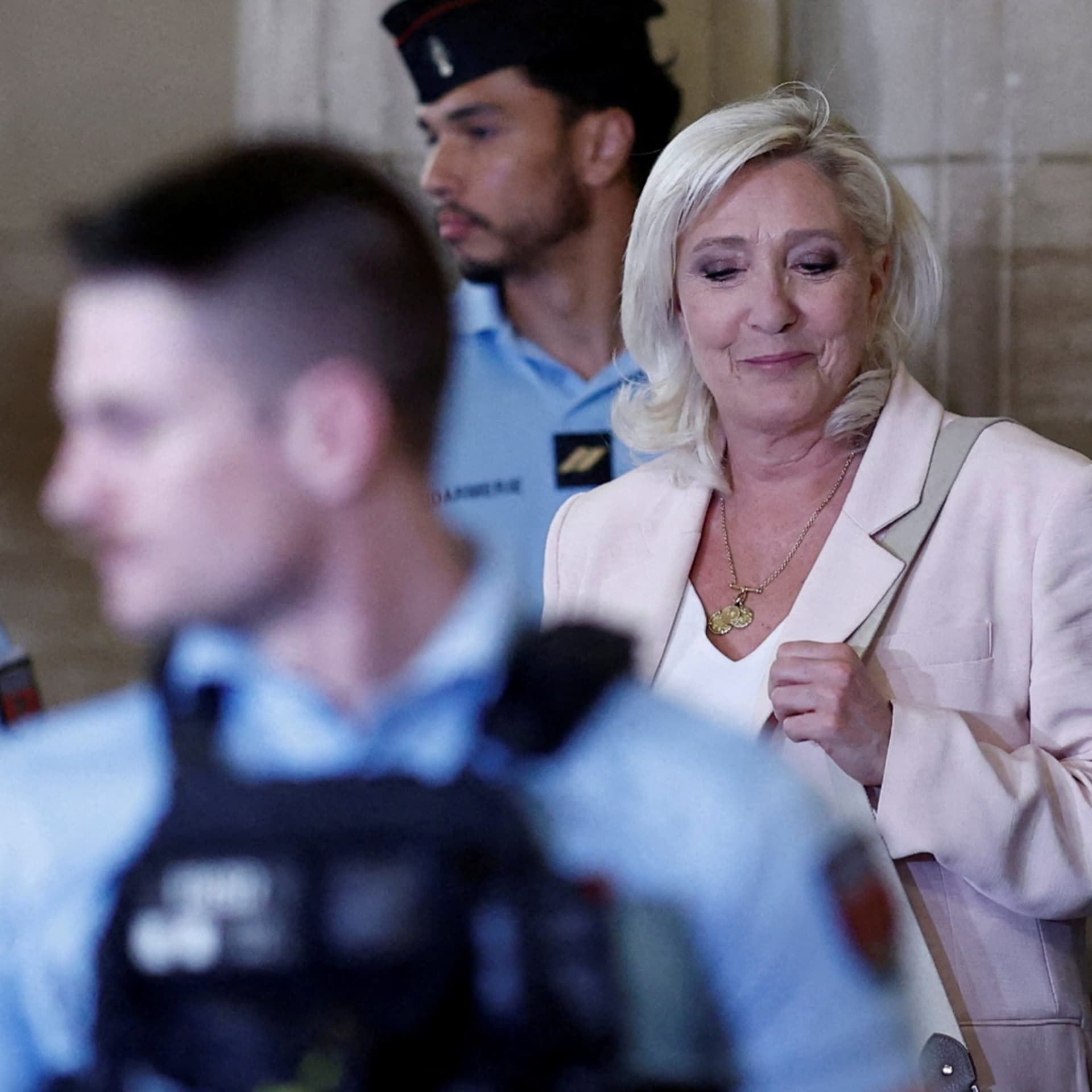
1:53We start in France where a court has cleared the way for Marine Le Pen, the leader of the far-right National Rally Party, to run for president, but has ordered her to wear an electronic tag. The judge upheld her conviction on embezzlement charges, sentencing her to three years of imprisonment, with two suspended and one with the tag. Our correspondent Hugh Schofield, who was at the court in Paris, told us more. She juridically, in the law, can run. The case seems to be that the judges have given a more lenient sentence than a year ago, And in this sentence, the key question of how long she will be barred from public office has been reduced from five years in the original sentence, which would have ruled her out completely from running next year, to 45 months with 30 suspended.
2:44Take away 30 from 45, you get 15. 15 has already elapsed since that judgment at the end of March last year. so her period of ineligibility is over. So juridically, she can now run. Yippee, if you're one of her camp. But, and there is a big but here, another part of the sentence is the jail term part. No one is talking of going to jail. Technically, it's called a jail term. It would be served at the home with an electronic tag. This part of her sentence is one year. It's been confirmed by this court. It would be served at home with an electronic tag. technically means she could still run but she herself personally has said I will not run if I am prevented from acting like a normal candidate going about my business going to rallies going to meetings without having to ask permission from the police if I can leave my home so theoretically yes she can run but under her own terms her own conditions that she set herself she can't run so we need to wait to understand what the reaction of the party will be she and Jordan Bardella I'm sure will be meeting quite soon to thrash things out my hunch is that still she will step down because this this this this this electronic tag thing is is a condition she set but who knows it may be that because the this court the appeal court has made a more lenient sentence has moved in her direction they may decide to rethink it and wonder whether it might not after all be possible for her to run next year.
4:17We'll know in the coming hours. And reminders about Jordan Bardella, he is the heir apparent, isn't he? Yes, and I mean he is the person waiting in the wings who is ready to step into Marine Le Pen's shoes if this episode turns out in a way which prevents her from running. If they decide that yes, it's impossible for Marine Le Pen to go ahead with the campaign because she can't operate normally as a candidate with an electronic tag, then yes, there is his plan B, 30-year-old Jordan Bardella. They are very, very close. He's utterly loyal to her. They say they are a team that is unbreakable. All that will be tested, of course, in the months ahead of the campaign if he is the candidate.
5:01But right now they say it's not a problem if Marine Le Pen can't run because we have plan B, B as in Bardella. Hugh Schofield in Paris. This year's NATO summit is underway in Turkey, with a very warm welcome from Turkey's President Recep Tayyip Erdogan. President Trump had this to say. I was very disappointed with NATO. And frankly, if it weren't held in Turkey, where my friend happens to be a very strong leader, it's possible that I wouldn't have attended. We've invested trillions of dollars in NATO. And I say that's fine, but you would think that they'd be very willing to do something to help us and they really weren't.
5:44The issue of defence spending has long dominated his conversations with America's European allies. The president continues to warn of consequences if they don't ramp up military spending to 5 % of GDP by 2035. NATO Secretary General Mark Rutter has echoed those calls for defence investment to be increased. We are on the cusp of the transatlantic defense industrial revolution. I'm asking you to take a leap and show our people that we are ready and capable to protect them anywhere at any time. And show Russia and all those watching today that the transatlantic The defence industrial base is mobilising with purpose, not on anger, but for our collective security.
6:35The other big item on the agenda, as it has been at recent summits, is the future of Ukraine, with President Trump expected to meet Ukraine's President Volodymyr Zelensky on Wednesday. He, of course, is calling for more funding for missile defences to intercept Russia's ballistic attacks. While this war continues, please help us get more air defense missiles. This is our top priority right now. We are capable of doing everything else ourselves. But when it comes to air defense, we need our partners' determination. Please let more determination and more decisions for air defense be one of the key outcomes of this NATO summit in Ankara.
7:23Our diplomatic correspondent Paul Adams gave the BBC's Regine Vajinathan his analysis of what President Zelensky had to say. Look, this has been his refrain now for the best part of two or three years. He says, and there's quite a lot of evidence for this, that in all sorts of other ways, Ukraine is on the front foot. It is gaining real advantages on the battlefield. has become a drone war superpower, to which other countries are looking for all sorts of opportunities, but that ballistic missiles are, in his words, Russia's last major advantage. In some of the recent attacks on Kiev and other Ukrainian cities, the Ukrainians have really struggled to shoot ballistic missiles down.
8:08And so they need the Patriot, the PAC-3 missile, as it's known, that is only basically made in the United States. One thing that he would like to see, President Zelensky would like to see, would be for the United States finally to grant licenses so that Ukraine can build those missiles in Ukraine, or at the very least elsewhere in Europe. Now, there are all sorts of issues to do with the transfer of technology, export licenses and so forth. It is a discussion that has been going on for quite some time. I'm sure President Zelensky would love to have some more positive news on that at this summit.
8:44There's no immediate prospect of that. Yeah, I mean, you talk about all the asks he has, many of them involve the US, he's due to be meeting President Trump, their meetings haven't always gone the way he's wanted them to, have they? No, they haven't. And you know, that's a relationship which remains, you know, unpredictable and difficult. I think President Zelensky still finds it really hard to understand why Donald Trump seems to favour his relationship with Vladimir Putin. He would like to see more overt signs of pressure. Donald Trump has said that, you know, he's having conversations with Putin.
9:19The Russian leader is anxious to bring this war to an end, that an end is, in President Trump's words, getting much closer than people recognise. But again, we're not really seeing much evidence of that. And Russia's recent ballistic missile attacks on Ukraine suggest that very little has changed in terms of the Kremlin's thinking. Let's talk about the other main agenda point on the summit, as we mentioned there, and that is, of course, defence spending. We heard Mark Rutter there speaking about an industrial revolution in NATO. What does he mean by that? And what is the challenge there? I think this is all bound up with the question of America's commitment to NATO and the realisation among America's European NATO partners that it is time for the Europeans themselves to do a lot more of the heavy lifting.
10:04And so we are seeing, whether it's in terms of the way NATO is organised and command structures and so forth, a greater emphasis on Europe's role and, crucially, a move towards some kind of greater military industrial effort. And just briefly, Paul, President Trump warning of consequences. If European allies don't cough up, what could they be? Well, perhaps an increasing drift away from the commitment to NATO. I mean, it is clear that Donald Trump and the US administration feel that Europe needs to take more responsibility for the security of the European continent. That is something that I think that most European members recognise now.
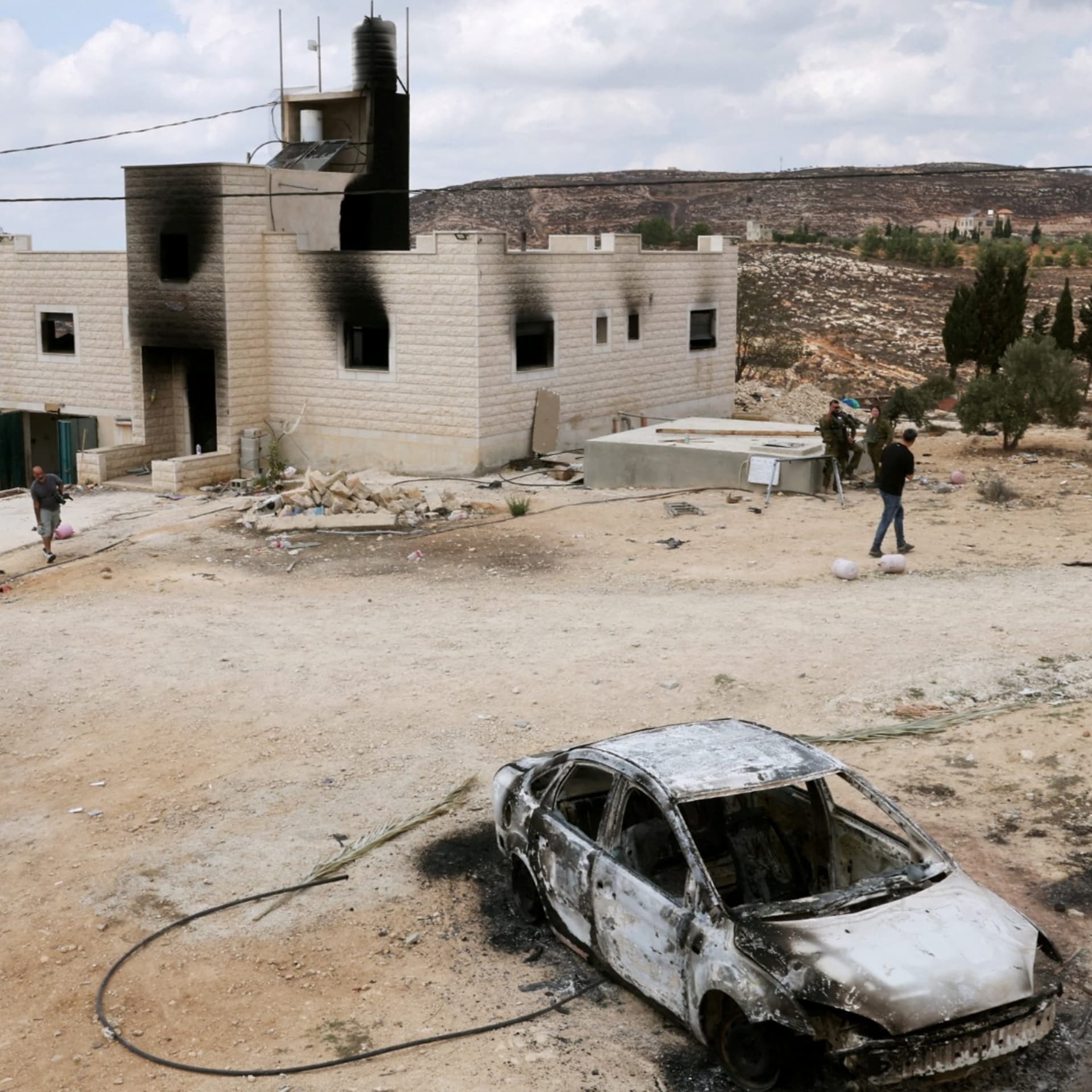
10:46But there is a fear that the drift of Washington away from NATO could become too fast for the Europeans to keep up with. Paul Adams. Before heading to that NATO summit, France's President Emmanuel Macron has been completing a high-profile visit to Syria, the first by an EU leader since the fall of the Assad regime. But videos coming out of the Syrian capital Damascus show it's been hit by explosions.
11:17The French president is safe and we're told that talks with his Syrian counterpart Ahmed al-Shara went ahead. Yigwe Chega is monitoring the situation from Beirut. So a security source in Damascus has told us that these were explosions caused by two devices. One had been planted inside a rubbish container and another inside a vehicle. And they were detonated, both of them, after President Macron had already left his hotel in central Damascus for this high-profile meeting with President Ahmed al-Shara at the presidential palace in Damascus. And indeed, shortly after those first reports emerged, Syrian state television reported that Mr.
12:01Macron had already been welcomed by Mr. Shara, and French officials are saying that President Macron did not hear any explosion as he was, you know, on his way to the presidential palace. But I think this underscores the major security challenges that the Syrian authorities face. The fact that two devices were detonated during a visit by a major Western leader near the hotel where he was staying in the heart of the capital is an indication of those challenges. Do we have any idea who might be behind this? Yeah, we haven't heard any claim of responsibility. Any group has said it was behind this attack.
12:45I've got to say that even though the situation in Syria has been relatively stable in terms of security, there have been these sporadic explosions, sporadic attacks, particularly by people and cells affiliated to the Islamic State group. And we've seen a rise in recent months of these attacks that have been happening, not only in Damascus, but also in other parts of the country. And just last week, there was a huge, deadly explosion in central Damascus, again, near the Justice Ministry, which, again, you know, gives us an indication of the challenges that the authorities are facing in Syria right now.
13:25You said this was a high profile visit, the first by an EU leader since the fall of the Assad regime. What were both countries expecting to get out of it? I think this is obviously a meeting designed to show Western support for this administration in Syria to symbolize Syria's return to the world stage after years and years of international isolation during the five decades of the Assad regime, particularly during the devastating civil war. So security issues, as I say, are obviously a key topic. And I think, you know, another key topic here is the economic situation in Syria. So I think one of the goals here of this visit is to give economic support for the country.
14:08A number of businessmen have joined Mr. Macron on this visit. And reconstruction of Syria is obviously a key priority after that devastating civil war. Hugo Baciga. Still to come in this podcast, research from Italy on the fertility tipping point for women. We thought it was going to be so easy to get pregnant as an older woman and it's really not.
14:41Is the American dream still possible? I'm Asma Khalid, one of the hosts of the Global Story podcast from the BBC. One of the most successful exports the United States has ever sold the world is the American dream, that tantalizing promise of a better, freer, richer life. But is it still attainable? I feel like the American dream is alive, but not well. For more, listen to the Global Story on BBC.com or wherever you get your podcasts.
15:12You're listening to the Global News Podcast. Ukraine's intelligence service says the body of a woman wanted over the attempted assassination in Monaco a week ago of the Ukrainian oligarch Vyadim Yamaliev has been found. Anastasia Barazovska, who was from Ukraine, was found near the capital, Kiev, with gunshots to the head. Our correspondent Sarah Rainsford is there. I should say from the outset that there's a lot of things we still don't know about this case. But what we do know is from a statement from the SBU, which is Ukraine's main intelligence service. And they have said that the body has been found, as you said, with gunshot wounds to the head.
15:52And it was found because when Anastasia Berozovska returns to Ukraine from Monaco, there was an investigation underway. Her contacts were followed and they showed that she was in contact with two men. One of them is an acting officer of Ukrainian military intelligence and another man is described as a former law enforcement officer. Now, these two men have now been arrested. One of them, the current member of the intelligence service here, has apparently confessed to killing Ms. Berezovska and he has implicated the second suspect as well. He has said, so the SBU statement stresses, that he was acting on his own initiative and that his superiors within Ukrainian military intelligence knew nothing about what he was up to.
16:42And there is no information, no suggestion, no hint even of any kind of motive. But of course, remember that Anastasia Birozowska was the main suspect in the attempted assassination of a Ukrainian multimillionaire, Vadim Yermalayev in Monaco just at the end of June. She is suspected of having left a rucksack full of explosives outside his residence in Monaco which detonated and then caused really catastrophic injuries to Mr Yermalayev's partner and injured him and his son as well. All of them survived but she was suspected of attempting that assassination. Well since we spoke to Sarah, the prosecutor's office has released a video of a basement in a house near Kiev where Anastasia Berezovska was held before her death.
17:27Here in Britain, Nigel Farage, the leader of the right-wing party Reform UK, has announced he's resigning as an MP, but will stand in the by-election that decision triggers in what he called a people versus establishment by-election. For months, Mr Farage, whose party is leading in the opinion polls, has been facing questions over donations he received in the run-up to his election to the UK Parliament in 2024. Over the weekend, this intensified, with the Sunday Times newspaper reporting he'd failed to declare benefits from a man who'd been convicted of fraud in the US. To be here at a news conference to which no members of the media were invited, Mr Farage insisted he'd done nothing wrong.
18:09I've thought about it hard and I've decided today, today I will resign as a Member of Parliament for Clacton-on-Sea, thereby forcing a by-election, which should happen, I hope, in short order. Now, I've decided that the people of Clacton should be the judges of my actions. This will be a people versus the establishment by-election. It's a chance to stick two fingers up to the entire establishment, to frankly tell them where to go. And that is why I will be putting my name forward to stand in this by-election. I will fight to win. I will fight to continue the political revolution that reform has started.
18:56Our political correspondent Rob Watson spoke to Regini Vajanathan. Well, it's hugely significant because reform is the party that is disrupting British politics, threatening the two main parties. And of course, it's led by Nigel Farage, who has led it for some time and who is an absolutely key player. Now, as you said, he's been facing all these allegations that he had these undeclared personal gifts, which he should have made public when he became an MP. And he was essentially facing two choices that maybe he could just walk away from British politics. Some people maybe thought that that was what he was going to do.
19:31Or, Rajini, drumroll, he could come out fighting and say this is all some massive stitch up by the establishment, the other parties, the media, against him. And he was going to come out swinging. And that is what he has done because essentially he's resigning, saying I've done nothing wrong. All of this stuff, it's a massive stitch up. I'm going to let the people of my constituency decide it's going to be the people versus the establishment in his constituency. which I know rather well it's on the east coast and it looks like I'll be going back there Regini. Yes on the sea isn't it? It is. Rob just tell us more about this investigation into allegations over his finances and of course what he says about all of that.
20:15So briefly it's two main things he received a gift of five million pounds which is over five million dollars from a sort of crypto billionaire in Thailand just before he became an MP. And he'd also received, if you like, services in kind from another one of his supporters for running things like social media, lending him an offices. And the way the rules work in Britain is that even if you receive payments before you became an MP and the year before you became an MP, you're supposed to declare it if it's got anything to do with politics or could be perceived that way. Nigel Farage said, look, you know, none of this stuff was about politics or reform.
20:52At the time, I wasn't a politician, so I didn't need to declare it. Let's talk more about, of course, the wider context to all of this Reform UK, an anti-immigration party here in the UK that, as you say, is fashioning itself as one of the main opposition parties now. Yes, absolutely. I mean, it is the most extraordinary force in British politics because it takes support away from both the Conservatives and Labour. It's entirely, in some ways, destabilised them. It leads in the opinion polls. It doubled its share of the vote at the 2024 election from about 15 % up to 30%. It's been struggling more recently, but undoubtedly it has set itself up as a plague on the system.
21:36We need to throw everything up in the air, remake it. And that, of course, has really rattled the two main parties. And they had been hoping that maybe Mr Farage was on the run, maybe the party has sort of peaked in its support. And certainly all this shenanigans about his finances has no doubt tarnished his appeal. But I mean, what's really interesting is that far from walking away from it all, he's going to stand and fight. Rob Watson. New research from Italy suggests women hit a fertility tipping point at 49. even if using younger donor eggs during the process of IVF, a fertility treatment in which eggs are fertilised with sperm outside the body and then implanted.
22:19The researchers from a fertility institute in Verona say the findings challenge the idea that donor eggs can fully reset the reproductive clock but should not put older couples off trying. Our health reporter Michelle Roberts has more. Even with young donor eggs, older women using IVF had a much lower chance of their fertility treatment working, with a marked drop-off at around age 49. Women in their mid to late 30s had a 54 % chance of getting pregnant with donor eggs. That fell to around 43 % for those age 49 or older, while miscarriage rates increased from 24 % to 38%. In the older women, the researchers also noticed age-related changes to the womb lining or endometrium, where a fertilised egg or embryo implants to grow.
23:10While the thickness was similar, the condition declined with age. Experts say this shouldn't put older couples off trying fertility treatment. Sharon Marshall went through six years of IVF attempts in her 40s before giving birth to her daughter Betsy. We thought it was going to be so easy to get pregnant as an older woman and it's really not. I think as an industry we sometimes need to talk about failure. We need to be honest about the fact that more cycles don't work than do and I think women deserve honesty. Research like this may help improve fertility success rates. Experts stress the health of the womb and ovaries differs from woman to woman.
23:59Michelle Roberts. On the last edition of this podcast, we heard a report from the BBC's chief international correspondent, Lise Doucette. She was in Tehran, where the funeral procession for Iran's late supreme leader was taking place. It prompted a listener, Jane, to get in touch with us. She rightly observed that every report from inside Iran is always preceded by the following caveat, that Lise is reporting there on the condition that none of her material is used on the BBC's Persian service and that the restrictions apply to all international media organisations operating in Iran. Jen wrote that this made me wonder what kind of reports do go out on the Persian service.
24:41It might be an interesting window on life in Iran during such a complicated time. Well, we have someone who can answer that. Jiagol is from the BBC's Persian service, and we put Jen's question to him. Well, I just want to thank Jen for the question. I think it's a very valid question. And thank you for the opportunity. Let us explain exactly what's happening. So the Iranian government is very strict on journalists. We don't have an office in Iran. We are not allowed to operate in Iran. But despite this, we have around 20 million viewers weekly. And if you just look at our Instagram, it has more than 23 million followers and so many more who are afraid even to follow us inside Iran because of the regime.
25:28Even some people, if they give us an interview, they could be prosecuted. The Iranian regime trying to control the narrative only allows international journalists go to the country when they think they can show the unity in the country. And in fact, in January this year, thousands of young protesters, men and women were killed. Simply, they went to the streets. Of course, they didn't allow any journalists to go there. And obviously, we as a BBC Persian, we have networks of trusted people inside Iran, we can rely on citizen journalists also. And obviously, we have a lot of pictures from the state television itself.
26:14But what we do normally, we bring experts, people who have a real knowledge, give an accurate picture of what is going on inside the country. You may be surprised, even we have heard some of Iranian officials in power, they don't trust their own state media, because it's all propaganda. But they tune into BBC to see exactly what is happening inside the country. I just want to give you an example. A few years ago in Istanbul, I saw Iran foreign minister. He recognized me by face. He said, oh, you are in BBC. Oh, I'm glad you are watching BBC. No, no, I don't watch BBC. How do you know me then? BBC Persian, I think, amongst all the languages in the BBC World Service, we are the busiest one for obvious reasons.
26:56Just look at the past two years. Just imagine the breaking news and the kind of load we have. So sometimes when something important like this happening, we increase our daily program. We have eight hours live program and obviously it's repeating itself. But when there is a breaking news, some important issues happening, so we increase our bulletins. For example, if normally we start 2.30 BST, British time, we start at 11.30. if there is something happening, if there is a, let's say, war, if there is a protest in Iran, if there is a negotiation with the US. So BBC Persian is extremely busy. I don't know if I should say, unfortunately, as a journalist, I think we're going to have a job for the next 5 ,000 years.
27:44And that was Jir Gol. And if you want to get in touch, you can, like Jen did, email us at globalpodcast at bbc.co.uk. And that's it from us for now. You can also find us on X at BBC World Service. Use the hashtag Global News Pod. And don't forget our sister podcast, The Global Story, which goes in-depth and beyond the headlines on one big story. This edition of The Global News Podcast was mixed by Volodymyr Muzetska. The producer was Charles Sanctuary. The editor is Karen Martin. I'm Valerie Sanderson. Until next time, bye-bye.
28:25The United States is about to mark its 250th anniversary. And so on the Global Story podcast from the BBC, we're telling surprising tales of American influence on the world stage and in ordinary people's lives all across the globe. We have this ability to export our story and a lot of people have bought it. I feel like the American dream is alive but not well. From the BBC, it's the United States at 2.50. Listen on bbc.com or wherever you get your podcasts.
From the publisher
French hard-right leader Marine Le Pen could now run for president next year after a court in Paris upheld her embezzlement conviction, but reduced the length of her ban on running for public office. Also: Ukraine's president has used a speech at the Nato summit in Turkey to urge allies to deliver the air defence systems Kyiv urgently needs. In Syria, explosions have been heard in central Damascus, reportedly near the hotel where French President Emmanuel Macron had been staying. The woman suspected of carrying out a parcel bombing in Monaco which injured a sanctioned Ukrainian multi-millionaire and his family has been found dead. In Britain, the leader of right-wing party Reform UK, Nigel Farage, says he will resign as an MP, triggering a by-election which he says he will stand in. New research from Italy suggests women hit a fertility tipping point at 49, even if using younger donor eggs during the process of IVF.
The Global News Podcast brings you the breaking news you need to hear, as it happens. Listen for the latest headlines and current affairs from around the world. Politics, economics, climate, business, technology, health – we cover it all with expert analysis and insight. Get the news that matters, delivered twice a day on weekdays and daily at weekends, plus special bonus episodes reacting to urgent breaking stories. Follow or subscribe now and never miss a moment. Get in touch: globalpodcast@bbc.co.uk Photo: French hard-right leader Marine Le Pen leaves a Paris court after her appeals trial. Credit: Reuters