In short
This BBC Global News Podcast episode covers multiple stories. In the occupied West Bank, funerals are held for two Palestinian teenagers, Khalil Abu Aliya (16) and Omar al-Nassan (19), killed during an incursion into their village, Almahair, amid a surge in settler violence; residents allege Israeli snipers and sheep-farming is used to extend settler control, while the IDF says it’s investigating. In the Falklands dispute, Argentina’s President Javier Milei threatens sanctions on firms exploring oil, arguing UK claims are illegitimate and hinting US support could shift. In Nepal, rescuers search for workers trapped in flooded hydropower tunnels after flash floods; hundreds are missing and deaths exceed 1,200. It also reports Indonesia’s wildfire haze worsening with El Niño, a US trial over Lindsay Clancy’s postpartum psychosis insanity defense, and a pig kidney xenotransplant breakthrough.
Guests
Lucy Williamson (Middle East correspondent), Will Grant (Latin America correspondent), Azadeh Mishiri (Nepal correspondent), James Menendez (interviewed on Indonesia fires), Ione Wells (US trial correspondent), Bernd DeBoosman (White House correspondent), Norn Angie (culture correspondent on Chicken Shop Date), Helena Burke (organ-transplant reporter), Dr. Leonardo Riella (xenotransplant researcher), Amelia de Moldenberg (Chicken Shop Date creator/host).
Written by AI. May contain mistakes. Listen to the episode to check what was said.
Chapters
Tap a time to open that second in VOFunerals for Palestinian Teenagers
2:18 to 5:36
Coverage of the funerals for two Palestinian teenagers killed in the West Bank.
“Also in this podcast, I really am going to appreciate what I've been given.”
Argentina vs UK: Falkland Islands Tensions
5:36 to 6:58
Discussion on the sovereignty dispute over the Falkland Islands.
“sovereignty dispute between the UK and Argentina.”
Nepal Flood Rescue Efforts
6:58 to 12:25
Reports on rescue operations for workers trapped in Nepal's hydro power plant tunnels.
“He basically argued that there could be no legitimate claim to self defence by the islanders, given the land itself, as he put it, had been taken illegally.”
Wildfires in Indonesia
12:25 to 14:05
Analysis of the severe wildfires in Indonesia exacerbated by El Niño.
“This year's El Niño weather system hasn't even arrived yet, but it's already having a severe impact on Indonesia, which is suffering from sweltering high temperatures and some regions have had no rain for months.”
Impact of Land Fires in Indonesia
14:05 to 16:40
Learn about the health impacts and responses to land fires in Indonesia.
“They found out that this corporation conduct a land clearing by a slice and burn, which is illegal in Indonesia.”
Trial of Lindsay Clancy
17:53 to 22:02
Examine the details surrounding the trial of Lindsay Clancy and its implications.
“children in the US state of Massachusetts in 2023.”
The Rise of Independent Media
22:02 to 28:00
Analyze the impact of independent creators like Chicken Shop Date on media.
“And I think that is why morally, medically, this has been such a hard case for them to assess.”
Digital Influence on Young Audiences
28:00 to 28:23
Learn how independent digital creators are impacting media consumption among younger generations.
“but especially for younger generations, this is what they're watching rather than traditional media.”
Kidney Transplant Breakthrough
28:23 to 29:34
Discover a groundbreaking xenotransplantation procedure using genetically modified pig kidneys.
“and the kidney is by far the organ in highest demand.”
The Process of Xenotransplantation
29:34 to 31:09
Understand the challenges and advancements in using animal organs for human transplants.
“Leonardo Riella from Mass General Brigham Hospital in Boston has been researching xenotransplantation, the process of using animal organs in humans.”
Show all 11 chapters
Success and Future of Xenotransplantation
31:09 to 31:54
Learn about the first successful transition from a pig kidney to a human kidney transplant.
“Tim then received a human kidney and is now doing well.”
Transcript
Automatic transcript. May contain errors.0:00This BBC podcast is supported by ads outside the UK.
0:30We do the things we do and how to make better choices to help avoid costly mistakes. Each episode covers the latest research in behavioral science and dives into themes like the power of self-control, shaping your mindset for success, navigating new beginnings and why starting over can feel so hard. Listen to choiceology at schwab.com slash podcast or wherever you listen. Running a business shouldn't feel like surviving a software group project. One app for accounting, another for inventory, another for sales. And somehow, none of them talk to each other. That's where Odoo comes in. An all-in-one business management software that brings every part of your business together.
1:15From sales and accounting to inventory and marketing, all in one powerful platform. No messy integrations. No bouncing between tabs. And best of all, no spreadsheets. Stop managing software and start managing your business with one unified system. Try for free today at odoo.com. That's O-D-O-O dot com. This is the Global News Podcast from the BBC World Service. Hello, I'm Ankur Desai and in the early hours of Friday the 4th of September, these are our main stories. Funerals are held for two Palestinian teenagers killed by Israeli settlers and soldiers in the occupied West Bank on Wednesday. Argentina's president ups the ante in a dispute with the UK by threatening to impose tough sanctions on companies that exploit the Falkland Islands oil reserves.
2:08And rescue efforts continue in Nepal, where hundreds of workers are trapped in hydropower plant tunnels after devastating floods. Also in this podcast, I really am going to appreciate what I've been given. I'm not super religious, but I have been praying day and night to get this. And here I am. It's unbelievable. A genetically modified pig kidney kept a man free of dialysis for nearly nine months. A record.
2:41We begin in the Middle East, where funerals have taken place for two Palestinian teenagers who were killed during an incursion into their village. in the occupied West Bank by Israeli settlers and soldiers. The deaths come amid a recent surge in settler violence and mounting criticism of the Israeli military's role in the attacks. The IDF said it's investigating Wednesday's incident. Our Middle East correspondent Lucy Williamson sent this report from the village of Almahair.
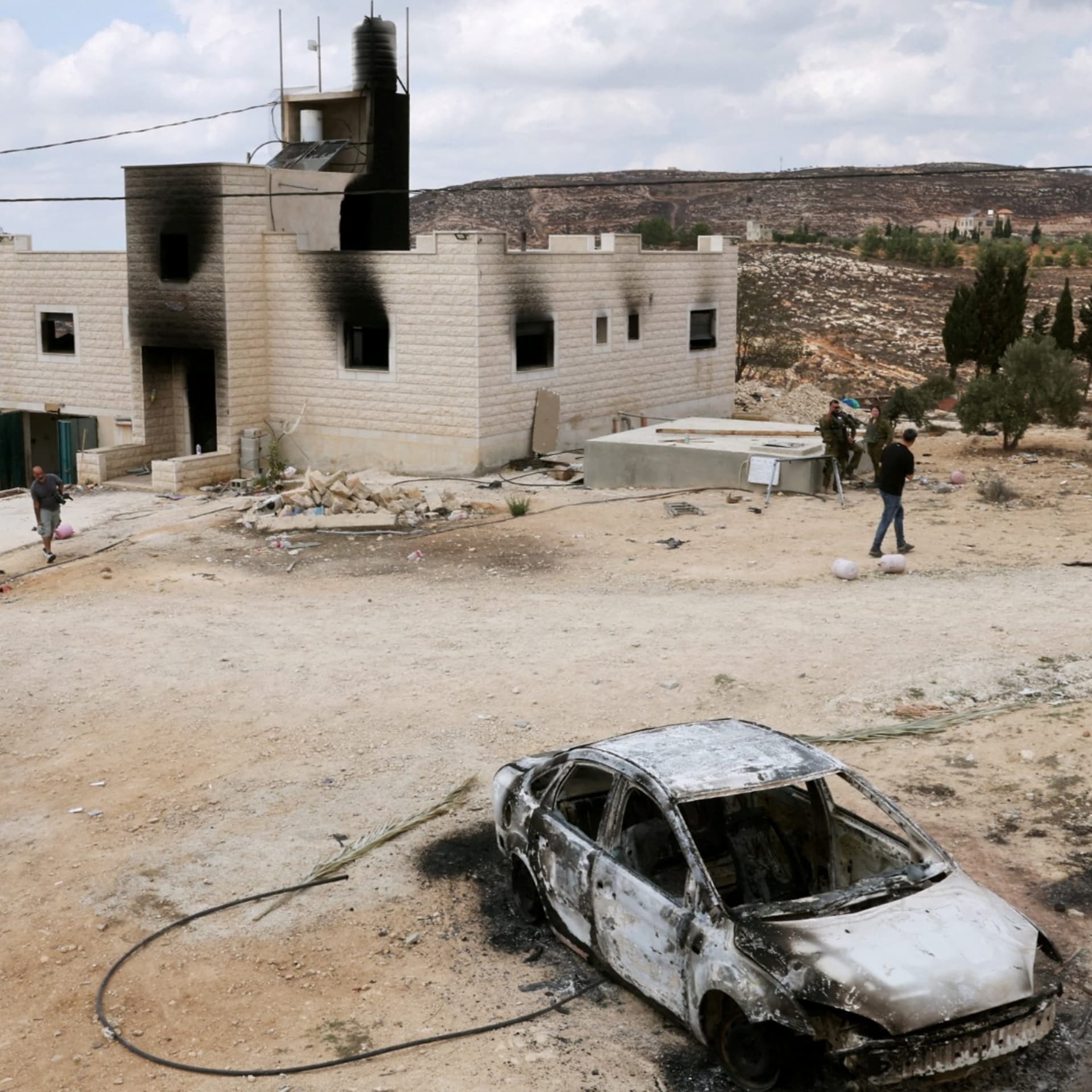
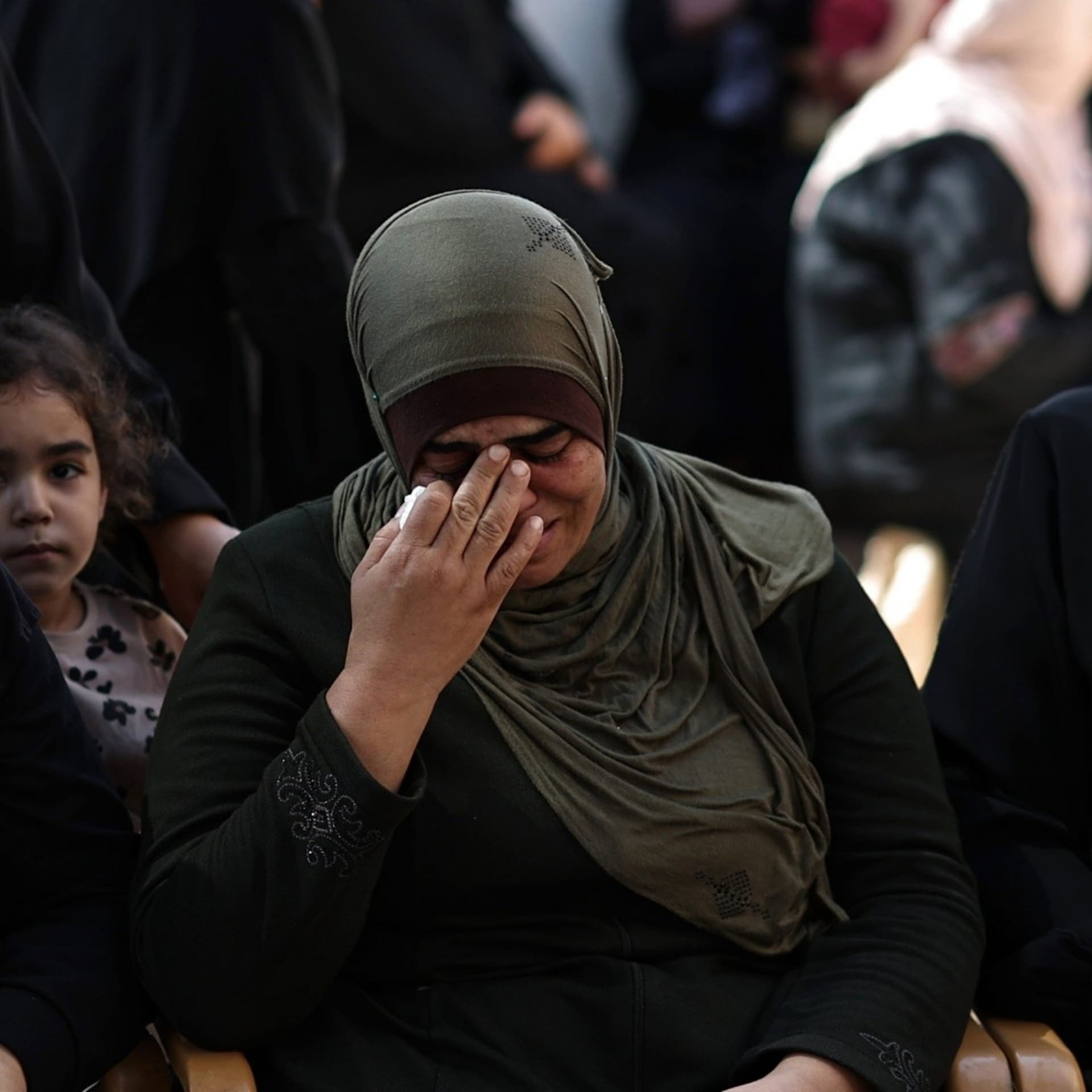
3:12One by one, Almahair is losing its sons. Khalil Abu Aliya was 16. shot dead in the middle of the village as settlers, backed by Israeli soldiers, seized dozens of sheep in a disputed claim of ownership. His body carried for burial alongside that of 19-year-old Omar al-Nassan, also shot dead yesterday. This village has held six funerals this year for men and boys killed by Israeli soldiers or settlers here.
3:51The killing of our young men has become a regular ritual, just part of our life. When your son walks in the street, you expect that he could be injured or killed, arrested by the army or beaten and dragged in the streets. It was here, right in the middle of the village, that both teenagers were shot dead. Khalil down this street and Omar just over here. Local residents say there were Israeli snipers on many of the rooftops here, and Israel's army says its force is fired in response to a violent riot. But that doesn't address the wider situation that's unfolding across the occupied West Bank, where Jewish settlers, backed by Israeli soldiers, are expanding their attacks and incursions further inside Palestinian villages, and Palestinians are being forced off their land.
4:45Sheep farming has become a routine tool for extending settler control over the occupied West Bank. In my village, I don't have any protection. My country don't have anything to do for me because it's not to have an army or anything. This is life, you know. This is my life. I can't change it. If you want to change it, you will be killed. Settler outposts, illegal under both international and Israeli law, have encircled Al-Muraya over the past few years, backed by Israel's fiercely pro-settlement government and protected by Israeli forces. This village now facing a daily choice, losing its land or losing its people.
5:32Lucy Williamson with that report. The Falkland Islands in the Atlantic Ocean have been at the centre of a long-running sovereignty dispute between the UK and Argentina. It's recognised as a British overseas territory, but Argentina is adamant that what it calls Las Malvinas belongs to them. And at present, Javier Mille has doled up tensions by announcing sanctions on oil drilling in the area. His national address was translated live by a BBC producer. The Falcon Islands are Argentinian. Because of history and because of law, there's no disagreement over it. The islands have always been part of Argentina since our origins.
6:15If today Argentina doesn't implement international law in a few months, the UK could just take control of the oil reserves under our sea. A Latin America correspondent, Will Grant, told me more about what President Milley had to say.
6:58that that has never changed. He basically argued that there could be no legitimate claim to self defence by the islanders, given the land itself, as he put it, had been taken illegally. So then we got to the crux. And the crux was this introduction of a bill to Parliament, a decree, under which sanctions would be imposed on energy firms intending to begin oil exploration off the coast of the Falklands in the coming years. He said Argentina would not stand for that, could not stand for that. And the idea that Britain would be, as we again heard in that clip, taking the resources from under the sea.
7:35He's also talked about the fact that the US is rethinking its support for Britain's sovereignty. Is this a case of Donald Trump wanting more oil, wanting more of that territory? Yeah, I think that was absolutely critical. He was very quick to identify that Donald Trump was re-evaluating the US position on the Falklands, which to this time has been a sort of neutral position with support for the British claim. It is a situation in which Donald Trump has Javier Millet as a close regional ally. They get on very well ideologically. And Mr Millet said there are winds of change in the world that are favourable to our claim.
8:15We know, of course, that President Trump remains frustrated at London for not having supported his war in Iran with material support, with troops, with military hardware and so on, that basically they didn't come in with him when he asked them to. So he may be sort of rattling the cage a little, or he may be serious that he simply is prepared to completely re-evaluate the US position on the Falkland Islands. And of course, Javier Millet said that in Argentina, Washington had, as he put it, a trustworthy partner while sort of depicting the United Kingdom as a nation in decline. And what just briefly does Mr.
8:54Miller want to distract from some domestic issues? What are his approval ratings like? It is a classic tactic by Argentine and Argentinian leaders to use the Falklands claims when times are tough domestically, politically. He is facing sliding popularity rates. He has an election next year. And I think it's very important to include that in our analysis of why it's happening now. Things are being ramped up though because I think this is about a specific thing to do with oil exploration rather than more nebulous claims of sovereignty and self-determination. Will Grant. Rescuers are still trying to reach hundreds of workers who are trapped in the tunnels of a hydro power plant in the mountains in northern Nepal after last week's devastating flash flood.
9:41The Nepali army says 900 staff are missing from the site. In the region as a whole, more than 1 ,200 people are now known to have died and at least 5 ,000 others are still missing. The United Nations has warned that an immense challenge lies ahead to reach survivors in isolated Himalayan communities. A correspondent, Azadeh Mishiri, has traveled to an area where frantic rescue efforts are now focused. Rescuers still hope Nepal's tunnels hold survivors. Yet another attempt at Upper Trishuli 1. More than a week has passed and every hour counts.
10:24Finding a safe place to land, a challenge. The tunnel, flooded, choked with mud and debris. Rescuers deploy a drone to see what's ahead Rafts, the only way to travel deeper inside
10:46Almost immediately, they find a body part
10:52They reach an underground chamber There, rescuers hope they'll find survivors They didn't
11:02Some feel all is already lost. Ram Bahadur Tamang was one of the upper Trishuliwan workers. He survived because he was outside the tunnel that day, but three of his cousins are trapped. He believes they're dead and is waiting to recover their bodies. No, I will never work in a tunnel again. I'm hurting and it's killing me inside. What am I going to do now? I can't find my friends. I won't return to my village without them. Nepal insists climate change is to blame for this disaster and says it will need up to£3.8 billion to rebuild. Even after all the destruction we've witnessed this week, it's hard not to take in just how stunning this entire area is.
11:49And Nepal is now talking about injustice, about the fact that even though it's one of the lowest emitters of global greenhouse gas emissions, it's one of the most vulnerable to climate change. And it's singling out countries like the United States, China, India as top emitters, and now asking for urgent financial help from a special UN fund for climate-related disasters to recover from this past week's events. Scientists are still studying the cause of the flood. For now, Nepal is caught between planning for its recovery and reckoning with the aftermath of the disaster. Azadeh Mishiri reporting from northern Nepal.
12:28This year's El Niño weather system hasn't even arrived yet, but it's already having a severe impact on Indonesia, which is suffering from sweltering high temperatures and some regions have had no rain for months. That's exacerbating wildfires, which are now spreading a toxic haze across a large swathe of Southeast Asia. The BBC's last year, Kertopati, is in the capital of Jakarta and spoke to James Menendez. The wildfires in Indonesia have burned for weeks now. The epicentre of the fire is in the island of Sumatra and also in Borneo, which is in Indonesia we call Kalimantan. Because the huge amount of wildfires that happen, the haze has been transboundary to Malaysia, Brunei and even to Philippines.
13:18Right, so it's been spreading all over the region. I mean, is it right to say there are fires every year? In which case, are these much worse? And how much worse are they? The worst wildfires that Indonesia had is in 1997 and 1998. It got a little bit worse in 2015. This year, the land fires happened really, really rapidly. Triggered by El Nino, which makes everything really dry. There has been no rain in the last few months. Even, you know, the biggest river in the island, it's dried up in some parts of the river. Are these all wildfires or are some of them fires that have been started by people burning agricultural land?
14:04The Indonesian government has been calling 20 companies. They found out that this corporation conduct a land clearing by a slice and burn, which is illegal in Indonesia. So you can say it's a deliberate fire that spread out really quickly and also being triggered by El Nino. Let's talk about the impact it's having on people because it is having some severe effects on people's health, isn't it? It affected more than 5 million people, also more than 50 ,000 people now in treatment because of the difficulty of breathing and respiratory illness, especially for the sensitive groups like elderly and also children.
14:45School's been closed for 10 to 12 days now. In the morning, the haze is really, really thick. you can only see like one and two meters ahead even though you put like n95 mask you can still feel the smoke inside your throat my understanding is that well for indonesia anyway that september is the peak month for el nina so i guess this is the height of the crisis isn't it yeah even our forest ministry said that this month will be the peak of the dry season so they really try to put of the fire with everything they got. And even some people, you know, in the area that are affected by land fires, they have this in Indonesia, we call it solat istiko, or like the prayer of calling for the rain as another, you know, measure to help in relieving this dry season.
15:39The BBC's Lestia Kertapati speaking to James Menendez. still to come in this podcast after millions of views the youtube channel chicken shop date is coming to an end hello hi how are you doing i'm good how are you good good louis louis through but what can its rise teach us about the changing media landscape
16:33www.smart.com Schwab has everything you need, all in one place, so you can invest your way. Visit schwab.com to learn more. John Deere is putting in work and putting up highlights. Oh man, look at those passes. Tillage, planting, harvesting. Three years in and these pre-owned machines are still at the top of their game. We're talking reliability, performance and long-term potential. And get this, these veteran machines can pick up the latest precision tech with ease. You know it, and fans ready to add John Deere certified pre-owned equipment and more options to their lineup can shop at machinefinder.com.
17:12Decisions made in Washington can affect your portfolio every day. But what policy changes should investors be watching? Washington Wise is an original podcast from Charles Schwab that unpacks the stories making news in Washington right now and how they may affect your finances and portfolio. Listen at schwab.com slash Washington Wise. That's schwab.com slash Washington Wise.
17:44This is the Global News Podcast. Now to the latest developments in a trial that's captured people's attention across the world. Lindsay Clancy is accused of murdering her three young children in the US state of Massachusetts in 2023. She has admitted to killing them, but her lawyer is seeking what's known as an insanity defense, arguing that she was suffering from postpartum psychosis at the time. Jurors have been deliberating for five days trying to reach a verdict. In court on Thursday, Lindsay Clancy's lawyer asked the judge to remove one juror who he said wasn't following legal instructions.
18:22If we come back here in a half an hour with a mistrial because of a juror that has just spurned the instructions of this court, it's a shame. My motion is to remove this juror that refuses to listen to your instruction on reasonable doubt. The judge did not agree and ordered the jurors to continue deliberating. A North America correspondent, Ione Wells, has been following the trial. I asked of what we know about this deadlock among the 12 jurors. We can't say with any certainty what exactly they are disagreeing about because the jury are not identified in this case. We don't know the makeup of their current positions, what they're currently thinking about a verdict.
19:01Although we have heard a little more today than perhaps previously about this deadlock, in the sense that before the jurors were sent back for their final deliberations of the day, the judge did remind the jury to abide by the law regarding the principle that somebody must be proved guilty beyond reasonable doubt. Lindsay Clancy's lawyer, after that reminder by the judge, expressed frustration. He had been seemingly quite irritated in the courtroom earlier. he alleged that one juror was refusing to listen to the law when it came to this principle of reasonable doubt. Now, we don't know whether that is definitely the case.
19:36As I say, we can't say that with any certainty, but that is what her lawyer has alleged. What we do know is that this is now been more than 36 hours of the jury deliberating and deliberating and still not reaching a verdict after two attempts. They have a third attempt to try and come to some kind of consensus. If they don't, there is a chance that this could be declared a mistrial. And there are many possible verdicts, aren't there, Ione, in this particular trial. What are the chances of this maybe even eventually going Lindsay Clancy's way? There's quite a lot on the table. There are lots of different options that could be the outcome of this trial.
20:13The first is that she could be found guilty of a first degree murder, which would carry a sentence of life in prison without parole, the most serious verdict that she could receive. There is a chance that she could be found guilty but of a less severe crime second degree murder for example which does have the chance of parole or manslaughter which could carry a lesser sentence as well. She could though also be found not guilty by reason of insanity which is what her defence has been centering around. Essentially her defence argue that because she was suffering from severe postpartum psychosis at the time a mental health condition that can affect some mothers after giving birth.
20:52She wasn't in a fit state of mind when she killed her three children. Her defence argue that she wasn't able to distinguish right from wrong, that she can't be held criminally responsible for what she did. The prosecution, on the other hand, say that she did act intentionally, deliberately, in a planned manner. So we've heard these two very, very different presentations of why and how Lindsay Clancy acted in that moment, even though nobody has denied that she killed her three children. This case is centering around whether or not she can be held responsible for that. And only how unprecedented would it be for someone with postpartum psychosis to be found not guilty by reason of insanity.
21:32Many people are seeing this as a trial that has the potential to set precedence for future cases. This is a very little known about, little researched condition, and it has led to this swell really of campaigning around the case with many women in particular, including some who have gathered outside the courthouse calling for more support for mothers suffering with this condition, more research into the condition. I think it is certainly a very unusual case and that is why it has gripped the nation so strongly. I think what is also so complex about it is essentially asking jurors to try to decide and distinguish where the line is between somebody being mentally ill and or so mentally ill that they cannot become criminally responsible for something.
22:18And I think that is why morally, medically, this has been such a hard case for them to assess. Ioni Wells. The US Vice President J.D. Vance has said that oil flows through the Strait of Hormuz are almost back up to pre-war levels. The US and Israel's six-month conflict with Iran has driven up global energy prices and fuel costs. But Mr. Vance said Tehran's control of the vital waterway is effectively gone. When the Iranians shoot at commercial shipping, Obviously, that means some ships don't want to go through. A lot of ships have gone through. We got about 15 million barrels out of the Strait of Hormuz just yesterday, despite the fact that the Iranians continue to ship or continue to shoot, I should say.
22:58And we're going to do what we have to do in order to ensure that their efforts don't lead to a worldwide energy crisis. J.D. Vance was speaking at his first White House press briefing in weeks and dodged many other questions, including some about reports that a U.S. strike killed four people at a wedding. in southern Iran and about his own political future once Donald Trump leaves office. A White House correspondent, Bernd DeBoosman, said the vice president sounded optimistic about the Iran war but will continue to face scrutiny from American voters. He was more upbeat and I think he spent much of what was a relatively short press briefing at the White House addressing some of those concerns that Americans have about the lingering impact of the war on their own pocket books.
23:44Of course, polls have shown that this is something that many Americans are deeply concerned about as we head to a midterms just two months away. And Vice President Vance addressed many of those questions and blamed really any lingering problems on the Iranians shooting at ships in the Gulf. So he certainly sounded much more upbeat and he sounded very much more confident than we've heard from officials in recent months and weeks that the United States can get those ships through the Strait of Hormuz and that ultimately we'll see gas prices going down. But then again, the administration has repeatedly said that lower gas prices would be right around the corner and that still hasn't materialized for many Americans.
24:20So I think they'll be waiting to see just when that might happen. Ben DeBoosman. A few years ago, if you were an A-list celebrity with something to promote, primetime TV would probably have been top of your list. But now you're just as likely to see famous faces being interviewed by independent creators on YouTube. One of them is called Chicken Shop Date. But after 34 million views, its creator and host has announced that it's coming to an end. Amelia de Moldenberg is known for asking celebs awkward and cringeworthy questions over a portion of Chicken and Chips here in the UK. Here she is trying to use those skills on singers Billie Eilish, Paul McCartney and Sabrina Carpenter.
25:03Is smell a big thing for you? Kind of number one. Really? Obviously personality, right? and overrated. What about smell? That's the first thing that I notice and I have a very strong nose so if somebody smells good I like them more. Who's your favourite beetle? Well there's only one left. Currently it's Ringo. During the beetles I think we all used to look up to John. You come from a family of carpenters. Sort of. Have you ever built anything with your bare hands? It doesn't have to be like a piece of furniture. No. I build people up as opposed to like building objects because like hammers? Heavy.
25:40Nails? Scary. Amelia de Moldenberg says it's time to move on to a new adventure. But what exactly is it about channels like this that are described as changing the media landscape? That's a question Will Chalk put to our culture correspondent, Norn Angie. She's obviously one of the UK's best known, biggest content creators, millions of followers. She's got this style where she interviews people that's really popular and of course it's all done over a plate of nuggets. and chips. And so it's her way of sort of disarming celebrities, everyone from Sir Paul McCartney to Billie Eilish. And yeah, of course, now she's closing up shop.
Read the full transcript
26:17Now, there will be people listening who haven't heard of Chicken Shop Date, but this matters, doesn't it, because of what it represents, because she is now getting guests that traditional broadcasters would love. And the guests don't want to go on the traditional TV. They want to go to her and do it all on YouTube. I think people can see that it's the style in which she engages to people the way that she gives you know these celebrities who you used to see perhaps in sort of press junkets being slightly more formal or a lot more formal and the interview the questions being very similar and the answers being very similar here you're getting something totally different to what you're used to and it presents the celebrities in a certain way that you know you can connect with them a bit more or a lot more and I think that's something that's increasingly popular and it's something that she's managed to do through this series and I think as you say rightly the celebrities can see the value of that.
27:05Does it show that maybe people are craving more and more something that traditional TV can't provide because traditional TV can sometimes feel quite formal and stilted? Emilia de Moldenberg's style is this sort of trademark dry, awkward flirting banter that she has with the celebrities. And she asks these sort of off the wall questions. She has these deadpan silencers, puts people on the spot. It's funny, it's entertaining. And that's what people crave these days. And it's funny, when I interviewed her, I did ask her, look, you've been doing Chicken Shop Date for so long. Would you want to take this to potentially a sort of traditional TV couch format where you can ask these questions in a more, you know, a linear way?
27:42And she wasn't very keen on it, to be honest. She sort of said, I think what I've got going here is essentially a sort of late night chat show. And she could obviously see that that seems to work for her and the power in a way rests with social media and these platforms like YouTube. I think what it says about YouTube and the growth of YouTube. We say it again and again, we talk about it, but especially for younger generations, this is what they're watching rather than traditional media. I think it also shows that sort of independent digital creators can give traditional broadcasters a run for their money and more.
28:13You know, they can become where the power is. She was very much a pioneer in that. Norn Angie. Every year, tens of thousands of people across the world die while waiting for an organ transplant. and the kidney is by far the organ in highest demand. Now doctors say they've made a breakthrough that could help address the donor shortage. A man in the United States has received a genetically modified pig kidney, which enabled him to stay off dialysis for nine months. Helena Burke has the details. When 66-year-old Tim Andrews was diagnosed with end-stage kidney disease, his prognosis looked grim. So it's very hard for me to get a kidney transplant from a human.
28:56It'll be seven years or so before I would come up on the list to be able to get one. And on average, the person lives five years on dialysis. So I had a little bit of a shortage of time, you know. It really becomes very, very depressing that this is it. This is how I'm going to end my life. I'm going to be going to dialysis and being tired. In the US, around 100 ,000 people are currently waiting for a kidney, while only 25 ,000 transplants occur each year. And it's a similar story in many other countries. To combat the problem, Dr. Leonardo Riella from Mass General Brigham Hospital in Boston has been researching xenotransplantation, the process of using animal organs in humans.
29:45Pigs are seen as the ideal donor, as their organs are roughly the same size as humans. In an attempt to save his life, Dr. Riella offered Tim the pioneering procedure. His health conditions started to deteriorate. His window for getting a kidney transplant, unfortunately, was closing. And this is when we approach him with the potential of thinking about xenotransplantation of an option to perform these transplants earlier. It can serve as a bridge until Tim accumulates more time and gets to the top of the list and stays healthy enough then to get a human transplant. Tim received a kidney from a genetically modified Yucatan miniature pig in January 2025.
30:25This is not the first time a pig kidney transplant has occurred, but the procedure marks the longest dialysis-free survival following a pig kidney transplant, with Tim living with the organ for nine months. It wasn't a simple process, though. Dr Riella says it took years to develop genetically modified Yucatan miniature pigs with humanized organs. Performing xenotransplantation has been a huge challenge, in part due to the incompatibilities between the pig kidney and the human body. So the genetic edits were one of the main advancements that allow us to improve that compatibility. therefore improving the survival and the chances of xenotransplantation to be successful.
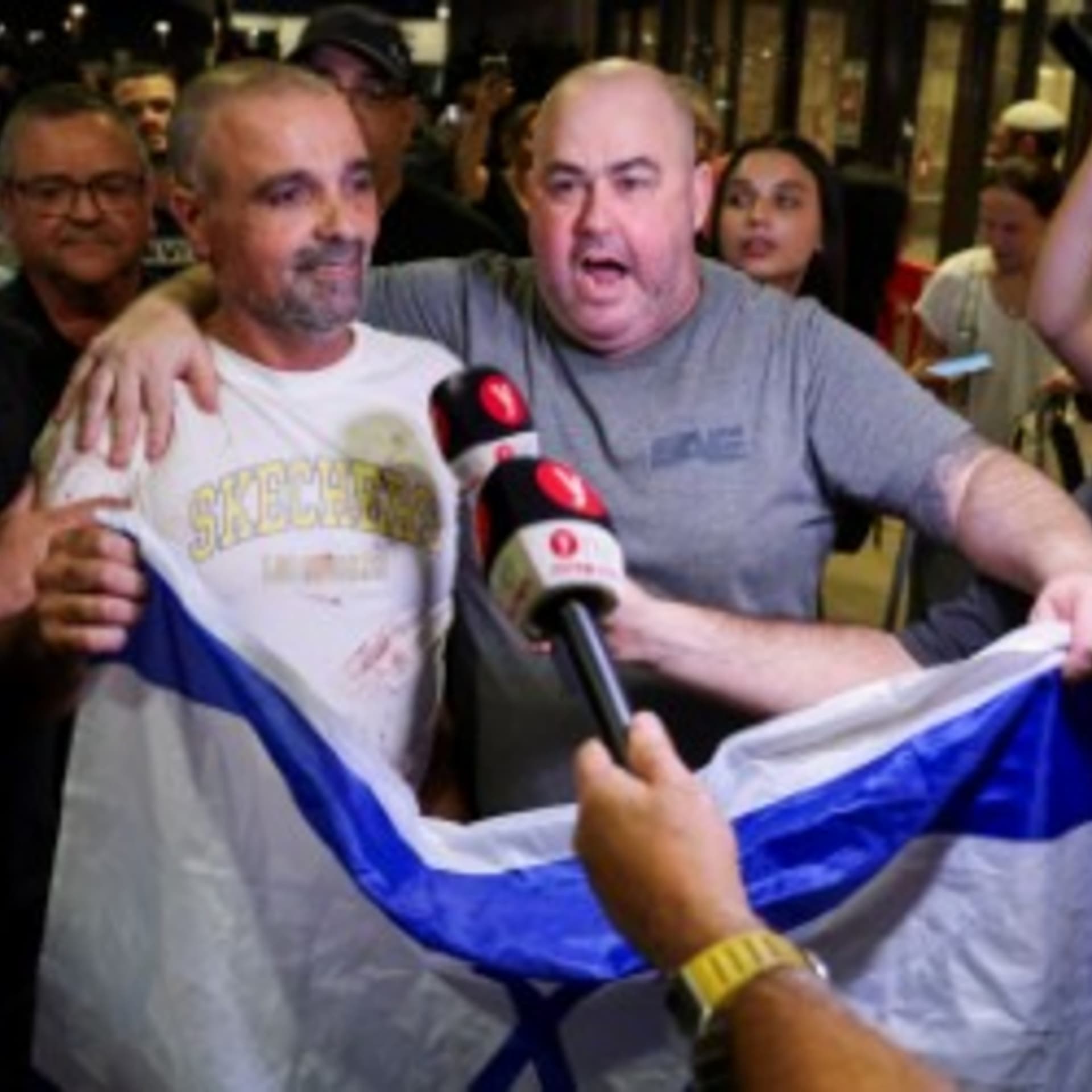
31:08After nine months the pig kidney eventually failed and had to be removed. Tim then received a human kidney and is now doing well. I'm not super religious but I have been praying day and night to get this and here I am. It's unbelievable. This is also the first time someone has successfully moved from a pig kidney transplant to a human kidney transplant. Dr Riella hopes this breakthrough will pave the way for mainstream use of xenotransplantation in the next few years. We are working really hard to bring hope and we truly feel that xenotransplantation can be an alternative for patients who don't have a living donor where we could potentially bypass dialysis and get them to a transplant in a timely manner.
31:57Dr Leonora Riella ending that report by Helena Burke. And that's all from us for now. If you want to get in touch, you can email us at globalpodcast at bbc.co.uk. This edition of the Global News Podcast was mixed by Derek Clark and produced by Emma Joseph. The editor is Karen Martin and I'm Anka Desai. Until next time, goodbye.
From the publisher
Funerals have been held for two Palestinian teenagers killed by Israeli settlers and soldiers in the village of Al-Mughayyir in the occupied West Bank. Israel's military said its forces had fired at instigators of a "violent riot". The deaths come amid a recent surge in settler violence and mounting criticism of the IDF's role in attacks. Also: Argentina's President Milei threatens sanctions against oil companies working off the Falkland Islands or Las Malvinas. The UN warns of immense challenges reaching isolated Himalayan communties devastated by the Nepal-Tibet flash floods. A US jury is deadlocked in the Lindsay Clancy murder trial. The success of a genetically modified pig kidney transplant offers new hope to those on dialysis. And Amelia Dimoldenberg ends "Chicken Shop Date".
The Global News Podcast brings you the breaking news you need to hear, as it happens. Listen for the latest headlines and current affairs from around the world. Politics, economics, climate, business, technology, health – we cover it all with expert analysis and insight. Get the news that matters, delivered twice a day on weekdays and daily at weekends, plus special bonus episodes reacting to urgent breaking stories. Follow or subscribe now and never miss a moment. Get in touch: globalpodcast@bbc.co.uk Photo: Mourners attend the funeral of Khalil Abu Aliya and Omar Mohammed Naasan in the West Bank village of Al-Mughayyir Credit: Atef Safadi - EPA/Shutterstock.