
In short
Global News Podcast Episode Summary
Episode Title
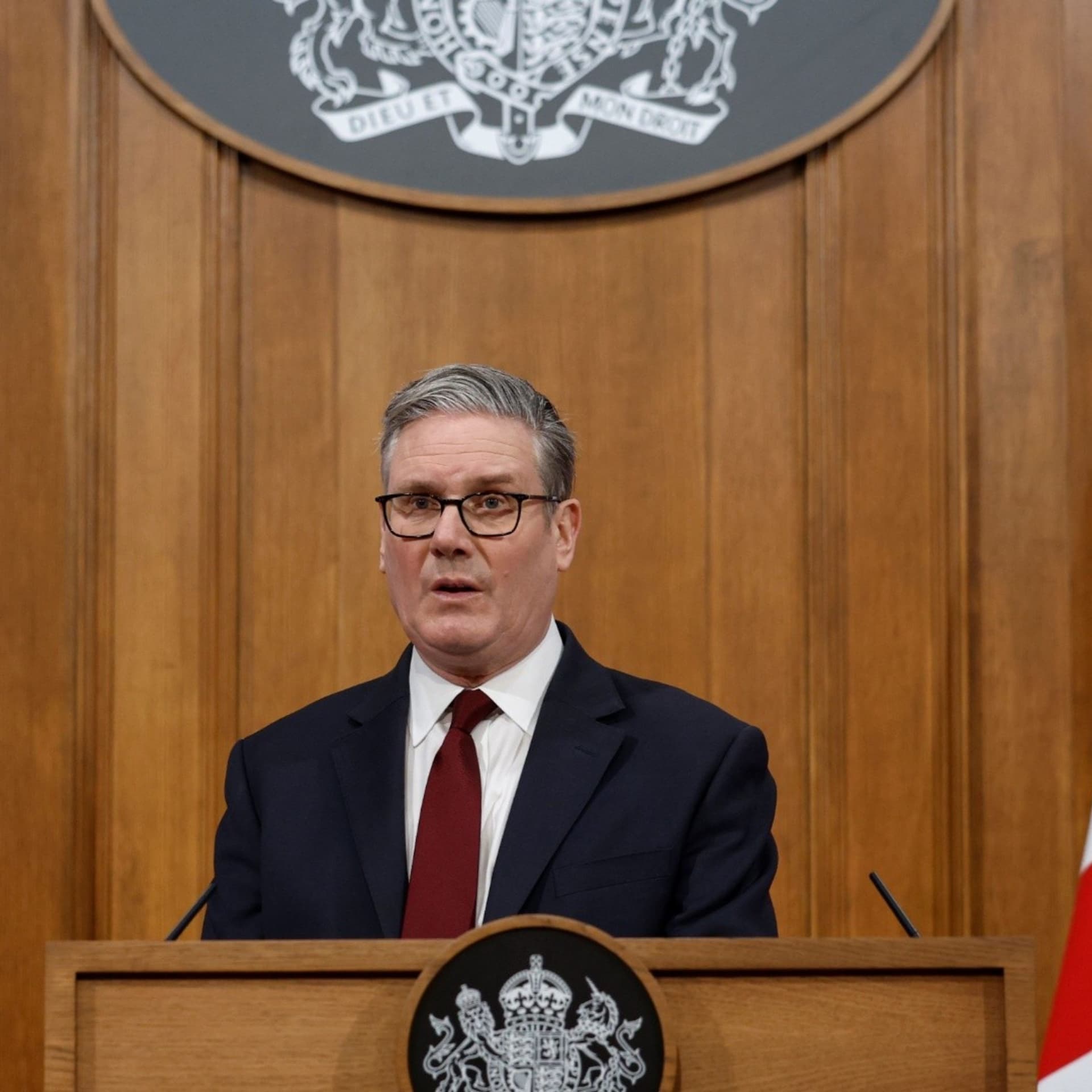
Germany and UK tell Trump this is 'not Nato's war' Episode Description In this episode, discussions unfold around the responses from Germany and the UK regarding the war against Iran, President Trump's demands for NATO involvement, and various global developments including drone attacks in Ukraine, social media content moderation issues, the Oscars, and infant deception.
---
Key Discussions
NATO and the Iran Conflict
- Germany and UK's Position: Both countries assert that the conflict with Iran is not NATO's responsibility and will not participate in efforts to reopen the Strait of Hormuz.
- Quote from Prime Minister Keir Starmer: “We’re working with others to come up with a credible plan… that won’t be a NATO mission.”
- Trump's Reaction:
- Claims NATO’s lack of involvement will harm the alliance.
- Urges China to assist in reopening the Strait of Hormuz since it relies on this waterway for 90% of its oil.
Russia's Military Action
- Daytime Attacks in Kyiv:
- A rare daylight drone attack reported in Kyiv, resulting in multiple explosions.
- Russian drone capabilities under scrutiny, with claims of improved communication technology between drones and their controllers.
Social Media Content Moderation
- Whistleblower Revelations:
- Social media companies prioritize user engagement over the moderation of harmful content.
- Testimonies highlight that harmful posts, especially involving children, are deprioritized in favor of politically relevant content.
- Quote from TikTok employee: "We were instructed to prioritize cases involving politicians over harmful posts featuring children."
Oscars and the Film Industry
- Reflections on the Oscars:
- Discussion about the future of film amidst corporate mergers, AI integration, and layoffs.
- Changing dynamics with the potential shift of the Oscars from television to streaming platforms like YouTube.
Infant Deception Study
- Research Findings:
- Study reveals that infants as young as 10 months may engage in deceitful behaviors.
- Key Takeaway: Deception is emerging earlier than previously thought, indicating an inherent aspect of early cognitive development.
---
Key Takeaways
- Political Dynamics: The reluctance of NATO countries to involve in the Middle East conflict underlines the complexities of international alliances and the expectations placed on them by nations like the USA.
- Social Media Responsibility: The prioritization of engagement over safety raises significant questions about the ethical responsibilities of tech companies and the impact on younger audiences.
- Cinematic Evolution: The film industry is at a crossroads, facing challenges from technological advancements and shifting audience preferences, indicating a fundamental change in how films are produced and consumed.
- Child Development Insights: Understanding early deceptive behaviors in children could reshape parenting strategies and educational approaches, recognizing the normalcy and cognitive development associated with such actions.
---
Conclusion This episode of the Global News Podcast encapsulates the ongoing challenges in global politics, the intricacies of social media ethics, the evolving landscape of the film industry, and fascinating insights into early childhood development. Each segment reflects the interconnectedness of these issues in today’s rapidly changing world.
Written by AI. May contain mistakes. Listen to the episode to check what was said.
Chapters
Tap a time to open that second in VOUS and Allies on Strait of Hormuz
1:23 to 2:19
An analysis of the situation in the Strait of Hormuz and NATO's involvement.
“Also in the podcast, what do the Oscars tell us about the future of film?”
Germany and UK's Response to Trump
2:19 to 4:22
Discussion on the responses of Germany and the UK to Trump's demands regarding war efforts.
“the US says it needs help to reopen the Strait of Hormuz, where Iran has reportedly laid mines as part of its strategy to stop oil tankers getting through.”
Challenges of International Support
4:22 to 6:46
Exploring the challenges the US faces in rallying international support for military actions.
“Our chief international correspondent Lise Doucette told us more about the difficulties facing the US in getting help from its allies.”
China's Role in the Conflict
6:46 to 9:09
Examining China's stance and actions regarding the Strait of Hormuz amid rising tensions.
“Yeah, and there have been more reports of heavy bombing in Tehran.”
Iran's Continued Aggression
9:09 to 12:33
Updates on Iran's military actions and their impact on the Middle East.
“Besant and Hurley Fong as if the visit is going ahead.”
Life in Israel During Conflict
12:33 to 14:03
Insights into how Israelis are coping during the ongoing conflict with Iran.
“In the first days of the war, the Israeli prime minister said he could now fulfill his long held ambition to crush what he called the regime of terror in Iran.”
Israel and Iran: A Shifting Landscape
14:03 to 15:43
Explore the implications of ongoing conflicts in the Middle East and Israel's changing stance towards Iran.
“Do you think Israel will be in this situation again in six months, in 12 months?”
Ukraine's Struggles Amid Global Tensions
15:43 to 17:11
Hear about how the conflict in the Middle East is affecting Ukraine's position in the international arena.
“Michael Oren is a former Israeli ambassador to the U.S.”
Social Media's Dark Side
17:23 to 20:40
Examine how social media platforms prioritize engagement over user safety, risking harmful content exposure.
“Russia launched a rare daytime attack in Kiev on Monday morning using drones that Ukrainian officials say appear upgraded.”
Inside Social Media Companies
20:40 to 23:05
Learn about internal practices at social media firms that allow harmful content to proliferate.
“They spoke to the BBC documentary Inside the Rage Machine.”
Show all 15 chapters
Impact of Algorithms on Youth
23:05 to 24:56
Discover how social media algorithms can lead to the radicalization of young users and affect their mental health.
“One of the things that was highlighted repeatedly by the people who work within the companies is how the prevalence of this kind of content, not preventing the spread of borderline content, say.”
The Future of Film in a Changing Era
24:56 to 26:46
Dive into the challenges facing the film industry amid corporate changes and technological advancements.
“that ultimately affect users and particularly younger people.”
Early Deception in Children
26:46 to 28:03
Learn about a study revealing that babies can begin to deceive before their first birthday, challenging previous assumptions.
“Now, babies look innocent enough, enough, but a new study suggests they learn how to deceive us before the age of one.”
Understanding Deception in Early Childhood
28:03 to 29:15
Discover how children learn to deceive and the role of parental influence.
“We looked at whether kids were doing that.”
The Intersection of Humor and Deception
29:15 to 30:28
Explore how games like peekaboo contribute to children's understanding of deception.
“How much is that connected to how their parents respond to their initial behaviours?”
Transcript
Automatic transcript. May contain errors.0:00This BBC podcast is supported by ads outside the UK.
0:30exceptions the result is durable clothing like the premium slub crew tee no bs high-rise pant and slim roughneck pant that become part of your life snag the hoodie that will bring you comfort for life the american giant classic full zip save 20 off your first order at american-giant.com when you use code staple 20 at checkout we focus on the part of the internet that most people don't know about. It's called the dark web. Undercover in the furthest corners of the dark web, US special agents are on a mission to locate and rescue children from abuse. Moving in now. From the BBC World Service, World of Secrets, the darkest web follows their shocking investigations.
1:15Listen on bbc.com or wherever you get your BBC podcasts. You're listening to the Global News Podcast from the BBC World Service.
1:52Also in the podcast, what do the Oscars tell us about the future of film? And... Before even a year and a half, half of the kids are deceiving in our sample. They're probably not criminal masterminds or anything at that point. They're just really cleverly coming up with ways to get what they want. How babies learn to trick us at a very young age.
2:18After pulling its minesweepers out of the Middle East earlier this year, the US says it needs help to reopen the Strait of Hormuz, where Iran has reportedly laid mines as part of its strategy to stop oil tankers getting through. President Trump wants NATO allies to help clear the waterway and has warned that if they don't, the organisation faces a, quote, very bad future. Japan and Australia have already said they are not willing to send warships to patrol the strait. The British Prime Minister, Keir Starmer, said reopening the waterway was not a simple task. He said the UK would do what it could, but would not be drawn into a wider war.
2:58Firstly, we are working with others to come up with a credible plan for the Straits of Hormuz to ensure that we can reopen shipping and passage through the strait. Let me be clear, that won't be, and it's never been envisioned to be, a NATO mission. That'll have to be an alliance of partners, which is why we're working with partners both in Europe, in the Gulf and with the US. For its part, Germany pointed out that at the start of the war, the US said European assistance was neither necessary nor desired. And the German Defence Minister Boris Pistorius rejected the US President's latest demands.
3:40What does the world expect? What does Donald Trump expect from a handful or two handfuls of European frigates in the Strait of Hormuz that the powerful American navy cannot accomplish there on its own? That's the question I ask myself. And before we make a decision, outside of NATO territory, by the way, we would need both an international framework and a mandate from the German Bundestag. I would think about that very carefully before we take that step. And I see absolutely no reason to do so. It's not our war. We didn't start it. We want diplomatic solutions and a swift end. Our chief international correspondent Lise Doucette told us more about the difficulties facing the US in getting help from its allies.
4:30President Trump keeps changing not just his narrative on what the end goal is for the United States President and Commander-in-Chief, but also keeps changing his narrative on what's happening on the ground. Our listeners will know that he's repeatedly said, oh, the war is almost over. We've destroyed Iran militarily. And remember, this is a war where there was no consultation with any allies except for Israel. And when Sir Kir Stomer, who initially refused to join the war effort, then came in and said, we'll help in a defensive way. And he said, no, we don't want people who join the war when it's already won.
5:10And now he's realizing, and it's extraordinary that this wasn't realized, wasn't made it clear to him by his planners, that Iran had an ability to basically close off this strategic waterway, the Strait of Hormuz. There are some tankers which are still getting through, which underlines to you that there are others who are trying different ways around this crisis. For President Trump, he now wants a Hormuz coalition, as he calls it, and is asked countries. And in that way, he often menaces them that if NATO allies don't come to his aid, then there will be consequences. But you have on the other side, the Indian Foreign Minister Jaishankar, who will join the EU meeting today to discuss this very issue of what they can and should do to try to get that straight open, has been saying, well, they're talking to Iran and they managed to get two Indian flag gas tankers through the strait this weekend.
6:07Turkey has also been talking to Iran. They managed to get a bulk carrier through. Of course, these are exceptions. This is not the bulk of the traffic. But we do also hear reports that other countries are talking to Iran. But President Trump wants countries to join him in a war where, as I said, he hasn't made clear what the overall aim of the war is. And it's also not clear what the war is in the Strait of Hormuz. In his interview with the Financial Times, he also said that he wants to knock out some bad actors on the Iranian shoreline. So this would mean that a whole lot of other countries would become belligerents in this war.
6:45And that's a very, very dangerous shift in an already dangerous war. Yeah, and there have been more reports of heavy bombing in Tehran. Do we have any idea of when this might end? It's an interesting aspect of this war. I think it's the only one I can remember where you have the two main combatants, the Americans and the Iranians, in a sense, talking past each other on social media. President Trump will say something on his Truth Social account. Iran will fire back. And then Iran, then America, mostly President Trump, but also members of his administration will do the same. Now, President Trump said on Air Force One, he said that U.S.
7:26is holding talks with Iran, but the Iranians aren't ready. And for the first time, Abbas Adachi said that there are proposals from neighboring countries that they're studying. Lise Doucette. Well, as well as pressurizing NATO, President Trump also called on China to help reopen the strait, saying the country gets 90 percent of its oil from there and hinting he might delay his summit with the Chinese President Xi Jinping if he doesn't get what he wants. In response, the Chinese foreign ministry said both sides were in communication about the expected visit. Trade talks are already underway between the US and China in Paris.
8:02This assessment from our Beijing correspondent Stephen McDonnell. Now the problem for Donald Trump is that he doesn't have the same leverage with China in terms of bullying that he does with other countries. I think most analysts would say that, again, he seems to have overestimated the extent to which he can push Beijing around. I mean, his problem here is basically twofold. One, China might say, well, we didn't start this war. Why would we go and help you sort it all out? And number two, already there are signs that Chinese ships are going to be let through. And so why risk sending the Chinese Navy anywhere near a dangerous place like that or any other Chinese assets to come to the US's aid, even if it is to keep these talks alive.
8:53I mean, Beijing definitely wants Donald Trump to come. We know this because of the sort of soft peddling of the rhetoric here, so as to not upset Washington to keep the momentum going towards this visit. And we're seeing these discussions still going on in Paris right now between Scott Besant and Hurley Fong as if the visit is going ahead. They're trying to nut out the various sticking points when it comes to trade, the supply of rare earths, the supply of chips, finding ways they can cooperate with one another. But in yet another indication that I think the US doesn't have the same leverage with China, we've got these trade figures that have come out showing that while Chinese exports to the US down by 11 % year on year for the first two months of this year, overall they've gone up by 22%.
9:48So it shows that China's getting markets elsewhere and doesn't need the US the way it used to. Stephen McDonnell in Beijing. Despite a reduction in its attacks in recent days, Iran has continued to lash out at targets across the Middle East. Overnight, Saudi Arabia said it downed dozens of drones, while Iraq and Kuwait also reported new strikes. In the United Arab Emirates, Dubai International Airport was again temporarily shut after a drone set a fuel tank on fire. Officials in the UAE capital Abu Dhabi say one person has died after a missile hit a car there. There's also been more disruption at the Fujairah oil facility.
10:27We heard more from our correspondent in Dubai, Azadeh Moshiri. All this only a day after the Iranian Foreign Minister Abbas Archi said that Iran was not targeting civilian and residential infrastructure. That's obviously going to be little comfort to the United Arab Emirates that is seeing these multiple incidents that it's had to respond to. And it's extremely frustrating for a country that feels that it's been unjustly pulled into this wall. Iran may think that this is the sort of pressure that makes leaders here put pressure on the United States to end the wall. But the fact is, is that officials here are furious.
11:04One presidential adviser called this imposed terrorist aggression. And so this image that has taken so many years, so much effort to build of a safe and prosperous country, it's taking multiple blows and people are worried about the long term impact here. Yeah, I mean, earlier on, we heard about people fleeing, essentially, the UAE to try and escape these drone attacks. What is the impact of this opening and closing of the airport and disruption at the oil facility in Fujairah? I mean, life is still carrying on here in Dubai. For example, there is one regular fountain and light show at this artificial lake at the base of Burj Khalifa, a busy area, and they still are carrying on with those shows.
11:49Having said that, there are fewer people who are watching and people are generally very worried that a city and a country that is built on tourism is going to take a very big hit. And it's a major expat hub. Only 10 percent of people here in the UAE are Emirati citizens. The airport, Dubai International Airport, is one of the world's busiest airports with the most international passengers going through. There are about 90 million passengers that it dealt with last year. And so that's why they're so concerned that this image of a city built of glass towers, glitzy, luxurious, but most importantly safe, that it won't start attracting the same sort of business and the same sort of tourists in the same way.
12:33Azadeh Meshiri in Dubai. In the first days of the war, the Israeli prime minister said he could now fulfill his long held ambition to crush what he called the regime of terror in Iran. And Benjamin Netanyahu says the bombing campaign is already achieving some of his aims. Our Middle East correspondent Lucy Williamson has this report.
13:00Israel's wartime routine is now so familiar. Even the hospital entertainment continues in underground car parks turned into temporary wards.
13:13Several floors above, sirens sound daily as Iranian missiles are intercepted by Israel's air defences.
13:24This underground car park at Sherat Zedek Hospital in Jerusalem is now a fully functioning hospital. It's not the first time that Israel's hospitals have moved patients underground during war and what many Israelis are now asking their prime minister is whether this war with Iran will put an end to Israel's conflicts. It became very difficult, the situation, each time we have the bombs here, we want to finish this issue. Verbi Vash was visiting his father-in-law, recovering from a fall, his hospital bed neatly positioned on a numbered orange parking space. Do you think Israel will be in this situation again in six months, in 12 months?
14:07It might be. Unfortunately, it doesn't finish. Do you think this could finish it? This war could finish the wars forever? Most of this depends on Trump. Iran has been sending missiles towards Israel night and day. Yesterday, shrapnel from cluster bombs landed in several places. Israel's Prime Minister has been preparing for war with Iran for decades and says this conflict has already changed the Middle East and Israel's power within it, even with Iran's regime still standing. Iran is way weaker. Nimrod Sheffer, a former Air Force general, now part of the opposition Democrats' party, says victory in Iran will hang on recovering its stockpile of highly enriched uranium.
14:57They lost the Air Force, they lost the air defence, they lost most of its ballistic missiles capacity, they lost the navy, they lost tons of assets. Now they said, OK, we realise the game. We understand now. You will keep on attacking us until we have the nuclear capacity. It could be even a worse situation than before. Before this war began, many Israelis said they were tired of constant conflict, but were willing to fight Iran if it meant something fundamental would change. Their prime minister has repeatedly pushed for Iranians to overthrow their government. But with little sign of that happening, the war schedules of Israel and the U.S.
15:37may be starting to diverge. The political reality in America is very different than the political reality here. Michael Oren is a former Israeli ambassador to the U.S. Netanyahu, even people who detest Netanyahu in the opposition, are solidly behind him. The question is, the timetable is much more America's than it is Israel. We don't feel the economic crunch. We don't feel the rise in oil prices. We don't feel any of these pressures that are being brought to America are not being brought on the Israeli government. Israel's security strategy has changed since the Hamas attacks of 2023 and its power in the region has grown.
16:11Its military might in Gaza, Lebanon and Iran has proved itself time and again in containing threats, not resolving conflicts. Our Middle East correspondent Lucy Williamson. Still to come on the podcast... It doesn't make me feel great. I just get addicted. I can't help it and I just finally stop. Whistleblowers tell the BBC how social media giants allow more harmful content on their platforms to try to boost user engagement.
16:50We focus on the part of the internet that most people don't know about. It's called the dark web. Undercover in the furthest corners of the dark web, US special agents are on a mission to locate and rescue children from abuse. Move in now. Police! From the BBC World Service, World of Secrets, the darkest web follows their shocking investigations. Listen on bbc.com or wherever you get your BBC podcasts.
17:23This is the Global News Podcast. Russia launched a rare daytime attack in Kiev on Monday morning using drones that Ukrainian officials say appear upgraded. Multiple explosions were heard throughout the capital city and elsewhere. As I heard from our diplomatic correspondent there, James Landau. There were attacks across the country in Dnipro where two people were killed in Zaporizhia, We think about three dead there. There was also, as you say, an attack on the capital here in Kiev. The authorities say about 30 drones attacked, they think, largely energy infrastructure targets in and around the capital city.
18:00And it was pretty loud. We could hear and see some of this from where we are in the city. Debris from some of the drones that were destroyed landed in pretty prominent parts of the city center, including the Maidan Square, where famously Ukrainians gather to protest and demonstrate and also increasingly remember their war dead. And as you say, yes, there have been some reports that some of these drones had new capabilities. I have to say, I mean, there are always drones is very much an evolving technology. And I think what the suggestion here today is that some of the drones that may have been used, and none of this is confirmed, had greater communication with the Russians that had fired them.
18:44The original drones were sort of launched and fired, and then once they were away, they could no longer be controlled. The suggestion is that some of the drones that came here were communicable with those who had launched it back in Russian territory. But there's a bit of uncertainty about what developments there were, because a lot of these drones are destroyed, so it's very early to tell from just going through the remnants of what had been destroyed. And how has the war there been affected by the fighting in the Middle East, if at all? Well, in lots of different ways, really. The Ukrainians fear that, you know, they're being forgotten as the world's attention turns on the Middle East.
19:21And that's inevitable. So President Zelensky and others have been doing their utmost to keep Ukraine in the news. He's been very visible, very prominent, talking to world leaders, visiting countries, giving lots of interviews. At the same time, he's been very vocal in saying, look, Ukraine has a lot to offer countries in the Gulf and elsewhere who are who are learning what it's like to suffer from cheap Iranian designed drones. The Ukrainians are also pretty aware that there are some downsides from this conflict. You know, Russia is filling its coffers with money because of the raised price of oil and the fact that the Americans have decided to waive some sanctions temporarily on Russia.
20:00They also know that the Gulf is firing off an awful lot of air defense missiles at the moment, which means that it'll be harder for Ukraine to purchase or get given more of those in the coming months. So it's sort of mixed view, I think, from here. But at the moment, I mean, we had a long session with President Zelensky over the weekend and several of us asked just how bad the moment it was. And he didn't give the impression that this was a game changing moment in the war. James Landau in Kiev. More than a dozen whistleblowers have told the BBC that social media companies have allowed more harmful content to appear on their platforms in order to maximise user engagement.
20:40They spoke to the BBC documentary Inside the Rage Machine. I heard more from our social media correspondent, Marianna Spring. I've spoken to whistleblowers and insiders across several of the major social media companies. Some of them work at TikTok. So one who's a TikTok employee actually gave me rare access to the company's internal dashboard of user complaints. So I could see evidence about how they prioritise in terms of this system, specific cases and so on and so forth. And they in particular highlighted how they were instructed to prioritise several cases involving politicians over a series of reports of harmful posts featuring children, which was really concerning to them.
21:19They also showed me some examples of content that were encouraging people to join terror groups, say, which wasn't as the top priority that they had to moderate and deal with. And I met this whistleblower over several months. They're incredibly concerned that these decisions are being made within the companies, not just to compete with the other social media companies, but also to maintain a strong relationship with political figures to avoid threats of regulation or bans. I also spoke to several people who work at Meta. That includes an engineer at Meta who said that they were told to increase borderline harmful content, that's like misogyny, conspiracy theory content, in order to compete with TikTok.
21:57Another senior researcher at Meta said that when they launched Instagram Reels to compete with TikTok, they didn't have sufficient safeguards in place. And I've seen internal research that shows an uptick in harmful content in the comments on Reels. Also, I spoke to someone called Brandon Silverman, who was another senior person who worked at Meta and described how they invested in lots of staff to work on reels, but then turned down a request for two specialist staff to deal with kids. Here's a clip of him. And I remember a moment when regular headcount planning process, and there were some integrity teams and safety teams were going to ask for two headcount to work on kids stuff and tend to work on elections.
22:34There was another team that went, oh, we just got 700 for Instagram reels. I was like, OK. It's worth saying I put all these allegations to the social media companies. TikTok said these were, quote, fabricated claims and the company invested in technology that prevented harmful content from ever being viewed. And I also put the allegations to Meta and Meta told me that any suggestion that we deliberately amplify harmful content for financial gain is wrong. The truth is we have strict policies to protect users on our platforms and have made significant investments in safety. And what do these kind of decisions made by the companies, what do they mean for the people who use their services?
23:12One of the things that was highlighted repeatedly by the people who work within the companies is how the prevalence of this kind of content, not preventing the spread of borderline content, say. The issue with that is that lots of younger people, including teenagers, use these platforms. And so they are then at risk of being exposed to this content, which is promoted by the algorithms. And in the documentary, I met a young guy called Callum. He's now 19, but when he was 14, he describes how he became effectively radicalised by the social media algorithms and adopted racist and misogynistic views.
23:44I also went into a school and spoke to some teenagers about their experiences, particularly how when they say they don't want to see some of this violent and harmful content using the tools in the platforms, they're still getting pushed in. Lockdown when I was like nine, we were at home all the time and that's the only way I could communicate with my friends. So I used it a lot more. Who thinks that they spend the most time? Five hours a day, maybe. I'm doing it, like, before school in the morning and then as soon as I get home from school. It doesn't make me feel great, but I just get addicted.
24:14I can't help it and I just finally stop. Are there things that pop up on your feed and you think, I don't really want to see more of that? Probably, like, the same, like, violence. It's like the bullying, the fighting, really. It just makes people think it's right. And then you report it. It doesn't come up for, like, a day or two and then it'll just pop back up. Now this documentary and investigation comes at a time where lots of countries around the world are thinking about whether to ban social media for under 16s for example. And I think that the crucial thing that it highlights and that I've found from doing this is just how what the companies, social media companies are saying to the outside world doesn't feel matched up with what the people on the inside doing the work are seeing and the risks they feel are being taken that ultimately affect users and particularly younger people.
24:59Marianna Spring. Hollywood may still be basking in the glow of its biggest night, the Oscars, but the film industry is facing some major upheavals, including corporate mergers, the growing use of artificial intelligence and mass layoffs. BBC Talking Movies presenter Tom Brook was at a watch party in Los Angeles for the Academy Awards ceremony. He's been reflecting on what it says about the future of film with our North America correspondent Peter Bowes. People could go away from tonight's proceedings and think, oh great, a Hollywood studio film, all two studio films doing really well. And the reality is, you know people who work in the industry here, people who are out of work, great anxiety about AI and whether it will bring about the promised land or destroy people's careers.
Read the full transcript
25:44I do feel it is the end of an era in a way. I mean, it sounds very dramatic, but I mean, where film is perhaps less central to people's lives, but never been more important in terms of giving us hope for the future. One battle after another, a Norwegian film's sentimental value. I'm a news junkie, but somehow watching these films made me appreciate life in a really good way and it's a different form of narrative storytelling and we need that. Everything is changing in just two or three years' time. The Oscars will not be on television. It will be on a streaming service on YouTube and that really, for me, just encapsulates how quickly things are changing.
26:25I know it's been on television, standard broadcast television, since the 1950s. It's going to be on YouTube and at first I thought, how shabby. But the thing is, YouTube gets 2.5 billion monthly users, so it will take it to a huge audience. But I wonder what it will be taking to a huge audience, what kind of spectacle. Tom Brook in Los Angeles. Now, babies look innocent enough, enough, but a new study suggests they learn how to deceive us before the age of one. More than 700 parents across the US, UK, Australia and Canada were asked about their children's behaviour and a quarter of them were found to dabble in the basics of lying by the age of 10 months by pretending not to hear a parent hiding toys or secretly eating food.
27:11Elena Hoiker from the University of Bristol here in the UK led the research. She spoke to Leila Nathu. I think the surprising finding of our study was that deception is emerging so much earlier than we thought. In the research community, we always thought it was about three years, but we found some parents reporting it as early as eight months and about half of kids by 17 months. Was it also the kinds of things that they were doing? Yes, I think that's really key. So in previous research, we relied a lot on this task where kids peek at something and then say, no, they didn't peek. I mean, kids are great at that at three years.
27:47But we borrowed deception types as well from the animal literature. So non-human primates do deception in the wild. So a non-dominant chimpanzee, for instance, might find some food and eat it behind a big rock so that the dominant one doesn't come and take it. So using that kind of deception. We looked at whether kids were doing that. And it seems that they are. It would suggest that this sort of behaviour is normal if you're observing it in about a quarter of very young babies. Is that right? Would it be right to describe it as normal? I mean, we don't, you know, because the instincts of some parents might be, oh, gosh, my child is already hiding things from me and becoming capable of lying.
28:26Yeah, I think it's absolutely normal. So before even a year and a half, half of the kids are deceiving in our sample. I mean, from the kid's point of view, they're probably just trying to get things they want and coming upon ways to do that. So they notice if they can't see someone when they do something, they get away with it. So, you know, they're probably not criminal masterminds or anything at that point. They're just really cleverly coming up with ways to get what they want. So they're really thinking of their own interests, which is, you know, standard at this point of development. Here, they're really clearly doing something people are not telling them to do.
29:01So they're also somewhat creative in their thinking as well. And then as they get a bit older, the babies, when they become toddlers, I think you found that they sort of progress to a bit more sophistication in terms of how they can deceive. How much is that connected to how their parents respond to their initial behaviours? So overall, we found that parents who deceive their kids. Their kids knew more deception types. And a small number, 15 % or so of parents reported encouraging their kids to deceive. And those kids were also more likely to deceive. Is there a chance that through play, parents could be unwittingly encouraging them to deceive?
29:42I mean, I'm even thinking about peekaboo or something, you know, a very simple game that does involve deception. I think that's quite possible. I think there's a lot of overlap. And actually, that's why I got into this project. I've done humor research for about 20 years. And some types of humor, peekaboo is a great one that develops very early on in the first few months. Kids are starting to understand peekaboo. And it's tricking people and then enjoying it. Kids tease before a year as well. They'll offer things and then take it back. So they're kind of deceiving their parent, but they're laughing about it.
30:16And of course, parents do these things to their kids too. The great thing about humour is that it's emotionally positive, it's social. And so when parents are doing that, those might be some things that make kids realise, oh, we can break the rules sometimes and trick other people. Helena Hoiker from the University of Bristol here in the UK. And that's all from us for now, but the Global News Podcast will be back very soon. This edition was mixed by Louis Griffin and produced by Chantal Hartle. Our editors, Karen Martin. I'm Oliver Conway. Until next time, goodbye.
30:56We focus on the part of the internet that most people don't know about. It's called the dark web. Undercover in the furthest corners of the dark web, US special agents are on a mission to locate and rescue children from abuse. Moving in now. From the BBC World Service, World of Secrets, The Darkest Web follows their shocking investigations. Listen on bbc.com or wherever you get your BBC podcasts.
From the publisher
Germany and Britain say the war against Iran has nothing to do with Nato and the alliance won't be taking part in any effort to reopen the Strait of Hormuz. But the UK Prime Minister, Keir Starmer, said London was working with individual allies on a plan to secure the vital waterway, which has been largely closed by Iran. President Trump has said it will be very bad for Nato if it doesn't get involved, though the alliance is only a defensive partnership. He also called on China to help reopen the Strait of Hormuz - saying it gets "90% of its oil" from there and hinting he might delay his summit with the Chinese president Xi Jinping if he doesn't get what he wants. Also: Russia launched a rare daytime attack in Kyiv on Monday morning - using drones that Ukrainian officials say appear "upgraded"; Whistleblowers have told the BBC that social media giants allowed more harmful content on people's feeds, after research showed how outrage fuelled engagement. TikTok and Meta have denied the claims; BBC Talking Movies presenter Tom Brook on this year's Oscar winners and what they say about the future of the film industry; and new research reveals babies younger than one practise deceit such as pretending not to hear parents or hiding toys.
The Global News Podcast brings you the breaking news you need to hear, as it happens. Listen for the latest headlines and current affairs from around the world. Politics, economics, climate, business, technology, health – we cover it all with expert analysis and insight. Get the news that matters, delivered twice a day on weekdays and daily at weekends, plus special bonus episodes reacting to urgent breaking stories. Follow or subscribe now and never miss a moment. Get in touch: globalpodcast@bbc.co.uk



