
In short
This BBC Global News Podcast episode covers multiple breaking stories. Topic 1: Yemen—Iranian-backed Houthi fighters seize Yemen’s entire Red Sea coast in a lightning offensive, including islands near the Bab al-Mandab Strait, a key shipping choke point between the Indian Ocean and Mediterranean via the Red Sea/Suez.
Key claims
navigation is safe except for Saudi vessels; Houthis promise not to disrupt maritime trade beyond Saudi targets; Saudi Arabia shut down a major oil pipeline after drone attacks from inside Iraq; UN says hundreds killed and tens of thousands displaced. Topic 2: DRC Ebola—outbreak spreads to South Ubangi (west of prior northeast focus).
Key claims
3,000+ dead; 7,000 cases; US and European aid cuts to clinics hinder response; vaccine work is early. Topic 3: UK assisted dying—England/Wales bill rejected; terminally ill campaigners say choice denied; opponents cite coercion fears. Topic 4: BRICS summit in Delhi—Modi hosts; wars and tariffs dominate; debate over dollar alternatives and trade. Topic 5: Manchester Museum removes mummy Azrou from display. Topic 6: Charlie Kirk legacy—Kyle Bass assesses his impact on youth conservative politics.
Guests
Kyle Bass (investor, private equity founder; knew Charlie Kirk). No other named guests appear; most segments use correspondents/experts (e.g., Lise Doucette, David Bamford, Fergus Walsh, Dr Ryan Truchelat, Dr Ryan Truchelat, Chris Page, Rowan Bridge, Ambarasan Etirajan, Chris Page, Dr Peter McLaughlin, Dr Ryan Truchelat).
Notable examples
Bab al-Mandab Strait; Ebola spread to South Ubangi; Esther Ransom and Ashley Dalton quotes; BRICS aims to reduce Western-dominated influence; Azrou consultation ~8,000 responses; Charlie Kirk assassination anniversary.
Written by AI. May contain mistakes. Listen to the episode to check what was said.
Chapters
Tap a time to open that second in VOYemen's Houthi Control
1:27 to 2:09
Discussion on Houthi fighters seizing Yemen's Red Sea coast.
“Iranian-backed Houthi fighters in Yemen cement their control of a key waterway, seizing control of the country's entire Red Sea coast.”
The Bab al-Mandab Strait
2:09 to 3:50
Explains the significance of the Bab al-Mandab Strait amid conflicts.
“It's half of an exhibit if you just have the exterior without the interior of it.”
Ebola Outbreak in Congo
3:50 to 6:04
Updates on the Ebola outbreak spreading in the Democratic Republic of Congo.
“It essentially opens up a second front in this crucial area.”
Assisted Dying Debate
6:04 to 11:45
Discussion on the rejection of the assisted dying bill in England and Wales.
“Despite efforts to control the Ebola outbreak in the Democratic Republic of Congo, officials have confirmed that the virus has now spread to a new part of the country.”
Weather Records and El Nino
11:45 to 14:02
Analyzes the impact of El Nino on hurricane activity and weather patterns.
“A new weather record was set on Friday and it's good news because September 11, 2026 marked the furthest point into an Atlantic hurricane season without a single hurricane being formed.”
Understanding La Nina and Cyclone Activity
14:02 to 14:58
Explore how La Nina impacts cyclone patterns in different oceans.
“Typically, we'll have more travel cyclone activity in the Atlantic and less in the Central and Eastern Pacific.”
The Range of Services Offered by Schwab
14:59 to 15:12
Discover the extensive financial services provided by Schwab for various needs.
“financial planning, thematic investing, retirement planning.”
Upcoming Content Teaser
15:12 to 15:25
Preview of future discussions related to Charlie Kirk's legacy.
“No matter your goals, investing style, life stage or experience, Schwab has everything you need, all in one place.”
Key Issues Discussed at BRICS Summit
16:20 to 19:24
Examine the critical issues facing BRICS nations and upcoming discussions.
“Between them, they represent about half the world's population.”
Trump's Visit to Ireland
19:24 to 20:57
Learn about President Trump's upcoming visit to Ireland and its significance.
“And it is also interesting, the Iranian president, Masud Peshersky, and he's also there in Delhi.”
Show all 14 chapters
Historical US Presidential Visits to Ireland
20:57 to 23:25
Explore the history of US presidents visiting Ireland and its cultural ties.
“The roots of the relationship lie in emigration during America's formative years.”
Legacy of Charlie Kirk
23:25 to 26:00
Assess the impact of Charlie Kirk on American politics and conservative dialogue.
“Ireland is more used than most nations to hosting the holder of the most powerful office in the world.”
Charlie Kirk's Influence on Dialogue
26:00 to 26:10
Understand how Charlie Kirk promoted open dialogue in politics.
“And I think his legacy will be this concept of having an open dialogue is a good thing.”
Debate on Displaying Mummies in Museums
26:10 to 28:00
Discuss the controversy surrounding the public display of mummies in museums.
“to reflect what it describes as changing views.”
Transcript
Automatic transcript. May contain errors.0:00This BBC podcast is supported by ads outside the UK.
0:30We do the things we do and how to make better choices to help avoid costly mistakes. Each episode covers the latest research in behavioral science and dives into themes like the power of self-control, shaping your mindset for success, navigating new beginnings and why starting over can feel so hard. Listen to choiceology at schwab.com slash podcast or wherever you listen. If you are currently overpaying on software to run your business, remember this number, 10 ,000. That's the number of new businesses that join Odoo per month. Join Odoo today at odoo.com. That's O-D-O-O dot com. This is the Global News Podcast from the BBC World Service.
1:20I'm Janat Jalil and in the early hours of Saturday 12th September, these are our main stories. Iranian-backed Houthi fighters in Yemen cement their control of a key waterway, seizing control of the country's entire Red Sea coast. The Democratic Republic of Congo says the Ebola outbreak it's battling has spread to the country's northwest. A bill to legalise assisted dying in England and Wales is rejected by MPs. Also in this podcast, India hosts a BRICS summit. Will it challenge a Western-dominated world? And a museum in England removes an ancient Egyptian mummy from public display because they think that's what she would have wanted.
2:09Some visitors, though, aren't happy. It's half of an exhibit if you just have the exterior without the interior of it. You're missing out on kids coming in and learning what mommies look like. I do understand the point of view of the people who it's been taken from. Yeah, it definitely was the right decision to take it off.
2:30Iranian-backed Houthi fighters have now seized control of Yemen's entire Red Sea coast in a lightning offensive that cemented their grip on a vital maritime corridor. An eyewitness said gunmen were deploying along a key international shipping route, the Bab al-Mandab Strait, and driving around in military vehicles. Officials in the Saudi-backed Yemeni government say the Houthis have also seized several islands in and near the Bab al-Mandab. This has become an increasingly important route for Saudi Arabia's oil exports since Iran blocked shipping through the Strait of Hormuz after the US and Israel launched their war on it.
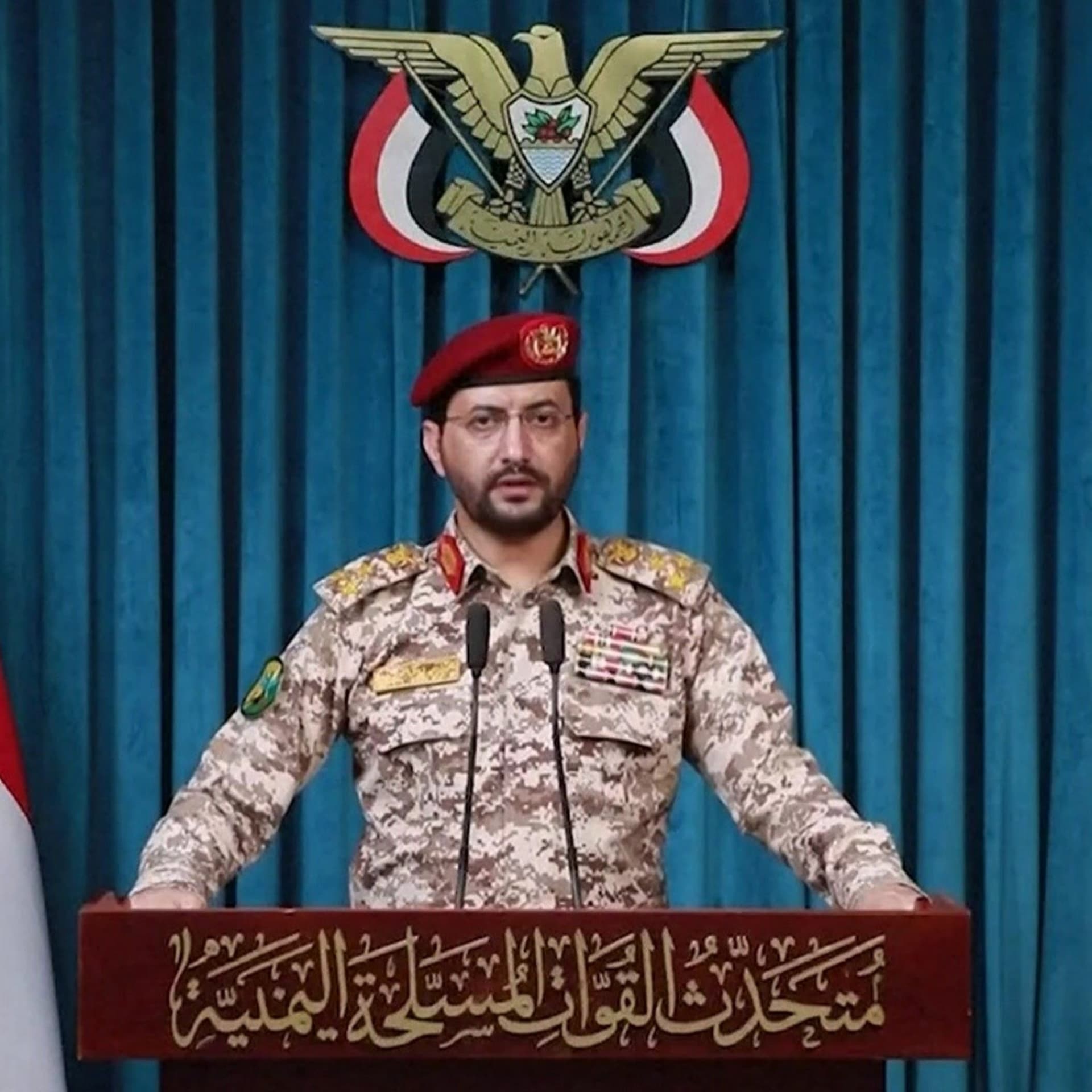
3:11The Houthi military spokesman, Yaya Sari, had this to say.
3:18Navigation remains safe for all shipping companies except Saudi vessels in the Strait of Bab al-Mandeb, a strategic link between the Indian Ocean and the Mediterranean Sea via the Red Sea and the Suez canal. Meanwhile, Saudi Arabia says it's shut down a major oil pipeline after it was attacked by drones launched from inside Iraq. The UN says the latest fighting in Yemen has killed hundreds of people and displaced tens of thousands more. Our correspondent Lise Doucette explained how significant the Houthi advance was. This is hugely significant. It essentially opens up a second front in this crucial area.
4:00We have, of course, been focusing on for many months. The main theater of war is in the Strait of Hormuz. And there's been observations, including from U.S. officials in recent days, about how they've been able to loosen Iran's grip on that strategic choke point, that they're now managing to get many, many more tankers through, exporting many, many more millions of barrels of oil, whereas the Iranians are being prevented from exporting their oil. So we see in this move by the Houthis, who are not completely tied to Iran, they have their own interests in the region. But on this, they seem aligned, that Iran now wants to exercise even greater leverage geographically and politically, by maintaining a hold over the second choke point, just south of the Persian Gulf.
4:45Now you have the Babel-Mandeb Strait on the Red Sea. But you heard from the spokesperson making it very clear, they don't want the Americans to be drawn in. They promise not to disrupt maritime trade except for the Saudis. And just how crucial is that Bab al-Mandab Strait? We've heard so much about the Strait of Hormuz. How about this particular choke point? It's particularly important for Saudi Arabia because Saudi Arabia being prevented from exporting through the Strait of Hormuz has been turning to the Red Sea, which is the link between the Suez Canal in the north and the Gulf of Aden. And I know from recently speaking to Saudi officials, they were putting all their efforts into developing these alternative routes.
5:26And it's been the same with other partners in the Gulf saying, OK, right, Iran's going to continue to exercise control there. We're going to outsmart them by making the straightforward moves less important. It's very difficult to say just how much of the traffic goes through there. And it's not just oil and gas. There are other really important commodities as well. So this is why you've seen today another spike in oil prices. The markets are nervous. And I think It's a very unpredictable and a very volatile situation. What will the Saudis do? They're already bombing today. There are reports that they've asked the Americans to help.
5:59So far, they're not, but the discussions are continuing. Lise Doucette speaking to Anka Desai. Despite efforts to control the Ebola outbreak in the Democratic Republic of Congo, officials have confirmed that the virus has now spread to a new part of the country. So far, more than 3 ,000 people are known to have died, with thousands more infected. I got more details from our reporter, David Bamford. Up until now, the virus has been mainly in the northeast of Congo in about six different provinces. It's now slightly further to the west on the borders of the Central African Republic and Congo in what's called the South Ubangi region.
6:43So it is still spreading. And up until now, we've had 7 ,000 cases nationwide. It's about nearly half of those died. So 3 ,300 dead. And the fear is, of course, that it could spread across the borders into the other countries. Although that said, when it did spread into Uganda, for instance, they dealt with it very efficiently. That's because they have quick contact tracing systems and so on, very modern, in a way that Congo just doesn't. And what role have the major cuts in US aid played in all this? Because the virus did spread undetected for some weeks. That's right, it did. It is true that the Americans under the Trump administration have withdrawn funding for the little clinics that were spread right across the Congo.
7:31But it's not just the Americans, of course. The Europeans have also withdrawn a lot of aid as well. and dealing with a country like Congo is difficult at the best of times, but with money disappearing the way it has, it's almost impossible. And what progress has there been towards developing a vaccine? Well, remarkably, there has been a lot of work on the vaccines and human treatment has begun already, but it's still in the early stages and it's going to be months before they can actually put together significant quantities of the vaccine to make any difference. David Bamford A number of countries have legalised assisted dying in recent years but it seems England and Wales won't be joining their ranks any time soon after the British Parliament voted against changing the law on this emotionally charged issue The terminally ill adults end of life bill would have allowed adults with less than six months to live to apply to end their own life subject to certain safeguards One of those who has long campaigned for assisted dying to be allowed in the UK is 86-year-old broadcaster Esther Ransom, who's terminally ill with cancer.
8:42She has said she is now too physically fragile to travel to another country like Switzerland where she could legally end her life. She gave her reaction to the no vote on a mobile phone. I'm so sad that people in this country won't have the choice of shortening their own deaths by asking for help. I am sure a change in the law will come. I am deeply sad that it won't come soon enough for many of the people who need it. But one of the MPs who voted against was Ashley Dalton, who is living with stage four cancer. She said she was worried people like her could be pressured or coerced into ending their lives.
9:31It's nothing short of irresponsible to scaremonger people like me into believing our deaths will be horrific. When all the evidence suggests that with access to good palliative care, deaths are on the whole gentle. The answer is not to terrify people and their families. It's to sort out palliative care and social care first. It's the second time in two years that MPs have voted on the issue. The lower house of parliament, the Commons, voted in favour of assisted dying last year. But after the upper house blocked it, concerns have grown that safeguards may not be robust enough. When the result of this latest vote was announced, our medical editor, Fergus Walsh, was outside the parliament building where supporters and opponents of the bill had gathered.
10:21Joy and relief from no campaigners who'd argued that the bill would lead to the coercion of the vulnerable and undermine support for the disabled. Sophie Kleanthus is a disability rights campaigner. The fact that MPs listened, they spoke to us, they heard us, they know that disabled people were terrified of this bill. Thank you to every MP that voted against. But there was dismay among pro-campaigners, who only last year were celebrating when MPs backed the same legislation. They argue terminally ill people deserve choice and a pain-free death. Sarah Burns' sister Elise died of breast cancer in July.
11:03It just feels like a massive slap in the face. We had to watch her go through hell. Essentially, she'd be devastated. that after it passed once and then it ran out of time that it's come back and now it's a no vote. A growing number of countries have legalised assisted dying in recent years, including Canada, Australia, New Zealand, Spain and just last month, France. This is not the end of the assisted dying campaign in Britain. Supporters say they'll be back, but it looks like they'll have to wait until after the next general election to have any hope of changing the law. Fergus Walsh. A new weather record was set on Friday and it's good news because September 11, 2026 marked the furthest point into an Atlantic hurricane season without a single hurricane being formed.
12:00James Kumrasami asked Dr Ryan Trishalat, a meteorologist and president of the consulting firm WeatherTiger, if this was down to the El Nino weather phenomenon? It absolutely is. And El Nino is a kind of global climate pacemaker. It's defined by warmth of tropical ocean waters in the Pacific Ocean, but it certainly has weather impacts worldwide. And in terms of tropical cyclones, when there is an El Nino in effect, you tend to see more tropical cyclones in the western and the eastern Pacific Ocean and many fewer than average tropical cyclones in the Atlantic Ocean. Now, it's unusual to see zero hurricanes forming, at what's generally regarded as about the halfway point of hurricane season here in the North Atlantic Ocean.
12:44But this is no typical El Nino. It's one of the strongest of all time. Does it mean that there is just a delay? I mean, could things come back with a vengeance in the second half of the season? Never say never in this business. I've been forecasting hurricanes for the last 20 years, and it really and truly does only take one hurricane to make it a bad hurricane season. 1992 was a very quiet hurricane season other than Hurricane Andrew, which was a Category 5 that hit South Florida. That being said, the conditions that are causing the hurricane season to be so quiet in the Atlantic are highly unfavorable upper-level winds over the Caribbean Sea.
13:21I do not think that those are going anywhere over the next couple months. El Nino is only intensifying, and I think those unfavorable upper-level winds will continue to be in place. Now, of course, that doesn't rule out that a storm could form closer to the continental United States and cause problems. So we may see some mean reversion, but I think this hurricane season is going to end well below normal and has a shot of being the quietest hurricane season of all time in the North Atlantic. Well, as you say, it's a different story in the eastern Pacific. Well, it absolutely is. And in fact, if you integrate all the tropical cyclone activity in the northern hemisphere, we're actually running about 25 % above normal for 2026.
14:02So it's kind of a seesaw. You'll see this when there's a La Nina. Typically, we'll have more travel cyclone activity in the Atlantic and less in the Central and Eastern Pacific. So in worldwide terms, 2026 travel cyclone season is quite busy, but it's very, very historically quiet here in the Atlantic. Since 1950, there have been at least two hurricanes in the North Atlantic Ocean every hurricane season. Dr. Ryan Truchelat. Still to come in this podcast, one year after the assassination of the prominent right-wing US activist Charlie Kirk, we assess his legacy. He changed the way US conservatives talk to Gen Z and future generations.
14:43And I think his legacy will be this concept of having an open dialogue is a good thing.
14:58Self-directed investing, trading, full-service wealth management, automated investing, financial planning, thematic investing, retirement planning. Phew. And to think, that's just a small taste of what Schwab offers. Because Schwab knows that when it comes to your finances, choice matters. No matter your goals, investing style, life stage or experience, Schwab has everything you need, all in one place. So you can invest your way. Visit Schwab.com to learn more.
15:56machinefinder.com. Booyah! With the new Schwab Teen Investor Account, teens can gain hands-on investing experience and build positive money habits. It's an account co-owned by you and your teen, so you can monitor and engage with the account while your teen learns how to invest and manage money. Learn more at schwab.com.
16:19This is the Global News Podcast. Between them, they represent about half the world's population. Leaders of the BRICS group of nations are attending a summit in the Indian capital Delhi this weekend. It looks set to be dominated by the wars in the Middle East and Ukraine, as well as economic challenges. It's being hosted by India's Prime Minister Narendra Modi. China's President Xi Jinping's visit to India will be the first since deadly border clashes between the two nations seven years ago. BRICS was created in 2009 as a forum for major emerging economies seeking greater influence in institutions dominated by the West.
16:59Our global affairs reporter Ambarasan Etirajan told us more. It's a much expanded BRICS. Initially, it was mainly Brazil, India, Russia, China, and then South Africa. Now it has expanded with 11 other members. It is happening at a critical time. You have the tensions in the Middle East, Russia's war on Ukraine, and also the US President Trump's tariff, particularly targeting those countries which are doing business with Rashi Azi, for example, and China, India, and many other countries. And why they founded this? Because they felt the Western-backed financial institutions like the World Bank and the International Monetary Fund, they were Western-dominated, and the UN and other agencies are, again, the influence of US and Western Europe are too high.
17:45And to balance this, this alternative grouping was formed. But there are also issues because even though they came together for a common purpose, there are also bilateral issues and tensions like India and China. And again, India's links with the US and Israel, how it is being seen, whether they can have any statement against President Trump. But it is important because it really represents nearly 50 % of the world's population, 40 % of the GDP. And these are some of the countries which are having the fastest-going economy. So what they say, whether to make trade easier among themselves or to plan for something long-term, whether how they can look at trading in low-con currencies rather than depending heavily on US dollar.
18:32So a kind of counterweight, if you like, to the West at a time when Donald Trump's policies, particularly on tariffs and trade, have caused a lot of concern around the world. This will be one of the topics discussed in this meeting because many of the countries feel that it is disrupting the global trade. And they also feel that these tariffs are unjustified. So now they want to take a common position. But at the same time, Trump has also clearly warned about some of the aims of these BRICs. For example, he was categorically saying they shouldn't even think about an alternative currency to dollar.
19:11then he will be imposing severe tariffs on the member states. He was also warning about individual agreements on any of the trade policies. You know, they're going to watch it, how far it is going to be beneficial to each other. Here is the counter-narrative, counter-voice. And it is also interesting, the Iranian president, Masud Peshersky, and he's also there in Delhi. So you have these people from different countries with a different agenda and finding a common point, that's going to be a challenge. For example, Vladimir Putin probably is one of the few countries where he can go freely without the fear of getting arrested because India is not a signatory to the ICC.
19:49And India and Russia, they maintain very close defence and trade ties, especially in the military defence supplies. India heavily relies on Russia. Now, at the same time, this also has given an opportunity for India and China to reset the ties because it's a first visit by Xi Jinping to India after seven years. So there is a thaw in relations between Beijing and Delhi because that's a bilateral meeting on Saturday is going to be seen as very crucial in improving ties. I'm Brassan Etirajan. President Trump is visiting Ireland this weekend to meet the country's leaders in Dublin and then to watch the Irish Open golf tournament at his resort in County Clare.
20:31Ireland has been a frequent destination for travelling US presidents, as Chris Page reports.
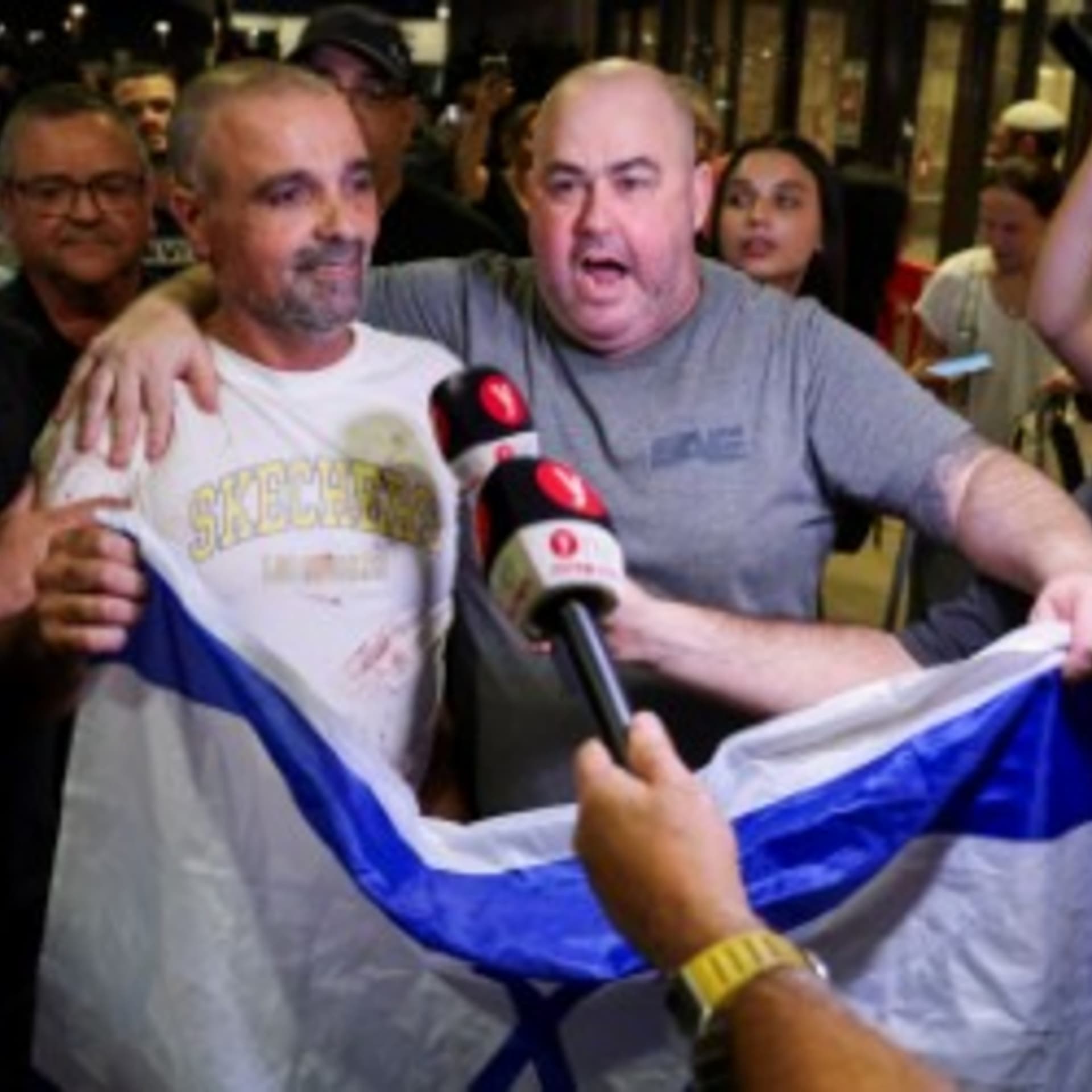
20:41Since the 1990s, Ireland has stood out among small countries as hosting a big number of US presidential visits. often with huge public welcomes for the visitors. Over the years, stories of this place have become part of my soul. I am happy to be in Ireland. I am now a free man of Dublin. The roots of the relationship lie in emigration during America's formative years. Almost one in ten Americans now claim Irish ancestry. The wheels of the presidential airliner were running on Irish soil. John F. Kennedy was in the land of his forebears. JFK was the first president to visit Ireland in 1963. This is the man whose great-grandfather somehow scraped together the£4 for a sailing ship passage and emigrated to the United States.
21:30Barack Obama was another president with Irish heritage, and he paid homage with humour. My name is Barack Obama of the Moneygall Obamas. and I've come home to find the apostrophe that we lost somewhere along the way. One of the most visible and diplomatically valuable outworkings of the country's links happens every year on the 17th of March in Washington. Let me wish everyone a very happy St Patrick's Day. On Ireland's national holiday, the Irish Prime Minister, the Taoiseach, has a meeting and a ceremony with the President. Time-honoured tradition, I'm going to present the bowl of shamrock to President.
22:10Dan Mulhall is a former Irish ambassador to the US. I don't know of any other country that has a guaranteed annual outing in Washington. Some of my European colleagues kind of puzzled as to how Ireland had managed to pull this off. Donald Trump's visit here to Dublin and to the west of Ireland will be different to most of his predecessors. He has no known Irish ancestry. There won't be a large public rally involving him. Protests are being planned, focused on US actions in the Middle East. Dr Peter McLaughlin believes there are parallels with another visit, that of Ronald Reagan in 1984. The US was severely criticised at that point by people in Ireland at what was going on in the Cold War broadly, but very specifically in Central America.
22:57Many people in Ireland would have a cousin or someone who was serving abroad as a nun or a priest in Latin America and was able to bring back these first-hand reports of how there were very controversial associations there with US policy. And yet at the same time, this was the US president. He needed to be courted and that was the start of the real investment of the US in the Republic of Ireland and indeed Northern Ireland. I want you to know that for this great grandson of Ireland, this is a moment of joy. Ireland is more used than most nations to hosting the holder of the most powerful office in the world.
23:31This weekend of diplomacy and demonstrations will be another episode in a story dating back decades. That report by Chris Page. It's one year since the assassination of Charlie Kirk, a right-wing American activist who was credited with helping to get young men to vote for President Trump and who was talked about as a future president himself. In the wake of his shooting on a college campus, his supporters thought his conservative movement, Turning Point, could only grow. but many now fear that no one will be able to fill the void. Kyle Bass is an American investor and founder of a private equity fund who knew Charlie Kirk.
24:12He spoke to Paul Henley. I met Charlie when he was 21 years old. He came into my office in Dallas. A couple of friends suggested that I meet him and I was just taken by his constancy of purpose. the fire that he had lit in him to change the way that youth politics is formed. And going to these college campuses around the U.S. was his mission to go talk about the things that he cared most about, which was, you know, faith, family and country. So we were in frequent contact. Charlie and I had plenty of things we disagreed on. But the one thing that I think everybody appreciates was his desire to engage in the dialectic.
24:54ask questions and answer questions. And let's talk about what our differences are and why they might be. And I think that did the US and the world a service. He was always optimistic and he changed the way youth politics was thought about in America. So I think he has a lasting legacy. And what convinced you he could have been president of the US one day? I've met the last, I don't know, four or five presidents in America. and when you meet someone whose life mission is to make things better and he has that charisma he has that presence that gravitas when he walked into a room when he was 21 years old he had it and i think that's why he was so successful having that constancy of purpose and the desire to as he always said trying to get america back to the america that let's say we once had the America that we had before September 11th.
25:47And I think that's why he had such a broad reach across America. What do you think Charlie Kirk would make of his legacy now? He changed the way US conservatives talk to Gen Z and future generations. And I think his legacy will be this concept of having an open dialogue is a good thing. Kyle Bass. And finally, Manchester Museum in north-west England has removed its ancient Egyptian mummy from public display to reflect what it describes as changing views. The remains of the woman, known as Azrou, have been on show in the city for 200 years. The woman lived and died in ancient Egypt more than 2 ,000 years ago.
26:30The museum said it had carried out research that showed she would not have wanted her body to be on public display. Rowan Bridge reports. Since being unwrapped, Asru's been on almost constant public display, most recently at Manchester Museum, but no longer. Last year, the museum launched a public consultation on whether her mummified body should continue to be seen by visitors. Around 8 ,000 people responded, with views roughly evenly divided. And today, these visitors to the museum gave their reaction to the decision. Might as well leave it. It's half of an exhibit if you just have the exterior without the interior of it.
Read the full transcript
27:07you're missing out on kids coming in and learning what mommies looked like. I do understand the point of view of the people who it's been taken from. Yeah, it definitely was a right decision to take it off. Having it in a separate room so that you make that choice about whether you go and see it or not, I think that would be a good compromise because I think some people would want to see it and we learn from the artefacts that are in museums. I mean, that's part of the reason behind having museums, isn't it? But the museum said the move reflected changing views about its responsibilities towards ancestors and the communities they represented, and most closely reflects what Asru herself would have wanted.
27:44The museum's now considering what should happen to her in the long term. The question of whether mummies should be publicly displayed is a live issue among museums. The British Museum still displays mummies, saying they provide an opportunity to examine how past societies understood death. Rowan Bridge. And that's all from us for now. if you want to get in touch, you can email us at globalpodcast at bbc.co.uk. This edition of the Global News Podcast was mixed by Hannah Montgomery. The producer was Emma Joseph. The editor is Karen Martin. I'm Jonat Jalil. Until next time, goodbye.
From the publisher
Houthi fighters seize control of Yemen's entire Red Sea coast, following a lightning military offensive that's cemented their grip on a vital maritime corridor.
Also: Despite efforts to control the Ebola outbreak in the Democratic Republic of Congo, officials have confirmed that the virus has now spread to another region in the North West of the country.
The British parliament votes against changing the law on assisted dying. The proposed legislation would have allowed adults, with fewer than six months to live, to apply to end their own life -- subject to certain safeguards.
Leaders of the BRICS group of nations are attending a summit in the Indian capital Delhi this weekend. It looks set to be dominated by the wars in the Middle East and Ukraine, as well as economic challenges.
The Global News Podcast brings you the breaking news you need to hear, as it happens. Listen for the latest headlines and current affairs from around the world. Politics, economics, climate, business, technology, health – we cover it all with expert analysis and insight. Get the news that matters, delivered twice a day on weekdays and daily at weekends, plus special bonus episodes reacting to urgent breaking stories. Follow or subscribe now and never miss a moment. Get in touch: globalpodcast@bbc.co.uk Photo: Houthi military spokesman, Yahya Sarea, delivers a televised statement in Sana'a, Yemen Credit: Al Masirah TV