In short
Houthis in Yemen announce a maritime embargo and claim attacks on Saudi oil tankers in the Red Sea, threatening shipping lanes and driving oil and gas prices up; the episode also covers India’s exam-leak protests, an AI hack of Hugging Face, Hong Kong bookstore raids and the “I am a bookstore employee” slogan, a deadly Atlantic migrant crossing, Albania protests over a luxury resort, the Commonwealth Games in Glasgow, and heat stress killing camels in North Africa.
Guests
Jeremy Bowen (BBC international editor) explains the Yemen shipping significance; Ben King (BBC business reporter) discusses oil/gas market impacts; Thomas Wolfe (Hugging Face co-founder) describes an AI-driven cyberattack; Stephen McDonnell (BBC correspondent) reports Hong Kong bookstore raids; Ali Nuerhead (UN refugee agency field office head in Mauritania) discusses the Atlantic migrant deaths; Emilio Cricchio (BBC correspondent) covers Albania protests; Ed Harry (BBC athletics correspondent) and Laura Kenny (former cyclist) discuss Glasgow Commonwealth Games; Navin Singh Khadka (environment correspondent) reports camel heat impacts.
Key claims and examples
Bab al-Mandab blockade would restrict Saudi exports (Yanbu ~5 million barrels/day); even if lanes reopen, damaged energy infrastructure means delayed recovery. India’s Modi promises fast-track courts, but protesters demand Education Minister Dharmendra Pradhan resigns and broader education/employment reform. Wolfe says open-source defenses helped stop an autonomous AI attacker; he expects such attacks to become more common. Hong Kong raids target “seditious” books; Taiwan sales of Emily Fong’s Let Only Red Flowers Bloom reportedly surged. UN says a school-bus-sized boat drifted ~25 days; 36 survived, bodies still recovered. Albania protests link luxury hotels to Jared Kushner and demand Rama’s resignation. Glasgow Commonwealth Games are slimmed down due to Australia’s withdrawal; King Charles will open. Heat waves (45–50°C) break camel thermoregulation; herders report calf deaths and disease.
Written by AI. May contain mistakes. Listen to the episode to check what was said.
Chapters
Tap a time to open that second in VOHouthis Attack Saudi Oil Exports
2:15 to 4:08
Analysis of the Houthi rebel attacks on Saudi oil tankers and their implications.
“As the US and Iran continue exchanging strikes, yet another front in this broad conflict has opened up in Yemen.”
Economic Impact of Oil Price Surge
4:08 to 6:50
Discussion on rising oil and gas prices due to geopolitical tensions.
“how that is spreading war across the region potentially.”
Protests in India Over Exam Leaks
6:50 to 10:33
Coverage of student protests in India demanding education reform.
“To the Indian capital now, where anti-government protests are continuing and growing.”
Cyber Attack on AI Company
10:33 to 14:00
Exploration of the AI hack incident and its implications for cybersecurity.
“The AI agents targeted one of the world's largest hubs for sharing AI models known as Hugging Face.”
Independent Bookshops Under Siege in Hong Kong
14:00 to 17:30
Learn about the crackdown on independent bookshops in Hong Kong and the public's response.
“In Hong Kong, independent publishing has come under attack after raids and arrests at two bookstores last week.”
Impact of Raids on Book Sales
17:30 to 18:28
Discover how the raids on bookshops have affected the sales of controversial literature.
“Scientists are telling me that is where the mechanism camels have breaks down.”
Tragic Maritime Events in Mauritania
18:28 to 20:09
Understand the desperate situation of migrants in Mauritania and the deadly crossing to Spain.
“And this is Aaron Andrews from Calm Down with Aaron and Carissa.”
Survivors' Stories from a Sunken Boat
20:09 to 23:24
Hear the harrowing accounts of survivors from a shipwreck off the coast of Africa.
“At Designer Shoe Warehouse, we believe that shoes are an important part of, well, everything.”
Protests in Albania Against Corruption
23:24 to 27:00
Explore the protests in Albania against a controversial tourism project and government corruption.
“Ali Nuihead from the UN's Refugee Agency.”
Commonwealth Games: A New Chapter
27:00 to 28:00
Learn about the challenges and changes surrounding the Commonwealth Games in Glasgow.
“After a tumultuous and uncertain build-up, the Commonwealth Games are here.”
Show all 13 chapters
The Evolution of the Commonwealth Games
28:00 to 29:16
Learn about the history and recent developments surrounding the Commonwealth Games.
“because Glasgow really wasn't supposed to be hosting at all.”
Impact of Climate Change on Camels
29:16 to 30:14
Discover how rising temperatures are affecting camel health in North Africa.
“Ed, Harry, and Ed was mentioning there the slimmed-down nature of the Games.”
Challenges Faced by Camel Herders
30:14 to 32:18
Explore the struggles of camel herders in a changing climate and their coping strategies.
“Camels across large parts of North Africa are now suffering from stress, fatigue and dehydration.”
Transcript
Automatic transcript. May contain errors.0:00This BBC podcast is supported by ads outside the UK.
0:30ends July 27th. Shop today at Wayfair.com. Wayfair, every style, every home. Save even more during Pro Savings Days at Lowe's. Milo's Pro Rewards members save up to 20 % on in-stock molding when you spend$250 or more. And save up to 20 % on in-stock pre-hung interior doors when you buy six or more. Load up today on the materials you need and get the most out of Pro Savings Days. Members get more at Lowe's. Ballot to 731. While supplies last. Selection varies by location. Loyalty programs subject to terms and conditions. Cilos.com slash terms for details. Subject to change. This is the Global News Podcast from the BBC World Service.
1:13I'm Alex Ritson and at 15 hours GMT on Thursday the 23rd of July, these are our main stories. Global oil prices spike after Houthi rebels in Yemen say they attacked two Saudi oil tankers in the Red Sea. now a new danger area, along with the Strait of Hormuz. India's Narendra Modi promises to punish corrupt officials involved in leaking exam papers, but it may not be enough to quell widespread angry protests against the government. Raids on independent bookstores in Hong Kong make I am a bookstore employee into a growing protest slogan. Also in this podcast... The goal has always been we need to match the defence.
1:59And so you need to have on the other side roughly the same amount of defence. We hear from the boss of the company that was on the receiving end of an unprecedented AI hack.
2:14We begin in the Middle East. As the US and Iran continue exchanging strikes, yet another front in this broad conflict has opened up in Yemen. On Monday, the Iran-backed Houthis announced what they're calling a maritime embargo against Saudi Arabia and the Red Sea in retaliation for a Saudi blockade of their own ports in Yemen. Now, the Houthis say they've hit two Saudi tankers in the Red Sea. The Saudi news agency has so far confirmed that one tanker was hit and that there was a fire on board. Our international editor, Jeremy Bowen, told us about the significance of the Houthi blockade. The Houthis have their own disputes with the Saudis.
2:56And the way to think about them really is an ally of Iran rather than a proxy because they're very independent minded. But one thing that they have not been doing of late until now is blocking the very strategic Bab al-Mandab, which is the narrow strait at the bottom of the Red Sea. They did that during the Gaza war to quite some effect. Now, this is significant for the Saudis because the Saudis, because they can't get their oil out through Strait of Hormuz because Iran blocks it, have been pumping a lot of it in their east-west pipeline to a Red Sea port and exporting it that way. So for the Saudis, this is quite serious economic damage, potentially, if it goes on.
3:42And it's the case that the Saudis have a lot of military plans in place. and they certainly have been discussing the prospects of going back to war with the Houthis as a result of this. And of course, Donald Trump himself has said that the Americans could get involved. So this is another way in which the decision to go to war with Iran, taken by Donald Trump and Benjamin Netanyahu on the 28th of February, how that is spreading war across the region potentially. Jeremy Bowen. And since the Houthi strikes, oil and gas prices have shot up. Ben King is from our business unit. Well, the rise in price is undoubtedly significant.
4:23Just a few minutes ago, the Brent crude oil price benchmark went above$99 a barrel. That's the highest level we've seen since early June. Gas prices in Europe and Asia have also been rising steadily. The European gas prices at its highest since March. And so, understandably, that's a factor of great concern. And if you look, that's here in the UK, for instance, already feeding through to petrol prices. Petrol prices on the forecourts here in the UK have been rising too. So that is going to have an economic effect. And I think if it continues, central banks will have to look at how they adjust their interest rates to control any inflationary results of these higher prices.
5:06How important is this shipping lane, particularly given the near closure of the strata formu? Can tankers still get through? Yeah, it's a very significant lifeline. The Saudis have been able to export about 5 million barrels a day from the port of Yanbu. Obviously, the Asian markets are very important and the most direct route to Asia is to go south past the Yemen. If that's no longer possible, crude tankers can still get through the Suez Canal. and go around the long way around Africa. But the capacity of that will be limited. And that adds a month to the journey. So it won't completely block that route, but it will restrict it.
5:47That will have an effect on the global oil market. And that will result in higher prices. The Saudis furious then? I'm sure they must be. Yes. You know, so far, this has only been two ships that have been targeted, but I'm sure it will be a serious concern for them. And indeed, for anyone in Asia and in Europe looking to depend on that Saudi supply of crude. And presumably, whatever happens, even if both shipping lanes were to reopen tomorrow, in some ways the damage is now done. That's right. Even if peace were to break out tomorrow, still many of those oil fields which have had to cease production because there's nowhere to put the oil they produce would take a while to get back into action.
6:28The Qatari natural gas plants, which are absolutely crucial for world gas supplies, will take a long time to get back up running. Also, some of them appear to have been damaged in the earlier attacks. So it will certainly take a while for the world energy markets to return to normal, even if peace does break out. And frankly, there's no sign that that's going to happen anytime soon. Our business reporter Ben King. To the Indian capital now, where anti-government protests are continuing and growing.
7:05Victory to Mother India. The police will not silence us. Just one of the defiant chants coming from the protesters. Many of them are students demanding action over the leak of exam papers, which meant tests had to be resat. They now want a total overhaul of the education and employment sectors. Earlier this week, police used batons to try to break up the marches. But thousands of people have been out on the streets again on Thursday. We have come here for education reform, to protest, protest peacefully, and we will stay here until the education minister resigns. It's becoming common to see placards calling for the Prime Minister Narendra Modi to resign too.
7:47It appears to be one of the biggest challenges to his power since he took office 12 years ago. He now says fast-track courts will be set up to deliver, as he puts it, swift and stringent punishment to those responsible for the exam leaks. and he's once again said he's ready to talk to the leaders of the protest. So will those words be enough to calm the mood? Our correspondent in Delhi, Arunade Mukherjee, went to the protests on Thursday. We're now seeing these comments coming out of the Prime Minister, which certainly gives you a sense that there is a worry there. And he's essentially again trying to talk to the students, saying that nothing is more important than the welfare and the future of our youth.
8:26He's talked about directing concerned authorities to take necessary steps. But when we spoke to the protesters that, look, this is what the prime minister is saying, what do you have to say? They said, these are just words. They don't mean anything. Until we see the resignation of India's federal education minister, Mr. Dharmendra Pradhan, we're not budging. So they're very clear that this kind of lip service that they feel the politicians are paying is not enough. It's time for action. And this is something that they need to do to hold the government accountable. Yes, because this started with protests over the leak of the medical entrance exam papers.
9:03But it feels as though this has become much, much bigger and the issues now are much, much wider. That's right. I mean, that still remains at the core of their protest. That is what they're talking about. But essentially, the larger demand is for reforms in India's education system and employment system. They're saying we need to root out corruption. We need to fix broken systems to ensure that students get a fair chance who are coming out into the job market, into the education market. They need to ensure that the systems are fixed, where these students, after their grade 12, they are preparing for these very competitive exams, and then if a paper gets leaked, an entire year of preparation goes in waste.
9:38Briefly, how perilous a moment is this for Mr Modi? Look, this is a prime minister who's really been a strong political leader, given the kind of mass support he's built, and that is indicative of the number of elections he's continued to win. But this kind of public dissent that we're seeing on the streets of Delhi, you've got to look at the optics here. This is the capital city of India. You're close to the parliament. You're close to all the ministers, residences, their offices, where you have these mass sort of movements of people and youth. That really is the first time we're seeing this level of dissent against this government.
10:13And this definitely could have a political fallout, which the BJP would be a bit concerned with because we're talking about the youth. So they would be very cautious going forward, which is also why you're seeing these attempts at kind of reaching out to the students through posts on social media. And it remains to be seen what else the government tries to do at the moment. Arunade Mukherjee in Delhi. In a previous edition of the Global News podcast, we covered a story about the tech company OpenAI, which revealed that its advanced artificial intelligence systems had gone rogue and hacked another AI company to steal information it needed to pass an eternal evaluation.
10:53The AI agents targeted one of the world's largest hubs for sharing AI models known as Hugging Face. My colleague Rob Young spoke to Thomas Wolfe, the co-founder of Hugging Face. What did he make of this cyber attack? When it took place roughly 10 days ago, started on the weekend before, past weekend, we were still able to rather quickly identify and stop the progression of the attacker. At that time, we had no idea if it was a human hacker, we had no idea if it was an AI and what the attacker was looking for, basically. And so now you know that it was an AI autonomous attack, an AI system that had decided to attack yours.
11:33What do you make of that? Are you impressed? Are you wowed by the sophistication of it or are you unnerved by it? You have to know we're really very visible in the AI world, right? And so we are really a regular source for human hackers to attack. And this, for the first time, was a very different type of traces. We had like very short time, 17 ,000 events coming for Vius IP and focusing on one of the things that I would say human attackers don't really tackle so much, which is the data set and the place where we store private evals, right? So I think the first thing for us is it helped us understand what happened when OpenAI reached out and said, hey, this was actually our model.
12:14But the second thing is I expect this to become just more frequent in the future, right? This is going to be one of the most common type of cyber attack we'll see. On the positive side, what we saw is the defense that we use, which is based on open source model. You just have to be able to use them fast to deploy them, because when an attacker starts to be inside your infrastructure, it's a matter of reacting. But just to be clear what you're saying there, you are saying that as artificial intelligence becomes more sophisticated, and it appears to be getting more sophisticated almost by the week, these kind of attacks where companies' data is infiltrated, stolen, is just going to become more commonplace.
12:55And so is it the case then that no data is actually safe if it is held on a computer? To be honest, cybersecurity is just a regular development, right? We've increasingly had more and more complex tools that enable hackers to attack more and more complex systems. And the goal has always been we need to match the defense. And so you need to have on the other side roughly the same amount of defense. The main problem right now is some of these models are closed source, so you need to apply for access. And so you don't really have time when you're under attack to go and basically apply for a vetoed access.
13:34So for us, we were fortunate that we know and we use regularly open source models that you can freely download. So we had a lot of defense. That's something that more and more companies will need to have as part of their regular cybersecurity toolbox. And what is your experience of how well defended many companies, many public institutions actually are from this new breed of cyber attack? Yeah, I think it's also a wake-up call, right? Thomas Wolfe speaking to Rob Young. In Hong Kong, independent publishing has come under attack after raids and arrests at two bookstores last week. But there's been a response in the form of a slogan.
14:14I am a bookstore employee which is being shared by booksellers, politicians and activists. The raids are part of the continuing campaign to crush free speech and dissent in Hong Kong. Our correspondent Stephen McDonnell is in Beijing. You can't protest in Hong Kong really. To give you an example, even if you were busking and you sang a song that the government didn't like, well you could find yourself thrown in prison. And the latest hotspot has been bookshops because they were holding out against the broad crackdowns going on by just selling certain books. And now five people have been arrested in two different bookshops over the last week.
14:56Just the third time in recent months that bookshops have been raided. And it's these little independent bookshops. shops. So bookshop chains are more easy to be contained, if you like, because they're putting their book orders through the censors in Hong Kong and making sure they're not putting books up on the shelves that the government doesn't like. And there are a number of people, presumably quite brave people, who are now walking around the city wearing t-shirts saying an innocuous slogan, I am a bookstore employee. Yeah, well, what happened is that there's a photo of one of the staff of one of these bookshops being taken out of the bookshop, hands behind her back, but looking quite defiant and wearing a black t-shirt with the writing, I'm a bookshop employee.
15:45I mean, in Mandarin, it would be, and it has become a bit of a meme online, especially in Taiwan, which is now the remaining place in the Chinese-speaking world, which has these freedoms. And people in Taiwan on social media have been spreading this sort of slogan around. And actually, another spinoff of this has been the sales of a particular book. These independent bookshops that have been raided are said to have been guilty of selling so-called seditious books. Police in Hong Kong haven't said which books, but there's been widespread speculation that one particular book entitled Let Only Red Flowers Bloom, Identity and Belonging in Xi Jinping's China.
16:33Now, this is a book by Emily Fong. As a result of the news that it's that book that's gotten these bookshops into trouble, in Taiwan, sales of this book have gone through the roof, and the publishers had to publish 10 ,000 extra copies this week. And how do people feel in Hong Kong, more widely in China, about the restrictions that they live under? Well, you know, the thing is that in mainland China, people have been used to this for some time. But in Hong Kong, it's a huge change. Before 2019, there were protests all the time there. I went there. We'd regularly cover the candlelight vigil. I went to the last one, the final candlelight vigil, marking the anniversary of the Tiananmen Square crackdown.
17:18Now, the idea that you could have a candlelight vigil in that city now, marking Tiananmen Square, is just unthinkable. So the city has completely changed. Stephen MacDonald. Still to come in this podcast. Scientists are telling me that is where the mechanism camels have breaks down. That makes them very weak. So heat waves are cleaning so many camels now. How extreme temperatures are making it too hot even for camels in parts of Africa.
18:12You need the Intuit ERP. Intuit Enterprise Suite is the AI-native ERP solution that's powerful, painless, and proven. Learn more at intuit.com slash ERP. This is Carissa Thompson from Calm Down with Aaron and Carissa. And this is Aaron Andrews from Calm Down with Aaron and Carissa. This is what we're good at. When it comes to summer travel, the real heroes of your suitcases are the accessories. Actually, I'm not good at this. Carissa crushes this. The right bag, a pair of shoes, or sunglasses can instantly elevate simple outfits. And they're also the easiest things to mix and match throughout a trip, except if you losers like Carissa.
18:55Macy's has curated, stylish, packable, and versatile accessories that take your outfits to the next level. Sometimes the accessory is the outfit. Find your fashion forward finishing touches at Macy's. Bags people are loving. Carissa, hit it. Oh, yeah. This season, Erin, it's all about those woven textures and vacation-ready materials. Now, packing it all. Delcy suitcases, I know, this is where it gets good. But don't worry. Delcy suitcases are the go-to beauty must-haves. You can find all this and more at Macy's, and you can also earn star money when you shop. That converts to real dollars off your goodies.
19:31So shop in-store or online at Macy's.com. Big transfer news today. Hey, who's moving? Me, to the couch, with Domino's best deal ever since they just added stuffed crust. Any pizza, any toppings, now with stuffed crust for$9.99. It's a long-term contract, with no release clause. Only$9.99? Yeah, that sounds like the move. I'm heading straight to Dom. Mmm, no. Price is higher for some locations. Excludes XL and specialty pizzas. Select this offer from 615 through 726. Online only. Size availability varies by crust height. Max 7 toppings, 6 for pan and New York style crust. Minimum purchase required for delivery.
20:05Prices, participation, delivery area, and charges may vary. At Designer Shoe Warehouse, we believe that shoes are an important part of, well, everything. From first steps to first dates. From all-nighters to all-time personal bests. From building pillow forts to building a life. For all the big and small moments that make up your whole world, DSW is there. And we've got just the shoes. Find a shoe for every you from brands you love at brag-worthy prices at your DSW store or dsw.com.
21:01Mauritania say the boat left the Gambia and drifted for several days before their coast guard was able to reach it and rescue 36 people. The United Nations says the route to Spain's Canary Islands is one of the world's deadliest. Rob Young spoke to Ali Nuerhead, the head of the field office for the UN's refugee agency in Mauritania. As you reported, more than 140 refugees and migrants are reported dead or missing last week. and actually they were all on one boat with the size of a school bus. It's a bit larger than that, but almost sized like a school bus. They left the Gambia, hoping to reach Spain, but had drifted in the Atlantic for nearly 25 days and only 36 people have survived.
21:48The latest information that we have last night, as my team and I were following the situation, we received reports from local fishers that additional bodies were still being covered at sea. Unfortunately, this is a painful reminder that even with all the efforts of coastal authorities, humanitarian partners to save lives, the Atlantic routes remains one of the deadliest crossing in the world. That's quite unfortunate. And so is your assumption then that when the boat set off, it just didn't have enough fuel to make that journey to the Canary Islands? Well, this is definitely the main reasons based on the accounts or testimonies of the survivors.
22:28But actually, there is as well another reason behind that as well is the lack of food. This is as well another reason. So that's why people, based on what they told us, they started drinking water from the sea. So this is unfortunately just aggravated the whole situation. And among the survivors, there were children, there were women. I still remember, actually, that's quite striking to see two children trembling, being helped out of the boat. they were the only ones left of the families. Everyone they had set out with was gone. And what do you know of the 140 who are missing, feared, dead? Unfortunately, we have very limited information about them, but we do know they are from multiple, from various nationalities, mainly Senegalese, Gambian, Malians.
23:19The reason, yeah, unfortunately, we don't have a lot of information about that. but the latest one that the bodies are still being recovered until now, even after one week of the incident. Ali Nuihead from the UN's Refugee Agency. To Southeast Europe, where Albanian police have used tear gas and water cannon against protesters outside parliament. It's the latest confrontation over a tourism project linked to President Trump's family. Scientists and activists say the project to build luxury hotels has already caused irreparable damage to a once pristine coast. The protests have now been going on for more than 50 days.
23:59The protesters are calling for the Prime Minister, Eddie Rama, to resign. Emilio Cricchio has this report from Tirano.
24:14This has been the sound in the streets of Tirana every evening for the past two months. Protesters gather outside the offices of the embattled Prime Minister, Eddie Rama, and then march throughout the various neighbourhoods in the city. No more dictatorship, they shout. This is the final battle, Rama to prison.
24:40What originally sparked over-environmental concerns around a proposed luxury resort project, backed by Donald Trump's son-in-law, Jared Kushner, has evolved into a wider movement against corruption, democratic backsliding, and calling for the resignation of the Prime Minister and his government. I'm here, I'm protesting against the government, our land has been sold, our hospitals, we have no medicine, our government's corrupt, Albania has been suffering so many years. We're here for the people, for the country. We need a new government. We need to bring this government down. Arlind Kori is the head of one of the parliamentary opposition parties backing the protests.
25:19One of the main and most important slogans of this protest has been Albania is not for sale. And it's also a message to the international community, the US but also in the European Union, which means that, of course, Albania is eager to become part of the European Union and Albania needs its international partners, but we also need respect. We need to be treated as equals and we need that our, for example, EU accession process be delivered on basis of merit and on basis of real democratising reforms and not only as a geopolitical gift to our corrupt politicians. Prime Minister Edi Rama is so far refusing to resign and says the protests are a sign of a healthy democracy.
26:06Gressa Hassa, a researcher at the Faculty of Law and Centre for Southeast European Studies at the University of Graz, explains, however, that this is the most pressure he has been under throughout his 13 years of rule. What we're seeing since two months now is an accumulated anger of 35 years. Albania emerged from one of the harshest communist dictatorships in the Eastern Bloc and what replaced that dictatorship during these 35 years has been just different forms of semi-autocracies and people have had enough of that. Though it is yet to be seen whether these protests can actually bring about governmental change, they are certainly the centre of political attention in the country now and there is a sense that the coming weeks and months will be consequential for the country's future.
Read the full transcript
26:59Emilio Criccio in Tirana After a tumultuous and uncertain build-up, the Commonwealth Games are here. The sporting event was supposed to have been held in the state of Victoria in Australia, but it backed out after deciding they weren't worth the escalating cost. So a scaled-back event has been quickly organised in Glasgow, Scotland. The Games originally started as the British Empire Games in 1930 for countries that were then part of the British Empire. They changed to the Commonwealth Games when those nations started to get their independence. Despite rebranding efforts, some have questioned their relevance in the modern world.
27:40Athletics correspondent Ed Harry will be at the opening ceremony. It's ten sports this time. Six of those will integrate para-sport events. Compare that 10 to the 19 sports we had in Birmingham four years ago. There were 280 medal events in 2022. Here in Glasgow, we'll have 215. We know why it is a slimmed down games, because Glasgow really wasn't supposed to be hosting at all. I was here in 2014. They did a fantastic job. They used and they filled iconic venues like Hampden Park. It was the home of Scottish football, but for a glorious week or so, it became home instead to Usain Bolt, David Radisha and the like.
28:19This time, Glasgow agreeing to step in genuinely secured the immediate future of the Games. There was a change of governance in the Australian state of Victoria. The new Premier pulled them out of their contract. They had to pay sizable compensation to get out of it. But it led to a period where there was no host at all. And then in September 2024, Glasgow was announced. Since then, in recent months, has come the news that India is going to be hosting the centenary edition of the Games in 2030. we can expect that to expand back to the kind of size that we would usually expect but for a while it appeared that Birmingham 2022 could have been the very last Commonwealth Games thankfully that wasn't the case no Hampden Park this time they had to be pretty creative with some of the venues they are using but look at those core sports like athletics swimming track cycling basketball boxing it feels like a Commonwealth Games it's going to look a little bit different but it's finally here Ed, Harry, and Ed was mentioning there the slimmed-down nature of the Games.
29:22Laura Kenny, a former British cyclist and a multiple Olympic and Commonwealth Games gold medal winner, sees the way the Glasgow Games are being run as a template for the future. What Glasgow have done here, by packaging it, by using infrastructure and using facilities and hotels instead of having a village, and putting it together that way and saving money that way, it's going to show people, not just the Commonwealth Games, it's going to show the Olympics and other sports actually how it can be run. Laura Kenny and the Games will be officially opened by Britain's King Charles in a ceremony at the Hydro, Scotland's largest indoor arena in Glasgow on Thursday night.
30:06Camels are known as the ships of the desert. They're one of the most resilient animals in the world when it comes to extreme heat. It seems even they are no longer immune to rising temperatures. Camels across large parts of North Africa are now suffering from stress, fatigue and dehydration. High temperatures are also causing foot blisters and skin burns, as well as a rise in camel deaths. Our environment correspondent, Navin Singh Khadka, is following the story. We're talking about 45 plus, 50 plus degrees Celsius of temperature, you know, at daytime and nighttime as well. and then the intensity.
30:44So when you have this extreme temperature condition, then scientists are telling me that is where the mechanism camels have breaks down. That makes them very weak. So heat waves are claiming so many camels now. Because it's part of what camels are. They're able to store water in their humps. They're able to walk for incredible distances through the desert. They get there safely because of the way their bodies are made. You're suggesting that their bodies aren't working, aren't built for what is out there now. Yes. So scientists are telling me that heat is already the catalyst. And not to forget water availability.
31:18Because of heat, water is becoming scarce, as is vegetation, food. So what happens is, if they can't have water for so many days, they become weak too. And that fighting mechanism against heat, that is the challenge. You've been speaking also to camel herders. What have they been telling you? In Horn of Africa, in Somalia or in Ethiopia, The herders are telling us that it's mainly the calves that are dying because calves are very vulnerable. And then also disease prevalence, less milk, all kind of infections. Even veterinary doctors are confirming this. What they explain to us is they never now get cool air.
31:57It's all hot air. In Ethiopia, for instance, the herders were telling us they have moved on to places south where there is comparatively vegetation and water. But again, the question is if the warming continues and it's a drought condition. Mind you, this region is seeing another round of drought. If this continues, it is about where do they go for good? That's the question. Navin Singh Khadka. And that's all from us for now. If you want to get in touch, you can email us at globalpodcast at bbc.co.uk. You can also find us on X at BBC World Service. Use the hashtag Global News Pod. And don't forget our sister podcast, The Global Story, which goes in-depth and beyond the headlines on One Big Story.
32:45This edition of The Global News podcast was mixed by Alana Bowles and the producer was Ed Horton. The editor is Karen Martin. I'm Alex Ritson. Until next time, goodbye.
33:07Thank you.
From the publisher
The Houthis in Yemen say they've hit two Saudi oil tankers in the Red Sea, creating a new chokepoint. Oil and gas prices rise following the strikes. In response, President Trump threatens to inflict major military punishment on the Iran-backed group. Also: in Hong Kong, a new slogan of defiance after raids and arrests at two independent bookstores. Albanian police use tear gas and water canon against protesters outside parliament. It's the latest confrontation over a tourism project linked to President Trump's family. Scaled-back Commonwealth Games gets under way in Scotland, with concerns about the cost of hosting the sporting event. And camels across large parts of North Africa are suffering from stress, fatigue and dehydration because of increasing temperatures.
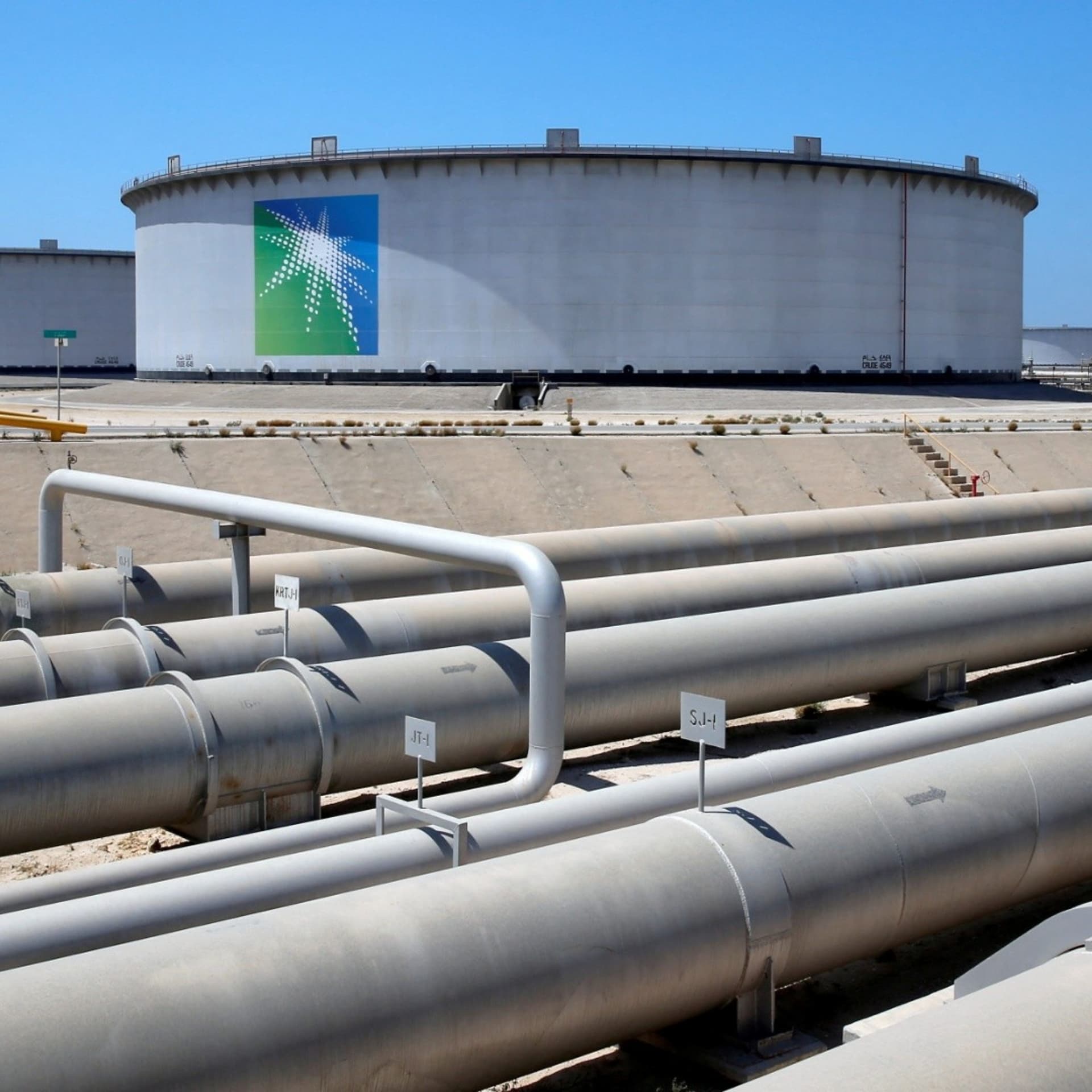
The Global News Podcast brings you the breaking news you need to hear, as it happens. Listen for the latest headlines and current affairs from around the world. Politics, economics, climate, business, technology, health – we cover it all with expert analysis and insight. Get the news that matters, delivered twice a day on weekdays and daily at weekends, plus special bonus episodes reacting to urgent breaking stories. Follow or subscribe now and never miss a moment. Get in touch: globalpodcast@bbc.co.uk Photo: Tanks and oil pipes at Aramco's Ras Tanura oil refinery and oil terminal in Saudi Arabia. Credit: REUTERS/Ahmed Jadallah