
In short
Iran hardens demands for reopening the Strait of Hormuz; Zelensky seeks more European missile interceptors; US Senate confirms Todd Blanche as Attorney General; Palestinians accuse Israel of weaponising archaeology in the occupied West Bank; AI firms allegedly bulk-buy and destructively scan old books; Canada wildfire update; Japan paternity leave shift.
Guests (named in transcript)
None as interview guests. Analysts/correspondents: Sebastian Usher (Middle East analyst), Dan Johnson (Ukraine correspondent), Bert DeBoosman (White House correspondent), Dale Johnson (sports correspondent), Alfie Habesher (Canada reporter), Sebastia Nasher (West Bank special report), Orwin Bennett-Jones (colleague), Ana Aslam (AI/books reporter). Individuals quoted: Abu Madif, Mohammed Azem, Mahed Saka, Alon Arad, Shmuel Browns, Shu Matsuo Post.
Key claims/examples
Iran conditions include war reparations, sanctions relief, full US troop/force withdrawal, and ending the US blockade; US threats haven’t been politically sustainable. Zelensky reports Russian missiles shot down none; family killed by drones near Kyiv. Blanche confirmation criticized as politicising DOJ; past Epstein-file handling questioned. West Bank: land expropriation for national parks at Sebastia and Herodium; UNESCO adds sites to World Heritage lists/danger. AI: orders like 71 books; “Project Panama” documents allege destructive scanning; companies deny destroying rare books. Canada: wildfire ~9,500 hectares; 20,000 evacuated. Japan: over half of men take paternity leave; company disclosure rules cited.
Written by AI. May contain mistakes. Listen to the episode to check what was said.
Chapters
Tap a time to open that second in VOIran's Stance on Strait of Hormuz
1:38 to 2:24
Explore Iran's conditions for negotiations regarding the Strait of Hormuz.
“Hello, I'm Ankur Desai and in the early hours of Sunday the 9th of August, these are our main stories.”
Iran's Demands for US Relations
2:24 to 3:01
Learn about the demands Iran has set for the US before reopening the strait.
“Orders coming minutes apart, one of them was 71 books, biographies, cartoons, political cartoon books.”
Impact of Trump's Policy on Iran
3:01 to 4:50
Understand how Trump's approach is influencing Iran's negotiations.
“Our Middle East analyst Sebastian Usher told me more about the Iranian conditions.”
Zelensky's Plea for Support
4:50 to 7:20
Hear about Zelensky's urgent request for military support in Ukraine.
“There is a deal that is being worked on at the moment between Iran and Oman to open a new route.”
Zelensky's Visit to Serbia
7:20 to 9:35
Discuss the significance of Zelensky's visit to Serbia amidst geopolitical tensions.
“with a special report from the occupied West Bank.”
New Attorney General's Confirmation
9:35 to 10:19
Analyze the implications of Todd Blanche's confirmation as Attorney General.
“One of Mr Zelensky's aides described the visit as a slap in the face for Russia.”
Concerns Over Justice Department Independence
10:19 to 12:22
Explore concerns regarding the independence of the Justice Department under Blanche.
“He had been serving as acting attorney general since April, after the sacking of Pam Bondi.”
Republican Support for Trump
12:22 to 14:00
Examine the current dynamics of Republican support for Trump amidst controversies.
“There was criticism of his handling of the Epstein files in the past as well.”
Political Pressure Ahead of Elections
14:00 to 14:21
Discussion on how constituents are influencing party concerns before elections.
“Many of them will be hearing from their constituents about the high price of petrol that they're paying for, about the high prices of fertilizer.”
FIFA President Under Fire
14:21 to 14:59
An overview of FIFA president Gianni Infantino's struggles amid controversy.
“FIFA has denounced what it's called a concerted and ongoing effort to undermine its president Gianni Infantino.”
Show all 22 chapters
FIFA's Defense of Infantino
14:59 to 15:18
FIFA responds to allegations against its president, emphasizing democratic processes.
“In a statement issued tonight, FIFA hit out at what it called unsubstantiated assertions and demonstrably false claims, but did not specify the reporting it was referring to.”
Future Uncertainty for Infantino
15:18 to 15:40
Discussion on the upcoming election for FIFA president and the challenges faced.
“It added that the future of its president should be decided by established democratic processes and not be the subject of allegation, insinuation or misinformation.”
Future Uncertainty for Infantino
16:15 to 16:55
Discussion on the upcoming election for FIFA president and the challenges faced.
“I'm the host of You're Dead to Me, the BBC comedy show that takes history seriously.”
Wildfires in British Columbia
16:55 to 17:54
Report on the devastating wildfires in British Columbia and their impact.
“ever wonder why we make the choices we do and how to make smarter ones?”
Evacuation and Response to Wildfires
17:54 to 20:48
Details on evacuations and the response to the rapidly spreading wildfires.
“Now to Canada, where thousands of people are fleeing their homes as a raging wildfire in British Columbia has doubled in size and is spreading quickly.”
Preparedness for Future Wildfires
20:48 to 21:24
Discussion on the need for better preparedness for increasingly common wildfires.
“So how well prepared are countries and now they are more intense and more frequent, these wildfires?”
Heritage Sites in the West Bank
21:24 to 22:31
Exploring the tensions surrounding land expropriation in the West Bank.
“In the occupied West Bank, thousands of ancient sites remain unexcavated, but Palestinians say Israel is expropriating land to solidify its control of the territory.”
Impact of Israeli Policies on Heritage
22:31 to 24:09
Examining the impact of Israeli policies on Palestinian heritage sites.
“He says that as Israeli-controlled titans, local people no longer feel free to clean the site.”
Weaponization of Archaeology
24:09 to 25:16
Discussion on how archaeology is used in political disputes in the region.
“The way we decide whether Herod was here is by finding a coin from Herod or pottery that can be dated to the time of Herod right here.”
Changing Attitudes Towards Paternity Leave
25:16 to 28:00
Exploring the shift in attitudes toward paternity leave in Japan.
“Their owners fear their fortunes may never revive if the Israeli authorities increase their control of the site, effectively removing it from the custodianship of its local Palestinian population.”
Destructive Scanning of Old Books for AI
28:00 to 29:51
Explore the practice of destructive scanning of old books for AI training.
“And being a provider doesn't necessarily mean just making money.”
The Ethical Dilemma of AI and Literature
29:51 to 31:16
Discuss the ethical implications of sacrificing old books for AI development.
“I think instinctively all of us are not enthused at the idea of anyone destroying books.”
Transcript
Automatic transcript. May contain errors.0:00This BBC podcast is supported by ads outside the UK.
0:30No bouncing between tabs. And best of all, no spreadsheets. Stop managing software and start managing your business with one unified system. Try for free today at odoo.com. That's O-D-O-O dot com. Ever wonder why we make the choices we do? And how to make smarter ones? Introducing Choiceology, an original podcast from Charles Schwab. Join Wharton Professor Katie Milkman, an award-winning behavioral scientist and author of the best-selling book, How to Change, as she shares true stories from Nobel laureates, authors, athletes, and everyday people about why we do the things we do and how to make better choices to help avoid costly mistakes.
1:14Each episode covers the latest research in behavioral science and dives into themes like the power of self-control, shaping your mindset for success, navigating new beginnings, and why starting over can feel so hard. Listen to choiceology at schwab.com slash podcast or wherever you listen.
1:37This is the Global News Podcast from the BBC World Service. Hello, I'm Ankur Desai and in the early hours of Sunday the 9th of August, these are our main stories. Iran says negotiations over new arrangements for the Strait of Hormuz are going well, but sets out conditions for the US before the waterway can be reopened. Ukraine's President Zelensky pleads for more European support on a visit to Serbia, a traditional Russian ally. And the US Senate confirms Todd Blanche as the new Attorney General, putting Donald Trump's former lawyer in charge of the Justice Department. Also in this podcast, Palestinians accuse Israel of weaponising archaeology in the occupied West Bank.
2:23And... Orders coming minutes apart, one of them was 71 books, biographies, cartoons, political cartoon books. It was obviously not human. Why are AI companies bulk buying old books and then destroying them?
2:42Both Iran and Oman say negotiations over new arrangements to manage traffic through the Strait of Hormuz have been constructive. But Tehran has warned that any deal would not see an immediate reopening of the vital waterway. It set out demands the US must meet before the strait can be reopened. Our Middle East analyst Sebastian Usher told me more about the Iranian conditions. It looks like a hardening of Iran's stance. These are conditions that have been around, essentially a part of a memorandum of understanding of a framework agreement, But the timing was different and left more vague. I mean, what Iran's security chief has just come up with is demands saying that in order just for the Strait of Hormuz to be fully reopened, to be fully operational, they need to be met.
3:30So that's for war reparations, that sanctions relief, the full withdrawal of all US troops and forces in the region, as well as an immediate end to the blockade that the US has imposed. So all of those were sort of part of what the Memorandum of Understanding had, but the timing and the mechanism of it seemed very different. And the conditions from the US side were still very much about Iranian commitments over its nuclear program and giving up any ambitions to develop a nuclear bomb and potentially hand over the enriched uranium that it has. This seems to change that and put much more pressure on the Americans to do this now.
4:14Why have Iran got this emboldened stance then all of a sudden? I mean, Iran has watched, as everyone else has, how President Trump has basically walked the world up to the hill and then walked them straight down again. I mean, we've had media organisations like us, like CNN, essentially noting how many times President Trump has done that. I think it's at least seven times that he's threatened utter destruction in Iran. And then stepped back and said that's because a deal is imminent. He did that just a week ago. So therefore, they have a stronger hand because the Strait of Hormuz is still essentially closed.
4:48Very few vessels are going through. There is a deal that is being worked on at the moment between Iran and Oman to open a new route. But though both sides have talked about there being progress in that and constructive talks, that hasn't happened yet. And Iran has been stressing throughout the days those talks have been going on that even if it does happen, it's not connected necessarily to the full reopening of the Strait of Hormuz, which, of course, is what the US wants. President Trump has the pressure of midterms on the horizon, losing support at home from his Maga Kaur supporter base. Where does it leave him and the US right now then?
5:22I mean, in a difficult situation, there's no doubt. I mean, as President Trump, as the US said throughout, I mean, they have the military capability, obviously, to wreak that kind of destruction on Iran. But they don't have the political will to do it, essentially. and the consequences that there would be, obviously economically, going far beyond the dire consequences of the closure of the Sridhar Hormuz. And also now with the Houthis in Yemen closing down another important waterway, the Bab al-Mandeb, not closing it down, but making it more difficult for Saudi ships to go through. So that pressure has only intensified.
5:56It hasn't weakened. And each time that Washington has escalated, It only seems to have pushed Iran, the leadership into an even more obstinate position where they carry out more attacks on Gulf countries. They widen the conflict. And that price politically that President Trump, the Republican Party, the US itself, you know, has been paying, it just doesn't seem to be worth it. It doesn't seem to be accomplishing what they want. So how many times can President Trump issue such extraordinary threats and not go through with them? Just very briefly, I mean, this deal between Iran and Oman just a few weeks ago was something that President Trump utterly ruled out because it leaves Iran with considerable control over the Strait of Hormuz.
6:43It may well be able to charge fees for vessels going through. at that time, President Trump was even talking about attacking Oman over this. That has very much shifted. These talks between Iran and Oman pretty much seem to have a US blessing. And it may be an off ramp for President Trump, not achieving anything, essentially, that he said that it could, but removing the biggest headache that he's facing at the moment, which is the Strait of Hormuz. And then everything else, you know, I guess he feels, his administration feels can be dealt with after that. But this is their most pressing political necessity.
7:16Sebastian Asher. And we'll hear more from Sebastian later in the programme with a special report from the occupied West Bank. President Zelensky has made an impassioned plea for Ukraine's allies to urgently provide more interceptors after another night when the country's defences failed to shoot down a single Russian missile. Three members of one family, including a child, were killed in the latest round of strikes. Volodymyr Zelensky aimed his appeals at Germany and Poland. but also mentioned Japan and South Korea, where such exports are restricted by domestic law. He was speaking in Serbia on his first visit to a long-standing ally of the Kremlin.
7:56Our Ukraine correspondent Dan Johnson sent this report.
8:03On the outskirts of Kiev, firefighters tackled an intense blaze that destroyed a family home after it was hit by Russian drones. A three-year-old boy was killed along with his grandparents. His 15-year-old brother was injured along with their parents and a neighbour who tried to help. Svetlana lives next door. My husband rushed to get water to put out the fire, but they didn't help. The neighbours rushed out, trying to rescue a small child, but they couldn't find the child.
8:39Ukrainian prosecutors are gathering evidence at the scene and say it could amount to a war crime. Russia also claimed to have struck a missile factory close to Kiev. Ukraine wouldn't confirm it. President Zelensky is warned repeatedly of the need for more US patriot interceptors to shoot down Russian missiles, but he's also pushing for tougher sanctions.
9:05He's concluded a two-day visit to Serbia, his first to the traditional Russian ally and one of the few European countries not to impose restrictions on the Kremlin.
9:21Supportive statements were exchanged with the Serbian president, but Aleksandr Vucic had already ruled out a change of policy towards Moscow. Serbia is pursuing European Union membership and has provided aid to Ukraine. there's talk of a possible trade deal. One of Mr Zelensky's aides described the visit as a slap in the face for Russia. Ukraine's also hit two more Russian oil refineries in its intensifying campaign of long-range drone attacks targeting fuel supply facilities and online retail warehouses. Dan Johnson reporting from Kiev. The White House has a new Attorney General. On this vote, the yeas are 50, the nays are 49.
10:05The nomination is confirmed. The controversial appointment of Todd Blanche, previously Donald Trump's personal lawyer, has sparked criticism that an impartial government department could become an agency that would do his bidding. He had been serving as acting attorney general since April, after the sacking of Pam Bondi. And it's seen as a major win for the US president after several Republican senators had threatened to rebel and vote against him. One of the concerned senators was Bill Cassidy, who ended up voting in the way Mr Trump wanted. He explained why. This is not a referendum on President Trump.
10:44It is a decision regarding Mr Blanche in very specific circumstances. All considered, I will vote for Mr Blanche. I'll be criticized for this vote, what's new. but people can be assured that I worked hard to understand the issue and to make the right decision. So what is the history of the relationship between President Trump and Todd Blanche? I heard more from our White House correspondent, Bert DeBoosman. They have a relationship spanning back many years. Todd Blanche was his personal attorney and as such kind of was at Trump's side during many of the legal battles he faced before returning to the White House in January.
11:23Since then, he's been the deputy attorney general under Pam Bondi until she lost her job not long ago. And then that kind of began these weeks of uncertainty about whether he would be confirmed to take the role formally going forward. And that's what the vote was about last night. I guess a lot of people will be wondering then, will he do what President Trump asks of him? Well, I think President Trump's detractors, of course, Democrats, but also some Republicans, There is a concern that under Todd Blanche, the Justice Department could be used to target President Trump's perceived political opponents and the detractors he has in government and outside of government.
12:01Of course, the White House and the Justice Department and Mr. Blanche himself would push back on that, saying that his role as the chief law enforcement officer of the United States is independent of the executive branch and the White House. I think it's one of those questions that is highly partisan and very divided opinion here in Washington. So it would depend who you ask. There was criticism of his handling of the Epstein files in the past as well. And will there be criticism coming his way now he's in such a key position or a lot more scrutiny over his decision making? Well, I think in the coming days and weeks, we'll very likely hear from members of both parties who criticized his handling of the Epstein file, as well as from some of the victims and the representatives who have kind of singled him out as someone they saw as not being particularly supportive to transparency with the Epstein files.
12:50He's pushed back very, very strongly and then said he's done everything he can and that if he had seen any sort of potential criminal charges in the files that he would have filed those criminal charges. But nothing really has come of that. So I think there's quite a lot of dissatisfaction among people that feel very strongly about the Epstein case that he did not perform to the best of his ability. But as I mentioned, the Justice Department kind of dismisses those claims. And at the moment, there's really kind of no forward movement in terms of any sort of prosecutions that might take place here in the United States, at least.
13:22What can we make of the support that President Trump holds amongst Republicans? There were two who voted against this appointment. Well, there's certainly been a perception here in Washington that in recent months, more Republicans are willing to stand up to President Trump. Before that, the kind of consensus had been that President Trump still has enormous power over the party as a whole. I think one of the main turning points was the war in Iran. we saw the Senate and then the House pass kind of a symbolic war powers resolution, which in practice means little, but it really was kind of a rebuke of President Trump by members of both parties.
14:03Many of them will be hearing from their constituents about the high price of petrol that they're paying for, about the high prices of fertilizer. And I think that really weighs on some members of the party ahead of the November midterm elections and their longer term concerns for any sort of eroding and support for Republicans. Ben Deboosman in Washington. FIFA has denounced what it's called a concerted and ongoing effort to undermine its president Gianni Infantino. He's fighting for his future after his aborted plan to sell stakes in the World Cup and other football competitions to private investors led to calls for him to resign.
14:41Here's our sports correspondent Dale Johnson. This statement follows a Daily Telegraph report that a woman who's alleged to have been in a relationship with Mr Infantino was given a severance payment by European football's governing body, UEFA. Mr Infantino has strongly denied those allegations. He's been under increasing pressure since he abandoned the plan to sell off stakes in competitions, including the World Cup, to a private investment company. In a statement issued tonight, FIFA hit out at what it called unsubstantiated assertions and demonstrably false claims, but did not specify the reporting it was referring to.
15:18It added that the future of its president should be decided by established democratic processes and not be the subject of allegation, insinuation or misinformation. Mr Infantino is due to stand for election for a fourth term as FIFA president next March. Dale Johnson. Still to come in this podcast. There's definitely a stigma, but becoming a father, being present, that was more important for me. With Japanese men breaking gender stereotypes to take paternity leave.
15:57With the new Schwab Teen Investor account, teens can gain hands-on investing experience and build positive money habits. It's an account co-owned by you and your teen. so you can monitor and engage with the account while your teen learns how to invest and manage money. Learn more at schwab.com. Hello, Greg Jenner here. I'm the host of You're Dead to Me, the BBC comedy show that takes history seriously. Every episode, I pair up a top historian with a fantastic comedian, and we have a lovely, funny, fascinating chat about a different subject from world history. And in this new series, we're beginning with an epic voyage through the story of Homer, the Iliad and the Odyssey.
16:36and that's with Kyle Smith-Bino joining us and then we'll be learning about Francis Galton and the racist discredited pseudoscience of eugenics with Desiree Birch we'll meet many medieval saints in their bone boxes with Rachel Parrott so if that sounds like your sort of thing listen to You're Dead to Me wherever you get your podcasts thank you, bye! ever wonder why we make the choices we do and how to make smarter ones? introducing Choiceology an original podcast from Charles Schwab. Join Wharton professor Katie Milkman, an award-winning behavioral scientist and author of the best-selling book, How to Change, as she shares true stories from Nobel laureates, authors, athletes, and everyday people about why we do the things we do and how to make better choices to help avoid costly mistakes.
17:28Each episode covers the latest research in behavioral science and dives into themes like the power of self-control, shaping your mindset for success, navigating new beginnings, and why starting over can feel so hard. Listen to choiceology at schwab.com slash podcast, or wherever you listen.
17:53This is the Global News Podcast. Now to Canada, where thousands of people are fleeing their homes as a raging wildfire in British Columbia has doubled in size and is spreading quickly. The authorities say they're doing everything they can, but say the blaze is out of control. The province's premier is David Eby. Conditions are extremely dangerous and changing minute by minute. The fires are moving incredibly quickly. Please follow the directions of local officials. I know many families are facing an unimaginable day today. People have lost their homes and many people have been displaced. Others are waiting for news about loved ones.
18:31Support is being mobilised, including emergency accommodation and other essential services. I've got more details from our reporter Alfie Habesher. The footage that is coming out of British Columbia is truly, truly chilling. We've seen videos of the night sky completely lit up in red with these enormous and ferocious blazing flames. They're reaching far, far above the height of the top of the trees. And as you mentioned, it really speaks to how fast this is moving, how out of control it really seems. The Regional Fire Service have sort of confirmed this by saying it may be the quickest moving wildfire they've ever seen.
19:06It started on Friday. It's now twice as big. It shows no signs of calming down. And in terms of size, it's now at this point about 9 ,500 hectares. For context, that's about the size of Paris. So we are in an official state of emergency now. OK, and Alfie, people are being urged to get out fast as well. Yes, we've been hearing that homes are being lost, buildings are getting destroyed, although we don't know what the scale of the damage really is right now. More than 20 ,000 people have been evacuated as the firefighters and the first responders are trying to rush in and turn this around. The authorities are saying they are really trying to do everything they can here.
19:41But people are also getting trapped in the blaze as they try to get out, and that's making this rescue effort much, much more complicated. And don't forget, this part of Western Canada, it's a rural area. There's a lot of farm animals and particularly horses that are living here. and people are left with this dilemma that when they try to escape they cannot take these animals with them so they're having to just in kind of desperation throw the gates open and hope that these animals are going to escape by themselves or find their own way back and some people are even resorted to putting specific markings on their animals to hope that they might be able to identify them at some time later on so for the people who have actually managed to get out safely it's a really distressing situation because they just don't know what they're going to return I don't know whether my house is gone or still there or not, but that fire came so fast and furious.
20:28The fire went from 50 hectares to 400 to 1 ,000 to 5 ,000, like within two or three hours. And what was once 15 kilometres away is now right here at the hill. It sounds more and more depressing and distressing when you hear these stories, especially what we've been hearing over Europe in recent weeks and what you've just talked about there. So therefore, I can imagine a lot of people are then raising questions. So how well prepared are countries and now they are more intense and more frequent, these wildfires? Yeah, well, this is something that governments around the world are really going to have to sit with now.
21:02Is it acceptable for people to be losing their homes, possibly losing their lives over something that could in theory be preventable? We know these wildfires are getting more common and this particular case is a good example of how they're becoming faster and more ferocious. You know, people make the point that we've known about this trend for a while now, and they're starting to say that we are simply evidently just not prepared for it. Alfie Habishan reporting. In the occupied West Bank, thousands of ancient sites remain unexcavated, but Palestinians say Israel is expropriating land to solidify its control of the territory.
21:37Israel disputes that, saying it's simply protecting and preserving its heritage. But a UNESCO move to add Sebastia, Nenabolus, to both its World Heritage list and its list of World Heritage in Danger has brought the dispute into sharper focus. Sebastia Nasher has this special report from Sebastia. Up in the hills above the Roman columns of Sebastia are olive fields that have been cultivated for generations by Palestinian families. It's a vital income for them, of course, but it goes deeper than that, as one of those landowners, Abu Madif, explains. Every tree has received more of my attention than my children, more than my family, and more than myself.
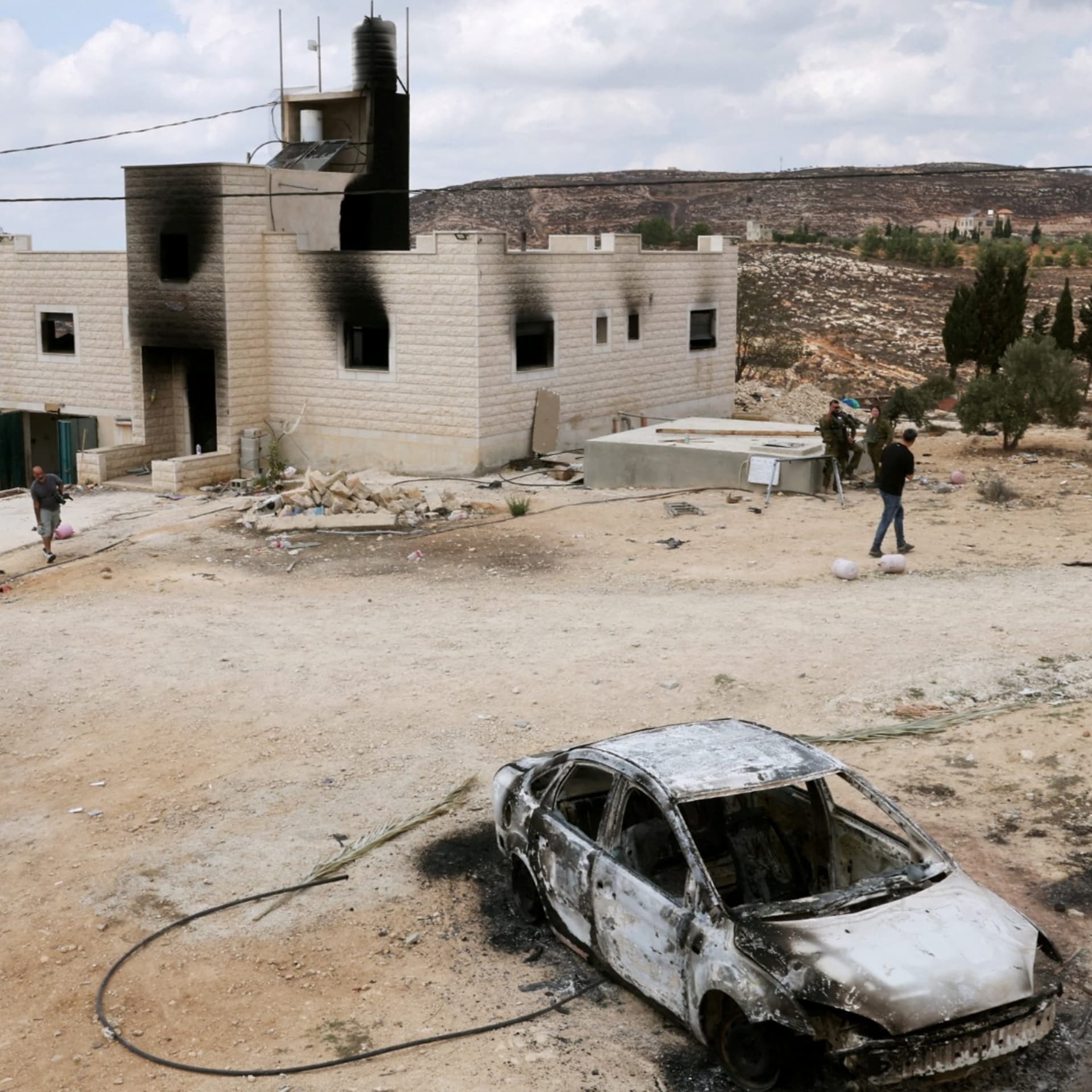
22:19Abu Madif says he's now received notification that his land is part of a tranche of around 450 acres that the Israeli authorities are taking possession of in order to develop a new national park in the archaeological site. Standing on a path between the car park at the ancient site of Sebastia, where the Roman era forum once stood, and the columns of the basilica, the mayor of Sebastia, Mohammed Azem, looks down to his right at some rubbish left in the ruins. He says that as Israeli-controlled titans, local people no longer feel free to clean the site. Mahed Saka, who owns a local restaurant that is under threat of demolition, says the Israeli plan seems to be to cut Palestinian residents off from the archaeological site.
23:06In the middle of the ancient Roman theater, an Israeli activist, Alon Arad, who heads a group that aims to ensure that the ancient heritage of a region belongs to all communities, says the Israeli authorities have bypassed consultation with the local administration and residents of Sebastia. The thing is that Israel is not the owner of this place. This is a Palestinian heritage site. And in order to do it in a positive way, it has to be done with the local community, with the municipality, in order for them to benefit.
23:43Further to the south in the West Bank and just in sight of Jerusalem, a man-made hill rises at Herodium with an extraordinary palace built on its summit by King Herod, who ruled these lands more than 2 ,000 years ago before the birth of Christ. Recently here too, Israel has begun to expropriate land, this time around 80 acres for what it says is the preservation and development of the site. For Shmuel Browns, who's worked on excavations here and leads deeply infused tours when there's a call, it's vital for Israeli archaeologists and officials to be able to oversee and protect places that are so freighted with significance.
Read the full transcript
24:23The way we decide whether Herod was here is by finding a coin from Herod or pottery that can be dated to the time of Herod right here. A new law was proposed earlier this year that would have given the Heritage Ministry sweeping powers to take control of land across the whole of the West Bank. It's now on hold as elections are coming up in Israel and it may never re-emerge. Back in Sebastia, the Israeli activist Alon Arad says the very fact that the bill was put forward shows how even the extraordinary archaeological riches of the West Bank have been weaponized. This is exactly how the mechanism works.
25:03You use archaeology in order to do excavations, to rewrite history, but you also use it in order to reallocate lands from Palestinian to Israeli. Despite the new law being on hold and the intervention by UNESCO, Their owners fear their fortunes may never revive if the Israeli authorities increase their control of the site, effectively removing it from the custodianship of its local Palestinian population. Sebastian Usher. Despite men in Japan being allowed to take time off work when their children are born, deep-rooted gender stereotypes have largely stopped them doing so, until recently. The latest figures show that for the first time, more than half of Japanese men now take paternity leave.
25:51One early adapter was the writer Shu Matsuo Post, who also challenged convention by taking his wife's name when he got married. He told my colleague Orwin Bennett-Jones about his decision to take paternity leave. All the stories that I was making up in my head made it more difficult than it actually was. But when I actually opened up to my boss, he was super understanding and the process was very simple and straightforward. So I'm very grateful to have understanding boss at the time. Yeah, because I guess most men at that time and maybe some now would think, you know, that would affect their promotion prospects.
26:27It could be difficult to ask and damaging to their career. Yeah, there's definitely a stigma at least six years ago when I went through it. I thought about that as well, but becoming a father, being present and going through the process with my wife together, that was more important for me than an immediate career, I guess. Well, many have followed your example. And one of the striking things is how rapidly sentiment is changing on this issue in Japan. Why is that, do you think? I think one of the biggest reasons is that many companies have to disclose a number or percentage of male workers to paternity leave.
27:07And I think that's really pushing, holding those companies accountable. Also, at the personal level, I think more people are just talking about it. You see that on the news, in newspapers. I think that's holding more men accountable. And it's really good to see that. Yeah, it's interesting. The government really is supportive of this, isn't it? You can get as much as 12 months paid parental leave as a father? Correct, yeah. Many people will be listening to this in countries where these rights are just not, this sort of thing just never happens. What would you say to people living in those societies about the value of taking paternity leave?
27:42I'm going to speak from my personal experience. It was overall very, very positive. It gave me a lot of new perspective as a new father. You know, my parents' generations, they grew up believing that, you know, men were supposed to go to work and women are supposed to stay back home and, you know, raise kids. And I think many people still do. So that really challenged my belief. And being a provider doesn't necessarily mean just making money. You know, you can actually be present with your child. Shumatsu Post. With AI companies having already scraped the internet for training data, they're now turning towards physical literature.
28:22There's growing concern over old books being bought, scanned and destroyed to improve artificial intelligence, as Ana Aslam reports. In an effort to improve AI for the future, tech companies are looking to the past. The practice of destructive scanning, where old books are bought in bulk, scanned to train large language models and then destroyed, is now understood to be widespread in the industry. Booksellers from around the world have recently reported unusual orders for hundreds of old obscure books at a time. Anna-Marie Thorby, who has a bookshop in New Zealand, said she was suspicious after a strange request from the US.
29:00Orders coming minutes apart, one of them for 71 books, New Zealand local history books, New Zealand Maori books, biographies, cartoons, political cartoon books. And we were that naive, we actually thought, oh, this bookshop's been hacked. And so we emailed them. They never got back to us. So we did a little bit of research. It was obviously not human. It was impossible to believe that these books were being bought for anything other than something like a Project Panama. Project Panama refers to a copyright lawsuit brought by authors against Anthropic AI, in which unsealed court documents revealed the company's aim was to destructively scan all the books in the world.
29:41A US judge ruled the practice is fair use, and recent reports suggest intermediaries are now stepping up to facilitate the process. But many people, especially artists, feel uneasy about literature being repurposed in this way. I think instinctively all of us are not enthused at the idea of anyone destroying books. I would kind of count myself among these people, but I'm also not surprised that the companies are doing it, as long as it's not sort of regulated away, they will be looking for any kind of edge. It's just another example of how the AI boom or bubble, you might even call it, is just extracting all the resources that we have to fuel the development of this technology.
30:19And that includes water, it includes energy, and apparently it also includes rare books. Anthropic and other companies deny destroying rare books. Tech journalist Emmanuel Mayberg explains that for AI training, a 1970s manual on soil mechanics is more valuable than the Gutenberg Bible. I think when you say rare book, people imagine like a first edition of Oliver Twist or the Dead Sea Scrolls or something like that. The content that is in them, it exists online, it exists in other physical copies, it exists in digital copies. What is rare, literally rare, is, for example, I don't know, like a 1994 walking tour guidebook of Denver.
31:01That is not valuable to most people. It is not emotionally resonant. It's not culturally resonant. But it is valuable as training data. So yet another ethical dilemma posed by AI is sacrificing old books to set up the next digital era a technological leap or a cultural loss. Ana Aslam. and that's all from us for now if you want to get in touch you can email us at global podcast at bbc.co.uk you can also find us on x at bbc world service use the hashtag global news pod and don't forget our sister podcast the global story which goes in depth and beyond the headlines on one big story this edition of the global news podcast was mixed by derrick clark the editor is karen Martin.
31:47I'm Ankur Desai. Until next time, goodbye.
From the publisher
Iran's security chief Mohammad Bagher Zolghadr has warned the Strait of Hormuz will not open until the United States agrees to six conditions. These include easing economic sanctions, paying war reparations and ending the US blockade of Iranian ports. The foreign minister Abbas Araghchi said earlier that Iran and Oman were "very close" to an agreement on a new shipping route through the Strait. Also: Ukraine's President Zelensky pleads for more European support on a visit to Serbia, a traditional Russian ally. The US Senate confirms Todd Blanche as the new attorney general, putting Donald Trump's former lawyer in charge of the justice department. Thousands of people flee their homes in the Canadian province of British Colombia as a raging wildfire doubles in size. Figures show for the first time more than half of Japanese men are taking paternity leave. And the growing concern over old literature being bought, scanned and destroyed to improve AI.
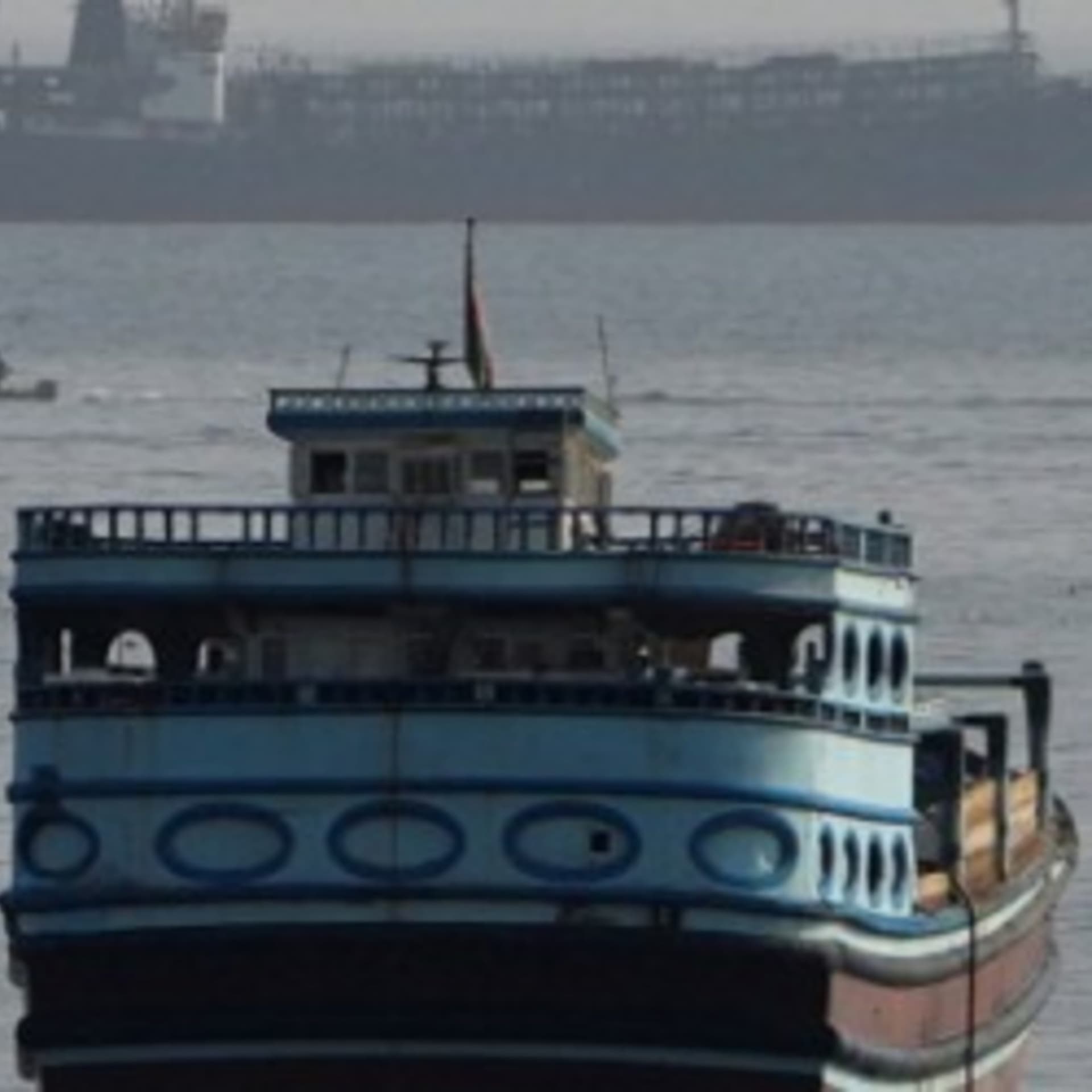
The Global News Podcast brings you the breaking news you need to hear, as it happens. Listen for the latest headlines and current affairs from around the world. Politics, economics, climate, business, technology, health – we cover it all with expert analysis and insight. Get the news that matters, delivered twice a day on weekdays and daily at weekends, plus special bonus episodes reacting to urgent breaking stories. Follow or subscribe now and never miss a moment. Get in touch: globalpodcast@bbc.co.uk Photo: Vessels in the Strait of Hormuz Credit: Reuters