
In short
The episode is a BBC World Service news roundup plus explainers tied to the US at 250 theme. Main topics: Iran’s week-long “funeral of the century” for Supreme Leader Ali Khamenei, who was killed in February during the first day of the US-Israel war with Iran; the UN warns of imminent catastrophe in Sudan’s El Obeid as RSF surrounds the city; and a Japan controversy over a town mayor taking maternity leave. It also covers a Monaco parcel-bomb case (suspect Anastasia Bereskovska, allegedly disguised as a man, with accomplices) and a US Independence Day segment plus a rare UK discovery of an original Declaration of Independence copy.
Guests/backgrounds
Tarana Fatalian (BBC Persian) reports on Iran mourning logistics; Nawal al-Maghafi (senior investigations) reports from Iran’s Bandar Abbas; Imogen Foulkes (BBC) reports on Sudan UN talks; Kurumi Mori (Tokyo correspondent) reports on Mayor Shoko Kawata; David Chazan (Times-Paris) covers Monaco; Nick Robinson interviews Chris Ruddy (Newsmax CEO friend of Trump); Anna Foster interviews Graham Moore (National Archives curator); Michael Skur is the volunteer finder.
Key claims/examples
Iran is staging mass ceremonies with tents, Wi‑Fi, and portable toilets; successor (Amir Khamenei) hasn’t appeared for months. Bandar Abbas residents say the ceasefire is fragile and fear Iran would close the Strait of Hormuz if it breaks. Sudan’s UN warns of “not a drill” violence; RSF attacks have already damaged schools and fuel/water infrastructure. Kawata faces criticism due to Japan’s lack of a legal maternity-leave framework for elected officials. Monaco prosecutors say the bomb was remote-detonated and involved orders from another person. The National Archives copy is one of only 11 known and was printed in New Hampshire, then taken aboard a privateer and later captured by the Royal Navy.
Written by AI. May contain mistakes. Listen to the episode to check what was said.
Chapters
Tap a time to open that second in VOIran's Funeral of the Century
1:08 to 2:14
Discussion of the funeral for Supreme Leader Ali Khamenei and its implications.
“Listen to the global story on BBC.com or wherever you get your podcasts.”
Public Sentiment Towards Khamenei
2:14 to 4:28
Exploration of the mixed feelings towards Khamenei's legacy and the expected turnout at the funeral.
“the long-delayed mourning rituals marking the death of the late Supreme Leader, Ayatollah Ali Khamenei.”
Ceasefire and the Strait of Hormuz
4:28 to 6:10
Report on the fragile ceasefire and its implications for shipping through the Strait of Hormuz.
“about people around the world are going to be watching what takes place.”
Life in Bandar Abbas Amid Conflict
6:10 to 10:19
Nawal al-Maghafi describes daily life in Bandar Abbas during the ongoing conflict.
“and Israeli strikes in Iran and bring Washington to the negotiating table.”
UN Concerns Over Sudan's Civil War
10:19 to 14:00
Discussion of the escalating violence in Sudan and the UN's response.
“Standing amongst the people of Bandar Abbas, it becomes clear that this city's story can't be told through the lens of geopolitics.”
Geopolitical Power and Responsibility
14:00 to 14:34
Discussion on the importance of international cooperation in crisis situations.
“Nobody should be able to put their hand on the table and say, no, we don't think we need to do anything about that.”
Breaking New Ground: Japan's First Mayor on Maternity Leave
14:34 to 16:30
Exploration of Shoko Kawata's groundbreaking maternity leave as a mayor in Japan.
“Now, normally when a pregnant woman decides to take maternity leave, it's seen as a personal decision.”
Cultural Expectations in Japanese Politics
16:30 to 18:49
Discussion on cultural pressures and expectations regarding maternity in Japanese politics.
“I sat down with Mayor Kawata and asked her what the biggest complaint was that she's been getting from residents.”
World Cup Insights and Record-Breaking Moments
19:52 to 21:40
Discussion about the ongoing World Cup and Messi's record-breaking performance.
“and we've now reached the knockout stage.”
Investigation into Monaco Bombing
22:47 to 25:00
Details surrounding the investigation of a bomb incident in Monaco involving a Ukrainian woman.
“There've been longstanding allegations of corruption there, which they've always been keen to deny and prevent people from really investigating too hard.”
Show all 13 chapters
July 4th Celebrations and Political Context
25:00 to 28:00
Analysis of July 4th celebrations and Donald Trump's involvement in the 250th anniversary.
“Tomorrow, July 4th, is an Independence Day like no other.”
Discovery of a Rare Declaration of Independence Copy
28:00 to 31:29
Learn about the significant find of a rare 1776 Declaration of Independence copy.
“We hold these truths to be self-evident, that all men are created equal, that they are endowed by their creator with certain unalienable rights, that among these are life, liberty and the pursuit of happiness.”
Collaboration for America's 250th Anniversary
31:29 to 31:46
Hear about a special collaboration discussing America's influence on the modern world.
Transcript
Automatic transcript. May contain errors.0:00This BBC podcast is supported by ads outside the UK.
0:30No bouncing between tabs. And best of all, no spreadsheets. Stop managing software and start managing your business with one unified system. Try for free today at odoo.com. That's O-D-O-O dot com. How has America shaped the world? I'm Asma Khalid, host of the Global Story podcast from the BBC. As the United States marks its 250-year anniversary, we've been exploring the surprising and often hidden ways the U.S. has shaped the modern world. And today on the show, we answer your questions about this moment and what to expect in the years to come. From the BBC, it's the United States at 250. Listen to the global story on BBC.com or wherever you get your podcasts.
1:17This is the Global News Podcast from the BBC World Service. I'm Celia Hatton, and at 15 hours GMT on Friday, the 3rd of July, these are our main stories. A week-long funeral begins for Iran's late Supreme Leader, Ali Khamenei. The UN warns of a potential catastrophe in Sudan as paramilitary forces surround a city and prepare to attack. Police hunt for the suspect behind a parcel bomb attack in Monaco, now believed to be a woman disguising herself as a man. Also in this podcast, why taking maternity leave as a town mayor is highly controversial in Japan. There were those who said it's inappropriate for me to get pregnant and undergo childbirth while serving this limited term in office.
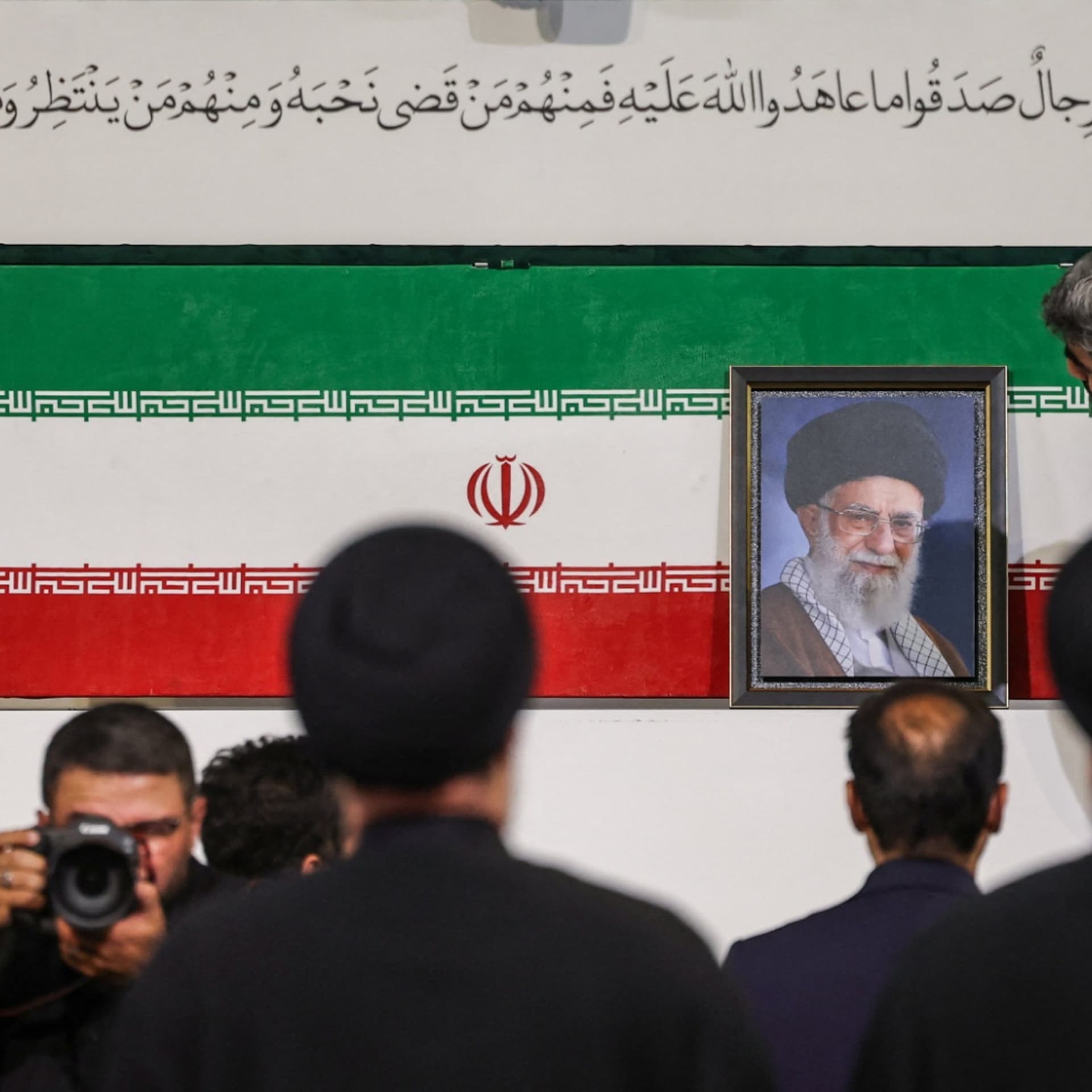
2:13First, it's being described as the funeral of the century by Iran's state media, the long-delayed mourning rituals marking the death of the late Supreme Leader, Ayatollah Ali Khamenei. He was killed on the first day of the U.S.-Israel war with Iran in February, when powerful U.S. and Israeli strikes targeted his compound. The Ayatollah's flag-draped coffin is lying at the Grand Mosalla Mosque in Tehran, where there have been extended prayers.
2:56Iran's president has paid his respects, along with representatives from Pakistan, Russia, China and India, alongside Afghanistan's Taliban rulers. Days of ceremonies and processions are planned in cities across Iran and Iraq, culminating in the Ayatollah's burial in his hometown of Mashhad on Thursday of next week. The Iranian government is expecting millions of mourners to attend, as I heard from Tarana Fatalian from BBC Persian. We'll have to see how many people will turn up, but the Islamic Republic is certainly planning for a very grand funeral procession. They started slightly earlier than they had previously announced.
3:39From what I've seen from the pictures, they have put tents across the country. I've seen in one of the grand parks of Tehran, they've put about a thousand tents, portable loos everywhere. There are announcements about Wi-Fi and commute and all these things to make life a bit easier for people who want to attend. It is certainly a question, though, how many people will attend, because as we know, Supreme Leader Ali Khamenei was loved by some, but also hated by many. And many people remember him as the big dictator of Tehran. And some people were even happy when he died. So we'll really have to see what is going to happen in the coming days.
4:27So it's an event that's playing out inside of Raab. about people around the world are going to be watching what takes place. It's more than just a funeral, isn't it? What message is it showing to the world? Well, the Islamic Republic is in a very difficult position right now after the war, after the protests that thousands were killed. It seems like it's a message that the Islamic Republic is still standing. It still has its own followers. And that's why it's very important to see how many people will turn up. That is a testimony to show how popular the Islamic Republic is among its people. And that's why it's very important for it to have many people show up.
5:13Another big question. Do you think we're going to be seeing images of the current Supreme Leader, the successor to the late Supreme Leader, his son? That is a question asked by many right now. And everyone thought that by now, it's been about four months since the death of Ali Khamenei and his son, the successor, Amor Shabba Khamenei, has not been seen or heard. We've only have seen written messages from him. So there has been questions about how badly he was injured and there has been rumours about him. So it is a very important question. Everyone thought that he would be showing his face by now and today he hasn't.
5:56So we'll have to see. Tarana Fatalian from BBC Persian. Well, the fragile ceasefire between the US and Iran may be holding for now, but the Strait of Hormuz is still not running as it was before the war began. Control over shipping through the strait has proven to be Iran's key bargaining chip to end U.S. and Israeli strikes in Iran and bring Washington to the negotiating table. Our senior international investigations correspondent Nawal al-Maghafi has traveled to the southern Iranian port of Bandar Abbas. The BBC is the first international broadcaster to report from the strait itself. Nawal has been seeing how Iranians at the heart of this crisis are living through that uncertain peace.
6:41We're on a fishing boat off the southern coast of Iran, heading out into the Strait of Hormuz. It's early in the morning and already the stifling heat is overwhelming. As we sail further out to sea, we find dozens of boats anchored, waiting for permission to move. We are right at the heart of the Strait of Hormuz and behind me is an international ship that's been captured by the Iranians. it's easy to forget how vital these ships are for day-to-day life. They're carrying fuel, they're carrying fertilizer. And when they're stopped, prices go up for all of us. In the last few months, this waterway has become a bottleneck and a crucial weapon for Iran.
7:22We're in the car driving across Bandar Abbas City on our way to the mayor's office. I want to speak to him about what he thinks about this war and about the ceasefire and its fragility. We arrive at a government complex and meet Mehdi Nobani in his office. He's been the city's mayor since 2021. There are many in Israel and in Washington who say this war has been a success. They've killed your supreme leader. They've killed multiple military commanders. They've attacked military sites, weapons depots, radar sites. What would you say to that? Not at all. Iran has been successful because Israel and the U.S.
8:03haven't reached their goals. If the ceasefire breaks down, Iran will close the strait for sure. As that fragile ceasefire continues to hold, life carries on as normal. We're heading out to a local market. The alleyways are lined with produce and motorbikes weave through the crowd. I'm just walking around the market in the heart of Bandar Abbas and it is bustling with people It's quite late in the evening, around 8pm, and it's packed People are buying fruits, they're buying cherries and grapes which are quite popular here There are shops that are selling sunglasses, selling toys and each one of them is quite busy because the weather here is scorching hot and so the day really starts at night and it's made me think that Bandar Abbas is always seen through the lens of its strategic importance, through the lens of the Strait of Hormuz and the impact it has on the global economy but we very rarely see it through the eyes of its people.
9:06They've had no say in this war and yet they're the ones that have had to endure it and so it's very interesting just walking around and speaking to people about the impact it's had on them and how it's affected their lives. We meet two women, Fatima and Mesoume, who are selling fruit from their stalls. Most are still too afraid to speak, scared of the repercussions. Fatima has begun selling peaches once again. Her son lost his job during the war. Her family now relies on what she alone can bring home.
9:44We didn't want a war. Trump wanted a war. He attacked us unexpectedly. We didn't want this. The rhythm of the market has returned, but war is still the topic of conversation. Nearby, 40-year-old Masumi is listening and wants to join in.
10:11Everywhere is a problem. It causes a lot of economic issues, but that's war. Everyone needs to get used to it. We need to be patient. Standing amongst the people of Bandar Abbas, it becomes clear that this city's story can't be told through the lens of geopolitics. Behind every calculation about global trade is a family whose life hangs in the balance. Nawal al-Maghafi reporting from Bandar Abbas in Iran, on condition that none of her material is used on the BBC's Persian service. These restrictions apply to all international media organizations operating in Iran. To Sudan now, there are growing fears that the three-year civil war there could soon result in thousands more civilian deaths.
10:59That's because the Sudanese city of El Obeid has been surrounded by the paramilitary group fighting on one side of the war, the Rapid Support Forces, or RSF. And there are worries the RSF will soon attack the city, which is experiencing what's described as siege-like conditions. Drone strikes have already damaged schools, shelters, fuel stations and tankers, causing severe fuel and water shortages. The UN Human Rights Commission has been holding an emergency session in Geneva to discuss the situation. Our correspondent Imogen Foulkes told us more. This session is aimed to be preventative. Human Human Rights Chief Volker Turk told the member states, this is not a drill.
11:44There are signs of serious imminent violence in the city of El Obey. There are half a million civilians in there and around. Some of them displaced many times. Food and water running very short. It's being destroyed by those, the RSF, attacking the city. And I think what's the frustration among UN human rights is that they made these warnings before the siege and then fall of El Fasher. Now, last October, as we know, tens of thousands of people were killed in a few short days when that city fell. So just to give you an idea of what the warning signs that the UN has been seeing, I talked just a few hours ago to UN human rights representative in Sudan.
12:32she's Li Feng, and she told me that her human rights team were seeing very worrying signs. Right now, what we have been documenting is increased arrests and detention within Al-Abaid of civilians who are accused of collaboration with the RSF. And this has been accompanied by rising hate speech, very disturbing social media posts calling for RSF collaborators to be arrested or killed. And this is the environment within the city. And in particular, those who have fled areas in West Kordofan and South Kordofan, which are controlled either by the RSF or the SPLM North, are seen as potential collaborators because they have come from outside.
13:25So this is a risk for those who are remaining. Imogen, more than three years into the civil war in Sudan, what can the UN achieve? Well, the UN Human Rights Council has no prosecuting powers. It has no peacekeepers. It can't order sanctions. These are all things for, for example, the International Criminal Court or for peacekeepers and sanctions. That's the Security Council. Now, interestingly, this morning, the UN Human Rights Chief, Volker, referred specifically to the Security Council and said, in situations like these where we know a slaughter appears imminent, the permanent five should not be able to use their vetoes.
14:08The risks are too grave. Nobody should be able to put their hand on the table and say, no, we don't think we need to do anything about that. That's something many member states have been asking for for more than a decade. Perhaps, and I think Fulker Turk is hoping, this will be the moment where people say, you can't just use your geopolitical power to say, no, we don't think we should do anything when thousands are at risk of being killed. Imogen folks. Now, normally when a pregnant woman decides to take maternity leave, it's seen as a personal decision. Not so for one woman in Japan who has sparked a national debate over her announcement she'll take two months off before she has a baby and two months after.
14:50The woman, Shoko Kawata, is an elected mayor in a small town in western Japan, and she's the first Japanese mayor to take maternity leave. Some people in Japan have strong opinions about that. Indeed, many working women in Japan face huge cultural pressures to resign or scale back their hours once they've had a baby. Our correspondent in Tokyo, Kurumi Mori, told Paul Henley more about the mayor. Shoko Kawata is Japan's actually youngest ever female city mayor when she took office back in 2023. So it's not the first time she's been in the news. She graduated from Kyoto University. She studied economics before pursuing this career in local government.
15:33And she, according to the official profile page, enjoys tea ceremonies, wearing kimonos and visiting shrines. So very fitting for that part of the country. But yeah, she campaigned on policies to support families, childcare and welfare. And she's been saying she wants to make the city more attractive for younger generations. Because as you know, Japan is facing this population decline. And so now she's 35 years old and she's making headlines again as the first sitting mayor in Japan to take maternity leave. It sounds, therefore, totally fitting that after what she's supported, she decides to take maternity leave, is it?
16:14Yeah, I mean, the biggest issue I want to point out, though, right now, and the conversation surrounding her mat leave isn't really about she's a woman and she's taking leave versus a man who would take leave. It's really about Japan not having a formal legal framework for elected local officials to take maternity leave. I sat down with Mayor Kawata and asked her what the biggest complaint was that she's been getting from residents. So take a listen. There were those who said it's inappropriate for me to get pregnant and undergo childbirth while serving this limited term in office. In Japanese society, particularly in public service and politics, there remains a strong expectation that individuals should relinquish their private lives and devote themselves wholly, both physically and mentally, to serving the public.
17:16I think these kind of cultural expectations leads to such criticism. The fact that Japan has its first female prime minister suggests that there are more open minds to seeing more women high up in politics. Is that the case? I like to think so. But the facts remain that women significantly are underrepresented in politics. Even though we do have a head of the country, Sanae Takai-chi, being a woman, it's still the case that Japanese politics in this landscape, it's still quite seen as difficult for women to take on leadership positions. One thing I found interesting was I talked to Mayor Kawata's deputy mayor, who's going to be stepping in while she's taking that leave.
18:06He is 62 years old. He's been in local government his whole career. And he pointed out that when he had two kids of his own about three decades ago, he didn't take a single day off. He said his wife took care of the kids. And even when the babies were crying at night, he said he didn't get up. He left it all to his wife. But fast forward to today, he has two daughters and one of his daughters has a newborn. And he said that his son-in-law is taking six months of paternity leave from his job. So, I mean, it sounds like there are changes to attitudes about paternity leave, maternity leave in Japan.
18:44Slow changes, but at least signs of change. Kurumi Mori in Tokyo. Still to come in this podcast. As I undid it, there were these big letters, Declaration, on the top. And I thought, wow. So I called over to my boss and said, I think you need to come and have a look at this. The volunteer at the UK National Archives who chanced upon a rare original version of the US Declaration of Independence.
19:20How has America shaped the world? I'm Asma Khalid, host of the Global Story podcast from the BBC. As the United States marks its 250-year anniversary, we've been exploring the surprising and often hidden ways the U.S. has shaped the modern world. And today on the show, we answer your questions about this moment and what to expect in the years to come. From the BBC, it's the United States at 250. Listen to the Global Story on BBC.com or wherever you get your podcasts. The 2026 World Cup started with 48 teams and we've now reached the knockout stage. Records have been broken the way that Messi has been able to score these goals late in his career.
20:06He's happy to play football and broken records is the consequence for him. And new heroes have emerged. This country's caught the fever. casual fans are now diehard fans. And the More Than The Score podcast is bringing you the stories beyond the scorelines. More Than The Score from the BBC World Service. Listen now wherever you get your BBC podcasts. When you hear the phrase made in China, what do you think? I'm Tristan Redman. And I'm Asma Khaled. And together we host the Global Story podcast from the BBC. And today on our show, we look at the origins and evolution of made in China, because it actually wasn't inevitable.
20:49What we're talking about is the world's largest communist nation is at the beating heart of the capitalist system. For more, listen to The Global Story on BBC.com or wherever you get your podcasts.
21:07This is the Global News Podcast. Interpol says it's searching for a Ukrainian woman who was suspected of planting a bomb which injured three people in Monaco on Monday. Local prosecutors say the suspect, identified as 39-year-old Anastasia Bereskovska, had disguised herself as a man and detonated the device by remote control. They said she did not act alone. Among those reportedly injured was a Ukrainian oligarch with links to Russia. Johnny Diamond spoke to David Chazan, the Times-Paris correspondent, who's been following the story. The CCTV footage showed a person wearing a black fisherman's hat and a black top, who everybody thought was a man, until a witness who had had some sort of interaction with this person went forward to the police and said, I think she's a woman.
22:01And they then managed to trace her. they traced a German registered rental car she had been using in Monaco, which was then driven into France, into Italy, and from Italy across several other European countries, and apparently back to her home in Germany, where she is believed now to be living. So I get the impression that the Monaco authorities are hopeful that there will be an arrest soon. Monaco is not exactly a sort of a hotbed of communications and public relations. It tends to keep journalists on a very, very tight leash. Are we getting anything more from the Monaguesque authorities about circumstances around the explosion and what the intent was behind it?
22:51Well, not really. I mean, you're absolutely right. It's a very closed society. People don't like talking to reporters. There've been longstanding allegations of corruption there, which they've always been keen to deny and prevent people from really investigating too hard. But what the deputy public prosecutor has said is that the investigation has revealed that there are accomplices, that Berezovska did not act alone, and that there was also somebody behind this bombing who apparently ordered her to carry it out. All very mysterious, no further details given. But the prosecutor also said that the investigation was by no means over, and he was hopeful that accomplices would soon be identified.
23:46David, the flip side of keeping pesky journalists off the streets in Monaco is that it's a very safe and secure place for very rich people who don't want to be troubled by anybody else. Presumably, it's a bit of a struggle painting that picture right now. Yes, I was there in Monaco yesterday, and I spoke to quite a lot of people, both Monegasque citizens and foreign nationals. I mean, it's a tiny little enclave wedged between France and the Mediterranean. It's only got a population of 38 ,000 people, and three quarters of them are pretty well-heeled foreign residents. So the sort of the twin pillars of Monaco's economy are offering wealthy foreigners the possibility of taking up residence there with no income tax, no death duties, but also providing them with security.
24:47They've got more than 600 police there. That's one police officer for every 60 residents. And there are CCTV cameras almost everywhere. David Chisann. Tomorrow, July 4th, is an Independence Day like no other. Not just because the United States is celebrating 250 years since the Declaration of Independence, but because President Donald J. Trump is leading a national celebration of himself. July 4th, we will have the greatest show of all on the National Mall. Your favorite president will be speaking. So please show up. That was Donald Trump speaking a few days ago at the Great American State Fair rally in Washington, D.C.
25:32So what does this July 4th tell us about the State of the Union? Nick Robinson spoke to Chris Ruddy, chief executive of Newsmax and friend of the president. I think the country's happy about the 250, but it seems to be a passing moment. Not as many events as you would think leading up to this moment. Now, I know we're entering the 250th year, but usually after the initial celebration, everything's anticlimactic. The country's united, but not to the same degree that it was. And I think there's a lot of polarization in America. And that may be undermining some of the celebratory effects of this that should be felt by everyone.
26:15And did the president, did Donald Trump set up his own organization, Freedom 250, as against the official one, America 250, because he wanted to put his own stamp on U.S. history? Well, I don't know his motivation for doing that. I can tell you that he does seem to want to align this celebration very much with the presidency. He just went out to the opening of the Theodore Roosevelt Library. The president likes Theodore Roosevelt, has pictures of him prominently displayed, sees him as an imperial president like himself that was very powerful both domestically and on the world stage. After that, he's flying back to Washington, and then he's going back out to Mount Rushmore to be with the great monuments of the president, of which Theodore Roosevelt is one of them, with Lincoln, Jefferson, and Washington.
27:07The president has made it clear he would like to be on Mount Rushmore as well. Certainly he has retweeted things that have his picture superimposed or his image etched into the mountainside. So he definitely wants to draw a connection with powerful past presidents and himself. And, you know, he has been a very uniquely different president, a very strong president. When you say he wants to align the celebrations with the presidency, that strikes me as a rather coded way of saying it's all about him, isn't it? Well, we do call it the Trump show, you know. Chris Ruddy. The Declaration of Independence adopted on July 4th, 1776, severed ties between the U.S.
27:51and Great Britain and outlined the fundamental tenets of American democracy. Here's President John F. Kennedy reading the Declaration in July 1957. We hold these truths to be self-evident, that all men are created equal, that they are endowed by their creator with certain unalienable rights, that among these are life, liberty and the pursuit of happiness. And now a very rare copy of the Declaration of Independence has been discovered here in the UK at the National Archives. It's one of only 11 known to still exist and the only one in the UK. The man who found it, Michael Skur, had been working to catalogue a bundle of previously undocumented Royal Navy correspondence from the 18th century.
28:39As I undid it, there were these big letters, Declaration on the top. And I thought, wow. So I called over to my boss and said, I think you need to come and have a look at this. I opened it up and realised it was a Declaration of Independence in the United States of America. I could feel my stomach sort of thinking, oh, I think I need to calm down. Well, I feel very proud that I stumbled across it and that it will now be something which other people can enjoy, like I did. Graham Moore, who's the curator of the National Archives Revolution 250 exhibition, spoke to the BBC's Anna Foster about the find.
29:20This is a really landmark find for us. It's an amazing discovery. And it's an amazing discovery, in fact, by a volunteer at the National Archives as well. It's a really rare and fantastic find. It's a rare copy from July 1776, one of the first ever copies of the Declaration printed in the colony of New Hampshire, then in Rebellion Against the Crown. And this is part of that story of how the Declaration of Independence, 250 years ago, the news of independence is starting to circulate around the 13 colonies. And it shows how as well those ideas are circulating around the world, too, because what happens then is after being printed in New Hampshire, This copy of the declaration was taken aboard an American privateer.
Read the full transcript
30:03That's a ship with a commission to attack British vessels at sea and taken all the way across the Atlantic. On Christmas Eve, 1776, that same ship is then captured by a Royal Navy vessel. And then that is how it comes to us at the National Archives. Well, you were just combing through really to see what you could find from the time that might interest people now, not expecting to find something quite like this. We have a vast amount of documents around the American Revolutionary War, which is partly why we're putting on this exhibition at the moment as well. So we are still sorting through those.
30:35We're still cataloguing what we have to find out exactly what's in there. And various teams of volunteers have been working on different areas of the archive in the run up to the 4th of July to make this history accessible to people and to see what we could find. And I have my fingers crossed for something, but this is beyond what I could have hoped for, I think. Presumably you've told the Americans now that it's been unearthed. Yes, and the responses we're getting from across the pond are really amazing. This is a really amazing find, not only for us as a piece of British history, which of course it is in a sense as well, but also for people in the United States celebrating that 250th anniversary, particularly the communities in New Hampshire, where this ship initially came from.
31:14We, alongside the declaration, have paperwork about the ship that tells us more about its story, about the 120 men who were aboard that ship, who were then taken into custody in Britain, actually, during the war. So we can tell their stories too. And for me as a historian, that's what's really exciting about this find. Graham Moore. For more on the United States' 250th anniversary, you can join me and the BBC's international editor, Jeremy Bowen, for a special collaboration between the Global News podcast and the Global Story, in which we answer your questions about America and how it has shaped the modern world.
31:51Just search for The Global Story, or if you subscribe to The Global News Podcast, you'll get the episode this Sunday. And that's all from us for now. If you want to get in touch, you can email us at globalpodcast at bbc.co.uk. You can also find us on X at BBC World Service. Use the hashtag Global News Pod. This edition of The Global News Podcast was mixed by Alison Purcell-Davis, and the producer was Judy Frankel. The editor is Karen Martin. I'm Celia Hatton. Until next time, goodbye.
32:50in the years to come. From the BBC, it's the United States at 250. Listen to the global story on BBC.com or wherever you get your podcasts.
From the publisher
Foreign dignitaries arrive in Iran for a week of events ahead of the burial of Ayatollah Ali Khamenei, more than four months after he was killed in strikes launched by the US and Israel. He will be laid to rest in his hometown of Mashhad on Thursday after lying in state. Iranian authorities say millions are expected to attend. It comes as Iran and the United States observe a fragile ceasefire after signing a preliminary deal to halt their conflict in June. As control over shipping through the Hormuz Strait has proven to be Iran’s key bargaining chip to end US and Israeli strikes in Iran, we have an exclusive report from the Strait itself, from the southern Iranian port of Bandar Abbas. Also: The UN accuses the paramilitary Rapid Support Force of executions, torture and sexual violence in Sudan; an elected mayor in Japan is the first to take maternity leave; a police hunt is underway for the suspect behind a parcel bomb attack in Monaco -- now believed to be a woman disguising herself as a man; and a volunteer has stumbled across a rare copy of the US Declaration of Independence in the UK.
The Global News Podcast brings you the breaking news you need to hear, as it happens. Listen for the latest headlines and current affairs from around the world. Politics, economics, climate, business, technology, health – we cover it all with expert analysis and insight. Get the news that matters, delivered twice a day on weekdays and daily at weekends, plus special bonus episodes reacting to urgent breaking stories. Follow or subscribe now and never miss a moment. Get in touch: globalpodcast@bbc.co.uk
Photo: The coffin of Iran's late Supreme Leader Ayatollah Ali Khamenei displayed during a farewell ceremony for him at the Imam Khomeini Grand Mosalla in Tehran, Iran. Credit: REUTERS. Foreign media in Iran operate under guidelines set by the Ministry of Culture and Islamic Guidance, which regulates press activity and permissions.



