
In short
Global News Podcast Episode Summary
Episode Details Title: Is Israel planning a full-scale ground invasion of Lebanon? Date: March 23, 2023 Host: Oliver Conway Podcast Description: The Global News Podcast delivers breaking news from around the world, covering a range of topics including politics, economics, climate, business, technology, and health.
---
Key Topics Covered
- Israel's Military Actions in Lebanon
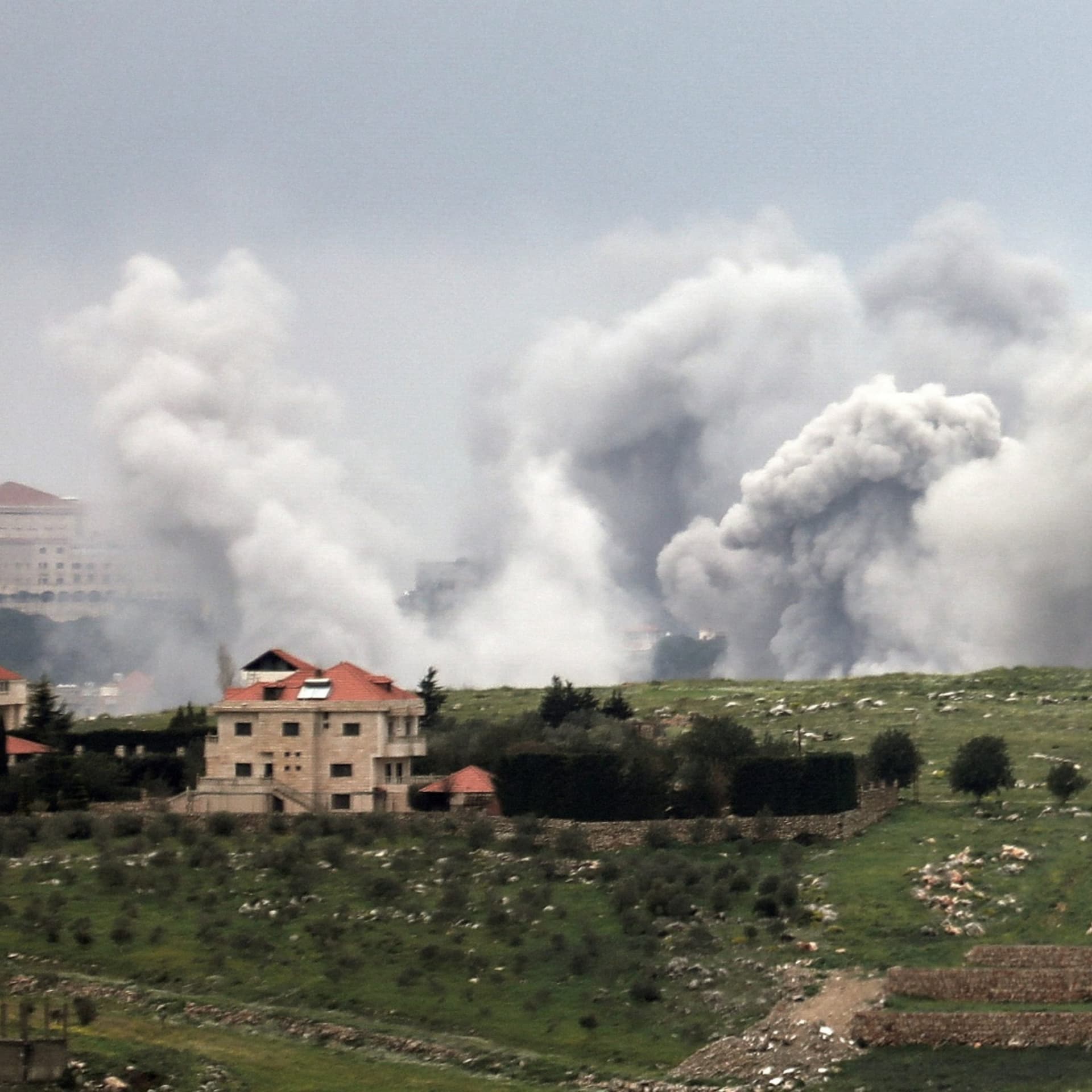
- Expansion of Ground Offensive: Israel's defense minister announced an expansion of military operations against Hezbollah in Lebanon, with orders to destroy all crossings over the Litani River.
- Objectives: The aim is to stop Hezbollah fighters from moving south into Israel and to create a buffer zone.
- Civilian Impact: The Lebanese Ministry of Public Health reports over 1,000 civilian deaths since the conflict escalation on March 2. The Lebanese President condemns Israel's actions as collective punishment.
Military Strategy Insights
- Incremental Approach: Analysts suggest Israel's military strategy will be methodical rather than a full-scale invasion, focusing on securing areas incrementally and systematically.
- U.S.-Iran Relations
- Trump's Threat: President Trump threatened to destroy Iranian power plants if Iran does not open the Strait of Hormuz.
- Iran's Response: Iran warns it will close the Strait if attacked, posing grave geopolitical concerns.
U.S. Public Opinion
- Divided Views: A majority of Americans oppose military action, but support exists among Republican voters for escalated military interventions.
- French Local Elections
- Results Overview: The Socialist candidate Emmanuel Grégoire wins in Paris, while a candidate aligned with Marine Le Pen secures the mayoralty of Nice.
- Implications: Results indicate a potential shift in political dynamics ahead of the presidential elections, with mainstream parties finding new confidence.
- Syrian Protests Against Alcohol Laws
- Public Reaction: Protests erupted in Damascus over new laws restricting alcohol sales, seen as part of a broader crackdown on personal freedoms.
- Community Impact: The laws specifically target Christian neighborhoods, raising concerns about sectarian discrimination.
- Advances in Artificial Intelligence
- Self-Repairing Robots: Researchers discuss the development of AI-driven robots that can adapt and continue functioning even if they lose parts.
- Potential Applications: These robots could be utilized in hazardous environments and various industries.
- Debut of Saturday Night Live UK
- Cultural Reception: The UK debut of the iconic sketch show prompted mixed reviews, with discussions around cultural differences in humor.
- Critical Highlights: Notable sketches received praise, particularly those addressing contemporary political issues.
---
Key Takeaways
- The escalation of military actions in Lebanon raises severe humanitarian concerns and geopolitical tensions in the region.
- The U.S. administration's approach to Iran remains contentious, with public opinion reflecting a reluctance for military engagement.
- Local election outcomes in France suggest a shift in voter sentiment and could foreshadow future political landscapes.
- Protests in Syria indicate rising discontent with government policies perceived as infringing on personal liberties.
- Innovations in AI robotics highlight both advancing technology and the ethical considerations surrounding autonomous machines.
- The reception of Saturday Night Live in the UK reflects cultural nuances in humor and the challenges of adapting a well-established format.
---
Conclusion This episode of the Global News Podcast encapsulates critical global events, from military conflicts and political shifts to technological advancements and cultural phenomena, providing listeners with comprehensive insights into current affairs.
Written by AI. May contain mistakes. Listen to the episode to check what was said.
Chapters
Tap a time to open that second in VOIsrael's Ground Offensive in Lebanon
1:30 to 2:07
Discussion on Israel's expansion of its ground offensive in Lebanon.
“Israel says it's expanding its ground offensive in Lebanon after bombing a key bridge.”
Assessment of Military Strategy
2:07 to 5:47
Analysis of potential military strategies regarding Israel's offensive.
“But first, is Israel about to launch a large-scale ground invasion of Lebanon?”
US-Iran Tensions and Political Implications
5:47 to 10:19
Examining the current state of US-Iran relations and political implications.
“Meanwhile, it's just over a day since President Trump issued his threat to obliterate Iran's power plants if the country doesn't open the Strait of Hormuz within 48 hours.”
Perspectives from Iran on War
10:19 to 11:40
Insights from Iran regarding the impact of war and public sentiment.
“It's very, very difficult to know exactly what's going on inside the country amid the internet outage imposed by the government on Iranian people.”
Innovation in Robotics with AI
11:40 to 14:02
Exploration of new AI-powered robots and their capabilities.
“Conce Habibiazad of the BBC Persian service.”
The Creativity of Robotics
14:02 to 15:07
Exploring the potential of Legos and robotics for personal use.
“They're different from other kinds of machines.”
Upcoming Topics in Politics
15:07 to 15:18
Preview of discussions on comedy and political relationships.
“Sir Keir is trying to set boundaries with the president while preserving their special relationship.”
Analysis of French Elections
19:15 to 22:23
Examining the implications of recent French local elections results.
“There was this challenge from the right from Rashida Dati, the former minister, but it's failed quite comprehensively.”
Italy's Judicial Reform Referendum
22:23 to 26:26
Discussion of Italy's referendum on judicial reforms and its political context.
“It's currently in the middle of a two-day referendum on judicial reform, which is being seen as a popularity test for the right-wing government.”
Protests Against Alcohol Laws in Syria
26:26 to 28:05
Coverage of protests in Syria regarding new alcohol restrictions.
“Hundreds of people have protested in Syria against tough new laws on alcohol.”
Show all 14 chapters
Protests in Damascus Over New Alcohol Regulations
28:05 to 28:48
Learn about the protests in Damascus regarding new alcohol regulations and their implications.
“It said sorry for singling out the Christian community and said the ban wouldn't affect tourist establishments like hotels.”
Saturday Night Live UK: First Impressions and Sketches
28:49 to 30:54
Explore the debut of Saturday Night Live UK and its reception through various sketches.
“The comedy sketch show Saturday Night Live has been an institution on US TV since the 1970s.”
Evaluating Humor in Live Sketch Comedy
30:55 to 31:51
Discussion on the challenges and successes of live sketch comedy as seen in SNL UK.
“Some of them were quite bizarrely not of the day, weren't they?”
The Translation of US Humor to British Comedy
31:52 to 32:43
Insights on how US humor translates to British audiences in the context of SNL UK.
“He was off camera, but doing these coquettish looks and little smiles.”
Transcript
Automatic transcript. May contain errors.0:00This BBC podcast is supported by ads outside the UK.
0:30all in one place, so you can invest your way. Visit schwab.com to learn more. Momentum doesn't appear overnight. It's built, refined, repeated. Puerto Rico understands momentum. As companies rethink supply chains and reshore operations, they're choosing a location that already delivers life-saving medicines, advanced manufacturing, and global-scale innovation. As a U.S. jurisdiction operating under federal law, with competitive tax incentives designed for long-term investment. Companies don't just relocate here, they scale here. Not culture or business, culture and business. Puerto Rico. It's not what's next, it's where.
1:13Visit investpr.org forward slash business. You're listening to the Global News Podcast from the BBC World Service. Hello, I'm Oliver Conway. We're recording this at 5 o 'clock GMT on Monday 23rd March. Israel says it's expanding its ground offensive in Lebanon after bombing a key bridge. Iran says it will completely close the Strait of Hormuz if the US attacks its power plants. And after local elections in France, are we any clearer about whether the far right will take power next year? Also in the podcast... Imagine a robot that is not just one robot, but it is made of parts that are themselves robots.
1:59The new AI robots that can keep going even if they lose a leg.
2:07But first, is Israel about to launch a large-scale ground invasion of Lebanon? That's the fear of the Lebanese president, after Israeli forces were ordered to destroy all bridges over the Letani River. Israel's defence minister said this was aimed at stopping Hezbollah fighters moving south towards Israel. He also ordered the demolition of homes in some villages near the border. Fellow minister Amichai Chikli says the operation is aimed at keeping Israelis safe. Our mission is to create a buffer zone, just like we've created in Gaza, and to make sure that the villages that Hezbollah has turned into a fortress of terror, loaded with ammunition in every second home, missiles, anti-tank missiles, rockets, motorcycles waiting for invasion.
2:59That's our mission, to push backwards the terrorists of Hezbollah and to make sure that our villages on the northern border will be safe. The Lebanese Ministry of Public Health says Israel has killed more than a thousand people in Lebanon since its war with Hezbollah resumed on 2 March, after rockets were fired at Israeli territory. Lebanese President Joseph Aoun says Israel's actions amount to a policy of collective punishment against civilians, and that its goal is to occupy Lebanese land. The head of the Israeli military said his forces were preparing for a long campaign. So what will the offensive look like?
3:38This assessment is from our former Middle East correspondent Jim Muir, who is in the Lebanese capital, Beirut. Well, I don't think it's going to be a great big push up to Beirut or whatever like we saw in 1982. I think it's going to be much more incremental. They're talking about destroying all the remaining homes along the border strip, most of which have been destroyed already, actually, systematically, as well as collateral damage. and then I think they will probably want to secure the whole of the area up to the Litani River and it was across that river that the main coastal highway bridge was blown up today after warning leaving a huge crater where the bridge was.
4:19So I think they want to basically go very slowly and very methodically up to the Litani and that would be their new sort of front line as it were and then once that's consolidated press further forward. They've already told the people living in the area in the next kind of batch of territory up to the Zahrania River to evacuate. And no doubt they will receive the same kind of treatment. But if they want really to finish off Hezbollah, and that seems to be the aim, they'll have to go up into the Beqar Valley because it's from there that Hezbollah has been firing rockets. So the other day it fired a big missile from the northern part of the Beqar Valley all the way down to near the Gaza Strip.
5:01So that's a clear message that they've got weapons stashed away there that the Israelis actually at the moment don't really know where they are. So the speculation, they might eat their way up slowly into the Beqar Valley, possibly doing a flanking movement through Syrian territory with armor and coming out into Lebanon from the east. That's kind of speculative, but it's a possible military way of doing things. I don't think they're going to do a big sort of what you call a full scale invasion, a la Putin trying to get into Ukraine or whatever, or themselves back in 1982. I don't think it's going to be like that.
5:35It's going to be very piecemeal, very slice by slice and very methodical and trying to really clear up so it doesn't have to keep coming back and hitting Hezbollah again and again. Jim Muir in Beirut. Meanwhile, it's just over a day since President Trump issued his threat to obliterate Iran's power plants if the country doesn't open the Strait of Hormuz within 48 hours. With less than 24 hours to go until the deadline expires, it doesn't look as if Iran will comply. In fact, the Iranians have issued a threat of their own, saying if their energy infrastructure is attacked, they will retaliate by closing the Strait of Hormuz completely and striking the energy and water systems of their Gulf neighbours.
6:19So how might President Trump respond to that? I asked our Washington correspondent Simi Jolosho. The Strait of Hormuz clearly has become a central pressure point for President Trump. It's made it difficult for him to end the war on his own terms. It's exposed fractures in the relationships he has with his allies, and it's just become something he can't ignore. How he will respond? Well, we've just received a report from a journalist from Israel's Channel 13, who said she spoke to President Trump earlier today, And she asked him that very question. And all he said was, you'll find out what's going to happen.
6:56He said, it's going to be very good. The total decimation of Iran, it's going to work out very well. It's not very clear what he means by that. He has one option, which is to end the war. He could say he's degraded Iran's missile and nuclear capabilities and their military. So he's achieved their objectives, which he's already said on Truth Social that the U.S. is close to meeting. Or he could choose to escalate the war, so further attacks along Iran's shoreline to try and force them to reopen the strait. He could go ahead with his threat and strike Iranian energy infrastructure, the power plants, the grids.
7:37Or he could also introduce ground forces and try and maybe seize Haag Island, which is a key hub for the Iranians. Yeah. And do we know what the American public think of those options, which perhaps they would prefer? The American public are very mixed with this. You've got a majority, so just over 50 percent, if we're to go by recent polls, who oppose sending troops to Iran and oppose this war in its entirety. But when you look at just Republicans, a recent poll by CBS found that 84 percent of Republicans do support the strike. And within Trump's MAGA base, even higher, around 92 percent do support further military action against Iran.
8:20Now, Republican lawmakers have said they are supporting President Trump through this war, but sending in ground troops would be a sort of red line. One Republican congressman said he would require more of a briefing, more of an explanation on what exactly the mission is. Then you've got Democrats who have said from the beginning, this is a war of choice. And they've criticised how costly this war is becoming as well, saying that President Trump needs to focus on affordability in America. So, yeah, very expensive. And now the Pentagon is asking for another$200 billion of funding. Is Congress likely to approve that?
9:03President Trump has said this$200 billion is for a lot of reasons beyond Iran. He says it's also to replenish military equipment and ammunition. Defense Secretary Pete Hexeth says it takes money to kill bad guys. And it's also for what the military may have to do in the future. Now, this is in addition to the Department of Defense's annual$830 billion. So it is a lot of money. Military funding does tend to get bipartisan support. But when you consider public opinion and public polls around the lack of support for this war, politicians here will definitely have to try and justify this massive spending request because it could come at a political price if the war and economic disruption from it drags on.
9:52Republican House Speaker Mike Johnson said it's important to adequately fund defence and that it's a dangerous time in the world. But the Democrats have been highly critical, firstly, because of the size of the request. And secondly, because President Trump decided to strike Iran without consulting Congress in the first place. It's a media law show in Washington. So what's been the view in Iran following this latest U.S. threat? Gonche Habibi Azad is from the BBC Persian service. It's very, very difficult to know exactly what's going on inside the country amid the internet outage imposed by the government on Iranian people.
10:31But some young tech-savvy people who have access to Starlink, which is satellite internet, have been able to connect, although there is a crackdown by Iranian authorities on Starlink as well. And the voices that I'm hearing are from some young people, especially in Tehran, in the capital, and they don't obviously represent the whole society. I don't hear the voices of people who have lost the home or don't have food to bring to their table, of the economic pressure that the war has had on them. But from what I'm hearing, they're very anxious, very tense. And even some of those who supported the war, they were saying that this is not right.
11:10This is a war on people. if they attack the infrastructures. That's not helping the people against the regime. They're saying even some might turn to the Islamic Republic if the attacks happen on infrastructure. One of my friends in Tehran, she was saying that she got straight into shower because last time that the war happened in June, she was stressed because the water was out for three weeks and she couldn't take a shower. So they're very stressed, some of them that I've been hearing from. But obviously, as I said, I'm not hearing the voice of everyone. Conce Habibiazad of the BBC Persian service.
11:43Some other news now, and researchers in the US have used artificial intelligence to create a robot that can evolve and adapt to its environment. They say it's even able to function if it loses a leg. The study's lead author is Sam Kriegman from Northwestern University in Chicago. He's been talking to Paul Henley. Imagine a robot that is not just one robot, but it is made of parts that are themselves robots. So here, these parts look like a sphere with a cylinder running through them. And these parts can bend like a joint at the knee. And so they're basically like a bunch of building blocks, similar to Legos, but that can move and that are smart.
12:28And you stick them together to build a robot that, well, if something happens to one part, like a leg, it's fine because all the other parts can continue to run. What's the robot for? There's many possible uses for a robot that can move quickly in the world that is also resilient. So we can imagine in the future, such machines could operate in construction sites, clearing mines, or just in environments that are risky, like a brittle cliffside. And how has artificial intelligence enabled this advance? Okay, so now imagine you have this Lego kit of possible robot parts. How are you going to put them together?
13:09If I close my eyes and I imagine what a robot should look like, it's really hard not to just imagine familiar objects, something like a human, a dog, or a car, or a plane. When we want to think outside the box, it's good to use AI to help us expand our imagination. So we use computers to run a kind of Darwinian process of evolution, sticking together these smart building blocks in different ways. And it's like a survival of the fittest inside of the computer. And the best ones pop out. We quickly assemble them out of our robotic Legos and they hit the ground running. What do you say to people who are worried by the idea of a robot that can adapt to a changing environment and that doesn't need our help to self-perpetuate?
13:52These robots are actually a lot more like Legos than self-adapting robots. So they need to be put together by us or another robot. And I think this is really fun. So, you know, Legos are great. They're different from other kinds of machines. You can think of a car, for example. If you use all the parts in that car to build something, you can really only build that car. But with Legos, you can build a car or a cathedral or anything in between. So this allows everyday ordinary people to build their own robot for uses that only they care about. But it's human intelligence that's in charge. It can be human intelligence that's in charge of deciding what task we ask the robot to do and how we design them.
14:38And so, you know, if you think about the stakeholders in robotics now, the people who are in charge of designing robots because they're so expensive and only companies and states can afford to build them and maintain them and decide what they should do, then you get certain kinds of jobs that robots are doing. But if everyone can build their own robot using their own robotic Lego kit, then it's more likely that those robots will do good than bad. Professor Sam Creedman. Still to come in the podcast, an American comedy institution debuts in Britain. Sir Keir is trying to set boundaries with the president while preserving their special relationship.
15:17I see. OK, so you're looking for more of a special situationship. So what did Brits make of the sketch comedy show Saturday Night Live?
15:52or anywhere you type and text. You'll never have to switch tools or tabs. Grammarly's AI agents are built for how you work and where you work, so you can find the right words, adjust your tone, and predict how your message might land before you hit send. Your ideas will get a boost, while still sounding natural, credible, and just the way you want. For nearly 17 years, Grammarly has been the standard for responsible AI. It's the premier writing tool that 93 % of users trust to get more work done. In a world of generic AI, don't sound like everyone else. With Grammarly, you never will. Download Grammarly for free at Grammarly.com.
16:32That's Grammarly.com. Finding great candidates to hire can be like, well, trying to find a needle in a haystack. Sure, you can post your job to some job board, but then all you can do is hope the right person comes along. which is why you should try ZipRecruiter for free at ZipRecruiter.com slash zip. ZipRecruiter doesn't depend on candidates finding you. It finds them for you. Its powerful technology identifies people with the right experience and actively invites them to apply to your job. You get qualified candidates fast. So while other companies might deliver a lot of hay, ZipRecruiter finds you what you're looking for.
17:10The needle in the haystack. See why four out of five employers who post a job on ZipRecruiter get a quality candidate within the first day. ZipRecruiter, the smartest way to hire. And right now, you can try ZipRecruiter for free. That's right, free at ZipRecruiter.com slash zip. That's ZipRecruiter.com slash zip. ZipRecruiter.com slash zip. Choiceology, an original podcast from Charles Schwab, is a show about the psychology and economics behind our decisions. Join host Katie Milkman, an award-winning behavioural scientist and author of the best-selling book How to Change, as she shares true stories from Nobel laureates, authors, athletes and everyday people about why we make the choices we do and how to make better ones to help avoid costly mistakes.
17:58Listen to Choiceology at schwab.com slash podcast or wherever you listen. You're not at the office. You're solving murders in the Scottish Highlands. you're not in your car you're in a candlelit carriage on the way to the ball this winter see it differently when you stream the best of British TV with Britbox catch a new original series like Riot Women let's start a riot new seasons of fan favourites like Shetland a body's been found and unparalleled collections of Jane Austen Agatha Christie and more it's time to see it differently with Britbox watch with a free trial now at Britbox.com
18:38This is the Global News Podcast. Now, a year from now, France will be gearing up for a presidential election that could be won by the far right. On Sunday, all eyes were on the French local elections for any indication of what might happen in 2027. With the results in, the mainstream left-wing socialists are celebrating after seeing off separate right-wing challenges in Paris and Marseille, although a candidate allied to the far-right national rally was elected mayor of Nice. I heard more about the significance of the results from our correspondent Hugh Schofield. Let's start with Paris because it's obviously the city which is drawing all the headlines.
19:15There was this challenge from the right from Rashida Dati, the former minister, but it's failed quite comprehensively. She got 40 percent. Emmanuel Gregoire, the continuity candidate, got 50 percent. And I think what's happened is that Rashida Dati proved to be rather divisive. She's a very strong personality, but she's someone who's very anchored on the right. And I think Paris is essentially a left wing city with pockets of right wingness in it. And she put a lot of people off, particularly after she accepted the support of a far right candidate who dropped out after round one. But the other thing that's very important about Paris, and I think also reflects a situation across the country, is that the socialist candidate in Paris, Manuel Grégoire, did not accept the idea of a link up with the far left.
19:57The far left candidate came through in round one with 11, 12 % of the vote and said, let's team up. And this happened in lots of towns and cities across France. The far left saying, let's get together to beat off the right, the fascists. And Emmanuel Gregoire said, no, I'm going to do this by myself. And he did that and he won. And he won convincingly because a lot of centrists who might otherwise, if he'd linked up with the far left, said, right, I don't want that, went with him this time. In other cities in France, where the left and the far left did form these alliances because the left were worried about losing and felt that they'd be safer by having this big block of votes from the far left.
20:34Where they did that, ignoring calls to boycott the LFI because of recent scandals regarding the murder of that student, if you remember, a month ago, and the alleged anti-Semitic remarks by its leader, Rodney Knollshaw, the socialists and Greens allied with the LFI. They lost. The voters turned to the right and the centre. They said, we don't want LFI near power in our city. Toulouse is a clear example of that. But you could also cite Clément Ferrand, Brest. These are cities which have for decades been socialist strongholds, but have gone to the right because the socialist candidate there allied with the LFI.
21:08So there's a clear, clear lesson there for the left. And the socialists will take great heart in saying, right, we can do this by ourselves. We do not need the LFI on our outside flank. In fact, they lose us votes rather than winners vote. Now the socialists held off a challenge from the far right in the second city Marseille but in Nice an ally of Marine Le Pen won. Do we know anything more about what will happen in the presidential election next year as a result of what we've seen now? In general the mainstream parties have drawn confidence and hope from these elections. The centrist parties, the mainstream centre-right, Republicans' party, more than held on to their own.
21:50They control the main cities of France still. And so that will give a lot of encouragement to them when it comes to the presidential election, because quite clearly voters do not want the extremes. The big worry for next year is that there are going to be too many candidates in round one, and it could be a candidate from the far right and the far left get through to the runoff. And that is quite possible. So that's the big worry for the mainstream parties, the traditional parties, who, of course, have been very much on the back foot in recent years. But from these results, they'll be saying, no, if we stay united, we can still win these elections next year.
22:23Hugh Schofield in France. Well, Italy has also been voting. It's currently in the middle of a two-day referendum on judicial reform, which is being seen as a popularity test for the right-wing government. Prime Minister Georgia Maloney, who has clashed with the courts over some of her controversial policies backs the proposed changes, but opponents say they are a threat to democracy. Sarah Rainsford sent this report from Rome. For Giorgia Meloni, this was a new kind of campaigning. Italy's Prime Minister swapped her usual trouser suit for a sparkly jumper, and she joined a celebrity rapper on his podcast.
23:09It was part of her last big push for a yes vote in a referendum that's all about reforming the justice system here. But as her host pointed out, it's morphed into a test of the prime minister herself. If the Noor wins, this will be a defeat. But I do not expect Meloni to resign. This is Roberta D 'Alemonte from Lewis University here in Rome. She will be politically weakened. This will be the first serious defeat of Meloni's government in three and a half years. I'm just walking through the giant archway onto the Piazza del Popolo. This beautiful big square and there's a crowd gathering here. Lots of trade union flags.
23:56At the front there's a stage and a big sign. Vote no to defend democracy. see. The left-wing opposition in Italy are very protective of a constitution that was written after the defeat of Mussolini and fascism. One to guarantee nothing like that ever returned here. And they are wary of Georgia Maloney. The judicial reform she's proposed is complex and its potential impact isn't clear. But Maloney has clashed publicly with the courts in the past over her migration policies for one. For people I spoke to in this crowd, there is one fear. With this change, justice is under stricter control of politicians.
24:40George Maloney says that this is about making the justice system for everybody. It's not true. No one can be so stupid to think that the justice for the normal citizen can be faster. Nothing changes that side. So what's it for? It's for government control, you think? Yeah, there's a point.
25:04Just up the road in Villa Borghese, the buskers are back. And people sit, eyes closed, soaking up the sun on their faces. But Georgia Maloney's own shine has faded lately. She was once proud of her close ties to Donald Trump, and yet his war on Iran isn't popular here, nor are the price rises that's causing. For Maloney and her party Fratelli d 'Italia, this vote is bad timing. My name is Andrea Di Giuseppe. I'm elected Fratelli d 'Italia. The opposition can say you should not touch the constitution, etc., etc. We need to make the right amendment to the good of the people. The geopolitical situation is very tough, of course.
25:51I completely understand that. But this referendum, we need to stay focused on the purpose.
Read the full transcript
26:02Georgia Maloney says that purpose is simple. On social media, she's been telling voters to put the X on their ballot papers next to yes for a more just justice system. But the result is touch and go. And losing this referendum would be a blow to Maloney. For the first time, the strong woman of Italian politics would seem vulnerable. Sarah Rainsford in Rome. Hundreds of people have protested in Syria against tough new laws on alcohol. The demonstrators in the capital fear it's part of a wider crackdown on personal freedoms by the Islamist authorities. This report from Jacob Evans.
26:45Bab Tuma is one of the major Christian neighbourhoods of the historic city of Damascus. Christians gathered on Sunday for a silent protest because they feel targeted. Targeted because earlier this week the governor of the city issued a decree banning the sale of alcohol in restaurants and nightclubs. The move also limits private purchases to just a handful of Christian neighbourhoods where drinks can only be taken away in a closed bottle. It's a move that's not gone down well, with critics saying it's sectarian. Rami Kousa is among the protesters. If the purpose of these decisions is to test the waters, in order to pass similar decisions to restrict public freedoms and change the city's identity, the message should have been received.
27:27This kind of decision will not pass. And if these decisions were issued carelessly, without calculating their repercussions, then this experimentation must stop. Islam forbids alcohol, but about 10 % of the 1.5 million inhabitants of Damascus are Christians. The protesters also fear the restrictions show that the new Islamist government of Ahmed al-Shara is becoming more conservative. Other new rules issued since he took power include female government employees in Latakia being banned from wearing makeup, and that modest swimwear must be worn at beaches and pools. However, following the initial outrage over the alcohol ban, the Damascus government has issued an apology.
28:05It said sorry for singling out the Christian community and said the ban wouldn't affect tourist establishments like hotels. Also at the protest was Mirel Abu-Shanab. She says the decision should be reversed in full. We have the right to receive an apology, but the order has not been withdrawn. They said they would reconsider it, but we have no confirmation that it will actually be reversed. It threatens people's livelihoods and divides Damascus. We have always lived as one. This is a personal freedom issue. Whoever wants to drink should drink, and whoever does not want to should not. Businesses will have three months to implement the new rules, but these demonstrations in Damascus underscore a growing public unease over which way Syria may go.
28:47Jacob Evans. The comedy sketch show Saturday Night Live has been an institution on US TV since the 1970s. It's inspired many international copies with its mix of live comedy, musical guests and political satire. A UK version of the show had its debut over the weekend, and the reviews are now coming in. Here's a flavour of the first episode, a sketch in which the British Prime Minister, Keir Starmer, seeks advice from a Gen Z advisor on how to deal with the US. Sir Keir is trying to set boundaries with the President while preserving their special relationship. I see, OK, so you're looking for more of a special situationship.
29:29First thing you've got to do, you've got to forget the phone call these days, It's all about the voice note. I'll try anything. I'll do anything. Except take a stand. President Trump even shared the clip on his social media. But did the format as a whole translate? Eric McElroy is an American stand-up comedian and knows some of the writers on Saturday Night Live UK. He spoke to Paul Henley. I grew up with Saturday Night Live. I remember staying up to watch it in 1978 with a babysitter. It was magical. So it's always been part of my life. But the whole idea of that cold open where they start with a strong sketch and then go to the host and then go into the sketches, that's new to some people here.
30:11And I thought it landed it really well. I enjoyed the opening sketch with Keir Starmer struggling to talk with Donald Trump. And I thought it was really funny. Is it worth doing everything live? It's inviting disaster with cue cards and people forgetting stuff, isn't it? But that's part of the magic of it. This is different than, you know, film sketch or even watching stand-up, like watching someone live on the Apollo. A lot of that is cultivated over time and created. But here, this is a show that's created within a week and having it live makes it special. It's more like watching an improv show where they've got the games that improv players use.
30:43You're giving them a time and a place and an action and they've got to make it happen right there. And because the show is pulled together so quickly, it's got that element to it. And that's what the live makes it stand out even more. Would you like to see it a little more topical? Some of them were quite bizarrely not of the day, weren't they? You're saying Shakespeare isn't topical? Well, I like topical humour a lot. I'm biased towards that. But at the same time, it's fun to have weird sketches that are culturally significant as well, like the 45 seconds with four acres that was about Irish heritage and accents.
31:15And that, to me, was a very British piece, but not topic at all, but fun and weird and funny. Some of it just didn't land, right? That's part of Saturday Night Live. They've written these sketches within the last seven days. They've never had the chance to perform them in front of a live audience or very limited chance. I have not yet to watch an episode in the U.S. where I was like, I didn't really get that one. But then the next one comes along. So you get that chance. And sometimes it is a bit hit and miss. So people need to give it that space because that's actually part of the show. The Princess Diana impersonation was a standout moment for me.
31:50What did you think? I thought, yes, Jack Shep, the actor that did it, stole the show. He was off camera, but doing these coquettish looks and little smiles. He just stole the sketch. And that's another part of Saturday Night Live is you get to see people come forward. And most of these aren't, you know, household names. I know a couple of people involved in the writing, and I know Larry Dean, who's in the cast. But most of these aren't names that most people have heard of yet. And that's another thing that Saturday Night Live in the US has done. It's launched the careers of some of the biggest names in comedy in the world.
32:21Was it a good translation of US humour? You're in the right position to judge that, maybe. Well, I think we used the US format and structure, but the humour was British. And I think the other thing they've done, which is crucial, is they invested in a huge writing team. And that's what makes these things work, is I think they've got 15 to 20 writers, and you need that because the cast is writing as well. Eric McElroy. And that's all from us for now, but the Global News Podcast will be back very soon. This edition was mixed by Pat Sissons and produced by Paul Day. Our editors, Karen Martin. I'm Oliver Conway.
32:57Until next time, goodbye.
33:05Warning, the following ZipRecruiter radio spot you are about to hear is going to be filled with F-words. When you're hiring, we at ZipRecruiter know you can feel frustrated, forlorn even, like your efforts are futile. And you can spend a fortune trying to find fabulous people, only to get flooded with candidates who are just fine. Fortunately, ZipRecruiter figured out how to fix all that. And right now, you can try ZipRecruiter for free at ZipRecruiter.com. With ZipRecruiter, you can forget your frustrations. Because we find the right people for your roles fast. Which is our absolute favorite F-word.
33:42In fact, 4 out of 5 employers who post on ZipRecruiter get a quality candidate within the first day. fantastic so whether you need to hire 4 40 or 400 people get ready to meet first rate talent just go to ziprecruiter.com zip to try zip recruiter for free don't forget that's ziprecruiter.com zip finally that's ziprecruiter.com zip
From the publisher
Israel’s defence minister has announced that his country is expanding its ground campaign in Lebanon. Israel Katz warned of a prolonged operation against the Iran-backed group, Hezbollah, after the Israeli government ordered the destruction of all crossings over the Litani River. The Israeli military also says it expects several more weeks of fighting against Iran. Meanwhile, Tehran has warned it will fully close the Strait of Hormuz if Washington follows through with President Trump's threat to "obliterate" power plants in Iran. Also: in France's local elections, the Socialist candidate, Emmanuel Grégoire, claims victory in Paris, while in a boost for the nationalist right, an ally of Marine Le Pen is set to become mayor of Nice; hundreds of Syrians protest in Damascus against strict new alcohol laws; the new AI robots that can repair themselves and adapt to their environment; and a critic's view of Saturday Night Live UK's debut.
The Global News Podcast brings you the breaking news you need to hear, as it happens. Listen for the latest headlines and current affairs from around the world. Politics, economics, climate, business, technology, health – we cover it all with expert analysis and insight. Get the news that matters, delivered twice a day on weekdays and daily at weekends, plus special bonus episodes reacting to urgent breaking stories. Follow or subscribe now and never miss a moment. Get in touch: globalpodcast@bbc.co.uk