
In short
Escalating Middle East violence (Iran–Israel missile exchanges and the fragile April truce), Israeli actions in East Jerusalem, Peru’s tight presidential runoff, Xi Jinping’s North Korea visit, Armenia’s election amid Russia–EU pressure, Russia’s recruitment of African fighters for Ukraine, new weight-loss drug research, and tennis at Roland Garros.
Guests and backgrounds
Kashyar Junaidi (BBC Persian, reporting from Washington on Iran–Israel); Yolande Nel (BBC Middle East correspondent, reporting from East Jerusalem); Ioni Wells (South America correspondent, reporting from Lima on Peru); Dr. Marie Spreckley (Cambridge diabetes prevention specialist, explaining retatrutide); Stephen McDonnell (China correspondent, on Xi–North Korea); Rehan Dmitry (Armenia correspondent); Sami Awami (BBC, reporting from a Ukrainian POW facility); Russell Fuller (tennis correspondent, on Zverev’s Roland Garros win).
Key claims/examples
Iran retaliated after Israeli strikes on Hezbollah positions; Trump urged Israel not to retaliate, but Israel did. UN figures: ~200 Palestinian households (~900 people) face eviction cases in East Jerusalem; examples include demolitions in Al-Bustan and evictions in the Muslim Quarter. Peru: exit/quick counts show a near tie between Keiko Fujimori and Roberto Sanchez. Xi–Kim visit: no clear agenda; missile tests and nuclear status likely discussed. Armenia: Pashinyan claims victory; Russia warns against EU drift. Ukraine: nearly 3,000 African recruits claimed by Ukraine; POWs describe being misled into Russian contracts (e.g., Sierra Leone, Kenya, Congo). Weight-loss: retatrutide adds glucagon to GLP-1/GIP to increase energy expenditure and fat utilization (still emerging; needs longer trials). Tennis: Alexander Zverev beats Flavio Coboli to win his first men’s Grand Slam at Roland Garros.
Written by AI. May contain mistakes. Listen to the episode to check what was said.
Chapters
Tap a time to open that second in VOOverview of Main Stories
0:55 to 1:48
An introduction to the main news stories covered in the episode.
“Subscribe on YouTube or wherever you get your podcasts.”
Middle East Tensions Escalate
1:48 to 2:19
A discussion on the recent missile exchanges between Iran and Israel.
“Also in this podcast, China's President Xi Jinping arrives in North Korea for his first visit in seven years.”
Insights from BBC Persian
2:19 to 5:53
Kashyar Junaidi provides insights on the escalating situation in the Middle East.
“When does a ceasefire cease to be a ceasefire?”
Palestinian Evictions in Jerusalem
5:53 to 9:47
Exploration of the evictions of Palestinians in East Jerusalem and their implications.
“There's been a rise in the number of Palestinians being forced from their homes in occupied East Jerusalem.”
Peru's Presidential Election
9:47 to 12:45
A report on the closely contested presidential election in Peru.
“A next-to-Peru and a presidential election runoff that appears to be too close to call.”
Weight Loss Drugs Overview
12:45 to 14:01
Discussion on new weight loss drugs and their potential impact.
“Right, let's talk about weight loss drugs like Zempik and Wagovi.”
Emerging Weight Loss Medications
14:01 to 15:47
Discussion on new medications that may aid in weight loss and their implications.
“So you expend more energy or it sort of feigns expending more energy and therefore that's what reduces the fat?”
China-North Korea Relations
17:55 to 21:28
Analysis of Xi Jinping's visit to North Korea and its implications.
“with Kim Jong-un in a bid to kickstart trade between the two countries, which has been in the doldrums since COVID.”
Armenia's Election Results
21:32 to 23:53
Update on Armenia's elections and the geopolitical implications of the results.
“This one, a pull between East and West for Armenia.”
African Soldiers in Ukraine
24:03 to 28:03
Examination of African recruits in the Russian fight in Ukraine and their circumstances.
“Russia and Ukraine have recruited military personnel from all over the world to fight in their war.”
Show all 13 chapters
Update on POW Engagements
28:03 to 28:39
Learn about the lack of responses from various governments regarding POW issues.
“The Kenyan government said in March that it had agreed with Russia that Kenyans would no longer be eligible to be enlisted.”
Zverev's Grand Slam Triumph
28:39 to 31:02
Discover the details of Alexander Zverev's first major win at Roland Garros.
“Our tennis correspondent Russell Fuller watched Zverev win at Roland Garros.”
Podcast Contact and Production Credits
31:02 to 31:36
Information on how to contact the podcast and credits for the production team.
“This edition of the Global News podcast was mixed by Daniel Fox.”
Transcript
Automatic transcript. May contain errors.0:00This BBC podcast is supported by ads outside the UK. Summer adventures are better with Minky Couture. From road trips to ball games, beach nights to backyard movies, Minky has you covered. Don't miss the Everywhere Blanket. Water-resistant, ultra-soft, and made for life on the go. Wherever summer takes you, bring comfort along. MinkyCouture.com, the original best blanket ever.
0:35I'm Kai Wright. I'm Carter Sherman. Welcome to Stateside with Kai and Carter. We're a new show from The Guardian. We're talking to big thinkers and the best journalists just trying to understand the world through smart conversation and honest reporting. We don't have billionaires telling us what to say. Stateside with Kai and Carter will come out three times a week, Monday, Wednesday, and Friday starting May 13th. Subscribe on YouTube or wherever you get your podcasts.
1:04This is the Global News Podcast from the BBC World Service. I'm Will Chalk and in the early hours of Monday, the 8th of June, these are our main stories. Iran and Israel are firing missiles at each other once again. Both sides, too, are warning that they won't be backing down. Donald Trump had explicitly told Israel not to retaliate. So where does this leave the fragile truce that's existed since April? With the Peruvian presidential election seemingly on a knife edge, we will hear from our correspondent there. And the pro-Western Prime Minister of Armenia has claimed victory after a general election seen as a contest with pro-Russian interests.
1:48Also in this podcast, China's President Xi Jinping arrives in North Korea for his first visit in seven years. and how the next generation of weight loss drugs might not only limit appetite, but also burn away fat. It needs to be safe. It needs to be effective. But this looks extremely promising and I'm very excited by this. Plus, for the first time since Boris Becker did it more than three decades ago, a German tennis player has won a men's Grand Slam.
2:19When does a ceasefire cease to be a ceasefire? A pertinent question right now with the truce between Iran and the US and Israel that was agreed back in April looking more frayed than ever. First, Iran, angry that Israel had continued its campaign against Hezbollah in Lebanon, launched missiles at Israel. Then, in the hours before we recorded this podcast, Israel retaliated and fired back at Iran. It is exactly what Donald Trump had warned Benjamin Netanyahu not to do. Kashyar Junaidi from BBC Persian is in Washington for us. It's been a very tense period in the Middle East in the past few hours.
2:58Immediately after the Israelis hit some Hezbollah positions in the southern outskirts of Beirut, Iranian officials came out and said that they will retaliate these attacks. And retaliation is what happened. Iran reported launching free rounds of ballistic missiles towards northern Israel. And of course, the Israeli officials have said all of these ballistic missiles were intercepted and no casualties were reported. And immediately after this, we heard from President Trump that, okay, the Iranians shot their missiles. Now it's time to go get back behind the table and restart the negotiations. And he also called on the Israelis not to retaliate against Iran.
3:38And of course, the Israelis seems that they just ignored President Trump's warning. And some time ago, there were reports of Israeli Air Force jets striking targets in central and western Iran, as the IDF reported. There has been reports by Iranian state media that explosions have been heard in Tehran, in Tabriz, which is in northwestern Iran, and in Isfahan, which is central Iran. First responders in Tehran have reported that there has been no report of damage in urban areas. And also the provincial governor of Isfahan has announced that there has been explosions in Najafabad, a city close to Isfahan.
4:19But this is all the reports that we've received. So far, we haven't heard from possible casualties or possible damages. There are some unconfirmed reports that the Israelis had targeted some missile launch bases and air defense bases. That's what we've heard. there are some confirmed reports that one of the targets was Tehran's Mehrabad airport. But these reports have to be confirmed yet. And I have to mention it's early morning in Tehran and we are waiting to hear more from the targets and the possible casualties of these attacks. Now, you mentioned that Donald Trump warned Israel not to hit back, which is exactly what Israel did.
5:00That means Israel is out on its own here, does it not? This ceasefire has been very fragile from day one. President Trump is very much concerned that these attacks would lead to the relaunch of a war and would derail the peace talks. And it seems that at this point, Iran has walked into a trap by Israel because Israel wasn't very happy with the possibility of a deal between Iran and the U.S. as it was reported. Iran just helped Israel to achieve its goal to harm this process. Of course, President Trump is also concerned that just before the World Cup, which the U.S. is also hosting, starts, such an attack, such escalation of situation in the Middle East would divert attentions from the World Cup, which is very important for President Trump himself.
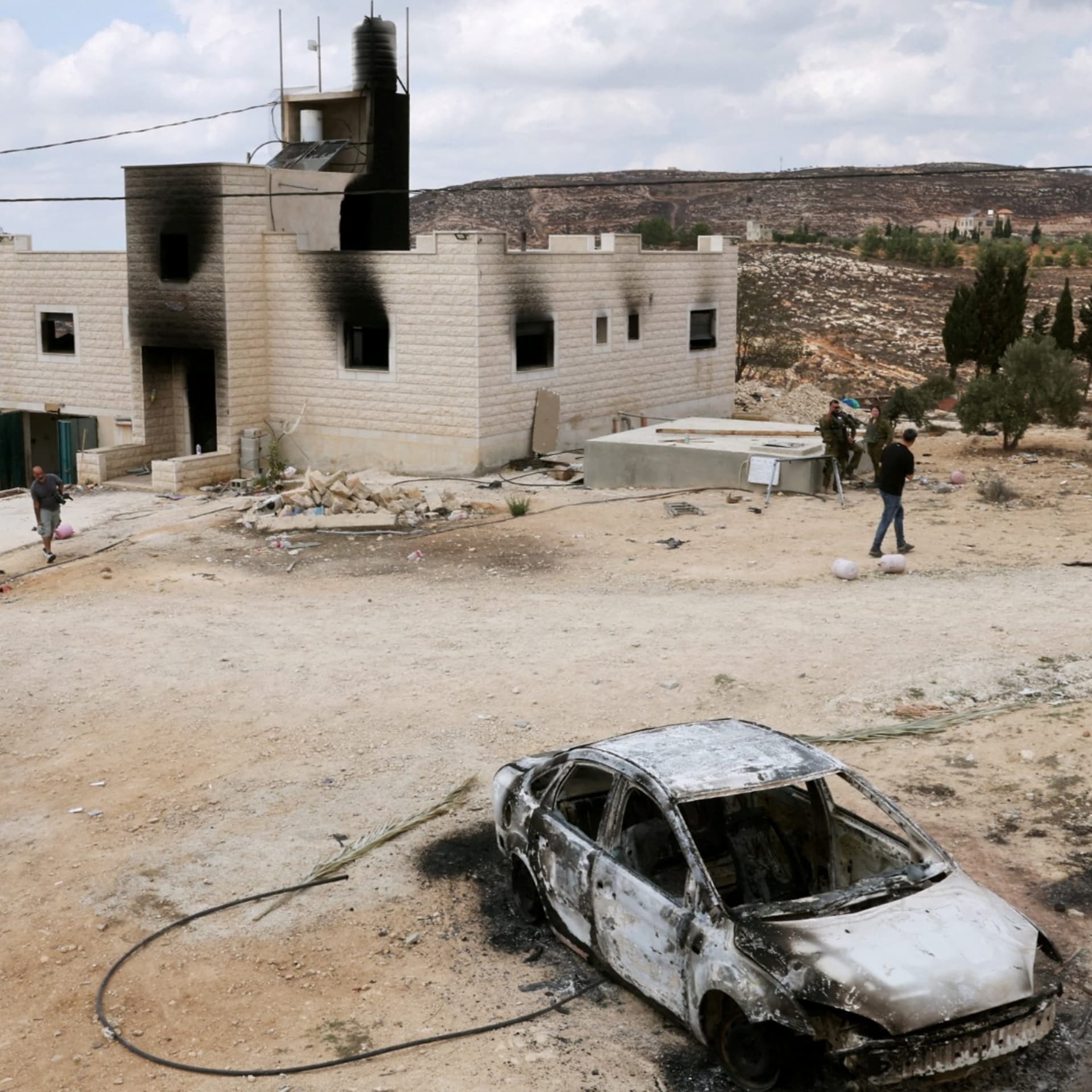
5:49Keshia Junaidi from BBC Persian in Washington. There's been a rise in the number of Palestinians being forced from their homes in occupied East Jerusalem. According to UN figures, some 200 Palestinian households, it's about 900 people, are facing eviction cases filed against them in the Israeli courts, mostly by settlers. Israel sees the whole of Jerusalem as its capital. Palestinians want the East to be the capital of their hoped-for future state. Our Middle East correspondent Yolande Nel has been to meet Palestinians whose homes are being taken over or demolished. From a hillside beneath Jerusalem's walled old city I watch a Palestinian house being torn down Israel is accelerating its efforts to move Palestinian residents out of the neighbourhood below So I've just come down to this plot in Al-Bustan The bulldozers have moved away The top floor of the Awad family house is now just a mess of mangled metal bits of concrete slabs They destroyed the future and everything else.
6:59We spent our whole lives building this house. They brought us back to zero again, me and my children. Fayez Awad despairs. There's long been an Israeli plan to build a biblically themed park here to be run by a settler group. But in the past two years, some 60 homes have gone, more than half of Al Bustan. The Jerusalem municipality says houses were built illegally. Palestinians say it's almost impossible to get Israeli permits. 97-year-old Yusra Kueda lives with the constant stress of a demolition order. They want to kick us out of here, she tells me. We're counting on God. In nearby parts of East Jerusalem, Israel uses laws allowing takeovers of land owned by Jews before the state was created in 1948 so that settlers can move in.
7:52Palestinians can't claim back properties within Israel, which they owned historically. In the old city's Muslim quarter, Israeli flags fly over a Jewish school. It was originally abandoned a century ago when Jews fled during riots. Wow, you've got the golden dome of the rock and then the silvery al-Aqsa. Al-Aqsa. But a Muslim god, the father of Mufid Bashar, kept the building safe in return for being allowed to live in part of it. Nearly 60 years after Israel captured this area in the Six-Day War, his family is now being evicted by the government. I don't have another house. What do you think your father would think if he knew this was happening now?
8:34He will be very angry, you know. He keeps the place, the same everything. And this is a gift what we get from him. Israel's annual Jerusalem Day flag march has increasingly become a display of dominance and racism by the far right. But last month, as Israeli ministers joined in the event in the old city, Israeli peace activists also came out in force. Aviv Tatarsky is from the group Iramim, which believes the city should be shared. We are working for this goal for decades. We have failed. Today, the Israeli government, all restraints are off. They are rushing to cement a reality of Jewish supremacy in the city that does not really tolerate Palestinian rights or maybe even Palestinian presence in Jerusalem.
9:27Back in Al-Bustan, I join a tour of foreign diplomats. Their countries support the creation of a Palestinian state with its capital in East Jerusalem. But with current Israeli ministers saying they're acting to bury that idea, Palestinians say it's time for the international community to stand up for international law. Yolan Nell reporting from East Jerusalem. A next-to-Peru and a presidential election runoff that appears to be too close to call. After voting on Sunday, exit polls suggest there's very little to choose between the right-winger Keiko Fuhimori and her left-wing rival, the Congressman Roberto Sanchez.
10:06Our South America correspondent, Ioni Wells, has been following developments in the Peruvian capital, Lima. We've just heard the results of a so-called quick count, which is essentially a sort of more rapid version of the official results, which are still to come. Interestingly, although Keiko Fujimori had a marginal lead over Roberto Sanchez in that exit poll, in this very quick count, he seems to be ever so slightly ahead of her on 50.3 % of the vote. Now, the official results are still yet to be finalized. They are still being counted, as I speak. But I think that has certainly energized Roberto Sanchez's camp.
10:46He's already been addressing supporters in the capital, essentially claiming this as a victory. Keiko Fuhimori, however, at a hotel in a middle-class neighborhood of the capital where supporters are gathering here, has also been addressing the press and supporters, essentially asking people to wait, saying that this could take some time, even some days, and essentially urging that every single vote be counted and we don't jump to assumptions before everyone has. So I think at the moment, certainly Roberto Sanchez is claiming this as a victory already. She's certainly urging caution at this stage.
11:22And for people who aren't familiar, you've got two drastically different candidates here. So there's a lot at stake, isn't there? That's right. They both have very, very different visions for the country. Keiko Fujimori is one of the most well-known faces in Peruvian politics. She's a conservative who's run four times now to be president. She very much aligns herself with free market ideologies. She wants to increase US investment in Peru, for example. But she's also pledged a very hard line on crime and violence, something which her late father, the former president Alberto Fujimori, was known for.
11:57He was eventually jailed for crimes against humanity, but his supporters saw him as someone who tackled violent insurgencies and brought a lot of social programs to some of the poor areas of Peru. Roberto Sanchez, on the other hand, is very much a classic left-wing South American politician in some ways. He wants to expand the state. He wants to give the state more control over Peru's natural resources, review the tax system. He says that this will address inequality and redistribute wealth, although some of his policies have certainly spooked some of the financial markets, even though his supporters say that they will address inequality and help to redistribute wealth more fairly.
12:33So we do have two very different visions for the country. And I think looking at how close it is suggests that this country is incredibly polarised still. Ione Wells speaking to me from Peru. Right, let's talk about weight loss drugs like Zempik and Wagovi. Around 100 million people around the world are already taking them. Their long-term impact on society is still to be seen, but trials have shown that by making people lose weight, they are also reducing the risk of heart attacks and strokes. And now there's a new drug on the horizon, retituride, which scientists say goes one step further. It doesn't just suppress your appetite, but burns fat as well.
13:14Dr. Marie Spreckley is a specialist in prevention of diabetes at the University of Cambridge. Owen Bennett-Jones asked her to explain how retitrutide works. So this one has the addition of glucagon. So we had semaglutide, which was Ozempic, and that was GLP-1. And then we had tezepatide, which was Manjaro, that had GLP-1 and GIP. And this one now has GLP-1, GIP and glucagon. So this is another additional component. GLP-1 and GIP mainly work on reducing appetite and increasing blood glucose control. And now the emerging evidence is suggesting that glucagon also really helps with energy expenditure and fat utilization.
13:58But this is emerging and they're looking into this now. So you expend more energy or it sort of feigns expending more energy and therefore that's what reduces the fat? Yeah, it helps with energy expenditures. So, you know, usually when people lose weight, unfortunately, metabolic rate also goes down. But this may potentially, you know, alleviate some of that. So this, I mean, does this open up the prospect of you can eat as much as you want? No. No. Okay, go on. No. No. And again, this is very much emerging. So we need to look into how these mechanisms work. If you're struggling with excess weight, you still very likely have to decrease the energy you're taking in.
14:37Some of the articles about this are talking about its use in diabetes. But is that the most important thing or is the most important thing for most people weight loss? So for patients with type 2 diabetes, that often goes hand in hand with excess weight. So 80 to 90 percent of individuals who have type 2 diabetes also tend to have a weight problem. So not everyone, but often it goes hand in hand. Absolutely. And blood glucose control, obviously, is very relevant to type 2 diabetes. which is one of the benefits of these medications. You've made the point that more testing is needed. How long before this generation of drugs might get to the market?
15:16So just specific on what we need to go through multiple trials and we need to get through all the approvals and we need longer term data. It really just depends on there are other trials ongoing to see what their outcomes are going to be. Approvals need to be applied for as well in various countries. So it really depends on all of those steps in between. so I can't unfortunately give you a conclusive response. But hopefully, you know, within the next two years. Dr Marie Spreckley speaking to Owen Bennett-Jotes. Still to come in this podcast, could the number of Africans enlisted by Russia to fight in Ukraine have been underestimated?
15:55Sometimes they were invited to study in Russia, and then suddenly they appear on the battlefield.
16:09We all can agree that housing is expensive. Rent, mortgage, it doesn't matter which one you're paying, it stings every month. But BILT can make you feel a little better. Let me explain. BILT started out rewarding members on their rent. Now, as of 2026, BILT members can also earn points on mortgage payments wherever they live. Every housing payment earns you points you can use toward flights with top travel partners like United & Hyatt, Lyft Rides, Amazon.com purchases, and so much more. And here's what you might not expect. Build members can also get access to a neighborhood concierge. It can make restaurant reservations, book fitness classes, and find new local spots, all while being rewarded at more than 45 ,000 merchant partners.
16:52It's like having a personal assistant baked into where you live. It's simple. Being a renter and now owning a home is better with Bilt. Join the membership for where you live at jointbilt.com slash podcasts. That's J-O-I-N-B-I-L-T dot com slash podcasts. Make sure to use our URL so they know we sent you. I'm Kai Wright. I'm Carter Sherman. Welcome to Stateside with Kai and Carter. We're a new show from The Guardian. We're talking to big thinkers and the best journalists just trying to understand the world through smart conversation and honest reporting. We don't have billionaires telling us what to say.
17:25Stateside with Kyan Carter will come out three times a week, Monday, Wednesday and Friday, starting May 13th. Subscribe on YouTube or wherever you get your podcasts.
17:55with Kim Jong-un in a bid to kickstart trade between the two countries, which has been in the doldrums since COVID. I asked our China correspondent Stephen McDonnell, what's on the agenda for this visit? Not surprisingly, we don't have one, because we're fully reliant on the readouts from the state-controlled Chinese and North Korean media outlets. And sometimes we don't even find out about it until either well into the trip or even after he's gone, what they did. You can imagine there'd be some sort of visit to some sort of site and then talks where they'll discuss their friendship, et cetera, et cetera, and how they can try and further this relationship.
18:35When North Korean leaders have come here, the Chinese have kind of encouraged them to just ease up a bit on the full tilt authoritarianism. I know people are going to think that sounds weird, but it's true. I mean, they take them to cities which have flourished with an open market economy to try to say to them, look, you can still retain political control and have all of this. And of course, North Korea is well behind China on that. I mean, it's a bit of a basket case of an economy. They struggle to feed their people at the best of times. So you can see what the Chinese would show off, but it's hard to think what the North Koreans might want to show off to Xi Jinping.
19:11It could well just be a sort of more of a historic thing. And with China in its position as almost the centre of the world in some ways, you know, it's got these ties with North Korea and Russia, but it's also got these relationships with the likes of Donald Trump to maintain. Yeah, exactly. And if you think of Xi Jinping's triangle of interaction over the last sort of six months, the North Koreans and Russians have come here for the military parade. Xi Jinping's gone to South Korea where he met Donald Trump. And so then it kind of makes sense that you'd have to complete the triangle, if you like, with him then going to North Korea.
19:48But he hardly goes anywhere. This is, I think, his first international trip this year. And that he's gone to North Korea is really significant. He's not just packing up his bags for anyone. So in that way, the North Koreans will be quite impressed, I'm sure. They will be discussing Donald Trump and the West and South Korea and how that should all be treated, especially given that, as you say, Xi Jinping has had talks recently with Donald Trump. Well, another thing that might be on the agenda is missile tests, because Pyongyang has recently been doing some. Do you think that'll be something that they'll be discussing?
20:25It's a testy issue if they do bring that up, because the Chinese government doesn't like North Korea doing all this missile testing and destabilising the region. And China want to have a buffer, basically. They don't want to have a united Korea with US troops on the border of China. And so they'll put up with all manner of stuff from North Korea. Missile tests, ranting and raving, blood-curdling threats of violence from the North Koreans. Because as long as North Korea's there, they don't really care that much that it's a bit of a basket case. As long as it's stopping the US troops from being on the border with China were Korea to be at some point unified.
21:05But we have just heard from Kim Jong-un's sister, Kim Yo-jong. According to her, North Korea will, quote, never back down on its status as a nuclear armed state. So she's come out and said this just before Xi Jinping's visit. So I guess that's a way of saying, in case you had any ideas, China, that we're going to wind back our nuclear program, well, you can forget it. Stephen Macdonald speaking to me from Beijing. Another election to update you on now. This one, a pull between East and West for Armenia. And it looks like the West has come out on top. The country's Prime Minister, Nikol Pashinyan, has declared victory in Sunday's election.
21:46Early results showed him well ahead of his two main challenges. That's the Russia-based businessman Samvel Karapetyan, Petyan, followed by the Armenia alliance of former President Robert Kotujan. Mr Pashinyan's governing civil contract party's success comes despite threats from Moscow and claims of Russian interference. Armenia and Russia are technically allies, but Moscow has compared the former Soviet Republic's ambitions to join the European Union to the path it claims triggered its 2022 invasion of Ukraine. Vladimir Putin has warned Armenia that if it moves too far towards Europe, it could suffer the same fate as Ukraine.
22:26Here is what the newly re-elected Prime Minister, Nikol Pashinyan, had to say to reporters.
22:36On June 7, 2026, regular elections to the National Assembly were held, and as a result of the elections, the Civil Contract Party won. And it is the Civil Contract Party that will form a single-party government. I express my gratitude to all the citizens of the Republic of Armenia who cast their votes. Our correspondent in Armenia, Rehan Dmitri, is following developments and gave us this update. This country never held elections that were so closely watched by the outside world. In the run-up to these elections, Russia imposed a number of bans on Armenian produce. Armenia is a member of the Russia-led economic union, so that is going to hurt the economy here.
23:23Russia has also warned against Armenia forging closer ties with the EU. But only last month, Yerevan hosted over 40 European leaders for the European Political Community Summit. Right in this square, we've seen President Macron going for his morning jobs. And of course, those visits by European leaders were seen as an endorsement of the incumbent Nikol Pashinyan. There has also been a very direct endorsement by the US President Donald Trump, who only last week posted on Truth Social urging people in Armenia to make Armenia great again. Rehan Dmitry in Armenia. Russia and Ukraine have recruited military personnel from all over the world to fight in their war.
24:08but the number of African soldiers joining up on the Russian side could be far higher than previously thought. According to the Ukrainian government, nearly 3 ,000 African fighters have been recruited by Moscow and more than 300 have been killed on the battlefield. A handful of governments, including Kenya and Ghana, have raised concerns over their recruitment and the fate of those who've been captured. The BBC's Sami Awami gained rare access to a prisoner of war facility in western Ukraine, where African men are now caught between war, politics and an uncertain future. I'm in a dining room and the prisoners are having lunch.
24:48They have bread, they have soup and porridge, sprinkled with some meat on top of it, I see. Access to this camp is tightly controlled. The media is invited here every month as part of Ukraine's effort to show the world it is complying with international standards on prisoners of war. Inside, I meet Lude Beverley, a former soldier from the Republic of the Congo. He spent seven years in Russia and speaks fluent Russian. I was at the training centre for foreign military personnel for the Naval Polytechnic Institute in Russia. From the food to the health care, the facility can feel almost ordinary, but nothing about it is.
25:33It holds captured fighters from across the world. One in eight of the men here are from Africa. That's why sometimes we interview... Among them, Richard Karno from Sierra Leone. He said he thought he was going to work as a security guard, but he still has hope of a better life, just not back home. If you were released here and you were given an option or a chance to choose whether to go to Russia or go back to Sierra Leone, where would you go? I would 100 % choose to go back to Russia. Why? I have identity. I'm a Russian. I signed a contract for Russia and I want to go back to Russia. Richard says he did not choose to join the Russian army.
Read the full transcript
26:09He believed he was signing a contract for a security job only to find himself in a military camp. Russia is widely accused of launching an unprovoked invasion of Ukraine, a claim the Kremlin rejects, arguing it acted to protect Russian-speaking populations and counter what it describes as expanding security threats from NATO. Hello. Yeah, good day, sir. I went to visit Richard's family in Freetown, and the reality he left behind is clear. His daughter, Elsie, lives with her mother and two younger sisters in a cramped, makeshift home of corrugated iron and scrap metal. It's about two by two metres.
26:53They are fighting for me to have a better life. When I spoke to your dad, he also said that he would like to go back to Russia. How do you feel about that? That's OK, because he hasn't achieved his dream yet. It's best that he stayed in Russia to achieve his dream than returning back to Seoul. That sentiment echoes across the camp. Not necessarily a desire to fight again, but a sense that home is no longer an option. 23-year-old Willy Macharia is from Kenya. I don't know how long it will take, but I know that one day I'll go back to Russia. And yet Ukraine's Foreign Minister Andrei Sibiya does not see the African prisoners of war as enemies.
27:37They are the victims of these illegal Russian activities, illegal Russian propaganda. And sometimes they were invited to study in Russia, and then suddenly they appear on the battlefield. For now, they wait and remain trapped in a war that is not theirs and facing home countries that are either hesitant or unwilling to try to bring them back. Sami Awami reporting from Ukraine. The Kenyan government said in March that it had agreed with Russia that Kenyans would no longer be eligible to be enlisted. and after interviewing those prisoners of war you just heard, the BBC asked the Congolese government if it had engaged with Ukraine over its POWs.
28:20We received no reply. We also put the same question to the Sierra Leonean government and again we received no reply. Before we go, the man who was regarded as the best men's tennis player to have never won a major has now won a major with German Alexander Zverev beating Italian Flavio Caboli. Our tennis correspondent Russell Fuller watched Zverev win at Roland Garros. He's been speaking to Ankur Desai. The relief will be enormous, I'm sure, because there were one or two shades of his first Grand Slam final in New York in 2020, where he led by two sets to love and lost a fifth set tiebreak and the title to Dominic Thiem of Austria, who was watching today.
29:03both players in this final were just as tense as those two had been in new york really struggling to swing freely through the ball because so much was on the line caboli does not have the experience of playing in a grand slam final before zverev does but had lost his three previous matches and having lost the fourth set on a tie break he was comfortably the better player in the deciding set and credit must be given to him for that as he won it by six games to one and certainly that made crossing the finishing line finally that much easier. There was little resistance from Koboli in the final set.
29:38He's for so long been the nearly man in tennis and he's had such dramatic moments on Chattrier as well, having had that horrific injury against Rafa Nadal when he had to retire in the semi-final. He lost when he had the lead against Al Karaz in a final on that court as well previously. So it feels as though, even though it's later in his career, he's finally got over the line and maybe it could propel him to maybe more Grand Slam success in the future. Yes, that's the great unknown. He is 29 years of age. He had come very close, as we have been saying, and this was an opportunity for him, and that brought with it its own pressure.
30:11I personally don't think it matters who wasn't here or who lost early, but he knew that he had an opportunity with Carlos Hakkarath absent through injury and Yannick Sinner losing in the second round. He was my favourite from that point, and that's because of the way he's played at Roland Garros before, the way he plays most of the time on the men's ATP tour. But that does bring with it those extra pressures. And there was a wobble today, but he was still the one lifting the Coupe des Musquataires at the end. Russell, how would you sum up this tournament as well? A teenage winner in the women's side of the draw, Maja Kwarlinska's fantastic journey to the final.
30:48Some dramatic exits as well, the likes of Yannick Sinner, who is the overwhelming favourite. How would you sum up the last two weeks in Paris? chaotic a spectacular tournament of upsets on both the men's and the women's draw i cannot remember that happening in the 12 or 13 years i've been doing the job russell fuller speaking to that's all from us for now if you want to get in touch you can email us at global podcast at bbc.co.uk we are also on x at bbc world service use the hashtag global news pod we have a sister podcast the global story, which goes in depth and beyond the headlines on one big story.
31:27This edition of the Global News podcast was mixed by Daniel Fox. The producer was Emma Joseph. The editor is Karen Martin. And I'm Will Chalk. Until next time, goodbye.
31:44I'm Kai Wright. I'm Carter Sherman. Welcome to Stateside with Kai and Carter. We're a new show from The Guardian. We're talking to big thinkers and the best journalists just trying to understand the world through smart conversation and honest reporting. We don't have billionaires telling us what to say. Stateside with Kyan Carter will come out three times a week, Monday, Wednesday and Friday, starting May 13th. Subscribe on YouTube or wherever you get your podcasts.
From the publisher
Israel has struck targets in western and central Iran, hours after Iran fired a wave of missiles towards northern Israel -- the first since a ceasefire was declared in April. The Israeli strikes came despite President Trump saying he did not want Israel to retaliate. Iran said its attack marked the beginning of a week of continuous strikes. Also: The presidential election runoff in Peru is close. The right-wing candidate Keiko Fujimori, the daughter of the late president Alberto Fujimori, and her left-wing rival, the congressman, Roberto Sanchez, are running neck and neck with the lead swinging from one to the other as the vote count proceeds. A new weight loss drug could be on the market soon. President Xi Jinping has arrived in North Korea for a two-day visit -- his first for seven years. Before leaving China, he hailed what he called an invincible friendship between the two countries. And in tennis, second seed Alexander Zverev has won the Men's French Open, clinching his first Grand Slam win after losing three previous finals. He's the first German man to win a Slam since Boris Becker.
The Global News Podcast brings you the breaking news you need to hear, as it happens. Listen for the latest headlines and current affairs from around the world. Politics, economics, climate, business, technology, health – we cover it all with expert analysis and insight. Get the news that matters, delivered twice a day on weekdays and daily at weekends, plus special bonus episodes reacting to urgent breaking stories. Follow or subscribe now and never miss a moment. Get in touch: globalpodcast@bbc.co.uk Photo: (write brief description of what photo shows) Credit: EPA/Shutterstock. Iranian missile and flag