
In short
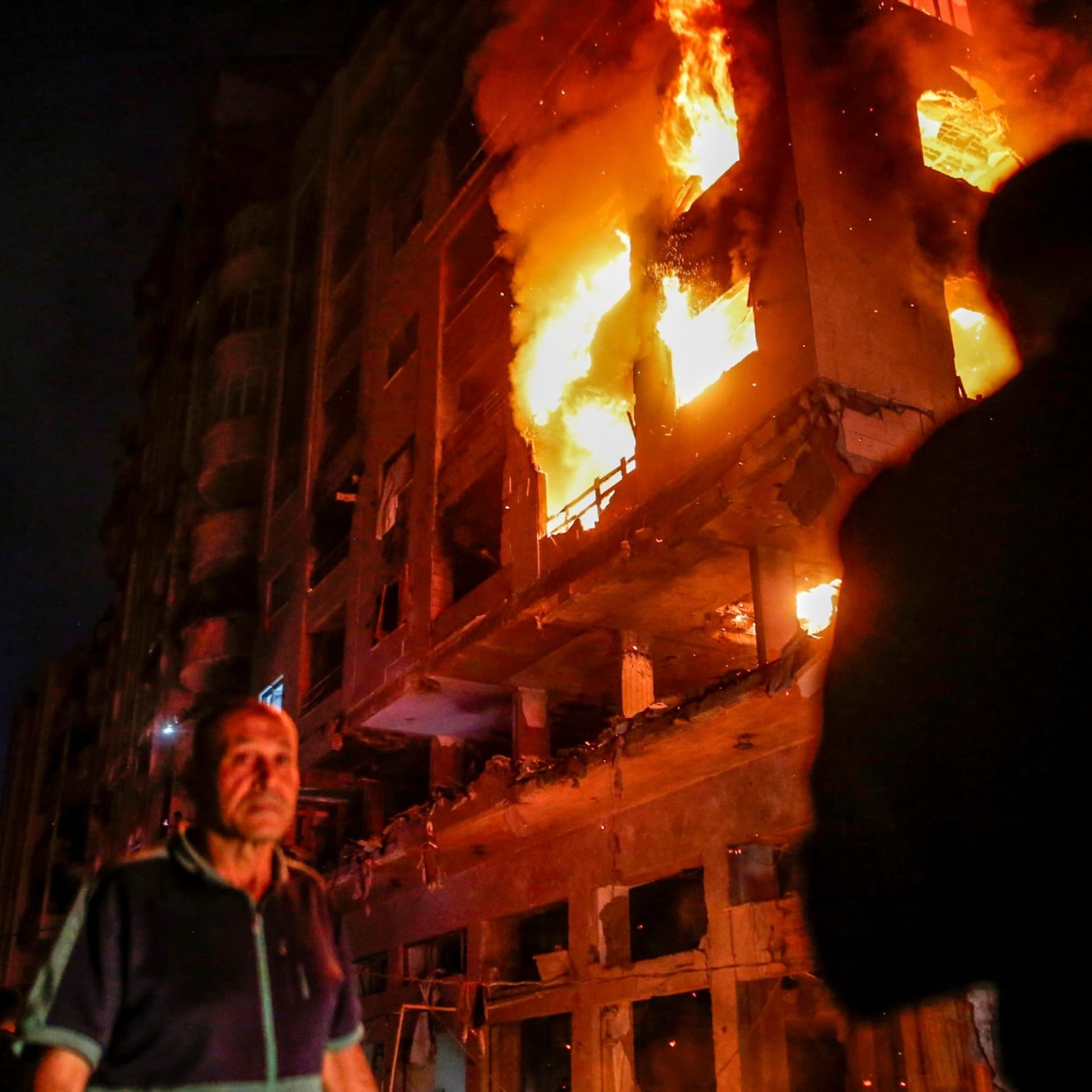
Israel’s alleged killing of Hamas commander Izzedine al-Haddad in Gaza, amid a ceasefire; plus other global news (Trump-China talks, Bolivia miner protests, nicotine pouch regulation, Paris looted-art returns, James Bond casting, Australia child protection review).
Guests
No podcast guests are interviewed in this episode. It’s a BBC Global News Podcast with correspondents and officials (e.g., Emir Nader, Tom Bateman, Katie Watson, Anbarasan Ethirajan, Klitsia Sala, David Zivy, AJ Chowdhury).
Key claims
Israel targeted al-Haddad, described as an “architect” of Oct 7; Hamas hasn’t confirmed. Gaza civil defence says civilians were killed in a Ramal neighbourhood strike. Israel says it’s also extended a Lebanon ceasefire for 45 days, but fighting continues. Bolivia says it reached a deal with protesting miners after violent clashes.
Notable examples
Ramal neighbourhood building hit by three missiles; Boeing deal for 200 aircraft with China; Bolivia fuel subsidy cuts driving protests; WHO warning about nicotine pouches marketed to teens; Musée d’Orsay offering Nazi-looted works for return; Bond casting speculation (Harris Dickinson, Lewis Partridge).
Written by AI. May contain mistakes. Listen to the episode to check what was said.
Chapters
Tap a time to open that second in VOIsrael's Attack on Hamas Leader
1:52 to 4:39
Discussion on the Israeli strikes targeting a Hamas leader and its implications.
“Also in this podcast, the hunt for the next James Bond has begun.”
Ceasefire Updates and Regional Tensions
4:39 to 6:26
An update on the ceasefire between Israel and Lebanon and ongoing violence.
“in which we still don't know if they have indeed been successful or not.”
Trump's Summit with China
6:26 to 8:59
Review of President Trump's recent summit with China and its outcomes.
“After a two day summit with China's President Xi, that one of our correspondents described as heavier on optics than outcomes, President Trump is back in Washington.”
Child Protection Review in Australia
8:59 to 14:01
Discussion on the review of the child protection system in Australia's Northern Territory.
“Politicians in Australia's Northern Territory have announced a review into the child protection system after the death of a five-year-old girl in Alice Springs.”
Voices from Alice Springs
14:01 to 14:33
Explore the challenges of making impactful changes in Northern Territory.
“We don't want another intervention, but what do we need to do to make sure that we can hear the voices of those little ones and to make sure that we fix those systems that support those families?”
Art Gallery's Unique Giveaway
14:38 to 14:51
Discover why a Paris art gallery is giving away famous artworks.
“The people who knew these works in the houses before the war, of course, they passed away.”
Political Turmoil in Bolivia
16:23 to 18:57
Understand the ongoing protests and political challenges in Bolivia.
“We debate about food, deep dish, tavern style, who's got the best beef.”
WHO's Call on Nicotine Pouches
18:59 to 21:47
Learn about the WHO's concerns regarding nicotine pouches among youth.
“So the political turmoil still continues in Bolivia.”
Musee d'Orsay's Art Recovery Initiative
21:49 to 26:16
Explore the efforts of the Musée d'Orsay to return stolen artworks.
“Vignac Prasat, the head of the WHO's tobacco-free initiative.”
The Future of James Bond
26:16 to 28:01
Discuss the search for the next James Bond and what it entails.
“French Culture Ministry official David Zivy speaking to us from Paris.”
Show all 11 chapters
The British Hero and the Bond Brand
28:01 to 28:20
Explore the cultural expectations surrounding British heroes and the Bond brand.
“Around the world, it's sort of a lightning rod for, you know, what people expect from a British hero.”
Transcript
Automatic transcript. May contain errors.0:00This BBC podcast is supported by ads outside the UK.
0:30with clear research-backed insights. No jargon, no misinformation. Make your next financial move with confidence. Follow NerdWallet's Smart Money Podcast on your favorite podcast app. John Daly here. You know what day it is? Neither do I. I live life daily. That's why I only spend on Moto Casino. Moto's got daily free bonuses, daily tournaments, new slots added daily. And the best part, guaranteed daily jackpots. You can't beat that. So today's the day you're gripping to spend it with me on Moto. America's social casino. Play for free on Moto.us. Moto Casino is the social casino. What were prohibited?
1:03No purchase necessary. Visit Moto.us for more details. Download the Moto Casino app today. Must be 21 plus. Moto Casino. America's social casino.
1:14This is the Global News Podcast from the BBC World Service. I'm Will Chork and in the early hours of Saturday the 16th of May, these are our main stories. Israel says it's killed one of the Hamas architects behind the October 7th attacks. The emergency services in Gaza City say the Israeli strikes killed at least seven people. Donald Trump is back in Washington after a two-day summit in China. But what's actually been achieved? The Bolivian government says it has reached a deal with protesting miners after violent clashes on Thursday. Also in this podcast, the hunt for the next James Bond has begun.
1:57I don't think they have to be British. It could be anyone who could portray those sensibilities. Bond is our last sort of contemporary worldwide cultural hero. But who will accept the mission?
2:13There is officially a ceasefire between Israel and Hamas. But what practically that means is less clear. Israel says it has targeted the leader of Hamas's military wing in Gaza, describing him as an architect behind the October 7th attacks on southern Israel nearly three years ago. A government statement didn't explicitly claim that Izzedine al-Haddad had been killed, but according to a senior Israeli security official, initial indications suggested he had been. Hamas hasn't commented on the fate of the commander, But the Palestinian civil defence spokesperson Mahmoud Bazal said the attack in Gaza City had killed civilians.
2:55The Israeli occupation targeted a building inhabited by citizens, a residential building in the Ramal neighbourhood, Al-Motaz building, with three war missiles that caused partial destruction. There's a big number of missing, victims and wounded due to this targeting. We are talking about hundreds of citizens who are living inside this building. The missile was fired without any warning or notification. According to eyewitnesses and local sources, the building was struck by three missiles launched simultaneously from two separate directions before a fleeing car was hit nearby. Abu Youssef was there.
3:32We were staying in a residential area with women and children. The place was hit by a belt of fire. It's very terrifying. and now they've hit a car. Where is the ceasefire? We are dying every day. For the sake of Allah, stop the war. Over the course of the war, Israel has assassinated several Hamas leaders. So who is Izzedine al-Haddad? And what would his death, if confirmed, mean for both sides? Israel doesn't allow the BBC to report freely from Gaza. Our reporter Emir Nader is in Jerusalem. Ezzedine al-Haddad was a mastermind of October the 7th, the last living mastermind still in Gaza, still alive, who hasn't been assassinated by Israel.
4:21As of last year, he's taken over the leadership of Hamas after all the other leaders have been killed. And he's also quite well known. He gave a prominent interview to Al Jazeera last year during the war in which he talked about Hamas's strategies. And so after these strikes tonight, in which we still don't know if they have indeed been successful or not. The Israeli military has accused him, al-Haddad, of the responsibility for the murder, kidnap and injury of Israeli citizens and troops on October 7th, but also of violating the current ceasefire by working to rebuild Hamas's capabilities. Now, obviously, we must mention that Hamas and indeed some humanitarian organisations also are saying that Israel isn't upholding their end of the ceasefire agreement too.
5:08But this is a significant blow to Hamas's leadership and may indeed impact their ability to strategize and negotiate going forward. In a separate development, Israel and Lebanon have agreed to extend their ceasefire after talks in Washington. But it's another truce that has so far been shaky at best. And cross-border strikes between Israel and the Iranian-backed Lebanese group Hezbollah are continuing. Again, Emir Nader told us more. This ceasefire has been in place for around a month. We're extending it now for another 45 days. The State Department is talking about that period will be used to make further progress.
5:46But actually, we've had very little detail. And indeed, many people have been looking at these negotiations to see if there would be detail about how and when Israeli troops might withdraw from Lebanon, how these big goals might be achieved, such as the disarmament of Hezbollah. These are big, complex issues. And indeed, the current ceasefire that is in place is, well, very, very limited. It's reducing the violence. We've seen 55 people killed, Lebanese people killed in the past 48 hours, according to the health ministry there. There's widespread Israeli attacks in the south of the country. We've seen an IDF soldier killed by Hezbollah last night.
6:23So the fighting is still ongoing. And what we're waiting to see now is, is there any more detail about how the United States will guarantee a real peace and a real ceasefire unfolding and being implemented in Lebanon, which might achieve some of these more longer term goals? Emir Nader. After a two day summit with China's President Xi, that one of our correspondents described as heavier on optics than outcomes, President Trump is back in Washington. That was a great discussion. It was fantastic. We made great deals, we did great, great deals, we had great relationships and a lot of things can happen that you'll be hearing about.
7:03But that was a tremendous success. I think it really was a historic moment. Well, a jubilant Donald Trump there. But China's foreign ministry said merely that the trade between the two countries would be expanded under the framework of reciprocal tariff reductions. One thing that has been confirmed, Boeing says China has agreed to buy 200 aircraft, but shares initially fell because investors were expecting more. Inevitably, Iran was on the agenda too. Our correspondent Tom Bateman was travelling back to the US on board Air Force One as part of the White House pool of journalists. While on board, he asked President Trump if China's relationship with Iran could help to reopen the Strait of Hormuz, and he filed this report during a refueling stop in Alaska.
7:51Here was a diplomatic opportunity to try and take advantage of the considerable leverage that President Xi has over the Iranians to try to use that to get the Iranians to at least ease their grip or to reopen the Strait of Hormuz. That, of course, playing directly into the cost of fuel in the US and into rising inflation again. So I put that question to Mr. Trump and asked whether he got any firm commitment from President Xi on that issue. Now, he said that he didn't because he didn't want to ask for a favour. We don't need favours. We've wiped out their armed forces, essentially. He said if he asked for a favour, he would need to get a favour in return.
8:38Didn't want to do that, although he did suggest that it is also in President Xi's interest for the straits to be open so that that may happen, that pressure may happen. But no signs so far of any breakthrough on that as Mr Trump heads back to Washington and that big domestic issue, a big international issue, still not solved. Tom Bateman in Alaska. Politicians in Australia's Northern Territory have announced a review into the child protection system after the death of a five-year-old girl in Alice Springs. Kumunjay Little Baby, as she's now known for cultural reasons, went missing last month after being put to bed by her mother in an Aboriginal community.
9:20A 47-year-old man has been charged with her murder. Her death caused national outrage and grief, but it's also highlighted the deep disparities in Australia. Our Australia correspondent Katie Watson reports from Alice Springs and a warning for Aboriginal and Taurus Strait Islander listeners, our coverage does contain references to someone who has died. She was my little princess. My princess who loved the colour pink. My heart is broken into a million pieces. Kumunjay little baby in the words of her mother. A little girl like any other. Hundreds of people turned up to this vigil, Many of them wearing pink.
10:07There are people in jumpers that are pink because it's really chilly now with the sun going down here in the outback in winter. Dogs with pink bows, children with pink balloons. Everyone paying respects to the little girl who died.
10:26Kuminjay Littlebaby's body was found five days after she went missing. A man's been charged with her murder, but her death has made the country reflect. How could this have happened? A small child from a vulnerable poor family, left exposed. Why? So many questions that need answering, but for now the community wants to grieve. A period known as sorry business. The raw pain echoed across the sports ground after the vigil ended. I think more than anything it's probably the sadness of that with systems around poverty for marginalised people, that systems, that people fall through the cracks. And this little girl was beloved by her family and community but obviously lived in poverty and was vulnerable.
11:13It's often, there's heavy things that happen in this town and as a non-Indigenous Australian, I think the colonisation story is still really big here, it's still really present. A jewel set in Australia's northern seas... For decades, Australian governments have introduced policies that have failed Aboriginal people. It's inhabited by a people whose instincts are not far removed from the lower animals. And the children especially are just carefree products of nature in the raw. Right up to the 1970s, thousands of Aboriginal and Torres Strait Islander children were removed from their families to get them to assimilate part of what's known as the Stolen Generations.
11:50White missionaries have come among the coloured Aboriginals and are doing noble work in saving the blacks from themselves. Then, in 2007, the Northern Territory intervention that lasted 15 years, an Australian federal government initiative aimed at combating alleged child sexual abuse in Aboriginal communities. I don't want to be right here, right now, to have to stand in this chamber. Kuminjay Littlebaby's family has asked that her death not be politicised, but politicians on all sides now want to make their point. Liberal Senator Jacinta Nampajimba-Price, who said she was a relative of the little girl, spoke earlier this week.
12:31For too long in this country, there has been silence around what is happening in too many town camps and remote communities. A silence driven by fear, a fear of causing offence, a fear of being labelled racist, fear of speaking honestly about dysfunction, violence, alcohol abuse. neglect and conditions vulnerable children are growing up in that silence is killing our babies not everyone agrees katherine liddle leads snake the peak body for aboriginal organizations looking after children and their families it's a country that um has been very good at demonising us and it's demonised us since colonisation.
13:23That's a really hard narrative to unpick and when we look at things like child protection in Australia today, the child protection system was built to remove Aboriginal children from their families and has not moved from that. This week the Northern Territory government said a review would be launched into the child protection system here and reforms would be made. But leaders are clear, Aboriginal people need not to be blamed for these failings, and they also need to be consulted to find a way forward, not just in child protection, but housing, justice, the prison system too. Marion Scrimger is a federal member for the Labour Party in the Northern Territory.
14:01We don't want another intervention, but what do we need to do to make sure that we can hear the voices of those little ones and to make sure that we fix those systems that support those families? But few here in Alice Springs that I spoke to really believe her death will deliver much needed change.
14:33Katie Watson there. Still to come in this podcast, why a Paris art gallery is trying to give away paintings by world famous artists. The people who knew these works in the houses before the war, of course, they passed away. But some families still have a small photograph of a living room before the war. And sometimes some people still bring to us this evidence.
15:15social casino. You know I've won a couple of majors and on Moto, I've won majors, grands and epic jackpots on their classic Vegas slots with huge, huge bonus rounds. Moto Casino adds new games and awards players free coins every single day. Grip it and spend it on Moto Casino. Download the Moto Casino app today. Moto Casino is a social casino. What we're prohibited to purchase necessary, visit Moto.us for more details. Moto Casino America's social casino Spring is calling. Weddings, patio sessions, barbecues and you want that drink vibe without sacrificing tomorrow. That's RK Zero Proof. As the world's first Zero Proof spirits brand, RK created the warm molecule, giving you the smooth kick of whiskey or tequila with zero alcohol, zero calories, zero sugar, and all the peace of mind you need to enjoy every moment.
16:02Step into the Zero Proof season at rkzeroproof.com.
16:10Chicago Land. Wayfair's Memorial Day Sale starts May 11th. And you can score up to 70 % off everything home in person. Shop Wayfair's Memorial Day Sale May 11th through 26th at the Wayfair store in Wilmette. Wayfair, every style, every home. Chicago talks. A lot. Hold on, let me step over here. People are talking too much. We debate about food, deep dish, tavern style, who's got the best beef. We yell across rooms, across blocks, across generations. Yes, nice earrings, Grammy. And now we're doing it on our phones, too. Video calls from the L train, group chats that never shut up. Neighbors texting you the score before your TV catches up.
16:49Get a load of this guy. Catch up on a dog. Yeah, we've got thoughts. Because nothing here gets built without conversation. Nothing moves without connection. So if you think you know AT &T, it might be time to rethink that. Because their network has improved. like a lot, which means Chicagoans can keep speaking their mind with the top-rated fiber internet in the city. Chicago won't stop talking. Our improved network backs it up. AT &T, connecting changes everything. AT &T Fiber limited availability in select areas. Top-rated and fastest internet. AT &T Fiber, based on analysis by Ooclub's Business Intelligence Data 2H 2025.
17:29This is the Global News Podcast. A story out of Bolivia next, where since May, people have been protesting against the austerity policies of the centre-right President Rodrigo Paz. On Thursday, it turned violent, with explosions and tear gas, as a group of miners called for him to resign. Mining unions have also been seeking changes to their work contracts. But now the Bolivian government says it has struck a deal. Our global affairs correspondent, Anbarasan Ethirajan, told me more. The Bolivian government says that after nearly 12 hours of negotiations, they had reached a deal with the miners who launched a big protest on Thursday.
18:09Now, a representative for the union is also saying that the government had addressed most of the demands, especially with regard to access to further equipment. And also they need more explosives basically for mining work. But both sides have not given out, listed out all the demands or what had been agreed and what had not been agreed. So this is the situation as of now. But it came a day after a protest by the miners that turned violent with the police and miners, protesting miners. They were clashing in the main city, La Paz. But it is still not the end of the story for the Bolivian government because it is still grappling with the protests by other workers, for example, teachers and transportation workers.
18:57They have been demanding wage increases as well as better working conditions. So the political turmoil still continues in Bolivia. And at the heart of this, like we see in so many countries, is the economy because people think their lives are getting worse. The current president, Rodrigo Paz, came to power in November, he assumed charge, after 20 years of socialist rule. And at that time, the country was facing a severe funding crisis, foreign exchange crisis. So he announced various measures, basically austerity and privatization. And he was talking about capitalism for all. He's a center-right president.
19:39But they did not go well with many Bolivians. And one of the decisions it took was to scrap the fuel subsidies that put up the cost of the fuel, which resulted in other prices also going up. And so that is one of the reasons why many Bolivians are on the street asking for better wages. And some of the other policies like farming, whether how they can incorporate some of the small holdings into bigger businesses. That was, again, raising questions about the indigenous communities. They were worried about big businesses coming and taking over the land. So since early May, the protests have intensified.
20:17In fact, there is a blockade going on around the main city La Paz, with many people talking about, you know, there could be even food shortage if these blockades continue. So it's a big challenge for the government, but at the moment they have reached the deal with the miners. But with regard to other workers, they need to find a way out. The World Health Organization is calling for countries to do more to restrict the sale of nicotine pouches to young people. They're the highly addictive products which people put next to their gums and it says they're being aggressively marketed to teenagers.
20:54Klitsia Sala reports. The industry says nicotine pouches help adult smokers move away from tobacco and are meant for over-18s. But the World Health Organization warns that what it calls deceptive tactics are driving a rapid rise in their consumption among young people worldwide, creating the risk of a new generation of nicotine addicts. WHO is deeply concerned about the speed at which these products are spreading because of the health risks they carry, especially for adolescents and young people. At the same time, regulations are failing to keep pace with the rapid evolution and aggressive marketing of these products.
21:31Manufacturers are accused of using bright packaging and sweet flavours like bubble gum and gummy bears and promoting the pouches through social media influencers to offset falling smoking rates. Only 16 countries ban them outright and 32 regulate them in some way. Cletia Salah. And you also heard there from Dr. Vignac Prasat, the head of the WHO's tobacco-free initiative. The celebrated French art museum, the Musée d 'Orsay in the centre of Paris, doesn't often hold exhibitions consisting of works of art it desperately wants to give away. But a new display featuring exhibits by impressionist masters Renoir and Degas, as well as a sculpture by Rodin, is intended to do just that.
22:16All of the works were stolen by the Nazis during the occupation of France in the Second World War, and subsequently recovered from Germany or Austria. And so far, none of their former owners have claimed them back. David Zivy is a French culture ministry official who is head of a governmental task force to return such cultural objects. Paul Henley asked him why the job was taking so long. It's a very complicated work. It's difficult because even if the artists are great and famous artists, the owners are not known. And it's very difficult to understand who was the owner before the war because we don't have all the data.
22:56So the work is to find who were the owners. And the second reason is also that the work began quite late, 30 years ago and more in the last few years. Is it generally the case that these artworks were stolen from Jewish families? Is that the pattern? Yes, that's the pattern. Some works were robbed, plundered, sized by the German authorities during the German occupation in France, but same in the Netherlands or in Belgium, for example, or in Eastern Europe. And some of the works were also sold during the war, sold under duress, sized and sold, or directly sold by French authorities, the gouvernement de Vichy, or even sold by the owners because they needed money for escape or hiding.
23:47And that's also difficult in that case to have good archives, clues or evidences to understand that. There was an Allied army team at the end of the war, wasn't there, that went into Germany and Austria to try to recover these items. There was a film made about them, Monument Men. Yeah, there was this scientific unity in the U.S. Army, but there were also what we call fine arts officers in France, officiers beaux-arts. And one of the main characters in this team was Rose Vallon, who was a French curator who worked during the war. She's also called the spy of the Musée du Jeu de Pomme because she was allowed to stay in a place where the Germans brought all the looted artworks.
24:35And she took notes. She noted everything secretly from where the works were looted and where they were sent in Germany during the war. And she participated after the war as a French army officer to the search and the quest and the finding of the works after the war in Germany and Austria. Are you literally expecting that someone will walk around the Musée d 'Orsay and say, that Renoir belonged to my grandfather and I can prove it? Of course, after more than 80 years, it's almost impossible that someone recognize a work. The people who knew these works in the houses before the war, of course, they are not among us now.
25:17They passed away, but some families still have a small piece of archive, a small photograph of a living room before the war. And sometimes some people still bring to us, the Ministry of Culture to the museum, this evidence. And so maybe someone will understand that the painting which is in the museum is the same than this small painting in a small photograph in the 30s before the wars. Well, it might happen. We hope so. But that's not the only way to understand, of course, the provenance. But success would be empty spaces on the wall of the permanent exhibition area in the museum, would it, at the end?
Read the full transcript
25:58Yes, maybe it's a paradox for a museum, but yes, it would be a success. Very often we have this empty space. After that, we put another work. But it would be a success, of course, because it would mean that with the research, we reach some results and understanding. French Culture Ministry official David Zivy speaking to us from Paris. You get to wear a smart tuxedo, cause huge explosions by pressing a button on your watch and drink endless vodka martinis. Let's see if I can do this. Shaken, not stirred. Let's be honest, playing James Bond wouldn't be a bad job. And now with Amazon MGM Studios controlling the Bond franchise, the hunt for the next one has officially kicked off.
26:45The speculation started long ago with names like Jacob Elordi, Callum Turner and Aaron Taylor-Johnson all in the frame. But who's going to get the part? AJ Chowdhury is from the James Bond International Fan Club. I believe Amazon are trying to go slightly younger and kind of get a new youth audience. They're big shoes to fill. Daniel Craig was the most commercially successful and critically successful James Bond we've had. So it's a bunch of people who I think have the Goldilocks amount of fame. They've done a lot of stage work, a lot of film and television on both sides of Atlantic, but haven't quite made it.
27:24They're not too famous, not too unknown. They're just right. The Goldilocks amount. I'd hazard a guess, British actors. One of the key people who's been cited is Harris Dickinson, who's made a name for himself in good quality drama. He also played a spy in Kingsman. Another person cited by the trade paper Variety is Lewis Partridge, who appeared in Stephen Knight's House of Guinness. I don't think they have to be British. It could be anyone who could portray those sensibilities. Bond is our last sort of contemporary worldwide cultural hero. In this country, it's a cultural element. Around the world, it's sort of a lightning rod for, you know, what people expect from a British hero.
28:08So I think they have to portray it as someone that could be conceivably British. Bond is a brand that's been built nearly 70 years. It's an unqualified success. And with a brand like that, you don't turn a Coke can blue. AJ Chowdhury there. That's all from us for now. If you want to get in touch, you can email us at globalpodcast at bbc.co.uk. You can also find us on X at BBC World Service. use the hashtag Global News Pod. We have a sister podcast, The Global Story, which goes in-depth and beyond the headlines on One Big Story. So give that a listen if you like. This edition of The Global News Podcast was mixed by Javid Gilani and the producer was Rebecca Wood.
28:50The editor is Karen Martin and I'm Will Chalk. Until next time, goodbye.
From the publisher
Israel says it's targeted the head of Hamas's military wing - describing him as an architect of the October 7th attacks. It's not clear if Izz al-Din al-Haddad was killed in the airstrike in Gaza City but there were civilian casualties. Also: the Israel-Lebanon ceasefire is to be extended; the alleged murder of an Aboriginal girl highlights Australia's deep inequalities; Bolivia's government strikes a deal with protesting miners; the WHO calls to restrict sales of nicotine pouches to young people; a French art gallery exhibits still-unclaimed works stolen by Nazis; and the hunt is on for the next James Bond.
The Global News Podcast brings you the breaking news you need to hear, as it happens. Listen for the latest headlines and current affairs from around the world. Politics, economics, climate, business, technology, health – we cover it all with expert analysis and insight. Get the news that matters, delivered twice a day on weekdays and daily at weekends, plus special bonus episodes reacting to urgent breaking stories. Follow or subscribe now and never miss a moment. Get in touch: globalpodcast@bbc.co.uk



