
In short
The BBC Global News Podcast covers ongoing Israel-Lebanon cross-border strikes despite a ceasefire; Hungary’s new prime minister Peter Magyar promises “regime change”; Russia’s Victory Day parade in Moscow is scaled back; New Orleans faces future inundation risks; Indonesia raids scam centers linked to online gambling/cyber scams; Australia’s One Nation wins a first Lower House seat; uncertainty over Iran’s participation in the Men’s World Cup; and a UK heavyweight boxing title fight.
Guests (reported/quoted)
Hugo Boshega (BBC correspondent in Lebanon); Nick Thorpe (BBC in Budapest); Steve Rosenberg (BBC Russia editor); Professor Jesse Keenan (Tulane University, climate/land-loss study); Valerie Sanderson (interviewer); Katie Watson (BBC in Sydney); Lise Doucette (BBC Global Story; quoted via interview); Porir Jaffare (BBC Persian Service); Yusuf Anani (boxing reporter).
Key claims/examples
Sak Sakia building destroyed; ~40 killed; Israel targets Hezbollah; Hungary’s anti-corruption “independent office” and dismantling Orbán-era “state capture”; Russia parade lacks tanks due to fear of Ukrainian attack; New Orleans could be surrounded by ocean within decades; Indonesia detains 300+ foreigners; One Nation seat signals frustration with traditional parties; Iran attends World Cup only if IRGC/visa/journalist conditions met; Dubois defeats Wardley to win WBO belt.
Written by AI. May contain mistakes. Listen to the episode to check what was said.
Chapters
Tap a time to open that second in VOIsrael's Continued Strikes in Lebanon
1:26 to 2:14
Explore the ongoing conflict and the impact of Israel's airstrikes.
“Hungary's new prime minister has taken office and pledged a change of regime.”
Eyewitness Accounts from Sak Sakia
2:14 to 3:43
Hear firsthand accounts of destruction and loss from a recent airstrike.
“Almost 40 people were killed in southern Lebanon in another day of intense attacks on Saturday.”
Political Change in Hungary
3:46 to 5:42
Discuss the political shift with Hungary's new prime minister.
“I, Peter, am I, that I will be a leader for Hungary and a leader for his foundation.”
Reactions to Hungary's New Leadership
5:42 to 8:16
Review the reaction in Europe and the potential consequences of new policies.
“Many, you know, similarities, I would say, to what we experienced in 1989, the time of the fall of communism.”
Victory Day Parade in Russia
8:16 to 11:20
Analyze the subdued atmosphere of Russia's Victory Day celebrations.
“Viktor Orban has been described as Vladimir Putin's greatest asset.”
Climate Challenges Facing New Orleans
11:20 to 14:07
Examine the implications of rising sea levels for New Orleans.
“New Orleans is no stranger to the perils of rising water.”
Overview of the Current Situation in Israel
14:07 to 15:05
Learn about the complex and evolving situation in Israel and its implications.
“There is already a domestic outflow of population from the city, the region and the state.”
The Artemis II Mission and its Impact
15:48 to 17:02
Explore the historic Artemis II mission and what it means for future space exploration.
“after successfully completing their groundbreaking voyage around the moon.”
Scam Centers and Cybercrime in Southeast Asia
17:02 to 18:38
Examine the growing issue of scam centers in Southeast Asia, focusing on Indonesia.
“Now, we've heard on the podcast before about the rise of scam centres in a number of Southeast Asian countries, including Myanmar, Laos and Cambodia.”
Political Shifts in Australia: One Nation Party's Rise
18:38 to 20:30
Discuss the implications of the One Nation Party winning a parliamentary seat in Australia.
“So what they suspect is it is not only online gambling.”
Show all 16 chapters
Analyzing One Nation's Policies and Public Perception
20:30 to 22:48
Understand the policies of One Nation and their impact on Australian society.
“Political history has been made in Australia with the far-right One Nation Party winning its first ever seat in the Lower House of Parliament.”
Cultural Tensions and Political Responses in Australia
22:48 to 24:06
Explore how recent events in Australia are affecting its multicultural identity.
“Pauline Hanson has talked about how Australia does not want Sharia law.”
Iran's Participation in the Upcoming Men's Football World Cup
24:06 to 26:08
Learn about the conditions under which Iran's football team might participate in the World Cup.
“so many people talk about how Australia is such a great multicultural country.”
Highlights from the Recent Boxing Match
26:08 to 28:01
Get insights into the recent heavyweight boxing match and its implications.
“You look at it from like really objective angle.”
Analysis of Fabio Wardley's Toughness
28:01 to 29:31
Discover the resilience and performance of boxer Fabio Wardley during his fight.
“Were you surprised that Fabio Wardley didn't go down or that his corner didn't step in and try to stop the fight?”
Impact of Heavyweight Boxing Results
29:31 to 30:06
Learn about the significance of the fight's outcome on heavyweight boxing.
“Well, it is internationally significant.”
Transcript
Automatic transcript. May contain errors.0:00This BBC podcast is supported by ads outside the UK.
0:30with clear research-backed insights. No jargon, no misinformation. Make your next financial move with confidence. Follow NerdWallet's Smart Money podcast on your favorite podcast app. Choiceology, an original podcast from Charles Schwab, is a show about the psychology and economics behind our decisions. Join host Katie Milkman, an award-winning behavioral scientist and author of the best-selling book, How to Change, as she shares true stories from Nobel laureates, authors, athletes and everyday people about why we make the choices we do and how to make better ones to help avoid costly mistakes.
1:06Listen to choiceology at schwab.com slash podcast or wherever you listen.
1:14You're listening to the Global News Podcast from the BBC World Service. Hello, I'm Oliver Conway. This edition is published in the early hours of Sunday the 10th of May. Israel has continued heavy strikes in Lebanon despite a ceasefire. Nearly 40 people have been killed. Hungary's new prime minister has taken office and pledged a change of regime. And Russia has held a muted Victory Day parade in Red Square without a tank in sight. Also in the podcast, political history has been made in Australia as the far-right One Nation Party wins its first seat in Parliament. and all the parties involved, they want it to happen, but still it's going to be very, very, very difficult.
1:59Will Iran's footballers play in the Men's World Cup despite the war with hosts USA?
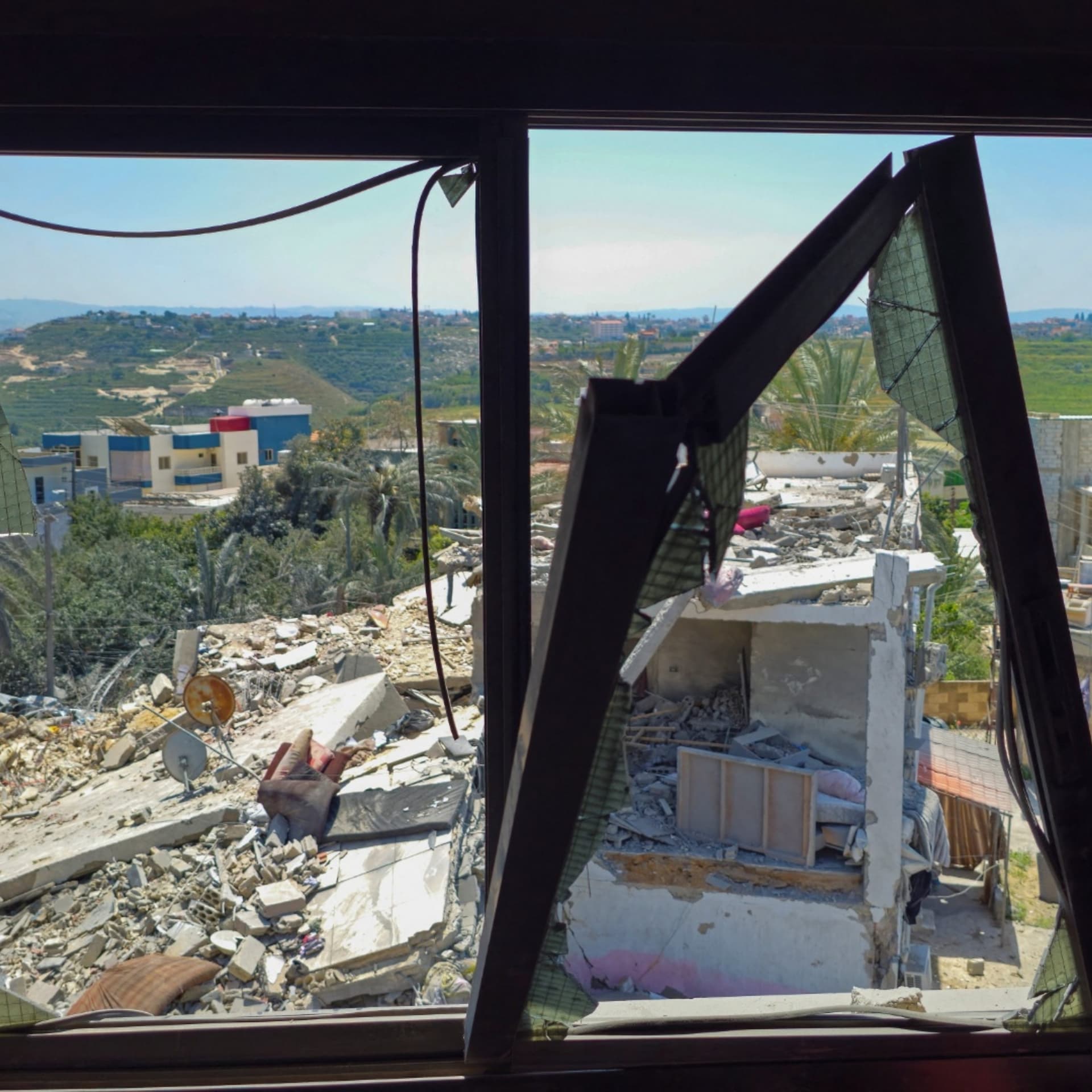
2:10But first, despite an apparent ceasefire, cross-border strikes have been continuing between Israel and Lebanon. Almost 40 people were killed in southern Lebanon in another day of intense attacks on Saturday. Seven died after a residential building was hit in the town of Sak Sakia. Our correspondent Hugo Boshega was there. This is the building that was hit by an Israeli airstrike here in the town of Sak Sakia and they've just finished the rescue operation. Now residents have told us that three families who had been displaced because of the war were living here in this building that has been completely destroyed.
2:50Now, the victims of this attack include a child who was two years old. Now, attacks like this are happening every day across southern Lebanon. The ceasefire here has failed to stop the war. Now, Israel says it is targeting Hezbollah, accusing it of violating the deal. But often it's civilians who are being killed. And Hezbollah has been responding by launching rockets and drones into northern Israel and also against Israeli troops occupying parts of southern Lebanon. And there have been new evacuation warnings issued by the Israeli military for towns in southern Lebanon, an indication that these Israeli attacks are likely to continue.
3:42Hugo Busega reporting from Lebanon. After 16 years dominated by one man, Hungary has a new prime minister. I, Peter, am I, that I will be a leader for Hungary and a leader for his foundation. Peter Marjar was sworn in four weeks after a landslide election victory over long-term ruler Viktor Orbán. In his first speech to lawmakers, Mr. Marjar promised what he called a regime change, saying his government would create an independent office to investigate corruption during the Orbán era. He then addressed supporters outside Parliament. Take it with you. Take this day with you as a memory and remember this day for your whole life.
4:35Maybe one day you will show it to your children, to your grandchildren, that this is how it was. This is how it was in 2026, the first day of the free and democratic Hungary. Our correspondent Nick Thorpe told us about the atmosphere in the Hungarian capital, Budapest. Certainly the mood in the square in front of Parliament and along the banks of the River Danube was one of sheer exhilaration. Pretty much everybody was dancing, thousands of people dancing on the streets. So you had the big screens, but also just ordinary people, very young people, teenagers, families with children literally dancing in the streets.
5:21So there is a sense of that Hungary is sort of shaken off a heavy burden. Obviously, there's disappointment on the Fidesz side. There's fear of repercussions. But in terms of the supporters of this government, of this incoming government, there's, especially among young people, there's a very happy mood. Many, you know, similarities, I would say, to what we experienced in 1989, the time of the fall of communism. Now, Peter Magyar spoke of regime change. What actually will change and what will stay the same? What he would like to do, and he has a mandate, a legitimacy, the power to do this in Parliament with his two-thirds majority, is basically to dismantle the structures that Viktor Orban built, which was his critics, what Viktor Orban's critics say, was effectively state capture, taking over major state institutions, eroding or doing away with checks and balances.
6:25So 14 out of 15 judges in the constitutional court, I think, could be said to be supporters of the outgoing government, the head of the Supreme Court, all these sort of major institutions. And Peter Maggio came in very clearly in his speech in Parliament today as soon as he'd been sworn in, asking all these people just to step down, to get out of the way, telling them that they have no place in the changes that he wants to bring in. I think what we may see as well, Fidesz passed its own constitution back in 2011 after other parties, opposition parties at that time boycotted the talks there. I think Peter Magyar will be tempted to bring in a constitution just to sort of decentralise power which was so centralised under the Fidesz government.
7:12And what does this mean outside Hungary, the EU, Ukraine, Russia? Peter Maggiar's victory was greatly welcomed in Brussels. Ursula von der Leyen, the president of the European Commission, Antonio Costa, president of the European Council, they also sent congratulations again today. Ursula von der Leyen, I've just got the quote here in front of me, wrote that our hearts are with Budapest, the hope and promise of renewal are a powerful message in these challenging times. she spoke about important work ahead for Hungary and for Europe I think that sense of relief is really that they will no longer have a leader in Budapest who's putting a spanner in the works who's blocking, vetoing aid from the European Union to Ukraine for example also a message of congratulations from Volodymyr Zelensky the President of Ukraine sending his congratulations In terms of Russia, though, I think this is a pretty major setback.
8:16Viktor Orban has been described as Vladimir Putin's greatest asset. That voice has now gone. And while Peter Madhya has said he will have an independent policy, he's not going to sort of roll over and wait to receive instructions from Brussels or from other European heads of government. And certainly he said he wants to work constructively and that Hungary will have its own distinct identity. But it will be a constructive debate rather than a sort of destructive or an obstructive one, which we saw under Viktor Orban. Nick Thorpe in the Hungarian capital, Budapest. Well, on to Russia now. And President Putin may have given an upbeat assessment of the war in Ukraine, telling reporters it could be soon over.
8:59but there was a distinctly downbeat feel to the annual Victory Day parade in Moscow on Saturday. The celebration of the Soviet Union's victory over Nazi Germany in the Second World War normally makes for a stunning showcase of Russia's military might with large numbers of troops, vehicles and hardware on display in Red Square. This year there wasn't a tank in sight as our Russia editor Steve Rosenberg found out. In Moscow, they were celebrating victory Commemorating the defeats of Nazi Germany But this year's Red Square parade had been scaled back Out of fear of a Ukrainian attack The soldiers were here, but the military hardware Well, that was on a screen, not on the square I've been on Red Square on Victory Day many times before, but this year's parade looks very different.
9:58There are no tanks, no missiles, none of the military hardware that Moscow normally showcases on this day to try to project its power to the world. Vladimir Putin likes to project strength and will have been reluctant to pare down his parade. He wants Russians to think that the war on Ukraine and World War II are connected. The great feat of the generation of victors inspires the soldiers fighting in today's special military operation. They are confronting an aggressive force which is armed and supported by the whole of NATO. Despite this, our heroes move forward.
10:46With a little help from their friends, North Korean troops took part in the parade. Their army has been fighting for Russia against Ukraine. Ukraine did not target President Putin's parade. A last-minute ceasefire brokered by Donald Trump reduced that danger. As for the finale, it was very patriotic. Russia can truly celebrate what it calls the great victory of 1945, but victory in Ukraine, there's no sign. Steve Rosenberg in Moscow. New Orleans is no stranger to the perils of rising water. It was famously inundated during Hurricane Katrina two decades ago. It already sits on one of the most exposed coastal areas in the world, But a new study from Tulane University suggests the US city could actually be surrounded by ocean waters within decades.
11:44Residents are being urged to think about moving and to make buildings more climate resilient. Professor Jesse Keenan, co-author of the study, spoke to Carl Nassman. What we face in New Orleans and all of southeast Louisiana is the prospects that in the coming decades and really in the coming century, the area will be inundated by a combination of land loss and sea level rise. And in that context, we have time. We have time to make investments and adaptation, and more particularly to build land. And this has been an immediate, let's say, political challenge in the last year, year and a half, with some major projects being canceled.
12:28But we do have time. We have generations to begin the process of thinking and preparing for this inundation and moving not just populations, but businesses, industry, and the like. What do you mean when you said building land as one of the solutions potentially to this? So in the past two decades, the state of Louisiana has engaged in coastal master planning and the development of projects that steer the sediment-rich Mississippi River into areas that allow for the deposit of that sediment to build land. Currently, for a lot of different reasons, land is being lost. A football pitch every 100 minutes is being lost in the region.
13:12And so when they divert the Mississippi, even in small areas or sometimes very large areas, it builds land. And most critically in this context, that land buys time for the city and the region and really all of southeast Louisiana. You know, we should say that when your study was published, there were some pretty dire headlines out there. One said the city has reached a point of no return and relocation must start now. What's your reaction to that? I mean, are we at a point right now where people should really think about picking up and leaving New Orleans? Well, I think where we are is we've seen a lot of sensationalism in the drafting of headlines.
13:54We have generations ahead of us that can make investments in the city of New Orleans, in infrastructure, in hazard risk reduction, in integrated flood protection systems. But that being said, we do need to begin the process. There is already a domestic outflow of population from the city, the region and the state. So it's a complex picture. There's no need to panic. We have time ahead of us. Professor Jesse Keenan. And still to come on this podcast. The main thing to take away from it is the sheer brutality. It's hard to really call it a boxing match. The world of boxing watches a thrilling heavyweight classic.
15:05Casinos, the social casino. Avoid were prohibited. No purchase necessary. Visit moto.us for more details. Must be 21+. Moto Casino. America's social casino. Catch the NBA playoffs on Sling TV, the most flexible live TV streaming service, putting consumers in control to watch games their way with flexible subscriptions. Want to catch one game or a full series on ESPN? Grab a one, three, or seven-day pass. If you want to catch as many games as possible, get a monthly subscription with our ABC, NBC, and ESPN combo package. Either way, Sling lets you watch the playoffs your way with no long-term contracts.
15:44Learn more at Sling.com. The crew of NASA's Artemis II mission have returned home safely after successfully completing their groundbreaking voyage around the moon. Splashdown confirmed. Humans are back in the business of going to the moon. But while the mission is over, the Artemis space program is just getting started. 13 Minutes, the BBC Space podcast, is looking back on their epic journey and discovering what the future holds for the Artemis space program. Just imagine what we as humans can do next. 13 Minutes presents Artemis II from the BBC World Service. Listen now, wherever you get your BBC podcasts.
16:28What's actually happening inside Iran? I'm Tristan Redman, host of the Global Story podcast from the BBC. Iranians have been under a near-total internet blackout for several months. Few Western journalists have been permitted to operate in the country. But in recent weeks, the BBC's chief international correspondent, Lise Doucette, has been reporting on the ground in Tehran. For more, listen to The Global Story on bbc.com or wherever you get your podcasts.
17:01You're listening to The Global News Podcast. Now, we've heard on the podcast before about the rise of scam centres in a number of Southeast Asian countries, including Myanmar, Laos and Cambodia. Now, the problem seems to be spreading to Indonesia as well. Officials in the capital, Jakarta, say they've detained more than 300 foreign nationals allegedly running such an operation. Our global affairs reporter Anbarasan Atirajan told Valerie Sanderson about the raid. It was a very well-coordinated operation in central Jakarta. They had deployed a heavy security presence around the building and they found dozens of people, more than 300 people inside this compound where they had organized a setup like a normal office setup with computers and desks, and they seized several hard desks as well as mobile phones.
17:52So what they suspect is this could be part of an international syndicate. It's a Ponzi scheme where you invest some money, you get more money, but actually it is a scam project. They came to Indonesia only two months ago, and they were targeting people outside the country, and it was more of an online gambling center. Also, online gambling itself is banned in Muslim-majority Indonesia, and this can carry up to nine years of sentencing. And how big a problem is this in Indonesia? Is this the first such scam they've found? They have intensified their crackdown. Only on Friday, they arrested another group of 200 people, many of them from Malaysia, Cambodia and Lavos.
18:37And most of those arrested in this week, they were from Vietnam, more than 200 people. So what they suspect is it is not only online gambling. This is also the kind of cyber scam operations. The reason why was, you know, there was a lot of international attention in Myanmar and in Cambodia and Laos where you had huge townships, you know, buildings, compounds where there were online gambling as well as scam centers operating. And also that is linked to human trafficking. and China put a lot of pressure on Myanmar and the ASEAN countries were putting pressure on these two countries, especially Myanmar and Cambodia.
19:15And we saw hundreds of people fleeing these camp compounds and the officials are suspecting that because the attention is there, a lot of security operation going on, they're moving to countries like Indonesia and that is why they find more people. In fact, in February, they found a group of Indians operating from Bali Island also. So we have seen hundreds of people being detained in Indonesia. And what can the authorities do to prevent this happening? It's a major issue for all the Southeast Asian countries. So they have been coordinating. What they want to do is to establish a joint centre, some sort of monitoring centre in Singapore.
19:56And China has also held a meeting with ASEAN ministers to how to control, because this seems to be what you call a cross-border criminal activity. And then cryptocurrency is involved. And then you have these scams and then gambling. So a joint effort is needed. And ASEAN countries have come out with an action plan how they can tackle this. But it is not going to be easy. Last year alone, the online gambling plus these scam centres estimated to have cost around$60 billion. I'm Rassan Etirajan talking to Valerie Sanderson. Political history has been made in Australia with the far-right One Nation Party winning its first ever seat in the Lower House of Parliament.
20:38David Farley was victorious in a by-election in New South Wales. The governing Labour Party didn't put forward a candidate and still holds a large majority in the Lower House. But what does this signal about Australian politics? The BBC's Katie Watson, who is in Sydney, spoke to Lise Doucette. I think there's a growing frustration with the traditional parties here in Australia. There's a cost of living crisis. That's something that people talk about a lot, the high cost of housing. And I think that's driven people to look for other alternatives. I mean, we've seen it in other parts of the world.
21:16Australia is no exception. Do you see it as a protest vote or you think this is a genuine shift because, of course, the party is now saying they're going after all the other seats as well? The leader, Pauline Hanson, did say that. I think it's a significant milestone. I mean, that's what the candidate called it. It's not going to change anything in terms of the Labour government's vast majority. But it's also been the first kind of federal test of One Nation support. So back in March, when South Australia had state elections, it recorded the second highest number of votes out of any political party.
21:55So Labour won, that was clear, but it was its best ever electoral performance. So clearly there's a move towards and certainly increasing popularity for One Nation. So I don't think it's anything that can be ignored. And it's interesting because with the elections last year here in Australia, the federal elections, there was such a discussion about how Australia has a preferential voting system. So basically voters rank candidates from their most to least preferred. And there's a final tally that's worked out. I was talking to many analysts who say that helps make Australia much more kind of central.
22:29And the fact that there's compulsory voting means that they don't have the swings kind of to extreme left or extreme right that we might have seen in other countries. But that's clearly not true. How would you describe One Nation? What are some of their defining slogans, policies? Anti-immigration, for sure. Pauline Hanson has talked about how Australia does not want Sharia law. So that's very clear. And that's very difficult right now because of what happened back in December with the terrible shooting at Bondi Beach at a Hanukkah event, which was Australia's worst terrorist attack. and it's a difficult time for Australia and I think that's perhaps made people a bit more on edge.
23:11So perhaps there's an element of what Pauline Hanson's talking about making people listen more. For a long time she didn't gain so much traction but she's clearly resonating. You know, she's a right-wing populist and anti-immigration is pretty much her strongest political argument. And she likes the limelight and doesn't shy away from controversy? Several times she's worn a burka in Parliament. She's been sanctioned for that. But she is equally loved and reviled here in Australia. I suppose for some Australians it might have been unthinkable that the One Nation Party would win a parliamentary seat.
23:50But what we've seen in many countries is that they start to infect the policies of the more traditional parties. Do you think this might start happening? There might be a wake-up call? When I speak to people in Australia after Bondi as well, and I was at the hearing for a Royal Commission on Anti-Semitism, so many people talk about how Australia is such a great multicultural country. But being here for the last few years, I feel that that pride and multiculturalism is being tested, that it makes it more difficult for politicians to read the room or they read the environment, especially after what happened in December.
24:24Katie Watson in Sydney in Australia. The Men's Football World Cup kicks off in the US, Mexico and Canada next month. Iran is due to take part, but there have been questions over whether it will actually be there, given the war with the US. Now, the Iranian Football Federation has announced the team will go, but only if a series of conditions is met. Here's Porir Jaffare of the BBC Parshish Service. There are 10 conditions in a statement by the Iranian FA or the Football Federation. a big chunk of it is about the IRGC connection when it comes to the players, to the coaching staff and also to the journalists.
25:04And also there's another part about the visa for the fans. They want the players who have done their military service at the IRGC to get visas in order to take part, which seems like a really reasonable request. And we've heard from the US authorities that they're going to cooperate when it comes to this. We've heard from President Trump and the Secretary Rubio that they don't want this to affect the athletes. But then again, with the journalists, they're very sensitive. They've warned the Iranians that they don't want IRGC people to come in as journalists. With regards to the fans, when you look at the laws and regulations, one might find it very difficult for the US to change any of those regulations when it comes to the travel bans.
25:46And also the Iranians are very much scared of what might happen if they face protesters who don't like the Iranian regime. One of their strongholds is in Los Angeles, in California. The Iranian team, they've chosen a camp in Arizona, which is seven hours drive from Los Angeles. And one would think like the reason they've done that is they wanted to stay away from whoever might cause them any trouble during the tournament. You look at it from like really objective angle. I think there are three parties here. There's the United States, the host, There's FIFA, who are the organizers, and there's Iranian football community and the Iranian people.
26:25And if Iran does take part for FIFA, it's a win. For Iranian football, it's a win. We know this is a once-in-a-lifetime opportunity. And also from a marketing perspective, and like the business side of it for the U.S., it's also a success that they got them together. And if it doesn't happen, if they pull out for whatever reason, then I think we're going to have three losers here. Poirier Jaffaret of the BBC Persian Service. A few hours before we recorded this podcast, all eyes in the world of boxing were on an intense bout here in the UK as two fighters from very different backgrounds slugged it out for the WBO heavyweight belt.
27:04Fabio Wardley, a former white-collar boxer, was defending the title against the homeschooled former champion Daniel Dubois. The contest lasted into the 11th of 12 rounds when the referee stepped in to stop Wardley taking more punishment, making Dubois a two-time champion. Our reporter Yusuf Anani was watching. The main thing to take away from it is the sheer brutality. It's hard to really call it a boxing match. This was a fight, an unadulterated fight. I mean, there was skill on display, but that was shown by the Londoner, Daniel Dubois, who's a very schooled boxer. So there's not much finesse with him, but he's got the basics down.
27:47Whereas Fabio Wardley, who was a recruitment consultant, and as you said, he had a few white-collar fights and just sort of fell into boxing quite late in life. So he didn't master the fundamentals, and tonight that really showed. Were you surprised that Fabio Wardley didn't go down or that his corner didn't step in and try to stop the fight? I wasn't particularly surprised that Wardley didn't go down because I've followed his career very closely. And it looks like the man's made of metal or something. He's incredibly tough, incredibly durable. And he takes shots. He doesn't have much of a defense.
Read the full transcript
28:29He takes big shots flush on the chin and can withstand them. But the problem is his skin can't withstand them. So even though he's still standing, spitting defiance, his nose and mouth have opened up and it makes a pretty scary spectacle. And I think certainly in a British boxing ring, they're only willing to take so much of that before they stop the fight. So if there's blood spraying everywhere, as there was, then basically the fight of bleeding is on borrowed time. So, no, I don't think it was stopped too early. And he's a warrior. He's an incredible warrior. And he'll be devastated to have been stopped in a boxing match.
29:16I mean, there was no way he was going to quit. I mean, some boxers do. Daniel Dubois, his opponent tonight, has been known to quit in a boxing match. And I wouldn't blame him. And what does this result mean for heavyweight boxing as a whole? Well, it is internationally significant. I mean, there was a world title belt. I mean, the world titles have been fragmented. For the first time in 20 years, we did have one undisputed champion, the Ukrainian Alexander Isik. But then he's now decided to engage in kind of novelty fights. He's fighting a kickboxer by the pyramids soon. So he relinquished the belt that Dubois and Wardley fought for tonight.
30:00for the heavyweight scene because the top man, Usyk, has already beat him twice. So there'll be no interest whatsoever in Usyk defending against Dubois and trying to recapture the belt that he surrendered. Our boxing expert, Yusuf Anani. And that's all from us for now, but the Global News podcast will be back very soon. This edition was mixed by Darcy O 'Brie and produced by Wendy Urquhart and Guy Pitt, our editors Karen Martin. I'm Oliver Conway. Until next time, goodbye.
From the publisher
Israeli airstrikes have continued in Lebanon despite the ceasefire - we report from the site of a residential building in Saksakiyeh hit in the latest barrage. Hezbollah is retaliating with attacks inside Israel and against troops occupying southern Lebanon. Also: Péter Magyar becomes Hungary's new prime minister after 16 years of Viktor Orbán's rule; Russia's Victory Day is marked with muted celebrations amid the Ukraine war; Indonesian authorities crack down on an alleged online gambling ring; Australia's far-right One Nation party wins its first parliamentary seat; scientists call for New Orleans residents to evacuate as climate change drowns the US city; Iran sets out conditions for its participation in the men's football World Cup; and our boxing reporter weighs in on the epic Fabio Wardley vs Daniel Dubois fight.
The Global News Podcast brings you the breaking news you need to hear, as it happens. Listen for the latest headlines and current affairs from around the world. Politics, economics, climate, business, technology, health – we cover it all with expert analysis and insight. Get the news that matters, delivered twice a day on weekdays and daily at weekends, plus special bonus episodes reacting to urgent breaking stories. Follow or subscribe now and never miss a moment. Get in touch: globalpodcast@bbc.co.uk



