
In short
Global News Podcast Summary
Episode Title
Israel Continues to Strike Iran After Ayatollah's Death
Episode Overview The episode discusses the ongoing military operations by Israel against Iran following the assassination of Iran's Supreme Leader, Ayatollah Ali Khamenei. The podcast highlights the potential for regional escalation, examines the domestic ramifications in Iran, and assesses the international legal implications of these strikes.
---
Key Topics Covered
- Military Strikes and Immediate Aftermath
- Background: Israeli and U.S. forces launched strikes on Iran, marking the second day of military engagement after Khamenei's death.
- Iranian Response: Iran vows to retaliate, with President Masoud Peseshkian declaring it a declaration of war against Muslims.
- Casualties and Damage: Reports indicate over 200 deaths and many injuries from airstrikes in Iran, including a significant incident at a school.
- Public Sentiment in Iran
- Divided Reactions: While many Iranians celebrate Khamenei's death, others mourn it, reflecting a divided national sentiment.
- Government's Stance: Official mourning has been declared, though unofficial celebrations are occurring in homes.
- Internet Blackout: An almost total blackout complicates assessing the public mood and reporting from inside Iran.
- Implications for Iranian Governance
- Leadership Transition: A three-person council now governs Iran until a new Supreme Leader is chosen.
- Potential Candidates: Discussions surrounding Khamenei's successor include his son, Moshtaba, as a possible candidate.
- Regional and Global Reactions
- Impact on Neighboring Countries: Gulf states, including Qatar and the UAE, express concern over the strikes, condemning them as violations of sovereignty.
- Trade and Security: Iranian missile strikes have targeted U.S. military bases and disrupted trade, especially through the Strait of Hormuz, affecting global oil supply.
- U.S. Political Reactions: Mixed sentiments arise in the U.S., with questions on the legality of the strikes and implications for Trump's "America First" policy.
- Legal and Ethical Considerations
- International Law Debate: Experts question the legality of the U.S.-Israeli attacks, noting a lack of justification under international law.
- Concerns of Chaos: The potential for chaos in Iran following Khamenei's death poses risks not only to Iranians but also impacts neighboring Iraq.
- Future Prospects
- Uncertainty Ahead: Analysts emphasize the unpredictability of the situation and the lack of clear U.S. and Israeli plans for post-Khamenei Iran.
- Calls for Stability: There are warnings about the dangers of a power vacuum and the need for the international community to monitor developments closely.
---
Key Figures Mentioned
- Ayatollah Ali Khamenei: Supreme Leader of Iran, assassinated in the strikes.
- Masoud Peseshkian: President of Iran, labeled the strikes a declaration of war.
- Sebastian Usher: Middle East analyst providing context on military actions and regime dynamics.
- Jonathan Conricus: Former IDF spokesman discussing objectives for regime change.
- Faisal al-Istrabadi: Legal expert critiquing the legality of the strikes.
- Lise Doucette: BBC's chief international correspondent offering insights on the political landscape in Iran.
---
Conclusion The episode underscores the critical and volatile nature of the current geopolitical landscape in the Middle East, particularly focusing on the implications of Israel's military actions against Iran following the death of its Supreme Leader. The situation remains fluid, with significant concerns about internal dissent, regional stability, and international law.
---
For further engagement, listeners are encouraged to reach out via email at globalpodcast@bbc.co.uk or follow the podcast on X at BBC World Service using the hashtag #GlobalNewsPod.
Written by AI. May contain mistakes. Listen to the episode to check what was said.
Chapters
Tap a time to open that second in VOSituation in Iran Following Khamenei's Death
0:46 to 1:50
Examining the fallout from the US and Israeli strikes on Iran.
“This is the Global News Podcast from the BBC World Service.”
Impact of Leadership Change in Iran
1:50 to 4:35
Discussing the implications of Khamenei's death on Iran's regime.
“had been killed in his office in the first wave of US-Israeli strikes on Saturday.”
Public Reaction to Khamenei's Death
4:35 to 7:15
Analyzing the mixed public reactions in Iran post-Khamenei.
“Gaging the mood in Iran is difficult during these extraordinary times in the history of the Islamic Republic.”
Strategic Goals of the US and Israel
7:15 to 9:46
Exploring the differing strategies of the US and Israel regarding Iran.
“that Donald Trump and Benjamin Netanyahu are calling on them to do.”
Israeli Response and Civilian Sentiment
9:46 to 14:01
A look into the Israeli perspective and civilian response to attacks.
“more and more in terms of military capabilities, the opportunity for the Iranian people will be very significant.”
Current Flight Situation in Israel
14:01 to 14:19
Learn about the absence of flights to Israel and the potential for changing opinions as the situation develops.
“So, you know, as that impact increases, opinion could change.”
Overview of Upcoming Topics
14:19 to 15:14
Get an insight into the focus areas of the podcast regarding the US and Israeli strikes and their implications.
“and Iran's retaliation have had in Washington and across the Middle East.”
Iran's Attacks and Gulf Reactions
15:27 to 19:06
Explore the details of Iranian missile strikes and Gulf states' responses amidst rising tensions.
“but first she gave me the latest on the Iranian strikes in the Qatari capital, Doha.”
US Reaction and Political Implications
19:06 to 22:05
Examine US President Trump's military actions against Iran and the response from various political factions.
“And the exports of Qatar and Saudi Arabia especially go through that area.”
International Law Perspectives
22:05 to 27:36
Analyze the legality of the US and Israel's actions in Iran through expert commentary.
“Now, Ro Khanna, a Democratic lawmaker, is saying that he wants lawmakers to come to Washington this week to put their name on the record with regards to how they stand on this campaign.”
Show all 12 chapters
Future of Leadership in Iran
27:36 to 28:02
Learn about the transition of leadership in Iran following Ayatollah Khamenei's death and the potential implications.
“I asked her how she views the next few days unfolding for Tehran.”
Analyzing Iran's Political Landscape Post-Khamenei
28:02 to 30:53
Discussion on the implications of Khamenei's death and Iran's leadership transition.
“So there is no, we don't know exactly who is on the list, but it's believed that Ayatollah Khamenei's son, Moshtaba, is one of them.”
Transcript
Automatic transcript. May contain errors.0:00Global News Team:This BBC podcast is supported by ads outside the UK. What they are ultimately trying to create is going to replace humans. What it's doing is par-boiling the inside of your brain. This could be a turning point in the history of social media. Welcome to The Interface, the show that explores how tech is rewiring your week and your world. Coming up next in our latest episode, we look at the secret meetings at the world's biggest AI summit. the truth about the mystery of a brain-melting weapon, and the lawsuit that could shift the future of social media. Listen on BBC.com or wherever you get your podcasts.
0:46Global News Team:This is the Global News Podcast from the BBC World Service. I'm Alex Ritson, and at 14 Hours GMT on Sunday 1st March, We're looking at the continuing fallout from US and Israeli strikes on Iran. The country has come under attack for a second day following the death of the Iranian Supreme Leader Ayatollah Ali Khamenei. Many Iranians have been celebrating the demise of the man they blame for thousands of deaths despite an official declaration of mourning. In this edition, we'll hear the latest from the strikes in Iran and Tehran strikes on Israel and across the Middle East. We'll ask what legal basis President Trump had to launch these attacks and how it's being seen by his supporters and rivals.
1:33Global News Team:And we'll find out what happens next in Tehran now that the regime is without its supreme leader.
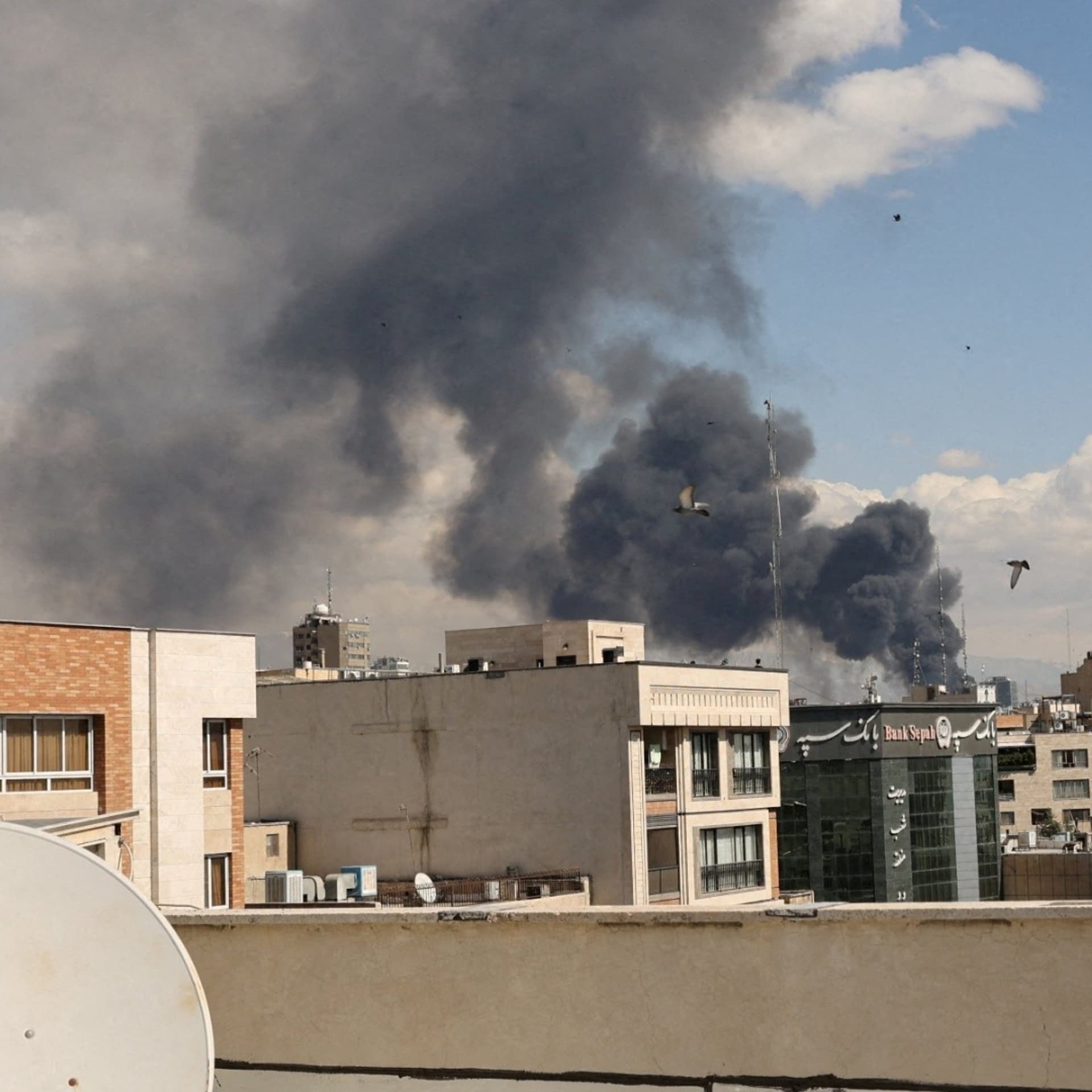
1:42Global News Team:In the last edition of the Global News podcast, we reported that Iran's supreme leader, Ayatollah Ali Khamenei, had been killed in his office in the first wave of US-Israeli strikes on Saturday. In the hours since then, loud explosions have again been heard across Tehran as Israel maintains its operations against the Iranian capital. Many Iranians inside and outside the country celebrated the news that the man who held absolute power for 40 years was dead. But others mourned his death, including these people on the streets of the Iranian capital.
2:24Global News Team:Several high-ranking officials were also killed in Saturday's attacks. The Israeli military named seven senior Iranian defence officials among the dead. The Iranian president, Masoud Peseshkian, said the killing of the Ayatollah was a declaration of war against Muslims and said it was Iran's legitimate duty to avenge him. Our Middle East analyst Sebastian Usher told me just how significant a moment this is. From the perspective of the US and Israel, I mean, there couldn't have been a better start to this campaign to have taken out the supreme leader in the opening hours. I mean, it seems clear now that that was the reason why the attack took place when it did, because the opportunity presented itself.
3:06I mean, last summer during the 12-day war, President Trump had spoken about the US and Israel's ability to kill Khamenei if they wanted to. But there seemed a sense then that Trump was holding back from that. The fact that they have targeted him and done so successfully shows the huge gulf between what happened then and what's happening now. That this is aimed at a complete root and branch change in the way that the Iranian regime is functioning, if it continues to function at all. As far as the regime itself is concerned, I mean, obviously, it's a huge blow practically and symbolically. But I mean, it has to be taken into account that Khamenei wasn't, you know, a dictator as such.
3:46He was the main authority. He was the final decision maker in Iran. He held the true reins of power. But the kind of system that had involved under the decades of his supreme leadership was one in which a number of regime institutions have become extremely powerful beneath him and around him. And as far as the regime is concerned, they will be hoping that those can withstand this blow and that they will be able to get together a new leadership. I mean, at the moment, it's a three-person council that's in charge, but they'll be looking for a new supreme leader, that that will hold steady, that that will give the image both to the world and internally that it still stays strong.
4:35Sebastian Usher.
4:37Global News Team:Gaging the mood in Iran is difficult during these extraordinary times in the history of the Islamic Republic. The country is under an almost total internet blackout and few Western journalists are allowed into Iran. But we are seeing reports of casualties in the country. The Iranian Red Crescent says more than 200 people have been killed and more than 700 injured in airstrikes. State media has reported that strikes killed at least 148 people at a school in southern Iran, including children, parents and teachers. The US military says it's looking into these reports, while the IDF of Israel says it was not aware of any operations in the area.
5:17Global News Team:It is clear in Iran, though, that the assassination of the supreme leader has convulsed the country in a way millions of Iranians have never felt before. BBC Persian is monitoring developments, and Khazra Naji told me more about the public reaction. Iran is now officially in mourning. They've announced some 40 days of mourning and the week of closures of government offices and schools and universities and so on. But unofficially, people are celebrating at home, if not outside the home, but also with a lot of trepidation. Many people are very concerned as to what might happen next. Will this bring Iranians closer together or divide them further?
6:04Global News Team:The fact is that the regime has its supporters still. And today, a lot of them are out on the streets showing they are mourning and the Iranian television is covering their gatherings. The gatherings are not that big. I've seen the pictures on the Iranian TV. Only the place that I've seen A big number is coming out as one in central Iran, traditionally religious sort of area. But nevertheless, also, we have videos of people celebrating in various parts of the country at homes, at night shouting slogans against the government. So there's quite a bit of divide. But Iranians are aware that the Americans and the Israelis are planning for this to go on for a few days, for about five days or four days, according to reports that we're getting from the American side.
7:05Global News Team:So I suppose people are waiting to see what happens, whether there will be space for them to come out and show what they want, and whether they can actually grab those levers of power that Donald Trump and Benjamin Netanyahu are calling on them to do. We heard Seb there talking about this three-person council who will run the country until a new leader is chosen. But can you choose a new supreme leader when the country is under attack like this? I think Iran has gone through a lot of traumas of this type. So they are quite good at sort of trying to keep some semblance of normality and continuity.
7:48Global News Team:There are systems in place, like, for example, this three-member council that they've just chosen is for a very short period of transition. Then we have this council of experts' assembly made of very senior clergymen. They have to decide whether they want a collective leadership or a single leader. They will decide in the next few days. Kazra Najee from BBC Persian. So how long will the US and Israeli strikes go on in Iran? And do both nations have a long-term plan for the future of Iran? Jonathan Conricus is the former international spokesman for the Israeli Defense Forces, or IDF, and now a senior fellow at the Washington think tank, the Foundation for Defense of Democracies.
8:38The US and Israel have plans in plural, not entirely sure that the plan is identical here. I think Israel would aspire for a more binary solution, as in a real regime change and for the regime really to be completely dismantled and for all of the threats that the Iranian regime has posed towards Israel, that they will actually be taken off the table. Whereas I believe that the U.S., from its perspective, perhaps has slightly more conservative goals and would suffice with no nuclear program and perhaps no ballistic missiles. The X factor here, the most important component with regards to the future, is the Iranian people.
9:22They are the ones who will eventually decide the outcome. Their actions will decide the fate of the regime. And I think they've been absolutely, tremendously brave so far, standing up to the regime. And what we're seeing now is that the US and Israel responded to that bravery, saw the opportunity, and has given the Iranian people that help that they needed. And from here on, as the Iranian regime will be degraded more and more in terms of military capabilities, the opportunity for the Iranian people will be very significant.
9:56Global News Team:Former IDF spokesman Jonathan Conricus, Iran initially responded to the Israel US attack with a flurry of missile and drone strikes across the Middle East, killing at least two people in Abu Dhabi and another in Tel Aviv before following up with a new wave after state media confirmed Khamenei's death. Speaking at the scene of an Iranian retaliatory strike in Tel Aviv, Israel's president Isaac Herzog had this to say. We are here with a message to the people of Israel and the entire region. Stay strong. This is a historic, historic effort to change the trajectory in the Middle East to a different future, a future of peace.
10:40We've been for generation confronted by an empire of evil. Ali Khamenei spent a whole generation of taking his people's resources and directing them towards terror, bloodshed, pain and horror.
10:54Global News Team:I spoke to the BBC's John Donison, who's at the scene of that strike. I'm in front of an apartment block that has been completely flattened. It's in reduced to rubble, really. And that is where one of the Iranian ballistic missiles got through. Most of them are being shot down by Israel's air defence system, but it's here that we had the first casualty in Israel of this war. A woman who we think was a Filipino care worker looking after someone in that building was killed, and a number of other people have been injured. And all morning the sirens have been going off here. I've heard loud explosions overhead.
11:31Just as we were driving to Tel Aviv, we saw a couple of Iranian missiles being shot down directly above our car. So, you know, the Iranians have said this is going to be the most devastating operation in their history in retaliation. And they do seem to be being true to their word.
11:49Global News Team:The Israelis must have had very good intelligence, incredible intelligence to target the Iranian leadership so precisely. What have you heard? Well, they do. I mean, that's pretty obvious. They have completely penetrated Iranian security. They have agents on the ground there. They have high tech surveillance. But what struck me about this assassination was that, you know, the Iranians had led us to believe that the Supreme Leader had been taken out of Tehran. He was in hiding. But it actually wasn't that hard to find him because he was in his office. He was in his compound. That's where he was killed in that initial wave of strikes.
12:30But you're right. They took out dozens of other senior Iranian leaders. They seem to know exactly their movements, where they're going, where they are. And the truth is that the Israelis, backed by the United States, are just vastly superior to the Iranians in terms of military capabilities, but also in terms of intelligence.
12:51Global News Team:What do Israelis make of this? Do they welcome the attacks on Iran, or are they worried about where this could go? Well I think look not just here in Israel but across the Middle East people are weary of war We've just come out of two years of war in Gaza A conflict that's not really gone away We've had the war between Hezbollah in Lebanon and Israel that was the year before last So people are tired of it but I do think speaking to people here in Tel Aviv on the ground You know they kind of accept what Prime Minister Netanyahu says on this They might disagree with him on lots of other things, but they do accept, I think, that for Israel, Iran poses an existential threat.
13:34And broadly, I think people are behind the government on this one. Now, if this goes on for some time and we end up with more casualties in Israel, if we don't see the fall of the regime in Iran, opinion might change. But at the moment, I think people are weary of this, but they probably back it. But it is going to have an impact. You know, schools are going to be closed this week. It's going to have an impact on the economy. There are no flights coming into Israel at all at the moment. So, you know, as that impact increases, opinion could change.
14:08Global News Team:John Donison in Tel Aviv. Still to come in this podcast, we take a look at the impact the US and Israeli strikes and Iran's retaliation have had in Washington and across the Middle East.
14:32What they are ultimately trying to create is going to replace humans. What it's doing is parboiling the inside of your brain. This could be a turning point in the history of social media. Welcome to The Interface, the show that explores how tech is rewiring your week and your world. Coming up next in our latest episode, we look at the secret meetings at the world's biggest AI summit, the truth about the mystery of a brain-melting weapon, and the lawsuit that could shift the future of social media. Listen on BBC.com or wherever you get your podcasts.
15:14Global News Team:This is the Global News Podcast. As we mentioned earlier, Iran has launched strikes across the Gulf. Many countries there host US military bases. The BBC's Barbara Platt Archer is in Qatar. I asked her how Iran's neighbours have reacted to these attacks, but first she gave me the latest on the Iranian strikes in the Qatari capital, Doha. There was quite a heavy round of explosions early this morning, and shortly after that the Interior Ministry here said it was dealing with a limited fire in an industrial area that had been caused by debris from a missile that had been intercepted. So the Qataris, as well as the governments in the other Gulf nations, say that they are mostly able to intercept these incoming missiles and drones, which continue into a second day.
16:03Although there has been some damage and some casualties here in Qatar, there was a press conference around midnight when officials said that around eight people had been injured and there had been various damage. And today you've had the port, a port, a birth of a port in Dubai that was hit and a fire broke out there. You've had the airport in Abu Dhabi as well as Bahrain targeted by drone strikes. The Omanis have said that their port was hit by two drones. This is the first time they've been attacked. You remember that the Omanis have played a long time role as a mediator between the Iranians and the Americans, but they are not being spared.
16:43Their port is also used as a military logistics hub, and that is what the Iranians say they are targeting. They are targeting U.S. bases across the region. In fact, they said that they were pounding U.S. military bases across the region this morning after the death of the Ayatollah. So very much the Gulf countries are on the front line of the response of Iran.
17:04Global News Team:Could these Iranian attacks actually provoke a response from the Gulf states? Qatar and the United Arab Emirates yesterday put out very strongly worded statements in which they condemned these attacks as a violation of international law and of national sovereignty and they said they reserved the right to respond. I think you have to wait to see how the next days play out and whether the Gulf states feel that the level of attack is something that they simply can't accept and need to stand up to and also what is happening in Iran. It's all very fluid here at the moment. But what we do know is that this is the worst case, like the nightmare for the Gulf states, which is an area of these stable, prosperous economies that depend on oil exports and tourism and travel.
17:49And a lot of the travel has been stopped, of course. And you are getting some rather angry statements. A senior diplomatic advisor in the United Arab Emirates said on X that this was misguided to attack your neighbors, he says to Iran. You're isolating yourself at a very critical moment, and you're just confirming this story of those who see you as the primary source of danger in the region. So come to your senses and deal with your neighbors with reason before the circle of isolation and escalation widens, as he put it.
18:18Global News Team:Yeah, you mentioned the impact on trade and tourism. If this continues, not least, of course, the Straits of Hormuz. The impact of that could be huge. Yes, it could. I don't think that Iran has officially closed the straits. What we are hearing from shipping companies and also from Iranian press is that it is in effect closed, that tankers are not going through. And I think one of the reasons for that is they're not getting insurance to cover their backs as they go through. I mean, it's in a war zone. So the de facto situation is that the shipping through the Strait of Hormuz has slowed to almost a standstill.
19:00And that is quite significant because 20 percent of the world's oil exports go through that region. And the exports of Qatar and Saudi Arabia especially go through that area. So it has a significant impact if that lasts for any length of time. It's something, again, that the Gulf states warned the Americans about. They were very clear with the Americans about what the risks were to the region if there was a military attack. And they are now seeing some of those warnings come true.
19:31Global News Team:Barbara Platt-Usher in Qatar. When he first ran for president in 2016, Donald Trump condemned what he saw as American military adventurism in recent years, declaring that regime change is a proven absolute failure. But now the US president has gone to war against Iran and may be seeking regime change. Helena Humphrey is our correspondent in Washington. I asked her what President Trump's supporters will make of this operation after being promised an America First policy. It's a very important question to ask because America First, as you say, is what so many voted for. They wanted to see an end to forever wars.
20:13That was a promise from President Trump on the campaign trail. They're costly financially, of course, but also when it comes to the potential for the loss of life. And remember, in that social media video that Donald Trump put out announcing all of this, he did warn that there could be American military casualties. He says that happens in war. So I think it's certainly a gamble ahead of the midterm elections, which are coming up in November. I think if he pulls off regime change, which he has stated as the aim here, he will tout that as strength, something that no United States leader has ever done before.
20:49But of course, it comes with huge risks. So, you know, what comes next in Iran? Could this drag the United States into something far bigger and far more dangerous? What does this mean for plans in Gaza and a permanent end to the war there? I mean, this is audacious, to say the least. If you take a look at the Google searches, because you're asking, you know, what do Americans make of this? What they're asking on Google is, why did we strike Iran? Did all of this go through Congress? They're also asking, you know, quite simply, are we at war? So I think it's fair to say there's confusion here, there's anxiety.
21:22And we haven't heard from President Trump in an address on television, for example, something you might expect after an operation of this scale. so much of this is being handled on social media from his resort in Mar-a-Lago.
21:37Global News Team:Yeah, that question of did Congress approve this is important, isn't it? What are the Democrats making of this? Well, I think it's fair to say even if you have Democrats on the Intelligence Committee, the Foreign Affairs Committee, for example, saying, look, Iran is a threat, there's concern about the way in which this is being carried out, no congressional approval. I mean, we've heard that from Republicans as well. Thomas Massey saying that this is an unauthorized act of war. It didn't go through Congress. Now, Ro Khanna, a Democratic lawmaker, is saying that he wants lawmakers to come to Washington this week to put their name on the record with regards to how they stand on this campaign.
22:15And what they'd wanted to do last week, the Democrats, was force a war powers resolution. So force that vote last week, limiting the kind of strikes that the US can carry out without authorisation. That didn't come to pass. And now we've seen what has been unfolding over this weekend. Now, we also heard from Mark Warner. He is the vice chair of the Senate Intelligence Committee. And what he was saying was, show us the intelligence when it comes to the threat to Americans. You know, kind of hearkening back to questions from Iraq, for example. But we know in justification, Donald Trump, he harked back to 1979 in that eight minute video.
22:53He said, look, Iran has long been a threat to Americans. Look at the hostage crisis in 1979 when Americans were among those who were held hostage for over 400 days, as his reasoning.
23:04Global News Team:Yeah, you mentioned Iraq. Presumably the fear is that the chaos that followed the Iraq war might be repeated. I mean, we're not there yet, but Donald Trump has been calling on Iranians themselves to rise up. He's been calling on the military to lay down their weapons. Essentially, he's saying, do it yourselves, no boots on the ground from the US side. But certainly we know that that will be extremely challenging. You've got elements of the regime which are still there. And I think in the meantime, there's the question, will the US end up embroiled in something which is far messier in the wider Middle East?
Read the full transcript
23:36Not to mention the risks that we know that can come with a power vacuum. when you think Iraq, as you say, Libya, Syria. So if past is prologue here, certainly this is a gamble from the US president.
23:47Global News Team:Helena Humphrey in Washington. Regardless of the political fallout from the attacks on Iran, are they legally justified under international law? Faisal al-Istrabadi is the founding director of the Centre for the Study of the Middle East at Indiana University in Bloomington in the US. He was also the Iraqi ambassador to the United Nations just after the overthrow of that country's former leader, Saddam Hussein. On the one hand, Ali Khamenei, as the supreme leader of Iran, has the blood of tens upon tens of thousands of Iraqis on his hands, as well as the blood of Iranians, as well as the blood of other peoples of the Middle East.
24:33And so I am shedding no tears for his demise. On the other hand, I happen also to be a lawyer and I teach international law. There can be no justification in international law for the actions taken by Israel and the United States. As I scan the reaction of the rule of law states, the West European states and Canada, I find that they are urging restraint upon Iran, which is indeed the entity that has been the state that has been attacked, not upon those who have attacked it without any legal justification. I happen to hold a minority view in believing that the war in Iraq was legal. But that's a minority view, and I know that.
25:23The majority view is that it was not. That involved a number of Security Council resolutions, and in my view, a reading of the Security Council resolutions gave justification for the United States and its allies to resume hostilities in Iraq, in particular after the Security Council unanimously passed Resolution 1441, which said that Iraq was in material breach of its disarmament obligations. So that was my view of the Iraq war. I'm in a minority. There is no legal justification for this any more than Vladimir Putin has for Ukraine. My fear is this. I wish the Iranian people well. Iran is a neighboring state of Iraq.
26:09Iraq shares its longest border with Iran. Chaos in Iran will be reflected in Iraq. There is something worse than tyranny, and that is chaos. Iraq went through a period of tremendous chaos after 2003. Chaos in Iran will be reflected inside Iraq. I do not wish the people of Iran chaos, and I do not wish my own people, the Iraqis, further chaos. I see absolutely no planning for what occurs now that Khamenei is dead. What is the American plan? I do not believe there is one. The Americans planned for almost a year for a post-Saddam Iraq and still got it wrong. This administration has not spent 24 hours, in my view, from what I understand, planning for what comes next.
26:57And for Israel's Netanyahu, chaos in Iran is a perfectly acceptable result. This is my fear. The Middle East does not need more chaos. And my fear is that that's what we're on the verge of. I hope I'm mistaken.
27:14Global News Team:Faisal al-Istrabadi from the Center for the Study of the Middle East at Indiana University in the US. To end this edition of the Global News Podcast, I spoke to the BBC's chief international correspondent, Lise Doucette. She's been covering Iran for years and is one of the few Western journalists who've been able to report from inside the country in recent months. I asked her how she views the next few days unfolding for Tehran. Under the constitution, there is a three-person, three-man leadership council, which is now in place, the president, the head of the judiciary, hardline president of the judiciary, and a senior cleric from the Guardian Council.
27:55They will oversee the running of the Islamic Republic while the Assembly of Experts selects a new leader. And we do know that last year, even before the 12-day war against Israel, Israel, which drew in the United States, Ayatollah Khamenei, knowing that he was in the sights of Israel and America, his implacable enemies, had said to the Assembly of Exers, draw up a list. So there is no, we don't know exactly who is on the list, but it's believed that Ayatollah Khamenei's son, Moshtaba, is one of them. So a list is ready. So we expect that in a few days' time. And once the Assembly of Exers, which is about 88 senior clerics, carefully vetted in the same mould, more or less, as Ayatollah Khamenei.
28:39Once they choose, he will have all the authority and legitimacy, at least of that body. Now, of course, it comes at a time when the regime is under unprecedented criticism at home and abroad. There will be those who will be looking not just for cracks in the ruling order, but also the collapse. So they are trying now to project stability and a seamless transition.
29:01Global News Team:The criticism after the Iraq war was that the Americans didn't have a plan. Do the Americans and the Israelis have a plan this time? Well, Israel has been preparing for this for many, many years. But for Israel, chaos is a good alternative. All they want is a weakened Islamic republic. And that was the concern of many of the Arab leaders in the Gulf who said to President Trump, don't attack Iran because you will unleash a war with unpredictable consequences for all of us across the region and could go all the way to the United States. Does President Trump have a day after, given what we hear about how the State Department with all its experts have been hollowed out, given how we know that the negotiating team, even Steve Witkoff, Jared Kushner, they don't have the bandwidth.
29:50They're negotiating in Ukraine the same time they were trying to negotiate in Gaza and many other, and on the Iranian file as well. The concern is no, they haven't looked at the day after. And President Trump veers, as we've seen in recent weeks, one day he talks about regime change, the next day he's talking about a nuclear deal. Even now, last night he was asked by CBS News about the future, and he said, well, now this opens up a possibility for diplomacy. So he keeps everyone guessing. And this is not the time to leave everyone and most of all the people of Iran guessing.
30:26Global News Team:Lise, you've observed the region for a long time. You're only just back from Iran. Are you optimistic or not? I think it's not a time for optimism or pessimism. It's a time just to keep an eye very closely on what happens, not just day by day, but hour by hour. This is a very unpredictable and a perilous moment, not just for Iran, but the region and beyond. Lise Doucette. And that's all for this special edition of the Global News Podcast. If you want to get in touch, you can email us at globalpodcast at bbc.co.uk. You can also find us on X at BBC World Service. Use the hashtag Global News Pod.
31:05Global News Team:This edition of the Global News Podcast was produced by Peter Goffin and Mickey Bristow. It was mixed by Nicola Brough and the editor is Karen Martin. I'm Alex Ritson. Until next time, goodbye.
31:45In our latest episode, we look at the secret meetings at the world's biggest AI summit, the truth about the mystery of a brain-melting weapon, and the lawsuit that could shift the future of social media. Listen on bbc.com or wherever you get your podcasts.
From the publisher
Israel is launching strikes on Iran for a second day after initial joint attacks with the US killed the Supreme Leader Ayatollah Ali Khamenei. Tehran says it has a duty to retaliate. Also in this special podcast, we hear how the Iranian people view the strikes on their country. We have a report from Israel, where there's been a barrage of Iranian missiles. We look at how the attack on Iran could turn into a wider regional conflict. And we ask how President Trump's decision to attack Tehran has been received at home — and whether it was legal under international law.
The Global News Podcast brings you the breaking news you need to hear, as it happens. Listen for the latest headlines and current affairs from around the world. Politics, economics, climate, business, technology, health – we cover it all with expert analysis and insight. Get the news that matters, delivered twice a day on weekdays and daily at weekends, plus special bonus episodes reacting to urgent breaking stories. Follow or subscribe now and never miss a moment. Get in touch: globalpodcast@bbc.co.uk



