
In short
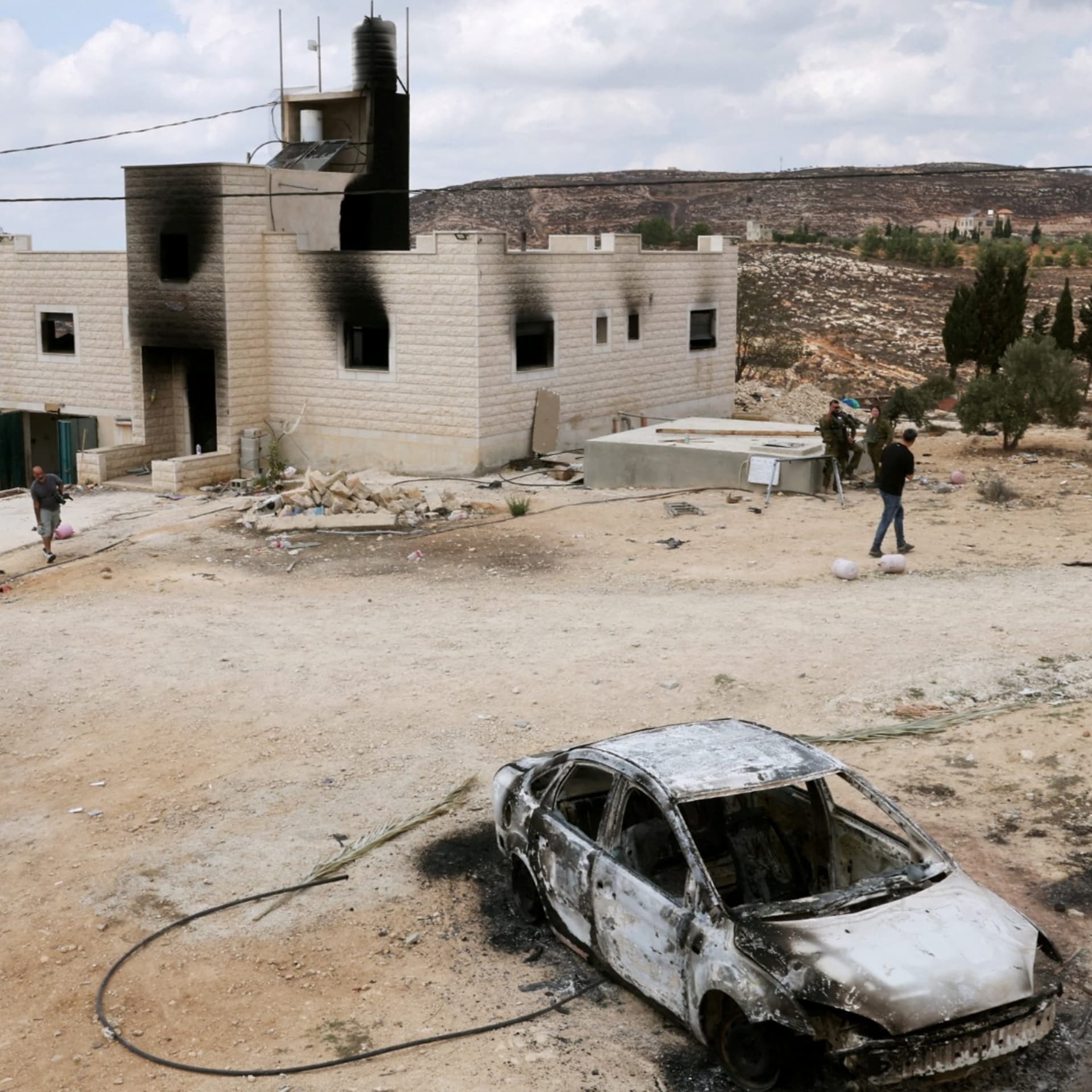
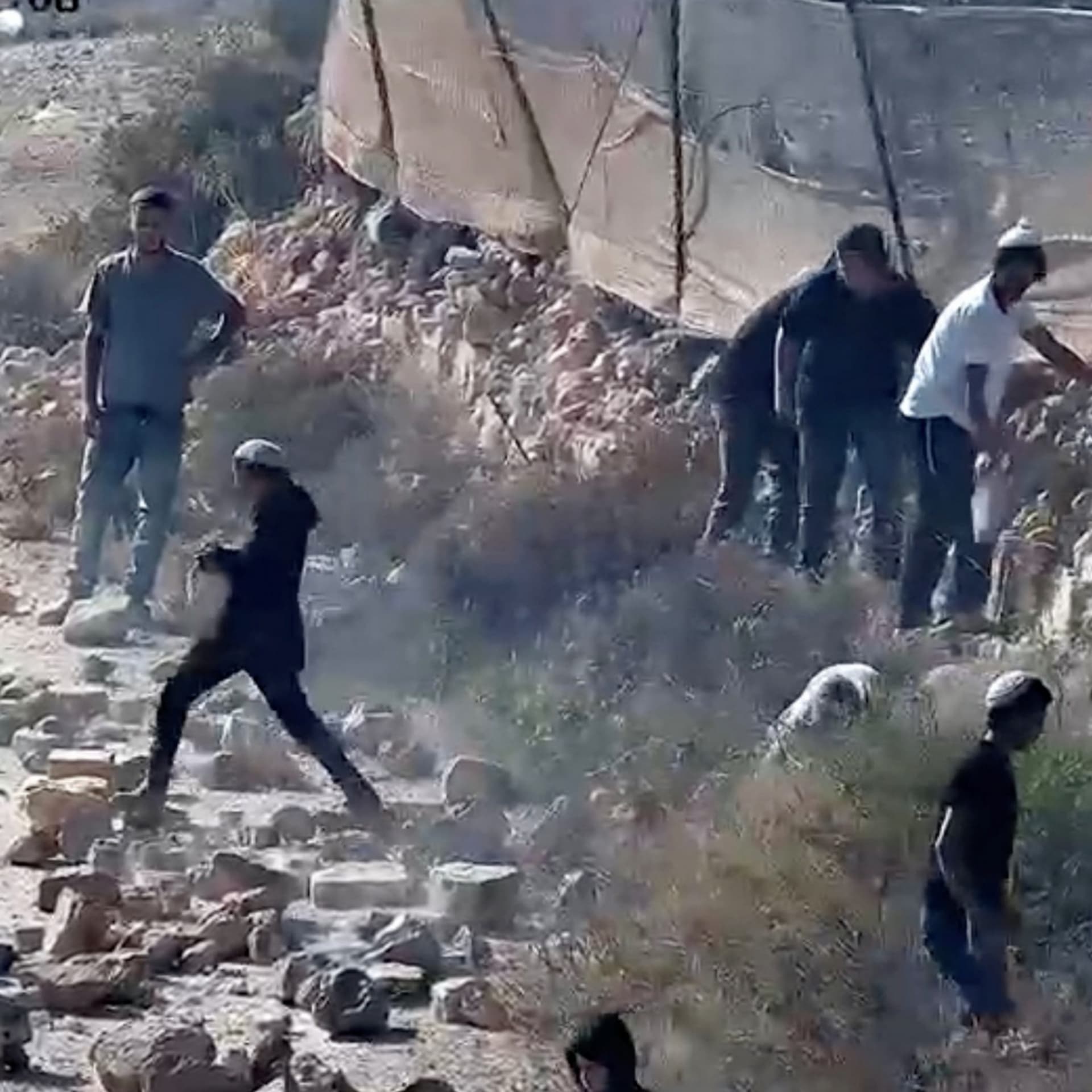
The episode is a BBC Global News Podcast covering multiple stories. Main topic: Israeli settlers in the West Bank have surrounded two Palestinian families’ homes in the village of Qusra for four days, blocking exits, cutting power and water, and limiting health care—described as a siege aimed at forcing families out so houses can be taken.
Key claims
settlements are illegal under international and Israeli law, yet Israeli forces have not effectively dismantled the siege; human rights groups allege soldiers allow settler violence with rare prosecutions and possible cabinet backing.
Notable examples
Kusay Aburida describes deprivation; John Donelson reports settler roadblocks and that tents were dismantled then settlers returned.
Guests
Doron Maynard (retired IDF colonel; volunteer with Looking the Occupation in the Eye) and correspondent John Donelson; other named voices include Jessica Parker, Stephen McDonnell, Mickey Bristow, Stephanie Hegarty, Sheila Flynn, James Copnell, and Nick Robinson (plus Sally Abbe and Jay Rayner for the Anthony Bourdain segment).
Written by AI. May contain mistakes. Listen to the episode to check what was said.
Chapters
Tap a time to open that second in VOMain Stories Overview
0:08 to 1:04
Overview of key global news stories including Israeli settlers and their impact.
“I'm Nick Miles and at 15 Hours GMT on Wednesday the 12th of August, these are our main stories.”
Siege in Qusra
1:04 to 2:28
Report on two Palestinian families trapped by Israeli settlers in Qusra.
“We start in the Israeli-occupied West Bank, where for the last four days two homes in the Palestinian village of Kusra have been surrounded by Israeli settlers.”
Testimony from Kusay Aburida
2:28 to 3:15
Kusay Aburida shares the harrowing experience of being trapped in their home.
“Doron Maynard is a retired colonel in the Israeli military, the IDF, who's now a member of Looking the Occupation in the Eye.”
International Response and Military Inaction
3:15 to 4:21
Discussion on the Israeli military's inaction regarding settler violence.
“Well, we're just on the edge of the village of Qusra in the Israeli-occupied West Bank, and I'm looking up at these four houses which are on the opposite hillside.”
Escalation of Settler Violence
4:21 to 5:50
Analysis of the recent surge in settler violence against Palestinians.
“Six Palestinians have been killed, hundreds injured.”
Germany's Intelligence Services' New Powers
5:50 to 7:02
Exploration of new powers granted to Germany's intelligence services amid rising threats.
“that the government brings to bear on what's happening?”
Context of Germany's Security Measures
7:02 to 9:37
Context behind Germany's new intelligence measures related to security threats.
“Parliament will still have to approve the reform.”
China's New Aircraft Development
9:37 to 11:21
Introduction of China's new Comac C919 aircraft and its significance.
“There's some various divisions of powers that are a bit complicated to go into between the domestic and the foreign intelligence services.”
Zhu Rongji's Legacy
11:21 to 12:33
Reflection on the life and achievements of former Chinese Premier Zhu Rongji.
“people to say well can we really I don't know do we trust you are these planes safe are they going to be okay but you mentioned China's massive inroads into other areas of technology so why not commercial aircraft.”
Zhu Rongji's Legacy and Influence
14:00 to 14:51
Learn about the impactful leadership and legacy of Zhu Rongji in China.
“Zhu Rongji was popular with the people he helped govern and one of the few Chinese leaders who could entertain a crowd, as he did here, talking about Hong Kong.”
Show all 18 chapters
Upcoming Discussion on U.S. Election Meddling
14:51 to 15:40
Explore the implications of U.S. meddling accusations in foreign elections.
“has long been suspected of trying to sway elections in other countries.”
Migrants Crossing Borders and Misinformation
15:54 to 17:59
Investigate the role of social media in migrant crossings and associated misinformation.
“At the end of July, an estimated 72 ,000 migrants swam or climbed around the border fence between Morocco and Ceuta, a Spanish enclave on Morocco's Mediterranean coast, in an attempt to reach Europe.”
Understanding the Misinformation Ecosystem
17:59 to 19:19
Analyze the decentralized nature of misinformation shared among migrant groups.
“we sent to them two hours later, they had been deleted or we couldn't see them anymore.”
Trump's Endorsement and Voter Sentiment
19:19 to 22:44
Examine how Trump's endorsement impacts voter sentiment amid rising frustrations.
“Is Donald Trump the election winner he once was?”
Breaking Land Speed Records with Hydrogen Technology
22:44 to 25:58
Discover the innovative achievements in land speed records with hydrogen-powered vehicles.
“Breaking land speed records is an age-old obsession.”
The Cultural Impact of Anthony Bourdain
25:58 to 28:00
Explore Anthony Bourdain's legacy and how he changed the culinary narrative.
“Anthony Bourdain, the bad boy American chef, writer and TV star, became a cult figure.”
The Complexity of Culinary Culture
28:00 to 29:10
Explore the cultural impact and legacy of a notable chef's honesty in the kitchen.
“and not necessarily created a space which was comfortable for women to report the issues they were having.”
Relatable Writing and Chef Appreciation
29:10 to 30:24
Discuss the relatable nature of a chef's writing and its widespread appeal.
“Definitely, you know, I mean, it's still the same now.”
Transcript
Automatic transcript. May contain errors.0:00This BBC podcast is supported by ads outside the UK. This is the Global News Podcast from the BBC World Service. I'm Nick Miles and at 15 Hours GMT on Wednesday the 12th of August, these are our main stories. Israeli settlers continue to trap two Palestinian families in their homes in the occupied West Bank after clashing with the Israeli security forces. The German cabinet has approved plans to give sweeping new powers to its intelligence services. A passenger jet, billed as China's answer to Boeing and Airbus, makes its first international flight. Also in this podcast, former Chinese Premier Zhu Rongji, who had championed free market reforms, has died at the age of 97.
0:45And a world record for a hydrogen-powered car. Absolute thrill. They were aiming for 350 miles an hour. They did such a good job. We've just exceeded 400 miles an hour both ways out in the Bonneville salt flood.
1:04We start in the Israeli-occupied West Bank, where for the last four days two homes in the Palestinian village of Kusra have been surrounded by Israeli settlers. They've been stopping the families from getting in or out. They've also cut off the power and water to the building. This Palestinian resident is one of those trapped there.
1:28I am Kusay Aburida from the village of Kasra, south of Nablus. Four days ago, settlers came to the house and blocked us from leaving. They stopped anyone from coming to the house. We have been deprived of all necessities. They cut off the electricity and water and supply of health care. There is a family living in a nearby house. They have two children, age four and two. They have also been cut off from the outside world. We are unable to leave the house and our situation is tragic. The soldiers arrived at the house but they did nothing. We appeal to the humanitarian organisations to help us and protect us and provide food and medicine to the families who are besieged by the settlers.
2:16Israeli settlements in the West Bank are illegal under both international and Israeli law. However, so far, the Israeli security forces haven't been able or willing to break up what is effectively a siege. Doron Maynard is a retired colonel in the Israeli military, the IDF, who's now a member of Looking the Occupation in the Eye. That's a volunteer group opposed to the Israeli occupation. He's also in Qasra. This morning, the commander of the Central Command, which is Brigadier General Avi Blut, have been there and promised the Palestinian resident that he is going to solve the problem. And he didn't do it yet.
3:00You know, maybe he will do it in the close future, but yet he didn't succeed to do it. And it's very embarrassing, I think, for him for the idea. Our correspondent John Donelson is the first international journalist to get to the village of Qusra. He told me what's been happening there. Well, we're just on the edge of the village of Qusra in the Israeli-occupied West Bank, and I'm looking up at these four houses which are on the opposite hillside. We're a distance of what, maybe half a mile or so, and I can make out just to the left of those houses. There are still what looks to be about 10 settlers there, and I can see where they've established some sort of roadblock just a few hundred metres down the line.
3:42Now, these four properties have been under siege by settlers since Sunday. At some point, the water and electricity has been cut off. Now, we have spoken to one of the families who are under siege, and they said that this morning the Israeli army came and they dismantled some of the settler tents. But as soon as the army moved on, the settlers came back. And this is, you know, a new tactic by the settlers. There's been a huge surge in settler violence against Palestinians in recent years. The UN, I think, says there are on average around about six attacks on Palestinian communities taking place every day this year.
4:21That involves violence. Six Palestinians have been killed, hundreds injured. It involves burning property, burning farmland. But this is different. What they're doing, in effect, is to try and starve these Palestinian families out with the view to take those houses over. Now, John, can we expect the military to go back there and confront these settlers more robustly, perhaps? Perhaps. You know, we have had strong words of condemnation from senior leaders within the Israeli military. but as we've seen throughout this past few days you know there is a bit of an ambiguity about some of the role of the soldiers so at the weekend we saw video footage showing some of the soldiers praying with the settlers some of the soldiers are settlers themselves so the army may well come back but the accusation from human rights groups and from palestinian communities is that the Israeli military allows settlers to act with impunity, with the backing of senior figures within Prime Minister Netanyahu's cabinet who support the settler actions.
5:32And the accusation is that they don't do enough and that there are very rarely pressed prosecutions for settler violence. Nevertheless, there is increasing international scrutiny on what's going on in parts of the West Bank. To what extent will that play into the pressure that the government brings to bear on what's happening? Well, look, there's been pressure and condemnation from the international community for a long time. You know, before the last few years since the war in Gaza started, which is when we really saw an escalation in settler violence. And that pressure hasn't really worked. We have heard Prime Minister Netanyahu in the past and other senior politicians within his government strongly condemning the violence by settlers.
6:17But as I say, prosecutions are rare. And within Prime Minister Netanyahu's own cabinet, he has right-wing ministers who not only don't condemn what the settlers are doing, they actively are accused of encouraging it and inciting such violence. John Donison speaking to me from a windy hillside near the village of Kusra. In Germany, the government has decided to give the intelligence services far more power. Ministers say this is because of rising security threats, but opposition parties and civil liberties groups fear that it will lead to a comprehensive surveillance of the whole population. They're particularly worried about this because of Germany's history.
7:02Parliament will still have to approve the reform. Our correspondent in Berlin, Jessica Parker, told James Menendez what new powers the agencies are to get. What they're looking at is cuts across their domestic and foreign intelligence services. So to give you a flavour of what those services may be able to do in future, this still needs to go before lawmakers in the autumn. They could be able to manipulate, disrupt, hack the IT infrastructure of a foreign power if Germany was undergoing a cyber or disinformation attack. They could agents potentially be able to break into a residence and replace explosives with something that's harmless as part of counterintelligence operations.
7:46And in the sort of data retention sphere where Germany has had for a long time very strict privacy rules, they'll loosen those rules. So there'll be longer data retention periods, greater powers in terms of surveillance as well via telecommunications. So that's a flavor of what they'll be able to do. And some people listening might be thinking, weren't they able, under certain rules and thresholds, able to do this anyway? Well, not really. In Germany, there have been very strict guardrails and constraints on the intelligence services as a legacy of what Germans experienced at the hands of Nazi spies and as well the Stasi in East Germany.
8:25So this is about loosening restrictions that really are very historically embedded in Germany here. And of course, the plans certainly have their critics of people who think that there's overreach going on. Tell us, though, about the context, because clearly that's what's driving this. Is this a response to the threat from Russia or is there more to it, too? I think it's absolutely a response to the threat from Russia. I think you could absolutely see this where it's beginning to be seen as part of that Zeitung vendor that was announced in the wake of Russia's full scale invasion of Ukraine, where Germany basically acknowledged that for a long time it had underinvested in its military and that it needed to be more robust in terms of security and intelligence and its intelligence agencies absolutely now becoming part of that Zeitung Wende.
9:09So I think that's absolutely important context here. And Germany's government says that it is the target of, Germany is the target of daily hybrid attacks, hybrid warfare attacks, whether that might be disinformation, whether that might be cyber attacks, whether that might even be sabotage as well. So it's saying it has to get more robust in the face of hostile actors, but it will apply in the domestic sphere as well. There's some various divisions of powers that are a bit complicated to go into between the domestic and the foreign intelligence services. But I think that absolutely is the overall context.
9:45And this sense, traditionally, Germany's intelligence services have been described as somewhat vegetarian, whilst other Western allies have been more carnivorous. And they're trying to bring them a bit more up to the standard of other Western agencies, although they are being clear that they won't be sanctioning the use of example for lethal force. Jessica Parker in Berlin. In recent years, China has been taking huge chunks of the global market in green technology and electric vehicles. It's also been racing ahead in the development of AI. So far, though, it's lagged behind in aircraft production.
10:20But now a new jet being billed as China's answer to large Boeing or Airbus passenger planes has made its first international commercial flight. Our China correspondent Stephen McDonnell told me more. That's the first international link using these homegrown, if I put it that way, commercial passenger jets made in China, the Comac C919. so from today this will be a regular connection between Beijing and Ulaanbaatar, the capital of Mongolia and I guess that they're hoping that eventually these planes will challenge the dominance of Boeing and Airbus. I mean give you an idea of the size of the planes.
11:01I mean we're talking about something similar to the size of a Boeing 737 so there's a large commercial aircraft but I think many aviation analysts would say it's going to take a while to really challenge this significant international market because these large western companies are so entrenched and I guess trusted in a way too you know this is something that it's going to take a while for people to say well can we really I don't know do we trust you are these planes safe are they going to be okay but you mentioned China's massive inroads into other areas of technology so why not commercial aircraft.
11:38And how significant is this for Beijing? Do you think psychologically, is it good for national pride, do you think? Yeah, absolutely. You put it up there with space program in China that not so long ago hardly existed. Now, China has its own space station. You look at you compare them to other countries. There's like an international space station with all these other countries combining. China's got its own one and they're regularly putting people up there. It was said by the government not so long ago, if we're going to be taken seriously, we need to be making commercial jets. And that's exactly what China's doing.
12:14Now, by the way, these have been tested already domestically. So for a few years now, you know, the Comax C919s have been running within China. But just, you know, the symbolism of it now being international, even if it's only one route, even if it's only to a neighbouring country, the hope is that they'd start to push out the use of these planes much further afield. Stephen McDonnell in Beijing. And staying in China, Zhu Rongji, the former Chinese premier who championed free market reforms, has died at the age of 97. His policies helped set communist China on the road to economic success. Mickey Bristow looks back at his life.
12:54Zhu Rongji was in charge of the Chinese economy in the 1990s, a critical time when not everyone in the leadership was convinced the country needed market reforms. He tried to shut down inefficient and unprofitable state-run firms. He also helped curb inflation, reorganise chaotic financial markets and negotiated China's entry into the World Trade Organisation. Zhu Rongji was China's premier for five years from 1998, the position putting behind the then-president Jiang Zemin in the Chinese political system's complicated hierarchy. but many think he was the real architect behind the booming China of today.
13:35He was known as a tough operator, not just thinking up new policies but also how to implement them and was a hard worker. At one state banquet in Australia, he was reportedly found in the men's room dismantling a toilet just to see how it worked. That fitted his profile. He studied engineering at Beijing's prestigious Tsinghua University before a succession of government jobs, most of them dealing with economic affairs. Zhu Rongji was popular with the people he helped govern and one of the few Chinese leaders who could entertain a crowd, as he did here, talking about Hong Kong.
14:19Later in life, he published a series of books about his time in office. He said he wanted them to serve as an accurate record of a historic period of transformation. By this time, he appeared in public with grey hair, something few Chinese leaders like to do. They mostly dye theirs. Perhaps, as he said in his books, he really was just interested in showing things as they really were. Mickey Bristow on Zhu Rongji, who's died aged 97. Still to come in this podcast as a film about the early career of Anthony Bourdain hits cinemas we hear what was so unique about this American chef and writer There was something very kinetic and bullshy about the way he wrote about that world and he became an appointed spokesperson for a whole particular culture and that was something we didn't feel we'd heard before
15:20The U.S. has long been suspected of trying to sway elections in other countries. But is something more brazen going on these days? I'm Asma Khalid, and I'm one of the hosts of the Global Story podcast from the BBC. Brazil has accused the U.S. of meddling in its upcoming vote. The U.S. has dismissed the allegation. But how do these claims fit into the long legacy of American electoral interventions? Check out the Global Story on BBC.com or wherever you get your podcasts.
15:54This is the Global News Podcast. At the end of July, an estimated 72 ,000 migrants swam or climbed around the border fence between Morocco and Ceuta, a Spanish enclave on Morocco's Mediterranean coast, in an attempt to reach Europe. Around 100 people died. Social media played a key role in the crisis, many posts spreading misinformation. Well, now the BBC has found that these social media accounts are again posting messages to hundreds of thousands of followers, encouraging them to attempt another crossing in the coming days. The BBC's global population correspondent, Stephanie Hegarty, has been investigating.
16:34We looked at this ecosystem that has existed for months, maybe years in some cases, where these Facebook groups, Instagram accounts share information about crossing the border, tips and different bits of information to help people cross the border illegally. And these are the groups in which messages about the border in late July started to spread, misinformation, things that were completely untrue, the fact that the border was open. So these are the same groups and accounts that were sharing information that caused this first surge of 72 ,000 people across the border. And of course, we know that at least 100 of those people died.
17:10Now they continued after that first crossing in late July and what we saw in the past couple of weeks is that new messages are being shared encouraging people to attempt another crossing and they're being shared widely across these groups. We looked at dozens of groups and found hundreds of these posts. So they're sharing information, first of all they're just showing pictures of the border with the date that they're encouraging people to make this second attempt at crossing. We also found people sharing information about equipment they might use, like wetsuits, or we saw in one case a sea scooter, which is a kind of propeller machine that would help you swim faster around the coast.
17:50When we alerted Meta, the owners of Facebook and Instagram, about these posts, and we sent a list of some of the posts that we'd seen, all of the ones that we sent to them two hours later, they had been deleted or we couldn't see them anymore. Is it possible to tell who is behind these accounts? What we saw from the accounts we looked at is it does seem to be a kind of a very decentralised group of people. Many of the accounts, when we looked back as far as we could, seemed to be set up by ordinary people. Some of them were small, some of them were huge, some had over 100 ,000 members, some were smaller.
18:26We couldn't see any evidence that this was organised in any way by, say, smugglers. It did seem to be ordinary people. And from what we saw of what happened in July, it did seem to be a kind of organic spread of misinformation across this ecosystem of groups and accounts that already existed. And is there any sort of self-reflection in this group? I mean, as you say, at least 100 people are thought to have died. Is there any recognition of the dangers? Because if they're calling for people to take those sorts of risks again, there's, of course, the sad possibility that more people died. There were, I mean, they were also providing a kind of platform where people could share information about those that had gone missing or those that had died.
19:05But they seemed to be a minority of the posts. And under some of the calls for another crossing this week, we saw people saying, don't do this, don't fall for this, these are lies, this isn't true. But again, that did seem to be a minority of what was being posted. Stephanie Hegarty there, speaking to James Cocknell. Is Donald Trump the election winner he once was? Results from Republican primaries on Tuesday suggest that his endorsement still carries significant weight in some places, but not everywhere. Public enthusiasm for the president more widely has certainly waned. Recent polling placed his approval rating at an historic low of 32 percent.
19:43Rising petrol prices and inflation more generally are taking their toll, with some polls even showing self-identified MAGA voters who have begun to suffer Iran war fatigue. The BBC's Sheila Flynn has spent the last week speaking to Trump supporters in the Tennessee town of Kingsport to see if the war has eroded support for the president in one of his strongholds. Support for President Trump's Make America Great Again platform is overwhelming in this mountain town, which voted for Trump by comfortable margins in all three of his elections. No one I speak to here is happy about inflation, but few lay the blame at the president's feet.
20:23I think they're doing a great job, I mean, with what he can control. Parked on his Harley Davidson outside a local cafe, I meet 53-year-old Daniel Overstreet. Whether it was the Iran War or anything else, we're not going to control those gas prices. And people can complain and fuss. It's not going to change that. Also stopping for his breakfast is David Carter, a bearded veteran who plays Santa Claus at Christmas time. He backs the president's involvement in the Middle East. You've seen it in history that the reason we go over there and we keep everything under control there is we don't have it on our front doorstep.
21:02Veterans account for around 10 percent of the region's population. The town is also home to the Holston Army Ammunition Plant, which churns out explosives used in Patriot missiles and other heavy weaponry for U.S. military stockpiles. David says that while he and many others in the town still back the president's goals overall, the war has certainly caused some frustration amongst the supporters. Trump said America first, and he's not put America first. He's put the war overseas first. In addition to the munitions plant, the city is home to a number of major factories, employers Trump came to office promising to defend.
21:4165-year-old Pam Robinson spent 20 years working at the local chemical plant. While she also fears the prospect of a nuclear Iran, she does think patience for the war, even here in Kingsport, has its limits. If people aren't getting killed, I think people will tolerate it a little bit longer. But they're going to say, soon you need to wrap this up. Something needs to be done. Something needs to be decided. Despite a few misgivings, none of the Trump voters I spoke to brought up the war unprompted. This is deep Bible Belt America, a moniker that many here embrace proudly. Christianity is often the primary driver of their voting intention.
22:20Dave and Pam again. This country strayed away from God compared to what it used to be. The first question I ask, do you believe in abortion? And usually if I get that answer, I know pretty well where I need to go on the rest of it. Even if his national support is slipping, there's little to indicate that the Republican Corps conservative base here looks likely to break faith with President Trump. That report by Sheila Flynn. Breaking land speed records is an age-old obsession. The vehicles that do it these days look more like horizontal rockets than cars, but there was something groundbreaking about the one that's just gone more than 654 kilometres an hour on the blindingly bright play known as the Bonneville Salt Flats in the US state of Utah.
23:06It was a hydrogen-powered car, breaking the record for that type of vehicle. The only emissions? A trickle of water vapour from the exhaust pipe. The intrepid driver was retired British Air Force pilot Andy Green. He spoke to James Copnell straight after he got out of the car. Absolute thrill. They were aiming for 350 miles an hour. They did such a good job. We've just exceeded 400 miles an hour both ways out in the Bonneville salt flats. an exceptional team effort and it's been brilliant to work with a genuinely world-class team of people and to watch them do in five or six days on the Bonneville Salt Flats what would normally take a high-speed racing team five or six years to achieve has just been extraordinary.
23:50When you are traveling 400 miles an hour 650 kilometers an hour or so presumably there's not much time to enjoy the stark beauty of the Salt Flats? Well you know strapping into the car and starting the engines i can actually look down the uh the 12 mile long racetrack best racing surface in the world that's you know it's the reason that it's the spiritual home of the land speed record i'm actually sitting out on the salt flats right now looking into the distance and it is quite literally somewhere you can see the curvature of the earth it's a smooth hard consistent surface in excess of 10 miles long you can take cars up to very high speed and have the distance to slow them down safely again.
24:27And there's also the Bonneville salt flats itself. Now, over the decades, there's been a lot of mining of minerals in the salt flats, and they are getting thinner and thinner. So there's a marvellous organisation called Save the Salt, who have spent decades lobbying local and national government to encourage the mining companies, all they need to do is all the spoil they take off, pump it back onto Bonneville. And that has been happening intermittently over the last few years. There's another push for them now to restore the most amazing race course on earth back to its full former glory and to replace the salt that's been mined out of it.
25:03So whether you've got a 50cc motorcycle or a 10 litre hydrogen powered supercar like the JCB Hydromax, this is the place to come. I'm fascinated by your own story. You're a jet fighter pilot, you've broken a succession of world records. What motivates you to take on that one extra challenge? Well the invitation to work with a world-class team of engineers, JCB who are the world leaders in hydrogen internal combustion engine technology and ProDrive and X-Track and of course Ricciardo who managed to uprate the power rating of these engines by a factor of 11 up to 800 horsepower each. Perhaps most importantly to be able to promote a new kind of race car, hydrogen internal combustion engine racing cars.
25:46The idea is not new but the technology to do it safely and effectively is new. And to be able to promote that as a genuine zero carbon technology the future, for all those reasons, why wouldn't I want to join? Andy Green. Anthony Bourdain, the bad boy American chef, writer and TV star, became a cult figure. But eight years ago, he took his own life at the age of 61. A new film, Tony, looks at a formative year in the life of the man whose book, Kitchen Confidential, pulled back the curtain on a chaotic, drug-fuelled, passionate world of the professional kitchen. Here's some of the trailer. I need a job.
26:25You work in the kitchen before? Sorry. Yeah. Let me teach you this. This is how you open an ice dam. I ate these in France when I was a kid. I said they taste like the future. We're going to start with this is special. Every Friday, something fancy, but not pretentious, Something sexy, you know, something only you can do. What is your name?
Read the full transcript
26:51Anthony Bourdain. Well, Nick Robinson spoke to two of his many fans, Sally Abbe, Michelin star chef in London, and first Jay Rayner, food critic of the Financial Times newspaper, who also knew him personally. He was very important. I became a restaurant critic after being a general journalist in 1999. Obviously, Kitchen Confidential came out in 2000. And it really was an extraordinary blast of invective, a sort of voice that we hadn't heard around food. There had been other people who'd written from the other side of the kitchen door before, including George Orwell back in the 30s. But there was something very kinetic and balshy about the way he wrote about that world.
27:30And he became an appointed spokesperson for a whole particular culture. And that was something we didn't feel we'd heard before. Kinetic and balshy is one way of putting it, but it was hyper masculinity, wasn't it? It was aggressive, sometimes childish. That's the really interesting point. We have to assess Tony Bourdain from the perch of now and the Me Too movement and issues of abuse in the kitchen, which he himself acknowledged. He gave an interview in Slate in 2017 where he recognised that he may have actually validated meatheads and not necessarily created a space which was comfortable for women to report the issues they were having.
28:09Sally can talk about that far better than I can. But I think it's one of the interesting things that he gave a voice to a particular culture while also licensing it, which may not really have been as great a positive as it seemed at the time. Sally, go on then, pick up that thought. Well, you know, I think, as Jay said, we've got to look at it at a time that the book came out over 25 years ago. And I think if you read a lot of things or looked at any TV shows, for example, that had come out that time, they're of a time. So I think that needs to be taken into consideration that times have changed a lot.
28:42But I still think he is the chef-chef and I still think a lot of chefs for him is a complete hero because he was just being honest and brutally honest about exactly what it was like to work in a kitchen and that had never been done before. An honesty required saying, did it Sally, that it did require sometimes, and forgive me, I'm not making a point about you, I should hasten to add, it did require people who were not entirely sane some of the time in order to really drive a kitchen forward. Definitely, you know, I mean, it's still the same now. I think, you know, obviously times are changing.
29:14Certainly my kitchen is not a toxic, shouty, screaming place to work, but it's still crazy. You know, it's still high pressure. It's still intense. It still requires this completely different set of skills to somebody, you know, working nine to five in an office. like you have to be a little bit crazy to work in a kitchen I think it certainly helps. Jay is that what made him a cult hero because he did come for people who read that book saw him on TV more than just a chef they liked didn't it? Yeah I mean it was an insight into a particular world the interesting thing about him was that he wasn't himself and he always said this a particularly accomplished chef he was not some great gastronomic hero he had an insight into how kitchens worked and he had a language and a way to write about them he tried his hand at fiction he wasn't particularly good at that but when it came to describing the life of the kitchen he found a vocabulary and a very direct way to talk about it which did turn him into a bit of a hero i did a book event with him in 1999 200 people 199 of them were mad acolytes of his and sally did you love his writing as well as his cooking oh absolutely i think the thing about His writing is that it's so relatable for everybody.
30:24So you don't have to be an Oxford University graduate to understand what he's trying to put on paper. And I think that's why it spans so many people that love him, because everybody gets it. That was the chef Sally Abbe and Jay Rayner. And that's all from us for now. And if you want to get in touch, you can email us at globalpodcast at bbc.co.uk. You can also find us on X at BBC World Service. Use the hashtag Global News Pod. And don't forget our sister podcast, The Global Story, which goes in-depth and beyond the headlines on one big story. This edition of The Global News Podcast was mixed by Joe McCartney and the producer was Judy Frankel.
31:05The editor is Karen Martin. I'm Nick Miles and until next time, goodbye.
31:38American electoral interventions. Check out The Global Story on BBC.com or wherever you get your podcasts.
From the publisher
Two Palestinian families remain trapped in their homes by settlers who moved into their village in the occupied West Bank on Sunday. The first Israeli soldiers who arrived at the scene were filmed praying with the extremist settlers. But after clashes they left and the settlers have returned. The Palestinian families say their water and power have been cut and they have dwindling food supplies. Also, has the war in Iran eroded Donald Trump's support in one of his key strongholds? Zhu Rongji, the former Chinese premier who championed free market reforms, has died at the age of 97. And we hear from the British driver Andy Green, who's set a new world speed record, in a hydrogen- powered vehicle.
The Global News Podcast brings you the breaking news you need to hear, as it happens. Listen for the latest headlines and current affairs from around the world. Politics, economics, climate, business, technology, health – we cover it all with expert analysis and insight. Get the news that matters, delivered twice a day on weekdays and daily at weekends, plus special bonus episodes reacting to urgent breaking stories. Follow or subscribe now and never miss a moment. Get in touch: globalpodcast@bbc.co.uk Photo: Israeli troops clash with settlers besieging Palestinian homes in West Bank Credit: Reuters