
In short
The episode opens in Khuzra, an occupied West Bank village south of Nablus, where Israeli settlers surrounded two Palestinian families’ compound, cutting electricity and water. Israeli forces later ordered about a dozen Palestinian households to evacuate within 30 minutes, saying the homes would become military posts; families report settlers continued harassing them while the army did not intervene. David Mensah (spokesman for Israel’s PM office) says Israel investigates and arrests wrongdoing, and Mike Huckabee (US ambassador) called the settlers “Israeli terrorists.” Correspondent John Donison reports bulldozers demolished a nearby settler outpost; UN and human rights groups accuse the military of allowing settler impunity and far-right minister backing. The episode then covers: Putin’s disputed Kuril Islands visit (Japan/Russia); Zambia’s presidential election; Haiti’s UN-backed gang crackdown; Romania’s nuclear shutdown from Danube low water; WHO Ebola warnings in DRC; vulture decline and a Nigerian community protecting them; and Women’s Africa Cup of Nations final (Cameroon vs Malawi).
Guests
David Mensah; Mike Huckabee (quoted); John Donison; Rebecca Kesby; Dingindaba Jonah Boyoya; Camilla Mills; Nick Thorpe; Trish Newport; Dr Tedros Ghebreyesus (quoted); Makuchi Okufor; Dr Stella Egbe; Abdoulaye Mewada; Chukwemeka Igwe; Piers Edwards.
Written by AI. May contain mistakes. Listen to the episode to check what was said.
Chapters
Tap a time to open that second in VOU.S. Election Interference Claims
0:30 to 1:39
Discussion on allegations of U.S. interference in Brazil's elections.
“visits an island claimed by Japan, drawing sharp criticism from Tokyo.”
Escalating Tensions in Khuzra
1:39 to 2:38
Report on the tensions in the village of Khuzra amidst Israeli settler actions.
“There have been growing tensions there all week after a group of illegal Israeli settlers surrounded the residential compound of two Palestinian families on Sunday, blocking the entrance and exit.”
Evacuations and Military Orders
2:38 to 3:38
Details on military orders for evacuating Palestinian families in Khuzra.
“His house is one of the homes that had been under siege.”
Settler Violence and Responses
3:38 to 4:47
Discussion on settler violence and the Israeli government's response.
“We don't condone violence against innocent people.”
International Reactions and Impunity
4:47 to 6:13
Insight into international reactions to settler actions and claims of impunity.
“So they have taken over those houses for what they said were military purposes.”
Russian Islands Visit and Tensions
6:13 to 6:58
Analysis of Putin's visit to disputed islands and its implications.
“within Israel's government, who not only don't condemn these sort of actions, but they actively are accused of encouraging them and inciting such violence.”
Zambia's Elections Update
6:58 to 9:33
Overview of Zambia's elections, key candidates, and economic concerns.
“Just search for BBC News on YouTube and you'll find the Global News Podcast in the podcast section.”
Haiti's Multinational Force Deployment
9:33 to 14:02
Report on the UN-backed multinational force deployment in Haiti.
“presence, for example, on these islands, which is geographically very close to Russia as a threat.”
Young People's Rights and Employment Issues
14:02 to 14:32
Discussion on the limitations young people face regarding rights and job opportunities.
“This has been a major talking point as well.”
UN Multinational Force Deployment in Haiti
14:32 to 15:00
Overview of the UN's deployment in Haiti to combat armed gangs and improve security.
“Sri Lankan troops have been sent to the central Artibonit region, where armed groups have expanded their control and carried out a series of deadly attacks.”
Show all 19 chapters
Challenges in Haiti's Artibonit Region
15:00 to 15:18
The impact of armed groups on agriculture and communities in Artibonit, Haiti.
“The new force is intended to support Haitian police in retaking territory and improving security.”
Ebola Outbreak in Africa
15:18 to 15:48
World Health Organization's warning about the spread of Ebola and its potential scale.
“Still to come in this podcast, the World Health Organisation says the spread of Ebola could make it the worst outbreak of the disease in Africa.”
Romania's Nuclear Power Station Shut Down
16:21 to 16:43
The impact of low water levels on Romania's Czernovoda nuclear power station.
“It generates a fifth of Romania's electricity, but now the Czernovoda plant, the country's sole nuclear power station, has been completely shut down.”
Energy Crisis in Central Europe
16:43 to 19:15
Discussion on the energy shortages in Hungary and Romania due to drought.
“Neighboring Hungary is planning engineering work on the Danube to raise the river's levels and keep its PAX power plant working.”
World Health Organization's Ebola Response
19:15 to 19:57
WHO's efforts to control the Ebola outbreak in the Democratic Republic of Congo.
“The World Health Organization says it's aiming to reverse the spread of Ebola in the Democratic Republic of Congo within three months.”
Challenges in Containing Ebola Spread
19:57 to 22:13
Challenges faced in controlling the rapid increase of Ebola cases in DRC.
“and it's moving faster than any previous Ebola outbreak.”
Conservation Efforts for Vultures in Nigeria
22:13 to 27:15
A community's role in protecting vultures amidst declining populations in West Africa.
“Vultures are disappearing across West Africa.”
Women's Africa Cup of Nations Update
27:15 to 28:01
Discussion on the semifinals of the Women’s Africa Cup of Nations and notable performances.
“At the Women's Africa Cup of Nations, the hosts Morocco have crashed out of the competition in the semifinals after penalties.”
Exciting Developments in Women's Football
28:01 to 29:42
Explore the thrilling outcomes and developments in the African women's football tournament.
“They'd never missed a spot kick in a shootout before Morocco.”
Transcript
Automatic transcript. May contain errors.0:00This BBC podcast is supported by ads outside the UK. The U.S. has long been suspected of trying to sway elections in other countries. But is something more brazen going on these days? I'm Asma Khalid, and I'm one of the hosts of the Global Story podcast from the BBC. Brazil has accused the U.S. of meddling in its upcoming vote. The U.S. has dismissed the allegation. But how do these claims fit into the long legacy of American electoral interventions? Check out The Global Story on BBC.com or wherever you get your podcasts.
0:59visits an island claimed by Japan, drawing sharp criticism from Tokyo. Romania shuts down its only nuclear power plant because of low water levels in the Danube. Also in this podcast, why vultures are becoming endangered. Hunting vultures, to use them in what we call belief-based use. And that's the use for vulture in traditional medicine or what we call voodoo. And Cameroon and Malawi make the final on Sunday of the Women's Africa Cup of Nations.
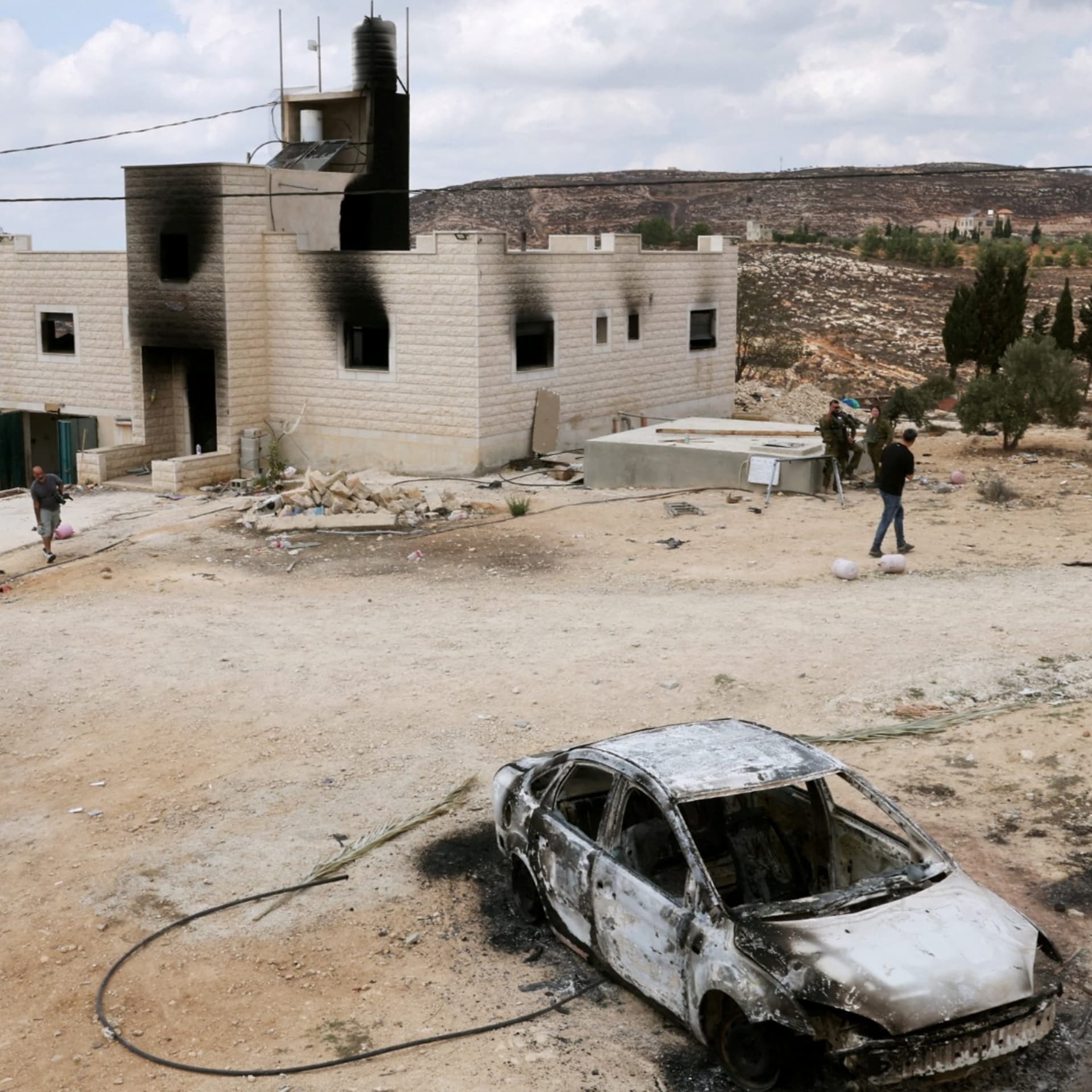
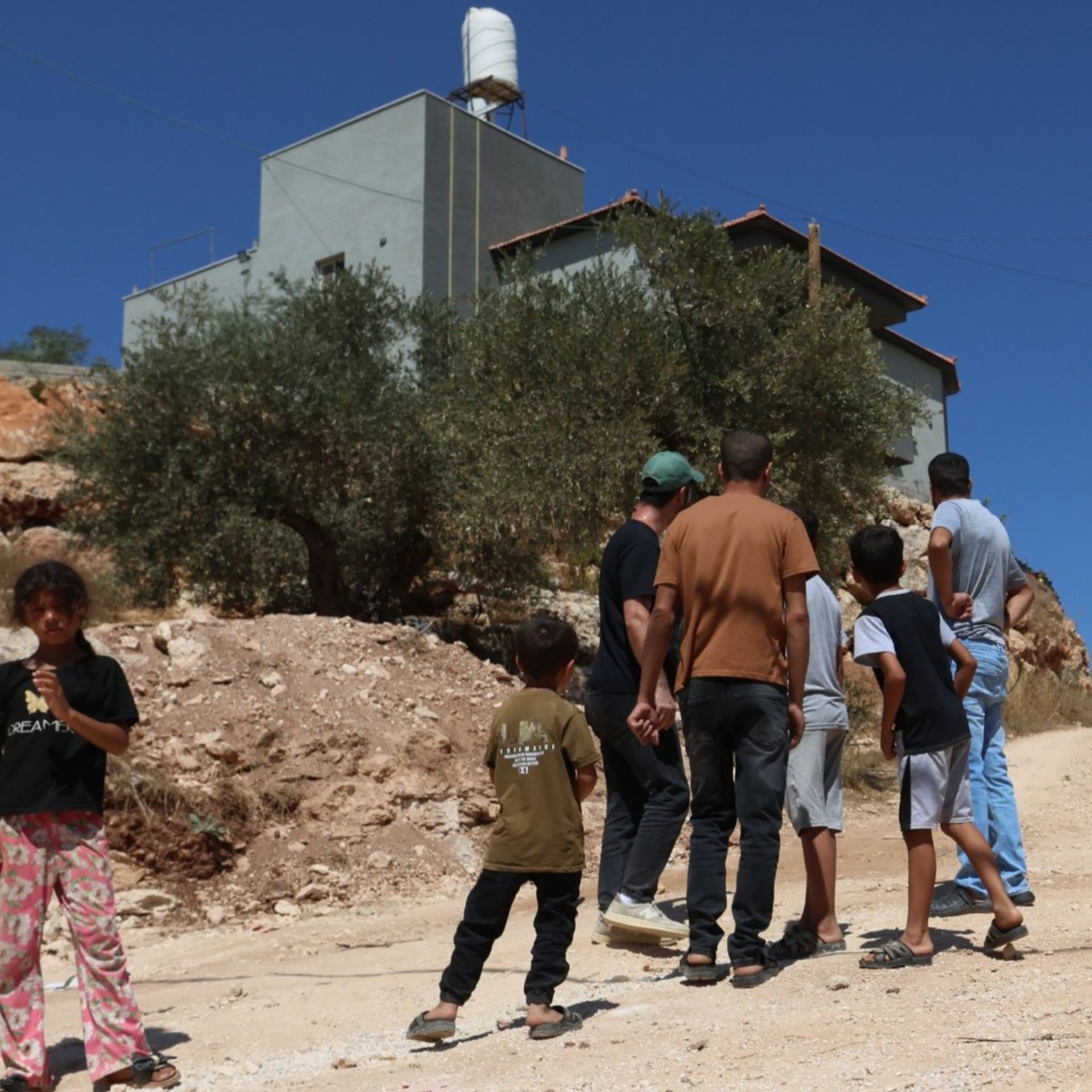
1:38We begin the podcast in the occupied West Bank in the village of Khuzra, south of Nablus. There have been growing tensions there all week after a group of illegal Israeli settlers surrounded the residential compound of two Palestinian families on Sunday, blocking the entrance and exit. The families told us the settlers had cut off their electricity and water supply. Additional Israeli forces have been sent to remove Israeli settlers today, and the soldiers reportedly have told about a dozen Palestinian households to leave their properties. One of those evacuated is Kuzi Abu Ridi. His brother, who owns the property, is Palestinian-American.
2:21The army came to us and told me, you have half an hour to take the belongings you need and leave the house. I asked him, what do you mean leave the house? He replied, there's a military order here from the central command officer who's with us. Your house and Yusuf's house are among the homes that we want to turn into military posts. They left us Rizek's house, who's Yusuf's brother. His house is one of the homes that had been under siege. A woman who asked us not to use her name was visiting one of the houses at the centre of the story just before the siege of the property by Israeli settlers began.
2:52She described how the IDF evacuated the families from the compound earlier on Thursday. At around maybe 8.39 in the morning, we have all been waking up very abruptly from the military. At least 10, 15 militaries were standing in front of the house and they asked us to evacuate the house in 30 minutes. and we have been moved to another house inside the gate. There has been no arrest whatsoever to settlers and now from the house we can still see at least 10 of them still harassing us and patrolling the house outside without the army doing anything about it. David Mensah is a spokesman for the Israeli Prime Minister's office.
3:37He says arrests will take place. We don't condone violence against innocent people. We're a country of law and order where there is wrongdoing. We act against it and we investigate it and we arrest those responsible. What here is so often missing from this discussion is that these crimes, and they are crimes, they're committed by a tiny extremist minority, maybe only 150 in number. They're juvenile delinquents. Very often, they're not even from the area. The American ambassador to Israel, Mike Huckabee, has described the group of settlers involved as Israeli terrorists. He wrote on social media that there was no excuse for such thuggish behaviour.
4:19Our correspondent John Donison is in the village of Khuzra and spoke to Rebecca Kesby. The Israeli army overnight, they went in with bulldozers and they demolished this small outpost, I guess tent encampment that the settlers had set up close to these Palestinian houses, which still remain under siege. The soldiers then went inside the houses and we've spoken to the families inside and they told us that they were all moved from two of the houses into a third house so the families are all now in one house they haven't been told to leave entirely yet but that is what they fear and they still say that they are low on water I think the electricity certainly if it's not cut off at the moment it's been cut off for much of the last few days at the same time, we've just been down into Kusra village itself.
5:11We spoke to a guy who was one of about 11 families who this morning the Israeli soldiers went in, simply went into their houses, told them to get out and they have seized those houses for a period of several hours they were told but still they'd not been allowed back in. So they have taken over those houses for what they said were military purposes. It was also quite interesting that Mr Mensah said that there will be arrests of these illegal settlers, but there's no sign that that's happened at all yet. No, I did hear reports that perhaps one settler had been arrested overnight. But the truth is that prosecutions, given the number of incidents, successful prosecutions are very, very rare.
5:57And the accusation from the United Nations, from human rights groups, from Palestinians, is that the Israeli military allows settlers to act with impunity, with the backing of far-right ministers within Israel's government, who not only don't condemn these sort of actions, but they actively are accused of encouraging them and inciting such violence. And I think what's important to remember here. And clearly the line from the Prime Minister's office and from Ambassador Huckabee, the US ambassador, is that these are a few extremists, a few bad apples. But certainly, you know, Mike Huckabee and the Israeli government support the settler project more broadly.
6:43And just this is just one outpost that's been dismantled today. It happens in Janine, a big Palestinian city to the north of here today. A whole new settlement has been opened. John Donison in the village of Kuzra. And we'll have more on this story on our YouTube channel. Just search for BBC News on YouTube and you'll find the Global News Podcast in the podcast section. This is a news story available every weekday. The Kural Islands have been a bone of contention between Japan and Russia for more than 150 years. Since the end of the Second World War, the island chain has been completely under Soviet and later Russian control.
7:18Moscow maintains a military presence there, But Japan claims as its own the three southernmost islands, including Iturup, as well as a few smaller uninhabited ones. That's why a visit by the Russian President Vladimir Putin to Iturup has caused anger in Tokyo. A reporter in Tokyo, Kurumi Mori, told me more about the visit and the controversy it's caused. President Putin visited one of the four Russian-held islands that Japan also claims. It's located off the coast of Japan's most northern prefecture of Hokkaido. Russian media report showed Putin walking around in a dark suit. He's inspecting some fish and visited a seafood processing facility and tasted some local fish roe.
8:01Now, Japan and Russia never signed a formal Second World War peace treaty. So it remains this unresolved territorial dispute over the islands. I want to point out in 2018, then Japanese Prime Minister Shinzo Abe and Putin did engage in peace treaty negotiations. They did try to discuss this, but it never really materialized into any sort of treaty. And since then, there hasn't been any progress. Apart from voicing anger, though, what can Japan actually do? That's the thing. Not much. They can, as they did, issue a statement in response to the visit. Foreign Minister Toshimitsu Motegi did so. He said Japan strongly protests the visit and that the Northern Territories, as Japan calls it, are Japan's inherent territories, both historically and under international law.
8:50We just heard a short while ago from Prime Minister Sanai Takaichi, she was speaking to reporters at the Prime Minister's office, criticizing Putin's visit. The northern territories are an inherent part of Japan's territory, both historically and under international law. This latest visit to Etorufu Island by the Russian president is incompatible with Japan's consistent position regarding the Northern Territories. It also hurts the feelings of the Japanese people and is absolutely unacceptable. She also said that it has made a mid to longer term relations with Russia more difficult. I mean, apart from that, I guess Japan can also find allies.
9:34The U.S. supports Japan's stance on the islands. And to Russia, that's been a threat. As Moscow sees the U.S. presence, for example, on these islands, which is geographically very close to Russia as a threat. I suppose there's lots of theories about why Vladimir Putin has chosen to make his first ever visit to these islands now. Yeah, you know, the timing is interesting. I mean, Japan has been supporting Ukraine. That could be a reason. We should also note the timing is significant because this comes two days before August 15th, which marks Japan's surrender in World War II. So given the context of these islands and the Second World War, it gives this visit some additional weight.
10:17I mean, it is quite complicated when it comes to validity of Japan's claim and Russia's claim, because from Japan's perspective, it goes way back to 1855. That's when the islands peacefully became Japanese territory when Japan, the Edo Shogunate, and Russia signed their first treaty from both sides, mutually recognizing them as inherent Japanese territory. But just before the end of World War II, the Soviet Union, now Russia, broke that treaty and declared war. So after Japan's surrender, the Soviet Army occupied all four northern islands, and Moscow views that as a legitimate outcome of that global conflict.
10:56So it brings us to today and just a couple of days before August 15. Kurumi Mori in Tokyo. Elections are underway in Zambia, a country regarded as one of Africa's most stable democracies. Despite the stability and the fact that it's the continent's second largest producer of copper, more than 70 percent of the population live on less than three dollars a day. That's according to data from the World Bank. Our reporter, Dingindaba Jonah Boyoya, gave me this update. The voting seems to be going on well. A lot of the polling stations started at 6am, which is the designated voting time for voting to start.
11:34A lot of people have turned out to vote, which was a concern for several analysts that some people may not turn out to vote, but the vote turnout seems quite decent at this time. The president is seeking a second term, isn't he? What about his main rivals? Or indeed, there is one main rival, isn't there? Yeah, there is one main rival. The election has 14 presidential candidates, but there's one main challenger, Brian Munduwele, who is a first time presidential candidate. He served as a member of parliament and opposition whip in the previous government, was also minister in the previous government and is now challenging for the presidency.
12:17He's an ally of the former president of Zambia, Edgalungu, who died last year. And a lot of the base support that he has at the moment is coming from the former president's support, the northern side of Zambia, which happens to be their stronghold, and the southern side being the stronghold of the incumbent. And what about the incumbent's record? The incumbent president, Hagainde Hijilema, is seeking re-election. And his argument has been that his government has improved economic performance. Inflation has dropped from around 20 percent to now 6.5 percent. They say they've restructured the country's debt.
12:57And this, as we know, Zambia had been dealing with high debt levels and it was structured around 13 billion. But that's also, interestingly, the argument by the opposition as well, that while these larger parts of the economy have been dealt with, people still complain of a high cost of living, which they believe the incumbent has been unable to deal with. The incumbent has voted in the election already, and he has called for citizens to remain peaceful and uphold the country's legacy of holding peaceful and democratic elections. And do you think the economy is the main concern for voters? Probably the biggest issue in this election.
13:39The issues coming out of there have to do with the cost of living. A lot of the Zambians that I have had a chance to talk to say they have seen the discussions around improved inflation, around improved debt restructuring, and the introduction of free education. But they say that the cost of their commodities keeps increasing and they are unable to afford it. There's also an issue around young people and employment. This has been a major talking point as well. The opposition are also saying that they feel like their democratic rights, freedoms of expression have been limited. And this is one of the talking points that they have been using to campaign throughout this period.
14:22Dingindaba Joda Boyoya. A United Nations-backed multinational force in Haiti has begun its first major deployment outside the capital, Port-au-Prince. The troops were sent to the Caribbean island nation to fight armed gangs who are terrorising large parts of Haiti, as Camilla Mills reports. Sri Lankan troops have been sent to the central Artibonit region, where armed groups have expanded their control and carried out a series of deadly attacks. Artibonit is one of Haiti's most important agricultural areas, and growing insecurity there has disrupted communities already facing severe food shortages and displacement.
14:59The gang suppression force was authorised by the UN Security Council last year to replace an underfunded Kenyan-led mission which struggled to contain the gangs. The new force is intended to support Haitian police in retaking territory and improving security. Camilla Mills. Still to come in this podcast, the World Health Organisation says the spread of Ebola could make it the worst outbreak of the disease in Africa. At its current pace, it's on track to eclipse the West African Ebola outbreak of 2014 to 2016.
15:48The U.S. has long been suspected of trying to sway elections in other countries. But is something more brazen going on these days? I'm Asma Khalid, and I'm one of the hosts of the Global Story podcast from the BBC. Brazil has accused the US of meddling in its upcoming vote. The US has dismissed the allegation. But how do these claims fit into the long legacy of American electoral interventions? Check out the Global Story on BBC.com or wherever you get your podcasts.
16:20This is the Global News podcast. It generates a fifth of Romania's electricity, but now the Czernovoda plant, the country's sole nuclear power station, has been completely shut down. The plant needs water from the Danube for its cooling systems, and the river is at an historically low water level. Romania shut down its other reactor last month. Neighboring Hungary is planning engineering work on the Danube to raise the river's levels and keep its PAX power plant working. The move comes as a fifth heat wave is peaking throughout Europe. A Central Europe correspondent, Nick Thorpe, told me more.
16:56It's pretty serious. One immediately thinks of water shortages with a consistent drought. Instead of that, the emphasis, both here in Hungary and in neighbouring Romania and throughout the region, really, first and foremost, has now been on energy. To lose 20 % of the energy, and I'm told that it has now completely shut down the two reactors at Cernavoda now. are very serious indeed. Romania, fortunately for itself, has a lot of solar. It has wind power. It has hydro. Just looking at the figures from an hour or so ago, solar is now generating 44 % of Romania's electricity. Wind, 13%. Hydro is down to 8%.
17:36Romania has huge hydro powers on many of its rivers, but they're affected, of course, by those same low water levels. They can't step in now. So during the evening hours, Romania will have to, for the coming weeks as we can see it, import a lot of electricity. And that will obviously cost people a lot of money. Exactly, yes. And we've seen this in Hungary as well when the Pox Nuclear Power Station, it's now running at about, also only about a fifth or a sixth of its normal capacity. It almost had to shut down and as you said in the introduction there, it's now trying to follow some of the same methods which were attempted in Romania but failed to sink large barges with tons and tons of rocks in the middle of the Danube to divert some of those very shallow waters towards the cooling systems of the power station to try and keep it ticking over.
18:26It's also, of course, you know, provoking debate about the future, whether nuclear power does have a future in these areas where it depends on the waters of a Danube, which is not just having lower water levels during periods of drought, but year by year the levels of water in the Danube are sinking. And if the water levels rise, is it quite straightforward to fire up this nuclear power station again? It's relatively straightforward, but it takes a while and it takes a long time for the waters, the rainwaters, say falling in the Alps, in Austria or in the Carpathian Mountains up in Slovakia on the border with Poland or Ukraine to reach the Danube.
19:06So we're talking about several weeks before they can reach 1 ,200 kilometres downstream from Budapest to the Chernivoda power station. Nick Thorpe in Budapest. The World Health Organization says it's aiming to reverse the spread of Ebola in the Democratic Republic of Congo within three months. But it's warning the outbreak will not be over by then. The key, it says, is improving contact tracing. Meanwhile, the head of the WHO has warned that the current Ebola outbreak is on track to become the worst ever. Since May, there have been at least 2 ,000 deaths and more than 4 ,000 confirmed cases. Dr Tedros Ghebreyesus said at the present rate, this outbreak would surpass the West African epidemic that killed more than 11 ,000 people a decade ago.
19:52It's already the second biggest Ebola epidemic on record and it's moving faster than any previous Ebola outbreak. At its current pace, it's on track to eclipse the West African Ebola outbreak of 2014 to 2016. One of the focal points of the outbreak is Bunia. Trish Newport, the Ebola programme's deputy manager for Doctors Without Borders in the DRC, is there and she'll tell the BBC about the challenges in containing the spread of the disease. This outbreak is increasing at such a rapid rate. It's an exponential increase. The response to the Ebola outbreak at this moment is not catching up to the size and the growth of the outbreak today.
20:40There needs to be a rapid change in the strategy for how to respond to be able to actually control the outbreak today. There needs to be a massive scale up of the response. There are areas where there are new Ebola cases and there's absolutely no response today. And we saw just last week, a new case went into an area that had no Ebola, they died, and two weeks later, there were 17 new cases, which shows that if you don't have a response, every single place where there is an Ebola case, the numbers are only going to grow exponentially. But putting Ebola treatment centers isn't enough. You also need to really be engaging with the community.
21:17You need to be talking with the community leadership so that they're also leading the response. We can't cut the chains of transmission without the community involved. This is essential. But yes, we need to be having Ebola responses everywhere where there are cases. So in the villages, in more remote areas, we need to have enough resources on the ground that we can actually be working in the areas that don't have cases yet. And at this day, with all of the reactive responses, there's just not the capacity to do that. To respond to Ebola, you need specific training. If you have people responding that don't have the skills, more people are going to get exposed.
21:54So in a new area, you need to make sure that you have that knowledge going to the area to be able to do training, to be able to be setting things up. Today, this isn't happening everywhere. People are trying their hardest, but we definitely need more resources on the ground to be able to put changes of strategy into place. Trish Newport of Doctors Without Borders. Vultures are disappearing across West Africa. Once a common sight around markets, abattoirs and dump sites, the birds have become increasingly rare in many parts of Nigeria. Conservationists warn their decline could pose a serious public health risk as they remove rotting meat from the environment.
22:34But in southeastern Nigeria, one community is defying that trend. There, vultures are revered and fiercely protected by local traditions. Our reporter, Makuchi Okufor, has travelled to Anambra State to meet a man who's dedicated his life to protecting the birds, risking his own safety and challenging deeply held perceptions. His story reveals how an ancient belief system has become one of the last refuges for vultures in the country. For many people, vultures are birds linked to death and decay. Their disappearance across Africa has gone largely unnoticed. But in one community in southeastern Nigeria, one man is fighting to protect these misunderstood birds.
23:20I'm meeting Chukwemeka Igwe, a middle-aged man in Oketiti, inside a sacred forest where an ancient shrine has become an unlikely refuge for vultures. Locals know him by an unusual name. So people began to call me Ezeudene, which means the king of vultures. And I cannot run away from it. At the center of this forest is the shrine to Nguma, where sacrifices and its sacred tree provide safety and shelter for vultures. Like I said, most of the times, people do hunt the vultures. They will run to higher trees. But when they run here at this shrine, you'll find out that people fear the environment where the shrine is.
24:08no evil will ever happen here. So nobody fights vultures that peaches here. But there was a time when vultures were disappearing from Okittiti. Chukwemeka remembers when the skies were once filled with them. When we are growing up here, I tell you, vultures, there are too many flying everywhere because nobody hunts them. The birds were part of everyday life. You'll be walking, the vultures will be walking as well, looking for what to eat. Then hunters from outside the community arrived. Slowly, the birds began to disappear. So at the time, vulture began to disappear and nobody knows why and what causes it.
24:51In 2017, the Nigerian Conservation Foundation began working with the community to protect the birds. Chikwemeca became one of their strongest voices. Thank God for Conservation Foundation, NCF, and they bring this very suggestion on how to make vultures come back. Across West Africa, conservationists say vultures face a growing crisis, driven partly by demand for traditional medicine and spiritual practices. It's not limited to Nigeria, which is hunting vultures, to use them in what we call belief-based use. And that's the use for vulture in traditional medicine or what we call voodoo or jazz.
25:33Dr. Stella Egbe, a conservation biologist with Nigerian Conservation Foundation, says the demand for vulture parts has fueled a wider trade. There is a huge demand for vulture and vulture parts for traditional medicine. Seven African vulture species are now threatened, with some listed as endangered or critically endangered, and some populations declining by up to 98%. It's been registered that vultures are used for that. And that demand for vultures have created a network of trade within the country and even across the borders in the country. Nigerian customs spokesperson, Abdoulaye Mewada, says endangered species cannot legally cross borders under international laws.
26:18He says seashores and prosecutions are helping to tackle the trade in Nigeria. So we are doing everything possible to make sure that smuggling of items, including vulture, including donkeys, including other species outside the country is truncated or is suppressed to the virus minimum. But conservationists say enforcement alone is not enough. They say working with communities is key. For Chukwemeca and other local volunteers, their efforts are starting to pay off. The missing vultures, they're almost back. If you go to the marketplace now, you see vultures. What we've done in Okaititi is one very good example of a success story where people have taken charge of what's going on in their environment.
27:05That makes us happy. For this king of vultures, every returning bird is a victory. But with vultures still disappearing across much of Africa, he knows the fight to save them is far from over. Mukuchi Okufo in Nigeria. At the Women's Africa Cup of Nations, the hosts Morocco have crashed out of the competition in the semifinals after penalties. Cameroon will now play Malawi in the final on Sunday after beating Algeria. Football commentator Piers Edwards is in Morocco. Well, the Morocco-Cameroon game was quite extraordinary. It followed Malawi beating Algeria earlier in the day, which had its own sensational story.
27:45Malawi debutants in the competition making it through to the final of the first ever try. but the big match was Morocco and the expectation was that the Atlas Lionesses as they're called would make it through to their third final and hopefully go on and lift the trophy but Cameroon's goalkeeper Michele Bina had other ideas the game was goalless after 90 minutes and was goalless as it came towards the end of extra time Morocco awarded a penalty saved by the Cameroonian goalkeeper so went to a penalty shootout and then remarkably She saved three of Morocco's spot kicks in the shootout. They'd never missed a spot kick in a shootout before Morocco.
Read the full transcript
28:27Cameroon squeezing through. And so they will meet Malawi in Sunday's final. And the remarkable thing about Cameroon is they didn't actually even qualify for this tournament about a week or so after their failure to do so. Having gone out in the qualifying rounds, I said the tournament was expanded from 12 teams to 16. So they got a backdoor entry to come in. and so they've made it through to the final so a sensational story for them and Malaria said well it's a fairy tale for them on their debut So sensational, a fairy tale is it your view this tournament's gone pretty well? It's gone amazingly well I would say so the Confederation of African Football, CAF has put a lot of money and a lot of investment into trying to develop women's football in recent times they've introduced the Women's Champions League they've expanded this competition they've created more money for the women's game And so we're seeing very much a changing of the guard.
29:16Nigeria, South Africa were the big guns. Nigeria, record 10-time champions. They're not even in the semifinals for the first time. So we're seeing new teams. And for Malawi, as said, they're ranked 32nd on the continent. There are 54 teams in Africa. They are amongst the final two. They are led by some sisters called Tabitha and Temwa Chawinga. And they're nicknamed the Scorchers. And Malawi so far have been red hot. Piers Edwards. That's it from us for now. If you want to get in touch, you can email us at globalpodcast at bbc.co.uk. You can also find us on X at BBC World Service. Use the hashtag Global News Pod.
29:55And don't forget our sister podcast, The Global Story, which goes in-depth and beyond the headlines on one big story. This edition of The Global News Podcast was mixed by Joe McCartney. The producers were Aaron Kochi and Oliver Berlau. The editor is Karen Martin. I'm Valerise Anderson. Until next time, bye-bye.
30:41claims fit into the long legacy of American electoral interventions. Check out the global story on BBC.com or wherever you get your podcasts.
From the publisher
The army said it was acting to protect residents in Qusra and that it had demolished two illegal settler outposts. The mayor of Qusra says the village in the occupied West Bank has been declared a closed military zone. Also: Russia's president Vladimir Putin visits an island claimed by Japan - causing sharp criticism from Tokyo; Romania shuts down its only nuclear power plant because of low water levels in the Danube; why vultures are becoming endangered in West Africa; and Cameroon and Malawi make the final of the Women's Africa Cup of Nations, as the hosts Morocco crash out.
The Global News Podcast brings you the breaking news you need to hear, as it happens. Listen for the latest headlines and current affairs from around the world. Politics, economics, climate, business, technology, health – we cover it all with expert analysis and insight. Get the news that matters, delivered twice a day on weekdays and daily at weekends, plus special bonus episodes reacting to urgent breaking stories. Follow or subscribe now and never miss a moment. Get in touch: globalpodcast@bbc.co.uk Photo: Palestinians observe Israeli soldiers during a raid in the town of Qusra, south of Nablus, West Bank, 13 August 2026. Credit: EPA/Shutterstock