In short
A BBC World Service news episode covering King Charles’ U.S. Congress speech praising NATO and discussing U.S.-UK relations; the DOJ indictment of former FBI director James Comey over an Instagram photo; Mali’s junta leader Colonel Asimi Goita’s first public appearance after insurgent attacks; plus U.S. tech and consumer stories including Elon Musk testifying in the OpenAI lawsuit and a segment on lab-grown diamonds vs “blood diamonds.”
Guests
No named podcast guests; reporting is led by BBC correspondents/analysts: Peter Bowes, Anthony Zerker, Beverly Oichung (Control Risks Consultancy), Tim Franks (interviewer), Lily Jamali, Ed Butler, and Tom Bateman. Also quoted: Wes Bryant, Rachel Van Landingham, Adam Smith, Kash Patel, Todd Blanche, Sam Altman, Elon Musk, Rohit Mehta, Stanley Mataram, Doug Meadows.
Key claims and examples
Charles urged “unyielding resolve” backing Ukraine and NATO defense of shared values; Comey’s “8647” seashell photo was treated as a death-threat code (86=eject, 47=Trump); Goita’s government leans on Russia amid a Tuareg/separatist and al-Qaeda-affiliated rebel alliance; Musk says “no OpenAI without Musk” and alleges Altman “stole a charity”; lab-grown diamonds are 20% of market and cut retail prices ~40%, while critics cite high energy use and argue mining can be cleaner.
Written by AI. May contain mistakes. Listen to the episode to check what was said.
Chapters
Tap a time to open that second in VOUFO Files Announcement
0:45 to 1:07
Discussion on Trump's announcement about UFO files.
“Donald Trump last week announced that he'd be releasing the US government's UFO files.”
King Charles' US Visit Overview
1:07 to 2:17
Overview of King Charles' state visit and its significance.
“I'm Celia Hatton and in the early hours of Wednesday the 29th of April, these are our main stories.”
King Charles Addresses Congress
2:17 to 4:09
Details of King Charles' speech to the US Congress.
“and King Charles' state visit to the country.”
Dinner Banter Between King Charles and Trump
4:09 to 6:00
Light-hearted exchanges and remarks at the White House dinner.
“Peter, the White House dinner is underway and I understand there's been a bit of banter between King Charles and President Trump.”
James Comey's Indictment Discussion
6:00 to 12:14
Analysis of the indictment against James Comey and its implications.
“the kind of attitude that the president takes towards the UK.”
Mali's Leadership and Insurgency
12:14 to 14:03
Discussion on Mali's leader's appearance and the insurgency situation.
“Days after insurgents tried to seize power for Mali's military junta, the country's leader has finally appeared in public for the first time after a noticeable absence.”
Mali's Political Landscape and Russian Influence
14:03 to 15:59
Discussion on the complex alliances in Mali and the impact of Russian support on the military government.
“So what do you think the government can do now with its Russian backers?”
US Military's Response to Minab School Attack
17:36 to 22:20
Analysis of the US military's investigation into a school attack in Iran during the U.S.-Israeli war.
“Can a royal visit help fix the so-called special relationship between the US and the UK?”
Elon Musk's Legal Battle with OpenAI
22:20 to 27:31
Details about Elon Musk's trial against Sam Altman regarding OpenAI and its implications for AI development.
“Ten days after the strike, President Trump blamed it on Iran without providing any evidence.”
Impact of Lab-Grown Diamonds on Traditional Mining
27:31 to 28:06
Exploration of how lab-grown diamonds affect traditional diamond mining in Sierra Leone.
“And last, the slogan, a diamond is forever, linking diamonds to everlasting love and ultimate commitment, has been a big selling point for decades.”
Show all 13 chapters
Impact of Lab-Grown Diamonds on Artisanal Mining
28:06 to 29:35
Learn how lab-grown diamonds are changing the landscape for artisanal miners in Sierra Leone.
“On a recent trip to Sierra Leone in West Africa, the BBC's Ed Butler spoke to local artisanal miners to assess the impact of lab-grown gems on the wider industry.”
Contrasting Views on Diamond Ethics and Environment
29:36 to 31:01
Explore the debate between the benefits of lab-grown diamonds versus traditional mining practices.
“they're also more ethically and environmentally sourced.”
Traditional Diamond Industry's Response
31:02 to 32:35
Understand how the traditional diamond industry is adapting to competition from lab-grown diamonds.
“The British multinational diamond company De Beers has recently launched ads like this one, promoting the traditional stones.”
Transcript
Automatic transcript. May contain errors.0:00This BBC podcast is supported by ads outside the UK.
0:30Make your next financial move with confidence. Follow NerdWallet's Smart Money Podcast on your favourite podcast app. What makes people want to believe in aliens? I'm Tristan Redmond, one of the hosts of the Global Story podcast from the BBC. Donald Trump last week announced that he'd be releasing the US government's UFO files. So why the renewed interest in life out there? And what deeper spiritual meaning might people be searching for? Check out The Global Story, We Are Serious Journalists, on bbc.com or wherever you get your pods. This is the Global News Podcast from the BBC World Service. I'm Celia Hatton and in the early hours of Wednesday the 29th of April, these are our main stories.
1:19Warm words have been shared between King Charles and President Trump during the King's state visit. Is it enough to repair relations? Also in the U.S., the indictment of James Comey. Donald Trump has been openly pushing the Justice Department to prosecute the former FBI director. Mr. Comey says he'll fight back. Well, they're back. This time about a picture of seashells on a North Carolina beach a year ago. And this won't be the end of it. But nothing has changed with me. I'm still innocent. I'm still not afraid. Also in this podcast, Mali's ruler appears in public for the first time since insurgents tried to seize power.
2:02My dear fellow countrymen, now is more than ever the time to show confidence in our armed forces who are engaged in a complex struggle against terrorism.
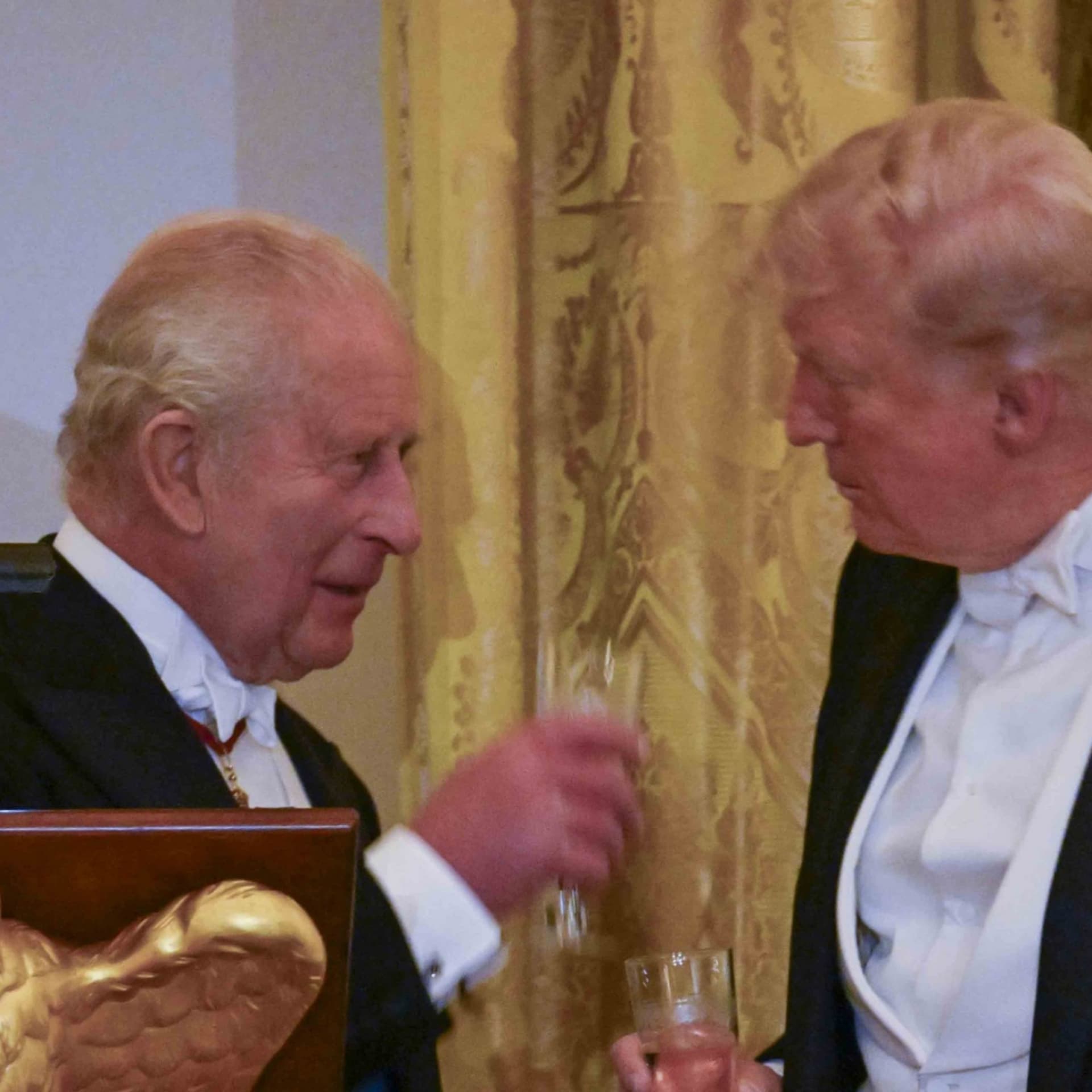
2:17We begin in the U.S. and King Charles' state visit to the country. It's an important visit for U.S.-U.K. relations, which have been struggling during the second Trump administration. And in the last few weeks, President Trump had a harsh reaction after Britain's Prime Minister, Keir Starmer, made it clear the U.K. would not be drawn into the U.S.-Israel war with Iran. Many on both sides of the Atlantic hope the visit by King Charles and Queen Camilla to the United States will put things back on track. After meeting President Trump at the White House on Tuesday, the king addressed the U.S. Congress.
2:54And as we record this podcast, he's attending a state dinner at the White House. Our North America correspondent Peter Bowes is following the visit. I began by asking him what King Charles said in his speech to Congress. Well, he talked a lot about NATO. In fact, this is a subject that he returned to later during his speech at the dinner. At the banquet, his speech was mostly lighthearted, but he said of the alliance that it was important to ensure that together we can meet the challenges of an increasingly complex and contested world. In his Congress address, he also talked about times of great uncertainty, that there should be unyielding resolve in backing Ukraine against Russia, and that the UK and the US could not rest on past achievements.
3:43He said the UK was profoundly grateful to the American people for a truly unique relationship built over the centuries. I pray with all my heart that our alliance will continue to defend our shared values with our partners in Europe and the Commonwealth and across the world.
4:08And that we ignore the clarion calls to become ever more inward looking. Peter, the White House dinner is underway and I understand there's been a bit of banter between King Charles and President Trump. Yes, there has been quite a lot of jovial remarks between the two of them. The King thanked the President for a splendid dinner, calling it a significant improvement from the Boston Tea Party. He managed to slip in a reference to him being the King of Canada, a country Donald Trump has referred to as the 51st US state. And the King referred to the upcoming FIFA World Cup and said, in one sense, Mr.
4:44President, as heads of state, we are joint hosts. And then from the king, there was this playful exchange about history, teasing the president about the US's colonial past. You recently commented, Mr. President, that if it were not for the United States, European countries would be speaking German. Dare I say that if it wasn't for us, you'd be speaking French.
5:15Of course, we both love our French cousins greatly. And we three estates are not really bound by our shared values, but by a profound belief that together we are more than the sum of our purse. Peter, are we realistically thinking, though, the trip seems to be going well, But could it really repair US-UK relations? I think it could act as perhaps some sort of a reset. Relations have been particularly soured over recent weeks. We know that Donald Trump sees the king in a very high regard. And if I think anyone is going to maybe shift Donald Trump on a particular issue, it could be the king. But I think it remains to be seen over coming days, weeks and months, the kind of attitude that the president takes towards the UK.
6:04Peter Bowes. Well, staying in the US, the Federal Justice Department is moving forward in its case against the former FBI director, James Comey. Donald Trump has been openly pushing for Mr. Comey's prosecution for months. And now he's been charged with threatening the life of the US president. The case centers around a single photo James Comey posted to social media last year that showed the numbers 8647 spelled out in seashells on a beach. It's an image that prosecutors say was meant as a threat to the president because of the possible meaning behind those numbers. As we'll hear from our Washington correspondent in a moment, there are different ways to interpret what the photo could mean.
6:49At a news conference to announce the indictment, the current FBI director, Kash Patel, said James Comey disgracefully encouraged a threat on President Trump's life and posted it on Instagram for the world to see. He was joined by the acting Attorney General Todd Blanche. Threatening the life of the President of the United States will never be tolerated by the Department of Justice. While this case is unique and this indictment stands out because of the name of the defendant, his alleged conduct is the same kind of conduct that we will never tolerate, and that we will always investigate and regularly prosecute.
7:28This was Mr. Comey's response in an online post. Well, they're back. This time about a picture of seashells on a North Carolina beach a year ago. And this won't be the end of it. But nothing has changed with me. I'm still innocent. I'm still not afraid. And I still believe in the independent federal judiciary. So let's go. But it's really important that all of us remember this is not who we are as a country. This is not how the Department of Justice is supposed to be. And the good news is we get closer every day to restoring those values. Keep the faith. Our North America correspondent, Anthony Zerker, told me more about the photo and why it led to a fresh indictment.
8:15It was a close up photograph of seashells on a sandy beach and the shells were aligned to write out 8647. And it was interpreted as a slang. 86 is a slang for eject or remove. And then 47 to Donald Trump, the 47th president of the United States. And when he posted this on Instagram, it was picked up by conservative media and eventually by the White House and Donald Trump's Republican allies as a direct threat to the president, that it was a death threat, a threat of violence. Comey quickly deleted the post, said he didn't know the exact meaning of the term 86 and that he did not intend to threaten the president.
8:58He was interviewed by the Secret Service the next day. And this issue seemed to kind of fade into the background until today, when an indictment out of a federal court in North Carolina was brought out, charging Comey with threatening the president, which is a crime in the United States. What's the relationship between James Comey and Donald Trump? James Comey was fired by Donald Trump in 2017? He was the director of the FBI. And when Donald Trump was running for president, Comey was involved in investigating first Hillary Clinton, who was running as the Democratic nominee for her use of a private email server, but also investigating possible ties between the Russian government or Russian figures and the Trump campaign.
9:44And Kobe made Trump aware of this in December before Trump was inaugurated in 2016 and then continue on the investigation once Donald Trump became president. Very early on that year in 2017, Donald Trump fired James Comey and he explicitly said that he fired him because he wasn't dropping that investigation, which he called a witch hunt into his and his campaign's ties to the Russian government. There was independent counsel appointed Robert Mueller, who investigated fully those ties. It ended up filing their report. Comey kind of faded into the background after that, but was always somewhat antagonistic towards the president.
10:23And the feeling was mutual. In fact, Comey was indicted by the Trump administration last year on different grounds, on grounds for lying to Congress during testimony about that investigation. That indictment was subsequently dropped. So this is just the latest in an ongoing near decade long saga between James Comey and Donald Trump. And it looks like it's going to end with Comey back on potential trial in the months ahead. The timing of this new indictment is interesting, though. It comes one month after Donald Trump fired his attorney general, Pam Bondi. In part, some have said because of his reported frustration, the Justice Department wasn't pushing ahead with cases against his perceived rivals.
11:08There was a social media post that Donald Trump put on his website that encouraged Pam Bondi to bring indictments against people who were critics who were considered to be enemies of Donald Trump, James Comey being one of them. Since then, it had been revealed by reporting that that message was actually meant to be a private message to Pam Bondi that he accidentally posted publicly. But I think people view it as giving an inside view, an inside look at Donald Trump's motivations, the pressure he was putting on Bondi and the Justice Department to bring indictments. Now, Bondi was dismissed or allowed to leave by the president just a month ago, as you mentioned.
11:51And part of it, what possibly could have been her handling of these prosecutions, but also her handling of the Epstein files. But with the new leadership at the Justice Department, it appears that they are pushing ahead with a prosecution of someone who clearly has a history with the president. And this is just the latest step in Donald Trump apparently pursuing those who he views as critics and enemies. Anthony Zerker. Now to Mali. Days after insurgents tried to seize power for Mali's military junta, the country's leader has finally appeared in public for the first time after a noticeable absence.
12:27Late on Tuesday, Colonel Asimi Goita appeared on state TV. He assured the nation that the situation was under control after the attacks, which saw the militants make some significant gains. But he also called on the country to support his government in its battle against the rebels. My dear fellow countrymen, now is more than ever the time to show confidence in our armed forces and our security forces who are engaged in a complex struggle against terrorism. Earlier, Colonel Goita's office released some photos, including one of him in military fatigues with a mask covering most of his face while sitting with Russia's ambassador to Mali.
13:13Beverly Oichung is a senior analyst at the Control Risks Consultancy in Dakar, Senegal. Tim Frank started by asking her about the photos. It was quite surprising when they issued that series and the second series of him actually at the hospital visiting victims from the attacks that took place this weekend. It has felt that since those attacks took place that there's been a bit of a power vacuum It did feel as if in light of reporting around the extent of the militant siege in the northern parts, the central parts of the country, the military headquarters, the death of the defence minister, that that silence was a cause of concern around where the country was heading, whether there was any assurance from the government and of course the anxiety among people.
13:58There were various other statements coming from the army trying to assert a sense of control and of course opposite sentiments coming out from the militant groups behind this violence. So what do you think the government can do now with its Russian backers? This Russian paramilitary force has been trying to provide extra help for the military rulers. What do you think the chances are that they will be able to beat the insurgents back? That's going to be quite challenging. But the photo from the presidency does demonstrate that they will continue to lean in, in particular on Russia, despite the fact that some of them actually gave up positions in a strategic town in the north in Kidal.
14:39it also shows you that they don't really have as many choices in terms of security partnerships in particular. It's a high risk zone. And it's also interesting because whenever there is various crisis in Mali, there are always these sort of meetings by the Russian defence officials providing reassurance, despite the fact that so far they haven't really been the bulwark of security in the country as well as the region. And in terms of the rebels themselves, it's a rather sort of bizarre alliance of Tuareg separatists and this al-Qaeda affiliated bunch of jihadists. Do you think there's any prospect that they could actually take the capital and then try and govern Mali together?
15:23This alliance is because they see this military government as a common adversary and they want to push out the government. It's not as simple as them just becoming the governing power. They don't have support in the southern region. They are behind a violent siege and a violent occupation in various parts of the country. They have to broker alliances to be careful about being seen as wanting to be a central power. It simply wants an authority in Mali that is either sympathetic to it or that is not challenging its control of certain areas. Beverly Oichung speaking to Tim Franks. Still to come in this podcast, Elon Musk has been testifying at the OpenAI trial.
16:04We'll hear from our tech correspondent in California. It was a big day. Not every day you're in a courtroom with Elon Musk and Sam Altman at the same time.
16:21What makes people want to believe in aliens? I'm Tristan Redman, one of the hosts of the Global Story podcast from the BBC. Donald Trump last week announced that he'd be releasing the US government's UFO files. So why the renewed interest in life out there? And what deeper spiritual meaning might people be searching for? Check out the global story We Are Serious Journalists on bbc.com or wherever you get your pods.
17:12hatch right now. It is a beautiful sight. We're seeing more and more of the far side. And insight from experts at NASA. That's the way it is in spaceflight. There are a lot of tough questions, and we could never fly a perfectly safe mission. The safest mission is just staying home in bed. From liftoff to splashdown, catch up with 13 Minutes presents Artemis II from the BBC World Service. Listen now, wherever you get your BBC podcasts. It just looks unreal. Can a royal visit help fix the so-called special relationship between the US and the UK? This week, King Charles is visiting America, but it's a tense moment for the US and the UK.
17:53I'm Tristan Redman. And I'm Asma Khaled. And we host the Global Story podcast from the BBC. We speak to the former British ambassador to the United States, who knows a thing or two about getting on the wrong side of President Trump. For more, listen to The Global Story on BBC.com or wherever you get your podcasts.
18:35no details at all after such a length of time. The strike at a primary school in Minab during the opening salvos of the U.S.-Israeli war killed 168 people, including around 110 children, according to Iranian officials. It's one of the worst cases involving civilian casualties in U.S. wars in the Middle East in over three decades. The U.S. military has said only it's investigating what happened in Minab. Here's our State Department correspondent, Tom Bateman.
19:12The war started for the parents of Minab searching for their children in the rubble of their bombed-out school. Two months later in Washington, a search goes on for answers and even any admission of responsibility. When will you release the report on the Minab school, Mr Secretary? That was my unanswered question to the Defence Secretary, Pete Hegseth, on Friday. Despite reports the US military's initial probe suggested the US struck the school and clear evidence its missiles targeted the Iranian base next to it, the Pentagon will still say nothing more than it is investigating. The first thing that you undertake is an initial review.
19:52Wes Bryant ran the civilian harm reduction team at the Pentagon before it was gutted by Mr Hegseth last year. he says any preliminary probe has to show two things. Were civilians harmed and was the US operating in the area at the time? When you meet both of those criteria, that's the only time that an investigation is actually formally initiated. And so from a process standpoint, that just points even more to the fact that, yes, they know already that the US caused this or else they wouldn't be doing this investigation and they just don't want to acknowledge it or speak to it. To not even be able to have any comment on it whatsoever is just unacceptable.
20:38He compares the Minab case to the handling of a drone strike in Kabul in 2021, which the Pentagon said targeted terrorists, but in fact killed a family of 10, including seven children. This strike was taken in the earnest belief that it would prevent an imminent threat to our forces and the evacuees at the airport. But it was a mistake, and I offer my sincere apology. Less than three weeks after the bombing, the Pentagon had admitted its responsibility and apologised. 36 hours after the attack, it's still extremely hot here in the shelter. Behind me, rescue workers are taking out more charred bodies, many of them tiny bodies, obviously of children.
21:18In 1991, one of the most notorious incidents of the Gulf War, the US hit a shelter in Baghdad, killing more than 400 civilians. The Pentagon first tried to blame Saddam Hussein for putting people in harm's way, but was almost immediately answering questions and accepted it was a US strike. All of this is further than the current administration has gone on the Minab strike. Rachel Van Landingham is a former judge advocate in the US Air Force. I think it strikingly departs from the standard response. Administrations in the past at least demonstrate fidelity, right, a commitment to the law of war by saying we are going to investigate and we feel terrible about what's happened.
22:00And this is what's been missing within this administration to ensure this doesn't happen again. Will the Americans, will the U.S. accept any responsibility? Well, I haven't seen it. And I will say that the tomahawk, which is one of the most powerful weapons around, is used by, you know, is sold and used by other countries. You know that. And whether it's Iran, who also has some tomahawks, they wish they had more. Ten days after the strike, President Trump blamed it on Iran without providing any evidence. Mr. Hegseth stuck to a minimal, carefully worded line. Thank you. Come back to the BBC. Can you give us an update on what the administration knows, what you know now about the reported strike on a girls' school in southern Iran on Saturday?
22:42All I know, all I can say is that we're investigating that. We, of course, never target civilian targets, but we're taking a look and investigating that. On Capitol Hill, opposition lawmakers have written several times to the Defence Secretary, I've been shown two of the Pentagon's responses which give no answers, saying only it is investigating. Adam Smith is the top Democrat on the House Armed Services Committee and has been in closed-door briefings with Pentagon officials. Basically, it's the prosecutor's equivalent of we don't comment on ongoing investigations, which is pathetic and completely inadequate at this point.
23:21Has there been even an admission this was a US missile one? There has been no admission. It's not a complicated set of circumstances. I think everybody in the world now knows what's happened. We need to admit it and deal with it instead of stalling. I asked the Pentagon why there had been no comment about its preliminary findings, about when the full investigation would be released, and about the stark differences with historical precedent. They said, again, it would be inappropriate to comment due to the current investigation. Two months on, the parents of Minab have only silence compounding their trauma.
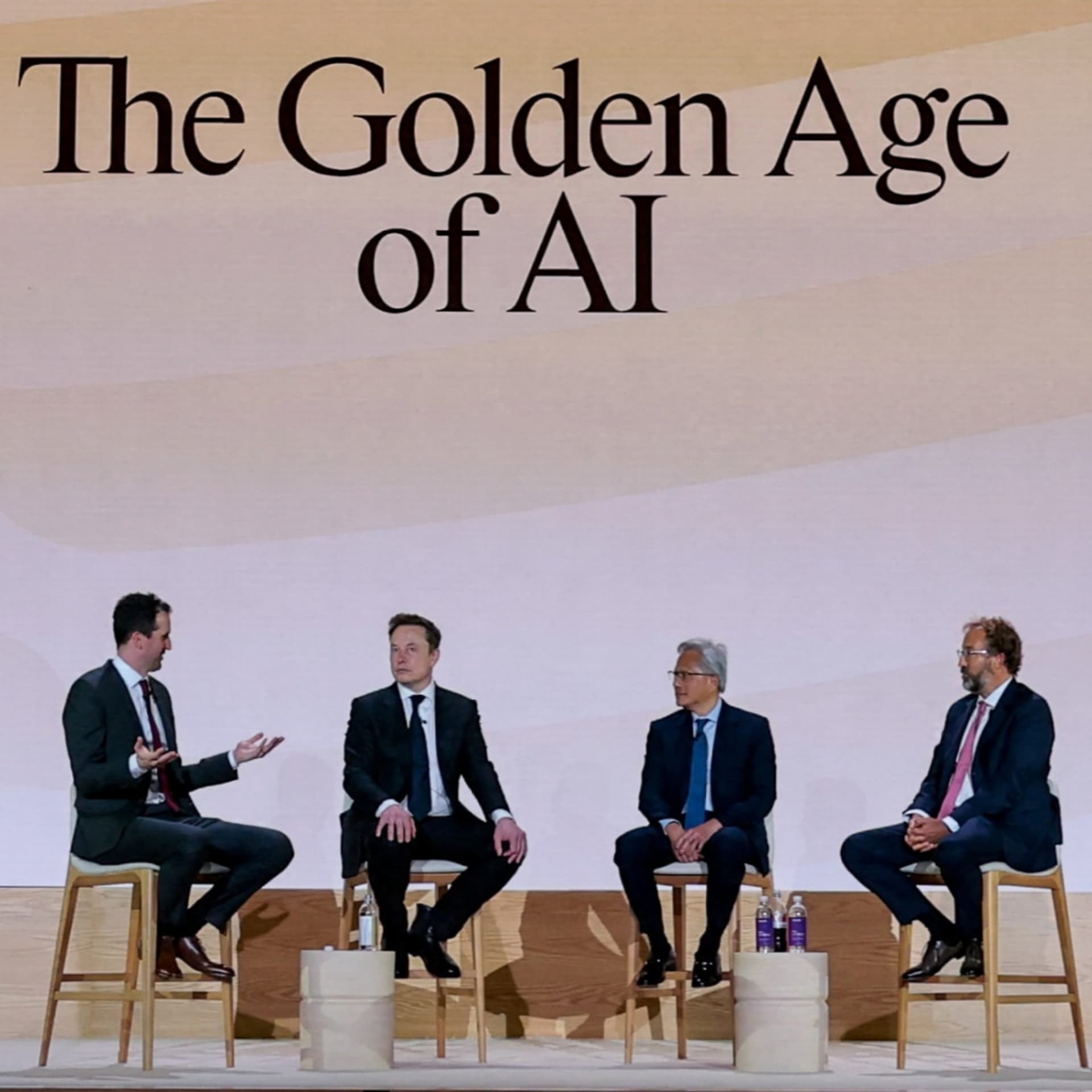
23:56Tom Bateman. Let's go to the high-profile U.S. trial that's unfolding in California that centers around the status of one of the world's most influential artificial intelligence companies, OpenAI. It's the maker of ChatGPT. Elon Musk and Sam Altman co-founded OpenAI in 2015. And now Elon Musk is suing his former colleague, who's still the boss of OpenAI, for allegedly duping him into donating millions of dollars to the company. Both men were in court today, with Elon Musk giving evidence. Our North America technology correspondent, Lily Jamali, told me more. It was a big day. Not every day you're in a courtroom with Elon Musk and Sam Altman at the same time, certainly.
24:43He laid out his recollections of OpenAI's early days today. A key message, I think, from Musk and his lawyers was that there would be no OpenAI without Musk. And so he talked about, in his view, instrumental role in creating the company. He came up with the idea for the name. He recruited key people to OpenAI and ultimately donated$38 million to get the company started. At one point, his lawyer asked, why is he suing Altman? And he said it was about stopping a legal precedent, saying it's not OK to steal a charity, which is what he alleges Sam Altman did. Amazing. These two men were sitting in court together.
25:23Let's not forget they were once good friends before their fallout. I would call them more friendly collaborators than friends. It was kind of funny, actually, because that is part of like, sometimes we hear that about them. But when you hear Musk talking about Altman, he sort of tries to really play him down. Like, listen, this person was not a known commodity in 2015 when we started the company. That's sort of the message he was trying to get across today. And the day actually began with the judge in this case speaking with Musk about recent posts that he's been making on social media. This week, he's referred to Sam Altman as scam Altman on X.
26:02And so the judge said to Musk that he needs to control his, quote, propensity to use social media to make things worse outside the court. Musk agreed. And Altman did also. And so Musk is actually going to be back on the stand tomorrow to face cross-examination by open AI lawyers. OK, so lots of drama going on inside this one courtroom. But what implications could this trial have for open AI and the future of the whole industry? Well, I think if Elon Musk gets his way, that could really set open AI back at a pivotal time for them. They're supposed to IPO soon, you know, make a public listing so that everybody can invest in their stock for the first time.
Read the full transcript
26:47And they are basically one of the very top, if not the top, AI developer in the U.S. right now, probably rivaled most closely by Anthropic. So a musk win could deal a very serious blow to OpenAI's business. Remember, he's asking for Sam Altman to be ousted from the company. He wants to undo some of this move from the nonprofit entity to the for-profit. And bigger picture, you know, these guys are all racing for what's known as artificial general intelligence, the kind of intelligence that rivals human intelligence. And so if Musk gets his way, there is potentially one fewer competitor as he tries to get his own startup off the ground.
27:31Lily Jamali. And last, the slogan, a diamond is forever, linking diamonds to everlasting love and ultimate commitment, has been a big selling point for decades. But does it matter where the diamond has come from? The term blood diamond describes an industry, especially in Africa, that's been fueled by war and corruption. Now, traditional diamond miners are facing another threat, the emergence of the lab-grown variety, which now makes up 20 % of the global market and has caused a 40 % drop in retail prices in recent years. On a recent trip to Sierra Leone in West Africa, the BBC's Ed Butler spoke to local artisanal miners to assess the impact of lab-grown gems on the wider industry.
28:19I'm standing in an open valley. There are huge pits filled with orange sandy water. Men digging at the sand along the banks and others sifting through the mud and the gravel. to find the rich, precious stones that lie abundantly in this landscape. We take the soil, it is the gravel. There we find the diamond. I have not made a lot of money yet. Sometimes for all of the year, you can get anything. Thin pickings then. Decades of extraction mean the remaining worthwhile stones now lie mostly beyond the reach of picks and shovels. And prices have been falling sharply over the last five years. This is why lab-grown diamonds, diamonds produced in factories.
29:10India alone is producing perhaps three million of these diamonds a year, collapsing global prices by as much as 40%. I see a situation where people are going to, all over the world, are going to get more conscious about climate change, about extracting too much from the earth. Rohit Mehta is CEO of FourLink Ventures. It's a commodities house based in India's diamond capital, Surat. He says that lab-grown diamonds aren't just cheaper, they're also more ethically and environmentally sourced. There's no blood on these stones, he argues. The dependence of the industry on the naturally mined diamonds is going to be less and people will be looking more towards lab-grown diamonds and that is where a big boom in the lab-grown diamond industry is going to happen.
30:00There is a counter view. Stanley Mataram is a US-based environmental consultant. He completely rejects the idea that lab-grown is somehow better, either for the planet or for humanity. It's untrue. It is factually not defined by science. These reactors run at the temperature of the sun. They're like data centres. That's the kind of energy that they require to operate these. and there's nothing really socially or environmentally responsible about this. Stanley Mataram also says that the allegations of environmental destruction leveled against artisanal diamond mining have been exaggerated. No chemicals use.
30:39You're not talking about iron ore mining or gold mining. Classic hard rock diamond mining is the cleanest form of mining and when done correctly, not only does it provide a lot of social benefits, These holes in the ground become future carbon sinks. And you uplift the lifestyles of women and children, education, the significant benefits. The traditional diamond industry is trying to push back now. The British multinational diamond company De Beers has recently launched ads like this one, promoting the traditional stones. The diamond you choose should match your journey, match the patience you took to find each other.
31:20And that is a natural diamond.
31:25As well as TV commercials, De Beers has launched Gemfair. It's a venture in Sierra Leone aimed at giving artisanal miners better equipment and a fair price for their diamond finds. You might call it fair trade for diamonds. Part of the campaign to change that difficult association some people have with war and corruption. Well, that's the intended message. They're going for the biggest bling that they can afford, I guess. That's Doug Meadows. He's an Atlanta-based jeweler. Some of it's perception, you know, people coming in thinking of the idea of a blood diamond. The lab-grown community has touted it as being ethical and eco-friendly and all this kind of stuff.
32:06And to try to educate a consumer the value in a natural diamond, I'm hoping the industry can give us some help.
32:17Back in the pit, Daniel Thibault is still digging and hoping for his first diamond find. Whatever the taste and the falling value of diamonds on the global market, Daniel and tens of thousands of other Sierra Leoneans are still digging and hoping. For now, they say they don't have much choice. Ed Butler in Sierra Leone. And that's all from us for now. Now, if you want to get in touch, you can email us at globalpodcast at bbc.co.uk. You can also find us on X at BBC World Service. Use the hashtag Global News Pod. And don't forget our sister podcast, The Global Story, which goes in-depth and beyond the headlines on one big story.
33:04This edition of The Global News Podcast was mixed by Nick Rendell and the producer was Muzaffar Shakir. The editor is Karen Martin. I'm Celia Hatton. Until next time, goodbye. Thank you.
From the publisher
President Trump has called the bond between the US and the UK a friendship "unlike any other on Earth" at a state dinner attended by King Charles and Queen Camilla. Earlier in a historic address speech to Congress, King Charles praised NATO and said the UK-US partnership was more important than ever. We ask if these warm words can repair the two countries' relations. Also: The former FBI director, James Comey, has been charged with threatening the life of President Trump in a picture he posted on social media last year; Mali's ruler appears in public for the first time since insurgents tried to seize power; and we look at the impact of lab-grown diamonds on the wider diamond industry.
The Global News Podcast brings you the breaking news you need to hear, as it happens. Listen for the latest headlines and current affairs from around the world. Politics, economics, climate, business, technology, health – we cover it all with expert analysis and insight. Get the news that matters, delivered twice a day on weekdays and daily at weekends, plus special bonus episodes reacting to urgent breaking stories. Follow or subscribe now and never miss a moment. Get in touch: globalpodcast@bbc.co.uk