In short
Lebanon-Israel talks and conditions for peace; UN inquiry alleging Israel deliberately targets Palestinian children in Gaza; UN report on systematic sexual violence in Sudan’s civil war; North Korea says it’s arming its navy with nuclear weapons; heatwave in Western Europe; Ebola outbreak in DRC IDP camps; study on why surprising events are remembered vividly; World Cup “Chief World Cup Watchers” paid to watch every match.
Guests
No named podcast guests. Interviews are with BBC correspondents: David Willis (North America), Charlotte Gallagher (Jerusalem), Jake Kwon (Seoul), Darren Bett (BBC Weather Centre), Anne Soy (DRC), Helena Burke (research report author), Neda Taufik (interviewer), plus two World Cup watchers: Kevin Okoto and Austin Franklin.
Key claims/examples
Lebanon demands full Israeli troop withdrawal from southern Lebanon and end to Iran-backed Hezbollah; Hezbollah alleges ceasefire violations after Israeli fire killed civilians. UN commission says Israel violated international norms, with 20,000+ children killed in Gaza; Israel rejects report. UN says 500+ verified sexual-violence incidents in Sudan. Kim Jong-un claims nuclear weapons for navy ships. Heat dome drives record temperatures (France highest in 80 years). DRC IDP camp lacks soap/handwashing; Ebola confirmed 1,000+ with 250+ deaths. Study: unexpected events get “high-resolution” memories. World Cup watchers get $50,000 to watch all 104 matches in Times Square.
Written by AI. May contain mistakes. Listen to the episode to check what was said.
Chapters
Tap a time to open that second in VOLebanon's Stance on Peace Talks
1:20 to 2:18
Discussion on Lebanon's refusal to accept any deal without Israeli withdrawal.
“Lebanon says it will not accept any deal that does not include Israel's withdrawal from southern Lebanon.”
US Secretary of State's Comments
2:18 to 3:26
Insights from U.S. Secretary of State on Lebanese negotiations and Hezbollah.
“First, there's been a lot of focus on the peace talks between the US and Iran in recent days, but separate negotiations are also taking place between Israel and Lebanon.”
Hezbollah's Accusation and Israeli Response
3:26 to 4:32
Overview of Hezbollah's claims and Israel's military actions in Lebanon.
“saying that Israeli soldiers opened fire on a group of civilians in southern Lebanon on Tuesday, killing two people.”
Iran's Role in Lebanon Conflict
4:32 to 6:01
Exploration of Iran's influence and demands regarding the Lebanese-Israeli negotiations.
“Iran insists that the deal to end the war with Israel and the United States requires Israel to withdraw its troops from Lebanon.”
UN Commission's Accusation Against Israel
6:01 to 7:10
Discussion on the UN commission's report accusing Israel of targeting children in Gaza.
“Well, earlier today, Lebanese officials said that Israeli gunfire had killed two people in the south of the country and that prompted Hezbollah to accuse Israel of violating the current ceasefire there.”
Israel's Response to UN Report
7:10 to 8:29
Israel's rejection of the UN report and allegations of using children as shields.
“Israel has dismissed the report unequivocally.”
North Korea's Nuclear Navy Expansion
8:29 to 10:34
Analysis of Kim Jong-un's announcement on equipping the North Korean Navy with nuclear weapons.
“Well, another report on Tuesday by the UN Human Rights Office says sexual violence has been used systematically as a weapon of war throughout Sudan's civil war, which began in April 2023.”
Heatwave Impact Across Europe
10:34 to 14:00
Details on the severe heatwave affecting Western Europe and its implications.
“And is it a sign that they're becoming significantly more aggressive?”
Climate Change Impact on Weather Patterns
14:00 to 14:33
Learn about the connection between climate change and increasing storms in Europe.
“Pressure is going to be dropping across Western Europe.”
Political Instability in the UK Post-Brexit
15:26 to 16:01
Explore the ongoing political effects of Brexit in the UK.
“mainstream mid-sides class, excluding electrical vehicles based on manufacturer websites.”
Show all 14 chapters
Ebola Outbreak in the Democratic Republic of Congo
17:22 to 20:44
Learn about the alarming Ebola outbreak and its impact on displaced communities.
“says more than 1 ,000 people are now confirmed to have contracted Ebola and more than 250 of them have died in the east of the country.”
Memory Formation and Surprising Events
20:44 to 23:51
Discover how surprising events affect our memory and retention.
“What are some of your most vivid memories?”
Special Podcast on America's 250th Birthday
23:51 to 24:30
Preview of a special podcast celebrating America's upcoming anniversary.
“Dr Ruben Rodeau ending that report by Helena Burke.”
Getting Paid to Watch the World Cup
24:30 to 28:00
Explore the unique job of two fans getting paid to watch World Cup matches.
“I know, I'd snap your arm off too, but with this tournament, it is the biggest ever, featuring 48 teams and 104 matches.”
Transcript
Automatic transcript. May contain errors.0:00This BBC podcast is supported by ads outside the UK.
0:30with clear research-backed insights. No jargon, no misinformation. Make your next financial move with confidence. Follow NerdWallet's Smart Money Podcast on your favorite podcast app. Your package says delivered, but delivered where exactly? The hallway? The lobby? Your neighbor's apartment? Instead of playing detective with your deliveries, get a mailbox at the UPS store. We'll sign for your packages, text you when they arrive, And keep your deliveries low-key under Lock and Key. Get three months free mailbox services with a new annual agreement at the UPS Store. For full details and to get your coupon, visit the upsstore.com slash offer.
1:14This is the Global News Podcast from the BBC World Service. Hello, I'm Ankur Desai and in the early hours of Wednesday the 24th of June, these are our main stories. Lebanon says it will not accept any deal that does not include Israel's withdrawal from southern Lebanon. An independent UN-backed commission says Israel is deliberately targeting and killing Palestinian children in Gaza in what it calls an ongoing genocide. And North Korea's leader says he is arming his navy ships with nuclear weapons. also in this podcast we have a special report from a camp for internally displaced people in the democratic republic of congo that's been hit by ebola and things that sort of surprise us we tend to have a more vivid or i guess a high resolution memory of than those things that we expect why our brains recollect unexpected things more clearly
2:18First, there's been a lot of focus on the peace talks between the US and Iran in recent days, but separate negotiations are also taking place between Israel and Lebanon. The two sides met in Washington on Tuesday for a fifth round of talks. Lebanon's president has insisted he will not accept any peace deal that does not include the full withdrawal of Israeli troops from southern Lebanon. When asked about the negotiations, the U.S. Secretary of State Marco Rubio insisted the Lebanon-Israel talks were not connected to the U.S.-Iran negotiations. Well, that process is separate. It's separate because Lebanon is a sovereign country.
2:57It has a government. And when it comes to Lebanon and what's happening inside of Lebanon, we're going to negotiate and deal directly with the Lebanese government. There's an Iranian issue with regards to Lebanon, and that is their support and sponsorship of Hezbollah. That factor will be discussed as part of our conversations with the Iranians. The future of Lebanon belongs to the Lebanese people through their sovereign elected government, and that's who we're going to be working with. A temporary pause in fighting was agreed between Israel and the Lebanese militant group Hezbollah on Friday, but Hezbollah is claiming that Israel has violated the ceasefire, saying that Israeli soldiers opened fire on a group of civilians in southern Lebanon on Tuesday, killing two people.
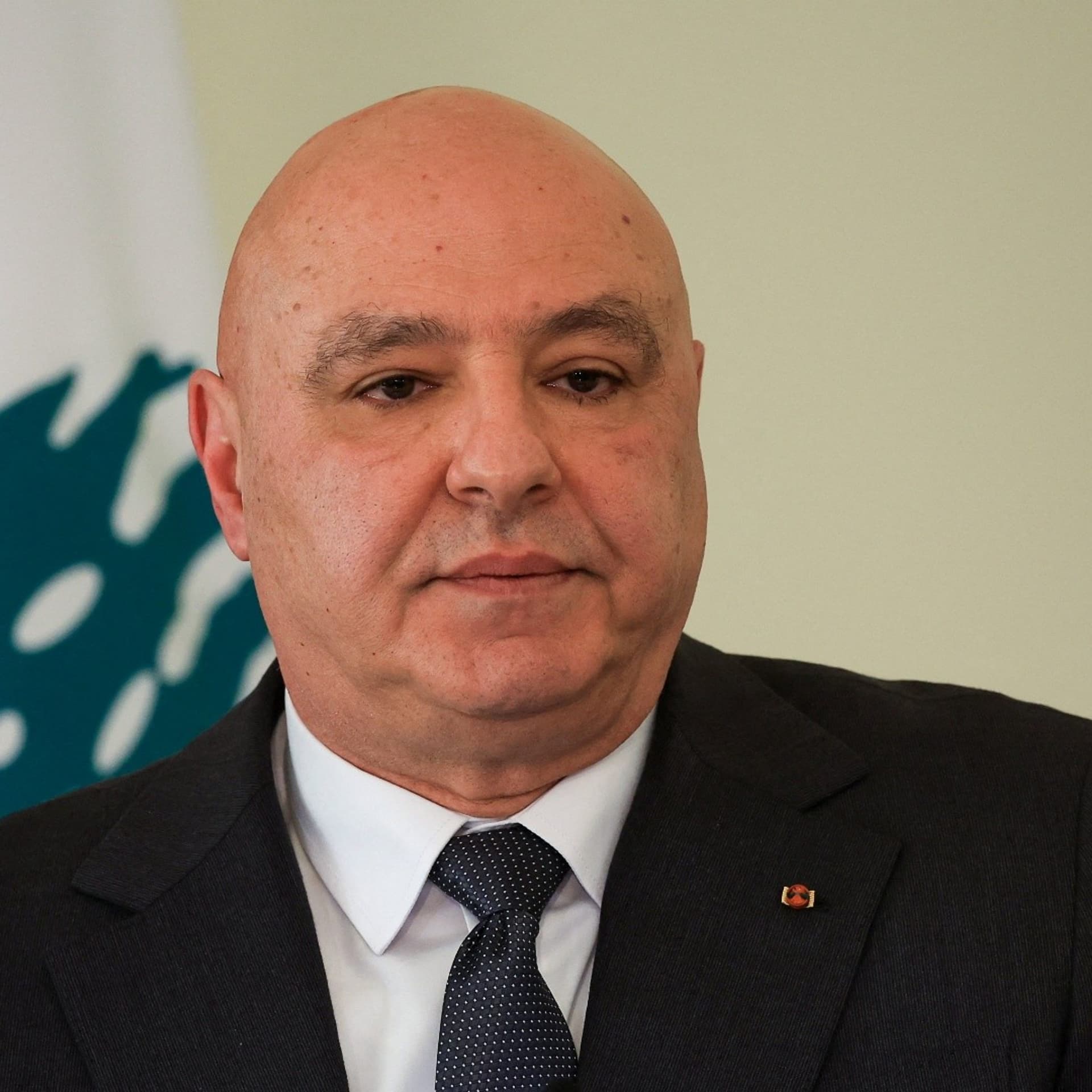
3:39I spoke to our North America correspondent David Willis about what each side is hoping to get out of these talks. Lebanon is insisting on Israel's withdrawal from the south of the country and the restoration of what its president, Joseph Ayoun, calls Lebanese sovereignty, together with an end to Iran's backing of Hezbollah, the terrorist group which drew Lebanon into this conflict back in March by firing rockets at Israel in response to the killing of Iran's supreme leader. Joseph Ayyoun has accused Iran in the past of using his country as a bargaining chip, as he put it, through its backing of Hezbollah.
4:24Israel has responded, of course, with both airstrikes and a ground offensive that Lebanese officials say has killed more than 4 ,000 people. Iran insists that the deal to end the war with Israel and the United States requires Israel to withdraw its troops from Lebanon. Israel insists it's acting in self-defense by maintaining a so-called security zone in the south of Lebanon in order to repel threats against its soldiers and its citizens. It's interesting, isn't it? Because the Trump administration say that these negotiations are not connected to those US-Iran talks, but Tehran is saying that that is a key red line in negotiations with Washington, that Israel must cease attacks on Lebanon.
5:14Well, that's right. And Lebanese officials began direct talks with Israel, of course, back in April in Washington, DC, and the two countries are about to begin a fifth round of those talks. Lebanese authorities have been trying, of course, to separate the negotiations from the US-Iran deal, so far largely without success. And given the precarious nature of negotiations over that peace deal, with the United States saying that Iran has agreed to let nuclear inspectors back into the country, Iran directly contradicting that assertion, and the competing claims from the two sides over financial incentives for Iran and the long-term control, of course, of that vital waterway, the Strait of Hormuz.
6:07Israel's parallel war in Lebanon is really just another uncertain, unpredictable element of this search for a lasting peace in the region, a piece which Donald Trump is anxious to see given his falling approval ratings and the fact that there are elections on the horizon here in the United States in just a few months' time. Well, earlier today, Lebanese officials said that Israeli gunfire had killed two people in the south of the country and that prompted Hezbollah to accuse Israel of violating the current ceasefire there. David Willis reporting from Los Angeles. Staying in the Middle East, an independent United Nations-backed commission has accused Israel of deliberately targeting and killing Palestinian children in what it calls an ongoing genocide.
7:02The commission says Israel must be held accountable, alleging the military has violated every international legal norm. Israel has dismissed the report unequivocally. From Jerusalem, here's Charlotte Gallagher. The health ministry in Gaza says more than 20 ,000 children have been killed there since the Israeli military launched a response to the Hamas-led attacks on the 7th of October 2023. The figures are viewed as reliable by the UN. The UN Independent International Commission of Inquiry, which was set up by the UN Human Rights Council, says children are not collateral damage in this conflict, but instead have been deliberately targeted and killed by Israeli security forces.
7:45The inquiry's three-member panel does not officially speak for the UN. Its investigators say childhood is being erased in Gaza due to severe physical and mental injuries, mass trauma, starvation and the collapse of education and health care. The treatment of children in the occupied West Bank and East Jerusalem is also highlighted, with the report alleging that Israel is failing to protect children there from violence committed by settlers and the IDF. Israel's foreign ministry said it utterly rejects the commission's report, calling it a libel, a sham and outrageous propaganda. It added that investigators ignored what it says is Hamas's cynical use of Palestinian children as human shields and pawns of war.
8:28Charlotte Gallagher reporting from Jerusalem. Well, another report on Tuesday by the UN Human Rights Office says sexual violence has been used systematically as a weapon of war throughout Sudan's civil war, which began in April 2023. The UN has verified more than 500 incidents affecting more than 800 victims, including children, but says the true scale is far higher. To North Korea now, where the country's leader, Kim Jong-un, says he's equipping the North Korean Navy with nuclear weapons. According to the country's state news agency, the authoritarian leader, made the remarks at a ceremony that marked a new naval vessel's entry into active service.
9:13Kim Jong-un recently told his ruling party that he'd expand nuclear forces, accusing South Korea and the United States of pushing the world to the brink of a nuclear war. Our correspondent Jake Kwon is following developments from Seoul. We're talking about a very secretive regime and everything we know about it and we're seeing it, most of it comes from what they are allowing us to see what they published for us to see. And it isn't very clear, you know, what kind of weapons will be mounted on this warship that he just showed off. But it is the latest warship that North Koreans are really showing off.
9:49This is the biggest warship that they have. And, you know, they're talking about mounting nuclear weapons on their navy. What is most likely to happen is that, you know, they're going to launch not just this surface ship, but also submarines. And usually, you know, they have these missile launchers that are mounted that we can see from the images that North Koreans are sharing with us. And these missiles will be carrying nuclear weapons so that they can use it in case, you know, North Korea itself gets bombed or there's any strike on North Korea. What they're saying is essentially that if you strike us, even if we're eliminated on the land, our ships on the water can strike back.
10:30So there seems to be a broader expansion of North Korea's navy. Why is he doing this? And is it a sign that they're becoming significantly more aggressive? I think there are two faults here. One is, you know, there's an obvious propaganda value here. He talks about how North Korea is stronger than ever, richer than ever. And it is somewhat true. I mean, this is the best kind of ship they have ever had in their history. And they're launching one ship today. They're talking about launching another one. And they're talking about making, building two ships every year. So we're talking about a very aggressive expansion plan here.
11:02And in terms of capabilities, it is very important, again, for North Korea to really double down on their nuclear weapons. Something that we've heard from Kim Jong-un for the past few years is that North Korea has nuclear weapons, it's never giving it up away, and then he's going to move at a very aggressive pace to build it even further. Jake Kwon reporting from Seoul. People across Western Europe are bracing for what's forecast to be the hottest day of the year. It's a title that keeps being recycled as a severe heatwave breaks records almost daily. France just measured its highest temperature in 80 years on Tuesday, with the Eiffel Tower and Louvre Museum closing early.
11:42But many people had no choice but to continue working. This cleaner and bicycle courier in Paris said they're struggling to cope. You have to start work very early because it's too hot in the afternoon. The vacuum cleaner makes your back heat up. I'll be completely soaked in sweat by the end of the day. It makes you really tired. Even if you drink a lot of water, it's difficult. When I go back home, I'm so exhausted it takes me 10 minutes to climb the stairs. From the BBC Weather Centre, Darren Bett told me more. The reason it's so hot really is because you get a lot more daylight hours at this time of the year.
12:26So there's more sun coming into the ground and the air that then heats up. And you've also had a persistent and large area of high pressure. You may well recognize that as a heat dome. That's what it seems to be called these days. And underneath that heat dome, that area of high pressure, then the heat is sort of trapped under there. And if it sits in the same place, the heat builds up and it builds up and builds up. So we've had record temperatures across France. Yeah, it's been really, really hot across western parts of Europe, including the UK. we're going to break a June temperature record.
12:59Yeah, we're not very going to deal with the heat especially. No, no, we're not. But this heat is a bit different actually because there's higher humidity as well and that makes it much more difficult to deal with. It's more stressful for the body. It's more dangerous as well which is why we've got this red extreme heat warning that was issued by the Met Office. That's running through Wednesday and Thursday and that's where in the UK we're likely to find the peak of the heat. And you say we're going to break records in the UK as well. I'm getting messages from my local tennis club saying, we don't advise you to be going out and playing in this heat and all sorts of warnings like that.
13:31Kids, you know, being told to take care of schools and precautions like that. Yeah, all that sort of thing. Yeah, it's understandable. I mean, I think what's going to happen is that the heat that is, the highest temperatures that at the moment are across Western Europe, by the time we get to the weekend, they're going to push their way into Central Europe. So across to Germany, across to Austria and Poland, temperatures are going to be 40 degrees there. That could break some records in places. And that's because that heat dome, that area of high pressure, is moving further east across Europe. That's taking the heat with it.
14:01Pressure is going to be dropping across Western Europe. There may be some more storms as well. Darren, is this something we're going to start seeing year on year now, with climate change impacting the world we're living in? Well, there have been lots of studies, of course. And, I mean, the underlying reason that we're seeing these high temperatures is because of climate change. Lots of studies have showed that heat waves are happening more often. they're lasting longer and they're more severe. So it could be that what we're seeing is a taste of what's to come because it's more likely that temperatures are going to continue to rise.
14:33Darren Bett. Still to come in this podcast. It's, you know, a relatively easy job, right? I'm sitting on a couch watching football, but it has been tiresome. We meet two guys who are being paid a fortune to watch the Men's Football World Cup.
14:57why is it always chaos when we link up because nobody plans anything bro good thing the rug's ready like that for real rain dirt whatever available all-wheel drive five modes we still outside and they got some kick too that turbo torque is crazy the most in its class it moves moves rogue doesn't mess around and peep the space merch on merch gear mics all of it fits Load up, we out. 2026 Nissan Rogue, built for all of it. Auto Pacific Segmentation, 2026 Rogue versus latest in-market competitors in the ex-SUV mainstream mid-sides class, excluding electrical vehicles based on manufacturer websites.
15:37As yet another British Prime Minister steps down, is the country still feeling the effects of Brexit 10 years on? I'm Tristan Redmond, one of the hosts of the Global Story podcast from the BBC. Keir Starmer has become the sixth leader to resign since the Brexit referendum. Ever since that vote in 2016, the country's been wracked with political instability. When will it end? For more, listen to The Global Story on bbc.com or wherever you get your podcasts. The biggest men's football World Cup in history is here. 48 teams and a record 104 games being played across the United States, Canada and Mexico.
16:20And the More Than The Score podcast is bringing you more than just the latest results, stats and fixtures. We're taking a closer look at the new teams competing, the Cups' standout stars and the fans who are shaping the tournament. More Than The Score from the BBC World Service. Listen now wherever you get your BBC podcasts. Every story is a technology story in one way or another. And on the interface, we decode the tech that's rewiring your week and your world. On this week's episode, we look at the UK's teen social media ban and ask, what happens next? Why are AI companies so interested in nuclear fusion energy?
17:01And will the new iPhone AI update mean that Siri will finally be good? Listen on BBC.com or wherever you get your podcasts.
17:19This is the Global News Podcast. The Ministry of Health in the Democratic Republic of Congo says more than 1 ,000 people are now confirmed to have contracted Ebola and more than 250 of them have died in the east of the country. Efforts to control the outbreak are being stepped up in the vast region beset by decades of insecurity. The three provinces affected by the outbreak, Ituri, North Kivu and South Kivu host three and a half million people displaced by conflict. The BBC's Anne Soy travelled to the epicentre to find out what measures people are taking as infections continue to spread. I've come to the Kigonzi camp for internally displaced people now.
18:04This is a region that is beset by insecurity. There are armed groups operating in different parts of the province and beyond. And these people live in cramped spaces. I can see their homes. Many of them are still tents. Others are mud-walled. Some are built using corrugated iron sheets. As I walk down the alley, I can see many children playing here. This is a huge population in a very small space. And in times of outbreaks of disease like this one, there's worry about their safety. I am frightened. Ebola is killing many people. I find Regina Janine queuing to fetch water from the communal watering point near the shared pit latrines.
18:49She tells me they've been taught how to prevent Ebola, but they lack the means to do so. Look at how we are living. 10, 15 people in one room. We've been suffering since we got displaced. I wish we could go back to our farms. The militia should be disarmed before people can go back to their homes. Bosco Kisoke is a civil society activist. There are 17 official IDP camps and more unrecognized ones in Ituri province. These people have nowhere else to go. Until today, the security situation that forced them to flee has not improved. They fled their farms in Jugu, about 80 kilometers northeast Obunia, eight years ago after they were attacked by an armed group.
19:34She says before then they grew their own food, but since being displaced, they are fully dependent on foreign aid, which has been reducing.
19:46The camp president, Jijo Etienne, worries about the impact Ebola could have on the 25 ,000 people living in Kigonze camp. Here, people need water, but there are no hand washing stations. No soap. How do we protect ourselves? In such living conditions, this disease could finish us. I speak to him near the shared iron sheet bathrooms. They still have USAID branding, but that was cut off last year. Now, when the latrines fill up, the camp's management cannot afford exhaust services. They empty them themselves. After we left, we received reports that 10 people died at Kigonze camp in just one day.
20:30Suspected cases of Ebola. Samples were taken for testing. People in the east of the DRC have been hit hard by this outbreak. Dealing with it in an IDP camp presents an even greater challenge. That report by Anne Soy. Here's a question for you. What are some of your most vivid memories? Well, for many people, their clearest recollections tend to be shocking moments, major life transitions and important firsts. A new study helps explain why this is the case. Researchers from Australia have found that the brain goes to much greater efforts to absorb vivid details from surprising events than from predictable ones.
21:13Helena Burke has the details. Computers regularly require software updates, demanding they be rebooted to install new features and information. But what if your brain did the same thing? Researchers at the University of Sydney hooked up 40 people to an EEG, a type of brain monitoring software, and recorded their reaction to dots appearing on a screen. Dr Ruben Rodeau is one of the authors of the study. Participants, they had a very simple task. They just had to indicate using a key press which side of the screen the dot appeared. and to them it may have seen as though the dot appeared just at random locations but we manipulated the presentation of the dot so that there were these subtle probabilistic tendencies of the dot to be presented at a particular location over time.
22:00The participants' brains reacted differently depending on whether the dot appeared at an expected or unexpected location. So there seems to be a speed benefit for events in the world that happen that we expect so we respond to those faster than the ones that we don't expect. But we remember them less well. So things that sort of surprise us, we tend to have a more vivid or, I guess, high-resolution memory of than those things that we expect. During predictable events, our brain moves fast to quickly process information. But during surprising events, the mind goes into encoding mode, directing energy into absorbing as much sensory information as possible.
22:39And why does it do this? Dr Rodeau says it's the brain trying to make itself more efficient. The way that it is able to form these accurate predictions is by paying attention to the predictions that go wrong and then updating that model that creates the predictions so in the future it will be more accurate in its predictions. And so, yeah, you can think of this as sort of providing a software update to that model within the brain, which is constantly generating predictions about what's going to be coming up next. You see this throughout the brain. There are all these design principles that seem to support this spending as little energy as possible in order to get the most bang the buck.
23:19While the findings help explain why some memories are more vivid than others, they do not fully account for why some events remain etched in our minds for years. There are other factors there. So if something is quite traumatic or it elicits a strong emotional response, I think that that can have an independent effect on memory. But certainly things that surprise you, this would seem to provide evidence for why they remembered better. And perhaps it supports that sort of old thought or that old sort of saying that you learn a lot more from your mistakes. Dr Ruben Rodeau ending that report by Helena Burke.
23:55Now, on the 4th of July this year, the United States will celebrate its 250th birthday, marking the anniversary of the adoption of the Declaration of Independence in 1776. In the run-up to the celebrations, we will have a special podcast looking at the state of America today. If you have thoughts or questions on the matter, we'd love to hear from you. Please email us at globalpodcast at bbc.co.uk. and if you can include a voice note, so much the better. Thank you so much. Now, how would you feel about being paid a few thousand dollars to watch some of the World Cup games? I know, I'd snap your arm off too, but with this tournament, it is the biggest ever, featuring 48 teams and 104 matches.
24:44So that's a lot of football. Practically tuning in for each game is something of a full-time job and quite literally for two super fans in the US, Kevin Okoto and Austin Franklin, it is, as they're getting paid$50 ,000 to do just that for the Fox One streaming service. Our correspondent Neda Taufik caught up with them in New York. I'm in the middle of Times Square and along with the digital billboards, there is a new fixture. It is a custom-built cubicle that you can see right into with a sofa, two recliners, and two men who are being paid$50 ,000 to watch every single World Cup match. There's a sign here that calls them Chief World Cup Watcher.
25:34So over there, we've got a miniature version of every single soccer ball ever used in the World Cup on the bookshelf. Austin Franklin is an influencer from Philadelphia. I caught up with him and Kevin Okoto, a former line cook from Florida, just over a week into their roles to get a tour of the space. You know, it's like any 20-year-old's, like, you know, imagination. Like, if you could put anything in here, like, this is what you'd put in here as a soccer fan, I think. Plenty of seating options. Plenty of seating options. Plenty of flags. Lots of plushies, I see. Yes. And then, Kevin, there's even a memory wall.
26:08You guys are taking some Polaroids. We're trying to take a Polaroid for each match, so just getting some memories, our memories in, and also taking photos with our guests as well. So once we get to the final, we can recount on, you know, the journey that we've been on. Sorry, I might want to tune in to Messi taking this PK. They beat out thousands of others for this job, which requires them not to just watch every match, but also to create content for fans. The start of the World Cup with four matches a day and an expanded 48 teams has made for a packed schedule. With several more weeks to go, the men say they're trying to pace themselves.
Read the full transcript
26:45I sleep when I can. It is a total marathon. It's a relatively easy job. I'm sitting on a couch watching football, but it has been tiresome. I'm making sure I get my eight hours when and where I can. I've kind of gotten worn down a bit. You know, I've gotten worn down. Austin's gotten a bit worn down. So just learning how to, you know, keep up with everything that's going on. Austin's favorite part has been meeting the thousands of fans from all over the world that have taken over Times Square and chatting with them in between matches about football, culture, and how they're experiencing the United States.
27:20Yeah, the craziest part of it is how frequently I forget that I'm in Times Square with people watching me. Like, I'll be watching a match for 10, 15 minutes and get sucked into it. And I look to my right and see Kevin and then see all of these people walking around Times Square. And you totally forget that you're in a cube in the middle of Times Square with people watching you. So which teams do they support? Kevin is rooting for the U.S. and Ghana because of his family ties to both nations. But Austin wears Norway's jersey, not for any personal reasons, but because he thinks they could surprise everyone.
27:52I think it's, you know, an easy pick to say, oh, Spain will win or France or, you know, and I think Norway is right on the cusp. and if the chips fall where they may, I could totally see them bringing it home. The Chief World Cup watchers there speaking to Neddorfiq. And that's all from us for now. If you want to get in touch, you can email us at globalpodcast at bbc.co.uk. You can also find us on X at BBC World Service. Use the hashtag Global News Pod. And don't forget our sister podcast. It's called The Global Story, which goes in depth and beyond the headlines on one big story. This edition of the Global News Podcast was mixed by Derek Clark and produced by Wendy Urquhart and Emma Joseph.
28:35The editor is Karen Martin. I'm Ankur Desai. Until next time, goodbye.
From the publisher
The Lebanese president says he will not accept any peace deal that does not include the full withdrawal of Israeli troops from southern Lebanon. The two sides met in Washington on Tuesday for a fifth round of talks. Hezbollah has accused Israel of violating the recently-agreed ceasefire claiming IDF soldiers opened fire on a group of civilians in Lebanon killing two people.
Also in this podcast: A United Nations-backed commission accuses Israel of deliberately targeting and killing Palestinian children in what it calls a "genocide". Kim Jong Un announces that he's equipping North Korea's navy with nuclear weapons. People across western Europe brace for what's forecast to be the hottest day of the year. Researchers in Australia discover why some memories are more vivid than others. And we hear from the men being paid $50,000 to watch the World Cup.
The Global News Podcast brings you the breaking news you need to hear, as it happens. Listen for the latest headlines and current affairs from around the world. Politics, economics, climate, business, technology, health – we cover it all with expert analysis and insight. Get the news that matters, delivered twice a day on weekdays and daily at weekends, plus special bonus episodes reacting to urgent breaking stories. Follow or subscribe now and never miss a moment. Get in touch: globalpodcast@bbc.co.uk Photo: Lebanese President Joseph Aoun attends a press conference in February 2026 Credit: Reuters/Mohamed Azakir