
In short
The episode covers: Netanyahu deriding the UK as an “Islamic Republic of Great Britain,” Japan’s deadly record rainfall and flooding near Tokyo, UN warnings that extreme heat and drought threaten global food security, Australia’s social media ban for under-16s facing a parliamentary inquiry, Sudan’s worsening child humanitarian crisis in El Obed, and UK politics after Nigel Farage’s Clacton by-election win amid a restarted parliamentary standards investigation.
Guests
none named as interviewees; it uses BBC correspondents and officials. Key claims/examples: Netanyahu’s remarks on Israeli Army Radio (and alleged link to J.D. Vance quotes) strain Israel-UK ties; Japan’s Chiba Prefecture sees 3x average rainfall, 19,000 households without power, 100,000–400,000 evacuations; UN/FAO says 1°C rise can cut yields ~7% for major crops; Meta reports 750,000 under-16 accounts removed; Save the Children cites 40,000 displaced children and cholera risk in El Obed; gold cache in Belgium worth $10M found in a wall.
Written by AI. May contain mistakes. Listen to the episode to check what was said.
Chapters
Tap a time to open that second in VONetanyahu's Controversial Comments on the UK
0:37 to 3:29
Discussion on Netanyahu's remarks calling the UK an Islamic Republic and its implications.
“I'm Pete Ross and this edition is published in the later hours of Friday the 14th of August.”
Impact of Netanyahu's Remarks
3:29 to 6:00
Analysis of the potential effects of Netanyahu's comments on Israel-UK relations.
“You could call it the Islamic Republic of Britain.”
Extreme Weather in Japan
6:00 to 7:20
Reporting on unprecedented rainfall and its consequences in Japan.
“The the Chiba Prefecture has had more than three times its average rainfall this month alone.”
UN Concerns on Global Food Security
7:20 to 11:16
Discussion on how extreme weather impacts food security worldwide.
“And just how unusual is this amount of rainfall?”
Australia's Social Media Ban for Teens
11:16 to 12:11
Examination of the impact and compliance of Australia's social media ban for minors.
“What's the priority here in order to build a resilient food system?”
Tech Companies Respond to Account Closures
14:03 to 15:14
Learn about tech companies' actions regarding account closures and bans.
“They already announced around 500 ,000 have been closed between Instagram and Facebook, like in the run up to the ban.”
Upcoming Stories Preview
15:14 to 16:09
Discover the intriguing upcoming stories in this podcast episode.
“Now we can start to discover who has put it over there.”
Humanitarian Crisis in Sudan
16:09 to 18:43
Understand the dire humanitarian situation caused by the civil war in Sudan.
“The civil war in Sudan has been described as one of the worst humanitarian crises in the world.”
Clacton By-Election Analysis
18:43 to 21:01
Explore the unusual circumstances and results of the Clacton by-election.
“Now, listeners are unlikely ever to have heard an odder snapshot of the shape of British politics than a parliamentary by-election which has been held in the east of England in the seaside town of Clacton.”
Implications of Farage's Return
21:01 to 23:38
Examine the political implications of Nigel Farage's return to Parliament.
“And I don't think there's ever been a by-election where there were 34 candidates.”
Show all 12 chapters
Spain's Nuclear Energy Decision
23:38 to 25:46
Learn about Spain's decision to extend the life of its largest nuclear plant.
“To Spain, where the government has announced it's extending the life of the country's biggest nuclear plant.”
Discovery of Hidden Gold in Belgium
25:46 to 28:00
Discover the story behind the unexpected gold treasure found during renovations.
“Police in Belgium are investigating after construction workers discovered a cache of gold treasure behind a wall in a house they were renovating.”
Transcript
Automatic transcript. May contain errors.0:00This BBC podcast is supported by ads outside the UK.
0:30Check out The Global Story on BBC.com or wherever you get your podcasts.
0:36This is the Global News Podcast from the BBC World Service.
0:43I'm Pete Ross and this edition is published in the later hours of Friday the 14th of August. Raised eyebrows in Britain as Benjamin Netanyahu calls the UK an Islamic Republic. In Japan, several people have died after unprecedented rainfall causes flooding and landslides as the UN raises food security fears if the extreme weather continues.
1:07Also in this podcast, the leader of Britain's right-wing reform party, Nigel Farage, is re-elected as an MP. In the middle of August, in holiday season, we have secured far more votes than we got in the general election of 2024. But investigations into his finances go on.
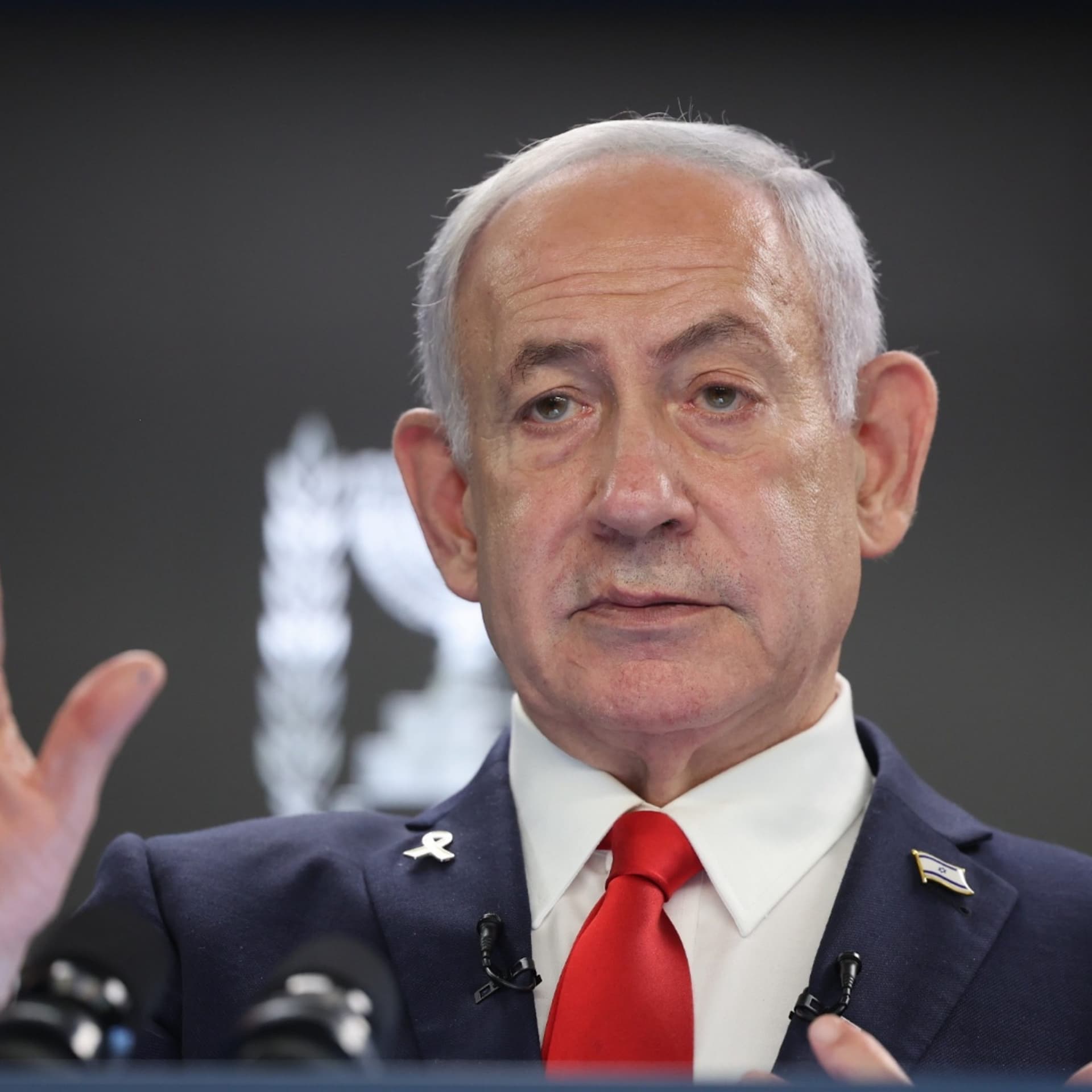
1:32Relations between Israel and the UK have been strained for a while, but the Israeli Prime Minister Benjamin Netanyahu appears to have risked making them worse still by suggesting Britain is now an Islamic republic. In a podcast with Israeli Army Radio, Mr Netanyahu recalled meeting the grandson of Winston Churchill, describing him as a lover of Israel, then remarking that you won't find that kind of attitude in the UK now, which he said was known as the Islamic Republic of Britain. He'd been talking about how the Six-Day War in 1967 was reported on by Winston Churchill's son and grandson, both journalists at the time.
2:10By the way, he and his father, Randolph Churchill's son, came here and covered the Six-Day War here in a very positive way for us. Try finding that in Britain now, in what is called the Islamic Republic of Britain. A spokesperson for the Israeli Prime Minister's office, David Menser, said Mr Netanyahu was merely quoting the American Vice President, J.D. Vance. He was making a quote that someone else had given. His words exactly were, someone had called it that. And when you look into it, it was actually Vice President Vance, J.D. Vance, that made those comments at the Munich Security Summit, but also to an invention in 2024.
2:50So those are the words of the Vice President. I asked our correspondent in Jerusalem, Yulann Nell, what we should make of the comments. Well, he's speaking in a long podcast with a host on Israeli army radio, a man who lost his son in Gaza. And you have to remember that the Israeli prime minister is currently in campaign mode with these elections due at the end of October, and he's currently trailing in the polls. Now, he recalled meeting the writer, grandson of Winston Churchill, also called Winston, whom he said had represented Israel in a very positive way, along with his father Randolph, before he went on to contrast that relationship with the UK today.
3:26And he said, try to find that now in Britain. You could call it the Islamic Republic of Britain. And he added that it could potentially be the first Islamic Republic with nuclear weapons, seemingly forgetting about the Islamic Republic of Pakistan. And it's really being read as underlining the deterioration, I guess, in relations between Israel and the UK. These are two countries that have historically been close allies. They cooperate diplomatically and on security matters. And a lot of that has been to do with Britain taking a more critical stance over Israel's conduct of the war in Gaza. And the Israeli government has repeatedly criticised the UK's Labour government since it moved to recognise a Palestinian state.
4:12Mr Netanyahu argues that such measures risk rewarding Hamas. But it's not just the UK. He's also saying that it's demographic changes across all of Europe, Muslims immigrating to Europe, that has led to kind of increased criticism of Israel's policies when he's asked about Israel's increased isolation on the international stage. These comments were made in Hebrew on an army podcast. It's clearly for an Israeli audience. Do you think he expected them to go more widespread than that? And if so, what should we make of it? Yes, certainly it was primarily for a domestic audience. And as I say, he's in campaign mode.
4:45But also, this is an important moment, isn't it? We've just got a new prime minister in the UK, Andy Burnham. He has been looking to recalibrate Labour's position on the Middle East. He has apologised for the Labour Party's initial response to Israeli actions in Gaza, where the former prime minister was deemed to have been slow in calling for a ceasefire. He said that Labour must do better. And in a video message just last month, he said that the UK should be clear in criticism of events in Gaza, and simultaneously should condemn the Hamas-led attack on the 7th October 2023. Anti-Semitism, that is the different instances have been happening in the UK.
5:27So there's an expectation here that his government is going to take a harder line than perhaps the government that came before. So I think Mr Netanyahu will see this as, you know, serving a dual purpose. You know, it will resonate with some of the Israeli public. But also, he does imagine that, you know, these remarks can, of course, be translated, especially nowadays in the media, and will be picked up by the UK. Yola Nell in Jerusalem. To Japan now, where record rainfall has caused flooding in the east of the country near Tokyo, leaving several people dead. The the Chiba Prefecture has had more than three times its average rainfall this month alone.
6:07This comes after a series of storms swept through Japan and neighbouring countries in what forecasters say is an unusually active typhoon season. Our Tokyo correspondent, Kurumi Mori, told me more. We're seeing record rainfall in Chiba Prefecture. Now that is a prefecture to the east of Tokyo. Japan's weather agency have declared that this is unprecedented. Japan's self-defense force have been deployed to the area to help people who are trapped and stuck in flooded areas and get them to safety. Authorities warn that more heavy rain is still possible, so they are cautioning for people to stay alert.
6:46And Chiba Prefecture, which as you say is right next to the capital, Tokyo, that must be a fairly heavily populated part of the country. What has been the impact for people living there? Yeah, absolutely. I mean, there are a lot of commuters you can imagine. So far, we're seeing more than 19 ,000 households still without power as of last check. About 100 ,000 to 400 ,000 people were ordered to evacuate last night at the peak. Roads were submerged in water. spoke to a Chiba resident who was telling me that they're seeing a bunch of abandoned cars left out on the roads because the roads are still flooded.
7:22And also the BBC, we just got off the phone with JMA, Japan's weather agency, and they told us that the special warning has been lifted, but people are still urged to remain cautious because the atmospheric conditions remain unstable. And just how unusual is this amount of rainfall? In Japan, heavy summer rain isn't anything particularly new. It's more about how intense these downpours can become and how quickly they can overwhelm roads and infrastructure and the drainage systems. This week is a holiday in Japan. It's called Obon. That's when we traditionally travel back to our hometowns. So the storm also having an impact there with reports of travelers being stranded at Narita Airport, around 7 ,000 of them stranded.
8:07This is not the first of these types of storms that Japan has experienced in the last couple of weeks? No, you know, we've been seeing quite an interesting variety of weather events, natural disasters. We had an earthquake in Kumamoto, followed by quite a severe heat wave where we saw up to 18 ,000 people be hospitalized for a heat stroke in just one week in late July, followed by this severe rainfall in Chiba Prefecture. And a short while ago, The government reported a volcanic eruption happening in Japan. We're getting everything on all sides when it comes to these extreme weather events and these natural disasters.
8:47Kurumi Mori in Tokyo. From one weather event to another, the extreme heat ravaging much of Europe. Temperatures have reached well above 40 degrees Celsius in some places, and that's prompted growing alarm about the damage being done to the planet and its inhabitants. Now the United Nations has added its voice to flag concerns about the pressure extreme weather events like drought are putting on food security. Kavad Zayedi, from the UN's Food and Agricultural Organization, told my colleague Kasia Madera that the weather to come could make the problem even more pronounced. We're concerned across the board because the combined impact of the droughts and the extreme heat that we're seeing is becoming essentially a serious threat to food security.
9:32Of course, extreme heat, first and foremost, we see an impact on the staple crops, staple crops that feed the world. We're talking about maize, rice, soy, wheat, some of the ones that you mentioned. We know that for every one degree increase in average global temperatures, there's going to be around a 7 percent decrease in yields for these four major crops that essentially provide 60 percent of global calories. But these are global averages, and we know that single events can have much, much bigger impacts. And we've seen that play out, including in the previous El Nino cycle. Well, on that, scientists are predicting a super El Nino event, that hot event in the early part of next year.
10:19How is that going to exacerbate what we're already experiencing? Well, it's just going to magnify what we're already experiencing. We don't know exactly what El Nino holds in store for us this time around. Previous El Ninos are not necessarily a perfect prediction of the current ones. But we've already seen, as you say, that this is going to be a strong one because of the ocean temperatures. What we saw last time, the last cycle of El Nino, was extraordinary impacts. I mean, you take a country like Morocco. In the last cycle, you saw extreme drought, extreme heat that led to over 40 percent drop in cereal yields and a complete failure, I guess, of the olive and citrus production.
11:03We saw cereal prices and yields drop in South Africa, potato in India, fruit and vegetables in Mexico, rice in Indonesia. The list goes on and on. And I guess that's what's in store. What's your advice then? What's the priority here in order to build a resilient food system? Is it crop rotation? Is it completely revisiting the types of foodstuffs that we will be consuming going forward? Absolutely. You've named some of the solutions. I mean, first and foremost is early warning. Our farmers have to know what's around the corner to help them with their planning so that they know what to plant, when to plant it, what to store, how to store fodder, water, choose the right kind of drought and heat tolerant seeds and breeds.
11:48All of these are going to be about building resilience. We have to invest more in these kinds of practical solutions that save water, that help to maintain moisture in our soil. So really, it's so much about anticipatory action, so much about early warning to prevent the worst of what the El Nino could bring. Keva Zaidi. Back in December last year, Australia passed a law banning social media for many teenagers. It was a first and since then other countries have followed suit. Now representatives of various tech companies have been giving evidence about the ban to an Australian parliamentary inquiry.
12:27So what's come out of that? I asked our correspondent in Sydney, Katie Watson. There have been a mixture of families whose children have died, have faced bullying from social media, as well as representatives of the platforms, regulators, government. They've been talking to a parliamentary inquiry about the social media ban and the changes that are going on here in Australia. And what has come out so far? What has been the impact of the ban? Well, I mean, if you were to ask the average teenager that I've done in the last few months, they would say nothing's happened. I mean, what, it's been going for eight months.
13:03And certainly in March, the regulator, the internet safety regulator said that it was concerned platforms weren't doing enough to uphold the ban. There are definitely statistics, I mean, government figures, other independent studies, they've shown that about eight in 10 under 16s are still on social media. That was in the first three months. So clearly, if you're looking at kind of numbers who've been pushed off platforms, not much. However, However, the government kind of talks about this as much more of a long term issue trying to kind of change the way people think about online safety. But because of this discussion about whether it's working or not, the government has doubled the maximum fines for not complying.
13:43So they initially were face it. They'd face fines and it's not the children. It's not the parents. It's very much the platforms. now they can face up to about 70 million US dollars if they're found not to be taking steps to kick under 16s off so this hearing was kind of going through talking to all of the players in this ban and what are the tech companies saying about all this because from what I've read they have closed down a number of accounts do they say they're on top of this yeah so meta kind of preempted this hearing and earlier this week they put out some numbers they said there's a total of 750 ,000 accounts that have been closed since the ban.
14:22They already announced around 500 ,000 have been closed between Instagram and Facebook, like in the run up to the ban. So it's an extra 250 ,000 accounts that have been closed up until now. Now they say they're still monitoring it every time they kind of somebody's flagged as being under 16 and they kick those people off. But they have also made clear that they don't agree with this ban and the way it works. Clearly, there's a lot of court cases that they're facing. I spoke to the commissioner herself who said that it's like she's dealing with kind of 10 different investigations on each different platform, looking at the numbers, looking at what they're doing.
14:58But fining a company will take probably a court battle and then, you know, some. So it's taking a long time to actually kind of see whether this ban and these fines will actually work. Katie Watson in Sydney. Still to come in this podcast. Now we can start to discover who has put it over there. Is there a criminal site on that gold? The mystery of the multi-million dollar gold stash discovered in a house renovation.
15:36The U.S. has long been suspected of trying to sway elections in other countries. But is something more brazen going on these days? I'm Asma Khalid, and I'm one of the hosts of the Global Story podcast from the BBC. Brazil has accused the U.S. of meddling in its upcoming vote. The U.S. has dismissed the allegation. But how do these claims fit into the long legacy of American electoral interventions? Check out The Global Story on BBC.com or wherever you get your podcasts.
16:09This is the Global News Podcast. The civil war in Sudan has been described as one of the worst humanitarian crises in the world. The city of El Obed has become the focal point in the conflict, with the rebel rapid support forces pounding the city with drones. as they try to take control from government forces. The two groups have been fighting since April 2023. Thousands of children are among those fleeing to El Obed to escape violence in other parts of the country, but conditions in the city are desperate. Francesco Lenino is the deputy country director for Save the Children in Sudan. In the last few months, around 40 ,000 displaced children arrived in El Obed, and many of them arrived with their family and with almost nothing.
16:53And the first thing they're looking for is food, because they left with nothing. So, you know, children and their families, they leave their places and they work for days looking for a safe place to go and escaping for the violence. But the city itself, it's now also hard to reach. And also, you know, supplies cannot really timely reach and obey. And the food prices has increased dramatically in the last few months. So we have a situation in which children already arrive with high malnutrition. And now, even worse, there is also cholera outbreak. There is a water scarcity and very bad water quality because with all these drone attacks are affecting also, you know, all the water station and wells.
17:42As Save the Children, now we have an office in Lobade and we managed to bring supplies into the city. But there's only a few routes available. What we are facing challenging is now with all this global crisis, the rise for fuel has increased dramatically. And then according to several data, you know, half of Sudanese children witnesses the loss of one of the family members have been out of schools for years and also have been displaced so many times all around the country. When I was in Darfur just a few weeks ago, one of the things that I could witness was the difficulties for children to play, because they were something they were not used to.
18:29So in a context in which you spend the majority of the day moving from one place to another one, just fetching for water or looking for food, there is no time for being a child. Francesco Lenino speaking to us from Port Saddam. Now, listeners are unlikely ever to have heard an odder snapshot of the shape of British politics than a parliamentary by-election which has been held in the east of England in the seaside town of Clacton. With a list of candidates literally as long as your arm, there were 34 of them. It's been won by the right-wing reformed UK leader, Nigel Farage, who triggered the poll in the first place.
19:05He'd resigned as MP for Clacton in response to an investigation into his finances. He received over 22 ,000 votes, even more than when he first won the seat two years ago. On the hottest day of the year, in the middle of August, in holiday season, we have secured far more votes than we got in the general election of 2025. But all of Reform's main political rivals boycotted the election. So, Mr Farage's main challenger? Count Binface. A comedian dressed as a rubbish bin and a veteran of polls up and down the UK, including the Makerfield by-election won by the now Prime Minister Andy Burnham. Mr Farage did not attend the count, citing security concerns, but Count Binface did.
19:52To hear the verdict of the Clactonites was the least I could do. And why? Because I've had over 9 ,000 votes, guys. Now, in Makerfield, eight weeks ago, I got 95 votes. So against Nigel Farage, compared to Andy Burnham, I am 1 ,000 times more popular. Extraordinarily though, there is now a chance that voters will need to go to the polls again in Clacton in a few months' time. That's because moments after Mr Farage regained his seat, a paused parliamentary investigation into whether he should have declared a cash gift of$6.7 million or£5 million was restarted. If he's found to have broken the rules, he could then be suspended from Parliament for long enough to trigger, yes, another by-election.
20:42Our UK political correspondent, Rob Watson, told me about this most colourful of by-elections. Goodness, I'll try and make sense of it. I'm not sure how successful I'm going to be here by the sea and the sand in Clacton-on-Sea. But, I mean, certainly of all the by-elections I've covered on and off the last, I don't know, 40 years, it's definitely one of the oddest because, you know, essentially you had Nigel Farage up against a man with a bin on his head who claims in a comedic way to be a traveller from another planet and that he did remarkably well. And I don't think there's ever been a by-election where there were 34 candidates.
21:20So pretty extraordinary stuff. Yeah, 9 ,000 votes he got. That's not an insignificant amount of people. But let's get on to this parliamentary inquiry that's restarting. What's going on with that, Rob? Well, the Commissioner for Parliamentary Standards has made it clear that that is now resuming now that Nigel Farage is becoming an MP again. So if the hope of reform and its leader, Nigel Farage, had been that this by-election would sort of kill all that off, that is not happening. And just to remind everyone briefly of the sort of detail of it, essentially, Nigel Farage was given a gift of five million pounds from a cryptocurrency billionaire based in Thailand before the 2024 general election.
22:05Now, the rules state that even if you're not yet an MP, you should declare any gift, certainly ones as big as that. Now, Nigel Farage said everything was all above board, that he hadn't done anything wrong. It was nothing to do with politics. But that now will be examined. examined. What I can't tell you, Pete, is exactly how long that investigation will take or what it might come up with. But the importance of it is that one of the things that's really been knocking reform back, and it's important to remember that it was leading in the polls in spring, its sort of populist right-wing message resonating with many.
22:39But one of the things which really seems to have sort of eaten into their popularity is concerns about Nigel Farage and indeed the party's finances more widely. And what, if anything then, can that tell us about the state of British politics on a national level? Because as you say, many had tipped Mr Farage, you know, to be the next Prime Minister following Andy Burnham, but his support had taken a bit of a hit. But can we tell anything by his, you know, electoral success in the last 24 hours? Well, it was probably a bit hasty to say he was going to become Prime Minister in a few years time, and one would want to be cautious about reading too much from this by-election.
23:17But I think you can say the following about British politics and where all this leaves us. It tells you that things are very fluid and that there are lots of big questions out there that we can't answer. First one is, can Nigel Farage and reform bounce back? Number two, can Andy Burnham, the sort of newish leader of the Labour Party and Prime Minister, can he maintain his bounce? and can the Conservatives somehow claw back some of the right-of-centre votes from reform? Rob Watson. To Spain, where the government has announced it's extending the life of the country's biggest nuclear plant. The Almoraz plant was due to be decommissioned in two years' time, but will now remain open until 2030, despite previous plans to close all nuclear reactors by 2035 and focus on renewables.
24:02Our global affairs reporter, Sebastian Usher, told me more. It's the biggest nuclear power reactor in Spain. It provides about 7 % of the electricity output, the power output. So it's absolutely key up until now in terms of the supply. I mean, this goes back a little while, this commitment by the Spanish government, this left-leaning Spanish government, to switch by 2035 to close down all the power stations so they can go to renewables and really to force that change through by doing this. Intervening in between, of course, have been several things. The war in Ukraine first, then the war in Iran, both of which have severely disrupted energy supplies.
24:45and really putting more and more of an emphasis, it's not just Spain but other European countries feeling this, of providing their own source of power, their own sources of energy rather than importing it. So that's been one issue. And then last year, I don't know if people remember, but there was this massive outage of power across the Iberian Peninsula, both Spain and Portugal. And that, again, led to a rethinking. So what the Spanish government said was that if the owners of these nuclear power reactors had a good case to make for keeping them open a bit longer, then they will consider it. So what's happened is that they've done that, they've made the case, the Spanish government has acceded to that to an extent, and the organisation that assesses the safety of the nuclear power reactor has also given it a clean bill of health.
Read the full transcript
25:32So it's an extension by two years at the moment. It does raise, obviously, the possibility of this happening with other reactors, where, again, those companies have also suggested that they'll be making the same kind of case. Sebastian Usher. Police in Belgium are investigating after construction workers discovered a cache of gold treasure behind a wall in a house they were renovating. Gold bars and coins worth more than$10 million were found in a chest by workers in a town in eastern Flanders. Alice Adderley reports. Imagine the surprise. You're carrying out a house renovation and after knocking down a wall, you discover a chest containing millions of dollars worth of gold.
26:14That's what happened in the small Flemish city of Dendemonde. In the chest were at least 4 ,000 gold coins and more than 40 gold bars, dating from the 1950s and 60s. Patrick Face is the chief of police for Dendemonde. We are certain that it has nothing to do with the Second World War because it's from the 50s or the 60s, the gold bars. But we don't have any other clue why it was covered in the ground over there. The house used to belong to a local brewer and now belongs to a charity. So the police are looking into who put the gold there and whether there was any crime involved. Now it's very safe in the central safe of the federal government.
27:04and now we can start to discover who has put it over there. Is there a criminal site on that gold or it's just someone who has put it away for later? The police are warning prospectors to stay away from the house where it was discovered. Don't come to the works over there. It's very dangerous. There are workers. You can't see anything. Everything is gone. It's not a touristic place. It's too dangerous. to discover something yourself. The building belongs to a homeless charity, CAW, and its director-general, Hert Hilliart, said he was surprised and amazed by the discovery.
27:49We certainly aren't counting our chickens before they hatch at the moment, nor are we thinking about what we're going to do with it yet. Right now, we're mostly still surfing the wave of amazement, and we're also especially glad that it's safe. If they are found to be the legal owners, they hope to use the money to help local people who are down on their luck. Alice Adderley reporting.
28:13And that's all from us for now. If you want to get in touch, you can email us at globalpodcast at bbc.co.uk. You can also find us on X at BBC World Service. Use the hashtag Global News Pod. And don't forget our sister podcast, The Global Story, which goes in-depth and beyond the headlines on one big story. This edition of the Global News Podcast was mixed by Kai Perry, and the producers were Chas Geiger and Guy Pitt. The editor is Karen Martin. I'm Pete Ross. Until next time, goodbye.
29:03Story podcast from the BBC. Brazil has accused the U.S. of meddling in its upcoming vote. The U.S. has dismissed the allegation. But how do these claims fit into the long legacy of American electoral interventions? Check out The Global Story on BBC.com or wherever you get your podcasts.
From the publisher
The spokesman for the Israeli Prime Minister, Benjamin Netanyahu, has defended his reference to the UK as an 'Islamic Republic'. In a podcast with Israeli Army Radio, Mr Netanyahu recalled meeting the grandson of Winston Churchill, describing him as a 'lover of Israel' and then adding that you won't find that kind of attitude in the UK now, which he said was known as 'The Islamic Republic of Britain'. The UK and Israel are long-standing allies, but relations have become notably more tense since the war in Gaza. Also: At least eight people have died and several more have been injured in eastern Japan after record rainfall caused widespread flooding; the United Nations adds its voice to flag concerns about the pressure extreme weather events like droughts are putting on food security; builders in Belgium working on a renovation project have found a chest filled with gold bars and gold coins, bricked in the wall of a cellar; in Australia, tech executives give evidence about the ban on social media for under-16s to a parliamentary inquiry; we hear from Save the Children about the latest on the humanitarian crisis in Sudan; Spain announces it's extending the life of the country's biggest nuclear plant; and in Britain, the Reform UK leader, Nigel Farage is re-elected as an MP in a by-election he triggered, defeating 33 other candidates - a parliamentary investigation into a nearly seven-million dollar gift he received from a crypto billionaire has now resumed.
The Global News Podcast brings you the breaking news you need to hear, as it happens. Listen for the latest headlines and current affairs from around the world. Politics, economics, climate, business, technology, health – we cover it all with expert analysis and insight. Get the news that matters, delivered twice a day on weekdays and daily at weekends, plus special bonus episodes reacting to urgent breaking stories. Follow or subscribe now and never miss a moment. Get in touch: globalpodcast@bbc.co.uk