
In short
Global News Podcast covering: Israel resuming airstrikes in Lebanon (Tyre) after a temporary Iran-Israel truce; Taliban crackdown on women’s hijab protests in Herat; Honduras passing harsher laws against femicide; BBC investigation of Libyan kidnappings and forced organ-removal threats against Iraqi migrants; uncertainty over whether Iranian fans can attend the World Cup after US ticket actions; Philippines earthquake response; ICC prosecutor Karim Khan suspended over sexual misconduct allegations; AI’s impact on work; Japan bear captures and a second elusive “intelligent” bear.
Guests
No recurring guests. Segment voices include BBC correspondents/reporters: Lina Sinjab (Beirut), Caroline Davies (Afghanistan), Mimi Swaby (Honduras), Sue Mitchell and aid worker Rob Lowry (Libya organ-harvesting investigation), Sean Lay with Puri Ajafarev (BBC Persian, Iran World Cup tickets), Jonathan Head (Philippines earthquake), Anna Holligan (ICC), Sarah O’Connor (AI book), Simon Jack (AI investment), Kurumi Mori (Japan bears).
Key claims/examples
Tyre evacuation orders; at least 10 killed; displaced in Lebanon over a million. Herat police deny protesters were shot. Honduras: up to 60-year sentences; women-only judicial bodies; ~90% femicide cases go unpunished. Libya: militia demanded $5,000 per boy; threatened kidney harvesting; UN says organ harvesting is common. Iran World Cup: US withdrew ticket allocation; Iranian FA sold ~4,000 tickets; FIFA says it’s to ensure smooth participation. Philippines: 7.8 quake, at least 40 dead, hospitals damaged, roads severed. ICC: Khan suspended immediately; first such suspension in court history. AI: translators paid half, expected twice as fast; job quality changes. Japan: bear capture after ~100 schools closed; second bear escaped an electronics factory, possibly using locks/faucet.
Written by AI. May contain mistakes. Listen to the episode to check what was said.
Chapters
Tap a time to open that second in VOIsraeli Airstrikes on Lebanon
1:11 to 1:57
An update on the recent airstrikes in Lebanon amid tensions with Iran.
“I'm Celia Hatton, and at 14 hours GMT on Tuesday, the 9th of June, these are our main stories.”
Local Reactions to Airstrikes
1:57 to 4:23
Exploring the impact of airstrikes on Lebanese civilians and their sentiments.
“The pause in fighting between Iran and Israel is still holding for now.”
Protests Against Taliban in Afghanistan
4:23 to 5:41
Details on protests in Afghanistan against Taliban dress codes and government actions.
“Medical sources in Afghanistan have told the BBC a woman and a child were killed in the western city of Herat during a crackdown on protesters.”
Femicide Laws in Honduras
5:41 to 8:07
Discussion on new laws in Honduras aimed at addressing femicide and protecting women.
“From a grim story about the state of women's rights to possible signs of progress in Honduras.”
Kidnapping and Organ Trafficking in Libya
8:07 to 12:19
Investigation into the kidnapping of migrants in Libya and threats of organ removal.
“About 90 % of femicide cases go unpunished in the country.”
Iran's World Cup Participation
12:19 to 14:00
Examining Iran's ticket allocation issues for the World Cup amidst political tensions.
“I don't want to go to any country again, you know.”
Ticket Sales and Financial Struggles of Iranian Football
14:00 to 16:21
Learn about the challenges faced by the Iranian Football Federation and their ticket sales amid sanctions.
“First of all is the money situation because the Iranian Football Federation, they have all the money, the rewards they get from qualifying to FIFA World Cups and other competitions and other FIFA projects.”
Bear Captured in Japan Amid Alerts
16:21 to 16:50
Discover the unusual situation involving bears in Japan and the captured bear's antics.
“Still to come in this podcast, in Japan, one bear has been captured while another bear, described as being extremely intelligent, is evading police.”
Impact of Earthquake in the Philippines
17:51 to 21:54
Get insights into the devastation caused by a powerful earthquake in the Philippines and ongoing recovery efforts.
“Built cars are issued by Column N.A., member FDIC, pursuant to license for Mastercar International Incorporated.”
Suspension of ICC Prosecutor Amid Allegations
21:55 to 28:00
Explore the significant events surrounding the suspension of the ICC's top prosecutor and implications.
“The top prosecutor at the International Criminal Court has been suspended with immediate effect following an investigation into sexual misconduct allegations.”
Show all 14 chapters
The Significance of Emotional Intelligence
28:00 to 28:27
Discussion on the importance of human emotional intelligence in AI context.
“who had so many different kinds of intelligence, you know, tactile intelligence, emotional intelligence.”
Bear Capture in Japan
28:27 to 29:26
Details about the capture of a bear in Utsunomiya City near Tokyo.
“And finally, let's go to Japan, where a bear that's been roaming around a city near Tokyo has finally been captured.”
The Intelligent Bear of Fukushima
29:26 to 30:26
Exploration of a bear in Fukushima that evaded capture and displayed unusual intelligence.
“but it took three shots, so three tries, and authorities carried him away in a truck.”
Innovative Technology in Wildlife Management
30:26 to 31:51
Discussion on how authorities are using technology, including AI, to manage bear populations.
“Reportedly, the bear turned on a faucet to drink water, which is quite unusual behavior.”
Transcript
Automatic transcript. May contain errors.0:00This BBC podcast is supported by ads outside the UK.
0:30Make your next financial move with confidence. Follow NerdWallet's Smart Money Podcast on your favourite podcast app. Decisions made in Washington can affect your portfolio every day. But what policy changes should investors be watching? Washington Wise is an original podcast from Charles Schwab that unpacks the stories making news in Washington right now and how they may affect your finances and portfolio. Listen at schwab.com slash Washington Wise. That's schwab.com slash Washington Wise. This is the Global News Podcast from the BBC World Service. I'm Celia Hatton, and at 14 hours GMT on Tuesday, the 9th of June, these are our main stories.
1:18Israel's carried out new airstrikes on the Lebanese city of Tyre a day after an Israeli truce resumed with Iran. There are reports that Taliban forces in western Afghanistan have shot and killed two people demonstrating against the detention of women who'd ignored religious dress codes. Also in this podcast, a BBC investigation tracks migrants traveling through Libya who were kidnapped and threatened with organ removal. They want the money. He say, I want your kidney, you know. My family pays$5 ,000.
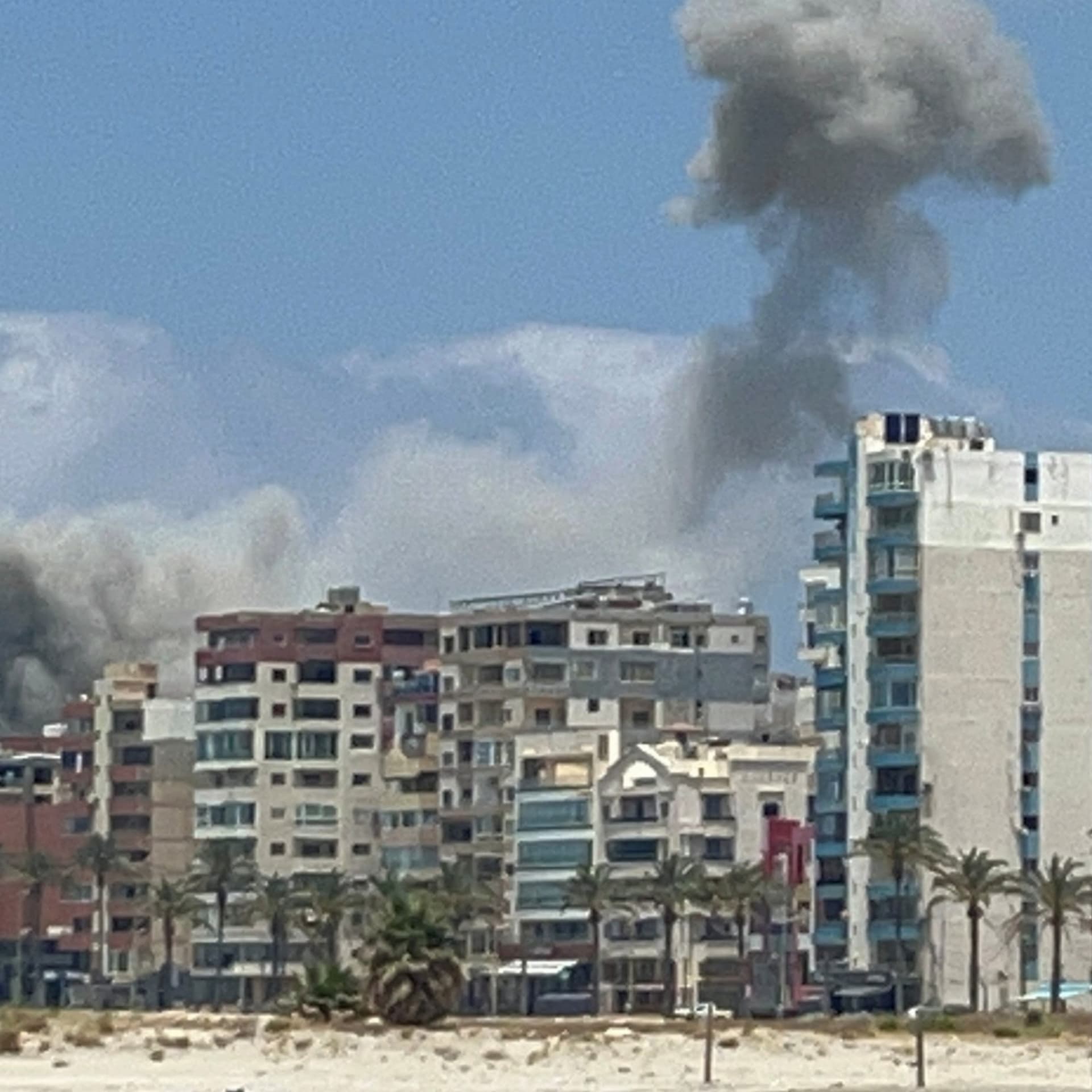
1:56We start with the latest in the Middle East. The pause in fighting between Iran and Israel is still holding for now. Announcements that military operations would come to a temporary halt came after President Trump told both countries he didn't want their fighting to block any deal aiming for a longer-term ceasefire. But Israel is still carrying out airstrikes inside Lebanon against the Iranian-backed group Hezbollah, even though Tehran's threatened to attack Israel again if it continues bombing Lebanese territory. I got the latest from our correspondent in Beirut, Lina Sinja. After halting attacks between each other, the Israelis and the Iranians, Israel continued here in the south and issued even new evacuation orders in the city of Tiyer, and this time for the first time in a Christian neighborhood of the city.
2:46So people were rushing for their safeties in thousands of them, And airstrikes continued in Tiyar, in Nabatiyah. At least 10 people have been killed so far, and the number are likely to rise because it hasn't been updated with the Ministry of Health. But it just shows how the situation is very much volatile, and the Israelis are adamant to continue the battle in Lebanon, in the south of the country, despite efforts for finding a political solution and having a lasting ceasefire. Indeed, Israel has said it's doing the Lebanese government's job of fighting against Hezbollah. But how are the Lebanese people responding to this continued fighting?
3:28How do they see it? I think there are more and more voices that are angry and they don't want this war. They want an end of this war, especially among the south of the country's community, those who've lost their homes, lost their villages and towns, those who are displaced, which are over a million now. But at the same time, there is a big number of them who is also angry with Israel. They've killed over 3 ,600 people, mainly civilians. They've destroyed homes, infrastructure. They are attacking health facilities. Over 128 rescue operators have been killed so far. So they really feel that, you know, Israel's war is not against Hezbollah, but it has a plan of expanding its presence in the South and occupying the South.
4:16That's why their anger is mostly directed towards Israel rather than Hezbollah. Lina Sinjab in Beirut. Medical sources in Afghanistan have told the BBC a woman and a child were killed in the western city of Herat during a crackdown on protesters. Taliban forces had reportedly opened fire to disperse a protest against the detention of women accused of failing to comply with strict religious dress codes. The police have denied that anyone was killed. Caroline Davies reports. Over the weekend, there were reports that local Taliban government officials in Herat had begun to arrest women they considered to be improperly wearing the hijab by showing their faces.
4:58The UN has cited reports that around 30 women were detained. The Taliban government have imposed many restrictions on women since they took power, including strict dress codes. Women must be completely covered when they leave home. Protests against the Taliban are increasingly rare, but a group of men and women took to the streets in Herat to protest. There have been accusations that the authorities opened fire. Herat's provincial police chief spokesperson said that the protesters acted in a manner that disturbed public order, saying that they were trying to create tension under the pretext of protesting issues about the hijab.
5:34When asked about the allegations that the officers had fired on the protesters, The spokesperson said they were investigating. From a grim story about the state of women's rights to possible signs of progress in Honduras. The parliament there has introduced new laws and tougher sentences to address femicide. Honduras has the highest rate of such gender-based killing in Latin America. Hundreds of women are killed there every year, prompting the legal changes. Our global affairs reporter Mimi Swaby told us more. Honduras has consistently been among the highest rates, if not the highest rates of femicide in Latin America.
6:12Last year, authorities recorded more than 260 femicides. This year so far, there have been more than 115 women murdered, recorded, again, due to their gender. But it really is a countrywide national problem at a really severe level. So much so that a report is sent to the National Congress saying that, from multiple parties, saying that tougher punishments and laws are needed to protect women across the country. These women are incredibly vulnerable. Now, that has been something that's going on for a long time now, but it's really hit a critical point. Some numbers, which might not be the easiest to understand, but it's thought that about 4.3 cases per 100 ,000 women is an average rate of femicide.
6:55So that's actually a lot of women, proportionally speaking. So the number of women killed per 100 ,000 in the country, but really is a systemic problem. OK, so you've said that, you know, there have been calls for new laws and things to deal with it. So tell us about these reforms that are hopefully going to be put in place. So the reforms to Honduras's penal code, its legal system, its laws in place to protect these women will now see a potential jail term of up to 60 years. So a massive increase of what it was previously. Now, alongside more severe punishments for such crimes, there'll be specialised women-only judicial bodies established.
7:33Now, these bodies will investigate and help with the legal proceedings in these cases. So, kind of the idea is that women take control and are at the forefront of fighting femicide. Now, Congress have said that it's part and it reflects its commitment to protecting women and fighting, again, more systemic-based gender violence in the country. But critics have said, you know, the focus shouldn't be on increasing sentences. It should be increased on preventing these killings. Rights groups have said that, you know, these sentences are quite futile, basically, if the cases aren't even brought to court.
8:07And I think that is the issue we're seeing happen a lot. About 90 % of femicide cases go unpunished in the country. And that is something that we've seen in the wider region as well. So it's not just a problem in Honduras, but Honduras is trying to tackle it now. Mimi Swaybe. A BBC investigation has discovered that more than 300 migrants heading to the UK last summer were kidnapped, tortured and threatened with forced organ removal. The young men, all from Iraqi Kurdistan, were captured in Libya by a militia who demanded a ransom of$5 ,000 from each of their families and threatened to harvest the captives' kidneys if payment was not made.
8:45Reporter Sue Mitchell and aid worker Rob Lowry visited the town of Rania in Iraqi Kurdistan, a starting point for many migrant journeys from the Middle East to Europe and the UK. We came to northern Iraq to investigate a network of smugglers bringing thousands of people across Europe. We've heard that smugglers from Rania have opened up a new route from Iraq to Europe, crossing over land through Libya. But something's gone wrong and more than 300 boys have been kidnapped by one of Libya's armed militia groups. We meet a father of one of the boys. The father takes out his phone and zooms in on a photo of a large wound.
9:41That's a scar, exactly where the kidney goes on the body. Yeah. Look at that. So basically the scar looks absolutely... I'm surprised that's not infected. So he's got one, two, three, four... A lot of stitches. The man lets me copy the photo and I send it to a surgeon I know in the UK. He replies straight away, saying the location's consistent with where you'd make an incision to reach a kidney. Is this where we're here? The father says he's in touch with many other families of missing boys in Rania and if we give him an hour, he can get dozens of them to meet with us. These are all the families and they've come back to meet us.
10:21When we arrive at a local hall, there are about 20 people outside wanting to show pictures or videos of their sons being held in Libya. Some are violent, sent to parents by the militia to extort a$5 ,000 payment for each boy's release. That is brutal surgery, that. Oh, it's brutal. All the blood there. In Libya. In Libya. So it's a video of his son. He looks terrified on that video. Once we're inside, there were about 60 people in total, mostly fathers and brothers of the missing boys. More coming. Yeah, more coming. There's a lot more coming in. So I'm just going to now explain to the people who we are, why we're here.
11:06Good afternoon, gentlemen. It's such a great honour for me and my colleague. This is Sue Mitchell of the BBC. My name is Rob Laurie. So at the moment, this tragedy, no one knows about it, other than families. Most of the families tell us they paid the same smuggler, a Rania gang leader called Noah Aron, who's been selling illegal crossings for more than a decade. Parents say he'd taken groups of migrants through Libya before, but not paid the militia transporting them, so the latest group had been held and ransomed to repay the smugglers' debt. They've taken our sons. It's more than eight months.
11:49So our sons, they are there. And they don't do anything. So why they don't capture one of the biggest smugglers? Noah Aaron has since been jailed in France and given 10 years for smuggling crimes and the Iraqi government has been bringing the kidnapped boys home on military planes. Most of the boys have since returned, although migrant groups are kidnapped regularly in Libya and an investigator for the UN tells us that organ harvesting is common. I don't want to go to any country again, you know. As we leave our meeting in Rania, we meet one boy who's just returned home after his parents were among the first to pay the$5 ,000 ransom.
12:32For a long time in Libya, by six months in the jail. They wanted to take your organs? Because they wanted the money. He'd say, I want your kidney, you know. You're scared, frightened? Yeah, yeah. My family paid the$5 ,000. I'm very happy in this moment, you know, to come back. That report by Sue Mitchell. And you can hear more about her investigation in her podcast, To Catch a King. The World Cup is just days away, and there are questions about whether Iranian fans will actually be able to attend. Iran's football federation says the ticket allocation for Iran's group games has been withdrawn by the US.
13:17Iran's role in the World Cup has been uncertain since the start of the U.S.-Israel conflict with Iran started in February. Sean Lay spoke with Puri Ajafarev from BBC Persian. So what's Iran saying about this? They're saying this is an act of sabotage by American authorities. Like every other World Cup, 8 % of the capacity of the stadium for every group match And every other match during the World Cup goes to that member association. I've done a calculation. The Los Angeles Stadium is about 70 ,000. And also the Seattle Stadium is just about 70 ,000. So a total of just less than 17 ,000 tickets should be allocated to the Iranian FA.
14:04and the Iranian FA started selling those tickets with the help of the Office of Iranian Interest in New York which because Iran and USA did not have a diplomatic relationship even before this war that office has been helping the Iranian FA to sell those tickets and what I understand speaking to sources close to Iran is that already 4 ,000 tickets have been sold. There are two things here. First of all is the money situation because the Iranian Football Federation, they have all the money, the rewards they get from qualifying to FIFA World Cups and other competitions and other FIFA projects. It's been blocked in Zurich in FIFA HQ because of the US sanctions.
14:51So they desperately need this money in order for their operations. And just roughly, it's going to be about$2 million from the tickets that they have already sold. And just to be clear about this, they've sold tickets, but they don't physically have the tickets. I'm not sure about this. We're trying to get some clarification from FIFA. What I understand from FIFA is that yesterday there was an online meeting between the General Secretary of FIFA and the Iranian Federation, and they said this was done to make sure that Iran's participation in the World Cup is as smoothly as possible. It hasn't been anything smooth at all.
15:31But they are in close contact and Iran has made this objection heard now. How passionate are Iranians about soccer? It's the number one sport. The national team of Iran is perhaps the most important sports team, even more than club football. But this time is a bit different. We already saw some fans distancing themselves from the national team during the 2022 World Cup. If you recall, some sections of the Iranian crowd were cheering for the opposition. And this time, the games being in California, with such a strong diaspora population of Iranians, Persians in California, you expect some members of that crowd to be present at the stadium, but not to support the national team.
16:20Pouria Jaffare. Still to come in this podcast, in Japan, one bear has been captured while another bear, described as being extremely intelligent, is evading police. It may have unlatched a lock on a window, slid it open and then pushed through the screen to escape the factory and they found big claw marks on the side.
16:50everyone's heard about built as a loyalty program that lets you earn points on rent wherever you live and they just leveled up even more as of 2026 homeowners can now earn up to 1.25x points on their mortgage payments this is thanks to built's three new credit cards the palladium card Obsidian card, and blue card. All three turn your housing payments, rent or mortgage into flexible rewards, so you can choose the card that fits your lifestyle without missing out on points and exclusive benefits. Build points can be redeemed at top airlines and hotels, amazon.com purchases, future rent payments, and more.
17:25Build points have also been ranked by top publications as the industry's most valuable point currency. Your housing payment is already your biggest expense. Make it your most rewarding. Find the car that fits your lifestyle and apply today at joinbuilt.com slash podcasts. That's J-O-I-N-B-I-L-T dot com slash podcasts. Make sure to use our URL so they know we sent you. Turns and limitations apply. Subject to approval and eligibility. Built cars are issued by Column N.A., member FDIC, pursuant to license for Mastercar International Incorporated. She was the sister who went unnoticed. A daffodil might look plain next to a lily, but on its own there is much to be admired.
18:07Now her greatest chapter is yet to come. The most important thing is to be yourself. From the world of Jane Austen's Pride and Prejudice comes a new Britbox original drama. Mary, you will flourish. Based on the best-selling novel The Other Bennett Sister, now streaming only on Britbox. Watch for the free trial at BritBox.com.
18:32This is the Global News Podcast. To the Philippines now, where a rescue and recovery operation is continuing across Mindanao, the Philippines' second biggest island. That's after a magnitude 7.8 earthquake killed at least 40 people. The quake destroyed buildings and sparked tsunami warnings. Richard Gordon is the chairman of the Philippine Red Cross. There's a lot of damage to hospitals, bridges, roads, and certainly there are some areas that are isolated right now. Right now we're looking at a municipality called Glan that is about north of General Santos, which is hit badly, along with Salangani province.
19:13Now, they have lost two bridges on the way to Glan, and another town is also isolated. So we're looking at supplying it with food and water. There's no power. There's no water. We have to look at that because at least in the other areas, they're fairly well equipped with the accoutreed comforts of urban living. Our Southeast Asia correspondent Jonathan Head told us more. The damage is pretty bad because it was a very, very powerful earthquake and there have been a number of aftershocks as well. So most of the damage that's been measured in terms of buildings, we're talking about thousands of buildings, public buildings, private buildings, have been monitored in the main cities, in particular General Santos City, which was very close to the epicentre.
19:53But as Richard Gordon was saying there, it's much harder to gauge the damage in rural areas because the roads have quite literally been severed. These roads have been broken into pieces. They're totally impassable. So it is very hard to get up to those areas. And as he says, it's not just about the loss of shelter. If you've got no water, water supply and no power as well, it's going to be very tough for people there. So we're not really fully abreast of the full scale of the human impact, but it's certainly very big. The death toll at the moment is hovering somewhere around 40, but it'll probably go up.
20:27There are still thought to be quite a lot of people trapped in some of those collapsed buildings. So there's a combination of different things going on at the moment. You've got medical treatment being given to people outdoors in tents because the hospitals have been damaged and there's a fear that they might yet collapse. Schools have all been closed and a lot of them have been damaged. It was the very start of the school year when the earthquake struck. And you've also got rescue teams combing through collapsed buildings, calling out. They brought in sniffer dogs as well to try to get people who are still trapped inside if they're still alive.
20:59And this is this is going on over quite a large area of the southern part of Mindanao. We heard Richard Gordon also mention that some areas, as you said, are quite isolated. I mean, can you tell us more about how the aid operation is unfolding? Are other countries getting involved? Not yet, no. I mean, it's not on that scale. And the Philippines is generally quite well equipped to handle natural disasters. We'll have to see whether they look for assistance. You know, all the normal emergency and response services have been mobilized by the government in Manila. And they pre-place assistance in local areas.
21:37They establish evacuation centers where people who can't go home can live. So I think they will be able to manage on their own for now. But that will really depend on how bad things are up in these remote areas, which in many cases have not yet been reached by the authorities. Jonathan Head. The top prosecutor at the International Criminal Court has been suspended with immediate effect following an investigation into sexual misconduct allegations. Karim Khan, who is British and a former Crown prosecutor, has repeatedly denied all of the accusations against him. The body, which oversees the court, emphasised this suspension was not an indication of the final outcome.
22:18Justin Webb got the details from our correspondent in The Hague, Anna Holligan. This relates to allegations of sexual misconduct. They first emerged two years ago, 2024. Initial investigation was closed due to the alleged victim, someone who is understood to have worked in his office, declining to take part. She is thought to have lost faith in that process. Then there was a second, much broader UN-led inquiry that ran for over a year, resulted in thousands of pages of evidence. And it's worth noting this is the first time in the court's history its top prosecutor has been suspended. So overnight, there was a report from the Bureau of the Court's governing body saying that he has been suspended with immediate effect.
22:59So this looks like a significant escalation in the process. What happens now? So it's handed over to the 125 member stays and the Bureau has said this is not a finding of guilt. Decision lies with those members. They'll be meeting for an emergency session as soon as possible. And the decision to suspend him immediately won't actually necessarily change anything in the short term because he's already been on leave for a year. His office has been run by his deputies. The decision to suspend him was based on a report by the UN's internal oversight services, underlying evidence, advice of a panel of judicial experts, plus written statements.
23:38And the fact that it's been elevated to the member states does suggest that this isn't the end of the process, obviously. But extremely sensitive time for the ICC, intense political pressure, the sanctions from the US. Those sanctions initially targeted Kareem Khan, also his deputies now, judges in the courts. And if, as the threats have been made, the U.S. targets the institution itself, the scaffolding, so the bank accounts, the computer systems, it's difficult to see how the court would survive that. Anna Holligan. Barely a day goes by without a news story about artificial intelligence and how it's changing the world of work for better or worse.
24:19There are fears that many jobs will be lost because of it. The Financial Times journalist Sarah O 'Connor has spent the last year looking at this for her new book, We Are Not Machines, the fight for the future of work. She's been speaking to Sarah Montague. We spend a lot of time talking about the quantity of jobs, how many jobs will be lost, how many jobs will be created, whose job is exposed, whose job isn't exposed. And what I learned from going out and meeting translators, warehouse workers, people in mines, people supervising autonomous trucks, was that often what was changing was not the quantity of jobs.
24:53A lot of these people were not losing their jobs entirely. What was changing was the quality of their jobs, the nature of their work, the way they related to their work and whether it made them feel more human or less human. So to give you an example, I interviewed a lot of translators. I spoke to one man who he translates the subtitles of TV shows from English into Czech, which is his language. And he says it's such a kind of joyful job because you watch this TV show. You have to think, how would I render that joke in another language? Now, what's happening to translators is that they're not being wiped out altogether.
25:25But he's given a machine translation. The machine has already translated the text. And he has to go through it and check that it's accurate, tidy it up a little bit and maybe add the kind of quotes human touch. and what these translators told me was that for one thing they're paid half the price now to do this and they're expected to do it twice as fast and for the other it's a totally different thing checking a machine translation from doing it from scratch and he said that this job that had been so beautiful and creative was actually becoming more mechanical and felt more like being back on the factory floor.
25:56But he's still got a job and were translators adapting what they were considering doing, how they were working beyond that. Yeah, and this is the other thing that I really took away from doing the reporting and left me feeling more hopeful than when I started, which is that I didn't meet anyone who was just sort of lying down and saying, okay, well, I'm just going to find out if I'm going to be a winner or a loser from this new kind of phase of technological change. So in the case of translators, a lot of them are trying to move into adjacent work that is harder to automate. And then some people were saying, look, we're just going to have to change our business models.
Read the full transcript
26:30We want to fight for what we think is better than a machine translation. So for all that we have these big headlines, individually we each have an agency that perhaps we're not recognising. Absolutely, yeah. And that even goes for young people. You know, I completely understand why young people are feeling very overwhelmed and quite sort of depressed at the moment. It's a hard time. AI is starting to really ruin the hiring process itself. So a lot of young people get hired by algorithms rather than people. They have to get through two or three rounds of these faceless, autonomous interviews before they get to reach a human.
27:05But I interviewed a young man in my book who I really liked because he had basically decided, well, look, you know, if I'm not going to be able to get a foot in the door, I'm just going to use these tools to do something for myself. So he decided he was going to start his own startup and he was going to use all of these coding tools, marketing tools that have become much cheaper and more affordable, thanks to AI, to create a business that one day he thought, well, maybe I can come for those incumbents. So where did you end up? Because you write in the book that you used to be a techno optimist.
27:34What are you now? I think I'm a techno realist, perhaps. Really, I think I ended up as a humanist. I found myself feeling that one thing that has happened, or that some people would like to happen, is that we as humans sort of lose faith in ourselves. You know, we're surrounded by all these predictions that machines are going to be better than us at everything that we do. And that indeed is the goal that a lot of these technology companies are pursuing. But I met so many people who had so many different kinds of intelligence, you know, tactile intelligence, emotional intelligence. You would say we need to have more faith in ourselves as humans.
28:09Absolutely. That is my main conclusion. Writer Sarah O 'Connor. And if you're interested in hearing more about AI, look for the latest edition of the Global News podcast on YouTube. As giants like Anthropic and open AI prepare to sell shares publicly, we asked the BBC's business editor Simon Jack whether AI is a good investment. And finally, let's go to Japan, where a bear that's been roaming around a city near Tokyo has finally been captured. The black bear had been spotted many times over several days, forcing almost 100 schools to close. Residents were asked to stay home and lock the windows.
28:47And that's not the only bear getting attention in Japan right now. A search is still underway for another bear that's been described as extremely intelligent. It's been seen chasing people in the city of Fukushima. Our Tokyo correspondent Kurumi Mori has been following the story. So Japan, currently we're facing a bear crisis. I mean, it was a pretty chaotic scene in Utsunomiya City. It's home to half a million people and it's just about an hour north of Tokyo, so it's not too far. Earlier today, officials caught this wild bear. He had been running around the neighborhood. A vet tried to sedate it with a tranquilizer gun and eventually did, but it took three shots, so three tries, and authorities carried him away in a truck.
29:31So the whole operation, we were watching it live. It took about an hour and 40 minutes from the time of locating this bear to the actual capture, and we could see a whole lot of police cars and security vehicles surrounding this house to try and capture this three-year-old male bear. Sounds pretty dramatic. What about this other bear in Fukushima that's still proving hard to catch? Why do experts think this second bear is so smart? Yeah, well, last week, this bear in Fukushima City, which is slightly even more north of Tokyo, another bear injured four people. And then it broke into an electronics factory where authorities say it repeatedly evaded their capture attempts.
30:12And that included avoiding the tranquilizer darts and the traps that they set up, like cages with food in it. This bear then was able to escape the building itself that they tried to basically contain him in. And the mayor described him as extremely intelligent because of how it was able to escape. Reportedly, the bear turned on a faucet to drink water, which is quite unusual behavior. They also claimed that it may have unlatched a lock on a window, slid it open sideways, and then pushed through the screen to escape the factory. And they found claw marks, big claw marks on the side of the window.
30:53So from our perspective, it looks extremely intelligent. Some experts say it may just kind of be by chance, but these bears are known to be able to learn. And so maybe it's a sort of sign of intelligence or maybe a combination of luck. And Karimi, just briefly, I mean, the Japanese authorities are looking at using new technology to try to help and find these bears? Yeah. So local governments and companies are turning to tech. It includes AI-powered image systems to track the bear movements and also drones with thermal imaging. One company that I find super interesting, in 2016, they created devices called the Super Monster Wolf.
31:36It's a solar-powered robotic wolf designed to scare away the bears and other wildlife. So they've been deploying those in some areas, too. If you Google it, very visually interesting and striking. Kurumi Mori in Tokyo. And that's all from us for now. If you want to get in touch, you can email us at globalpodcast at bbc.co.uk. You can also find us on X at BBC World Service. Use the hashtag Global News Pod. And don't forget our sister podcast, The Global Story, which goes in-depth and beyond the headlines on one big story. This edition of The Global News Podcast was mixed by Mike Campbell, and the producers were Judy Frankel and Steven Jensen.
32:17The editor is Karen Martin. I'm Celia Hatton. Until next time, goodbye. Thank you.
From the publisher
The Israeli military has carried out strikes on the southern Lebanese city of Tyre, a day after Iran called for attacks on Lebanon to stop. Thousands of people have fled the city. Also: medical sources say Taliban forces in western Afghanistan have killed two people demonstrating against the detention of women who'd ignored religious dress codes; Honduras approves a series of reforms to tackle the high rate of femicide in the country; rescuers in the Philippines are working to reach isolated areas after an earthquake struck Mindanao; a BBC investigation reveals hundreds of Iraqi migrants were kidnapped and threatened with forced organ removal in Libya; and Japanese wildlife officials have caught a bear that had been roaming a city, causing widespread school closures.
The Global News Podcast brings you the breaking news you need to hear, as it happens. Listen for the latest headlines and current affairs from around the world. Politics, economics, climate, business, technology, health – we cover it all with expert analysis and insight. Get the news that matters, delivered twice a day on weekdays and daily at weekends, plus special bonus episodes reacting to urgent breaking stories. Follow or subscribe now and never miss a moment. Get in touch: globalpodcast@bbc.co.uk Photo: Smoke billows following an Israeli strike in Tyre, Lebanon Credit: Reuters