In short
Global News Podcast Summary
Episode Title
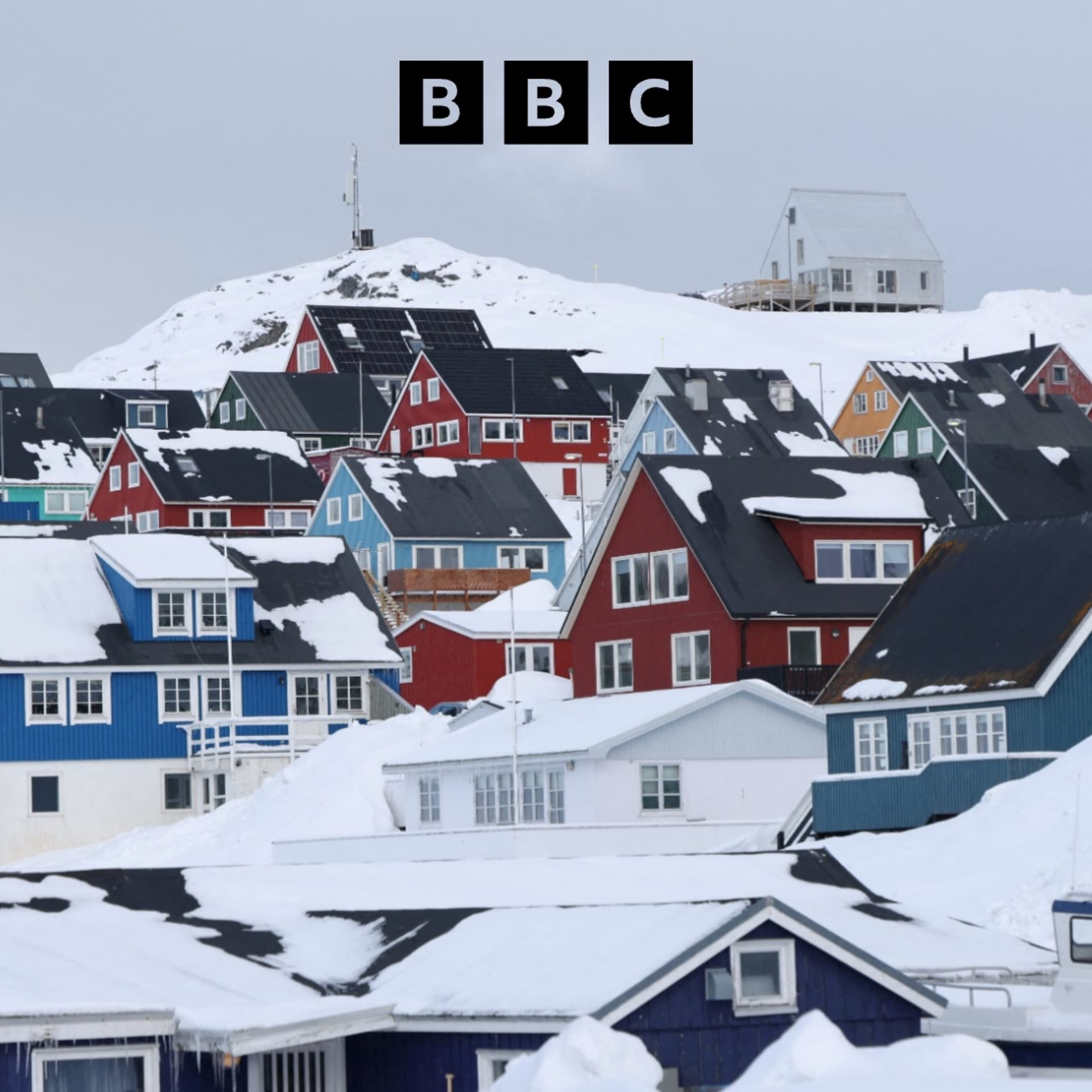
President Trump Again Threatens to Annex Greenland
Podcast Overview The Global News Podcast from the BBC World Service provides breaking news and current affairs globally, covering a wide array of topics including politics, economics, health, technology, and more. Episodes are released twice daily on weekdays and daily on weekends, featuring in-depth analysis and expert insights.
---
Episode Highlights
Main Stories
- US Interest in Greenland
- The US has declared the acquisition of Greenland as a national security priority, highlighting potential military action if necessary.
- The discussion surrounding Greenland was brought up during a meeting of Ukraine's allies in Paris, where leaders expressed concern over the US's intentions.
- Danish MP Trina Mack criticized the US's approach to international law and emphasized the importance of Greenland’s sovereignty.
- Ukraine's Security Talks
- Ukraine and its allies reported progress in security discussions aimed at establishing post-ceasefire guarantees.
- A multinational force is proposed to support Ukraine post-conflict, with commitments from France and the UK to deploy troops.
- Venezuela's Military Crackdown
- The Venezuelan government continues to suppress dissent following the removal of Nicolás Maduro.
- Reports indicate a heavy military presence and intimidation tactics used against the populace, complicating the political landscape.
- Anti-Government Protests in Iran
- Significant protests erupted in Tehran, marking the largest demonstrations since 2022 against the regime led by Supreme Leader Ali Khamenei.
- Clashes between protesters and police resulted in casualties and raised concerns about governmental repression.
- Advancements in Quantum Computing
- Insight into one of the world’s first quantum computers, showcasing its potential to perform computations exponentially faster than traditional computers.
- The technology could revolutionize various fields by solving complex problems previously deemed impossible.
- LEGO's Technological Evolution
- LEGO has introduced high-tech upgrades to its traditional bricks, incorporating smart technology to enhance play experiences.
- Concerns arise over the impact of technology on childhood creativity and play.
---
Key Discussions
US Intentions for Greenland
- The US administration views Greenland's acquisition as essential for countering Russian and Chinese interests in the Arctic, particularly concerning natural resources.
- Denmark reaffirmed its commitment to Greenland’s territorial integrity in response to US claims.
Ukraine's Future Security
- The coalition focusing on Ukraine's security emphasizes the need for international compromise and support in ensuring stability after a potential ceasefire.
- Ukrainian President Volodymyr Zelensky highlighted the importance of preparatory measures for future peace.
Venezuela's Political Climate
- The military's crackdown on dissent indicates a tightening grip of the government over the populace amidst political turmoil.
- Regional responses to the US intervention and the new presidency remain cautious, with neighboring countries on alert.
Iran's Demonstrations
- The protests in Iran reflect widespread discontent with the government’s economic and political handling, igniting fears of escalated violence.
- Recent clashes have resulted in fatalities, highlighting the precarious balance between public sentiment and governmental authority.
Quantum Computing Innovations
- Quantum computing represents a significant leap in technology, with potential benefits across various sectors including health and energy.
- The challenges of controlling qubits and ensuring operational stability remain key areas of focus for researchers.
LEGO's Smart Brick Initiative
- The introduction of smart bricks aims to modernize the brand, but raises questions about preserving creativity in play for children.
- Responses to this innovation are mixed, reflecting a divide between traditionalists and those embracing technological advancements.
---
Conclusion This episode of the Global News Podcast covered a diverse range of global issues, from geopolitical tensions surrounding Greenland to innovative technological advancements in quantum computing and consumer products. The discussions reflect the complex interplay of international relations, domestic policies, and cultural shifts in technology and play.
For feedback or comments, listeners are encouraged to reach out via email at globalpodcast@bbc.co.uk or on social media.
---
Additional Resources
- Contact: globalpodcast@bbc.co.uk
- Social Media: [BBC World Service on X](https://twitter.com/BBCWorldService) #GlobalNewsPod
Episode Credits
- Host: Will Chalk
- Producer: Wendy Urquhart
- Editor: Karen Martin
---
End of Summary
Written by AI. May contain mistakes. Listen to the episode to check what was said.
Chapters
Tap a time to open that second in VOUS Discussion on Greenland Acquisition
1:12 to 1:41
The US discusses the potential acquisition of Greenland amidst military implications.
“I'm Will Chalk, and in the early hours of Wednesday 7th January, these are our main stories.”
International Reactions to Trump's Threat
1:41 to 2:52
European leaders react to Trump's threats regarding Greenland's annexation.
“Also in this podcast, we get the latest on the anti-government protests that have engulfed Iran.”
Danish MP Critique on US Law Flexibility
2:52 to 3:47
Danish MP Trina Mack critiques the US's approach to international law regarding Greenland.
“Greenland has been owned by Denmark since 1814 and the European statement promised to defend the vast North Atlantic island's territorial integrity.”
US Military Options for Greenland
3:47 to 4:54
Discussion on the US's military options in relation to Greenland's acquisition.
“I asked our North America correspondent David Willis whether the Americans were really threatening to invade Greenland if Denmark didn't hand it over voluntarily.”
Greenlanders' Perspectives on US Claims
4:54 to 6:42
Greenlanders express their views on becoming part of the United States amidst Trump's claims.
“In other words, a close security alliance with Greenland.”
Coalition of the Willing: Ukraine Security Guarantees
6:42 to 10:40
Details on the Coalition of the Willing's commitments to Ukraine's security amidst ongoing tensions.
“Well, let's return to what the Paris meeting was officially about security guarantees from Ukraine's allies.”
Introduction to Quantum Computing
10:40 to 11:15
Exploring the basics and potential of quantum computing technology.
“Now, if you think of all the things we can achieve on computers right now, then imagine they were a trillion times faster.”
Inside Google's Quantum Lab
11:15 to 14:01
A visit to Google's Quantum AI Lab to observe advancements in quantum computing.
“Our correspondent Faisal Islam has been to visit one cutting edge laboratory in California.”
The Future of Quantum Computing
14:01 to 15:18
Learn how quantum computers could revolutionize drug discovery and energy efficiency.
“At the very bottom, this coldest stage is where our willow chip actually lives.”
The Mystery of Russian Apartment Bombings
18:11 to 18:42
Investigate the unresolved mystery behind the 1999 Russian apartment bombings.
“If journalism is the first draft of history, what happens if that draft is flawed?”
Show all 17 chapters
Venezuela's Political Turmoil
18:50 to 23:00
Explore the impact of the US intervention and military presence in Venezuela.
“The acting president, Delcey Rodriguez, has declared seven days of mourning for members of the military who were killed during that US raid to capture leader Nicolas Maduro.”
Maria Corina Machado's Struggle
23:03 to 24:38
Learn about Maria Corina Machado's efforts and challenges in Venezuela's opposition.
“Now, President Trump has said very little about the continuing repression that Will was mentioning in Venezuela.”
Protests in Iran: A Growing Crisis
24:39 to 27:01
Examine the recent protests in Iran and the government's response to dissent.
“For months, she has advocated closer ties with the US and a free-market, pro-business approach, including an opening up of the oil industry to foreign companies.”
LEGO's Technological Transformation
27:07 to 28:17
Discover LEGO's new smart bricks that integrate technology into classic play.
“For generations, the humble plastic Lego brick has been a big part of children's toy boxes and the shelves of some slightly nerdier adults as well.”
Lego's Revolutionary New Smart Bricks
28:17 to 29:26
Discover how Lego's new smart bricks aim to enhance play experiences.
“and will allow the Danish company to move through the times.”
Concerns About Creativity and Imagination
29:26 to 29:58
Explore the debate on whether technology enhances or undermines children's creativity.
“Adding these smart bricks is actually going to undermine children's creativity and imagination, which was really the strong suit of Lego.”
Mixed Reactions from the Community
29:58 to 30:25
Hear the varied opinions on Lego's smart bricks from parents and fans.
“It becomes an instrument for their play and it unleashes their imagination.”
Transcript
Automatic transcript. May contain errors.0:00This BBC podcast is supported by ads outside the UK.
0:30Find out more at polandyourplacetogrow.com. Every day, millions of customers engage with AI agents like me. We work round the clock and have the facts at our fingertips. We're fast and effective, but incredibly patient. And we're built on Sierra, the leading AI-powered customer experience platform. No hold music, just answers and action. Visit sierra.ai to learn more. That's sierra.ai.
1:06This is the Global News Podcast from the BBC World Service. I'm Will Chalk, and in the early hours of Wednesday 7th January, these are our main stories. The US says it's discussing options to, as it puts it, acquire Greenland, including the use of military force. Ukraine and its allies say they've made progress in talks to ensure the country's security in the event of a ceasefire with Russia. And the Venezuelan military and government continue to crack down on dissent. Also in this podcast, we get the latest on the anti-government protests that have engulfed Iran. And we actually ran a benchmark computation on this chip, which took just a few minutes, but it would have taken 10 septillion years on today's top supercomputer.
1:59An inside look at one of the world's first quantum computers.
2:07Over the course of countless TV interviews, press conferences and speeches, Donald Trump has made a lot of claims and it means sifting out the ones he's immediately planning to follow through on isn't always easy. But one idea that the US might take over Greenland seems to be increasingly picking up steam, so much so that it dominated a meeting of a group of Ukraine's allies, the so-called Coalition of the Willing, in France on Tuesday. The meeting was supposed to be about security guarantees for Ukraine. Now, a number of those guarantees were established, but the Paris meeting also made a joint declaration on the issue of Greenland after Donald Trump again threatened to try and annex the island using force if necessary.
2:52Greenland has been owned by Denmark since 1814 and the European statement promised to defend the vast North Atlantic island's territorial integrity. Trina Mack is a Danish MP and a member of the country's Foreign Affairs Committee. She's highly critical of the US's seeming contempt for international law. It's a very weird comment to come with in the 21st century where we base state relations on the UN Charter that states quite clearly that people have the right to self-determination and we have to respect the state sovereignty. Now, it's quite obvious that the current US administration has a very flexible approach to international law, but a lot of European countries, Nordic countries, Canada has come out in support of Koreans' right to independence and protection.
3:41What counts right now is that other countries step up and stand firm on international law. I asked our North America correspondent David Willis whether the Americans were really threatening to invade Greenland if Denmark didn't hand it over voluntarily. It could really hardly be plainer. I have to say, well, a statement from the White House Press Secretary, Caroline Levitt, says the president and his team are discussing a range of options to acquire Greenland and that utilizing the US military is one of those options. And that statement calls Greenland's acquisition an important foreign policy goal and a national security priority of the United States.
4:26It was no doubt intended to counter the statement, that is, European leaders' support for Denmark and the claim by Denmark's prime minister that a military attack by the US would, as he put it, spell the end of NATO. Meanwhile, the US Secretary of State Marco Rubio has told lawmakers on Capitol Hill that the United States wanted to buy Greenland from Denmark, not invade it. And the Reuters news agency, quoting an unnamed senior US official, reported that another option was forming a so-called compact of free association. In other words, a close security alliance with Greenland. We've heard lots from the US, from Donald Trump, especially about why they need Greenland, why they want Greenland.
5:16But have we heard anything as a justification for why they should have Greenland? Well, that's a very good question, given that Greenland is the most sparsely populated territory in the world with one of the harshest climates. 80 % of it is covered in ice. According to the White House Press Secretary, acquiring Greenland is vital to deterring the United States' adversaries in the region. And by that, Caroline Levitt, I think, is referring to Russia and China, both of which have expressed interest in Greenland, not least, of course, because of the natural resources that lie beneath its ice caps, including those rare earth minerals such as iron and uranium.
6:03And those minerals are likely to become more accessible, it's thought, as global warming leads to the melting of the ice cap. And such resources have been a focus, of course, of the Trump administration elsewhere in the world, including, of course, in Ukraine. Yet, whilst Donald Trump, Will, covets Greenland, opinion polls show that most Greenlanders, anyway, aren't quite so keen. And whilst they favour their eventual independence from Denmark, there is overwhelming opposition on the part of Greenlanders to becoming part of the United States. David Willis. Well, let's return to what the Paris meeting was officially about security guarantees from Ukraine's allies.
6:50When we recorded the last global news podcast, the summit was underway. We now know what was achieved. The agreements included a declaration of intent by France and Britain to deploy troops as part of a post-cease-fire multinational force. But the delegates also acknowledged that peace in Ukraine may still be a long way off and that Russia must accept that any deal would have to involve compromise. Hosting the talks in the Elysee Palace was the French President Emmanuel Macron. Within this coalition, on the basis of all the work done in recent months, So we have consolidated our approaches. Firstly, with setting up ceasefire monitoring mechanisms to be placed under American leadership with contributions from several states that said they were willing and able to do so.
7:39Then long-term support, firstly to Ukrainian armed forces that are and will remain in the front line of defense and deterrence against aggression. We also heard from the Ukrainian President Volodymyr Zelensky. He was speaking through a translator and he had this to say. We want to be ready so that when diplomacy reaches peace, we can place the forces of the Coalition of the Willing. The details will be set out in other documents. We're working on which countries are willing to contribute and guarantee security in the air, at sea and on land. We are assessing which forces are necessary. Also at the Coalition of the Willing Summit was our Ukraine correspondent, James Waterhouse.
8:29He sent this assessment of what the talks achieved. As their name suggests, this mostly European coalition has always said it's willing to help Ukraine after the fighting stops, but never how. In Paris, though, there was the first bit of detail. A promise from the UK and France to send troops once a ceasefire is in place. We're told thousands as part of a reassurance force across land, sea and air. This is a vital part of our ironcast commitment to stand with Ukraine for the long term. This group of almost 30 nations also promised to help monitor the frozen front lines to make sure fighting doesn't break out.
9:16But the most influential people in the room weren't seasoned politicians, but Donald Trump's friend and real estate investor Steve Witkoff and his son-in-law Jared Kushner, both now senior ambassadors. European confidence to help Ukraine with troops has been hampered with an American reluctance to step in if there was a direct confrontation with Russia, although not now, they claimed. The president does not back down from his commitments. He is strong for the country of Ukraine and for a peace deal. Those words might have been more reassuring if Donald Trump hadn't staged an extraordinary military intervention in Venezuela and repeated his desires to take over Greenland, a Danish territory.
10:01This US delegation has also been accused of being more friendly to Russia than Ukraine. Before the meeting has even started, European leaders have put out this statement in support of Greenland after Donald Trump's repeated claims of wanting to annex the territory. So you have this scenario where the ambitions of NATO's most powerful member are making the rest of the alliance nervous. Europe is trying to unite around Ukraine against Russian aggression, as well as attempting to take America with it. And we don't even know what Moscow will agree to. In these geopolitical times, this is a continent having to tread carefully.
10:45James Waterhouse at the Paris Summit. Now, if you think of all the things we can achieve on computers right now, then imagine they were a trillion times faster. It's a pretty mind-boggling thought. Well, quantum computing uses quantum mechanics to create a new type of computer able to solve problems that ordinary computers can't. If successful, it would make possible calculations that would take today's system's trillions of years and help unlock discoveries in many fields. The building blocks of quantum computers are called qubits, which are incredibly fast, but also very sensitive, difficult to control and prone to errors.
11:25Our correspondent Faisal Islam has been to visit one cutting edge laboratory in California. We've just arrived in Santa Barbara, a couple of hours away from Los Angeles, and we're about to visit one of the most important technological developments in the world right now, which is the quantum lab of Google. So we're going to go in and actually have a look at one of the world's first functioning, most advanced quantum computers. Hello. Hi, guys. I'm Hartmut. I'm the founder and leader of the Quantum AI Lab. I'm Julian Kelly, Senior Director of Hardware. Thanks for showing us around this facility.
12:06Okay, so we're coming into a restricted area now, and we're starting to see the real deal, the actual conversion of this high theoretical physics into an actual computer. Let's take a look at our latest chip called Willow. The chip is actually comprised of two parts. A larger part here, this large silver rectangle. This is our control electronics chip. And the qubits themselves, they sit in this little darker squares. But the exponential power of quantum is what you're trying to harness with this chip we're holding here. Yes, for certain computations, the power of these chips is rather mind-boggling.
12:47So in December, we actually ran a benchmark computation on this chip, which took just a few minutes here on the Willow chip, but it would have taken 10 septillion years, as is the one with 25 zeros on today's top supercomputer. So there's a special feature of this process, which happens at extremely low temperatures. And Julian wants to show us just how low that temperature is with some liquid nitrogen. Liquid nitrogen, yeah. It's around minus 200 degrees Celsius or 77 Kelvin. So we've got here, just for example, a nice little clover. And we can dump some liquid nitrogen onto it. And so what's the relevance of the cold to the chip?
13:33Our chips are superconducting. And when you get certain metals cold, in our case aluminum, they become superconducting and they have zero resistance. it is one of the coldest places in the universe colder than you'd find in outer space or really anywhere else and then just behind us we have this sort of bronze barrel which has an intricate lattice of wires going up to some connectors and a series of golden and silver discs and this is the quantum computer yes so this this is the quantum computer and so there's a couple of different pieces to it. At the very bottom, this coldest stage is where our willow chip actually lives.
14:11And then these different plates that kind of ascend vertically that all these wires are connecting, they go up higher and higher in temperatures. So at the very top, we have room temperature. So the wires connect our quantum chip to these control electronics that are sitting in racks behind the computer room temperature. And those are the things that actually program and manipulate the chip. Take us 20 years into the future. What are we doing with quantum computers? I think we will use it to help with many problems that humankind has. It will enable us to discover drugs more efficiently. It will help us make food production more efficient.
14:52It will help us with the energy economy, like to produce energy, to transport energy, to store energy. I think just by virtue of being able to model nature at its finest level to essentially speak the language of nature this allows us to understand nature much better and then unlock its secret to build technologies that make life more pleasant for all of us. Faisal Islam. Still to come on this podcast It's not just computers. Lego's getting a high-tech upgrade too. So you hear the door unlock, the engine start. As I move the car around, you'll see it respond, even swerving around corners. Maybe I'm going to crash it.
15:38But does it really need it?
15:46This advertisement feature is paid and presented by Poland's Ministry of Foreign Affairs. Looking for the perfect place to grow your business For over 30 years, Poland has been a launchpad for innovation at the heart of Europe, powered by world-class research and ambitious young talent. From bold startups to established powerhouses, Poland offers the momentum, resources and reliability you need to take your business further. Poland, where businesses don't just grow, they're built to last. Find out more at polandyourplacetogrow.com. This advertisement feature is paid and presented by Poland's Ministry of Foreign Affairs.
16:21When you're thinking about where to scale your business, think Poland. As one of Europe's fastest growing economies with a large talent pool, it's the ideal place for your business to grow.
16:36My name is Toma Renault. I'm the CEO of Iliad Group. Iliad is the number five telecom operator in Europe. When we expanded into Poland in 2020, we knew it would be a successful venture. Since then, we have invested over 4.5 billion euros in the Polish economy and become the country's leading mobile operator with Play. Here, we have access to over a million graduates with skilled professionals across IT, software, tech, engineering and manufacturing. And on top of that, we benefit from favorable business regulations in order to support telecommunication network deployment, in order to push digitalization in the public sector.
17:22We also have direct access to global markets. I like to think of it as the Silicon Valley of Europe. Poland has a culture of innovation and that drives business forward. Poland embraces technology early. Digitalization is progressing rapidly in both the public and private sectors. And that's why we are here. to innovate, to invest, to grow together. Global brands and rising scale-ups alike choose Poland as their base for smart, long-term growth. Poland, the place where scale-ups become standouts. Find out more at polandyourplacetogrow.com
18:11If journalism is the first draft of history, what happens if that draft is flawed? In 1999, four Russian apartment buildings were bombed, hundreds killed. But even now, we still don't know for sure who did it. It's a mystery that sparked chilling theories. I'm Helena Merriman, and in a new BBC series, I'm talking to the reporters who first covered this story. What did they miss the first time? The History Bureau, Putin and the apartment bombs. Listen on BBC.com or wherever you get your podcasts.
18:49First, though, let's turn to the situation in Venezuela. The acting president, Delcey Rodriguez, has declared seven days of mourning for members of the military who were killed during that US raid to capture leader Nicolas Maduro. As Donald Trump celebrates Mr Maduro's removal and transfer to the United States, residents of Caracas say military personnel are visible on every street corner of the capital as the government of Delce Rodriguez continues to crack down on dissent. This man told the BBC that while he was happy at Maduro's downfall, he hasn't been marking the event publicly. On the outside in the street, it is quiet.
19:28It is nervousness. There is still the same secret police, the same political police, the same Gestapo, which is the Dehesim and the Sevim. Those guys are still the same guys in the street. So you can't really go out to protest. You know, I delete my phone every time I go out of my house. For more, I spoke to our correspondent, Will Grant, who is on the Colombian border with Venezuela. I started by asking him about this military presence. On one level, I feel like it's the obvious thing that the Venezuelan government would do. They were always going to mobilize the military from the moment that those military targets inside Venezuela were targeted by U.S.
20:07forces. And of course, that was all part of their operation to remove Nicolás Maduro from Venezuelan soil. So on that level, it's not unexpected. But of course, it does represent greater repression, more crackdowns. And don't forget that in Venezuela, there is a second group of armed forces, in a sense, which are the militia groups loyal to both Nicolas Maduro, but more broadly to the Bolivarian revolution. they have been out in force too. And to have these sort of armed civilian militias known as colectivos, intimidating the populace, turning out in force, as we were hearing from that Venezuelan in the clip there, it really does paint a very, very intimidating and frightening picture, particularly when we add the uncertainty of not knowing exactly what's coming next.
20:57We've heard lots of comments from Donald Trump on this. And I think in a lot of them, he sounds quite celebratory about the military action. How's that going down in the region? Well, I think obviously there are those who never wanted Nicolas Maduro in power. You know, haven't wanted to see him there for a long time and voted against him only to see him remain in power after the last election. So they have that relief that he's gone, but they can't turn out to celebrate it anyway because of the intimidation we've just been talking about. And maybe they don't necessarily share that celebratory tone that you're referring to that Donald Trump is showing when he addressed Republicans and so on, because they just don't feel that.
21:35Because at the moment, it is so uncertain. It is so dangerous for ordinary Venezuelans. They feel like the thing is on a knife edge. They are, of course, trying to return to a semblance of daily life. I was talking to a Venezuelan friend. She said people are out shopping. They're beginning to think about sending their kids back to school after the holidays next week. Things like that, the semblance of normal life. But it is anything but normal in so many ways. You know, the United States has just launched a first strike against a Latin American nation since the Cold War and removed a sitting head of government.
22:07So they're still sort of processing all of that altogether. So that tone doesn't necessarily help. And I mentioned you're on the Colombian border. What about reaction from Venezuela's neighbours in the region? Well, it's been an interesting one from Colombia in the sense that the first thing they did too was move troops to this border region where I am. And they are showing a pretty clear presence. There are tanks at the border crossings. There are troops in larger numbers. 30 ,000 more troops were sent here. They, in part, are monitoring the movement of irregular forces, as they put them. That is the left-wing rebel groups, again, who are protected by and who have been allied to the left-wing revolution in Venezuela.
22:46So there is tension really all over. That's this side. And of course, out to the Caribbean, there's the question of Cuba, which is so dependent on Venezuelan oil and really doesn't know what Del C. Rodriguez will mean for their future either. Will Grant there on the Venezuelan-Colombian border. Now, President Trump has said very little about the continuing repression that Will was mentioning in Venezuela. But he has said he'll work with the new president, Del C. Rodriguez. Whatever his plans, though, Donald Trump appears to have sidelined the opposition leader, Maria Carina Machado, who late last year won the Nobel Peace Prize for her efforts to bring democracy to Venezuela.
23:25She said she wants to return home, but it's not clear when that might happen or what kind of reception she would get. Our South America correspondent Ioni Wells reports. Maria Corina Machado has long been the main face of Venezuela's opposition. She was banned from running in the last elections in 2024, but she attracted huge crowds on the election campaign. Opposition parties united behind a candidate, Edmundo Gonzalez, to take her place, and afterwards they published tallies from electronic voting machines, which they said definitively showed they, not Nicolás Maduro, had won the election. She has been living in hiding ever since, but briefly travelled to Oslo last year to collect the Nobel Peace Prize.
24:03Donald Trump had made it clear he believed he should win the prize, and there is some speculation it is why he claimed in a news conference on Saturday that she did not have support or respect in Venezuela. Despite this, she continued to praise his intervention in an interview with Fox News. I do want to say today, on behalf of the Venezuelan people, how grateful we are for his courageous vision, the historical actions he has taken against this narco-terrorist regime to start dismantling this structure and bringing Maduro to justice. Since the US intervention, she has called for the release of political prisoners in Venezuela.
24:42For months, she has advocated closer ties with the US and a free-market, pro-business approach, including an opening up of the oil industry to foreign companies. She told Fox News her movement was ready to win a free election, but she added she had not spoken to Donald Trump since 10 October. President Trump, though, seems to have different plans. He said the US had to fix the country before elections could be held and has reiterated his belief the US is in charge. In reality, the Venezuelan government is still running the country, but he has threatened the new president, Delcey Rodriguez, with a worse fate than Mr Maduro if she doesn't do, in his words, the right thing.
25:18Ione Wells. Anti-government demonstrations have again flared up in the Iranian capital, Tehran. Large crowds staged a sit-in at the city's Grand Bazaar, chanting slogans against the country's supreme leader, Ali Khamenei. There were clashes between police and protesters, with security forces firing tear gas and closing down areas of the city's historic market. BBC Persian, together with BBC Verify's Merlin Thomas, have this assessment of what's been happening on the ground. Iranians have taken to the streets in the largest protests the country has seen since 2022. Protesters stood in front of police water cannon, refusing to move.
26:00Others shouted death to the dictator and set fire to statues. Anger initially broke out in the capital Tehran on the 28th of December, after the value of the country's currency sharply dropped. In the latest protests, police and security forces seemed more restrained at first. But that changed this week. Verified footage shows a demonstration taking place outside a hospital. People stand chanting. Then, security forces opened fire. Using verified funeral videos and interviews with family members and friends, BBC Persian has confirmed the identities of at least 15 people reported dead since 28 December.
Read the full transcript
26:41Human rights groups HRANA says at least 35 people have been killed. This violent crackdown by the authorities coincided with Supreme Leader Ayatollah Ali Khamenei's first public reaction to the unrest, when he said that rioters must be put down. The Iranian regime is already facing regional instability and a crumbling economy. Now it must deal with the biggest wave of protests since 2022. Merlin Thomas. For generations, the humble plastic Lego brick has been a big part of children's toy boxes and the shelves of some slightly nerdier adults as well. But if you've got fond memories of making pew pew and zoom noises as you played, that might soon be a thing of the past.
27:27because after much secrecy, LEGO's unveiled some smart bricks, which it says will allow toys to come alive. Aina Aslam built this report. LEGO hasn't changed for nearly 100 years. You build an item out of tiny, colourful bricks and then harness your imagination to play with it. The new 2x4 bricks look the same, but have a tiny chip, sensors, LEDs and mini speakers. So you can now move around what you've built and, depending on what you're doing, the bricks light up and make sounds. The technology was demonstrated in a toy car at the CES show.
28:16Toy expert Peter Jenkinson says Lego's new creation is revolutionary and will allow the Danish company to move through the times. It features NFC, which is near field communication inside, which enables these smart bricks to sense motion, position and distance. So it's a super clever brick. It's the biggest thing they've done for 50 years since they introduced the minifigure. Lego has also released smart minifigures with different personalities and smart tags as part of the new high tech world. The first smart sets will be Star Wars themed, so you'll be able to have realistic lightsaber fights.
28:55hear R2-D2's hard-to-impersonate bleeps and give Darth Vader a dramatic entrance.
29:08The Bricks will also communicate with each other to decide whether you've delivered enough laser blasts to blow up a spacecraft. But many have voiced concern that in an age where children are turning to video games and iPad screens, Introducing technology could undermine Lego's historic strength. Josh Golan is from the NGO Fair Play. Adding these smart bricks is actually going to undermine children's creativity and imagination, which was really the strong suit of Lego. And when we transfer that power of who's making the noise, who's driving the play, who's creating the story around what's happening with the toy, from the child to the toy maker, we really lose a lot of what's so special about toys and play.
29:49But Lego's vice president, Tom Donaldson, says bricks that play back will inspire children. There's no screen inside. There's not even a power button on this thing. But the Lego smart brick responds to what kids do, generating reactions to their actions. It becomes an instrument for their play and it unleashes their imagination. Reactions from parents and older users have been mixed. Some say they would rather pay less and continue making the swoosh and pew-pew sounds themselves. But others are excited for the future, with one fan asking when a Lego Titanic, complete with a smart brick playing Celine Dion's My Heart Will Go On, might hit the market.
30:25Aina Aslam, although she didn't commit to the pew pew noises quite like I did. That is all from us for now, but there will be a new edition of the Global News podcast later. If you want to comment on this podcast or the topics we've been covering, you can send us an email. Our address is globalpodcast at bbc.co.uk. You can also find us on X at BBC World Service. Use the hashtag Global News Pod. This edition was mixed by Nick Randall. The producer was Wendy Urquhart. The editor is Karen Martin and I'm Will Chalk. Until next time, goodbye.
31:32they're built to last. Find out more at polandyourplacetogrow.com.
From the publisher
The US claims that acquiring Greenland is a national security priority to deter threats from Russia and China in the Arctic. Washington hasn't ruled out the use of military force. Also: Ukraine and allies say they've made progress in talks to ensure the country's security in the event of a ceasefire with Russia; the Venezuelan military and government crack down on dissent; the anti-government protests that have engulfed Iran; an inside look at one of the world's first quantum computers; and Lego's high-tech upgrade.
The Global News Podcast brings you the breaking news you need to hear, as it happens. Listen for the latest headlines and current affairs from around the world. Politics, economics, climate, business, technology, health – we cover it all with expert analysis and insight.
Get the news that matters, delivered twice a day on weekdays and daily at weekends, plus special bonus episodes reacting to urgent breaking stories. Follow or subscribe now and never miss a moment.
Get in touch: globalpodcast@bbc.co.uk