
In short
Global News Podcast episode covering rescue after Nepal–Tibet floods; Norway’s King Harald V death and succession; a study on how the brain tags events for memory; UK campaign against AI voice cloning; Iran–US conflict six months on; West Bank settler violence; US–Venezuela talks on oil stake; Apple’s upcoming foldable iPhone.
Guests (interviewees/quoted experts)
Dr Niti Shrestha (anaesthetist treating flood injuries); Stephen McDonnell (China correspondent); Sanjaya Dakal (BBC Nepali service, Kathmandu); Mimi Swaby (BBC global affairs reporter); Dan Dennis (York University psychology professor); Johnny Diamond (interviewer); Peter Caulfield (Save Our Voices Now campaign founder); Paul Moorcraft (war analyst); Lucy Williamson (Middle East correspondent); Ijeoma Endokwe (business reporter); Brian Ma (IDC tech analyst).
Key claims/examples
~500 dead, hundreds missing; Tibetan “barrier lake” fears eased; Nepal says immediate rescue needs limited foreign help. Norway’s succession is automatic to King Haakon VIII; Harald died after blood infection. Memory “tagging” prioritized by emotion/personal relevance; replay during slow-wave sleep. Actors want legal voice ownership to stop scams/unauthorized clones (Attenborough impersonation example). Iran–US war may shift to economic/managed phases; Red Sea/Suez risk. West Bank: 60+ incidents in a week; examples include iron-bar beating of Saeed Al-Amour and donkey torture. US talks for ownership stake in Venezuela oil fields (90B barrels proven in targeted fields). Apple foldable: hinge/crease/waterproofing lessons; likely compromises like Face ID/zoom lens; premium >$2,000.
Written by AI. May contain mistakes. Listen to the episode to check what was said.
Chapters
Tap a time to open that second in VOFloods in Nepal and Tibet
1:07 to 2:28
Discussion on the recent floods in Nepal and Tibet, highlighting the emergency response.
“This is the Global News Podcast from the BBC World Service.”
Eyewitness Accounts of the Disaster
2:28 to 3:41
First-hand accounts from a doctor treating flood victims in Rasuwa.
“Two days after the initial disaster, we've been hearing about a lake which was threatening to burst its banks, risking further devastation.”
Rescue Efforts and Challenges
3:41 to 4:47
Analysis of ongoing rescue efforts and the challenges faced by agencies.
“Our China correspondent Stephen McDonnell told me more.”
Chinese Assistance and Media Coverage
4:47 to 5:46
Discussion about China's offer of assistance and how the media is covering the disaster.
“or something like that after that huge wall of water and mud came crashing down a couple of days ago.”
In-depth Report from Kathmandu
5:46 to 7:03
Report detailing the difficulties faced in rescue operations in remote areas.
“And Stephen, what do we make of the coverage of this story so far based on what the Chinese state media is saying and then what a lot of people in China are seeing on social media?”
Government Response and Public Safety Warnings
7:03 to 8:14
Examination of the government's response to the floods and public safety alerts.
“Most of the areas dry in very remote part and in a high mountain area.”
King Harald V of Norway Passes Away
8:14 to 8:56
News on the passing of King Harald V and the public's reaction.
“But there's a big worry that there could be another flooding, the bridge of that lake.”
Succession of King Haakon in Norway
8:56 to 11:21
Details on the succession of King Haakon following his father's death.
“King Hoekhan VIII has ascended to the throne in Norway after the death of his father, Harald V.”
Public Mourning and Future Ceremonies
11:21 to 12:24
Discussion about the mourning period and upcoming ceremonies for King Harald V.
“So when the successor will be sworn in, for example?”
New Research on Memory Tagging
12:24 to 14:01
Insights from a study on how our brains prioritize memories.
“This will be nothing to rival the pageantry and the ceremony that we saw in the likes of the British succession as well as other monarchies.”
Show all 19 chapters
Understanding Memory Formation
14:01 to 16:39
Explore how memories are formed and the role of sleep in memory processing.
“So when we first experience something, the brain will tag it, give it a level of priority.”
Concerns Over Voice Cloning
16:39 to 18:55
Learn about the implications of AI voice cloning and the call for legal rights.
“This is where artificial intelligence creates a digital replica of a person's voice based on an audio sample of them speaking.”
The Impact of TV Tourism
18:55 to 19:54
Discuss the effects of the Netflix show Emily in Paris on tourism and culture.
“I'm Asma Khalid and I host the Global Story podcast from the BBC.”
Analysis of US-Iran Conflict
19:54 to 23:45
Gain insights into the ongoing US-Iran conflict and its economic implications.
“Professor Paul Moorcraft has spent decades analysing and reporting from the world's war zones.”
Escalation of Settler Violence in West Bank
23:45 to 27:49
Examine the rise in violence by Jewish settlers and its impact on Palestinians.
“I think despite all problems, Trump and elements, some compromising elements of the Guard Corps, will do a deal, I hope.”
US Interests in Venezuela's Oil
27:49 to 28:03
Investigate the US negotiations for a stake in Venezuela's oil resources.
“about Washington taking an ownership stake in its huge oil resources.”
US Talks on Oil Stake in Venezuela
28:03 to 29:34
Learn about the US negotiations regarding significant oil fields in Venezuela.
“According to these reports, the details are still being ironed out.”
Apple's Entry into Foldable Smartphone Market
29:36 to 31:28
Discover Apple's strategy and challenges in launching its first foldable iPhone.
“Apple is planning to shake up the tech industry again as it prepares to enter the foldable smartphone market, with its first foldable iPhone expected to be unveiled next month.”
Demand and Pricing of Apple's Foldable iPhone
31:28 to 31:58
Explore the anticipated pricing and market demand for Apple's new device.
“But it is something where you anecdotally hear people who, let's say, they see someone carrying a Samsung Galaxy Fold, and they're like, when is Apple going to have one of those?”
Transcript
Automatic transcript. May contain errors.0:00This BBC podcast is supported by ads outside the UK.
0:30While supplies last, selection varies by location. See Lowe's.com for more details. Soil Offer excludes Alaska and Hawaii. Is the hit Netflix show Emily in Paris just harmless, escapist TV? Or is Emily ruining Paris? I'm Asma Khalid, and I host the Global Story podcast from the BBC. The president of France has described the show as super positive for his country. Soft power through cinema. But is TV tourism good for a city? For more, listen to The Global Story on BBC.com or wherever you get your podcasts.
1:07This is the Global News Podcast from the BBC World Service. Hi, I'm Ankur Desai and at 14 Hours GMT on Friday the 28th of August, these are our main stories. The Chinese President Xi Jinping has chaired an emergency meeting to coordinate rescue efforts following the deadly floods in Nepal and Tibet. Norway mourns as King Harold V dies at the age of 89. And we analyse the situation in the Middle East, six months since the start of the conflict between Iran and the United States. Also in this podcast, a new study reveals that our brains apply a special tag to events as they happen to help us prioritise our memories.
1:50Every day our centres are sort of bombarded by so much information that our brain needs a way to figure out what is actually important that we're seeing and we're hearing that needs to be committed into a long-term memory. And... We are both male British voices, for sure. However, I am not David Attenborough, for anyone out there who might be confused. More than 80 actors are calling on the British government to give every person a legal right to own their voice because of famous voices cloned by AI.
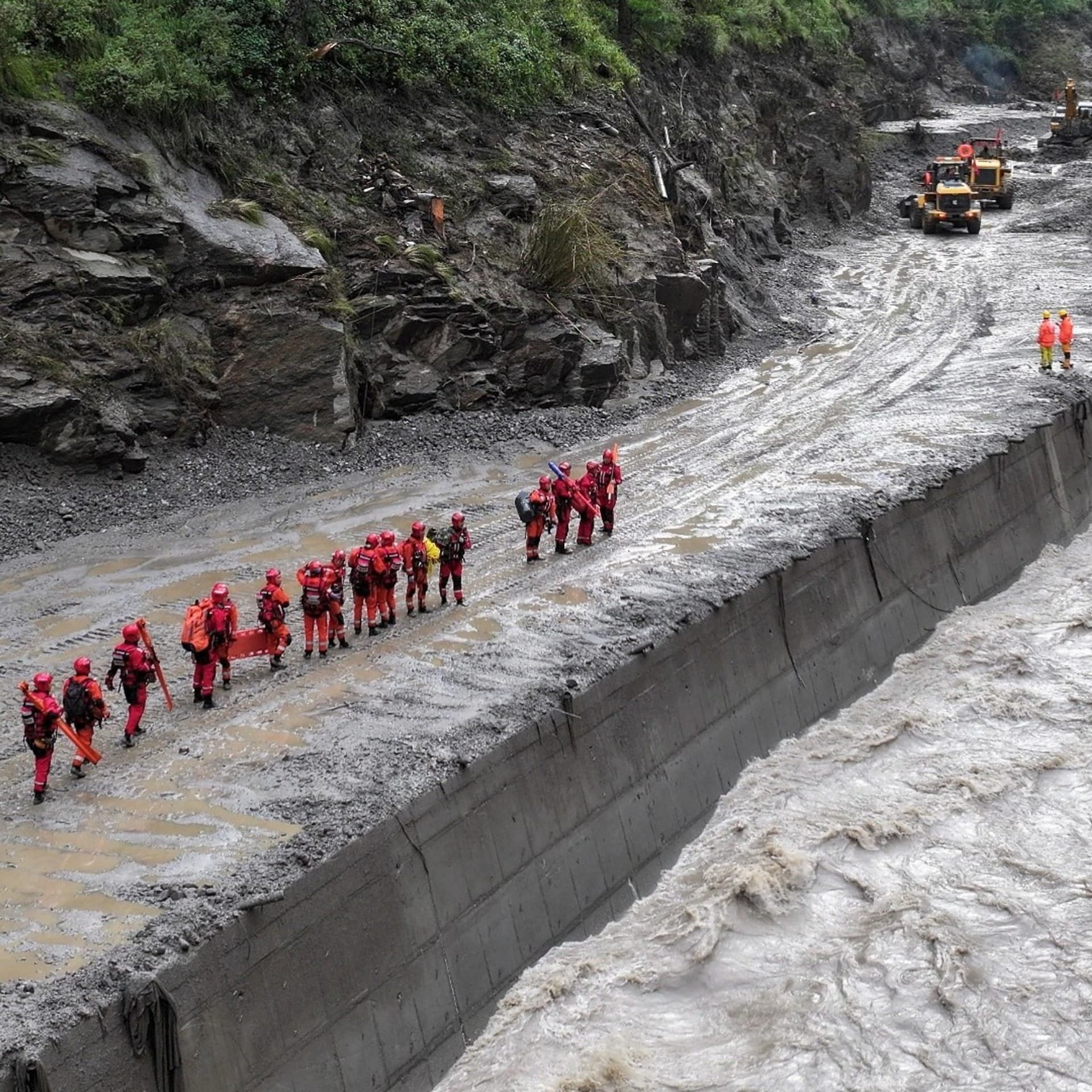
2:27We start with the devastating landslides and floods in Nepal and Tibet. Two days after the initial disaster, we've been hearing about a lake which was threatening to burst its banks, risking further devastation. Well, according to officials on the ground, that has now happened. But while Nepali officials say water levels are rising as a result, the feared deluge has not as yet occurred. Nearly 500 people are now known to have died in the disaster. Hundreds are still missing and relief agencies are struggling to help survivors. Dr Niti Shrestha is an anaesthetist who has travelled to the district hospital in Rasuwa to treat the injured.
3:07Many people have lost their loved ones. People they were trying to rescue but had to leave behind. People have run away from their homes just to save themselves without even their phone, with no slippers. Most of them are covered in mud because it was like a mudslide. People have told me that they had to leave their ill relatives behind because they couldn't carry them or maybe they couldn't walk, like elderly people. Well, relief operations on the Tibetan side had been suspended over the threat of renewed flooding, but have now resumed. Our China correspondent Stephen McDonnell told me more. Yeah, on the Tibetan side of the border, the situation has stabilised somewhat.
3:48the rescue and recovery effort has started again and that's because fears of this second round of flash flooding have subsided somewhat. People are not so concerned and I'll tell you why. It's because there was this artificial lake, if I could describe it as that, created when mud and debris, rocks, etc. poured into a mountain valley and this then filled up with water, a huge volume of water, creating what they call a barrier lake. And the concern was that this would burst, leading to another huge gushing amount of water pouring down that valley. But government officials are saying that the water level has subsided quite a bit in that lake and because they've dropped, They've decided to resume the very difficult effort to try to find people who might still be alive trapped underneath, I don't know, the remains of buildings or something like that after that huge wall of water and mud came crashing down a couple of days ago.
4:57Stephen, a Chinese president has made an offer of help to Nepal. Is there much cross-border cooperation on this one? Yeah, he said that Chinese teams can be available. I mean, a lot of other countries have also offered to help Nepal. But at the moment, the Nepalese government seems to be saying they don't need any help in terms of the immediate rescue. They've got their own military doing this. What the government in Nepal has said is they might need help with is the recovery later on. So some sort of financial support to assist those areas that have been devastated by this terrible incident. And maybe China will be there to help with that.
5:33But China does have a lot of resources, especially when you compare the country to Nepal. However, at the moment, at least, we haven't seen any Chinese teams operating on the other side of the border. And Stephen, what do we make of the coverage of this story so far based on what the Chinese state media is saying and then what a lot of people in China are seeing on social media? Well, certain things have happened here. For example, the really shocking footage of the original just gargantuan amount of water pouring down, smashing settlements, engulfing multi-storey buildings and people trying to outrun this hasn't been shown on television here, only stills.
6:17Now, in one way, people might say that that's the government censoring this type of stuff, But there is an extent to which it could be quite disturbing for people who live in Tibet. I mean, imagine you've got friends and relatives, you're essentially watching them die. And so you can also understand why there might have been a decision not to run that footage. It is highly controlled there, though. It's the most controlled part of China. I think it'd be fair to say that. Foreign reporters, we can't go into the Tibetan autonomous region ever without permission from the government. And so that's why we're covering it from here.
6:53So it is also very hard to verify what's really going on. I heard more about the situation in Nepal from Sanjaya Dakal of the BBC's Nepali service, who's in Kathmandu. Most of the areas dry in very remote part and in a high mountain area. So access is very difficult. And we have seen videos of security personnel rescuing people from totally muddy places. and it looks like a very complicated operation. Access by road is very limited. The largest stretch of highways have been washed away by the flood and therefore most of the job has to be done either through aerial route and access to the people in the most difficult region is very difficult.
7:37In terms of the risk of further flooding, are there any warnings which are coming out about this? There were lots of warnings from the Chinese side also And today, this afternoon, Nepal's Disaster Response Authority also issued an alert asking people to remain on a high alert because the water level was slightly rising in the river area where the flood had occurred. But then there were also then reports that the bridge that occurred today has stopped. Such kind of reports came from China, China's side. And so for the time being, rescue and assaults and rescue is ongoing. But there's a big worry that there could be another flooding, the bridge of that lake.
8:20So there's that big worry. The government's response. Has this been adequate? Were there measures in place which could have maybe alleviate what had happened earlier? Well, search and rescue operation is a very difficult and complicated process. Of course, it is not adequate because people are still waiting to hear about their loved ones. Many are missing. Over 900 people are missing. So, you know, it's inadequate, but the terrain and the area is also quite difficult. Sanjay Dakhl in Kathmandu. King Hoekhan VIII has ascended to the throne in Norway after the death of his father, Harald V. Harald died earlier on Friday morning at the age of 89.
9:06Large crowds gathered to watch the new monarch's arrival at the royal palace in Oslo, where he's been meeting government ministers. We really love our king, and I thought he was really a king of the people. So I think it's really important that people come here to show how grateful we are for his heart. He was really a good-hearted man. King Harald has been such a good king, and I think most Norwegians really feel that they know him very well. He's been very active as a king. He's been participating in so many different situations for so many years. and he was a great guy. The king's final months, though, were overshadowed by turmoil in the royal family.
9:50His daughter-in-law, crowned Princess Metamaret, underwent a lung transplant. Her son, Marius Borghoibi, was jailed for four years after being convicted of two rapes. Metamaret also apologised for her past friendship with Jeffrey Epstein. Our global affairs reporter, Mibi Swaby, told me more about his life and reign. King Harald V took throne in 1991 and oversaw so many changes worldwide, let alone in his country, Norway. But he was seen, despite having no political power or form of political power, as very much a symbol and a status of comfort and stability for many Norwegians. He would often go to disasters, address victims of attacks and really was seen as a king of the people.
10:36And that is something I've heard from mourners across yesterday when people started preparing for this event, going to the palace and also laying down flowers, lighting candles, holding vigil for him. Until this morning, again, when we heard the news from the royal court confirming that King Harold had passed away peacefully, they said, at Oslo University Hospital after suffering with a blood infection, which he was being treated for there. But he was very much seen as a modest king. He was a unifying symbol, unifying figure. That is something that many people have been saying, that they will remember him as his grandfather figure for the country and was hugely loved despite all these scandals that the wider royal family have been plagued with in recent years.
11:19Mimi, do we know what happens next? So when the successor will be sworn in, for example? King Hawken is now the new king. It is automatic when the previous monarch passes away, the next in line, his son, automatically assumes that title. So he's now officially the new king. He hasn't been sworn in yet. He will take an oath at a later time. But at the moment, we're seeing mourners pay their respects. There are extraordinary council of state happening right now. That is basically a meeting of a full cabinet meeting of Norway's parliament with the new monarch. They're signing condolences. We can then expect an in-person appearance in the palace square by ministers as well as the new king.
12:02And then a sequence of eulogies then going on to officially being sworn in. And this is a sequence of events, a timetable, which is full of tradition and ceremony. But it is important to say it is also in keeping with the nation's more low-key royal family and their approach to reigning over Norway. This will be nothing to rival the pageantry and the ceremony that we saw in the likes of the British succession as well as other monarchies. So it will be a humble affair. And these are words I've been using all morning. Humble, modest, low-key. And that is something that we can expect to see in these sequences of events today.
12:42Norway is in a mourning period. We don't know how long that period will be, but it'll be until the funeral. That date has yet to be announced. And the flag is flying at half mast over the palace in Oslo. But yeah, there is a sequence of events which has already started and will last for the coming hours, but also days before that funeral is held. Mimi Swaby. Now, do you remember that car licence plate you saw the other day? The one with the combination of letters and numbers that made you think? No? Well, there's a reason you don't. New research has found that your brain applies a kind of tag to your daily experiences and then overnight uses those tags to work out whether or not to remember those moments or to let them slip away.
13:27The study was led by Dan Dennis from York University's Department of Psychology here in the UK. He spoke to Johnny Diamond. every day our centers are sort of bombarded by so much incoming information that really our brain needs a way to figure out what is actually important that we're seeing and we're hearing that needs to be committed into a long-term memory and we think that these tags that sit alongside these memory traces are what essentially guides the brain into making that decision it's important to understand that our memories are not just a static snapshot of exactly how we experience it they get transformed and they evolve over time.
14:03So when we first experience something, the brain will tag it, give it a level of priority. And that priority might be based on things like the emotion that's being felt or the personal relevance that you feel towards that particular experience. And then to ensure that it remains a stable memory into the long term, it then needs to be reprocessed again during sleep, where that memory trace gets replayed in the brain multiple times. and that's the process by which the new experience that we form during the day enters our long-term memory so that we can recall it in the future. Different people remember different things, don't they?
14:38I mean, this is a very personal and individual moment. It's not something you're saying applies in a uniform way. You're just explaining how these things are remembered. Is that right? Yeah, exactly. There are some things that are probably going to be well remembered by almost anyone and they tend to be emotionally charged, often quite negative events tend to have almost universal saliency. But there are lots of other things, like you said, that are going to vary person to person. And that's what this tagging is doing. It's deciding or indicating relevancy. And it might be drawing on our own past experiences and our own previous memories in deciding in the moment what is relevant to you as an individual.
15:16And how important is the nature of the sleep that you get to the filing process, if I can call it that? The sleep itself is very, very important. We think that the filing process, as you said, or the replaying of the new experiences tends to happen when we're in a stage of sleep called slow wave sleep. And that's the deepest stage of sleep that we get, you know, when we're most detached from the world. So anything that can disrupt that deep sleep might interfere with these ongoing memory processing, which is going to be in the end detrimental to memory. How does it mesh with the idea that you can improve your memory, that you can train yourself to remember more and different things?
15:57Yeah, I think that's a really interesting question and something we want to explore a bit more in the future is how different kinds of learning strategies influence this process of selectivity in what we end up remembering in the long term. One thing, for example, is if you're trying to remember a new association, like maybe an association between a new name and a face. If you can form a visualisation in your mind that links those two things together very strongly, that's going to improve your ability to recall that person's name when you see them in the future. And interestingly, the brain mechanisms that are involved in that binding process, that linking of different things together, appears to be the same kinds of brain mechanisms that are involved in the tagging that we're seeing in our research.
16:35Psychology professor Dan Dennis. Next, have you heard of voice cloning? This is where artificial intelligence creates a digital replica of a person's voice based on an audio sample of them speaking. Sir David Attenborough said he was profoundly disturbed when he discovered two years ago that he was being widely mimicked online using AI technology. One of the websites that had been creating copycat clips of the British naturalist responded to the controversy by posting this audio. Let's set the record straight. Unless Mr Attenborough has been moonlighting for us in secret and under an assumed name with work authorisation in the United States, he is not on our payroll.
17:17I am not David Attenborough. We are both male British voices for sure. However, I am not David Attenborough for anyone out there who might be confused. It sounds a lot like him, but just to be clear, that's an unauthorised AI version of David Attenborough and not the real thing. Now, a group of more than 80 actors, including Hugh Bonneville, are calling on the government to give every person in the UK a legal right to own their voice. They're concerned performers like voiceover artists could lose their livelihoods to digital knockoffs. They also point to the growing number of scams involving voice cloning.
17:56Peter Caulfield is founder of the Save Our Voices Now campaign. When I started digging deeper into the clauses of these online companies, it seemed that we don't have any rights when it comes to our voice ownership. So from an artist's point of view, that was quite scary because it's sort of like, well, we're putting our voice out there all the time, whether it's on social media or whether it's audition tapes. And it's just like, actually, what happens to that data and what happens to your voice after you've sent it off into the ether? At this point in time, we don't really have any rights or laws to protect our voice.
18:30You'd think that you would own your voice because you were born with it, but actually there is no law that really protects us from anyone with the right kind of AI software from copying your voice in three seconds and then using it as their own, which is quite terrifying. The actor Peter Caulfield, who's part of a new campaign calling for a crackdown on AI voice cloning. still to come in this podcast samsung's eight generations into this product already they've obviously gone through a lot of growing pains it does look like apple's coming in later we find out why apple are about to enter the foldable phone market
19:12this is Is the hit Netflix show Emily in Paris just harmless escapist TV? Or is Emily ruining Paris? I'm Asma Khalid and I host the Global Story podcast from the BBC. The president of France has described the show as super positive for his country. Soft power through cinema. But is TV tourism good for a city? For more, listen to The Global Story on BBC.com or wherever you get your podcasts. This is the Global News Podcast. Today marks exactly six months since the start of the conflict between Iran and the United States. Professor Paul Moorcraft has spent decades analysing and reporting from the world's war zones.
20:00Joel Mitchell asked him if we could still be sitting here in three months' time in the same situation as now. You know, it's very easy to be depressing about this war, especially as some argue we're in the foothills of the Third World War. I don't think so. We've had six months since the war on Iran started, and last week the 60 days of the ceasefire ran out. So the first phase is over, the heavy kinetic fighting Israel and America and Iran. Now Washington says we're in the big economic war. That's the second phase. I think there could be a third phase. It depends what happens to the American elections, to the Israeli elections and so on.
20:43I think there's likely to be a managed kind of on-off war until next year. And that's going to be bad news for the world economies. Yes. And you mentioned the economic phase. This talk of economic D-Day was being talked about. And as we began the week, we were expecting those sanctions. We got them by the middle of the week, but not all the major international players, in particular China, going along with the United States on that one. And it's worth a reminder, the global economy, oil production, massively affected by Iran's closure, control over the Strait of Hormuz. Well, of course, and it could get worse.
21:26If it moves into a third phase, then the Houthis, under Tehran's orders, will start blocking the Red Sea, having a go at the Suez Canal and the Egyptian ports. There's lots of things the Iranians could do. They've done extremely well in this war. They've showed great resilience, great spirit, and they're fought much harder than people expected. But neither side, neither the Americans or the Iranians, Israelis may be different, want a major war because of the economic effects. Unlike the First World War or the Second World War or NATO versus the Warsaw Pact, There are cross-cutting allegiances.
22:09China's economy is very important to America. Also, the Russians and the Israelis still are quite close in some respects. So this isn't a complete and utter war. It's not going to turn into the Third World War. But nobody wants the Straits of Amos to remain closed, except perhaps the Iranians. In this sense, they have won this war. They're much stronger than before the war started six months ago. So the Americans got to do an awful lot of things. They got to persuade the Iranians to do a deal, a proper deal. They've got to open the Strait of Hormones without charging money. And there's lots of things that the Iranians want, whether the Americans can give it.
22:54And on top of that, the Iranians' government is much more hardline than it was. Officially, it was a theocratic government, but now the military or the revolutionary guard corps is basically running the show as well as the economy. There's many hardliners within the guard corps who do not want to do any deals. So there are splits within the Iranian government. Whether a third phase of further bombing will make them change their mind, I don't know. But I think the Chinese getting involved, and also the Russians, perhaps, Perhaps because Trump likes to talk, feel he can talk to President Putin. I think there's not going to be an absolute kinetic war.
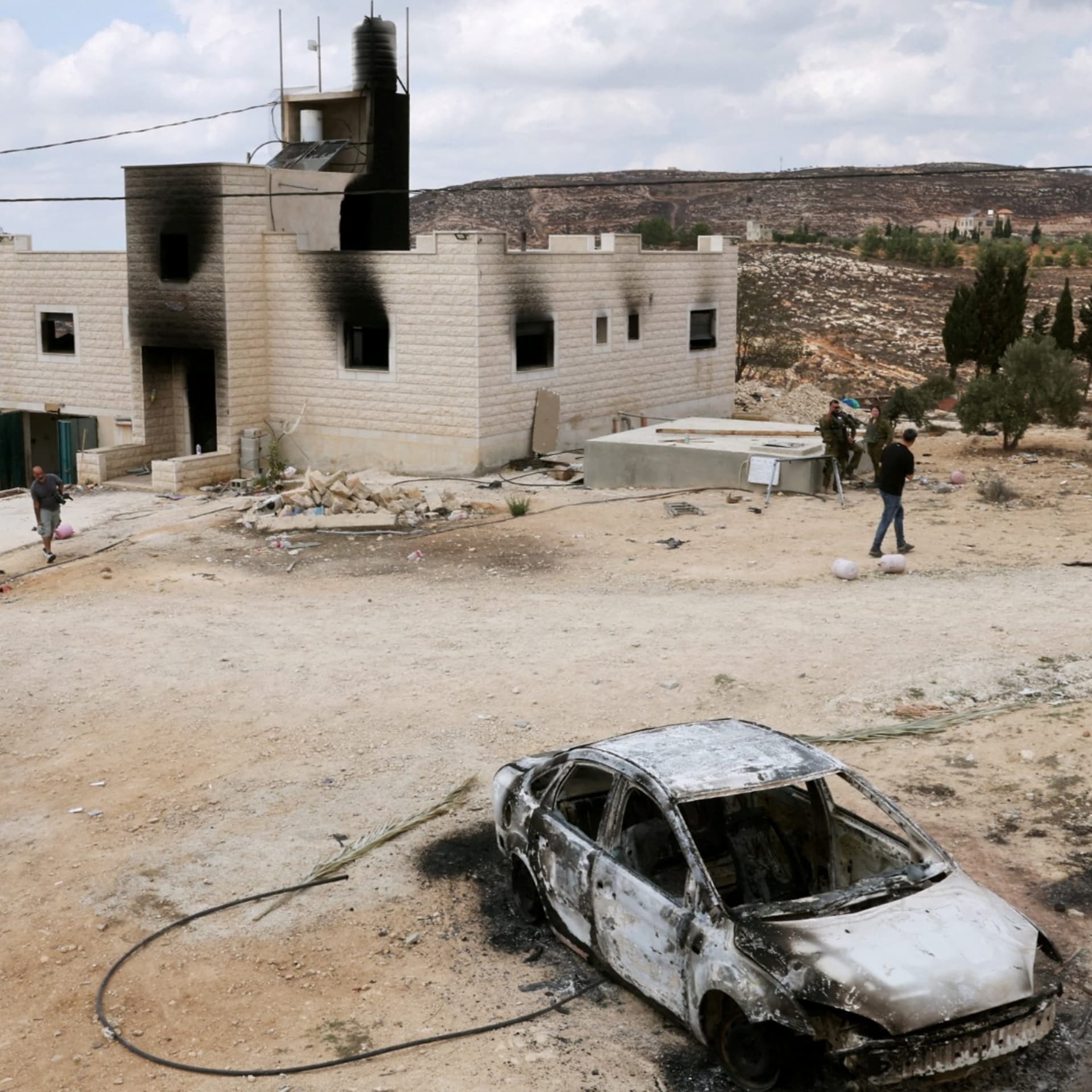
23:36Besides, lots of problems with the American military, whether it's Patriot missiles or whether it's endurance on the carriers and so on. I think despite all problems, Trump and elements, some compromising elements of the Guard Corps, will do a deal, I hope. Analyst Paul Moorcroft. Violence by Jewish settlers in the occupied West Bank is set to reach record levels this year, as human rights groups warn that they are increasingly spreading into new areas of the territory. Attacks on Palestinians have risen under Israel's current government, alongside a rapid increase in Israeli settlements. Our Middle East correspondent Lucy Williamson has been looking at reports of settler violence across the West Bank in the course of one week.
24:27A teenager shot dead, beatings, arson attacks, a donkey tortured. You might have seen the worst attacks by Jewish settlers here in the occupied West Bank, but behind those lies a much wider campaign of violence against Palestinians. We've counted more than 60 incidents here just in the past week, including daily incursions and intimidations that never make the news, some of which aren't even reported by the victims at all. On Saturday, amputee Saeed Al-Amour was beaten by a settler with an iron bar as he stooped to pick up one of his crutches. A shocking video recording the assault clearly shows his attacker, who's now under arrest.
25:14Saeed, who lost his leg last year after being shot near his house by a settler security guard, says settlers are constantly harassing the family. They want me to leave this place. It's not only me who's targeted, it's everyone. If I leave, they'll go after my neighbor down the road, then the next one, then the one after that, until they remove everyone from these areas and replace them with Zionists. On Friday, a large group of Jewish settlers, some of them armed, walked through the Palestinian village of Saire, near Hebron, past the house of 17-year-old Karim Shalalde. His father, Sanad, told us Karim was killed while filming the settlers.
26:06The second bullet struck my son. I ran to him before he fell and held him in my arms. I would rather die myself a thousand times than see it happen to my child. Israel's army said it had received reports of Palestinians throwing stones. Jewish settlements here, illegal under international law, are expanding. And settler attacks are rising as well. The Israeli human rights organization, Yesh Din, says more than 90 % of police investigations into settler violence end without indictment. There is a problem of violence in the West Bank. Doran Spielman, a spokesman for the Israeli prime minister's office, spoke to the BBC late last month.
26:51There are Jews who are a very small number of Jews. They are human beings. They have names. They're not just called settlers who have, in fact, been prosecuted by the police by the vast, the largest estimate would be maybe 300 or 400 youth that are involved in this out of a population of 750 ,000. This week, Zvi Sukkot, a settler lawmaker in Israel's governing coalition, filmed himself destroying a village memorial in the West Bank because, he said, it honoured terrorists. It triggered a rebuke from Israel's foreign minister and from the office of the Prime Minister, Benjamin Netanyahu. Jewish settlers were also filmed torturing a donkey, tying it to their vehicle and dragging it along until it was dead.
27:38a sadistic act of aggression that shocked Israelis more than it shocked Palestinians. Lucy Williamson reporting from the West Bank. US media is reporting that the Trump administration is in talks with Venezuela's interim government about Washington taking an ownership stake in its huge oil resources. We heard more from our business reporter, Ijeoma Endokwe. Based on these reports, the US is in talks with Venezuela about taking quite a significantly large stake in its oil fields. According to these reports, the details are still being ironed out. The discussions are said to involve more than a dozen productive oil fields, which have about 90 billion barrels of proven reserves.
Read the full transcript
28:23And if you bear in mind that Venezuela has 300 billion barrels of proven reserves, that's nearly a third of that. Now, some of these oil fields that are being discussed, they used to be controlled by former Venezuelan insiders, people with close ties to the Venezuelan government, including some who've now been indicted. and we know that some of them were also controlled by China. And from what we understand at this stage, in return for a US ownership stake, private companies, including American firms, would take over the development of these oil fields and return more oil revenue to Venezuela.
29:02There are some small oil traders who are very excited about this deal. But generally, if you look at some of the oil majors who have traditionally operated in Venezuela, They're quite nervous about investing huge sums of money into the country, especially during a time of political turmoil, because they've invested money before and not got their returns back. When the Maduro regime was in operation, a lot of them weren't able to take full advantage of what they'd put into those reserves. Ijeoma Ndokoe reporting. Apple is planning to shake up the tech industry again as it prepares to enter the foldable smartphone market, with its first foldable iPhone expected to be unveiled next month.
29:47Huawei and Samsung currently dominate the market, accounting for 36 % and 34 % of global foldable shipments respectively last year. Apple's entry could significantly reshape the market. The launch will also mark the first major product unveiling under new CEO John Turnus. So why has Apple waited so long to enter the foldable market? Brian Ma is a technology industry analyst with IDC. It's not entirely out of character for Apple to kind of sit it out for a while, let the technology mature a bit before they get into it. But on paper, Samsung's eight generations into this product already. They've obviously gone through a lot of growing pains, learning how to get the hinge to work, the waterproofing to work, all that kind of stuff.
30:29So it does look like Apple's coming in later. However, I think they wanted to make sure the experience was going to be good for a consumer, the opening and closing, whether there's much of a crease in the fold area, whether the hinge works out well. One of the challenges is that in order to get it so thin, they had to step back on a few things that they normally put into iPhones, like Face ID, like a zoom lens. So the rumors are, at least, that Apple had to give up on some of those in order to make this work. So this first generation of product may be a bit of a compromise for folks, but eventually the hope is that as Apple comes out with future generations of the product, let's hope they do build in that zoom lens and that sort of thing.
31:08And so eventually we may get there. Think of this in the spirit of what Apple did with Apple Watch Ultra, right? Really going beyond even just the high-end Apple Watch present the Ultra. Even what they did with the iPhones going to Pro Max. So this is going to be a very premium product. We think this is going to be well over$2 ,000. So clearly, that's not quite a mainstream product yet. It will be the early adopters. But it is something where you anecdotally hear people who, let's say, they see someone carrying a Samsung Galaxy Fold, and they're like, when is Apple going to have one of those? So I think there's folks that are looking at it and assuming that Apple really delivers on a decent experience.
31:45This is something that is going to be in good demand. But again, that price point means that it will prohibit that from becoming a mainstream thing for at least the time being. Tech industry analyst Brian Maher. And that's all for us for now. If you want to get in touch, you can email us at globalpodcast at bbc.co.uk. You can also now watch our episodes in full. Just search for the Global News Podcast on YouTube. This edition was mixed by Tom Bartlett and the producer was Nikki Verico. The editor is Karen Martin and I'm Ankur Desai. Until next time, goodbye.
32:27Is the hit Netflix show Emily in Paris just harmless escapist TV? Or is Emily ruining Paris? I'm Asma Khalid, and I host the Global Story podcast from the BBC. The president of France has described the show as super positive for his country, soft power through cinema. But is TV tourism good for a city? For more, listen to The Global Story on BBC.com or wherever you get your podcasts.
From the publisher
Two days after massive floods and landslides in the Himalayas, authorities in Tibet have resumed search and rescue operations, despite the ongoing threat that a debris-filled lake could collapse. The Chinese government has offered to send aid to Nepal to help survivors of the disaster. Also: King Haakon VIII has acceded to the throne in Norway after the death of his father, Harald V, at the age of 89. A group of more than 80 actors are calling on the British government to give every person in the UK a legal right to own their voice in response to the rise in the use of AI "voice cloning". And Apple prepares to shake up the tech industry with its first foldable iPhone expected to be unveiled next month.
The Global News Podcast brings you the breaking news you need to hear, as it happens. Listen for the latest headlines and current affairs from around the world. Politics, economics, climate, business, technology, health – we cover it all with expert analysis and insight. Get the news that matters, delivered twice a day on weekdays and daily at weekends, plus special bonus episodes reacting to urgent breaking stories. Follow or subscribe now and never miss a moment. Get in touch: globalpodcast@bbc.co.uk Photo: Firefighters conduct search and rescue operations after a mudslide in Gyirong county in Tibet. Credit: Reuters