
In short
Global News Podcast Summary
Episode Title
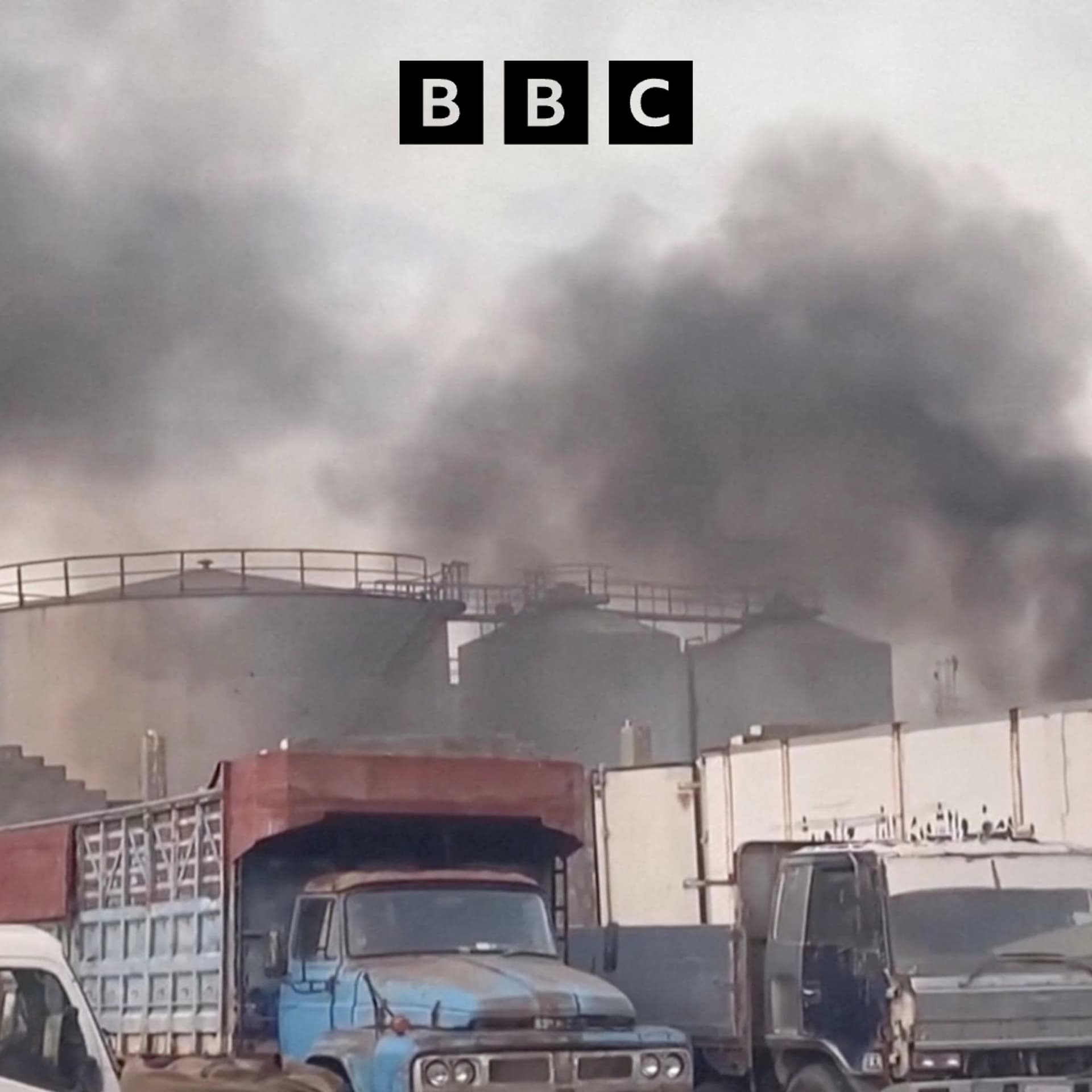
Saudi Arabia Bombs Yemeni Port Over Alleged UAE Weapons
Date
December 30, 2023
Host
Ankur Desai
Overview This episode covers significant global news, focusing primarily on escalating tensions in the Middle East, as Saudi Arabia launched an attack on a Yemeni port, Mukalla, over alleged UAE arms shipments meant for separatists. It also addresses protests in Iran, military exercises in Taiwan, price-fixing fines in South Korea, Russian military losses in Ukraine, environmental issues on Mount Everest, a renewed search for Malaysia Airlines Flight MH370, a unique dinosaur discovery, and the end of traditional mail delivery in Denmark.
---
Key Topics
- Middle East Tensions: Saudi Arabia and UAE
- Event: Saudi Arabia bombed the port city of Mukalla, claiming it was targeting UAE weapons destined for Yemeni separatists.
- UAE's Response: Agreed to cease operations in Yemen after Saudi demands but denied sending arms.
- Analysis:
- The conflict reflects a significant rift between Saudi Arabia and the UAE, who previously cooperated against Houthi forces.
- Expert Insight: Journalist Iona Craig discussed how the UAE’s strategic control in southern Yemen contrasts with Saudi Arabia’s focus on negotiating peace with the Houthis.
- Protests in Iran
- Background: Demonstrations sparked by rising prices and currency devaluation, marking the largest unrest since the "Woman Life Freedom" protests three years ago.
- Current Status: Protests are ongoing, with students joining merchants in the demonstrations.
- Government Reaction: Iranian President Masrur Pezashqian has urged reforms to address protesters' demands.
- Military Exercises in Taiwan
- Situation: China conducted large-scale military drills around Taiwan, simulating a blockade and invasion.
- Taiwan's Response:
- Civilians are largely unfazed, continuing daily activities despite the exercises.
- Taiwanese officials call for international condemnation of China's actions.
- South Korea's Business Regulations
- New Measures: South Korea announced steep fines for companies involved in price-fixing, raising penalties significantly to deter unfair business practices.
- Market Impact: The government aims to create a fair business environment, responding to public discontent and economic stagnation.
- Analysis of Russian Military Losses in Ukraine
- Findings: Recent analysis indicates a spike in Russian battlefield casualties, coinciding with intense negotiation periods regarding peace talks.
- Expert Opinion: These losses may affect Russia's bargaining position in future negotiations.
- Environmental Concerns on Mount Everest
- Issue: A clean-up initiative requiring climbers to return with waste has been scrapped due to inefficiency.
- Future Actions: Authorities plan to introduce a non-refundable fee for climbers to fund waste management efforts.
- Search for MH370
- New Search: A renewed effort to locate the wreckage of Malaysia Airlines Flight MH370 is set to begin in the Indian Ocean, 10 years after its disappearance.
- Challenges: The search is complex and weather-dependent, with significant public interest in uncovering this aviation mystery.
- Discovery of a Unique Dinosaur
- Event: A newly identified dinosaur, dubbed "Spicomelus" or the "Punk Rock Dinosaur," was discovered in Morocco, featuring distinctive spikes.
- Importance: This find emphasizes the ongoing research and education in paleontology within Morocco.
- End of Traditional Mail in Denmark
- Change: Denmark's postal service, PostNord, ceased letter deliveries, shifting focus to parcel services amid changing consumer habits.
- Cultural Impact: The move reflects broader digital trends and nostalgia as iconic mailboxes are removed.
---
Conclusion This episode of the Global News Podcast encapsulates critical global developments, emphasizing geopolitical tensions, economic reforms, environmental issues, and cultural shifts. The analysis provided by experts across various fields enhances the understanding of these complex topics and their implications for the world stage.
Contact
- Email: globalpodcast@bbc.co.uk
- Twitter: [@BBCWorldService](https://twitter.com/BBCWorldService)
- Hashtag: #GlobalNewsPod
Production Credits
- Producer: Oliver Burlout
- Editor: Karen Martin
- Mixer: Paul Mason
---
*This summary provides an overview of the discussions and insights shared in the episode, allowing for a deeper understanding of the critical issues facing the global community today.*
Written by AI. May contain mistakes. Listen to the episode to check what was said.
Chapters
Tap a time to open that second in VOFirst Draft of History
0:05 to 0:42
Exploration of flawed journalism and its implications.
“If journalism is the first draft of history, what happens if that draft is flawed?”
Yemen Conflict Overview
0:46 to 2:13
Discussion of the escalating tensions between Saudi Arabia and UAE in Yemen.
“Hi, I'm Ankur Desai and at 16 hours GMT on Tuesday the 30th of December.”
Iona Craig's Insights on Yemen
2:13 to 6:05
Iona Craig discusses the humanitarian situation and military movements in Yemen.
“but denied it had sent arms to the separatists, saying it was disappointed by the Saudi claims.”
Iranian Protests Explained
6:05 to 7:45
A report on the ongoing protests in Iran regarding economic issues.
“Protests are continuing for a third day in Iran against rising prices and an increase in the price of foreign currency.”
Taiwan's Stance on China's Military Drills
7:45 to 8:13
Examining Taiwan's reaction to Chinese military exercises near its territory.
“Being a small island off the coast of China, fully aware that Beijing has a mind to invade you must be intimidating at the best of times.”
Concerns Over Potential Invasion of Taiwan
8:13 to 11:15
Discussion on the implications of China's military drills and potential invasion of Taiwan.
“which Beijing claims as its own territory.”
South Korea's Measures Against Market Abuse
11:15 to 14:00
Overview of the new government's actions against unfair business practices in South Korea.
“And so this is what the Taiwanese government's trying to do.”
Economic Changes in South Korea
14:00 to 15:17
Explore the economic reforms under President Lee Jae-myung in South Korea.
“where these companies believe that rule breaking will lead to their ruin.”
Russia's Battlefield Losses
15:20 to 17:02
Understand the impact of battlefield losses on Russia's negotiation strategies.
“led by the US, a peace deal for Ukraine still seems some distance off.”
Environmental Challenges on Everest
18:42 to 20:36
Learn about the waste management issues facing Mount Everest and new policies.
“You're likely thinking of a beautiful snow-top peak.”
Show all 15 chapters
Search for Malaysia Airlines MH370
21:10 to 23:18
Delve into the ongoing search efforts for the missing MH370 aircraft.
“Malaysia Airlines flight MH370 disappeared, a search for the aircraft is expected to begin in a remote part of the Indian Ocean.”
The Discovery of Spicomelus
23:53 to 27:11
Uncover the fascinating story behind the discovery of a unique dinosaur species.
“This summer, scientists announced the discovery of one of the most bizarre dinosaurs they'd ever seen.”
Denmark's Postal Service Transformation
27:17 to 28:03
Examine the end of letter deliveries in Denmark and the shift to parcels.
“Rebecca Moreau, now when was the last time you sent a letter?”
The Digital Transformation in Denmark's Postal System
28:03 to 31:00
Explore how Denmark is transitioning from traditional mail to digital communication and its cultural implications.
“So personally I think it'll be okay even if it's sad.”
Investigating the Mystery of the Russian Apartment Bombings
31:25 to 32:07
Uncover the chilling history and ongoing mysteries surrounding the 1999 apartment bombings in Russia.
“If journalism is the first draft of history, what happens if that draft is flawed?”
Transcript
Automatic transcript. May contain errors.0:00This BBC podcast is supported by ads outside the UK. If journalism is the first draft of history, what happens if that draft is flawed? In 1999, four Russian apartment buildings were bombed, hundreds killed. But even now, we still don't know for sure who did it. It's a mystery that sparked chilling theories. I'm Helena Merriman, and in a new BBC series, I'm talking to the reporters who first covered this story. What did they miss the first time? The History Bureau, Putin and the apartment bombs. Listen on BBC.com or wherever you get your podcasts. This is the Global News Podcast from the BBC World Service.
0:46Hi, I'm Ankur Desai and at 16 hours GMT on Tuesday the 30th of December. These are our main stories. The United Arab Emirates has agreed to end its military activities in Yemen after being given a 24-hour deadline by Saudi Arabia to pull out. Protests are spreading in Iran over rising prices and the plummeting value of the currency. Also in this podcast, Mount Everest and the challenge of removing rubbish and waste from the mountains is proving almost as tough as climbing it. And it's got this neck collar, which has spikes. They're about a metre in length. So sort of the length of golf clubs sticking out in various directions.
1:24And we've never seen anything like that in any other animal. We'll have the story of the dinosaur hunters and their 10-year investigation, which led to the discovery of a spiky punk rock dinosaur.
1:39We start with escalating tensions between two of the biggest powers in the Middle East, Saudi Arabia and the UAE. Riyadh has declared a UAE-backed separatist advance in Yemen as a threat to its national security and has told the United Arab Emirates to withdraw all its forces from Yemen within 24 hours. Saudi Arabia said it had carried out an attack on the port of Mughala in southern Yemen, where it said large quantities of weapons had been sent from the UAE intended for the separatists. The UAE has now agreed to end its operations in Yemen, but denied it had sent arms to the separatists, saying it was disappointed by the Saudi claims.
2:18Iona Craig is a journalist who has lived in and reported from Yemen for 15 years. She told Krupa Padi about the situation there. There had already been a large convoy of UAE vehicles that had already military hardware that had arrived the previous day. And there's been video released by Saudi Arabia and by the Saudi press agency of Saudi Arabia tracking those convoys through eastern Yemen, giving a clear indication to the UAE and their back forces in the area that they are tracking them and they're watching what they're doing. And it seems to be a very strong message added to by the extremely strong statement that Saudi Arabia put out following those strikes, which I think is probably more concerning in many respects than the airstrikes themselves.
3:06The UAE continue to maintain that any shipment has not been intended to offer support to southern separatist forces. But how serious could this get? There were clear indications very early on that the UAE had its own goals in Yemen, particularly in southern Yemen. It very quickly, after getting involved, backed the southern separatist cause and then helped establish the Southern Transitional Council, which has been leading this military move into eastern Yemen over the last few weeks. And that was strategic for the UAE. They've taken control of large parts of the southern coast and ports, as well as islands off the coast of Yemen, been building air bases on those islands.
3:49Whereas the priority for Saudi Arabia, particularly more recently, has been about trying to negotiate a political settlement with the Houthis in order to maintain security within the kingdom to prevent the Houthis carrying out attacks, you know, with ballistic missiles that we saw earlier on in the conflict. Whereas the UAE's goals have been something quite different. And this doesn't just play out in Yemen, of course. I think we can't see this in isolation from what's been happening in Sudan in the war there as well. The UAE, we know, is backing the RSF forces there. Although the UAE denies it, the RSF forces that the UAE deployed inside Yemen in sort of 2016 and 2017 were under their direct command.
4:30I saw them on the front lines. And of course, Saudi Arabia is on the opposite side of that conflict in Sudan. And Saudi Arabia has been trying to push for an end to that conflict. They've raised the issue in Washington with Donald Trump and tried to intervene to end that. And I think that has created some animosity with the UAE over that issue. And I think that's why we're seeing this, timing-wise at least, of what's happening in Yemen now is almost a form of retaliation, if you like, for Saudi Arabia's attempts to de-escalate and stop the RSF actions in Sudan. So this has regional consequences, both for Saudi Arabia and the UAE, but also interplays with events on the ground in Sudan.
5:13Iona, millions of civilians are caught up in this war. What has daily life become like for them? The humanitarian situation is an ongoing problem in Yemen, and that's impacted by the conflict. It's impacted by cutbacks in aid and the defunding of aid programs in Yemen, as well as climate conditions. There's been severe flooding, excessive flooding even by Yemeni standards during the rainy season over the last 12 months that have contributed to that. So any kind of shock to the system that has an immediate impact on imports, particularly into the south, rice, flour and wheat and those elements all come in by the ports into Aden for the southern population.
5:53So if there's a shutdown of borders, there's a shutdown of the ports and there's a shutdown of the airspace. The impact of that is going to be felt extremely quickly for the civilian population who are already struggling. Iona Craig. Protests are continuing for a third day in Iran against rising prices and an increase in the price of foreign currency. Students from several universities have joined the demonstrations, which were started on Sunday by shopkeepers and market stallholders. Tehran province has been the centre of the protests. Parts of Tehran markets are also closed. David Bamford reports.
6:28These are the largest demonstrations since the Woman Life Freedom protest three years ago, sparked by the death of an Iranian woman, Maqsa Amini, while in police custody. Today, students from the major universities in Tehran, including Sharif and Beheshti, have joined the protests. A strike continues in Tehran's Grand Bazaar and commercial districts, with merchants keeping shops closed. There's also fresh unrest in the central city of Isfahan, where students from the University of Technology have taken to the streets. Ostensibly, these are protests about food price increases of up to 70 % year-on-year and soaring inflation.
7:06The security forces have deployed heavily, but videos show them pulling back amid the public anger. State media say Iran's president, Masrur Pezashqian, urged his own government to listen to what he called the legitimate demands of the protesters and make reforms. Some in the crowd can be heard shouting political slogans calling for the overthrow of the Islamic Republic. Slogans that can be heard include Death to the Dictator, targeting Supreme Leader Khamenei, the real power in Iran, and This is the final battle Pakhlavi will return, a reference to the family of the ruling Shah of Iran ousted in the late 1970s.
7:45David Bamford with that report. Being a small island off the coast of China, fully aware that Beijing has a mind to invade you must be intimidating at the best of times. And it's likely even more so when this is going on.
8:03Jet planes launching and the firing of rockets as China's People's Liberation Army, or the PLA, enters its second day of military drills around Taiwan. The war games are simulating the seizure and blockade of key parts of the self-governing island, which Beijing claims as its own territory. So how is this going down in Taiwan? These people at a market in Taipei are remaining stoic. The intimidation effect isn't that strong for us. This isn't something new. They threaten all the time. China threatens any country it sees as a threat. I don't think there's much impact. People are still going out, so it doesn't really affect anything.
8:45For us personally, no matter what's happening overhead, life still has to go on. Taiwan's defence ministry has called on countries around the world to condemn the drills. It says it's spotted dozens of boats and planes near the island and that 27 rockets have been fired in its northern and southwestern waters. As our China correspondent Stephen McDonald told me, despite a relaxed attitude in some parts of Taiwan, these war games do have real-world implications. Domestic flights from Taiwan's main island to these offshore islands have been cancelled. Around 6 ,000 passengers were inconvenienced because of that.
9:24The Taiwanese government has said that this is potentially illegal because of all those disruptions. That said, people know it's only going on for a couple of days and they'll get on with their lives. However, you know, there will be some in Taiwan who would be worried that it's ramping up, you know. You can't just ignore that these exercises are taking place. They are, after all, a dress rehearsal for a blockade of Taiwan, a potential invasion in the future of Taiwan. So, yeah, there would be some people who are worried that they're taking place and the government in Taipei has condemned them.
10:01But for the ordinary people in the street, yeah, they're just getting on with their lives. And like you say, there are people, some observers, who believe that China does have the capacity to invade as early as 2027. Yes, I think most observers would say that the PLA could take Taiwan if it wanted to, unless the US got involved in Japan and others, but just say they didn't. Militarily they could. The problem is what the Taiwanese government is factoring in is the cost of doing that. so it's no cakewalk you've got to get across the taiwan strait with landing craft and they're practicing that as we speak but you know death destruction all around china's reputation would be in the toilet that china would have international sanctions on it i mean not to mention the fact that the chinese government has to explain to its own people why we're killing our brothers and sisters from that rogue province in order to get them to join the family again.
11:07That's a bit of a hard sell if there are all these dead people on the beaches, not to mention all the dead soldiers from the PLA. It would be an awful thing for it to happen. And so this is what the Taiwanese government's trying to do. They're not thinking we can beat the PLA. They're just thinking we can have such a solid defense that the cost would be so high that the Chinese government won't go ahead and do it because it just wouldn't be worth it. Stephen, you mentioned Taiwan's response. What about Taiwan's allies? What would they be making of this? Well, Donald Trump didn't seem to care at all.
11:43He was asked about this. He said, oh, I'm not so worried. I've seen these exercises before and was totally downplaying it. of course, what he's not taking into account is that these are not the exercises of years gone by. Since 2022, the exercises have really ramped up on all sides of Taiwan with many more ships, many more planes. I mean, this time round, we're talking about destroyers, the rocket force, land-based missile launches, land-based rocket launches. I mean, you know, it's a vast exercise. these are not the exercises of 20 years ago. They are becoming more and more significant. Stephen McDonnell reporting from Beijing.
12:29Since South Korea was thrown into turmoil after the former president announced martial law a little more than a year ago and the subsequent leadership change, the new government has announced a range of measures against unfair business practices. Now the authorities are targeting companies that are exerting undue influence over the country's markets. they could be facing fines of up to$7 million. I spoke to our correspondent in Seoul, Jake Kwon, and asked him whether that would be enough to deter big firms. This has been the question for many years now, and there seems to be this notion that for these companies, the juice is always worth the squeeze.
13:08How the government so far has been trying to deal with these unfair market practices has been to fine the executives maybe$10 ,000,$20 ,000, and the companies maybe a few million dollars. But it was always considered too little to prevent this problem. And every year, it seems that we have headlines of companies perhaps colluding with their competitors to engage in price fixing. There has also been a few high-profile cases of large companies kind of throwing their weight around with their smaller suppliers and involving themselves and telling these smaller suppliers to share their trade secrets, or to tell them, you know, whether they can engage with any other companies or not dictating what they should do with their businesses.
13:51So there has been this growing notion that the government needs to really up the punishment to prevent these things from happening. So the new president is saying that the fine needs to be at a level where these companies believe that rule breaking will lead to their ruin. How key is this in terms of, well, the role of the new president showing that there is change happening in South Korea after everything that's happened over the last 12 months in particular? I mean, the new president, his message since he got into the office, you know, after the martial law has been that Korea is now open for business, that everything is going back to normal again.
14:27This is a thriving democracy with a free market. Now, the second part, President Lee Jae-myung, he has to raise the economy. This is his main agenda. Since COVID, the country, the economy has been quite stagnant, and he has a local election coming up next year, which will be very, very important for him. So one thing he wants to really do is buoy the stock market. And one way he could do that in a very short term is to introduce all kinds of market reforms to really deliver the message that South Korea is a fair place to do business and to invest. And that market also had somewhat responded to this messaging.
15:02I mean, if you look at Korea's main market index, KOSPI, it went up 75 % this year, which is an astounding number. It beat out all the major markets around the world. So for Mr. Yi, this is a winning move and we can expect Mr. Yi to continue in this path. Jake Kwon in Seoul. Despite recent diplomatic activity, including led by the US, a peace deal for Ukraine still seems some distance off. But one factor that could influence Moscow's position is their battlefield losses. A new analysis suggests that over the past 10 months, Russian losses on the front line have been growing faster than any other time since the start of the full-scale invasion more than three years ago.
15:43BBC News Russian has been counting Russian war dead alongside the independent outlet MediaZone and a group of volunteers since February 2022. Olga Ishina is from the BBC's Russian service. What we have seen is in 2025, first of all, the number of obituaries have been the highest ever, and it's on average 40 % higher than compared to the previous year. And the second thing we have seen is that the months with the biggest spike coincide with the months where the most intense negotiation between US and Russia have been going on. The first spike happened in February 2025. That's exactly the time when US and Russia started their first negotiations about a possible peace deal.
16:29Then it lowered a little bit. And then another huge spike was in August, when another round of negotiations have started when Putin have visited Alaska and met in person with Donald Trump. And in October, when another round of negotiations was supposed to happen in Budapest, the number of obituaries published per day sometimes reached 320, 350. This is twice as much as the average in 2024. So it's hard to refer those spikes to exact dates, but we can refer it to certain months. And it seems that it has been part of the Russian strategy to get maximum advantage on the front line just before the negotiations or during the negotiations to use it as a leverage during the talks.
17:15It's not just, I mean, the numbers sort of show it, but it is also Russian officials themselves who hinted it. For example, in December, the ID to Vladimir Putin, Yuri Shakov said that recent successes on the battlefield helped them to succeed in negotiations as well. Olga Evshina. Still to come on this podcast. It's sad that it's coming to an end, but in one way or another, it'll be OK. New things happen. It's a time of change. So personally, I think it'll be OK even if it's sad. But you can't stop change. Why the Danish Postal Service will stop delivering letters ending centuries of service.
18:02If journalism is the first draft of history, what happens if that draft is flawed? In 1999, four Russian apartment buildings were bombed, hundreds killed. But even now, we still don't know for sure who did it. It's a mystery that sparked chilling theories. I'm Helena Merriman, and in a new BBC series, I'm talking to the reporters who first covered this story. What did they miss the first time? The History Bureau, Putin and the apartment bombs. Listen on bbc.com or wherever you get your podcasts.
18:41You're listening to the Global News Podcast. Picture this, Mount Everest. You're likely thinking of a beautiful snow-top peak. You might not be picturing some 50 tonnes of rubbish. That, though, is sadly the reality for the world's highest mountain, with abandoned tents, plastic bottles and oxygen tanks littering its camps. Now an 11-year-old scheme to try to tackle the problem has been cancelled because the authorities say it simply wasn't working. Our environment correspondent, Novin Singh Karga, is a man who's climbed Everest and told me more about the scheme and why it's been scrapped. So what it required climbers to do was pay this deposit money, $4 ,000, before they embarked on this expedition.
19:22And then if they brought back at least eight cages of trash, then they would get that. That was the idea. So when I spoke to these officials, all of them were saying that, you know, most of the money was refunded, meaning they got the clearance letter, they brought the trash back. So why is then still the trash is piling up on Everest? What they tell me is climbers tend to bring back only trash from the lower camps, not the higher camps. The higher camps, you know, that's where the real issue is. And the checkpoint is just above the base camp, meaning only lower camps were cleared, higher camps, still a big deal.
19:56And that's why they thought that they should scrap it altogether. Right, OK. But the authorities aren't giving up. they are going to recycle this scheme in some way, to pardon the pun. What's that going to be? So what they're saying now is, you know, they are introducing a fee, which is a non-refundable fee, compulsory to be paid. It won't be returned. But then the Sherpas, the Sherpa community in particular, they're happy because what they said was to keep the mountain clean and to monitor if this is happening or not, they didn't have the fund. Now what happens is they will have the fund, and that means they can set up a checkpoint high up in the mountain.
20:27And also there will be mountain ranges who can go up and check and come back, back and forth. That's the idea. But this thing will have to be enacted as a law, and it'll have to be passed by the parliament, and then things might start running. And just how likely is this to be successful in your experience? And just how bad is the problem, especially for the environment up there? It's horrible, to be honest. In the wake of this growing number of climbers, it's getting very, very difficult. What I'm told by operators is there's this cutthroat competition. As a result, what happens is many climbers, many expedition operators, they tend to take up cheap things like cheap tents and they just trash them there.
21:02But Sherpas think that if they have the money, they can do things. We'll have to see that. That was our environment correspondent Navin Singh Khadka. Now, more than a decade after Malaysia Airlines flight MH370 disappeared, a search for the aircraft is expected to begin in a remote part of the Indian Ocean. 239 people were on board the plane when it vanished an hour after takeoff from Kuala Lumpur en route to Beijing. The plane's disappearance has remained one of the biggest aviation mysteries. Our global affairs reporter Ambarasane Thirajan told us more. It still remains as one of the biggest mysteries and people are wondering how in this modern day and age with all the technology, a plane with 239 passengers just disappeared from the screen and also all these years they were trying to find it and they were not even able to go anywhere closer.
21:54The families of those people who died or who disappeared in this plane, they are waiting for a closure. It's not only for the families, the government, for the airline companies. So it's one of the biggest mysteries and the air investigation's history. It's an unsolved issue. Now, the Ocean Infinity and the company, they are now trying to start this search once again. They did start late last year. They called it off in March this year because of bad weather. And there have been numerous, just to remind people, in the past as well, right? Initially, the three countries, Malaysia, Australia and China, they were involved in the search until 2017 and they couldn't find anything.
22:34And then again, another search program was launched in 2018. But it's still a mystery because the plane abruptly turned after taking off from Kuala Lumpur about 40 minutes into the flight and it was last seen on Andaman Sea. And a report in 2018, it concluded that the plane was manually controlled to turn around, even though, I mean, it didn't talk about or specifically conclude on any sinister motive, either by the crew or by anyone else, because there was no evidence why the transponder, which normally communicates with the civilian air traffic control, was switched off. It's still a mystery.
23:10And that's why they're now looking in southern Indian Ocean based on the model that the plane could have been flying for about six more hours. So they're going to look around 15 ,000 square kilometers. It's a no find, no fee contract in case if the company finds the wreckage, they will get about$100 million. And it is going to be challenging because of the weather. It is likely to last for about 55 days to two months, depending on the weather conditions. But it also requires a lot of work using the latest technology. But the government as well as the families, they hope that at least this time this search company will find something.
23:52Abarasan Etirajan. This summer, scientists announced the discovery of one of the most bizarre dinosaurs they'd ever seen. Unearthed in Morocco, it's called the Spicomelus and was nicknamed the Punk Rock Dinosaur, thanks to the huge spikes that covered its entire body. But the discovery of this extremely strange animal, which lived 165 million years ago, didn't come easy. It's taken years of dinosaur detective work. Our science editor, Rebecca Morrell, went behind the scenes at the National History Museum to find out more. This is a story that starts with a bone. All of this is dinosaurs. A really bizarre bone.
24:29Professor Susie Maidment is a paleontologist at the Natural History Museum. We have a rib. It's a rib. And you can tell this because it's T-shaped in cross-section. But the really weird thing about this is that at the top of the rib, you have these four spikes and these spikes are rounded in cross section. They range from about three centimetres in length to about 10 centimetres in length. Professor Maidment found this unusual bone in 2018 in a fossil shop in Cambridge. The information that came with the specimen was that it was from the middle Jurassic of Bulmaid. Now, Bulmaid's a town in the Middle Atlas Mountains of Morocco.
25:02and I looked at a geological map and I found that there was indeed middle Jurassic rocks in this area. She teamed up with researchers in Morocco and went there to investigate. We worked our way down the commercial supply chain talking to different fossil collectors and eventually found our way to the guy who had literally dug the fossil out of the ground and I was able to show him a picture of the fossil and he was able to take me to exactly the place where he had found it. To find out more, the scientists needed to find more bones. So in 2023, they started excavating. Dr Simon Wills from the Natural History Museum was part of the team.
25:39To sort of describe the area, it's very, very arid. But the rocks are amazing because they're just multicoloured. So you just see the layers of different colour rocks. There's purples, there's greens, there's greys, there's browns. And we just stood there and asked, what on earth is this? It spikes everywhere. The next step was to piece this fossil puzzle together to work out what this animal looked like. Professor Richard Butler is from the University of Birmingham. It's got these spikes coming out of every single one of its ribs, but it's also got these incredibly long spikes coming out of various other parts of the body.
Read the full transcript
26:12And in particular, the thing that's just utterly bizarre is it's got this neck collar, this collar of bone around the neck, which has spikes that are about a metre in length. So it's sort of the length of golf clubs sticking out in various directions. And we've never seen anything like that in any other animal. The scientists have named the dinosaur Spicomelus. And apart from the spiky rib that started this dino detective story, the bones will stay in Morocco. Geologist Dr Ahmed Uso from the University of Fez says that's important. When a fossil like Spicomelus makes headlines, it inspires young people to learn more about our ancient past and shows them that important scientific research is happening right here in Morocco.
27:01Also, it encourages more students to study geology and paleontology, and it helps train the next generation of Moroccan scientists. The team will be returning to the site next year. They say there's still much to find out about Spica Mellis. Rebecca Moreau, now when was the last time you sent a letter? It's the end of an era today in Denmark, as the state-run postal service PostNOR ends its four-century-old task of delivering letters to residents around the country. It will instead focus on parcels because of the change in consumer behaviour. Christian Beckgaard has been a postman for 20 years and has seen the contents of his bag change over time.
27:41It's becoming mainly letters from authorities, banks or bills. Fewer Christmas cards too. He'll soon be delivering packages with a car and spoke to Danish radio during one of his last rides on his post bike.
27:58It's sad that it's coming to an end, but in one way or another it'll be okay. New things happen. It's a time of change. And it has to happen now and then. So personally I think it'll be okay even if it's sad. But you can't stop change. Laura McIver got more on why this is happening from Danish journalist Maja Tekeli. It simply has something to do with the fact that people just don't send letters anymore. That first of all being romantic, individual, personal letters. But Denmark is a very, very digitalized country. Bills, bank messages, government decisions, they arrive digitally and it's only around 5 % of Danes that still receive official mail on paper.
28:45Given the fact that I guess most people don't remember the last time they sent a letter themselves. They accepted it, but nostalgia really kicked in when PostNord, as the state services call, started to take down our iconic red mailboxes. They've been a part of the country for as long as you can remember. Some of them were put up for sale and within hours they were sold out because people just wanted a little piece of that history, I guess. I don't know what you're going to use a postbox for, though. but you know we'll figure it out. It might look nice in the hall of your house if you so wish.
29:27But what about then people who do want to send a birthday card to somebody or actually do want to maybe write a letter to a friend that's gone through a bereavement? Will there be private options still? That's it there will be private options. Private enterprises will take over and that means that you'll of course still be able to send a letter. You won't use a stamp though. You have to write a four or six digit code on your letter, which is a little different. But that also means as a stamp collector, your collection is complete now. There will be no more Danish stamps. Will it change traditions as well?
30:03We will feel it in Denmark around Easter, surprisingly. We're not really Christmas card people. But what we are, though, is gag letter people and I'm just translating it loosely. Around Easter, Danish people send each other gag letters which are very beautifully, most of the time, cut out letters with patterns and little riddles inside. It was cultivated by H.C. Andersen, the very famous writer who was really good at making his gag letters very beautiful. You write a little riddle and if the person you sent the letter to guess who you are you have to give them a chocolate egg and if not it goes the other way around and that's a tradition that might that will have to change let's see what happens around easter maybe we have a lot of very very sad danes i'll let you know maya techily and that's all from us for now but there will be a new edition of the global news podcast later If you want to comment on this episode or the topics covered in it, you can send us an email.
31:08The address is globalpodcast at bbc.co.uk. And you can also find us on X at BBC World Service. And you can use the hashtag Global News Pod. This edition was mixed by Paul Mason. And the producer was Oliver Burlout. The editor is Karen Martin. I'm Anka Desai. Until next time, goodbye.
31:33If journalism is the first draft of history, what happens if that draft is flawed? In 1999, four Russian apartment buildings were bombed, hundreds killed. But even now, we still don't know for sure who did it. It's a mystery that sparked chilling theories. I'm Helena Merriman, and in a new BBC series, I'm talking to the reporters who first covered this story. What did they miss the first time? The History Bureau, Putin and the apartment bombs. Listen on bbc.com or wherever you get your podcasts.
From the publisher
The United Arab Emirates says it will end its operations in Yemen, after Saudi Arabia conducts a strike on the southern port of Mukalla. Riyadh claims the target was a UAE-linked weapons shipment, intended for separatists. The attack marks the most significant escalation in a widening rift between the two Gulf powers, who once cooperated in a coalition against the Houthis.
Also: protests are spreading in Iran, sparked by rising prices and the plummeting value of the currency. China has launched rockets on a second day of large-scale military exercises around Taiwan. South Korea announces steep fines for companies found guilty of price fixing. BBC analysis suggests Russian losses in the war with Ukraine have been growing faster than at any time since the start of the full-scale invasion. Nepalese authorities are scrapping a clean-up scheme that was meant to encourage climbers to bring down their waste from Mount Everest. A new search for the wreckage of the missing Malaysia Airlines flight MH-370 begins in the Indian Ocean. We speak to the dinosaur hunters who discovered a spiky “punk rock" dinosaur. And why the Danish Postal Service will stop delivering letters, ending centuries of service.
The Global News Podcast brings you the breaking news you need to hear, as it happens. Listen for the latest headlines and current affairs from around the world. Politics, economics, climate, business, technology, health – we cover it all with expert analysis and insight. Get the news that matters, delivered twice a day on weekdays and daily at weekends, plus special bonus episodes reacting to urgent breaking stories. Follow or subscribe now and never miss a moment. Get in touch: globalpodcast@bbc.co.uk



