In short
Global News Podcast - Episode Summary
Episode Title
Stay calm on Greenland UK tells Trump and EU
Date
January 19, 2021
Host
Valerie Sanderson
---
Key Topics Discussed
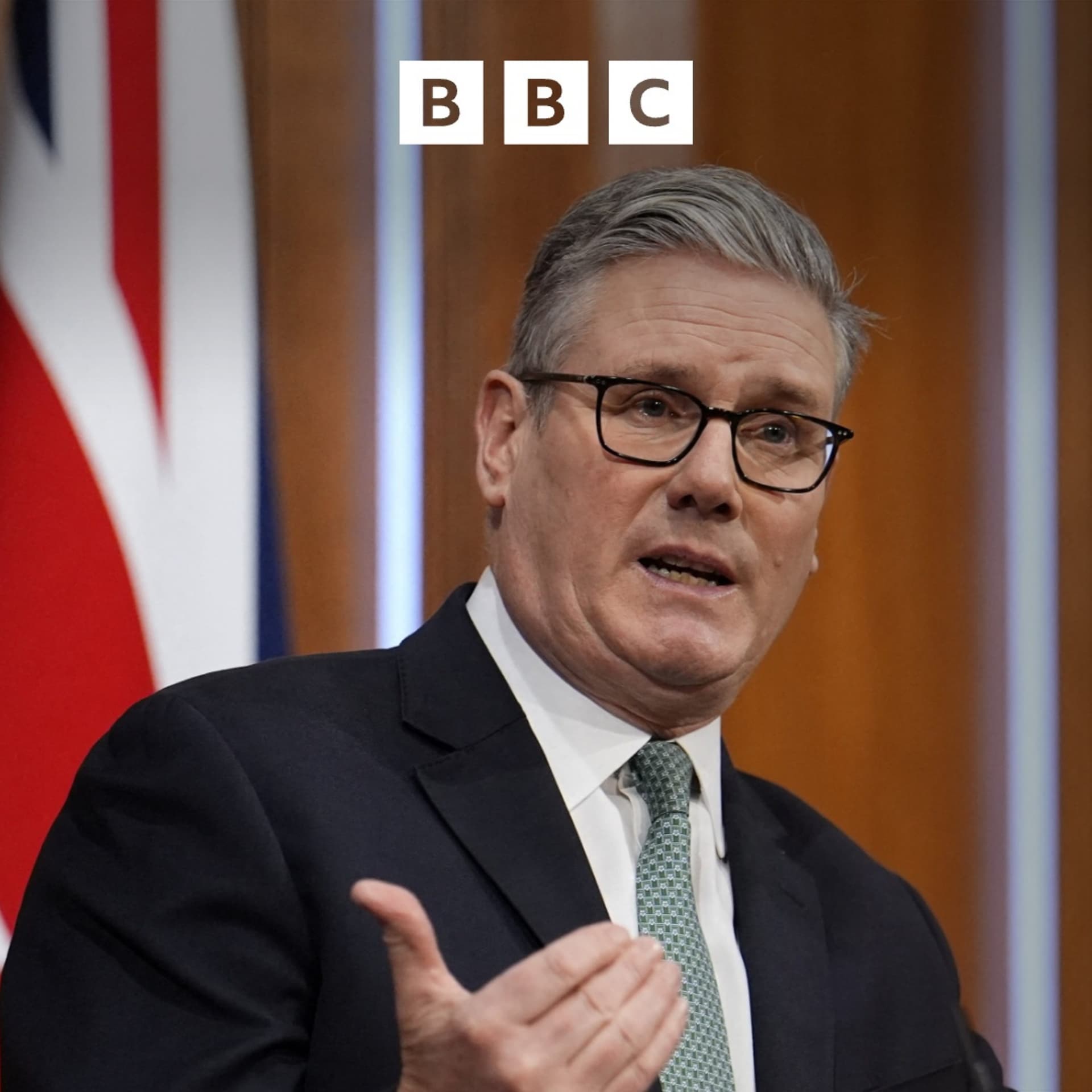
- Keir Starmer's Address on Greenland
- Context: British Prime Minister Keir Starmer addressed Donald Trump's threats regarding tariffs on countries opposing his Greenland annexation plans.
- Key Points:
- Starmer criticized tariffs as an improper way to resolve international differences.
- Emphasized that the future of Greenland should be determined by its people and Denmark.
- Advocated for calm discussions among allies.
- International Response to Trump's Tariff Threats
- EU Leaders' Stance:
- Senior EU figures, including Germany's Finance Minister Lars Klingbeil and French President Macron, accused Trump of blackmail.
- Macron suggested utilizing the EU's "trade bazooka" as a countermeasure, a term originally designed for dealing with external threats, not allies.
- U.S.-Europe Relations
- Diplomatic Approaches:
- Starmer adopts a "softly, softly" strategy, focusing on maintaining diplomatic ties despite rising tensions.
- Concerns raised about the effectiveness of diplomacy if Trump remains unyielding.
- Trump's Critique of Norway
- Context: Trump expressed frustration over not receiving the Nobel Peace Prize, incorrectly blaming Norway's government.
- Implications: His statements seem to reflect a shift in foreign policy focus from peace to a more aggressive stance, linking it to economic control over Greenland.
- The Spanish Train Crash
- Incident: A high-speed train collision in Spain resulted in at least 39 fatalities and over 120 injuries.
- Details: Witness accounts described chaotic scenes and significant structural damage.
- Political Developments in Japan
- Snap Elections: Japan's Prime Minister Saneye Takeichi announced upcoming elections to secure a stable majority for an economic stimulus bill.
- Popularity: Takeichi, Japan's first female prime minister, enjoys high public support but faces challenges due to party controversies and economic concerns.
- Russia’s Involvement in Middle East Peace Efforts
- Putin's Invitation: President Putin was invited to join a new "Board of Peace" concerning Gaza, amidst broader geopolitical tensions.
- Analysis: The invitation's significance and the implications of creating alternative governance structures for international relations.
- Alzheimer's Disease Research
- Innovative Trials: Ongoing trials are exploring the feasibility of blood tests to diagnose Alzheimer's, involving 1,000 volunteers in North America and the UK.
- Potential Impact: A successful test could revolutionize early diagnosis and risk assessment for Alzheimer’s.
- Changing Cinematic Trends
- Discussion: The impact of shorter attention spans on film production and storytelling.
- Insights from Filmmakers: Netflix's approach to storytelling emphasizes capturing viewer attention quickly, leading to significant changes in script and production styles.
---
Key Takeaways
- Diplomacy vs. Aggression: The episode highlights the delicate balance of international relations, particularly in response to Trump's aggressive trade tactics.
- Emerging Political Landscapes: Political dynamics in Japan and Europe reflect broader themes of leadership, public sentiment, and economic strategy.
- Healthcare Innovations: Advances in medical testing for Alzheimer's present promising avenues for early intervention, showing the intersection of healthcare and technology.
- Cultural Shifts in Media Consumption: The evolving landscape of film suggests significant adaptations driven by audience engagement strategies.
---
Contact Information
- For comments or inquiries: [globalpodcast@bbc.co.uk](mailto:globalpodcast@bbc.co.uk)
- Follow on social media: [BBC World Service on X](https://x.com)
Producer: Charles Sanctuary Editor: Karen Martin Next Episode: Available later.
---
This summary encapsulates the crucial discussions and insights from the podcast, presenting an overview of the global issues and developments covered in this episode.
Written by AI. May contain mistakes. Listen to the episode to check what was said.
Chapters
Tap a time to open that second in VOMain Stories Overview
0:42 to 1:12
Overview of the main news stories including UK politics, a train crash, and Japan's elections.
“I'm Valerie Sanderson at 1600 Hours GMT on Monday the 19th of January.”
Trump's Greenland Ambitions
1:12 to 1:52
Discussion on President Trump's plans regarding Greenland and the EU's response.
“I'm looking at the presence of three proteins that have been linked to Alzheimer's disease, so-called blood-based biomarkers of Alzheimer's disease.”
EU's Firm Stance Against Blackmail
1:52 to 3:09
Analysis of the EU's position against Trump's threats regarding Greenland.
“Some senior EU figures are openly accusing the US president of blackmail over Greenland.”
Keir Starmer's Diplomatic Approach
3:09 to 4:25
Keir Starmer's response to Trump's tariffs and the importance of diplomacy.
“Nor is it helpful to frame efforts to strengthen Greenland's security as a justification for economic pressure.”
Negotiations and Future Outcomes
4:25 to 5:30
Insight from Kellyanne Shaw on potential negotiations and outcomes regarding Greenland.
“Well, that is the great question, Valerie.”
EU's Dilemma: Reaction to Trump's Threats
5:30 to 7:06
Discussion on the challenges the EU faces in responding to Trump's threats over Greenland.
“As Kellyanne Shaw mentioned there, European leaders are meeting this week on Thursday to discuss their response.”
Trump's Views on the Nobel Peace Prize
7:06 to 8:31
Examination of Trump's comments linking his Greenland ambitions to the Nobel Peace Prize.
“He's blamed the Norwegian government for the decision, though it's not in that government's gift.”
Spain's Train Crash Coverage
8:31 to 10:37
Details about the deadly train crash in Spain and its aftermath.
“I mean, as so often in explaining Donald Trump's stance, I think, you know, political analysis will take you a certain amount of the way, but you do need a psychologist.”
Japan's Political Landscape
10:37 to 14:02
Overview of Japan's upcoming snap election and the current Prime Minister's popularity.
“I was sitting in the last seats of the carriage and I was thrown over.”
Japan's Popularity and Political Stability
14:02 to 15:43
Explore the current political climate in Japan and the implications for the upcoming election.
“I mean, she is the first female prime minister and she is also a conservative prime minister here.”
Show all 13 chapters
The Board of Peace and Global Leadership
15:43 to 17:40
Understand the implications of the Board of Peace and President Putin's invitation.
“The Kremlin says President Putin has been invited to join Donald Trump's Board of Peace for Gaza.”
Innovations in Alzheimer's Diagnosis
17:40 to 21:48
Learn about a new trial investigating a finger prick test for detecting Alzheimer's.
“I think it's always both when it's President Trump.”
Impact of Attention Spans on Film Production
21:48 to 25:25
Discuss how changing attention spans are influencing filmmaking and viewer behavior.
“Netflix, you know, the standard way to make an action movie that we learned was you usually have like three set pieces, one in the first act, one in the second, one in the third.”
Transcript
Automatic transcript. May contain errors.0:00This BBC podcast is supported by ads outside the UK. If journalism is the first draft of history, what happens if that draft is flawed? In 1999, four Russian apartment buildings were bombed, hundreds killed. But even now, we still don't know for sure who did it. It's a mystery that sparked chilling theories. I'm Helena Merriman, and in a new BBC series, I'm talking to the reporters who first covered this story. What did they miss the first time? The History Bureau. Putin and the apartment bombs. Listen on BBC.com or wherever you get your podcasts. This is the Global News Podcast from the BBC World Service.
0:46I'm Valerie Sanderson at 1600 Hours GMT on Monday the 19th of January. These are our main stories. The British Prime Minister Keir Starmer says President Trump's plan to impose tariffs on countries opposed to his goal to take over Greenland is completely wrong. At least 39 people have died in a train crash in Spain. Japan's Prime Minister calls a snap election. Also in this podcast... I'm looking at the presence of three proteins that have been linked to Alzheimer's disease, so-called blood-based biomarkers of Alzheimer's disease. Could a simple finger-prick blood test be the future for diagnosing Alzheimer's?
1:32There have been many tests for European leaders during the first year of Donald Trump's second term in the White House, but so far they've tried to manage, placate and charm the US president. Now his aim of acquiring the semi-autonomous territory of Greenland, part of the Kingdom of Denmark, has alarmed politicians to such an extent they're pushing back. Some senior EU figures are openly accusing the US president of blackmail over Greenland. Here is Germany's finance minister Lars Klingbeil speaking alongside his French counterpart. Germany and France agree that we will not allow ourselves to be blackmailed.
2:10There will be a united, clear response from Europe. And we are now preparing united countermeasures with our European partners. We are preparing for the event that President Trump maintains his tariff threat. President Trump's own drogings. Washington insists there will be punishment in the form of trade tariffs from next month for any country that stands in the way of the President's ambition to acquire Greenland. President Macron of France wants the EU to fight back by deploying for the first time the EU's trade bazooka. We'll have more on that shortly. By contrast, Britain's Prime Minister Keir Starmer has called for a calm discussion between allies.
2:50In a speech at Downing Street, he reiterated the unified EU position, that the future of Greenland is for its people and Denmark to decide. And he criticised President Trump's threat on tariffs. The use of tariffs against allies is completely wrong. It is not the right way to resolve differences within an alliance. Nor is it helpful to frame efforts to strengthen Greenland's security as a justification for economic pressure. Our political correspondent Rob Watson gave me his assessment. It would be fair to say that amongst America's European allies, he is the leader of what might be described as the softly, softly approach, Valerie, that let's take it diplomatically, let's not turn the heat up any higher.
3:40But it is difficult domestically here in the UK because, of course, there are plenty of politicians and, of course, plenty of ordinary voters who think, Come on, Sakir, tell Donald Trump what you really think, that this is all completely unacceptable. In other words, have a sort of love actually moment, that film where the British prime minister takes it to a fictional American president. That that isn't going to happen. And he repeated the argument he's made really ever since President Trump's inauguration, which is, look, you know, whatever, however angry you might feel about stuff. The relationship between the U.S.
4:14and the U.K. is so important for us in terms of our security. and economics, you have to keep talking. Yeah, but what happens if Mr. Trump isn't up for calm discussions? Well, that is the great question, Valerie. And it was put to him after his statement in Downing Street by several of my colleagues, and he refuses to countenance that saying that he believes that there will be a diplomatic solution that he doesn't think that this will come in any way to sort of military action or anything remotely like it. But that is the key question. I mean, what does happen if this talking and if this diplomacy doesn't work?
4:47I mean, I think that would be a crisis of absolutely existential proportions for the West. Rob Watson. So what might happen next? Kellyanne Shaw was the deputy assistant to the US president for international economic affairs in the first Trump administration. She told the BBC she believes Mr Trump is prepared to negotiate. I think there's a negotiated outcome here. We'll see the president in Switzerland this week in Davos with a number of European leaders. I would imagine there'll be some very frank conversations. But when I see the president threatening tariffs, what I hear is I want to negotiate something here.
5:24And so I think we'll ultimately see something that works for Denmark, something that works for the United States and something that works for Greenland. As Kellyanne Shaw mentioned there, European leaders are meeting this week on Thursday to discuss their response. And it's thought they'll consider a raft of retaliatory measures. One potential issue? Well, our Brussels correspondent Nick Beak says not all the countries are on the same page. This feels like a precarious moment for the EU because it's been on this roller coaster ride for the past year trying to placate or charm or manage Donald Trump but this is the most dangerous turn yet and what you've got is openly some EU leaders accusing Donald Trump of blackmail.
6:06The dilemma here is if they don't do anything they can look weak and that may embolden Mr. Trump even further over Greenland. If they go too far, then there's the risk of a trade war with the US, their biggest partner. President Macron of France, he says the EU really needs to be tough at this moment. He's talked about using the EU's trade bazooka, as it's known. Basically, this would be counter tariffs. It was a weapon that they designed originally to basically deal with bullying by a hostile external country and at the time they were thinking of China you know they weren't thinking of the United States but you've got people like Giorgia Maloney of Italy saying that a trade war would be really damaging to both sides she says there needs to be a diplomatic solution to this and she's tried to characterize this as a misunderstanding of the EU and the US position on Greenland but I think the problem is that the positions of the two sides you know they're poles apart and they're completely incompatible with each other.
7:08Nick Beak. Well, as all this is unfolding, President Trump has linked his aim for control of Greenland to his failure to win the Nobel Peace Prize in 2025, telling Norway's Prime Minister he no longer feels obliged to think purely of peace. He's blamed the Norwegian government for the decision, though it's not in that government's gift. Our global affairs reporter Paul Moss told me more. The text started by reiterating America's claims over Greenland. Donald Trump said the world would only be safe if the US had total and complete control over Greenland. He then questioned why Denmark currently had sovereignty, said it was just there were no documents to support this.
7:47And it was just down to the fact that a Danish boat landed there a few centuries ago. And rather ominously, he said plenty of American boats had landed at Greenland. And yes, as you say, he went on to say that because Norway hadn't given him the Nobel Peace Prize, he didn't have to think purely about peace when it came to foreign policy decisions. Now, I should emphasize Mr. Trump did say that peace would remain a predominant consideration. But nonetheless, he made clear his thinking had changed because Norway hadn't given him the prize. As you say, it's particularly odd because it isn't the Norwegian government that gives it.
8:20It's an independent committee. The Norwegian Prime Minister, Jónus Gasturus, says, look, I have repeatedly tried to explain to Donald Trump it's not us. But it seems the message didn't get through. Now, everybody listening to this is going to wonder why does the Nobel Peace Prize mean so much to Donald Trump? It's hard to understand, is it? I mean, as so often in explaining Donald Trump's stance, I think, you know, political analysis will take you a certain amount of the way, but you do need a psychologist. I will have a go. I think it's partly because of his relationship with Barack Obama. Donald Trump really was contemptuous of Barack Obama.
8:53He was part of the birther movement, which claimed completely falsely that Barack Obama had been born abroad in Africa and therefore wasn't allowed to be president. And then what did Barack Obama do? He had the temerity not just to be elected, but to be reelected. And he got the Nobel Peace Prize. Now, many think Donald Trump's thinking as if it was good enough for Barack Obama, it's good enough for me. And, you know, can't underestimate how, overestimate how much he wants this. He's actively lobbied for the prize. This just isn't the done thing. And last week, it emerged that the woman who did get the Nobel Peace Prize last year, the Venezuelan Maria Machada, flew to Washington and presented Donald Trump with her Nobel Prize award.
9:34And there he is grinning, holding up this award as if he won it. I mean, you know, just for comparison, if last year's winners of the Pulitzer Prize for journalism for some reason decided that they'd been a terrible mistake and really the journalism award should have gone to Paul Moss, they could turn up at the office and hand over the medal to me. But the fact is that wouldn't mean that I'd won. And yet Donald Trump seems to act as if it does. This really is a top issue for the US president. Paul Moss. And for more on this story, you can go on YouTube, search for BBC News, click on the logo, then choose podcasts and Global News Podcast.
10:14There's a new story available every weekday. Next to the worst train crash in Spain in more than a decade, according to the country's civil guard. As we record this, there are still no clear answers as to why a high-speed train bound for Madrid derailed and barrelled into an oncoming train, killing at least 39 people and injuring more than 120. Survivors from the crash in Angelicia say the initial impact felt like an earthquake. The first thing we noticed was a sudden braking, although we remained in place, but we didn't have time to react when in a fraction of a second another, much stronger impact came, which caused suitcases, clothes and people to be scattered all over the carriage.
10:59The impact was like a sudden blow. The lights went out. I was sitting in the last seats of the carriage and I was thrown over. I don't know how many times I rolled over. I don't know how, but I hit my back. There were people screaming and all the suitcases fell on top of people's heads. Our correspondent, Guy Hedgecoe, is close to the scene of the accident. We know that a train heading from the southern city of Malaga, heading north, some of its carriages were derailed, just as another train was heading the other way, heading south. That second train was then derailed by the collision and it was pushed down an embankment.
11:39Ever since then, rescue workers have been working, first of all, to pull survivors out of the wreckage. a wreckage that was twisted metal, carriages that had been turned upside down. And then more recently, we've been told that the rescuers' work is probably more about recovering bodies because the local authorities here in Andalusia have said that they believe that the death toll is probably going to increase even further. Guy Hedgco in Spain. Still to come in this podcast. I think it might be a bit of a fork in the road, you know, because do you respect films as a great popular art form or do we treat cinema as kind of like a glorified screensaver?
12:22Has the way that movies are made, produced and consumed changed forever in the age of the smartphone?
12:35If journalism is the first draft of history, what happens if that draft is flawed? In 1999, four Russian apartment buildings were bombed, hundreds killed. But even now, we still don't know for sure who did it. It's a mystery that sparked chilling theories. I'm Helena Merriman, and in a new BBC series, I'm talking to the reporters who first covered this story. What did they miss the first time? The History Bureau, Putin and the apartment bombs. Listen on BBC.com or wherever you get your podcasts.
13:13Japan is set to hold a snap election on February the 8th. It's been announced by the Prime Minister Saneye Takeichi, who's been in office since October and is currently enjoying popular support. I got more from our correspondent in Seoul, Chik Kwon. Well, Ms. Takeichi came to the office with a promise of boosting Japan's economy, which has been sluggish for many years. And her party, the Liberal Democratic Party, barely managed to hold on to power in the last election and now has a minority government. So she has a really ambitious stimulus bill that she wants through the parliament. And this is supposed to deliver the economic boost that she promised.
13:49So to push that through with ease, she wants a large majority and she feels now is the time. And tell us more about her. She is Japan's first female prime minister and has big plans for the country, doesn't she? She does. I mean, she is the first female prime minister and she is also a conservative prime minister here. And she is really flying high on her personal popularity. No Japanese prime minister has been this popular since 2012 when Shinzo Abe was in power. Now, she is clearly leveraging her popularity to have an election win here. She said today that this is a vote for her. Vote liberal Democrats to keep her in power.
14:30So she might also be betting that the public is now ready for some stability. She is Japan's fourth prime minister in five years. But her win is also far from guaranteed come February. Japan is still going through the cost of living crisis. And while she is popular, her party is not. And she has made controversial comments, hasn't she, on Taiwan that have angered China. Tell us more about that. Well, back in November, when she was just elected, Ms. Takahichi suggested that Japan could send its military to defend Taiwan. This is the self-governing island that Beijing still holds claim. And of course, this is a red line for Beijing.
15:10It made Beijing very, very angry. And they pulled out all kinds of tools to retaliate, including export control. And you have to remember that China is Japan's number two trading partner. And this is very much concerning to many businesses in Japan. But it also had contributed to her popularity. In fact, her popularity went up after the spat with China, especially among her conservative base. And they really see her as a brave politician who is standing up to what they see as China's bullying. Jake Kwan. The Kremlin says President Putin has been invited to join Donald Trump's Board of Peace for Gaza.
15:49A draft charter has been sent to 60 countries, inviting them to take up three-year memberships. Our global affairs correspondent, Sebastian Usher, told me more about the Board of Peace and what were to make of the invitation to President Putin to join it. I think there's a certain amount of confusion about all these different boards that there are over Gaza. The Board of Peace actually is the kind of big oversight one which leaders of the world are being invited to. And in fact, the way that's being presented is it won't just be about Gaza, But if it is successful in Gaza, it will then be like almost an alternative UN.
16:24So at least 60 invitations have been sent out. I don't think President Putin should feel too special about his invitation. But obviously, when you have something called the Board of Peace, and you are sending it out to leaders who essentially have invaded other countries, it does bring that all into quite sharp relief. I mean, the other groups that are involved in Gaza, there's the Palestinian one, the technocratic one, which is meant to deal with the day to day running of Gaza, if it ever gets going to that extent. Their names were announced last week. Israel's not happy with some of those names, as you would imagine.
17:00There is also an executive board, which is a lot of regional senior officials are involved in that, but also Trump's special envoy, Steve Witkoff, his son-in-law, Jared Kushner. Tony Blair is on that one. That's the one which will be, you know, actually taking an active role in the reconstruction of Gaza. As I say, this Board of Peace at the moment seems to be more a kind of symbolic membership, maybe a bit like Mr. Trump's own club, Mar-a-Lago. They have said that for permanent membership, you need to pay a billion dollars. Ah, so what does it tell us about his ambitions for this? Is it just about money or is it about prestige as well?
17:41I think it's always both when it's President Trump. But as I say, this Board of Peace, wherever that goes, I mean, in a sense, it's not, I think, the essential part of the way that Gaza, if we ever get to that stage, is rebuilt. I think it's those other boards, which are the ones which are going to be directly involved in the reconstruction and in trying to find a new way of governance that will really matter. But I'm sure there are many countries, not many have so far said they've signed up, Hungary certainly won, but many who will be tempted to sign up. But they may bulk at the idea of paying a billion dollars to do so.
18:15Sebastian Usher. An international medical trial is investigating whether a simple finger prick blood test could be used to diagnose Alzheimer's disease. It involves a thousand volunteers over the age of 60 in the US, Britain and Canada. The BBC's medical editor, Fergus Walsh, reports. Playing tennis is one way 66-year-old Michael Sandberg stays healthy, so reducing his risk of a host of diseases, including Alzheimer's. Dr Sandberg, a London GP, is keen to know how his brain is ageing. I think if you pick it up early, people can do better with what's available. All right, so what we're going to do, I'm just going to clean your finger here, and then I'm just going to do the little finger prick.
19:03That's why Michael is having this finger prick test. A couple of drops of his blood are being collected as part of a trial to see whether it can spot risk factors for Alzheimer's disease. That's brilliant. Thank you. That's all it is. Very grateful. Pretty straightforward. would. His sample ends up at the Dementia Research Institute labs in London, where it's analysed. Dr Giovanni Lally, from the medical research charity LifeArc, explains. We are looking at the presence of three proteins that have been linked to Alzheimer's disease, so-called blood-based biomarkers of Alzheimer's disease. And analysing the concentration, the levels of these proteins may tell us whether a person is at risk of developing Alzheimer's disease.
19:56Michael also has a highly detailed PET brain scan, which uses a radioactive tracer to detect the rogue proteins called amyloid and tau that accumulate in the brains of patients who get Alzheimer's. But only two in a hundred Alzheimer's patients ever have this kind of detailed and expensive analysis. So how does the finger prick test compare to the scan? Hello, Michael. Hello. Come in and sit down. Today's results day. Michael is given his results by Dr. Ema McSweeney, a neuroradiologist from Recognition Health. So, Michael, I'm really pleased to be able to report both the negative and both correlate, which is brilliant.
20:44So, in terms of risk, at the minute you're well down, you're not even on the radar. Michael, that must be a relief. It's a huge relief. So, one of the most frightening tests I think you can do, probably, to be honest. This is, of course, just one set of results. Scientists will need to analyse the findings from all 1 ,000 volunteers on the trial in the UK and North America, before they know how useful the finger prick blood test is at spotting Alzheimer's risk. But Dr Ema McSweeney is hopeful. It's a very important moment. If this is successful, it provides a ubiquitous, accurate test which can detect the presence of abnormal amyloid protein in the brain without complicated, expensive investigations.
21:33And that report was from our medical editor, Fergus Walsh. Are our attention spans now so short that the way films are made are being affected because we can't concentrate long enough to take in a full length movie? The filmmakers and actors Matt Damon and Ben Affleck said in a podcast that special effects and plot scripting are changing to accommodate a world where people are easily distracted. Netflix, you know, the standard way to make an action movie that we learned was you usually have like three set pieces, one in the first act, one in the second, one in the third. And they kind of ramp up in the big one with all the explosions.
22:10And you spend most of your money on that one in the third act. That's your kind of finale. And now they're like, can we get a big one in the first five minutes? We want people to stay tuned in. And, you know, it wouldn't be terrible if you reiterated the plot three or four times in the dialogue because people are on their phones while they're watching. You know what I mean? So is this a case of art adapting to suit life or is life ruining an art form? Anna Foster spoke to Tim Roby, film critic for The Telegraph, and the TV and culture journalist Hannah Verdier. I think it might be a bit of a fork in the road, you know, because do you respect films as a great popular art form that bring people together?
22:49whether it's your family or whether it's you know a room full of strangers and allow you to escape every everyday reality or do we treat cinema as kind of like a glorified screensaver that's just on in the background while everyone doom scrolls through their social media feeds and waits for the world to end i mean i i think i know which side of that i'm on but i'm worried that netflix is on the other side now yeah i suppose hannah as well to an extent it's where you watch it if you're in the cinema it's i was gonna say it's socially unacceptable people still do it you still see people pull out the phone and give it a quick check but if you're at home it's a very different experience well it should be illegal to pull out your phone at the cinema because it's a beautiful spectacle you're watching but when you're at home realistically who isn't watching two or three screens at the same time and also with netflix i find the younger generation watch subtitles just so they can get distracted by their phone and catch up very quickly which i think ruins it but this is how we're consuming it now yeah i mean there is a question i suppose tim isn't there?
23:49We do it a particular way because we've always done it a particular way. But is that the right way? Yeah, I'm guilty of it myself. I have a pretty bad phone addiction. But I do try at home if I'm going to stick a film on to allow that to be a bit of a sanctuary, to put the phone in the other room or something. And without wanting to be a little television as a medium, I understand people sticking the telly on in the background while they do all manner of things. You know, you do the ironing, you watch the TV, etc. But these films that Netflix are paying for, they're paying 100 million, 200 million dollars for these productions.
24:21And they're just giving up if they're just saying, well, it's probably just a second priority to everyone's phones at this point. So I think that's a real shame because they should be using that money ambitiously and saying, well, let's challenge the viewer and maybe see if they can concentrate and follow the plot. Yeah, I guess as well, Hannah, on the flip side of that, they've spent all of that money. And if people are watching it and simultaneously on social media saying how good it is, maybe that's a good thing for them or for their business model at least. it's a win-win but I think Netflix has evolved really well to match our attention spans and I think if you look at the Harlan Coburn adaptations you get a cliffhanger at the end of every episode to keep you there and Netflix has been very clever knowing what it's doing there and yes if people are hashtagging it on social media watching along with social media then you know it's more promotion which is what they need and that's how they can spend the money on it and it is good quality as well.
25:20I don't think you lose the quality. It's just that people can use it in a different way. Hannah Verdier and Tim Roby. And that's it from us for now, but there'll be a new edition of the Global News Podcast later. If you want to comment on this podcast or the topics covered in it, send us an email. The address is globalpodcast at bbc.co.uk. You can also find us on X at BBC World Service. Use the hashtag Global News Pod. This edition was mixed by Alana Bowles. The producer was Charles Sanctuary. The editor is Karen Martin. I'm Valerie Sanderson. Until next time, bye-bye.
26:19I'm Helena Merriman, and in a new BBC series, I'm talking to the reporters who first covered this story. What did they miss the first time? The History Bureau, Putin and the apartment bombs. Listen on bbc.com or wherever you get your podcasts.
From the publisher
Keir Starmer has given a special address to set out Britain's stance over Donald Trump's threat to impose tariffs on European countries opposing his move to annex Greenland. The British prime minister said tariffs were no way to resolve differences within an alliance, and that calm discussion was needed instead. Also: Mr Trump criticises Norway, mistakenly accusing its government of not awarding him the Nobel Peace Prize; Investigations begin after Spain's worst train crash in a decade; the Pentagon prepares to deploy 1500 soldiers to Minnesota where protests continue over immigrant deportations; Snap elections are announced in Japan next month; Russia's President Putin is invited onto the Gaza peace board; trials are underway for a blood test for Alzheimers; and why short attention spans may be changing the ways films are made.
The Global News Podcast brings you the breaking news you need to hear, as it happens. Listen for the latest headlines and current affairs from around the world. Politics, economics, climate, business, technology, health – we cover it all with expert analysis and insight.
Get the news that matters, delivered twice a day on weekdays and daily at weekends, plus special bonus episodes reacting to urgent breaking stories.
Follow or subscribe now and never miss a moment. Get in touch: globalpodcast@bbc.co.uk