In short
Global news roundup focused on a US-Iran memorandum affecting tanker traffic through the Strait of Hormuz, plus separate segments on ChatGPT safety, Ebola burials in DRC, Ukrainian drone strikes on Moscow, a newly identified “walking shark” in Papua New Guinea, and the declining Major Oak in Sherwood Forest.
Guests/backgrounds
Rahul Tandon (BBC business presenter) discusses shipping and oil-market implications. Lise Doucette (BBC chief international correspondent) analyzes the US-Iran deal’s winners/losers and Israel’s Lebanon position. Peter Garahan (MindGuard founder) and Chris Vallance (senior technology reporter) cover ChatGPT jailbreak findings. BBC correspondents Anne Soy, Steve Rosenberg, Oliver Conway, Richard Hamilton, and Anna Foster report on Ebola, Russia-Ukraine attacks, walking sharks, and the Major Oak.
Key claims/examples
Strait of Hormuz reopened for at least 60 days; only a few tankers transit due to insurance, safety, and mine risks. Deal includes halting military action, nuclear “blending down” of 440kg to 60%, sanctions lift, and a $300bn reconstruction oversight; Israel not part of deal and plans to keep striking Hezbollah in Lebanon. Researchers say ChatGPT can still generate explicit sexual/violent content via simple prompts. Ebola control depends on safe burials; Red Cross modifies body bags for viewing and faces violence risks. Moscow hit by ~200 drones; oil refinery smoke reported. New walking shark species named after Christine Dudgeon; threatened by habitat loss. Major Oak likely can’t regrow leaves; soil compaction from visitors/vehicles damaged root-soil connections.
Written by AI. May contain mistakes. Listen to the episode to check what was said.
Chapters
Tap a time to open that second in VOUkraine's Latest Offensive
1:58 to 2:24
Ukraine has launched a significant attack on Moscow amidst ongoing conflict.
“Ukraine has launched one of its biggest attacks on the Russian capital, Moscow.”
Ebola Battle Report
2:24 to 2:41
A correspondent reports on the fight against Ebola in the DRC.
“They're quite wriggly, so they will try and sort of get away.”
Tankers Through Hormuz After Iran Deal
2:41 to 4:28
Tankers begin to navigate the Strait of Hormuz following a US-Iran agreement.
“As we record this podcast, marine tracking platforms say at least four tankers have sailed through the Strait of Hormuz after Iran and the United States signed a memorandum of understanding on ending their war.”
Impact of the Iran Deal on Global Economy
4:28 to 5:50
Discussion on how the Iran deal affects global oil supply and economy.
“And wherever you are in many parts of the world, you will see the impact of these prices are continuing to go up.”
Analysis of the US-Iran Agreement
5:50 to 10:14
A detailed analysis of the implications of the US-Iran war-ending agreement.
“And you can hear more from Rahul on the Business Daily podcast.”
Challenges with AI Content Generation
10:14 to 14:02
Examining the issues surrounding AI-generated content and its regulation.
“Search for BBC News on YouTube and you'll find Global News Podcast in the podcast section.”
Regulation Around AI Content
14:02 to 14:58
Learn about the existing regulations concerning AI-generated content and their implications.
“Does this all depend on, shall we say, the authority of the parent companies like OpenAI?”
The Historic Oak Tree's Demise
15:01 to 15:18
Discover the challenges leading to the decline of a historic oak tree linked to Robin Hood.
“The popularity of coming to visit this amazing tree over the last 200 years have really had a very detrimental effect on the soils around the tree.”
The Historic Oak Tree's Demise
16:15 to 17:41
Discover the challenges leading to the decline of a historic oak tree linked to Robin Hood.
“Hell yeah, these wins are piling up faster than my divorces.”
Ebola Outbreak in the DRC
17:48 to 22:14
Understand the impact of Ebola outbreaks on communities and burial practices.
“the African Union's health agency says it's now claimed more than 200 lives.”
Show all 14 chapters
Ukrainian Drone Strikes in Moscow
22:17 to 25:18
Examine the recent drone strikes in Moscow and their effects on public perception.
“as Ukrainian drones struck a major oil refinery for the second time in a week in what looks like the heaviest drone attack yet on Moscow.”
Discovery of a Walking Shark
25:18 to 27:47
Learn about the new walking shark species discovered in Papua New Guinea and its unique traits.
“mouths filled with razor-sharp teeth, hunting for prey deep beneath the waves.”
The Legend of the Major Oak
27:49 to 28:00
Explore the folklore surrounding a historic oak tree and its recent decline.
“In the heart of Sherwood Forest in the English county of Nottinghamshire lies an ancient oak tree.”
The Fate of the Major Oak
28:00 to 30:28
Learn about the challenges and future of the Major Oak tree in Sherwood Forest.
“the hero Robin Hood, known for robbing the rich to give to the poor, took shelter inside the huge oak when he was hiding from the Sheriff of Nottingham.”
Transcript
Automatic transcript. May contain errors.0:00This BBC podcast is supported by ads outside the UK.
0:30The new tropical butterfly refresher from Starbucks. Guava and passion fruit flavors with mango pineapple flavored pearls. Yeah, that feels like summer before you even taste it. Funny how one small stop becomes the best part of the day. Start your summer rhythm with Starbucks. Try the new tropical butterfly refresher from Starbucks. Running a business shouldn't feel like surviving a software group project. One app for accounting, another for inventory, another for sales, and somehow none of them talk to each other. That's where Odoo comes in, an all-in-one business management software that brings every part of your business together, from sales and accounting to inventory and marketing, all in one powerful platform.
1:17No messy integrations, no bouncing between tabs, and best of all, no spreadsheets. Stop managing software and start managing your business with one unified system. Try for free today at odoo.com slash iHeartRadio. That's O-D-O-O dot com slash iHeartRadio.
1:58Ukraine has launched one of its biggest attacks on the Russian capital, Moscow. Researchers say chat GPT can still make explicit sexual and violent content, despite new restrictions imposed by its parent company. Also in this podcast, our correspondent reports from the front line in the battle against Ebola in the northeast of the Democratic Republic of Congo. And later... They're quite wriggly, so they will try and sort of get away. And that's really all that's required. It's not too difficult. A new species of walking shark is found in Papua New Guinea.
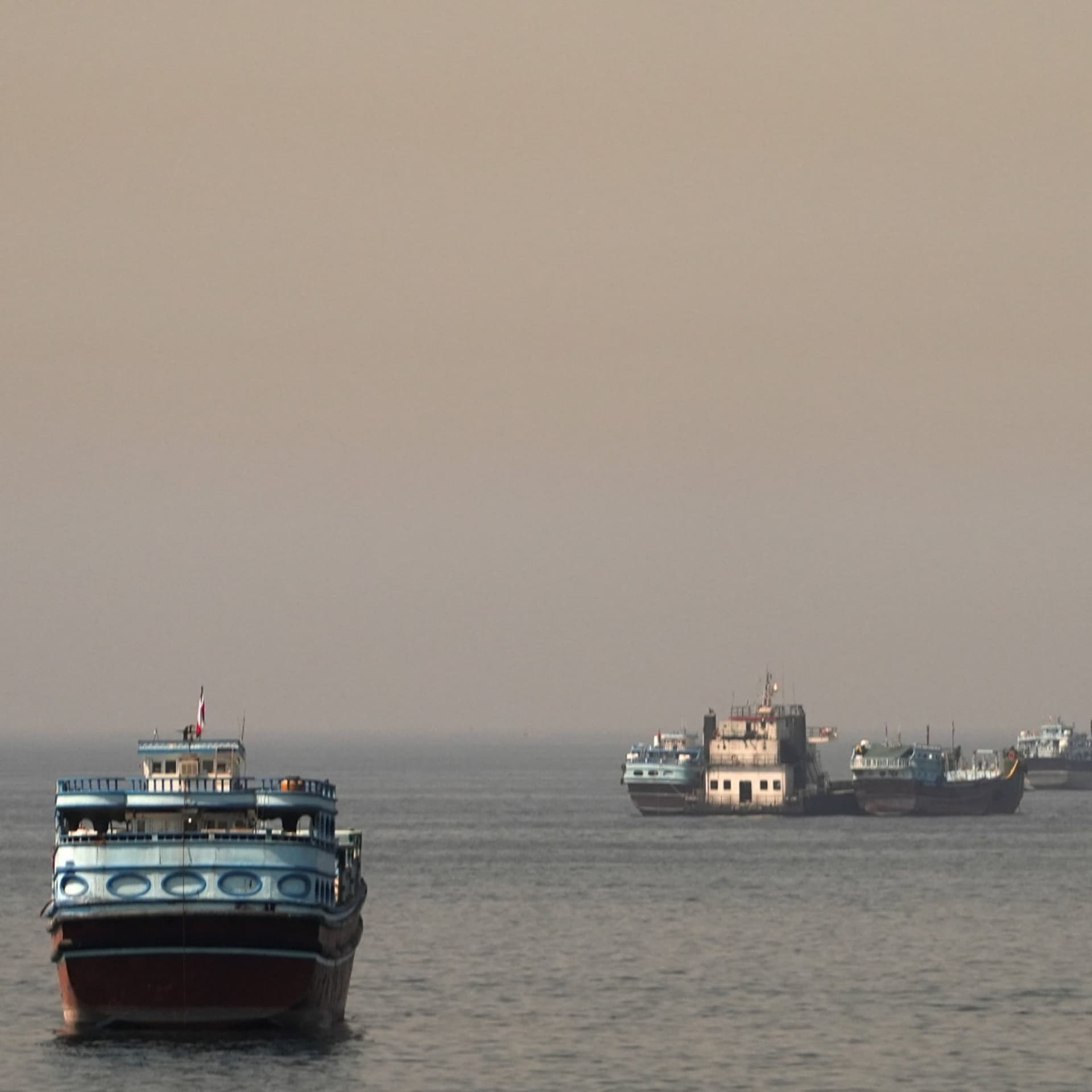
2:41As we record this podcast, marine tracking platforms say at least four tankers have sailed through the Strait of Hormuz after Iran and the United States signed a memorandum of understanding on ending their war. The key shipping route has been caught in the crossfire between Tehran and Washington over the past four months, wreaking havoc on the global economy. It was, of course, open and operational before the US and Israel began launching their strikes on Iran. The deal is now supposed to secure free passage through the strait for at least 60 days. I've been speaking to our business presenter, Rahul Tandon.
3:17We are beginning to see a few ships going through the Strait of Hormuz and this is such an important waterway choke point for the global economy in some ways. 20 % of global oil, 20 % of liquefied natural gas goes through there as well. The problem is that we're seeing a few ships going through, nowhere near the traffic that we would normally see. And when I speak to shipping companies, they say this is going to take some time. Why? Insurance problems. Insurance is still very high. Safety concerns still. Will this peace hold? And for how long will it hold? And also mines. How many mines have Iran put in there?
3:51So good news if you're sitting at home when you think there's a peace deal or some sort of deal coming, because it could mean that prices at the pumps go down wherever you are in the world, but they might not go down as quickly as you think. And so long term, what does it mean for the global economy? I mean, will it be able to bounce back or will this war have a huge effect? Well, if you're listening at home, the global economy, like you, have had many shocks. The pandemic caused huge shocks to the global economy. What happened in Ukraine caused huge shocks to the global economy and this as well.
4:24And so it is bouncing back, but it is taking longer and longer to do so. And wherever you are in many parts of the world, you will see the impact of these prices are continuing to go up. Inflation is rising. We are seeing oil prices come down. If I look at the figures in front of me at the moment, a barrel of Brent crude is below$80. At one point, it was up to$130. So that is good news. It will happen, but it will happen slowly. And that is only if the Strait of Hormuz remains open. And that is a big question. And Rahul, analysts are saying this points up the dangers of relying so much on one route for trade.
4:58So do you think companies and countries will look for other ways of transporting fuel? Well, look, as we said, it's about a fifth, isn't it, of a lot of those important suppliers going through that? Yes, they will, but it's not easy. Pipelines could be used, but building pipelines takes quite a long period of time. Ships can go down the Cape of Good Hope around the tip of Africa. But for you and me, if they do that, Valerie, it means costs go up because it's going to be a lot more expensive for shipping companies to do that. One thing that we may see is the countries looking at their own fossil fuel resources near to them.
5:31And we're seeing that here in the UK, also in parts of the Caribbean as well. And maybe it could in some ways shift the move to green energy, which, of course, we wouldn't have to transport for countries doing that. But in the short term, it's the Strait of Hormuz. There is no other way for these supplies to move in any other way. Rahul Tandon. And you can hear more from Rahul on the Business Daily podcast. So who has gained most out of the agreement signed by the US and Iran aimed at ending the war? President Trump claims the Memorandum of Understanding is a major win for the US, but Iran's chief negotiator, Mohammad Bagha-Galabaugh, described it as a record of failure for the Americans.
6:12According to the document, which sets out a framework for negotiations, Iran, the US and their allies will halt all military action, including in Lebanon. Iran has repeated its promise not to develop nuclear weapons, and the two sides will discuss the issue of Iran's enriched uranium. At the same time, sanctions on Iran will be lifted and the US will oversee a$300 billion reconstruction package for the Islamic Republic. So, which side got most out of the deal? Lise Doucette is our chief international correspondent. They both got a deal and that is really important. It's important not just for the United States and Iran, it's also important for the world.
6:53as we've been reporting week in, week out. This war has had far-reaching consequences with the closure of the Strait of Hormuz. So immediately, the fact that that is now open, that's a win for President Trump. You saw some of his true social posts saying oil prices are coming down, stocks are going up. And he said that in response to the critics in the United States. Some of his harshest critics are saying this is appeasement, that this is surrender for the United States. And I think that if you look at the deal, and of course, it's only the first part of the deal, that Iran has done very, very well.
7:31You look at what is the core issue, the nuclear program. In the text, and I have to emphasize that's still not being public. We just said leaks, a 14-point framework of a memorandum of understanding. Iran reaffirms its commitment not to develop a nuclear weapon. Well, it's been saying that for years. It also said in the 2015 landmark deal, which President Trump pulled out of in his first term. When it comes to nuclear enrichment, the only real detail in this first framework is something they call blending down the 440 kilograms of uranium enriched to 60 percent, dangerously close to weapons grade.
8:13There is no mention of President Trump's repeated demand that Iran should ship all of its highly enriched uranium to the United States. And finally, I would point to the Strait of Hormuz. It will remain toll free for 60 days, but then there will be a regional dialogue. And really for Iran, that's code for that. Iran is going to, it's already working with Oman, who controls the southern edge of the strategic waterway, to impose some kind of, don't call it tolls, call it fees, call it services. But it is in the second phase where Iran will then, then perhaps the United States will be the one to see whether Iran makes the kind of concessions to get both sanctions lifted and its assets unfrozen.
9:00And Lise, what about Israel? Because despite the promise to end the war on all fronts, including in Lebanon, Israel insists its forces will remain there where they're fighting Hezbollah. This deal has been disastrous in so many ways for Israel. First of all, Israel is not part of the deal, but it's being told to cease all its activities in Lebanon. The Defence Minister of Israel said that they are going to continue to occupy with their troops at parts of Lebanon. They're going to continue to strike when Hezbollah strikes them or when they feel their interests are threatened. There's been criticism right across the political spectrum in Israel.
9:41And Prime Minister Netanyahu is coming under huge pressure, not just for the deal, But the way that President Trump has been speaking about him as being the junior partner, as not being responsible enough when it comes to Lebanon, that he gets excited, he blows things up just for the sake of getting one or two people. It's hugely embarrassing while the two of them continue to say they have a great friendship. This is a really pivotal moment in their personal relationship, but also I think in the history of relationships between these two very strategic partners. Lise Doucette and we have more analysis on the US-Iran deal on our YouTube channel.
10:20Search for BBC News on YouTube and you'll find Global News Podcast in the podcast section. There's a news story available every weekday. AI chatbots have regularly come under fire for generating explicit violent and sexual content. Many of the big tech companies behind them have pledged to introduce safeguards to protect both users and those, often women, whose pictures are used to create sexualised images. Now, researchers say the latest version of OpenAI's ChatGPT can be made to create graphic content with a simple prompt, despite the company saying it had introduced additional measures to stop such images.
11:00Peter Garahan is the founder of the AI security startup MindGuard, which put the system to the test. It is a game of cat and mouse. There are an infinite number of ways you can attack something. I mean, so many ways you could defend to respond about that. I think that with this particular story, it isn't that we were able to do it successfully. It was how easy it was. The researcher tasked upon this was incredibly shocked. They were not expecting these things and they had to take time off to recover from this. I got more from our senior technology reporter, Chris Fallons. This in many ways reflects a sort of real challenge for this type of AI, of generative AI, which is getting it to stick to its guardrails.
11:42I mean, experts we've spoken to call it a game of whack-a-mole, a game of cat and mouse, if you like, in the sense that people come up with ways to jailbreak the system, to get it to break its own rules, and then the companies roll out fixes. The AI Security Institute, that's a UK government body, found that it was able to jailbreak all the big models that it tested. But they did say it was getting harder. So it does seem that the AI companies are getting better at getting their models to stick to the guardrails. And I guess there is a sort of deeper problem here as well, which is that they don't really understand what they're being asked to do or what they are creating.
12:25What do you mean they don't understand what they're being asked to do? You mean the AI doesn't? The AI doesn't understand in the way that we would understand. So, for example, with this prompt, what it's being asked to do is quite innocuous. So it may not trigger alarm bells within the model itself. But I think a human might look at that and say, this looks really odd and weird. Why am I being asked to do that? So in a sense, what the AI companies are faced with is the challenge of sort of specifying rules for everything, rather than, you know, if you like, if it's a human, you might sort of, they might sort of see the output and go, oh, that looks concerning.
13:04I'm not going to present that to the user. Whereas the AI model is trying to follow, if you like, a set of rules, a set of criteria. So their understanding of what's bad and good is different from a human's understanding. Well, I suppose they don't have human judgment yet. What does it go? Yes, exactly, exactly. And what does the parent company, what does OpenAI say? Well, OpenAI say we take these reports seriously after After investigating this trend, we've introduced additional safeguards against this type of prompt. Our safety systems are designed to block potentially harmful images that are uploaded to ChatGPT, and we analyze whether the AI-generated image violates our policies before we show them to the user.
13:46We also combine automated systems and human review to identify and block harmful material. And I think just to translate that a little bit, what they're saying there is they also have separate AI systems, if you like, scanning the output, trying to spot things that would be against its rules. Does this all depend on, shall we say, the authority of the parent companies like OpenAI? Or are there rules in place, legal rules in place for this now? There are some things that certainly are on the statute books in various parts of the world about certain types of AI-generated content and existing laws.
14:26For example, this wasn't the case in this case, but there are laws that apply to AI-generated child sexual abuse material, non-consensual sexual images. There are rules around this, and we've seen investigations launched against AI companies where they have crossed those laws. So there is regulation around this. I think it's fair to say that it's a moving target with AI companies. The capabilities of the models keep changing and regulation has to keep up with that. Chris Vallance. Still to come in this podcast. The popularity of coming to visit this amazing tree over the last 200 years have really had a very detrimental effect on the soils around the tree.
15:12How an historic oak tree with its roots in the legend of Robin Hood has reached the end of its life.
15:48with any toppings for$9.99. Finally something everyone can get behind. And if the refs disagree, that's between them and Domino's, which means the only thing left to fight over is who's ordering. Dom. Domino's. Price is higher for some locations. Excludes XL and specialty pizzas. Select this offer from$6.15 to$7.26. Online only. Size availability varies by crust type. Max seven toppings. Six for pan and New York style crust. Minimum purchase required for delivery. Prices participation delivery area and charges may vary. Here's golf legend John Daly. Hell yeah, these wins are piling up faster than my divorces.
16:19I only spent on Moto, America's Social Casino. You know I've won a couple of majors. And on Moto, I've won majors, grants, and epic jackpots on their classic Vegas slots with huge, huge bonus rounds. Moto Casino adds new games and awards players free coins every single day. Grip it and spend it on Moto Casino. Download the Moto Casino app today. Moto Casino is a social casino. What we're prohibited to purchase necessary, visit Moto.us for more details. Moto Casino, America's Social Casino. Hey, it's Ryan Seacrest for Jewel Osco. For you, save days are here now through June 23rd. Find hot deals throughout the store and earn four times a point.
16:54Look for in-store tags to earn on eligible items from Triscuit, Quaker, Reese's, and Dots pretzels. Then clip the offer in the app for automatic event-long savings. Stack up those rewards to save even more. Enjoy savings on top of savings when you shop in-store or online for easy pickup or delivery. Restrictions apply. See the website for full terms and conditions. Hey, it's Ryan Seacrest for Jewel Osco. Now through June 23rd, shop for You Save Days and get great savings on all your favorite personal care essentials and earn four times points. Shop in-store or online and save on items like head and shoulder shampoo, Pantene shampoo, Tres-A-Mai conditioner, L 'Oreal hair dye, Tres-A-Mai hairspray, and Aussie Miracle Curls and earn four times points to use for future savings on groceries or gas.
17:38Offer ends June 23rd. Restrictions apply. Offers may vary. Visit JewelOsco.com for more details.
17:47A little over a month after the Ebola outbreak was declared in the Democratic Republic of Congo, the African Union's health agency says it's now claimed more than 200 lives. The most contagious phase of the disease is when an infected person dies, and so how the dead are handled determines in a very big way how quickly an outbreak can be controlled. Burials have long been linked to mass infection events during Ebola outbreaks. The BBC's Anne Soy has been speaking to volunteers as they bury victims of Ebola in Ituri province in the northeast of the DRC.
18:28It's a very emotional time just outside the Ebola treatment unit and behind me is a family waiting for their child. We have seen some of the healthcare workers inside, fully kitted in personal protective equipment, bring out a body that looked like a child's body. And now the Red Cross volunteers have just arrived. They will also put on the personal protective equipment, and then the medics on the inside will hand over the body to them. We are about to accompany the family of a 34-year-old mother of four. She has died from Ebola.
19:14It's a big blow for our family. That's the deceased woman's father, Simone Nyal. She was not ill for long. Only one week and then she died. She's left behind children. I don't know how we will cope. They have now placed the coffin on the pickup truck and now they are removing the personal protective equipment that they wore here and that is done sequentially as another team observes, making sure there's no chance of infection.
19:52We've now come to Nyamurongo Cemetery and the Red Cross team is wearing white aprons and they've just lowered the body into the grave. There are few members of the family here. It's a very short session. The volunteers have gone back to the car. I think this is the quickest burial I've ever attended. Next to Simone's family, we find Joel Lonzama-Kombo alone covering his mother's grave. He has lost three sisters, a brother-in-law and his parents in a matter of days. Today is the sixth I came here. the cemetery to say bye for members in my family. My father yesterday and today you see I'm here just to say bye for my mama.
20:44I want to say for all of people that Ebola is true. I have never seen anything like this. There's so many families here that have come for burials just today and this is happening every single day. There are many freshly covered graves, many more being dug today. The number of people being buried in just this cemetery in Bonia is high. Even the locals are saying that this is not usual. The International Federation of the Red Cross and Red Crescent says hundreds of community volunteers have signed up to help families conduct safe burials. It's very cultural. That's why we adapt the procedure as much as possible to match the needs of the families and the communities.
21:31Maria Munoz is the coordinator for public health emergencies at the Red Cross. She shows me how they have modified body bags to enable families to view their loved ones safely. Families often want to make sure that it's their loved ones in the back. We can show them the face of their loved one once the body is secured, the back is disinfected. There have been incidents of violence when some families have tried to take the bodies of their relatives forcefully, rejecting safe burial protocols. It's a difficult period for both the community and volunteers trying to help them to stop Ebola. It's challenging but vital work to help bring the outbreak under control.
22:13And soy in the DRC. Plumes of thick smoke have been seen above the Russian capital as Ukrainian drones struck a major oil refinery for the second time in a week in what looks like the heaviest drone attack yet on Moscow. For its part, Russia launched overnight attacks on the Ukrainian capital Kyiv as well as on the northeastern city of Sumy. Oliver Conway heard more about the impact in Russia from Steve Rosenberg. We're in the centre of Moscow, not so far from Red Square, But I think even from here we can see the clouds of thick smoke in the distance. Yeah, Muscovites woke up this morning to the news that their city was under attack again.
22:53It's not the first time that the Moscow region has been attacked by Ukrainian drones. But the scale of this particular strike does seem to have been pretty large. Judging by the figures, the official figures that the Moscow mayor, Sergei Sabianyan, quoted earlier today. He talked about, first of all, 180 Ukrainian drones having been shot down by Russian air defences. Then he added some more to that. So we think around 200 or so Ukrainian drones, according to official Russian figures, were shot down on their way to the Russian capital. There has been damage. It's not clear to me yet whether the damage was caused by drones that were shot down or by drones that penetrated air defences.
23:33But the Moscow mayor himself has said that the Moscow oil refinery in the southeast of the city was hit for the second time in three days, actually. There's video on social media of thick black smoke rising above this oil refinery. Reports of other damage, too, outside the city. So, yes, muscovites are getting used to these kind of reports now. Yeah, I mean, for the first few years of the war, people in Russia were largely shielded from the effects. Are these kind of attacks starting to make them change their minds about the so-called special military operation? Certainly these kind of attacks are making people realise and face the fact that there is a war going on.
24:16You're absolutely right. For the first two or three years, many people in Russia, certainly here in Moscow, carried on as normal. For many people, the war was something that happened on television, a long way away from them. It didn't impact their lives directly. But of course, when there are Ukrainian drones coming pretty close and causing damage to an oil refinery, to an apartment block, to a shopping centre, this brings it home. It brings home the fact that actually the front line in this war is not hundreds of kilometres away in Ukraine, but sometimes it's here in the Russian capital. We know that there is this sort of deep sense of fatigue with the war.
24:56Surveys show it. Conversations on the streets show it. People feel more and more that the war is impacting their lives, economically, for example, and also more and more people know other people who are fighting in Ukraine and being injured and being killed. A Russia editor, Steve Rosenberg. When we think of sharks, we tend to imagine large predators, mouths filled with razor-sharp teeth, hunting for prey deep beneath the waves. But, and I don't want to worry you here, there are actually several species of shark that can walk with most of their bodies out of the water. Now scientists have identified a new species of walking shark in Papua New Guinea.
25:41Richard Hamilton reports. Walking sharks are less than a metre long, have colourful markings, and live in shallow water in northern Australia, eastern Indonesia and Papua New Guinea. They have evolved an unusual adaptation which allows them to move across the reef flats at low tide using their pectoral and pelvic fins like little legs. Occasionally they drag themselves out of the water over small stretches of dry land to get into the next reef pool. There were nine species of walking shark known to science but now there are ten. This one is named after Christine Dudgeon from the University of the Sunshine Coast in Queensland, who discovered it.
Read the full transcript
26:25We were on an expedition in Papua New Guinea looking for a known species of walking shark, which is known as the Millen Bay walking shark. They tend to be more active at night time. The water was a little bit deeper, so it was about one metre in depth, and so we were snorkelling around at the time when we found it. Because they're quite small, they're actually reasonably easy to catch. So this one was just swimming along the bottom, I shone the torch in front of it, which made it stop for a moment. And then I was able to sort of dive down quickly and grab it behind the head. And then I just secured the tail under my armpit because they're quite wriggly, so they will try and sort of get away.
27:08And that's really all that's required. It's not too difficult. Once back in the laboratory, Christine's team carried out DNA tests, which confirmed the new shark was genetically distinct from all the other known species. Papua New Guinea's walking sharks are believed to be under serious threat from habitat loss, which is caused by coastal development, the expansion of palm oil plantations, as well as coral bleaching. As the new shark is only thought to live in a small area, the researchers think it's probably the most endangered of all the ten species. Richard Hamilton. And finally, a story that sits somewhere between myth and reality.
27:53In the heart of Sherwood Forest in the English county of Nottinghamshire lies an ancient oak tree. According to local folklore, hundreds of years ago, the hero Robin Hood, known for robbing the rich to give to the poor, took shelter inside the huge oak when he was hiding from the Sheriff of Nottingham. A story perhaps with its roots in real events. The more than a thousand year old tree is still there, though it's now believed to have died despite conservationists' best efforts to keep it alive. Anna Foster spoke to Chloe Ryder, who's the Sherwood Forest Estate Operations Manager. It's a really sad situation and it is actually the combination of a series of really complex challenges that the major oak has faced right in the end stages of its vast lifetime.
28:39a combination of human interventions that have been very well intentioned in the efforts to preserve its iconic form but also the popularity of coming to visit this amazing tree over the last 200 years have really had a very detrimental effect on the soils around the tree and all of those footsteps and even vehicles in times gone by have squashed these soils and it's really restricted the amount of life and activity not only in the soils but those connections between the root system and the soils and it's been hidden for a long long time so we've only just been able to understand exactly what's been going on beneath the surface.
29:18And this is the first spring where it's had no leaves I'll be honest Chloe I'm not a gardener so this might be a really silly question but I'm going to ask it anyway for all of us who aren't. Once you've had that can it be brought back again? Are there things that you can do to try to revive it or is that really the end? so there really isn't a tree like the major oak anywhere else in the world it's had such a challenging past it's had loads of interventions there's nothing quite like it so there are always uncertainties but the amazing team of scientists that we've worked with very closely over the past few years all have got a massive experience in in tree physiology and understanding kind of what can happen.
29:58And they're all in the same belief that what we've found in this really deteriorated root system, it means that it really can't support itself anymore. If that's the case, do you leave it as a monument or does it have to be chopped down? Oh, definitely not. No. I mean, the Major Oak is going to continue to be a focal point of Sherwood Forest for decades, maybe even centuries. Its iconic form is going to go nowhere. Chloe Ryder speaking to Anna Foster. And that's it from us for now. If you want to get in touch, you can email us at globalpodcast at bbc.co.uk. You can also find us on X at BBC World Service.
30:38Use the hashtag Global News Pod. And don't forget our sister podcast, The Global Story, which goes in-depth and beyond the headlines on one big story. This edition of the Global News Podcast was mixed by Chris Lovelock, and the producers were Stephanie Zacherson and Paul Day. The editor is Karen Martin. I'm Valerie Sanderson. Until next time, bye-bye.
31:25From the makers of Grammarly, Go is an AI chat that sits inside every tab and tool you already use. Always available and ready to help you with what you're working on. Ask it to draft something, summarize a long thread, pull up a file, or prep you for a meeting. Go handles it without you ever leaving the page you're on. This is what it looks like when AI actually fits into your work, instead of adding to it. It's like having a teammate whose only job is to help you be better at yours. Go keeps up so you can move forward. And with Go working with you, you can show off what you do best. See what Superhuman Go can do at superhuman.com.
32:03That's superhuman.com.
From the publisher
Marine tracking platforms say at least four tankers have sailed through the Strait of Hormuz after Iran and the United States signed a memorandum of understanding on ending their war. The first to pass into the Gulf of Oman was a French-flagged vessel carrying liquefied natural gas. Three Saudi-flagged oil tankers followed. Our chief international correspondent, Lyse Doucet, assesses where next for the Middle East. Also: Ukraine carries out one of the biggest ever attacks on Moscow. We speak to volunteers as they bury victims of Ebola in the Democratic Republic of Congo's Ituri province. New research reveals ChatGPT by Open AI can be made to generate sexualised and violent images, despite the company saying it had introduced additional preventive measures. A new walking shark species which uses fins like legs found off Papua New Guinea. And famous Robin Hood oak tree in England's Sherwood Forest declared dead.
The Global News Podcast brings you the breaking news you need to hear, as it happens. Listen for the latest headlines and current affairs from around the world. Politics, economics, climate, business, technology, health – we cover it all with expert analysis and insight. Get the news that matters, delivered twice a day on weekdays and daily at weekends, plus special bonus episodes reacting to urgent breaking stories. Follow or subscribe now and never miss a moment. Get in touch: globalpodcast@bbc.co.uk
Photo: Vessels at the Strait of Hormuz, as seen from Musandam, Oman, June 18, 2026. Credit: REUTERS/Stringer