
In short
The episode is a BBC World Service Global News roundup plus short features. Main topic: whether US-Iran “peace talks” are real after Trump threatened to strike Iran’s power plants if the Strait of Hormuz stayed shut. Tehran’s parliament speaker Mohammed Bagher Alibaf calls the talks “fake news” to manipulate oil/financial markets; US officials say Trump’s envoy Steve Witkoff and Jared Kushner spoke with an unnamed Iranian regime figure (thought to be Alibaf) and talks could expand in Pakistan, possibly with JD Vance. Bolton argues it’s likely market-management and a premature “victory” without a real exit strategy; Chatham House’s Salaam Fakil says the threat would have triggered regional retaliation and may be “testing the waters.”
Notable examples
Strait of Hormuz still closed; Israeli PM Netanyahu acknowledges US thinks a deal is possible.
Guest backgrounds
John Bolton (former US National Security Advisor, Trump’s first term); Salaam Fakil (Chatham House MENA head); Jeremy Bowen (BBC international editor); David Willis (US correspondent); Jolande Nell (Middle East correspondent); Ioni Wells (South America correspondent); Anna Iovine (Mashable); Dr Luke Rendell (Marine Mammal Science Journal author); Charles Foster (Oxford exhibition curator; barrister and veterinarian); Chantal Hartle (science reporter); Sean Lay (Oxford feature reporter). Other segments cover Colombia’s military plane crash (66 dead), OnlyFans founder Leonid Radvinsky’s death, sperm whale head-butting filmed in the Azores, and an Oxford pet-ownership exhibition.
Written by AI. May contain mistakes. Listen to the episode to check what was said.
Chapters
Tap a time to open that second in VOIran and US Peace Talks Analysis
1:17 to 2:52
Explore the conflicting narratives about US-Iran peace talks.
“We're recording this at 5 o 'clock GMT on Tuesday 24th March.”
Bolton's Perspective on Negotiations
2:52 to 4:13
John Bolton shares insights on the credibility of negotiations with Iran.
“But Iran says there have been no negotiations.”
Details of US-Iran Talks
4:13 to 7:27
Update on potential negotiations and key individuals involved.
“So what is actually happening in terms of negotiations, if anything?”
Speculations on Trump's Strategy
7:27 to 9:49
Analysis of Trump's approach towards Iran and the implications.
“Despite the heavy blows and the decapitation strategy underway, the Iranian system is still intact.”
Israeli Settler Attacks Update
9:49 to 14:00
Report on rising violence by Israeli settlers in the West Bank.
“With the world focused on the Iran war, there's been an increase in Israeli settler attacks in the occupied West Bank, the larger of the two Palestinian territories.”
Escalating Settler Violence Against Palestinians
14:00 to 14:39
Learn about the recent increase in violence against Palestinians amid the ongoing conflicts.
“the disturbances, violent assaults with several people hurt in this village, including one man shot in the foot.”
Colombian Military Plane Crash
15:40 to 17:40
Explore the details surrounding a tragic military plane crash in Colombia.
“Is Venezuela Donald Trump's model for regime change?”
The Impact of Leonid Radvinsky's Death on OnlyFans
17:40 to 19:14
Examine the significance of the OnlyFans owner's passing and its implications for the platform.
“all of which seems to have detonated as a result of a fire on the aircraft, causing this huge flames and smoke, as we've seen in these videos.”
The Rise of Sperm Whale Head-Butting Behavior
19:14 to 24:21
Learn about groundbreaking footage capturing sperm whales engaged in head-butting interactions.
“It's you have to make an account and put in your credit card information in order to subscribe to a creator.”
Understanding Our Relationship with Pets
24:21 to 28:03
Delve into how pet ownership impacts human lives and the cultural significance of pets.
“Moving on to smaller animals now, and is your pet controlling your life?”
Show all 12 chapters
The Quirky Phenomenon of Pet Rocks
28:03 to 28:43
Learn about the humorous trend of pet rocks and its cultural impact.
“started to market pet rocks, and we've got one of them here.”
Venezuela and Trump’s Regime Change Strategy
29:05 to 29:25
Explore the implications of Trump’s strategies on Venezuela and its citizens.
“Is Venezuela Donald Trump's model for regime change?”
Transcript
Automatic transcript. May contain errors.0:00This BBC podcast is supported by ads outside the UK.
0:30Amazon and plenty more. So if you want to be smart with your wallet, your career choices, in meetings with your colleagues and at dinner parties, listen to Big Technology Podcast wherever you get your podcasts. Is Venezuela Donald Trump's model for regime change? As Venezuela's ousted President Nicolas Maduro prepares to go to court in New York this week, we're inside his home country exploring how well Donald Trump's plans are going for Venezuelans and for the US. Listen to The Global Story on bbc.com or wherever you get your podcasts.
1:11You're listening to The Global News Podcast from the BBC World Service. Hello, I'm Oliver Conway. We're recording this at 5 o 'clock GMT on Tuesday 24th March. The Speaker of the Iranian Parliament denies claims by President Trump that peace talks are underway between Iran and the US. The Colombian military says 66 soldiers have died in a plane crash, and we report on the increase in Israeli settler attacks in the occupied West Bank. Also in the podcast... A Swarovski cat flap studded with crystals. You can buy enormously expensive satin pyjamas for your dog or your cat, and even your ferret. Is your pet controlling your life and your wallet?
2:05In the face of turmoil on the markets and defiance from Iranian hardliners, President Trump has for now backed down on his threat to obliterate Iran's power plants. He had said he would target them if the Strait of Hormuz was not reopened within 48 hours. That deadline has now passed and the crucial waterway remains shut, but the US has not attacked. Instead, Mr Trump says he's paused the threatened strikes because peace talks are underway. We are now having really good discussions. They want peace, they've agreed they will not have a nuclear weapon, etc., etc. But we'll see, you have to get it done, but I would say there's a very good chance.
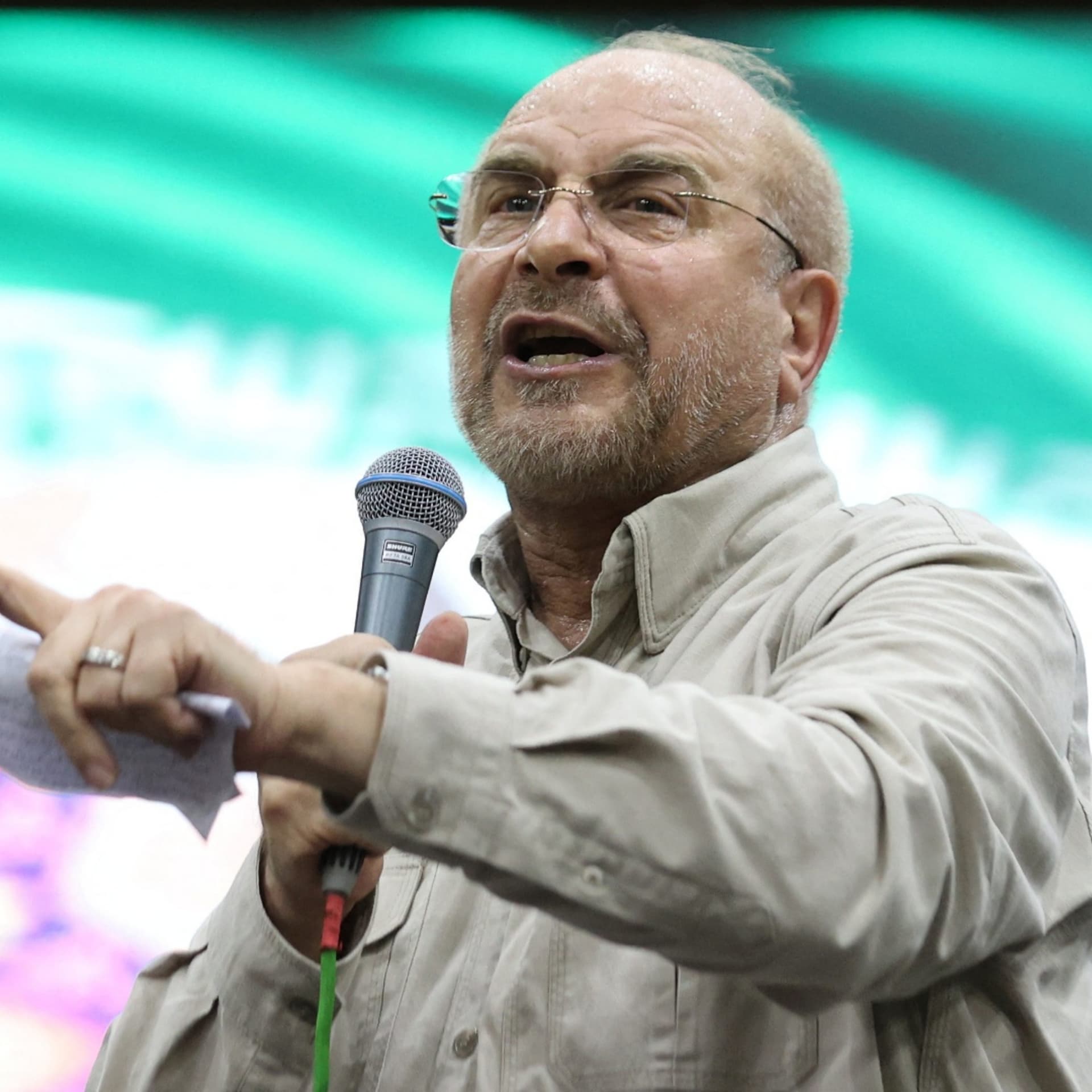
2:45And so we're giving it five days and then we're going to see where that takes us. and I would say at the end of this period, I think it could very well end up being a very good deal for everybody, as good as if we went all the way and just literally annihilated the place, which if we don't have to do that, that would be a good thing, not a bad thing. But Iran says there have been no negotiations. The Speaker of the Iranian Parliament, Mohammed Baga Ali Baf, mentioned as Iran's possible negotiator, said it was all fake news to manipulate the financial and oil markets. John Bolton was U.S. National Security Advisor in the first Trump term.
3:24What does he make of it all? I find it a little bit difficult to believe that there really are negotiations with Iran that are as close to bringing an end to the war as he says. I think he was very worried about the markets in Asia, and it was convenient to avoid a bloodbath on American stock exchanges too. And it may cause him to declare victory where victory doesn't exist. What we're doing is showing our weakness by allowing Iran to dictate the terms on which the struggle is going to end, that they'll open the Strait of Hormuz when they choose to. So we could lose a very significant opportunity here because Trump feels the domestic political pressure and is looking for an exit no matter what the long term consequences, much of which might be felt after he leaves office.
4:13John Bolton. So what is actually happening in terms of negotiations, if anything? I asked David Willis in the United States. President Trump has said that talks are underway and that his special envoy Steve Witkoff and his son-in-law Jared Kushner held discussions with an Iranian official yesterday and will continue to talk to that official today. and that the talks were involving, he said, a top person in the Iranian regime whom he wouldn't name, although he did confirm that it wasn't Iran's new supreme leader. The individual in question is thought to be Mohammed Baga Khalifbaf, who is the Speaker of the Iranian Parliament.
4:54And there are reports that Steve Witkoff and Jared Kushner could meet a negotiating delegation from Iran as early as this week in Pakistan, possibly with the US Vice President J.D. Vance joining those talks. The White House hasn't denied those suggestions and an administration official confirmed that President Trump did indeed speak by phone today to Israel's Prime Minister Benjamin Netanyahu. And Mr. Netanyahu afterwards acknowledged that the US thought a deal with Iran was possible. The Iranian foreign ministry spokesman said that messages had been received from friendly countries, and that's thought to be Egypt, Pakistan, the Gulf states, indicating that the United States was in favour of negotiating an end to this conflict, although that particular individual denied that any such talks had so far taken place.
5:52The majority of people here, Oliver, remain opposed to this conflict, and they've seen petrol prices soar. They've seen the conflict drag on. It's now entering its fourth week. And they've heard plenty of mixed messaging from Donald Trump in terms of both timelines and objectives. David Willis. But why is President Trump talking peace just 48 hours after threatening to wipe out Iran's energy infrastructure? Salaam Fakil is head of the Middle East and North Africa programme at the Chatham House think tank. First of all, this was a very bad threat to make because striking Iran's electricity grid, its power capabilities would have 100 % resulted in retaliation across the region.
6:38And there has certainly been lobbying from Gulf countries, if not more, to perhaps get President Trump to walk back a bad decision. Secondly, of course, there is the persistent speculation that President Trump is trying to manage the markets. So Trump quickly on Monday morning tried to temper oil prices, which are expected to continue to go up. But thirdly, there's nothing wrong with test running what negotiations would look like. I don't think that this is going to quickly end or cease this war. But this could be a first effort at testing the waters. And from what I hear, it is Iran's Speaker of the Parliament, Mohammad Bagheer Alibov, who is in communication with a new American interlocutor that could be J.D.
7:26Vance. Despite the heavy blows and the decapitation strategy underway, the Iranian system is still intact. It's intact because it's not personalized. It's bureaucratic and institutional. And it still has plenty of individuals working in that system that have history, that have experience, that have decision-making authority. And Galibov has been Speaker of the Parliament for quite some time, but he's been a well-known figure within that system. He also sits on the Supreme National Security Council, which is the body where theoretically foreign policy decisions are made in consensus and recommendations are put forward.
8:06Sanam Pakil of Chatham House. With his analysis of what possible negotiations may involve, here's our international editor, Jeremy Bowen. If there were talks, the agenda would have to be massive and complicated. What about the enriched uranium that could be used to make a nuclear weapon? What about the alliances Iran has around the region, like Hezbollah in Lebanon? And what about the Strait of Hormuz, the most potent weapon that Iran seems to have discovered, and in fact knew about all along. Plenty of people ask, why didn't President Trump know about it? The Iranians, if it is that kind of real negotiation at some point, will make their own demands.
8:46They'll want to retain control in some way of the Strait of Hormuz, maybe lift sanctions, maybe get some assurance that the Israelis are not going to attack them. So I think that what we're seeing right now, is it perhaps Trump preparing a declaration of victory? Gulf states don't want to be left with a mess in the region. Or is it simply an attempt to reassure the markets? That seems to be one of the most credible things. The point is, though, to have victory in war, you need a defined objective. You need a clear exit strategy. You need a plan for what's coming next. And the evidence is that he had none of those things, whereas Iran has had this plan to make this into a war of attrition.
9:27And what President Trump has done has dismissed all those worries and doubts that previous American presidents have had about attacking Iran because of all the difficulties it would cause. And I think he's discovering that that's why they chose not to destroy the Islamic Republic, but try to contain it instead. Our international editor, Jeremy Bowen. With the world focused on the Iran war, there's been an increase in Israeli settler attacks in the occupied West Bank, the larger of the two Palestinian territories. Six Palestinians have been shot dead by settlers this month, according to the local health ministry.
10:07Over the past two nights, settlers have gone on the rampage after an 18-year-old settler was killed in a car crash. At least 10 people were injured in a village east of Nablus, from where our Middle East correspondent Jolande Nell reports.
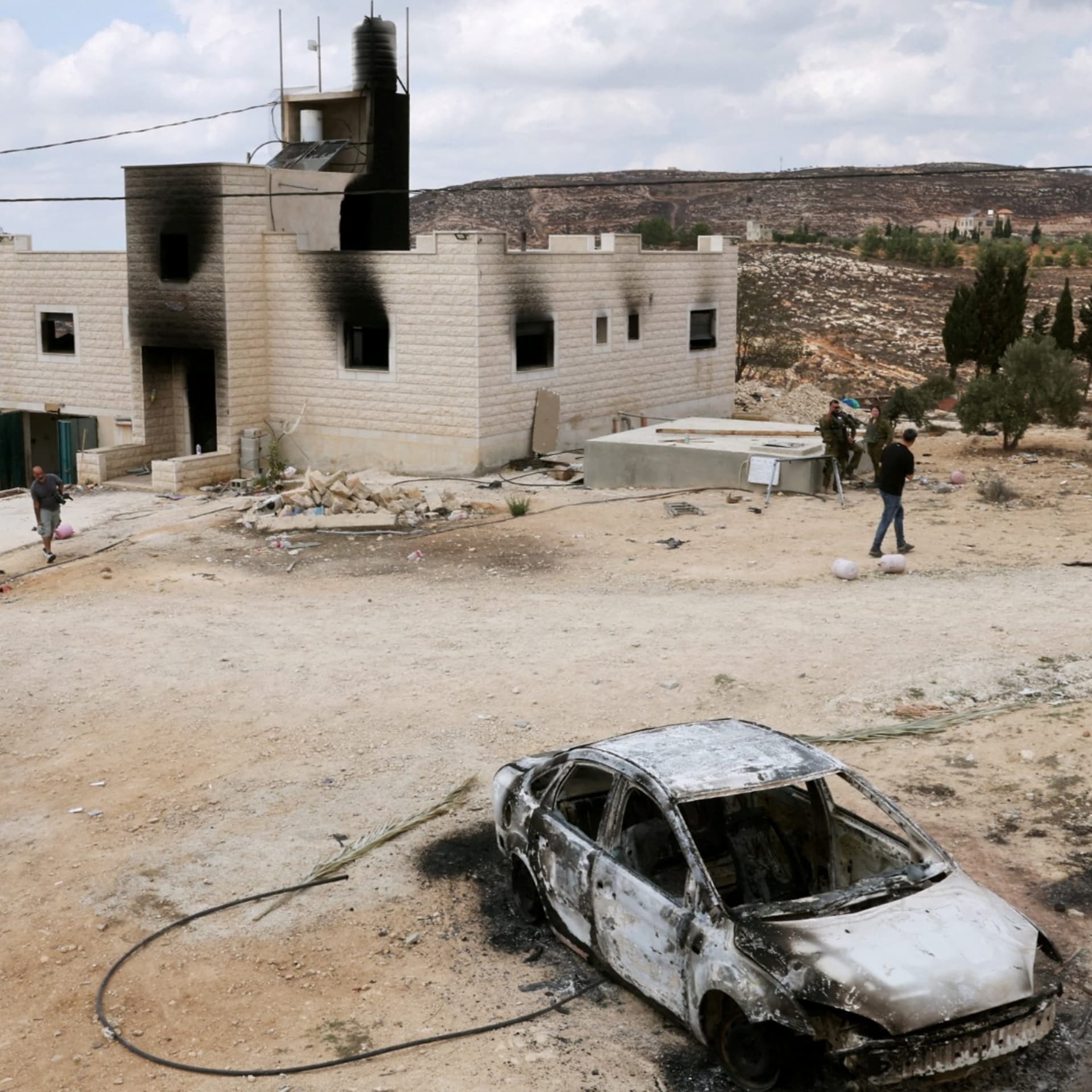
10:25I've just come into what must have been, just one day ago, a very smart villa, a multi-storied house, and now it has been burnt to ashes inside. All the furniture is charred. It was set alight in a big settler attack. The family was just here watching television. There's what remains of the TV screen there up on the wall. The house belongs to Barhan Omar, who's a bank manager. He built this house for his family.
11:03We had taken precautions, but we're not expecting so many of them to come. We thought they wanted to kill us. It was terrifying when you are sitting with your family and your children, and then you come under attack.
11:21I'm crying out of fear for my children. This is a village. It's called Dir Al-Hattab. It's on the eastern side of Nablus, surrounded by olive groves. And this is the road which locals say was absolutely packed last night. with settlers. There's still graffiti that's up on the walls, a Star of David over here. And it's here that villagers say dozens of settlers forced open a big black iron gate and entered into another property. There's what remains of a car here, really just the wreckage of a car at this point. This is the house of Samor Omar and his wife. They were here with their four children and didn't expect anything like this at all.
12:14It was so scary. I never imagined something like this would happen. My daughter ran inside and told me the settlers are burning the house down. I took my family outside because we were suffocating from the smoke. I didn't know what to do because the settlers were throwing stones at us. We had our hands on our heads. so samar has shown me up the stairs to the rooftop where there's a wooden ladder he was saying that his daughter was so frightened she could barely get up here but this is the only way that his family managed to make it out of the house to get up here on the very top of the roof away from all the smoke and the stones that were being thrown in this direction and from here you've got a really good view all around.
13:00I can see the built-up city of Nablus over on one side and then here past all of the olive trees which locals say belong to the village but they're no longer able to go to them without getting a permission from the Israeli military. Well here on the hillsides you've got a couple of new outposts, an Israeli military watchtower over there as well And then on the far hill, there is the settlement of Ilan Moray. That's where a funeral took place for a young settler that was the trigger for the latest violence.
13:39His family says that he was killed deliberately by a Palestinian. Palestinians say it was a car accident. But after that funeral, mourners came to attack the village. There was actually a wave of attacks across the occupied West Bank. Now, the Israeli military has condemned the arson that was carried out, the disturbances, violent assaults with several people hurt in this village, including one man shot in the foot. But locals criticised the army for not letting Palestinian ambulances and firefighters get here quicker. In the past two years, there has been a real acceleration in settler violence, which Palestinians say is designed to push them off their land.
14:23And now, since the start of the Iran war, Palestinians are saying that there has been a new uptick in this kind of violence. It's the same pattern repeating itself again. Reporting from the West Bank, Yolan now. And still to come on the podcast... We've captured a series of interactions that show them not just ramming, but nuzzling each other and shoving against each other in a kind of play. It gives us a new window into the social lives of these animals. After centuries of speculation, sperm whales are filmed bashing heads for the first time.
15:05Hi, this is Alex Kantrowicz. I'm the host of Big Technology Podcast, a longtime reporter and an on-air contributor to CNBC. And if you're like me, you're trying to figure out how artificial intelligence is changing the business world and our lives. So each week on Big Technology, I bring on key actors from companies building AI tech and outsiders trying to influence it, asking where this is all going. They come from places like NVIDIA, Microsoft, Amazon, and plenty more. So if you want to be smart with your wallet, your career choices, in meetings with your colleagues and at dinner parties, listen to Big Technology Podcast wherever you get your podcasts.
15:40Is Venezuela Donald Trump's model for regime change? As Venezuela's ousted president, Nicolas Maduro, prepares to go to court in New York this week, we're inside his home country exploring how well Donald Trump's plans are going for Venezuelans and for the US. Listen to The Global Story on bbc.com or wherever you get your podcasts.
16:09Hi, this is Alex Kantrowicz. I'm the host of Big Technology Podcast, a longtime reporter and an on-air contributor to CNBC. And if you're like me, you're trying to figure out how artificial intelligence is changing the business world and our lives. So each week on Big Technology, I bring on key actors from companies building AI tech and outsiders trying to influence it. asking where this is all going. They come from places like NVIDIA, Microsoft, Amazon, and plenty more. So if you want to be smart with your wallet, your career choices, in meetings with your colleagues, and at dinner parties, listen to Big Technology Podcast wherever you get your podcasts.
16:47You're listening to the Global News Podcast. The authorities in Colombia say 66 people have now been confirmed dead after a military transport plane crashed shortly after takeoff. Our South America correspondent Ioni Wells has the details. There was videos shared extensively on social media showing these huge plumes of black smoke, big flames at the location of this crash, which seems to be in the south of Colombia, near the borders with Ecuador and Peru. Since then, officials in the country have said that there were 125 people on board, 114 passengers, 11 crew members. What's really not very clear at the moment is what actually caused this crash.
17:30There aren't really any details so far about what might have happened, but we understand that the plane hit the ground only one and a half kilometers away from where it initially took off. And because it was this military plane, there was a lot of ammunition being carried on board, all of which seems to have detonated as a result of a fire on the aircraft, causing this huge flames and smoke, as we've seen in these videos. What we have heard from authorities in the country is that there hasn't been any indication of an attack by illegal actors. I think there were certainly concerns given the location, given it was right on the border.
18:02This is an area where there is a lot of criminal activity that takes place. But I think, interestingly, there are some reports that this is the same type of plane that has been responsible for other crashes in the region previously. And I think there will certainly be kind of questions for the Air Force about what the safety of this particular aircraft was. Our South America correspondent, Ione Wells. The owner of OnlyFans, Leonid Radvinsky, has died at the age of 43, leaving the fate of the multi-billion dollar streaming empire up in the air. The site transformed the porn industry by enabling adult content creators to reach their audiences directly for a 20 % cut of their revenue.
18:41The boom in the site's popularity brought scrutiny from lawmakers and regulators and accusations of a failure to deal with illegal content. When OnlyFans announced it would no longer allow sexual material, a backlash from subscribers and creators prompted a quick U-turn. Anna Iovine from the digital media website Mashable spoke to Rebecca Kesby. OnlyFans is a subscription platform where creators offer content like photos and videos behind a paywall so customers who subscribe can have access to it. And while not each and every creator on OnlyFans uploads nude or explicit content, that is what it's known for because it's not just free pornography.
19:23It's you have to make an account and put in your credit card information in order to subscribe to a creator. Okay, so Leonard Radvinsky has died, but many point to him as being the person that sort of helped the platform take off, really. Yes, while he was alive, he was described as reclusive often in the media. So not much is known about him personally or his illness, but he was a tech entrepreneur. And prior to buying OnlyFans in 2018, he founded a website called MyFreeCams, where performers put on live pornographic webcam shows. So he was definitely not a stranger to the industry. and in 2018 he bought a majority stake in OnlyFans and that's when the site really pivoted to porn instead of just advertising as a way for musicians or quote-unquote safe-for-work creators to make some extra money.
20:19Now it's a way for porn creators to make some extra money and then two years later when COVID hit, that's when OnlyFans really took off. It has fundamentally changed the porn industry. It's really contributed to the rise of the independent creator much like YouTube has for, say, for work creators. It's lowered the barrier to entry. You don't need to live somewhere like Los Angeles or Las Vegas to shoot with a porn studio now. You can actually just make content in your bedroom. And what does that do for lawmakers and scrutiny, regulators, that sort of thing? Is that better or worse with OnlyFans?
20:55I would say it's worse. There's been a ton of scrutiny on OnlyFans, as there has been a ton of scrutiny worldwide on the porn industry in general since the advent of Pornhub and Free Porn Online. So, for example, the British regulator Ofcom launched an investigation a couple of years ago over whether minors were accessing OnlyFans and actually ended up fining OnlyFans over a million dollars because they couldn't adequately say how they're age-checking. Anna Iovine. In the 18th and 19th centuries, seafarers wrote about seeing whales striking each other with their heads, occasionally even sinking ships, providing the inspiration for the novel Moby Dick.
21:37Until now, though, there wasn't any concrete evidence of whales actually banging their heads together. But scientists say the act has now been caught on camera for the first time, as Chantal Hartle reports. Many stories have been told of ships and the men who sailed, of sea beasts and the men who hunt them. But none has captured the imagination through the years so much as Herman Melville's immortal story of Captain Ahab, who lost his very soul in the bitterness of vengeance against the great white whale, Moby Dick. Moby Dick, the novel and film inspired by the sinking of the American whaling ship Essex in the Pacific Ocean in 1820.
22:20The vessel was reportedly sunk by two head-on strikes from a large sperm whale. Of the 20-man crew, only a handful survived, including the first mate, Owen Chase, who published his version of events a year later. It appeared with tenfold fury and vengeance in his aspect, he wrote, his head about half out of the water, and in that way he came upon us and again struck the ship. Other similar accounts of whaling ships being sunk by sperm whales were reported in the 18th and 19th centuries, but only now have scientists seen what this head-butting behaviour actually looks like. We've known for a long time that large male sperm whales will use their heads as battering rams and what we've collected here is a series of observations which suggest how that behaviour develops in young adolescent male sperm whales because we've captured a series of interactions that show them not just ramming but nuzzling each other and shoving against each other in a kind of play.
23:19That's Dr Luke Rendell, one of the authors of the study published in the Marine Mammal Science Journal. Using drones, researchers filmed the whales in the Azores in the North Atlantic and the Balearic Islands off eastern Spain between 2020 and 2022. What they don't know yet is why the whales do this, but Dr Rendell has some ideas. We suspect in mature males it is about dominance in obtaining mating opportunities if two of them show up at the same group of females at the same time. It's possible that some of these interactions where they're not sort of swimming at each other and just impacting but actually making quite gentle contact and then pushing against each other may be a sort of slightly safer form of competing.
24:02The researchers also speculated that the juveniles headbutting may annoy others in their social group, particularly the matriarchs, which could explain why they're forced out of the group early. One of the scientists involved said it was very exciting to observe this behaviour, which had long been a mystery. Chantal Hartle. Moving on to smaller animals now, and is your pet controlling your life? Here in Britain, we're famous for our dedication to our cats and dogs. But do we in fact belong to them rather than the other way round? That relationship between humans and pets is the subject of a new exhibition in the English city of Oxford.
24:41Sean Lay went along for the experience, which included a hands-on exhibit explained by curator Charles Foster.
24:51I'm sitting by a fake cat. If I stroke it, it mews me. If I stroke it even more, it will roll over. He's purring now as well. And this is a cat which is used to make life better for patients with dementia. That's Professor Charles Foster, barrister and veterinarian. I'm with him and his stuffed feline friend in the Western Library, where the exhibition he's curated has just opened. It's not called People and Their Pets, but Pets and Their People. I wonder why. One of the exhibits here indicates the colossal financial cost of keeping pets. They say, if you want to understand things, follow the money.
25:36If you follow the pet money, you realise who's really in charge.
25:45We've just come into the entrance. If we come in, we're confronted by, that is not a pet. It's not a pet. But proto-wolves were pets. wolves were looking at us when we were upper Paleolithic hunter-gatherers and gradually they realised that it was advantageous for them to have a relationship with us and we realised that it was advantageous for us to have a relationship with them and so a coalition formed in which we changed them, often not for their good. In the ancient world were there examples of the worship of animals but also the sentimentalising of animals. Egyptians had a cat goddess called Bastet so you would go to the cat goddess temple at the gate you would buy a mummified cat which you would present to the goddess in much the same way as these days you might buy a candle at the entrance to a church and light it in order to put before an icon.
Read the full transcript
26:41Herodotus talks about the ancient Egyptians loving their cats so much that they would run into a burning building to rescue them. A whole Egyptian household would shave their eyebrows as a sign of mourning when their beloved cat died. We've got some advertising displays here of the over-the-top way that some pet owners dress their pets. Describe what we're seeing, Charles. This is pet bling. This exhibit shows images of things that we can buy for our animals. For example, a Swarovski cat flap studded with crystals. You can buy enormously expensive satin pyjamas for your dog or your cat, and even your ferret.
27:29Now, these are Tamagotchas, and they say that when we can't have a real animal, such is our desire for an animal, that we create artificial ones. So this will demand food from you. You will be able to feed it. You'll be able to take it for walks. What does it say about us that we want to do that? There's another bizarre illustration of exactly that here and one of the most cynical marketing ploys of all time, and that is the pet rock phenomenon. In the mid-1970s, an advertising executive, Gary Dahl, started to market pet rocks, and we've got one of them here. there is an ordinary stone in a cardboard box with holes in it so the pet rock can breathe most people i expect took this as a joke it's basically just a stone it's just it's just a stone but some people took it seriously and stroked their rocks and fed their rocks and no doubt took their rocks for a walk around the park.
28:32I'm not sure what it says, but it says something pretty worrying. Professor Charles Foster talking to Sean Lay. And that is all from us for now, but the Global News Podcast will be back very soon. This edition was mixed by Kai Perry and produced by Stephanie Zacherson and Siobhan Leahy. Our editors, Karen Martin, I'm Oliver Conway. Until next time, goodbye.
29:05Is Venezuela Donald Trump's model for regime change? As Venezuela's ousted president, Nicolas Maduro, prepares to go to court in New York this week, we're inside his home country exploring how well Donald Trump's plans are going for Venezuelans and for the US. Listen to The Global Story on bbc.com or wherever you get your podcasts.
From the publisher
The speaker of Iran's parliament has said no negotiations have taken place with the United States, contradicting President Trump's announcement that talks were ongoing. Mohammad Bagher Ghalibaf said ''fake news'' was being used to manipulate the financial and oil markets.
Also: a special report on the increase in Israeli settler attacks in the occupied West Bank. At least 60 people have been killed after a Colombian Air Force plane crashed shortly after takeoff. Leonid Radvinsky, the billionaire owner of the online platform OnlyFans has died aged 43. Drone footage has captured sperm whales headbutting each other, something scientists had only speculated about until now. And we delve into the long history of human-animal companionship, and examine what our relationship with our pets reveals about us.
The Global News Podcast brings you the breaking news you need to hear, as it happens. Listen for the latest headlines and current affairs from around the world. Politics, economics, climate, business, technology, health – we cover it all with expert analysis and insight. Get the news that matters, delivered twice a day on weekdays and daily at weekends, plus special bonus episodes reacting to urgent breaking stories. Follow or subscribe now and never miss a moment. Get in touch: globalpodcast@bbc.co.uk