In short
Whether the Middle East conflict could escalate into World War III, and what historical patterns suggest about escalation vs de-escalation.
Guest backgrounds
Margaret Macmillan, retired professor of history (University of Toronto) and retired professor of international history (University of Oxford), specializing in 19th- and 20th-century international relations.
Key claims
Wars can spiral from accident, miscalculation, pride, and fear of backing down; “making peace is harder than making war.” A likely escalator is Iran (and allies like Yemen’s Houthis) via attacks on global shipping or closing the Straits of Hormuz. Major-power involvement could come through economic pressure rather than direct military entry. De-escalation requires diplomacy, reassurance, and forums for talks (including the UN). Economic/trade theories don’t reliably prevent war.
Notable examples
First World War origins (Franz Ferdinand assassination and the “blank check” chain reaction); Cold War near-miss after Korean Air Lines Flight 007; Cuban Missile Crisis; MAD preventing direct US-USSR war.
Written by AI. May contain mistakes. Listen to the episode to check what was said.
Chapters
Tap a time to open that second in VOHistorical Context of War
1:38 to 2:25
Discussion on the complexity of causes leading to war, using WWI as an example.
“You might remember from history class that the assassination of Archduke Franz Ferdinand in 1914 led to the First World War.”
Escalation to World War III?
2:25 to 3:01
Exploration of current tensions that could lead to a larger conflict.
“and Israel bombing Iran now involves more than a dozen other countries.”
The Relevance of World War III
3:29 to 4:50
Macmillan discusses the potential for conflict and historical parallels.
“I saw you were described as Professor Emeritus.”
Understanding 'World War'
4:50 to 5:19
Defining what constitutes a world war and its implications.
“including those who were their leaders, but enough people were prepared to risk it, that it did happen.”
Current Tensions and Escalation Risks
5:19 to 6:39
Examining how the Middle East conflict could escalate to a global war.
“Before we go deeper into this conversation, I think it's worth just making sure we know what we're talking about in terms of the lexicon, the terminology we're using.”
Historical Patterns in War
6:39 to 9:00
Macmillan explains common patterns seen in wars and their leadership dynamics.
“And, you know, overall, if we include the United States involvement, we're talking about more than a dozen countries.”
Accidents Leading to Larger Conflicts
9:00 to 11:14
Discussing historical examples where accidents led to larger wars, including WWI.
“Well, I think the whole thing about how it's easier to start a war than it is to end it.”
The Potential for Global Conflict Escalation
15:30 to 16:50
Discussion on how major world powers like China and Russia might be drawn into conflict due to economic factors.
“scenario, and that is the path that takes us away from World War III.”
De-escalation Pathways in the Middle East
16:50 to 19:52
Exploration of potential diplomatic pathways to de-escalate tensions involving the U.S., Iran, and Israel.
“So given where we are in the war at this moment in time in the Middle East, what are some of the ways you could envision this conflict de-escalating?”
Historical Examples of War averted
19:52 to 22:25
Analyzing historical instances where potential conflicts did not escalate into larger wars.
“I mean, we've seen it in some of the Israeli press who simply don't support what is going on, who think it's very, very risky indeed.”
Show all 14 chapters
Cold War Lessons on Diplomacy
22:25 to 26:05
Lessons learned from Cold War diplomacy and the importance of communication to avoid conflict.
“And it was apparently shot down by Russians by mistake.”
Current Global Tensions
26:05 to 28:04
Discussion on the potential for current global tensions to escalate into widespread conflict, referencing Ukraine and Russia.
“And we had those on both sides who said we cannot go to war directly with each other.”
The Threat of World War III
28:04 to 29:28
Discussing the possibility of World War III and the current geopolitical tensions.
“But I realize perhaps this view looks differently if you're sitting in Europe.”
Historical Perspectives on War
29:28 to 30:27
Exploring historical attitudes towards war and the importance of maintaining peace.
“The period from 1945 to the 1990s is very short in terms of the history of Europe or the history of the world.”
Transcript
Automatic transcript. May contain errors.0:00This BBC podcast is supported by ads outside the UK.
0:30Drive up and go. Pick up or delivery. Restrictions apply. See website for full terms and conditions. Hey, I'm Josh Spiegel, host of the podcast Lunatic in the Newsroom. If you enjoy journalism that drifts into mild panic, wild overthinking, and a guaranteed nervous breakdown, Lunatic in the Newsroom is for you. It's news like you've never heard before. The only newsroom with a panic button. You'll laugh, you'll cry, and gasp in horror as the show spirals completely out of control. It's not just news. It's emotionally unstable. Lunatic in the newsroom. Listen today. Hey there, I'm Asma Khalid. And I'm Tristan Redman.
1:09And we're here with a bonus episode for you from the Global Story podcast. The world order is shifting. Old alliances are fraying and new ones are emerging. Some of this turbulence can be traced to decisions made in the United States. But the U.S. isn't just a cause of the upheaval. Its politics are also a symptom of it. Every day we focus on one story, looking at how America and the world shape each other. So we hope you enjoy this episode. And to find more of our show, just search for The Global Story, wherever you get your BBC podcasts. You might remember from history class that the assassination of Archduke Franz Ferdinand in 1914 led to the First World War.
1:53But our guest today, an expert on the history of war, says it's a lot more complicated.
1:59Emeritus Professor Margaret MacMillan:There are masses of books and masses of articles. It's been estimated there's something like 32 ,000 things, books in English alone, on the origins of the First World War. Seriously? Wow. Because we still don't know. It's still debated. It turns out wars often spiral out of control for all sorts of unexpected reasons, sometimes even by accident, miscalculation, and pride. What started just over three weeks ago with the U.S. and Israel bombing Iran now involves more than a dozen other countries. And despite some signs that the Trump administration wants to negotiate, it's not clear Israel and Iran feel the same way.
2:39And that has some people wondering if there really is an off-ramp here, or could this continue to ratchet up and become an even bigger conflict? Is there a potential that this war could evolve into, dare I say, a World War III? Could we be heading toward World War III? Could we be a World War III? Are we headed for World War III? From the BBC, I'm Asma Khaled in Washington, D.C. And today on The Global Story, could we really be on the verge of World War III?
3:15Emeritus Professor Margaret MacMillan:My name is Margaret Macmillan, and I'm a retired professor of history at the University of Toronto and a retired professor of history, international history at the University of Oxford. And I specialize in international relations of the 19th and 20th centuries. I saw you were described as Professor Emeritus. Is that the official title they give you if you're retired? Yes, well, they give it to you. When they put you out to grass, they give you a nice little title. Well, thanks again for joining us. So we brought you on our show today to discuss a question that I have been hearing raised in recent days.
3:47It is a question I've heard from some listeners. It's also a question that I've been reading about. It's been percolating in the atmosphere. And that is, are we headed to World War III? Now, Margaret, to be clear, I don't personally think we are, but it is a question people are asking. And so here at the outset, I want to hear from you. Do you think it's a relevant question in this moment?
4:08Emeritus Professor Margaret MacMillan:Unfortunately, I do think it's a relevant question. We tend to think that wars are very carefully planned and those who go to war know exactly what they're doing and they have very clear plans. In fact, if you look at past wars, and I'm thinking particularly of the First World War, a lot of what set it off finally was accident and people misjudging their opponents and people feeling they didn't dare back down. I mean, think of it sometime like a sort of fight in a schoolyard. You reach a point where you can't back down and you lose face. And so you decide to go ahead. And And so I think we have to remember in history, there's accident, there's things like pride, sense of honor, fear of the opponent.
4:42Emeritus Professor Margaret MacMillan:And so I think often nations like people get into fights that they don't really want to be in. And once in, of course, it's very difficult to get out. And so the First World War was not something, I think, that most people in Europe wanted, including those who were their leaders, but enough people were prepared to risk it, that it did happen. And so we can't rule out the possibility, I think, at the present as we see tension spots. We're in the middle at the moment of increasing tension and open fighting in the Middle East. And there are other spots, of course, the South China Seas, the Taiwan, the India-China border.
5:18Emeritus Professor Margaret MacMillan:And so it's not foolish or imagining things to be worried about conflict spreading at the moment. Before we go deeper into this conversation, I think it's worth just making sure we know what we're talking about in terms of the lexicon, the terminology we're using. You are a historian of war. And so, Margaret, what exactly is a world war? Is there an agreed upon definition? I suppose no. I think we just all use it to describe a war that's not confined to one part of the world. There were still bits of the world that didn't really suffer actual fighting in either the First or Second World War. Latin America didn't see much fighting.
5:57Emeritus Professor Margaret MacMillan:And Canada didn't actually see, and the United States didn't see fighting on its territory. But we were engaged overseas. But a world war, I think, just is a fact of a global world, that there are these connections between different parts of the world and very difficult to confine war to a particular area. Margaret, we know that you're a historian, not a military analyst, but the context in which we are having this conversation today is the war in the Middle East. And we wanted to talk to you about how this situation could possibly escalate into a broader war. And conversely, how we might avoid it escalating into such a dire world war situation.
6:35And so first, let's talk about scenario one, the path toward World War III. As we are recording with you, there have been missiles, airstrikes, drone strikes, not just in Iran, but also in Israel, Lebanon, Syria, Iraq, the UAE, Saudi Arabia, Kuwait, Qatar, Bahrain, Oman, Azerbaijan, occupied West Bank, and Cyprus. And, you know, overall, if we include the United States involvement, we're talking about more than a dozen countries. It is still what many people describe as a regional war. But can you imagine a scenario where it escalates to a bigger war, possibly to a world war?
7:20Emeritus Professor Margaret MacMillan:I think the country that's likely to escalate it is probably Iran or allies of Iran, such as the Houthi in Yemen. And what will happen if they start attacking tankers or naval vessels belonging to global powers? And what will happen if Iran destroys, it's already attacked, I believe, one of the desalination plants in the Emirates. Which the Gulf uses, you're saying, for drinking water in many cases, correct? Because they don't have ample supplies of water of their own. And what will happen if Iran decides to go further and simply close the Straits of Hormuz, begin to really choke off, for example, China's oil supplies and gas supplies.
7:59Emeritus Professor Margaret MacMillan:And so it has the possibility, I think, of drawing in other powers. We have to hope it won't happen. China, I think, is reluctant to get drawn into any sort of conflict in the Middle East. It has other things that it's concerned about. But let's say, for example, what happens if China thinks, well, this is actually a good time to try and take Taiwan. It won't be a direct result of the conflict in the Middle East, but it will be seen possibly by Chinese thinkers, strategists, Xi Jinping himself, possibly as an opportunity, a good time for China to make a move on Taiwan if that's what it wants to do.
8:31Emeritus Professor Margaret MacMillan:And so there is always a possibility of conflict spreading outside a region, partly because others outside the region will see opportunities in the conflict because it's engaging people who might stop them from doing what they want. So you've studied wars in the past. And And so I want to understand from you if there are common ingredients that you have seen in previous wars that you are seeing now that give you concern that this could potentially become a larger conflict. Well, I think the whole thing about how it's easier to start a war than it is to end it. And I think, you know, the French prime minister, Clemenceau, in the First World War said making peace is harder than making war.
9:11Emeritus Professor Margaret MacMillan:And I think he was right, that once you start a war, once you get the losses, I think people become engaged. And there is often an argument that for the sacrifice of these people that we've already made, we must continue to win the war. And I think that can be a factor. I mean, I think we have to look at the role of emotions and things like pride. You don't want to be seen as backing down. Putin, I think, is very much an example of this. I mean, he's clearly made a real mistake in trying to invade Ukraine. This month marks four years since Russia invaded Ukraine. The casualties count is staggering.
9:51But he will not admit it. And he keeps on claiming victory, even though the losses keep mounting. With nearly two million soldiers on both sides killed, wounded or missing. Russia's military suffering the worst with 1.2 million casualties.
10:06Emeritus Professor Margaret MacMillan:And so I think we have to look at the individual leaders. We had at the end of the Second World War, We had Hitler sitting in his bunker in Berlin. In the final hours of the European war, Hitler prolonged the war to live as long as he could and consigned his country to destruction. He was prepared to sacrifice every German to see the German people fight on and be destroyed. And when someone said, you know, they don't deserve it, he said, they failed me. The Nazi monster died hard and had to be smashed into submission. You know, we have to look at the role of leadership, human emotions. It's like looking at a very complicated chess game being played on many levels and which factor is going to be the most important one.
10:45Emeritus Professor Margaret MacMillan:But I think in all wars, you see pretty much a sense that we didn't think it would turn out quite this way. You said earlier in our conversation that accidents can play often a big role into determining whether wars spiral into just bigger and bigger wars. Can you spell out an example or two from history in which that has happened, even if not into a world war, into a much larger war? Well, I think the classic is the First World War. The assassination of Franz Ferdinand, the Archduke, probably shouldn't have happened. He went to Bosnia and Herzegovina on the day of the great Serbian national holiday and got himself assassinated in spite of all the warnings.
11:29Emeritus Professor Margaret MacMillan:And I would call that an accident, an accident that could have been avoided. And I think what the assassination of Franz Ferdinand did was set a match to a pile of fuel that was already there. And so Austria-Hungary for long had seen Serbia as this poisonous little country on its southern border. And so in Vienna, when they heard about the Archduke, they said, this is our chance. We're going to destroy Serbia. It's quite clear they're behind it. We've got every excuse that we need. Austria-Hungary then went to Germany and said, look, we're going to try and really finish Serbia once and for all.
12:01Emeritus Professor Margaret MacMillan:will invade or whatever they said they were going to do. Will you back us? And that's when Germany gave the infamous blank check. Go ahead. Serbia then looked to Russia, its patron, and said, are you with us? And more or less Russia said, yes, you know, we're not going to let them push you around like this. And at that point, things began to move very fast indeed. The Russians then said to the French, who are their allies, if we go to war with Germany and Austria-Hungary, are you win? And the French said, yes, we have an alliance. The French more or less said to the British, well, what about you?
12:34Emeritus Professor Margaret MacMillan:And the British didn't have to go in, but they felt it was a matter of honor. And they also didn't want a continent dominated by Germany. And so the assassination took place on the 28th of June, 1914. By August 1914, Europe was involved in a major war. And that then spread through the rest of Europe and through other parts of the world. And of course, in 1917, the United States came into it. I mean, I'm simplifying it, but it more or less was a chain reaction that happened. And of course, the assumption was that it was going to be a very short war and we should never assume things about war because we don't know how it's going to go.
13:18Hey, it's Ryan Seacrest for Jewel Osco. It's stock up savings time now through March 31st. Spring in for storewide deals and earn four times a point. Look for in-store tags to earn on eligible items from Lindor, Chips Ahoy, Gatorade, Host, Ziploc, and Zoa. Then clip the offer in the app for automatic event-long savings. Stack up those rewards to save even more. Enjoy savings on top of savings when you shop in-store or online for easy drive-up-and-go, pickup-or-delivery. Restrictions apply. See website for full terms and conditions. Every soda next to Mr. Pibb got something to say. The classics reminisce about the glory days.
13:54The doctors giving a dissertation. The prebiotic bubbles giving TED Talks. Then there's Mr. Pibb. Sweet cherry up front. Bold ears on the follow. No pitch, no promises. Just bold cherry bringing the flavor. Some sodas talk big. Mr. Pibb backs it up. Bold kick of cherry. Hey, yo, Mr. Pibb. Hi, this is Alex Kantrowitz. I'm the host of Big Technology Podcast, a longtime reporter and an on-air contributor to CNBC. And if you're like me, you're trying to figure out how artificial intelligence is changing the business world and our lives. So each week on Big Technology, I bring on key actors from companies building AI tech and outsiders trying to influence it, asking where this is all going.
14:39They come from places like NVIDIA, Microsoft, Amazon, and plenty more. So if you want to be smart with your wallet, your career choices, in meetings with your colleagues, and at dinner parties, Listen to Big Technology Podcast wherever you get your podcasts. Every day, the world gets a little weirder and a lot more awesome. Cool Stuff Daily takes a look at everything from mining in space to the latest in the fight against cancer to how AI is basically changing everything. It's all the cool stuff you didn't know you needed to know. Join us for Cool Stuff Daily as we take a quick look at science, tech, and the, wait, what?
15:16stories that make you sound way smarter at dinner. Subscribe to Cool Stuff Daily now, because the future's happening fast, and it's way too fun to miss.
15:29Margaret, if I can take us back to the Iran War, I want to turn now to the other big alternative scenario, and that is the path that takes us away from World War III. I mean, first off, do you foresee the other major powers, whether we're talking about China, but also Russia, for instance, do you see them being drawn into this conflict? Or is that unlikely in your view?
15:59Emeritus Professor Margaret MacMillan:I think the other major powers will be drawn in simply by the fact that they get, especially in the case of China, they get fuel and fertilizer from Iran. And so their supplies are being threatened. I doubt if they'll be drawn in militarily, why would they want to be? I noticed that both Russia and China have been very quiet about the possibility of sending ships, for example, to the Gulf to try and protect tankers. And so I think the way they're being drawn in is simply because of economic factors. And in the case of Russia, they've had a relationship with Iran for some time. So I don't think we will see either of those countries coming in and creating conflict, engaging in a war.
16:35Emeritus Professor Margaret MacMillan:But it is quite possible that Russia will redouble its efforts in Ukraine because other powers are distracted. And it's quite possible that China may decide to make a move against Taiwan because, again, other powers are distracted. So given where we are in the war at this moment in time in the Middle East, what are some of the ways you could envision this conflict de-escalating? If you say that economics might draw China into the conflict in some ways, I've been wondering, too, I mean, is the economy not a way in which this could all entirely de-escalate? I mean, I covered the White House for several years here.
17:12I sit here in Washington, D.C., and I know that President Trump, for example, does get skittish about the health of the stock markets, the economy. That undoubtedly factors into his thinking.
17:23Emeritus Professor Margaret MacMillan:And I think it is possible that on both sides, I mean, let's take the two main protagonists, the United States, Iran, but also in Israel and in a number of the other Middle Eastern countries, there are those who say this has gone far enough. We can't sustain this and it's causing problems. And of course, in the United States, the president and the administration have to think about the midterms that are coming up. And wars tend not to be popular with the American public and rising prices. So domestic factors are always a consideration in these things. I mean, what we have to hope is that a number of the parties will get together.
17:57Emeritus Professor Margaret MacMillan:I mean, key would be the United States and whoever is speaking for Iran, speaking to each other. But I think Israel has to be in some ways part of this because Israel has played such a part in the war. And I think a number of the Middle Eastern countries, the Emirates, Saudi Arabia, would like some sort of participation. But it may also be that much as it's being reviled and disregarded, the UN can play a role in actually coming in. You think so? Because that's certainly not the perspective I hear from the Trump administration, who seems to think that the UN is an outdated organization in many ways.
18:28Emeritus Professor Margaret MacMillan:Well, what the United Nations, and we all know its weaknesses, what the United Nations has done and can still do is provide a forum for discussions. And it has previously come in and monitored ceasefires and it has in previous conflicts helped with reconstruction in post-conflict situations. And so I wouldn't write the UN off, but we badly need at the moment some sort of discussions which will be backed enough by outside other interested parties who want to make this work. If you see the economy or domestic politics, the upcoming midterm elections, as possible motivations for de-escalation, I mean, I understand why President Trump might want to de-escalate, but I don't have a clear sense of what are the paths for de-escalating from the perspective of the Iranians or from the perspective of the Israelis.
19:22Emeritus Professor Margaret MacMillan:Well, I think with the Israelis, I mean, again, so much depends on Netanyahu, who seems to be really making the running here. And he seems to have as his war aim, which I don't think is any longer an American war aim, toppling the regime in Iran. And I think the United States will have to make it clear to him that they're not going to support that if they want to get some sort of peace. As long as Israel is prepared to keep on bombing Iranian infrastructure and causing damage to that infrastructure, then I don't think there's going to be much hope of peace. But the United States has a lot of leverage that it can exert over Israel.
19:55Emeritus Professor Margaret MacMillan:And there are those in Israel. I mean, we've seen it in some of the Israeli press who simply don't support what is going on, who think it's very, very risky indeed. In Iran, I mean, I think we were told that there were those who were ready to possibly hand over the enriched uranium were prepared to hand it over to a third party, possibly Russia. Now, whether they're still prepared to do that is another matter. But I mean, there's not going to be any sort of settlement, I think, unless there's some sort of agreement on Iran's capacity to make nuclear weapons. And whether or not they're still willing to do this remains to be seen.
20:27Emeritus Professor Margaret MacMillan:But I think there's got to be, if we want to end this conflict before it goes on and before it spreads and causes even more misery, then we need to see some sort of talking. So it will depend, I think, a lot on who's in charge in Iran and what they want, a lot on what's happening inside Israel, but also a lot on the United States. And these are all difficult to gauge, and we'll have to see. But I think it's costing them all in their own ways. And it may well be that they're all reaching a conclusion that we're not getting what we thought we were going to get. It's not worth it. I mean, I think both Israel and the United States assumed that the Iranian regime would topple.
21:01Emeritus Professor Margaret MacMillan:The Iranians would immediately sue for peace. And we're now, you know, seeing that this is not the case. And so it may well be that people on all sides are beginning to think, how do we stop this? Are there some examples from history of regional conflicts that involved major powers that could have exploded into a larger war, into a potential world war, but instead were averted? I mean, we talk a lot about the wars that did happen, World War I, World War II, but what about the wars that didn't happen? Yeah, no, there are always wars that don't explode into wider conflicts. I mean, in Europe in the 19th century, which was by European standards a pretty peaceful century, there were wars promoted by Germany to unify all the German-speaking states into what became Germany.
21:55Emeritus Professor Margaret MacMillan:And those wars never involved more than two parties. And that, I think, in one case, there were three. But in that case, I think you did see wars that were contained and other powers standing aside because they didn't want to get involved. A more interesting example is when the accident doesn't turn into war. My fellow Americans, I'm coming before you tonight about the Korean airline massacre, the attack by the Soviet Union. And that's when one, for example, when the Korean airliner 007 was shot down at the beginning of the 1980s. And it was apparently shot down by Russians by mistake. But those in charge in the Soviet Union thought the United States was probably going to attack them for it.
22:37The Soviet Union has carried on the most massive military buildup the world has ever seen. Until they're willing to join the rest of the world community, we must maintain the strength to deter their aggression.
Read the full transcript
22:50Emeritus Professor Margaret MacMillan:And they became convinced and they began to read every sign that the United States produced, that the United States was planning an all-out nuclear attack on the Soviet Union. We know it will be hard to make a nation that rules its own people through force to cease using force against the rest of the world. But we must try. This is not a role we sought. And very close to war, closer than we like to think, because the Soviet Union was thinking of how to retaliate. So sometimes an accident can create a situation where both sides are apprehensive and they begin to read what's happening on the other side as clear evidence of what they fear.
23:27How was that diverted, the situation in the 1980s you just described?
23:33Emeritus Professor Margaret MacMillan:There were NATO exercises taking place, which the Russians had been told about, the Soviets had been told about. But they persuaded themselves, apparently, that these were actually preparations for a real attack. And President Reagan and Mr. Sancho, the Prime Minister of Britain, were meant to be taking part in the final bit of the exercises of going into their bunkers just to test that it all worked. And they luckily got word that the Soviets saw this as preparations for a real attack. And so they called off the last stages. And Reagan and Thatcher appeared in public. And then they talked to the Soviets and said, no, we really didn't mean it.
24:07Emeritus Professor Margaret MacMillan:And we're not going to attack you. So they actually picked up the phone, though, and called. I think they did actually directly reassure the Soviets and also through their ambassadors. But the terrifying thing was just how close we came to an all-out nuclear war because the Soviets had persuaded themselves they were about to be attacked. That's fascinating. It is terrifying. Though it's also, to me, Margaret, also reassuring that in that moment, we were able to avoid that really, really dangerous and terrifying result between the USSR and the United States, right? Is there a lesson you take away from that USSR example?
24:43Emeritus Professor Margaret MacMillan:I think the example is that diplomacy is very important. You need to know about the other side. You need to know what they're likely to do, and you need to be in touch with them. and you need to take measures to reassure the other side. And that began to happen a lot in the later stages of the Cold War, confidence building measures, where the Soviets would say to the Americans or to NATO, by the way, we're going to be doing some naval exercises. And the NATO forces would say to the Soviets, by the way, we're just going to be practicing. And so they sort of got used to each other. I mean, it was rather like a very tricky relationship where they started out hating each other.
25:16Emeritus Professor Margaret MacMillan:And then they sort of became like old, not friends, but sort of old foes. And they sort of got used to the war. Frenemies. No, there are lots of examples where sort of people have said, wait a minute, this is getting crazy. They understood it was getting too volatile and they needed to bring the temperature down. And that happened during the Cold War on several occasions. And so what never happened was that the Soviet Union and the United States fought each other directly. And the reason for that was largely, I think, because of nuclear weapons. Because if two big powers came in, the United States and the Soviet Union, with their nuclear arsenals, the real danger was of escalation.
25:49Emeritus Professor Margaret MacMillan:And so we had what came to be called MAD. Mutually assured destruction, the idea that nuclear powers would not go to war with each other. So you held back. Now, we shouldn't get sentimental about that because there were moments when we came very close to it. I think the Cuban Missile Crisis. But I think we did have a sort of stasis. And we had those on both sides who said we cannot go to war directly with each other. Didn't mean a lot of people weren't killed. It didn't mean that war didn't cause ghastly things in the course of the Cold War. But they never fought each other directly. These two nuclear superpowers.
26:21Emeritus Professor Margaret MacMillan:These two nuclear superpowers. And I think we may have to hope for that today, but of course there are more nuclear powers today. Yeah. I mean, that's actually exactly what I wanted to ask you about, which is that after the Second World War, there were these two big theories that developed that sort of suggested we were in this post-war order. I mean, one is, as you mentioned, mutually assured destruction, the idea that nuclear powers would not go to war with each other. But the other was capitalist peace theory, the idea that countries that trade with each other wouldn't go to war against each other.
26:52How much merit do these theories have today?
26:56Emeritus Professor Margaret MacMillan:Well, this is where history, I think, can be helpful. Britain and Germany were each other's biggest trading partners before the First World War. Did that stop them from going to war? No. You know, again, we have other factors. You know, it's not all about economics. I mean, I know there was this whole theory that no countries that have McDonald's will ever go to war with each other. You know, Russia had McDonald's. Ukraine had McDonald's. Look where we are. So I think we shouldn't assume that one factor will keep everyone happy. And there was a lot of talk during the Cold War of, you know, how we've moved into a more peaceful world.
27:31Emeritus Professor Margaret MacMillan:Well, we hadn't. I mean, there was a war every year somewhere in the world since 1945. look how many people got killed in the wars in Africa, in the wars in the Middle East, in the wars in Asia, in civil wars. You know, we still are a violent people, and we've seen a lot of violence since 1945. What we did manage to avoid was the massive wars that we saw in the First and Second World Wars. I realize that we're having this conversation in the context of Iran, because that's when I began hearing questions about, you know, Are we headed towards a potential World War III, at least in the American context?
28:08But I realize perhaps this view looks differently if you're sitting in Europe. Ukraine's President Volodymyr Zelensky recently told my colleague Jeremy Bowen at the BBC. I believe that Putin has already started it. That Russia's Vladimir Putin has already started World War III. The question is how much territory he will be able to seize and how to stop him. And so that makes me wonder, have we already begun a descent into a sort of global war and not realized it?
28:35Emeritus Professor Margaret MacMillan:Well, I hope not. And I think I'm not saying we should be foolishly optimistic. But if we throw up our hands and say, well, nothing we can do, it's all going to happen. That's very dangerous as well. I think we have to keep on struggling against that. And we have to keep on hoping it won't happen. Putin is more and more isolated. His pride now is involved in the Ukraine war. He can't back down. But he's not winning. And I don't see how we can win, actually. I think it's important that it is not just Ukraine's war, it's Europe's war. And it's a war of those who want peace and it's a war of those who want to resist aggression.
29:10Emeritus Professor Margaret MacMillan:But I don't think that is the same as World War III. You've written a lot about how we in the West, since World War II, sometimes act as though we kind of invented our way out of war. And yet you've also suggested that that's an unwise way to think and operate. Can you explain why? The period from 1945 to the 1990s is very short in terms of the history of Europe or the history of the world. And I think we became smug. I think we felt we didn't do war anymore. That was something that those people somewhere else did. And I think it's very much the same sort of feeling that a lot of Europeans had before the First World War.
29:50Emeritus Professor Margaret MacMillan:They were no longer barbaric. They were civilized. I mean, this is a sort of language they used. And I think it was a mistake. I think we don't realize just how present war is, and we're not perhaps aware enough, and we should be aware, that peace is something that doesn't just happen, it has to be maintained. And we have to think about how we maintain it. And, you know, we haven't wanted, and I speak as a Canadian, and we are certainly guilty of this, we haven't wanted to spend on defensive weapons or any sorts of weapons because the public's got other things it wants money spent on. But if we don't keep our defenses up, then we are going to be more vulnerable.
30:27Emeritus Professor Margaret MacMillan:And I think we're all realizing this now. I mean, NATO has tended to assume that the United States will look after everything. And now they're realizing that they have got to look after some things themselves.
30:41Well, Margaret, thanks so much for sharing your knowledge with us. We really appreciate it. Thank you very much for all your rather difficult questions.
30:54That was Margaret McMillan, emeritus professor of international history at the University of Oxford. By the way, if you enjoyed our show today, then please leave us a rating and review. It really helps other folks find us. Today's show was produced by Chris Benderev and Lucy Pohl. It was mixed by Travis Evans. Our executive producer was James Shield. Our digital producer is Matt Pintus. Our senior news editor is Chyna Khalids. And I'm Asma Khalid. Thanks as always for listening, and we'll talk to you again tomorrow.
31:46and also thousands of miles away. I'm Tristan Redman, one of the hosts of the Global Story podcast, and we're taking an inside look at the highly lucrative scam factories of Southeast Asia. Listen to the Global Story on bbc.com or wherever you get your podcasts.
From the publisher
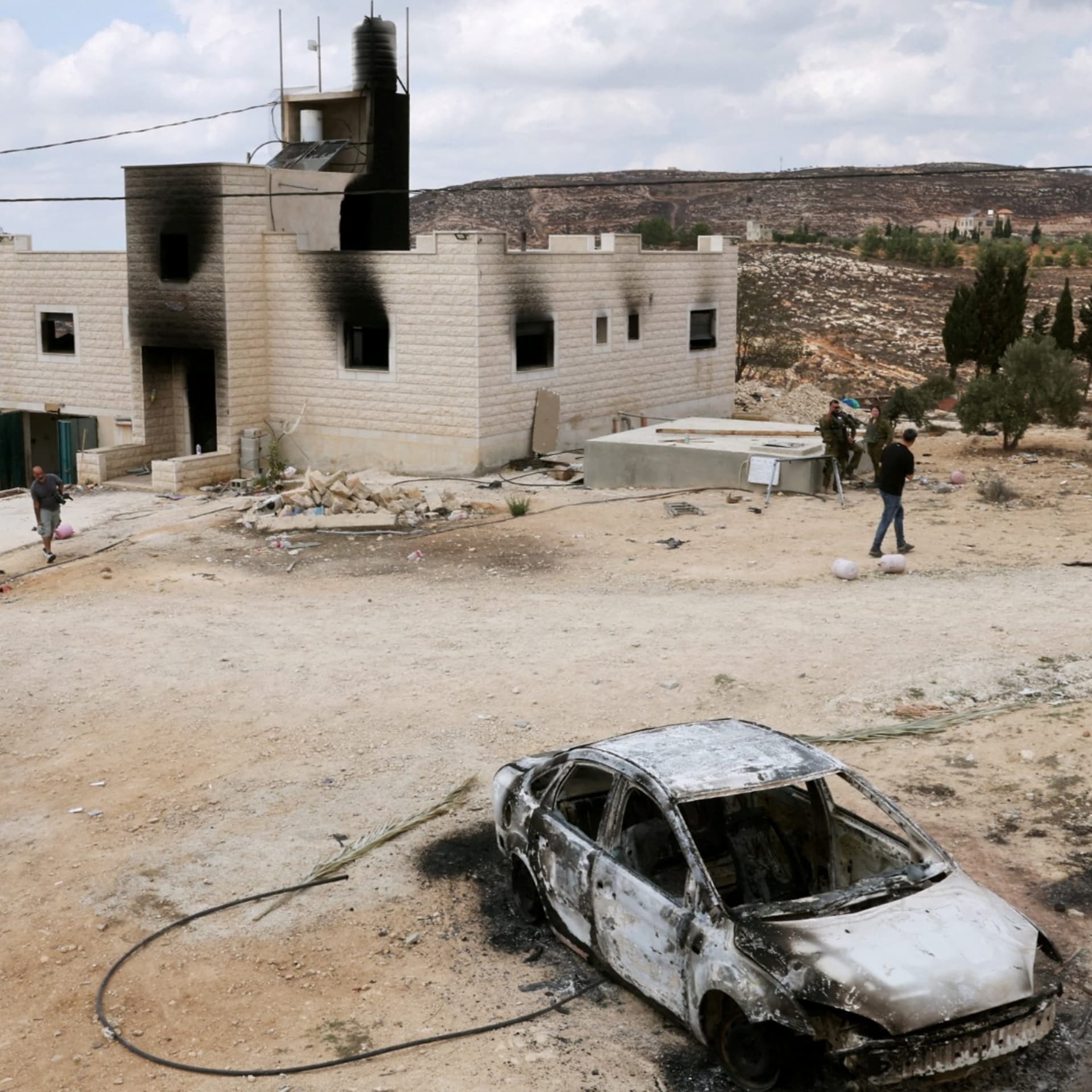
It’s been almost a month since Israel and the US launched their war against Iran, and already there have been strikes in more than a dozen countries, with reports of over 2,000 people killed across the region. As the war drags on and more countries get involved, there are concerns this conflict could escalate into something truly global.
We speak to Emeritus Professor of International History at the University of Oxford, Margaret MacMillan, and explore how world wars start, how they end and what can be done to avoid them.
The Global Story brings clarity to politics, business and foreign policy in a time of connection and disruption. For more episodes, just search 'The Global Story' wherever you get your BBC Podcasts.
Producers: Chris Benderev and Lucy Pawle
Executive producer: James Shield
Sound engineer: Travis Evans
Senior news editor: China Collins
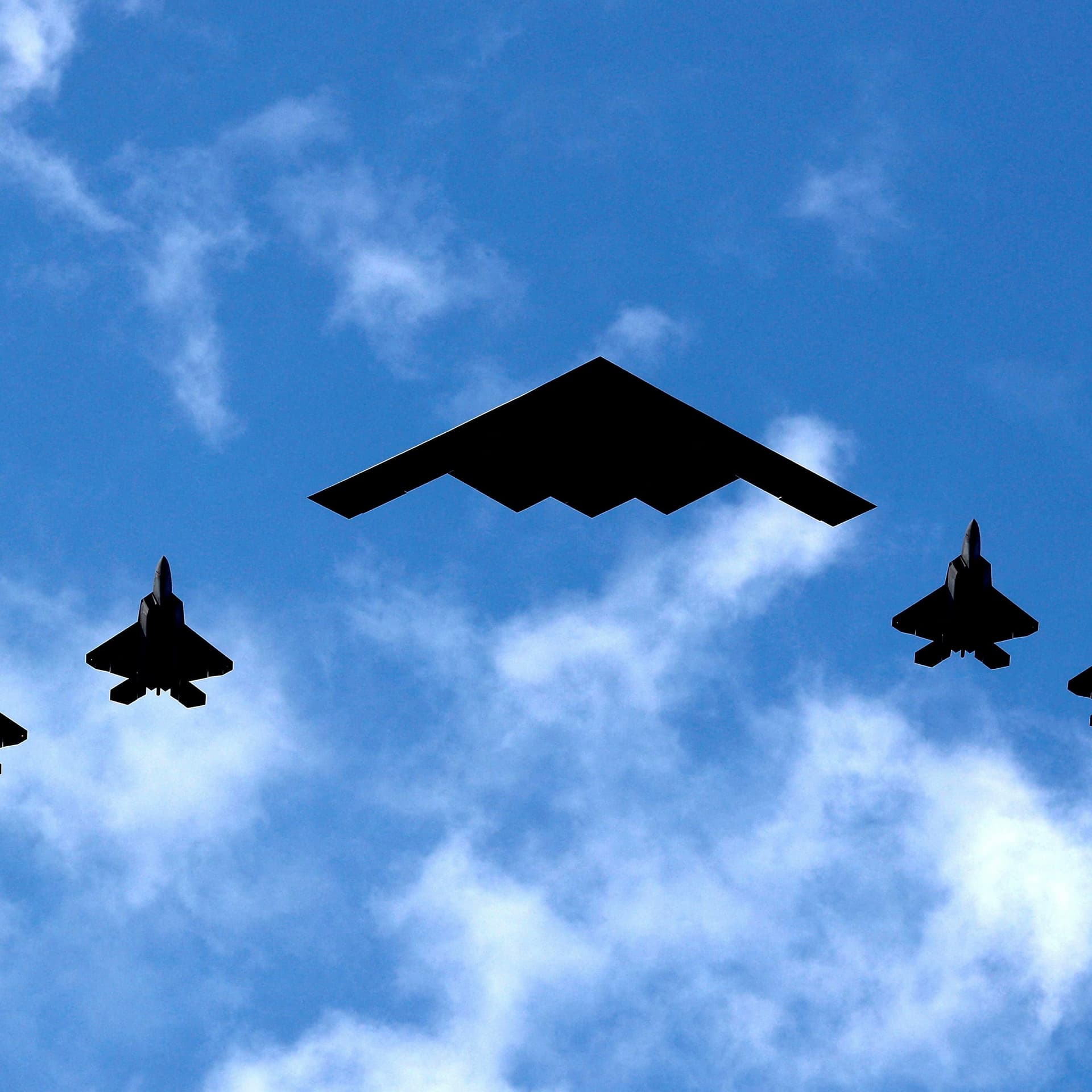
Photo: U.S. Military aircraft perform 4th of July flyover past New York City and New Jersey, 4 July 2020. Photo: credit: Reuters/Mike Segar