
In short
Global News Podcast - Episode Summary: "How Canada's Mark Carney is Taking on Trump"
Episode Overview In this episode of the Global News Podcast, the discussion centers around Canadian Prime Minister Mark Carney's challenge to U.S. President Donald Trump during a recent speech at the World Economic Forum in Davos. Carney's statements about the shifting global order have raised questions about his role as a leader among middle powers and his vision for a new world framework.
Key Themes
- Shifting Global Order: Carney asserts that the old world order is obsolete, advocating for middle powers to unite and redefine international relations.
- Response from Trump: Trump retorts that Canada benefits significantly from its relationship with the United States and should express gratitude.
- Canadian Leadership: Carney is positioned as a potential leader of a global resistance against Trump’s policies, particularly in light of a recent trade deal with China.
Key Takeaways
The Challenge to the Status Quo
- Carney's Speech Highlights:
- "The old world order is not coming back": Carney argues that the existing international rules-based system is ineffective and that countries should not rely on it.
- Call for Action: Emphasizes the need for countries to stop accommodating U.S. demands and to build their own strength.
- Trump's Reaction:
- Claims Canada receives "freebies" from the U.S. and criticizes Carney for lacking gratitude.
Analysis of Carney's Position
- Emerging as a Leader: Carney's standing ovation at Davos suggests broad support for his vision among international leaders.
- Alternative to Trump: His nuanced approach contrasts with Trump’s more forceful propositions, although he avoids direct confrontation.
Trade Relations with China
- Following tensions, Canada and China have reached a preliminary trade deal that lowers tariffs on electric vehicles, marking a potential shift in trade dynamics.
- Need for Diversification: Carney emphasizes the importance of reducing reliance on the U.S. for trade.
Concerns Over Sovereignty
- Fear of Becoming the 51st State: Discussions of U.S. territorial ambitions under Trump have led to heightened anxiety in Canada.
- Military Preparedness: Reports indicate Canada is considering scenarios of U.S. aggression, raising concerns about national sovereignty.
Implications for Canada’s Future
- Middle Power Strategy: Carney's calls for collaboration among middle powers may signal a new diplomatic strategy for Canada in a world influenced heavily by Trump’s unilateral actions.
- Long-term Economic Strategy: The episode reflects on the challenges Canada faces in maintaining economic stability amidst unpredictable U.S. policies.
Conclusion This episode outlines the evolving political landscape marked by the tensions between Canada and the U.S., spotlighting Mark Carney's role as a stabilizing force for middle powers in a time of global disruption. The discussion encapsulates the need for Canada to reevaluate its international alliances and economic strategies in the face of U.S. dominance.
Producers
- Aron Keller
- Hannah Moore
- Sam Chantarasak
- Xandra Ellin
Executive Producer
- James Shield
Sound Engineer
- Travis Evans
Senior News Editor
- China Collins
For more episodes, search 'The Global Story' wherever you get your BBC Podcasts. For feedback, reach out at globalpodcast@bbc.co.uk.
Written by AI. May contain mistakes. Listen to the episode to check what was said.
Chapters
Tap a time to open that second in VOThe Flawed First Draft of History
0:05 to 0:42
Explore the implications of flawed journalism in historical narratives.
“If journalism is the first draft of history, what happens if that draft is flawed?”
Trump's Comments on Canada
1:13 to 1:40
Discuss President Trump's remarks about Canada and US relations.
“And to find more of our show, just search for The Global Story, wherever you get your BBC podcasts.”
Mark Carney's Critique of World Order
1:40 to 2:25
Analyze Mark Carney's perspective on the current world order.
“That was President Trump speaking at the World Economic Forum in Davos.”
Canada's Position on Global Politics
2:25 to 2:50
Investigate Canada’s role as a middle power amid global tensions.
“The capacity to stop pretending, to name reality, to build our strength at home, and to act together.”
Interview with Lise Doucette
2:50 to 3:24
Engage with insights from BBC's chief international correspondent.
“From the BBC, I'm Asma Khalid in Washington, D.C.”
Trump's Davos Speech Analysis
3:24 to 4:52
Examine the key points from Trump's speech at the World Economic Forum.
“Unless you call Margaret Atwood a broadcaster.”
Mark Carney's High-Profile Speech
4:52 to 5:50
Delve into the significance of Carney's speech at Davos.
“That's probably the biggest statement I made because people thought I would use force.”
Canada's Trade Relations with China
5:50 to 6:41
Discover Canada's trade dynamics and recent agreements with China.
“but there's one leader in particular who has stood out and that is the prime minister of canada mark carney he made this fairly high profile speech on tuesday for which he received a standing ovation.”
Canada's Economic Strategies
6:41 to 8:00
Understand Canada’s need to diversify its trade partnerships.
“We participated in the rituals, and we largely avoided calling out the gaps between rhetoric and reality.”
The Threat of Becoming the 51st State
8:00 to 10:05
Explore the implications of Trump's 51st state comments on Canada.
“saying, we have to work together if we're going to try to find a way through this, because the old system doesn't exist, and it's never really worked that well anyway.”
Show all 20 chapters
Canadian Identity in Response to Trump
10:05 to 12:18
Discuss how Canadians are reinforcing their identity amid US influence.
“It's just so huge living next to the United States and the economies are structured in a way that ties them together.”
Concerns Over Potential US Invasion
12:18 to 14:08
Examine Canada's military preparedness against potential threats.
“The Conservative Party run by someone who was at that time a very successful politician called Pierre Paulyeve.”
Canada's Military Considerations
14:08 to 15:06
Discussion on Canada's war gaming scenarios in light of potential U.S. aggression.
“And we have read this quite extraordinary newspaper report from the Toronto Globe and Mail in the last few days talking about the Canadian government gaming out the possibility of US invasion.”
Asymmetric Warfare Tactics
15:06 to 15:59
Exploration of unconventional tactics Canada might consider in a conflict.
“How can Canada stand up against United States?”
NATO's Role in Defense
15:59 to 16:51
The implications of NATO's obligations if Canada faces aggression from the U.S.
“And they would have no plan beyond that?”
Mark Carney's Diplomatic Strategies
17:38 to 21:41
Analysis of Mark Carney's diplomatic maneuvers amid tensions with the U.S.
“where the United States neighbor to its north, there are reports, right, that they are war gaming, you say, a scenario of a possible American invasion.”
Challenges in Global Leadership
21:41 to 23:28
The difficulties leaders face in maintaining national sovereignty in a volatile environment.
“Bear in mind that they did negotiate a trade pact during President Trump's first term.”
Trump's Board of Peace Proposal
23:28 to 26:53
Discussion about President Trump's proposed Board of Peace and its implications.
“It runs carriages through the institutions and norms that have underpinned the world for better or worse since the end of the Second World War.”
Framework for Future Arctic Deals
26:53 to 28:04
Details on Trump's plans regarding Greenland and Arctic security.
“Mark Carney, let's see, he certainly, there was a report today in the Canadian media, he's certainly not going to pay$1 billion.”
Trump's Arctic Deal Framework
28:04 to 29:14
Learn about President Trump's recent social media comments regarding a deal related to Greenland and the Arctic.
“He said that, therefore, he will not be imposing the tariffs that were scheduled to go into effect on European nations on February 1st.”
Transcript
Automatic transcript. May contain errors.0:00This BBC podcast is supported by ads outside the UK. If journalism is the first draft of history, what happens if that draft is flawed? In 1999, four Russian apartment buildings were bombed, hundreds killed. But even now, we still don't know for sure who did it. It's a mystery that sparked chilling theories. I'm Helena Merriman, and in a new BBC series, I'm talking to the reporters who first covered this story. What did they miss the first time? The History Bureau. Putin and the apartment bombs. Listen on BBC.com or wherever you get your podcasts. Hey there, I'm Asma Khalid. And I'm Tristan Redman.
0:45And we're here with a bonus episode for you from the Global Story podcast. The world order is shifting. Old alliances are fraying and new ones are emerging. Some of this turbulence can be traced to decisions made in the United States. But the US isn't just a cause of the upheaval. Its politics are also a symptom of it. Every day we focus on one story, looking at how America and the world shape each other. So we hope you enjoy this episode. And to find more of our show, just search for The Global Story, wherever you get your BBC podcasts. Kennedy gets a lot of freebies from us, by the way. They should be grateful also, but they're not.
1:26I watched your prime minister yesterday. He wasn't so grateful. that they should be grateful to us. Canada, Canada lives because of the United States. Remember that, Mark, the next time you make your statements. That was President Trump speaking at the World Economic Forum in Davos. And it was just the latest in the war of words between the American president and the Canadian prime minister. Mark Carney called out countries that he thinks are not standing up to the United States. There is a strong tendency for countries to go along to get along, to accommodate, to avoid trouble, to hope that compliance will buy safety.
2:09Well, it won't. He said that the old world order was kind of built on a lie, that the rules-based system had become something of a fiction because the strongest countries had never really stuck to the rules. The powerful have their power. We have something too. The capacity to stop pretending, to name reality, to build our strength at home, and to act together. But if the old world order is done, what's the new one the Canadian Prime Minister envisions? Well, thank you, Prime Minister. I don't think I've seen many standing ovations at Davos, so that was interesting. From the BBC, I'm Asma Khalid in Washington, D.C.
2:53And I'm Tristan Redmond in London. And today on The Global Story, is Canada emerging as a leader of a global resistance to Donald Trump? And does it actually have a plan?
3:11We're joined today by the BBC's chief international correspondent, Lise Doucette. I would say one of the perhaps most well-known Canadian women in broadcasting. So it's great to have you back with us on the show. Such a treat to have you on to talk to us about Canada. Unless you call Margaret Atwood a broadcaster. Well, we are speaking to you shortly after President Trump finished giving his speech at Davos, the World Economic Forum there in Switzerland. World leaders have been gathering there. I think there was a lot of anticipation around what President Trump would say and what vision he would articulate to the world.
3:47What did you hear? What stood out to you? That's a very diplomatic way of saying what the mood was. Anticipation, yes, but I would also say anxiety. Here it was President Trump who had in his comments, as you followed them, marking his one year in power, he doubled down and said, I want Greenland. It's essential for the defense of the United States, and therefore I have to get it. How far are you willing to go to acquire Greenland? You'll find out. He said, oh, I'll be able to do something, make a deal with all these Europeans. Yes, they talk tough, but when they see me, they act differently. So we arrived.
4:26Well, thank you very much, Larry. It's great to be back in beautiful Davos, Switzerland. And what everyone was waiting to hear was, is he saying, no matter what, I'm getting it with a big hint that he would take it by force. We probably won't get anything unless I decide to use excessive strength and force, where we would be, frankly, unstoppable. But I won't do that. He laid that to rest. OK, now everyone's saying, oh, good. That's probably the biggest statement I made because people thought I would use force. I don't have to use force. I don't want to use force. I won't use force. And I think there must have been a collective sigh in what, by all accounts, was a packed room.
5:10But he still isn't backing down. And that's the reason I'm seeking immediate negotiations to once again discuss the acquisition of Greenland by the United States. Lise, he said he wasn't going to take Greenland by force today. Yes, exactly. I'm glad you said so. There's a moment of a sigh of relief and then everyone goes back to being anxious again. Yeah, yeah, exactly. I mean, I wonder if the sighs of relief might be a little bit preemptive. um greenland has been the main topic on the agenda a lot of european leaders have been in davos presenting themselves as opponents of the donald trump view of the world but there's one leader in particular who has stood out and that is the prime minister of canada mark carney he made this fairly high profile speech on tuesday for which he received a standing ovation.
6:04What were the bits of that speech that stood out to you? So Mark Carney basically said we have to call it out. We have to call out the reality of a rules-based international order, which no longer exists. We know the old order is not coming back. We shouldn't mourn it. Nostalgia is not a strategy. I was quite surprised that he added a caveat and said, well, it never really worked that well, did it? For us, not so great powers. We knew the story of the international rules-based order was partially false. That the strongest would exempt themselves when convenient. Okay, he's being really honest.
6:42We participated in the rituals, and we largely avoided calling out the gaps between rhetoric and reality. This bargain no longer works. He did call it out as it is, but today the Globe and Mail, Canada's national newspaper, did point out that he didn't mention President Trump by name. I mean, I have to confess, I heard the hype before I watched the speech, and the hype was sort of suggesting that Mark Carney was kind of the anti-Trump. And then when I watched the speech, it was a lot more nuanced and subtle than that. What was the headline takeaway for you? It was this rupture. His phrase was, this is not a transition.
7:22This is a rupture. It's over. And his was also a clarion call to middle powers, which Canada is. it's not a great power. Canada's never had an empire. In fact, it was colonized by both the British and the French. So it doesn't, in President Trump's might is right world, the world of strong men. Canada doesn't count among them. It's depending on which poll you look at, it's the ninth or the tenth biggest economy in the world. And it's basically appealing to other countries, let's say Australia, Germany, Korea, other countries the world over who also have to defend themselves, who have long looked to great powers, to be under their umbrella of protectionists now saying, we have to work together if we're going to try to find a way through this, because the old system doesn't exist, and it's never really worked that well anyway.
8:15And most of all, because it is so unpredictable. I mean, we live in a time where Mark Carney, the first Prime Minister to visit China since 2017, goes to China and talks about a predictable relationship with the Chinese. That is where we are at. What did Canada actually get out of that trip? What do they agree to? Well, first, symbolically, the fact that Canada is going to China and there have been really sharp tensions between Beijing and Ottawa for many years. Canada accuses China of spying in Canada, of meddling in elections. And last year, at the request of the United States, it imposed 100 % tariffs on Chinese electric vehicles.
9:01In retaliation, China imposed 100 % tariffs on the goods that Canada likes to sell to China. So what did they agree? It's a preliminary trade deal, but they have brought down those 100 % tariffs. So China will be allowed to sell. I think it's around 49 ,000 electric vehicles to Canada at a preferential tariff. China will buy Canadian products at a much reduced tariff. They still have to work out the details, but let's look at the numbers. Around 75%, 70 to 75 % of Canada's trade goes south of the border. China is Canada's second largest trading partner, but only 5 % of trade is with China. So it gives you a sense if you the mathematics of it.
9:47If Canada wants to try to diversify its trading partners, there's a lot of work to do. In fact, I spoke to a banker when I was in Canada recently and said, even if Canada, you know, Canada's been going to Saudi Arabia, Prime Minister Carney's going to be going to visit India this year, we understand. In 20 years, it will still only account for 5 to 10%. It's just so huge living next to the United States and the economies are structured in a way that ties them together. But it did send a message. Well, Prime Minister Carney was very careful to say we still disagree on key issues. He still brought up issues like human rights.
10:25There were still concerns about Chinese meddling in Canada. But on the trade side, he is a predictable trading partner. And Mark Carney knows that's what he needs. Well, in Davos, he did talk about the need to diversify trading partners and economic links with other countries, particularly when a middle power like Canada is faced with threats. Now, Canada is facing a very specific threat, which is this idea that it might become the 51st state of the United States of America. How serious is that threat? When President Trump started musing about Canada, the 51st state, wouldn't Canadians be better off.
11:08Canadians thought it was a joke. Then President Trump kept saying it. And even though Canadians kept saying, no, no, thank you. We're much better being Canadians. We are Canadians. We're very different from Americans. Then Canadians stopped laughing and they started getting angry, really angry, and they started taking action. I was really struck that when I was home in Canada this summer, you still go to shops and they have on it Made in Canada. I just published a book and And the sticker is on it, a Canadian author by Canadian. They took American whiskey off the shelves. They took American bourbon off the shelves.
11:47And there's always been this little strain of being a little bit anti-American because they dominate Canada culturally, economically, financially, security-wise in so many ways. Of course, you'd be a little bit resentful of that, but all the while you continue to consume American movies and American news. But that caused not just a rallying around the flag, but it also created the rise and rise of Mark Carney. Yeah, because would he have become prime minister had it not been for that rallying around the flag? Look, again, let's look at the numbers. The Conservative Party run by someone who was at that time a very successful politician called Pierre Paulyeve.
12:28He and his Conservative Party were ahead in the polls by double digits. The Liberal Party of Canada was set for a humiliating defeat. And then President Trump enters the White House in January last year. And suddenly the numbers start changing. President Trump hit Canada with tariffs and ramped up his Canada takeover talk. And suddenly the Conservatives' lead was gone. He wants to break us so America can own us. We will not let that happen. And I remember speaking with friends of mine who've been very active in politics in Canada, no politics well in Canada, no Mark Carney. And the gossip was, is he a retail politician?
13:13Can he really go out and press the flesh? He was the central banker in Canada. How can he really perform about Pierre Paulyab, who is a career politician and who's so fluent in French and in English? Can Mark Carney really take him on? And he did. Who's the worst person to stand up to Donald Trump? It's Pierre Paulyev. He worships the man. On the heels of President Trump's first 100 days in office, Liberal Prime Minister Mark Carney won Canada's national election, who ran largely on an anti-Trump platform.
13:48He wraps himself in the flag, figuratively speaking, and he negotiates cleverly, it sounds like, this threat of the 51st state thing. But we have to ask you, because the 51st state thing might have started off as maybe a joke, a bad joke, who knows. But in the way of Trump, these things start to develop into much more serious things. And we have read this quite extraordinary newspaper report from the Toronto Globe and Mail in the last few days talking about the Canadian government gaming out the possibility of US invasion. Can you talk us through that? And how surprised were you as a Canadian to be reading this report?
14:32I mean, astonishing. You know, and in the same paper today, there's an editorial by the editorial board of the Globe and Mail. And what is the title? Thinking the Unthinkable. Because it did say that they're gaming it, right? A war game. They're war gaming it, as armies often do. Canada's war gaming an invasion, a potential invasion by Americans. A potential invasion, yes. While still emphasizing that military to military relations are still good, Canada is still involved in discussions on what they call the Golden Dome, which is an intercontinental missile system to protect against missiles from China and Russia.
15:06But they had to look at options. How can Canada stand up against United States? It's what they call in battlefields far, far, asymmetric warfare. It's extraordinary that they looked at the hit and run attacks used by the Mujahideen, Afghan Mujahideen, against the Soviet Union. I was reporting in Afghanistan then against the Soviet Empire in the 1980s. They looked at the drones used by Ukraine against a much more formidable enemy, which is Russia. So they used all these kind of tactics that a much lesser military power can try to use to overwhelm, to take on a much bigger military power. So they looked at what were the options for Canada, but had to conclude that with the military might, we're talking about the world's biggest army, it would be overwhelmed within a week and possibly even within two days, Canada would lose.
15:59And they would have no plan beyond that? Well, I think it would be, you know, there would be one thing to have a full scale assault across, as I mentioned, the longest undefended border in the world. But Canada is the second largest landmass in the world. So can you subjugate all of Canada to America's will? I don't think so. I think you'd have from sea to sea to sea, you'd have people rising up, you'd have an insurgency. And also don't forget that Canada is a member of NATO.
16:32If they're invaded, oh my God, unthinkably by another NATO member, an attack on one is an attack on all. So would you have Germany sending over, you know, the warplanes? would you have France sending boats, warships? They would be honour-bound by the terms of the treaty to come to Canada's support. I mean, it's just mind-boggling.
17:00If journalism is the first draft of history, what happens if that draft is flawed? In 1999, four Russian apartment buildings were bombed, hundreds killed. But even now, we still don't know for sure who did it. It's a mystery that sparked chilling theories. I'm Helena Merriman, and in a new BBC series, I'm talking to the reporters who first covered this story. What did they miss the first time? The History Bureau, Putin and the apartment bombs. Listen on BBC.com or wherever you get your podcasts.
17:37I want to understand, Lise, how we got to this point. where the United States neighbor to its north, there are reports, right, that they are war gaming, you say, a scenario of a possible American invasion. You see the prime minister of Canada going and visiting China, the U.S.'s primary rival. You see him speaking up at Davos, maybe not indirect, but certainly rather explicit terms about American power and threats. It seems like there has been this point where the old friendship has broken down. And the reason I'm asking you for how we got to this point is I felt when Mark Carney visited Trump in the Oval Office in the spring, he seemed to kind of deftly push away the idea that Canada is not for sale.
18:20President, you have said that Canada should become the 51st state. No, no. Well, I still believe that. But, you know, takes two to tango, right? But no, I do. I mean, I believe it would be a massive tax cut. You know, he made this comment that we're sitting here in the White House. You are a real estate man. You know, Mr. President, you know some things are not for sale. There are some places that are never for sale. That's true. We're sitting in one right now, you know, Buckingham Palace, you visited as well. That's true. And having met with the owners of Canada over the course of the campaign last several months, it's not for sale, won't be for sale ever.
18:56And then we fast forward to October and there was this moment of tension with the premier of Ontario ran an ad on American in TV using clips of the former American president, Ronald Reagan, saying that tariffs weren't the answer. When someone says, let's impose tariffs on foreign imports, it looks like they're doing the patriotic thing by protecting American products and jobs. But over the long run, such trade barriers hurt every American worker. And I recall at that time, the prime minister, Mark Carney, apologized for that ad. And so it felt like he was trying to take a more measured approach with Donald Trump.
19:35How did we then get to the point where we are now in this past week? That's a very good encapsulation of the ups and downs as Mark Carney, who is no different from any other world leader who has to go sit in what is undeniably the hot seat of hot seats. when you sit next to him in the Oval Office, in that chair, in front of the World Express. And of course, it's broadcast live around the world. I know some world leaders who refuse to visit President Trump because they don't want to sit in that chair. Or some leaders who said, I'm coming to see you, but you cannot have me sitting in that chair.
20:14If you lose, they're going to be watching at home. So the general assessment was that Mark Carney handled that well. He started off by saying, and again, he was one of the few countries that did this. China did it, but the Europeans didn't. Retaliatory tariffs. He said, we are going to match you. Dollar for dollar, we're going to slap tariffs on you. But then at a certain point, he had to accept Canada's economy is 10 % of the United States' economy. And they just couldn't do it. So, yes, some of the critics in Canada said, you've caved in, you've lifted some of the tariffs. You know, I've seen some of the interviews Canadian journalists did with him.
20:59Mr. Prime Minister, you lifted some of the tariffs. And what did you get in return? And Mark Carney was again trying to open up a dialogue with President Trump. Because remember, after Rob Ford put that ad on in primetime television. The Premier of Ontario, yeah. Yes. President Trump said, right, it's finished. I'm not talking to you. The negotiations are off. I mean, again, back to the P word, predictability. How do you run a country when the guy next door who has such a stranglehold over your economy keeps changing his mind? So he was trying to create a new atmosphere by offering an olive branch to the president.
21:39It didn't really work. This year, there have to be really, really crucial renegotiation of the trade pact between Mexico, Canada and the United States. Bear in mind that they did negotiate a trade pact during President Trump's first term. And then when he tried to cancel it because it was a terrible deal, they pointed out, but Mr. President, that is your trade deal. And so that is a very high stakes trade deal for Canada. A lot of the tariffs are not in effect because they're covered under that trade deal. But if that trade deal collapse or the terms of it change, then Canada again is going to be affected.
22:17There are some Canadian towns whose the lifeblood of their economy is totally centered on producing certain auto parts for the American market. And if that market collapses, so too does employment in the life of that town. That's how serious it is. The question on my mind has been, is Greenland, are the threats to Greenland affecting the different approach that Carney might be taking in this moment and how he's thinking? Because I have been wondering, why does it seem that his tone and rhetoric has shifted slightly? When you are living in a moment, and when you're living in this moment as a leader who is, the people of your country look to you as the person who's going to protect them, and you see that there is a leader who's now saying, I want Greenland, and hinting that he could even take it by force, such that that is a shattering of the rules of the world as imperfect as they are, the world as we know it.
23:24It is an assault not just on Greenland if it happened. It is assault on the territorial integrity of Greenland, the sovereignty of Greenland. It runs carriages through the institutions and norms that have underpinned the world for better or worse since the end of the Second World War. And you think if there is a country which is willing to smash those norms, those values, those principles, then what will be next? Canada could be next. And I think it is that kind of moment which concentrates minds everywhere. So I have to confess, Lise, when I was listening to the Mark Carney speech, that I sort of slightly struggled to stick with the thread of what it was that he was trying to say.
24:09You know, he talked a lot about why it was important to build a new world order. The old world order was gone. But I didn't come away from it thinking that I had a firm grasp of what it is that he was proposing. And it strikes me that, in contrast, Donald Trump very much does propose these solid things. And it's very easy to get a grip with what it is that he's proposing. And right now, his preferred proposal seems to be this idea of this board of peace, which is very different from anything that Mark Carney was suggesting in his speech. Could you explain to us, please, exactly what the board of peace is as you understand it?
24:47Because there seem to be different interpretations. President Trump has been talking about this board of peace ever since he became more involved in trying to find a way out of this grievous war in Gaza, achieve a ceasefire, get Israeli hostages home. And so he began flirting with this idea of a board of peace. And in order to oversee the development of Gaza, who would run Gaza, all of these are incredibly sensitive questions given, you know, Israel's security concerns, the Palestinians' desire to run their own affairs. President Trump would say, oh, well, they want me to head the board of peace, you know, and that kind of false modesty.
25:26Fast forward to where we are now and what has been developing recently. After President Trump came up with this peace plan in October, they agreed the first phase of the ceasefire, which more or less ended the war, but not completely. It has been because Palestinians are still dying and not enough food is getting in. But it did bring about a ceasefire. The Israeli hostages came home, all but one, the remains of one. And President Trump has been trying to, He keeps saying, oh, I'm going to tell you what the membership of this board of peace, board of peace. Suddenly, the board of peace, the last details we have, which is why your question is so important.
26:02Not only is President Trump going to be head of this board of peace, he's president for life, even when he ever leaves office. And that board of peace, which initially had a small number of people, he keeps asking more people. So he's asked President Vladimir Putin to join it. He's asked the Belarusian leader to join it. Yes, he's asked Mark Carney. He's asked the Israeli prime minister to join him. And these are to be non-permanent seats. And then came out the absolutely mind-boggling detail that if anyone would like to be a permanent member, like President Trump, all they need to do is pay$1 billion.
26:37And they too would be a permanent member. I have to say it's becoming a bit of a farce. Not surprisingly, the French president, Emmanuel Macron, said he would love to be part of the efforts to bring peace to Gaza, to rebuild Gaza, but he's not going to join the Board of Peace. Mark Carney, let's see, he certainly, there was a report today in the Canadian media, he's certainly not going to pay$1 billion. Will he join the Board of Peace? Prime Minister Netanyahu has said he will join it. And then suddenly people realized that this wasn't just about Gaza, that President Trump was saying that, well, after we resolve Gaza, We can resolve other crises.
Read the full transcript
27:13And then that started raising questions. What does he mean?
27:19President Trump was asked yesterday, the question many are asking, are you trying to create an alternative to the United Nations and the United Nations Security Council? And as you say, he's a man of few words and details. And he said, it might be, which is his favorite kind of situation, which is he's keeping everyone guessing.
27:45Lise, thank you so much. Thank you, Lise. And as a Canadian, I feel obliged to say merci beaucoup. C 'était vraiment un très grand honneur. C 'était un grand plaisir, Lise. Merci beaucoup.
28:04That was the BBC's chief international correspondent, Lise Doucette. After we wrapped up that interview with Lise, President Trump took to his social media account and posted that he had had a very productive meeting with the Secretary General of NATO and said that, quote, we have formed the framework of a future deal with respect to Greenland and, in fact, the entire Arctic region. He said that, therefore, he will not be imposing the tariffs that were scheduled to go into effect on European nations on February 1st. Now, what that framework of a deal entails, President Trump did not specify. He then later did an interview with CNBC and said this.
28:46Well, we have a concept of a deal. I think it's going to be a very good deal for the United States, also for them. And we're going to work together on something having to do with the Arctic as a whole, but also Greenland. And it has to do with the security, great security, strong security and other things. Are mineral rights involved? Is ownership involved? I don't want to say. I don't want to say yet. Today's episode was produced by Hannah Moore, Aron Keller, and Sam Chantarosik. It was edited by James Shield and mixed by Travis Evans. Our studio manager was James Piper, and our senior news editor is China Collins.
29:28That's it for today's show. Thanks, as always, for listening to The Global Story, and we'll talk to you again tomorrow. Cheerio.
30:00Who did it? It's a mystery that sparked chilling theories. I'm Helena Merriman, and in a new BBC series, I'm talking to the reporters who first covered this story. What did they miss the first time? The History Bureau, Putin and the apartment bombs. Listen on bbc.com or wherever you get your podcasts.
From the publisher
Canadian Prime Minister Mark Carney seemed to challenge Donald Trump in a speech at the World Economic Forum in Davos this week, declaring that “the old world order is not coming back” and urging fellow “middle powers” to come together. In response, Trump said Canada gets “a lot of freebies” from the United States and “they should be grateful”. After striking a major trade and tariff deal with China – the US’s rival superpower – is Carney emerging as the leader of a global resistance to Trump? And does he have an alternative vision for the world? We speak to Lyse Doucet, the BBC’s chief international correspondent.
The Global Story brings clarity to politics, business and foreign policy in a time of connection and disruption. For more episodes, just search 'The Global Story' wherever you get your BBC Podcasts.
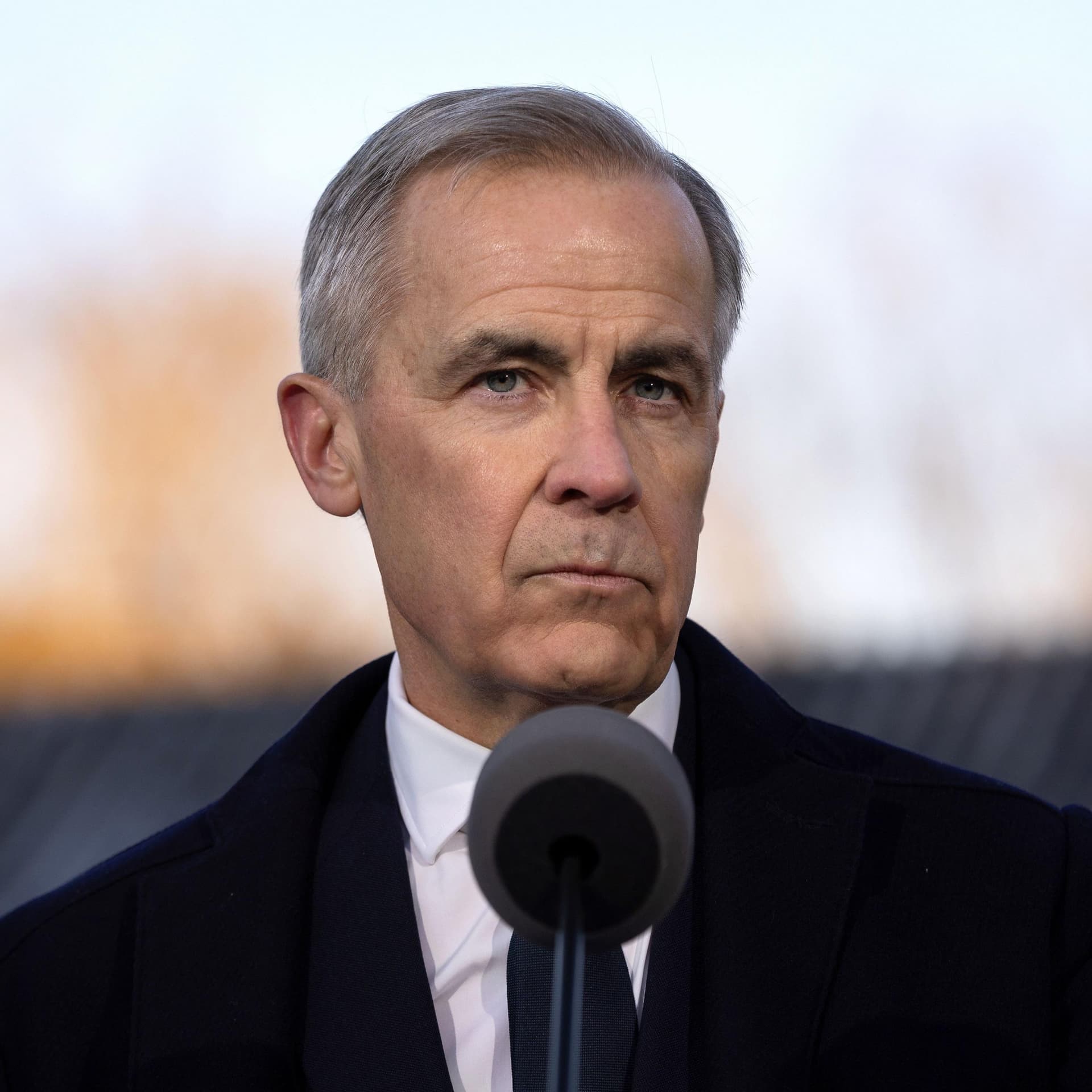
Producers: Aron Keller, Hannah Moore, Sam Chantarasak and Xandra Ellin Executive producer: James Shield Sound engineer: Travis Evans Senior news editor: China Collins (Photo: Canadian Prime Minister Mark Carney. Credit: Jessica Lee/EPA/Shutterstock)