
In short
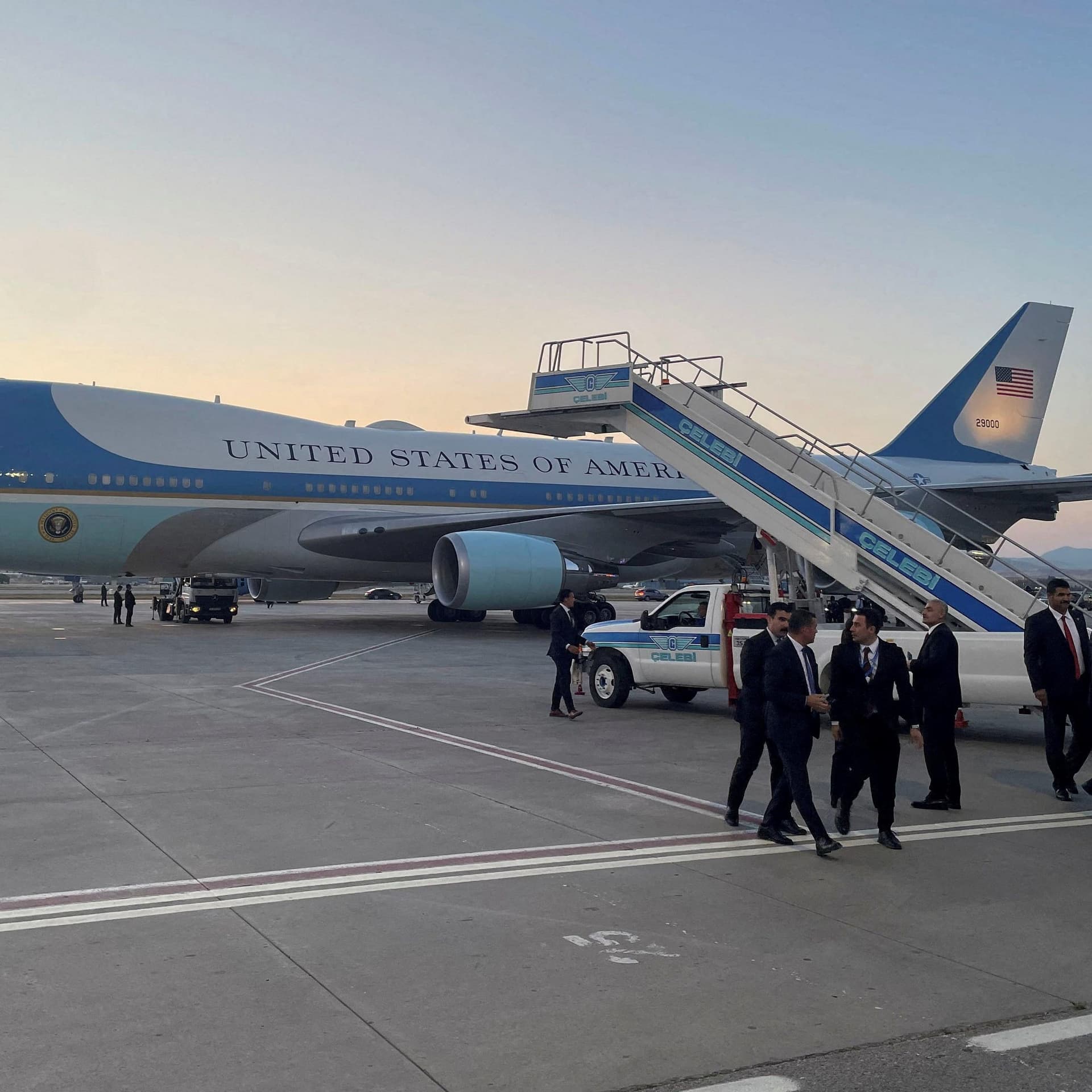
The episode examines reporting that President Trump avoided a credible Iranian assassination threat during a NATO summit trip in Turkey. It describes a secret “plane switch” using a catering truck: Trump allegedly left the newly showcased 747 via an elevated catering truck to a third aircraft, while Air Force One (with the press pool and senior officials) served as a decoy.
Key claims
national security experts say Iranian plots against US officials are real; the White House used “all tools” but did not acknowledge details for weeks; and renewed US strikes/bombing against Iran while Trump was abroad may have heightened risk.
Notable examples
a 2022 Justice Department case involving Quds Force-linked Shahram Pursafi; 2024 plots involving Osif Merchant and Farhad Shaqiri; and historical Iranian-linked attacks (e.g., Beirut embassy bombing, Buenos Aires Jewish center).
Guests
Dan Lamothe (Washington Post national security reporter, ~15 years); Parham Gabbadi (BBC Persian senior reporter).
Written by AI. May contain mistakes. Listen to the episode to check what was said.
Chapters
Tap a time to open that second in VOThe Secret Mission
0:59 to 1:45
Discussion about the secret security measures taken for President Trump.
“planes via a catering truck to avoid possible threats from Iran.”
Context of the Threat
1:45 to 2:49
Exploring the Iranian government's capability and intent regarding assassination.
“By now, you all have probably heard the story of President Trump boarding Air Force One, then sneaking onto another plane via a catering truck.”
Investigating the Story
2:49 to 3:33
Introduction of the guests and their backgrounds to discuss the threat.
“chance, would the government in Tehran really take down an American president?”
The Departure from Turkey
3:33 to 4:41
Details of President Trump's departure from Turkey amidst security concerns.
“And in order to do that, I have been speaking with The Washington Post's Dan Lamothe.”
The Aircraft Switch
4:41 to 5:38
Explaining why Trump switched planes and the implications of the decision.
“there's been this discussion of how the president travels and whether he's traveling on planes that are appropriate.”
The Catering Truck Operation
5:38 to 7:48
In-depth description of the decoy operation involving the catering truck.
“I'd like you to address speculation that you're leaving Ankara not in the new Air Force One because of security concerns involving Iran.”
Journalist Response to the Decoy
7:48 to 10:14
Discussion on the press corps' reaction and lack of information regarding the operation.
“Like, he's not inside, like, where you'd put the soda.”
Uncovering the Truth
10:14 to 11:39
Exploring how the story broke and the White House's response to the revelations.
“It was described to you as a decoy operation.”
Assessing the Iranian Threat
11:39 to 14:00
Experts discuss the credibility of assassination threats against Trump by Iran.
“there was actually a surprisingly muted reaction from the White House.”
Assessing the Threat to Trump
14:00 to 16:00
Discussion on the potential threat to Trump during his visit to Turkey.
“It wouldn't necessarily have to be a military operation in the stricter missiles and bombs sort of sense of the word.”
Show all 15 chapters
Understanding Iranian Covert Operations
16:00 to 17:00
Exploring Iran's foreign operations and potential plots against Trump.
“Tristan, one question that that conversation raised for me is what we know about Iranian plots to kill Donald Trump or other senior American officials.”
The Complexity of Iranian Threats
17:00 to 19:00
Examining the nuances of Iranian threats against U.S. officials, particularly Trump.
“And listeners, Parham has come here on his day off.”
Historical Context of Iranian Operations
19:00 to 23:00
Reviewing Iran's history of covert actions and recent assassination plots.
“Now, the New York Times have reported that, quote, someone in the vicinity of the NATO summit had been spotted with a shoulder fired missile.”
Targeting Dissidents vs. Foreign Officials
23:00 to 24:20
Discussion on the Iranian regime's focus on dissidents compared to foreign targets.
“He was charged with another assassination scheme to kill against Donald Trump.”
Threats to Journalists and Personal Security
24:20 to 27:00
Insights into the personal security threats faced by journalists covering Iran.
“They do not have as much security as John Bolton or Donald Trump.”
Transcript
Automatic transcript. May contain errors.0:00This BBC podcast is supported by ads outside the UK.
0:34What if you could get more from what you already do? When you're a Shell Fuel Rewards member, you can. When you join, you'll save 10 cents per gallon on your first fill, 20 cents per gallon on your second, 30 cents per gallon on your third, and more savings on every fill after that. Join the Shell Fuel Rewards program in the Shell app and enjoy life with more. Your nearest Shell station is closer than you think.
1:28planes via a catering truck to avoid possible threats from Iran. And we also dug into how credible an assassination plot of a US president actually is. If you enjoy the episode, you can find more by searching for the global story wherever you get your podcasts. Now on to today's show. By now, you all have probably heard the story of President Trump boarding Air Force One, then sneaking onto another plane via a catering truck. He was on his way to the UK from Turkey after a NATO summit. We begin tonight with new details about the extraordinary secret security measures taken to protect President Trump.
2:04A U.S. official says Trump was whisked off the plane and into a waiting catering truck. The secret mission was in part to evade a credible Iranian assassination threat, leaving his primary Air Force One to act as an unwitting decoy. Trump says the Secret Service told him to switch planes at the last minute because of a threat to his life. Journalists and senior members of the cabinet and the president's staff were left on board, part of a decoy. But is Iran really trying to kill Donald Trump? And what do we know about Iran's ability to assassinate people outside its borders? From the BBC, I'm Tristan Redmond in London.
2:46And I'm Asma Khalid in Washington, D.C. And today on The Global Story, if they had the chance, would the government in Tehran really take down an American president?
3:01So, Asma, we're getting into a bit of a rhythm of you go away and speak to somebody and then I go away and speak to somebody. And that's what we're going to do again today. So, I've been speaking to our old friend Paham Gabadi of the BBC Persian service about the extent of the threat posed by Iran. Iran has a history of involvement in such activities. They should at least know that killing a sitting president is a totally different story. Who have you got for us today, Asma? Well, Tristan, I have been trying to understand this story through the lens of Washington. And in order to do that, I have been speaking with The Washington Post's Dan Lamothe.
3:42He's one of the journalists who broke that story of the Trump catering truck switcheroo. He's covered in national security at The Washington Post for about 15 years. And I asked him to tell us the story of what happened in Turkey. Let's go back to July 8th. We want to thank you very much. We've had a tremendous time and I think a great success. President Trump is getting ready to depart from Turkey and leave the NATO summit. We just concluded a very successful NATO summit here in Turkey. and I want to thank President Erdogan. For context for listeners, it was around this time also that there were renewed strikes by the United States against Iran.
4:26This was at the direction of the President of the United States. I recall there was some question about which plane Trump would use to depart. Why was this decision so important and why was it of significance at that moment? Yeah, for months now, there's been this discussion of how the president travels and whether he's traveling on planes that are appropriate. And it really all stems from the United States last year bringing on this 747 that was gifted by Qatar, not purpose-built for this mission to carry the president. So they sent it for hundreds of millions of dollars in upgrades, and they kind of rolled it out in grand fashion at the Independence Day 4th of July celebration in Washington just last month.
5:13So this was the first big trip that the president took that new jet on. It's bright red, white and blue, very showy. He flew it into Turkey very publicly. This is his new plane is the idea. On that first trip after that grand showing, he announced that he would not be taking that plane home, which triggered a lot of questions, even in the moment. Stephen Nelson from The New York Post. I'd like you to address speculation that you're leaving Ankara not in the new Air Force One because of security concerns involving Iran. You've spoken today twice about them possibly assassinating you and possibly being successful.
5:56Did that concern have something to do with you? Well, I speak about it a lot because, you know, the life of a president is very dangerous. He said he would be taking the old Air Force One or the former Air Force One instead, which is kind of the blue and white plane everybody's been seeing for years. At the time, he said he was doing that so that U.S. troops could see the new plane. We have it going to Europe to a couple of bases, actually one in particular, but it's going to go to a couple of bases stop so the soldiers can see it because it's truly magnificent. Yeah, please. Which kind of, you know, turns some heads is like, is this really the reason.
6:34So in the moment, you've got the president announcing he would be taking the old plane. That's already step one of this process, even though that's not what he did. That put the eyes on the old plane. And then there's actually this third plane that nobody had heard of until we were able to break this story. So the president gets on the old Air Force One on video. And there's footage of him going up the steps of the old Air Force One. Yeah. What you have is the president getting on this plane, and he has since acknowledged on Tuesday night that he did, in fact, do this. As he left the 747 moments later, and our reporting holds that he then stepped off of the plane where there is an elevated airport catering truck waiting for him.
7:21He and a few aides get on this catering truck, which is easy to do. No stairs required. And it's covered. So you're basically stepping into a box out of sight. The box then is lowered back to the bed of the truck. It then drives to the next plane. A catering truck, we should be clear, is like a catering truck like we're probably all fairly familiar with seeing when you travel on an airplane that brings the meals. For clarity there, because I've seen a lot of both confusion and memes to this effect. He didn't get in a drink cart. Okay. Right? Like, he's not inside, like, where you'd put the soda.
7:58He got into the truck that would bring the drink cart, essentially. Those big trucks, boxes you sometimes see on the tarmac when you're sitting there waiting to board, you're saying. Yeah, it's basically a box truck with a hydraulic elevator. Okay, so he gets onto this catering truck. That catering truck then travels, you're saying, to a third plane. Correct. So next to the Big Air Force One is a smaller jet, also blue and white, also with the United States of America, you know, emblazoned down the side. It's a C-32A, significantly smaller plane, also used to carry VIPs, including the president domestically and Vice President of Dance on occasion.
8:41The bigger plane flies with the Air Force One call sign, basically saying, hey, the president's here, even though he's not on the plane. So you can see the plane on radar. You can see where the call sign appears. It was kind of over Istanbul at the time. And then it's like, OK, that is Air Force One. That is where the president is. That's the way it conventionally works. Meanwhile, all this time, he's on this third plane with the secretary of defense, Pete Hegseth. a handful of other aides. And they're flying with a relatively nondescript call sign, Reach 18, which typically is like a cargo flight.
9:19Okay. And Dan, my understanding is the group of journalists who traditionally travel with the president, known as the White House press pool, they were not informed of this. My understanding is they boarded that traditional Air Force one. There was also some White House staff on that plane, they did not know. And was it your understanding that Air Force One was meant to be a decoy? That's the way it was described to us, is this was a decoy operation. And I think where this has really taken on a life of its own is if Air Force One becomes a decoy with the press corps aboard, with a number of senior U.S.
10:02officials staying on that plane. So you end up with kind of the administration officials traveling, split between two planes without acknowledging it. But the White House press corps was not included in this discussion before, during, or even in the month after the fact. This was kept secret for a full month. It was described to you as a decoy operation. Can you tell us anything of like peeling back the curtain of how you actually got this story, or is that not possible? Here's what I can say. as the days after this happened kind of moved on. I had outreach from people who looked at this and said, what the world is being told here is not true.
10:44We did something very different. The United States government did something very different, and that should be known. So the challenge is, okay, you get the initial tip. That's not enough to publish on. The additional sourcing helped, but also the tracking data, the video, all of it matched effectively the initial story. We became increasingly confident with it. We finally went to the White House on Monday with kind of a full set of findings and said, hey, here's what we've got. What's your reaction? And did they offer any explanation? explanation. They did not deny a thing. They have not denied a thing after publication either, which, you know, this White House on plenty of occasions has denied things that are true.
11:33So I wasn't necessarily going to be scared off the story with a denial either. But in this particular case, there was actually a surprisingly muted reaction from the White House. We published on a Monday evening. It took until Tuesday evening in Washington for the president to speak on this. and fortunately no one else did in between. Can you tell us about your ride on the airport catering truck in Turkey? Why did you need to do that? Well, it's only up to Secret Service. I just follow what they'd like to do. So I go by Secret Service and the military. They wanted me to go on a different flight, a different plane, equal safety, but they wanted me to do it, so I do it.
12:15I do what they say. Why did they want me to do that? I guess there was a threat out there. I didn't really ask too much about it. I get a lot of threats. They put out a statement from the White House Communications Director Stephen Chung. It obliquely referenced that they used all the tools they have available to protect the president. It defended the new plane as viable and really didn't address much of the other reporting at all. It strikes me down that that's what feels so different, right? Because when you have the president sometimes traveling into Ukraine by train, right, say, Or as you say, the helicopters, Marine One traveling, there's a level of transparency with the journalists who are there covering the president.
13:00And there isn't a different version of the story that's told. Yeah, I think if they had done this in the moment and they had put out a truth social two days later, there would have been a buzz over it for certain. But I also think people would have moved on. It would have been like, well, it is a dangerous time. Well, there are threats on the president's life. All of that is true for me, like the fact that they wouldn't acknowledge it in the moment after the moment and for a full four weeks after the moment and really not until Tuesday evening when the president did. Can I ask you about that, Dan, though, because you cover the military and there have been credible threats on the president's life stemming from Iran over the last several years.
13:44Do national security experts that you speak with genuinely believe that the Iranian government is seriously considering a plan to try to assassinate the president of the United States? Yes. Yes, they are. There was a Justice Department case that came up through the court system where they referenced senior Iranian paramilitary officials trying to figure out a way to hire hitmen. It wouldn't necessarily have to be a military operation in the stricter missiles and bombs sort of sense of the word. So, yeah, I mean, I think it's a real threat. And I was covering the first Trump administration as well.
14:23There were concerns about whether or not there were tales on U.S. military generals, the Secretary of Defense. So, you know, it wouldn't be a shock to see an attempt made. And we tried to highlight that in the story. This is, you know, this is a good faith effort to be fair in covering this story. The threat was real. The threat is likely going to remain legitimate for some time going forward. you know among the questions i think that are unresolved here not a surprise the president was under threat you're going to a country that borders are iran you're not far away so i think that's a factor as well right like you know proximity should matter here to some degree what are your what you're planning at that point they despite all that they took the newer plane they also made a decision to green light a renewed bombing campaign against iran while the president was in Turkey.
15:20So among the questions that I think also unresolved, you could have done that probably a day later. That heightens the risk, you're saying? Yeah. Do you wait till the president is just out of range? Back in Britain, back in the United States, over the Atlantic, something. I don't know that a day mattered in that case. And whether or not there was consideration of that in the moment, I think is an open question.
15:50A lot of questions still. Well, Dan, thank you very much for bringing your exclusive reporting to us. And I appreciate you telling the story. Thank you.
16:09Tristan, one question that that conversation raised for me is what we know about Iranian plots to kill Donald Trump or other senior American officials. And, you know, more widely, how developed Iranian foreign covert operations are at this point. Well, Asma, to find out an answer to just that question, I've been speaking to one of our colleagues over at BBC Persian, someone well known to Global Story listeners. BBC Persian, as regular listeners know, is the largest Persian language media outlet outside Iran. It's heard by nearly 25 million people a week. Now, our guest told me that the picture of Iran's foreign operations may be more complex than it actually appears at first.
16:59Well, I'm very pleased to say that we are joined by friend of the show, Parham Gabbadi. Thanks for having me again. Great to see you, Parham. And listeners, Parham has come here on his day off. Such is his love for the global story. Thank you, Parham. It's always a pleasure. Paham, what do we know about whether Iran really did consider trying to kill Donald Trump, perhaps by attempting to blow up Air Force One in the vicinity of the NATO summit a few weeks ago in Turkey? So what we have to keep in mind, it coincided with the days that Iranian Supreme Leader, former Supreme Leader, his funeral was being held in Iraq and Iran and several cities.
17:40So the rhetoric of revenge was really commonplace in those days. And I remember I was watching live his funeral in Tehran. And one of the people who was addressing the crowd was saying that swearing to Khamenei's blood that we will kill Donald Trump. And you would see banners that in English, not only talking about revenge, but clearly talking about killing U.S. President Donald Trump. That was unprecedented because this regime was born with the slogans such as down to USA, down to Israel. Those things are familiar. But saying and holding a banner in English, saying that directly killing U.S. President Donald Trump was rare, to put it mildly.
18:25However, at the end of the day, there is some real politic going on in Iran. They know that killing a sitting U.S. president can have really harsh and dire consequences. And it's really jumping up the ladder of escalation. So, yes, there are some hardliners in Iran, but those who are in charge of making the decisions, they know about the consequences and repercussions of killing a sitting U.S. president. I have to say, when the reports came out, some of my sceptical spidey senses did go off in the sense that it would be a huge operation and hugely risky, as you say. Now, the New York Times have reported that, quote, someone in the vicinity of the NATO summit had been spotted with a shoulder fired missile.
19:13And they're attributing that to, quote, two US officials with knowledge of the threat. Now, I've been to NATO summits, Parham. The security around them is incredibly tight. Often you cannot get within miles of the venue without going through police checks and security cordons. If you were up to no good, would you be hanging around a NATO summit visibly armed? Would the consequences of these kinds of actions for Iran just be too severe to contemplate? You're right. You're right. And Iran has a history of assassinations, alleged bombings of places since its inception in the 80s. According to U.S.
19:56and other Western intelligence, Iran was involved, at least directed and involved in the attacking of, you know, in the Beirut in the 80s, where hundreds of Americans and others were killed in the U.S. embassy bombing, to the 90s in the Jewish community center in Buenos Aires in Argentina, where at least 85 people were killed. So yes, Iran has a history of involvement in such activities. And I'm not denying that. But what I'm trying to say is that they should at least know that killing a sitting president is a totally different story. Iran does have a program of covert ops around the world. Historically, we've seen that.
20:37There were allegations of an Iranian plot to kill a senior Trump administration official back in 2022. That was former National Security Advisor John Bolton, who's well known for being hawkish on Iran. What do we actually know about that alleged plot? So U.S. prosecutors charged someone named Shahram Pursafi, and they said that he was linked to Iran's Quds Force. Now, Quds Force is part of the Revolutionary Guards, but the foreign offshoot of that, that is the branch that conducts operations in other countries. Now, the person who was the architect of this Quds Force was General Ghassam Soleimani, who was killed at the order of Donald Trump in his first term back in January 2020.
21:23Soleimani was plotting imminent and sinister attacks on American diplomats and military personnel, but we caught him in the act and terminated him. So that's why the Iranian officials are really mad at Donald Trump and John Bolton, because they see these individuals responsible for the killing of their general. So Pursafi asked a U.S. resident that he had met online to take pictures of John Bolton. They usually do this recce, you know, before committing any crime. So he said that he wants to write a book about John Bolton and he needs the pictures for that purpose. And then that U.S. unnamed resident introduced Pursafi to another individual who was later asked to kill Mr.
22:08Bolton. And that person was an FBI informant. He was a double agent. He was a double agent, technically. So, Pursafi is believed to be in Iran, and there's a 20 million FBI reward for any information regarding his whereabouts. And the Iran foreign ministry has said that the allegations are ridiculous. Okay, so Pursafi was charged. Iran's foreign ministry said the allegations were, quote, ridiculous and baseless. And then we got to 2024, and there were reports of two separate Iranian plots to kill Donald Trump, who at the time was not president. What do we know about those? So in July 2024, a Pakistani national by the name of Osif Merchant was arrested for plotting to kill Donald Trump.
22:55And four months after that, an Afghan citizen again was arrested, Farhad Shaqiri. He was charged with another assassination scheme to kill against Donald Trump. But Merchant, the Pakistani National, was convicted in March 2026 this year. But Shaqiri, U.S. prosecutors say that he was directed by Revolutionary Guard officials, is still at large, so he has not been detained. And Iran described these claims against Shaqiri as totally baseless. But if I may add this, there's a book called Iran's Shadow Weapons, Covert Action by Jonathan Hackett. In that book, He shows that actually, despite the misconception that people think that the first and most primary target for Iranian regime must be Israelis or American officials, it's actually the Iranian citizens and Iranian dissidents who are the most primary target of Iranian regime.
23:49And they are the ones who are being, whether it's kidnapping, whether it's assassination, even cyber activities, it's mostly when you put it into percentage and numbers, it's the Iranian dissidents. Yes, there have been many attempts in the past, but usually their foreign attempts to kill individuals, whether it's Israeli or American, have been either foiled or unsuccessful or the individuals were arrested. Whereas when it comes to Iranians, there have been many, many, many cases that they were successful. The reason might be that these people have laxer version of security. They do not have as much security as John Bolton or Donald Trump.
24:26But at the end of the day, what matters is that many Iranians are also getting killed starting from the 80s. Very high profile individuals such as the last prime minister of the Iranian Shah at the time, who was killed in Paris. Shahpur Bakhtia. Shahpur Bakhtia. Okay. I mean, I remember going to visit one of the first presidents of the Islamic Republic in Paris a few years ago. And I was surprised, actually, at how low level his security was, given that I assume that the threat against him must have been at least non-negligible. Is the calculation as well that if you target foreign exile dissidents, the potential consequences are also less?
25:10That is exactly correct, because they know that targeting Iranians has less political repercussions than, for example, targeting John Bolton or any Western official. So the threats that are reported to have been detected against Donald Trump are personal. But what about for you, Paham, and for your colleagues at BBC Persian? Are they personal threats as well? Yes, there are. I cannot name individuals, but what I can tell you is that, for example, back in 2020, the UK published a report and said that there were 20 plots for assassination and kidnapping of Iranian individuals or those who were on the list for Iranian regime.
25:53And one of those individuals was, for example, there was a threat of kidnapping here in London. Against him was a BBC Persian journalist. I cannot name the person, but that's not the only example. We've got other colleagues who've had threats against their lives here in the UK. And that is the difference because in the past, it used to be that, okay, we could not travel to Iran because we were working for the BBC Persian. We were seen as traitors. However, now we do not feel safe even here in the UK. We have to watch our back. I mean, it sounds incredibly high stress. What's it like for you and your colleagues?
26:27So, you know, sometimes we have trainings. We know that we have to watch our back. We are advised how to travel. We are advised about our social media. So there are security measures that we do take into consideration. But it has a mental toll, you know, it has a mental pressure on you.
26:51so I know some of our colleagues who've dealt with this they have nightmares, they wake up in the middle of the night checking the doors, if they're closed, if they're not when it comes to traveling, when it comes for you to leave the house you have to check whether you see a familiar face or not so it's a different life it's a different lifestyle
Read the full transcript
27:19Well, look after yourself, please, Parham, and your colleagues too. It's been great to have you. Thanks so much for coming in. And please return now to your day off. Thank you. Thanks for having me.
27:35That was Parham Gabadi, a senior reporter at the BBC's Persian service. And earlier we heard from The Washington Post's Dan Lamothe. And just a reminder, if you enjoy the show, you can always reach us here at The Global Story with questions, story ideas, complaints. We love complaints. We don't like too many complaints. The best way to get in touch with us is through our email address, theglobalstory at bbc.com. And as you loyal listeners know by now, here on The Global Story, every weekday, we go deep on one big story about where the world and America meet. If you're also looking for a way to catch up on the latest news headlines, then we'd recommend checking out our sister show, The Global News Podcast.
28:17Today's episode was produced by Hannah Moore, Vari McKenzie, and Zandra Ellen. It was edited by James Shield and Martine Powers and mixed by Travis Evans. Our digital producer is Sam Gruet, and our senior news editor is Chyna Collins. Our studio manager is Mike Regard. I'm Tristan Redman. And I'm Asma Khalid. That's it for our show today. Thanks as always for spending some time with us here on The Global Story. We'll talk to you again tomorrow. Cheerio.
From the publisher
Last month, President Trump secretly swapped planes via a catering truck as he left a Nato summit in Turkey. The elaborate ruse, first reported by the Washington Post, was in response to a possible threat from Iran.
But how serious were the US administration’s fears of an assassination attempt? And does the Iranian regime have the capability to carry out such an operation beyond its borders?
We speak to Parham Ghobadi, a senior reporter at the BBC’s Persian Service, and Dan Lamothe of the Washington Post, to understand more about what transpired on Air Force One, the history of Iran’s alleged assassination plots, and why the Iranian regime’s prime target might be its own citizens.
For more episodes, just search 'The Global Story' wherever you get your BBC Podcasts.
Producers: Mhairi MacKenzie, Hannah Moore and Xandra Ellin
Executive producers: Martine Powers and James Shield
Mix: Travis Evans
Digital producer: Sam Gruet
Studio manager: Mike Regaard
Senior news editor: China Collins
Photo: A catering truck is parked on the other side of Air Force One, before U.S. President Donald Trump's departure from Ankara en route to Washington after his participation in the NATO leaders' summit, at Ankara Esenboga Airport in Ankara, Turkey, July 8, 2026. Credit: Reuters/ABC-TV/Pool/File Photo



