
In short
China’s alleged covert influence and espionage in the US, framed through two headline cases (Arcadia, California; Chinatown, New York) and explained by a former intelligence officer as “covert influence” and “civil-military fusion,” including “United Front” diaspora mobilization and “1,000 grains of sand” cumulative impact.
Guests
Andrew Badger, former CIA case officer (human intelligence recruiter) and co-author of The Great Heist.
Key claims
Eileen Wang allegedly coordinated pro-Beijing messaging via a fake news site without registering under FARA, using WeChat screenshots to report reach; Liu Zhang Wang allegedly ran an unsanctioned “secret police station” to monitor threaten Chinese nationals abroad (China denies). China’s 2017 national intelligence law and civil-military fusion allegedly expand reach; motives include MICE (money, ideology, coercion, ego).
Notable examples
Xinjiang coverage downplaying; Harvard professor Charles Lieber (Thousand Talents Program); UK firm Polemis wave-tech IP theft leading to South China Sea military energy use.
Written by AI. May contain mistakes. Listen to the episode to check what was said.
Chapters
Tap a time to open that second in VOEileen Wang: Allegations and Resignation
1:58 to 4:04
Discussion about Eileen Wang and her alleged connections to China.
“just search for The Global Story, wherever you get your BBC podcasts.”
Understanding Covert Influence vs. Espionage
4:04 to 7:15
Exploration of the nuances between espionage and covert influence.
“And today on The Global Story, how China's secret agents could be infiltrating American life and why they might pose a serious threat.”
China's Strategy: The 1,000 Grains of Sand Theory
7:15 to 10:40
Examination of China's intelligence strategy and its impact in the U.S.
“public without declaring that to the Department of Justice.”
Recruitment Methods and Motivations in Espionage
10:40 to 12:34
Insights into why individuals may act on behalf of the Chinese government.
“Each one of these small parts added together, you achieve that cumulative influence impact.”
The Role of Guangxi in Chinese Espionage
12:34 to 14:03
Discussion about how guangxi influences espionage practices in China.
“There's a number of university students which have been charged with smuggling in these different types of funguses and prohibited biological items.”
Exploring China's Espionage Tactics
14:03 to 17:30
Learn about China's Thousand Talents Program and cultural concepts influencing espionage.
“He was part of what was called the Thousand Talents Program.”
The Scale and Impact of Chinese Espionage
18:44 to 25:09
Understand the extensive reach of China's espionage and its implications.
“Welcome to Stateside with Kai and Carter.”
Balancing Security and Collaboration with China
25:09 to 28:00
Explore the challenges of addressing national security without fostering xenophobia.
“And this is really the thesis of our book, is that, look, there are a number of variables for why China has been so successful.”
The Balancing Act: U.S. Response to Chinese Influence
28:00 to 30:06
Explore the complexities of American responses to Chinese influence and historical parallels.
“government's response from being too heavy handed, from veering into xenophobia?”
Transcript
Automatic transcript. May contain errors.0:00This BBC podcast is supported by ads outside the UK.
0:30The new tropical butterfly refresher from Starbucks. Guava and passion fruit flavors with mango pineapple flavored pearls. Yeah, that feels like summer before you even taste it. Funny how one small stop becomes the best part of the day. Start your summer rhythm with Starbucks. Try the new tropical butterfly refresher from Starbucks.
1:21We'll be right back.
1:26Hey there, I'm Asma Khalid. And I'm Tristan Redman. And we're here with a bonus episode for you from the Global Story podcast. The world order is shifting. Old alliances are fraying and new ones are emerging. Some of this turbulence can be traced to decisions made in the United States. But the US isn't just a cause of the upheaval. Its politics are also a symptom of it. Every day we focus on one story, looking at how America and the world shape each other. So we hope you enjoy this episode. And to find more of our show, just search for The Global Story, wherever you get your BBC podcasts. Thank President Xi, my friend, for this magnificent welcome.
2:11And it really was a magnificent welcome like none other. Last week was all about America in China. And today's story on The Global Story is about China in America. This morning, growing national security concerns after a Democratic mayor in California admitted to secretly working for China. Eileen Wang was the mayor of Arcadia, California. It's a small city just outside of L.A. She'd been in the job for only three months when last Monday she abruptly resigned. Federal prosecutors say former Arcadia mayor Eileen Wang pushed pro-Beijing propaganda and worked with a convicted Chinese agent to operate a fake news site in the U.S.
2:53She has resigned from office and could face up to 10 years in prison. A few days later, we got another intriguing story. We are following some breaking news right now. The man accused of running a secret police precinct in Chinatown was convicted of obstruction of justice. A 64-year-old man in New York, a U.S. citizen, was convicted of running what's been described as a secret Chinese police station. Prosecutors accused Liu Zhang Wang of acting as an unsanctioned agent of the Chinese government. At least 100 similar stations have been reported across several countries. Rights groups have accused China of using these stations to threaten and monitor Chinese nationals abroad, especially pro-democracy activists.
3:47No, China denies this. It says the outposts are there to provide administrative services. These are just two stories that hint at the possible scope of Chinese espionage and influence on U.S. soil. From the BBC, I'm Tristan Redmond. in Paris. And I'm Asma Khalid in Washington, D.C. And today on The Global Story, how China's secret agents could be infiltrating American life and why they might pose a serious threat.
4:21My name is Andrew Badger. I'm a former intelligence officer and co-author of The Great Heist. Well, Andrew, it's a pleasure to have you on the show. Welcome to The Global Story. Great to meet you, Andrew. Thanks for coming. Thanks, Tristan. Really appreciate it. And Andrew, we were reading that you went through the CIA's elite training program. Can you self-introduce yourself and just tell us a little bit about what you did? Yeah. So I served as a case officer for about six years. A case officer is essentially a human intelligence officer. You're going out and you're recruiting human agents to provide you that information that the U.S.
4:59government can't get in any other way. Well, you know, Andrew, the reason we wanted to talk to you today was because of a story that made headlines here in the U.S. last week. And that's the case of Eileen Wang. It is a wild story, but I would say for those who may not have been following it closely, can you just tell us what happened? So Eileen Wang, she was actually born in China. It was about 30 years ago that she immigrated to the United States. So she's 58 years old now, so that would mean she came to the U.S. when she was around 28. But she joined the city council in Arcadia in Southern California, which is a relatively small city in the L.A.
5:40area. And essentially what she is accused of doing is setting up a website called U.S. News Center. It was a news site directed towards Chinese Americans in the United States. and she was putting out stories about Xinjiang, so the province in Western China, which there's an ethnic Muslim population. And China has been basically really launching an unprecedented crackdown on human rights there. And anyways, she was trying to put out stories to the public, basically trying to reduce and downplay human rights concerns, those type of things. But she was essentially taking direction or tasking, is what we'd call it, from the Chinese government.
6:25What was interesting was she was taking this tasking from WeChat, which is the Chinese encrypted app. There's this very interesting exchange where she takes a screenshot of how many people had seen the story, which I think was like 15 ,000 people. And she sends that back to her government official handler in China. And she's saying, look, I've helped influence the public discussion on this topic. And the official respondent said, so fast. Thank you, everyone. And so we can see this direct coordination between the Chinese government, this individual, and trying to influence U.S. public opinion.
7:01And so the U.S. has a law called Foreign Agent Registration Act, FARA. And you cannot accept tasking or money from a foreign government with the explicit purpose of trying to influence the U.S. government or the U.S. public without declaring that to the Department of Justice. So she is accused of essentially not registering with the Foreign Agent Registration Act. These are allegations that have been made against Eileen Wang. She has not been convicted of anything at this point. I believe she has not been convicted. I think I saw from a statement from her lawyer that she's pretty much apologized.
7:37She agreed to plead guilty is our understanding. She agreed to plead guilty. Yeah. Okay. But just Just to be clear, Andrew, this is slightly different from what many of us might consider to be traditional espionage. Now, when we think of people in a country acting on behalf of a foreign government, we think of them gathering information and then sharing it back to a foreign country. Whereas this is a slightly different accusation, isn't it? It's an accusation that Eileen Wang was actually broadcasting, disseminating information on behalf of a foreign government. So output as opposed to input almost, is that a fair way of describing it?
8:20But we would call it CACI. So this is covert action, covert influence. So covert action would be more of, you know, special forces teams sneaking in, blowing up a bridge. covert influence is this staying behind the scenes and trying to influence public opinion. And I wouldn't be surprised, I don't, you know, there hasn't been any official association with this group, but there's an organization called the United Front Workers Department.
8:47And basically the United Front, their job is to organize and mobilize the Chinese diaspora around the world. Their job is to also influence, again, public opinion. But it has this also a murky relationship with intelligence as well. And so they could help potentially be a spotter. And a spotter in the intelligence world is, okay, this person could be a very good source to go after. So they're not necessarily collecting the information or the intelligence, but they're directing which individuals could be potential targets for a Chinese intelligence officer to go after. But also close association with the Ministry of State Security, which is China's, It's their CIA, their FBI, their NSA, all combined into one organization.
9:32I mean, it's the largest, most powerful intelligence agency in the entire world. There's no question about that. And the United Front also sets up these fake kind of media sites, that type of thing. So I think one question that will be interesting to watch is, did she have any formal connections with the United Front?
9:54And as of now, Andrew, though, to be clear, we've seen no indication that that is the case, right? There's no allegation of that sort that I'm seeing from the U.S. government. Andrew, I guess I'm trying to understand why would the Chinese state bother to do this? Why would it try to recruit a local lawmaker who doesn't necessarily have a direct impact on U.S. foreign policy? So there's an interesting approach in kind of the academic world about China's intelligence collection capabilities at large. It's called the 1 ,000 Grains of Sand Theory. Basically, China has launched this massive campaign, and they're willing to pick up these small grains of sand because when you collectively put that together, it creates a massive material impact.
10:33You know, one news site helping shape coverage on Xinjiang or the Uyghur mistreatment, that's just one more quiver in their arrow. Each one of these small parts added together, you achieve that cumulative influence impact. According to our understanding, thus far, the Chinese government has not made an official comment on Eileen Wang's story. I mean, look, the Chinese government will never admit to anything. You'll never see a maya culpa or official acknowledgement for any of these actions by the Chinese government. You alluded to this earlier, Andrew, that Wang is not an isolated case. how big of a network of people are there inside the United States who are working in some capacity, either in Chinese intelligence or Chinese influence operations?
11:21Is there an assessment that the U.S. government has for how many people might be doing this work? I wish I could tell you the exact number, but it is all a bit speculation. Even when you were in the government, people didn't have estimates? Well, I'll say this. I mean, a lot of this accelerated rapidly under President Xi when he took power in 2012. So for one thing, he increased the size of the United Front Workers Department, but he also accelerated the growth and the resources available to the MSS, so China's KGB, their CIA. You know, another key angle here is that it's not just the official government individuals, which you have to count.
12:01It's this kind of exponential effect because China passed this law in 2017, their national intelligence law, which required any Chinese citizen, if they're tasked or asked by the Chinese government, to cooperate with Chinese intelligence services. So this has created a massive exponential effect in terms of their reach, where every Chinese citizen, whether they want to or not, they have to work with the Chinese government legally. And there's also potential blackmail against family back home, etc., which can be used to do that. There's a number of university students which have been charged with smuggling in these different types of funguses and prohibited biological items.
12:43A number of individuals have been charged with taking photographs of military bases across the U.S. So what we're seeing, again, is this kind of multi-pronged, whole-of-society approach by the Chinese government to not only steal secrets, but also to kind of undermine the civic fabric of the United States, undermine its economic capabilities. For cases that have come to light and been proven, how much do we know about the actual motivating factors for people who've been found to have been acting on behalf of the Chinese government? Is it ideological, financial, or something else? So as an intelligence officer, we're taught this acronym.
13:27It's called MICE, M-I-C-E. So there's these kind of four key variables for how you're trying to recruit someone to commit espionage. And so the first one, the M, is money. And obviously that is always a kind of universal pressing conservative, basically trying to enrich themselves. There's also the ideology, there's coercion, and there's ego, you know, making someone feel important. And so China really employs across all of those different factors. I mean, there was a case with a Harvard professor named Charles Lieber. He was convicted for lying to the U.S. government about his association with Chinese research back in Wuhan, China.
14:07He was part of what was called the Thousand Talents Program. So this was basically China's global campaign to recruit the best talent and bring that knowledge back to China so that they could benefit and profit from that. And he had established a relationship with Wuhan University and did not disclose that. He was also taking funding from the U.S. Department of Defense. And what's interesting about his case is that he's actually now back in China, and he's working with a Chinese university. And there's also kind of a ethno-nationalist appeal that oftentimes these MSS officers will lean towards in terms of, look, you know, China has been historically wronged by the West, and we're just helping China catch up.
14:49And that's kind of how they'll frame that in terms of, hey, this is why you should work with us. And then lastly, there's this one interesting component, which makes the Chinese approach a bit different. It's called guangxi. So this is basically a cultural concept about if I scratch your back, you scratch mine in a very rough translation. But it's about building this rapport and this relationship. And a lot of the times in these intelligence cases, the officer will build that relationship with an individual. and because of almost this like cultural guangxi effect, they will provide information for them or work for them because they feel obligated to in terms of these kind of cultural norms.
15:27So it's not even like they're motivated per se to say, oh, I hate the US or I hate this government. It's more of kind of this cultural obligation built through this sustained relationship. That's a fascinating nuance. So it's almost doing it in order to kind of cultivate a network of connections and obligations. Is that right? Yeah, that's a big part of it. In our book, we use the term crowdsource espionage. So China will often say, hey, we want this technology. And they won't explicitly go after it per se, but that will kind of be the bat signal to say, hey, if you bring this technology back to China, you will be rewarded.
16:05I've got a lot of business contacts for you. Hey, if you start this company back in China, I can help get you investment. If you're a professor, hey, I know a lot of these other professors at these universities. We have these grants for you. And it's proved extremely effective.
16:22there's been a number of cases with major ai companies other tech companies where the chinese government is not explicitly stealing the information through kind of a traditional reproach of of a case officer going out and recruiting a source it's more of putting out the incentive saying hey if you plug in that thumb drive to your company's mainframe and and steal that source code and come back to China will help you start your own company with the same technology. So it's a much more nebulous, much more dynamic, and ultimately a much more difficult form of espionage to counter than what we've ever really seen in history.
17:30We'll be right back. No purchase necessary. 21 plus to play. Void or prohibited. Sign up today for a generous welcome bonus. Moto Casino. America's social casino. Download the Moto Casino app today. Missed calls and slow follow-ups are silent killers. That's how businesses lose money without ever realizing it. Your customers don't tell you they're frustrated. They just go somewhere else. That's where Quo comes in. Quo is the business communications platform built for how modern teams actually work. Your entire team can manage calls and texts from one shared number. Everyone stays in the loop, conversations are visible in real time, and your customers get fast, consistent responses.
18:12No dropped leads, no missed follow-ups, just better communication that helps you close more business. Over 90 ,000 businesses, from solo operators to growing teams, rely on Quo to stay connected, professional, and consistently reachable even after hours. Try Quo for free, plus get 20 % off your first six months at Quo.com slash hello. That's Q-U-O dot com slash hello. When money's on the line, always say hello with Quo. I'm Kai Wright. I'm Carter Sherman. Welcome to Stateside with Kai and Carter. We're a new show from The Guardian. We're talking to big thinkers and the best journalists, just trying to understand the world through smart conversation and honest reporting.
18:55We don't have billionaires telling us what to say. Stateside with Kyan Carter will come out three times a week, Monday, Wednesday, and Friday, starting May 13th. Subscribe on YouTube or wherever you get your podcasts.
19:12Andrew, our colleagues based in Beijing and Singapore have done some reporting on the United Front organization that you mentioned. And they say that Beijing has denied all espionage allegations, calling them ludicrous. The Chinese government does dismiss this and think it is overhyped. And I am not so naive as to think that the U.S. also doesn't spy on China. So give us a sense of, is what China is doing any different? Look, I think there's a few differences. One is just in terms of scale. And so there's never been this kind of whole-of-society approach of conducting this espionage with such a large number of cases across so many different industries.
19:54And what makes China's approach unique is what we call the civil-military fusion. So there's no difference between a civilian company and the government or the private sector, public sector. All of that is blended and all of that is ultimately controlled by the CCP. And so that augments their capabilities and gives them enormous power where every kind of Chinese-associated organization or company around the world, where every potential student, every potential professor or state-owned employee has that connection or possible tie back to the Chinese Communist Party or the Chinese government. The story of Eileen Wang in Arcadia, California, I mean, seems relatively small fry, the accusations against her, compared to some of the things that you have written about in your book, Andrew, in which you focus very much on espionage or accusations of Chinese espionage to do with stealing secrets from the United States.
20:52What is the extent of suspicion around that kind of activity in the United States right now? I think it's top of mind for U.S. security officials right now. China's campaign to steal America's secrets has not de-accelerated. It's only accelerated, which is quite remarkable. But I'll give you actually a quick example from the U.K. So there is a company in Scotland called Polemis, which was a frontier green tech company. They developed these wave technology tools. And so these wave technology machines, you throw them out in the ocean, and they're like long mechanical snakes. And the waves actually generate the electricity.
21:32And so around 2004, 2005, they were actually one of the top companies in this space. They actually then garnered the attention of the Chinese government. And when a high-profile delegation from China visited around 2011, they actually made a request to go visit Polemus's factory floor.
21:58This was the only visit from the Chinese delegation outside of London. It was seen as a big honor. And so the Chinese delegation is led around the factory floors of Polemus. Later that night, they have a dinner, this banquet at the castle in Edinburgh. You know, whiskey's flowing, everyone's very chummy, having a lot of good friendships.
22:20About three or four months after that delegation visit, Polemus offices has their first break-in. And to be clear, it was never conclusively proven who it was. They went past the first floor office of, I believe it was Siemens. They broke into the second floor office of Polemice and stole four or five different laptops, which had all this critical IP about Polemice's wave technology machines. Fast forward two, three, four years, I believe it was around 2014, Plumas employees are online, and they see an almost exact replica of their wave technology machine from a company in China.
23:07And what's interesting about this is that this wave technology is not just about green energy for China. Again, going back to this civil-military fusion, everything done in the civilian sector is ultimately helping to benefit Chinese military aims, is that now in the South China Sea, where China is asserting its territorial claims near Taiwan, these islands which China has militarized, on these islands, China has to import oil. And so what they're developing now is using these wave technology tools to provide energy for these military outposts in the South China Sea. So the suggestion is that these wave power generation technologies are used specifically for a military energy output.
23:51Is that right? Exactly. I mean, there's civilian benefits. I'm sure China is interested for that. But there's also, again, this military component of how do these islands in the middle of the ocean sustain themselves with energy? I should say that the China Shipbuilding Industry Corporation, CSIC, which was accused of stealing information from this Scottish firm, Pelhamis, says those claims are totally groundless. And that's what the spokesperson of the Chinese embassy in the United Kingdom told the Guardian newspaper. It was never conclusively proven circumstantial evidence, to be clear. I don't think there's ever been a case where there's been overwhelming evidence and they will still deny any type of association with the espionage.
24:34But I think that is important to put out for the record their response. And this is an example, though, that traces back to the UK. So what you're describing is a situation where these allegations of IP theft, theft of equipment technology isn't limited to the United States. And that's a key point, Asma. It's not limited to the United States. It's going after European companies. And there really is no limit to what they'll go after. It's just a matter of how do we get this piece of information? How do we use it to advance the interests of China and achieve President Xi's vision of this national rejuvenation.
25:09And this is really the thesis of our book, is that, look, there are a number of variables for why China has been so successful. And this is kind of the pressing question, right, of how did China achieve this success so quickly? And there's no denying that having a state-command economy certainly helps. There's no denying that having 1.4 billion, 1.3 billion people helps, and having that economy as a scale. But the key variable we argue is why that speed was so quick in terms of dominating these frontier technologies is because of the success of this campaign of espionage. And what's the scale of this that you all track in the book?
Read the full transcript
25:45I mean, look, I mean, the FBI estimates that, you know, we've lost 600, 800 billion, which is roughly the size of the U.S. defense budget. Yeah. But that doesn't capture, asthma, the total effects, because when China steals a technology from a company, that company then goes out of business. So there's actually this exponential loss that you can't really calculate. I think it's just quite remarkable, given China's experience with foreign companies in China, that President Trump is trying to open up access for the American companies to go back into China. I mean, it's, I mean, mind boggling, really, power at that stage.
26:27Is the US government remonstrating with China about any of this, Andrew? So, I mean, Donald Trump last week was in Beijing. Would these accusations of espionage or theft be on the agenda for that meeting? I think it definitely was on the agenda. I mean, it has been on the agenda before in terms of trade talks with China. I think it's quite interesting that when the Trump administration officials went to China, they didn't bring any of their own electronics. I mean, I'd been a White House pool reporter and was advised by the National Security Council to not take my cell phone into the room. Yeah, exactly.
27:05I mean, which I had never been told not to do before for any other meeting with a foreign leader. Well, it's because any type of electronic device which is entering China is susceptible to being hacked, there was a justified paranoia. And for me, I see a lot of irony there in terms of, you know, Trump administration and these CEOs going into China and being terrified of bringing any type of electronic device, but then also wanting to go and set up their companies in China, I think just clearly demonstrates this paradox that the US and many Western countries face that you feel economically dependent on growth to engage with China, to invest there.
27:42But there comes with a very serious cost to that. One major question that has been on my mind throughout our conversation is that, yes, no doubt there are legitimate national security concerns that the United States has, that perhaps other European countries have as it relates to China. But how do you prevent the U.S. government's response from being too heavy handed, from veering into xenophobia? Because I think any American, as they hear what you're saying about China, will think back to a very controversial part of our history, and that's McCarthyism in the 1950s, in which an effort to root out communism, many would say, led to also questionable accusations.
28:27And the reason that this question, I think, has been particularly on my mind is that there are thousands of Chinese students who are in the United States. There is and has been a huge record of collaboration with Chinese institutions. And so how do you balance that? Because there are many people who will look at what you're describing now and think back to a very controversial part of our history. Look, I mean, there is no easy answer or perhaps even easy solution. But I would argue that actually the number one victims of China's covert campaign around the world in cases like Eileen Wang are actually other Chinese individuals.
29:14It's those who are fighting for democracy in China. It's those fighting for the freedom of Hong Kong. It's those individuals in Tibet fighting for a free Tibet. It's those individuals in Xinjiang who've suffered estimates of one million people in forced labor re-education camps. They're actually the number one victims of the PRC's campaign. The reason why Chinese students abroad are potentially suspect is because of the Chinese government forcing them to work with the Chinese intelligence organizations if required. I would pivot that the burden here falls on the Chinese government, who is the most ruthless in going after their own people.
29:54I would really put that onus on the Communist Party in China.
30:06Andrew, thank you so much for taking the time to speak with us. We appreciate it. Thank you so much, Andrew. It's been a real pleasure. Thank you, Asmund. Thank you, Tristan. Really appreciate it.
30:19That was Andrew Badger, a former U.S. intelligence officer and co-author of the book, The Great Heist, China's Epic Campaign to Steal America's Secrets. Our show today was produced by Viv Jones and Lucy Paul. It was edited by James Shield and mixed by Travis Evans. Our digital producer was Matt Pintis. Our senior news editor is Chyna Collins. And I'm Asma Khaled. And as always, our email address is theglobalstoryatbbc.com. We love to hear from you with your praise and even your complaints, if you're feeling that way inclined. Please get in touch. We'll be back again tomorrow. Cheerio.
31:05I'm Kai Wright. I'm Carter Sherman. Welcome to Stateside with Kai and Carter. We're a new show from The Guardian. We're talking to big thinkers and the best journalists just trying to understand the world through smart conversation and honest reporting. We don't have billionaires telling us what to say. Stateside with Kai and Carter will come out three times a week, Monday, Wednesday, and Friday starting May 13th. Subscribe on YouTube or wherever you get your podcasts.
31:32Apocal Studio Apocal Studio Thank you.
From the publisher
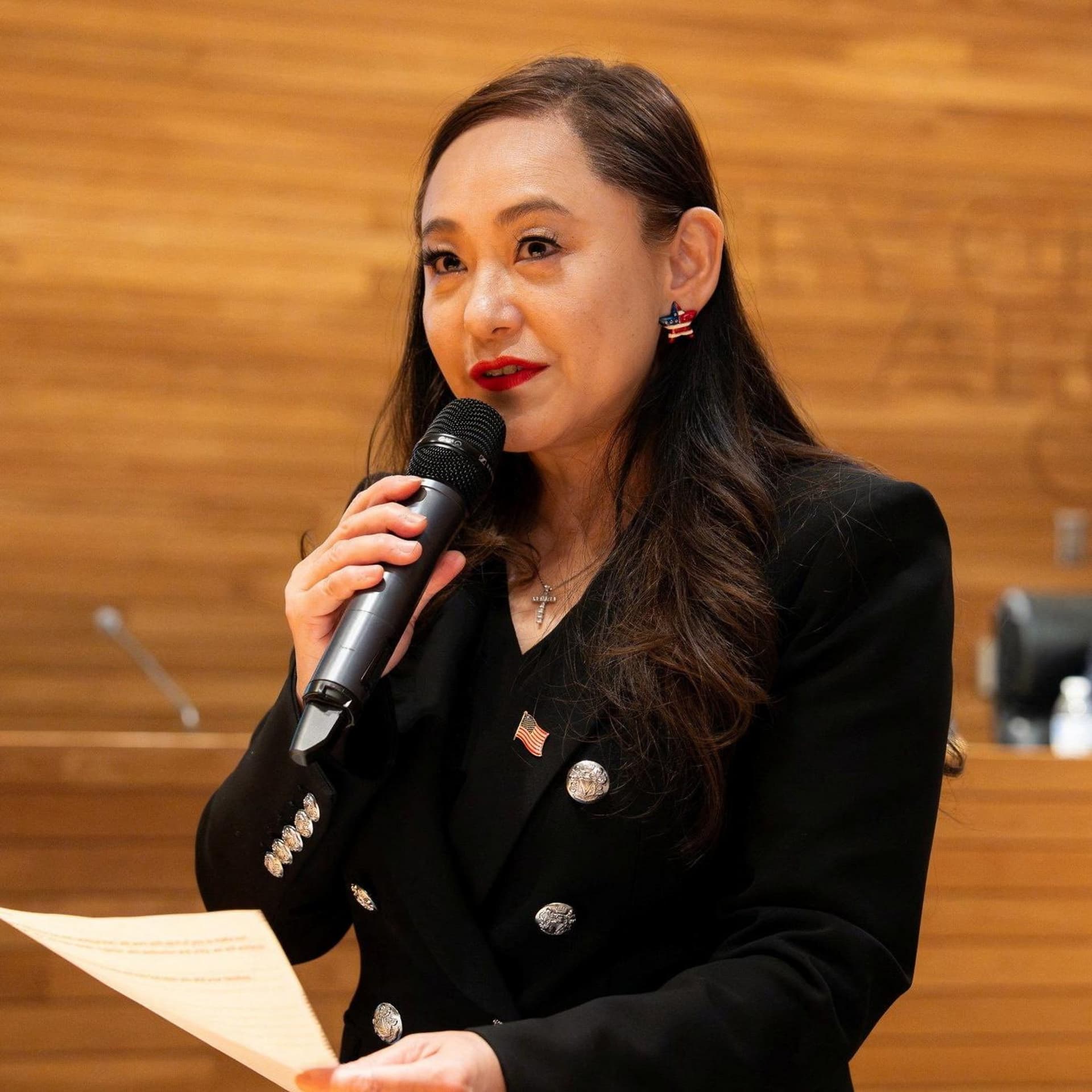
The mayor of the Californian city of Arcadia has agreed to plead guilty to charges she acted as an illegal agent for China. Prosecutors say Eileen Wang was directly co-ordinating with a Chinese official to disseminate news stories downplaying human rights concerns in China, with the aim of trying to influence US government and public opinion.
US authorities say the extent of China’s covert activity and espionage in the United States goes well beyond this case. According to the FBI, Chinese counterintelligence and espionage efforts are a “grave threat to the economic well-being and democratic values of the United States”.
We speak to Andrew Badger, former CIA case officer and co-author of The Great Heist: China's Epic Campaign to Steal America's Secrets.
The Global Story brings clarity to politics, business and foreign policy in a time of connection and disruption. For more episodes, just search 'The Global Story' wherever you get your BBC Podcasts
Producer: Viv Jones and Lucy Pawle Executive producer: James Shield Sound engineer: Travis Evans Senior news editor: China Collins
(Photo: Eileen Wang. Credit: City of Arcadia City Hall/ Reuters)



