In short
Podcast Summary: The Global Story - The Mystery of Putin and the Apartment Bombs
Podcast Details
- Title: Global News Podcast
- Description: The Global News Podcast delivers breaking news and current affairs from around the world with expert analysis, focusing on politics, economics, climate, business, technology, and health. Episodes are released twice a day on weekdays and daily on weekends.
Episode Overview
- Title: The Global Story: The Mystery of Putin and the Apartment Bombs
- Description: Discusses the September 1999 bombings of four apartment buildings in Russia that killed hundreds, the government's response, and the lasting implications for Vladimir Putin's rise to power. Featuring insights from Helena Merriman, host of a related BBC podcast titled *The History Bureau: Putin and the Apartment Bombs*.
Key Themes Historical Context
- Timeframe: The bombings occurred in September 1999, shortly after Vladimir Putin became Prime Minister.
- Political Background: Russia was experiencing turmoil with Boris Yeltsin as an aging and unpopular president, leading to instability and the search for a successor.
The Bombings
- Event Details:
- Four bombs exploded in different locations, including Moscow and the southern town of Volgodonsk.
- The first bombing in Boynaksk on September 4, 1999, resulted in significant casualties.
- Following bombings escalated public fear and led to heightened security measures.
Theories and Controversies
- Official Blame: The Russian government quickly blamed Chechen militants, reflecting ongoing tensions from previous conflicts.
- Alternative Theories:
- Some suspect involvement of the FSB (Russia's Internal Security Service) in orchestrating the bombings, with speculation that Putin might have had a role in manipulating the situation for political gain.
- The notion of a false flag operation has persisted, with supporters arguing it was a means to justify a war in Chechnya, enhancing Putin's image as a strong leader.
Key Events After the Bombings
- Public Reaction: Putin's speeches following the attacks resonated with the public's call for a strong response, increasing his popularity.
- Investigations:
- Various attempts to investigate the bombings were thwarted, including a failed parliamentary inquiry.
- A handful of suspects were eventually arrested, but none were found to be Chechen, contradicting the government's narrative.
Key Takeaways
- Power Dynamics: The incident marked a pivotal moment in Putin's rise to power, with the bombings contributing to a narrative of national security that he capitalized on.
- Media and Control: The handling of information and narratives surrounding the bombings reflects broader trends in Russia’s media landscape, where state-controlled narratives often overshadow independent journalism.
- Continued Inquiry: Questions surrounding the bombings remain relevant today, illustrating ongoing concerns about government transparency and accountability in Russia.
Conclusion The apartment bombings of 1999 remain a deeply controversial topic with lasting implications for understanding Vladimir Putin's governance and the evolution of Russian political dynamics. The episode encourages listeners to reflect on the complexities of historical narratives and the importance of questioning official accounts.
Additional Resources
- For more detailed insights, listeners are encouraged to check out *The History Bureau: Putin and the Apartment Bombs* available on BBC platforms.
Written by AI. May contain mistakes. Listen to the episode to check what was said.
Chapters
Tap a time to open that second in VOThe Context of the Bombings
0:45 to 2:37
Understand the historical backdrop of the 1999 apartment bombings in Russia.
“Old alliances are fraying and new ones are emerging.”
Descriptions of the Apartment Bombings
2:37 to 4:32
Detailed accounts of the bombings and their immediate aftermath.
“that set the stage for his rise to the presidency.”
Public Response and Media Coverage
4:32 to 6:34
Explore how the Russian public reacted to the bombings and the media's role.
“which is Russia's Internal Security Service, partly because of very strange, murky things that went on at the time, which I'm sure we'll get into.”
The Rise of Vladimir Putin
6:34 to 9:36
Analyze how the bombings impacted Putin's ascent to power.
“Russian investigators say a bomb caused the explosion which destroyed a block of flats in Moscow.”
The Mysterious Rezan Incident
9:36 to 12:00
A detailed account of the suspicious Rezan incident surrounding the bombings.
“this is the first time most Russians have seen him talk.”
Contradictory Government Statements
12:00 to 14:06
Examine the conflicting statements from the Russian government regarding the bomb incident.
“Someone takes them in, gives them cups of tea to keep them warm.”
The Mysterious Apartment Bombings
14:06 to 15:24
Learn about the strange events surrounding the Russian apartment bombings in 1999.
“finding and stopping what could have been a bomb.”
Introduction to the Series
15:24 to 15:50
Helena Merriman introduces her BBC series on the apartment bombings.
“In 1999, four Russian apartment buildings were bombed, hundreds killed.”
Western Media Response
15:50 to 17:52
Discover why the story of the bombings failed to gain traction in Western media.
“One small detail you mentioned in this series that caught my attention is that there was an attempt to publicize this story beyond Russia.”
Putin's Rise Amidst Conflict
17:52 to 19:13
Explore how Putin's rise to power coincided with the Chechen war and bombings.
“But in a way, those questions get sidelined because there's this new distraction, which is Putin sending fighter jets to bomb the Chechen capital, Grozny.”
Show all 15 chapters
The Inquiry into the Bombings
19:13 to 22:10
Learn about the failed attempts to investigate the apartment bombings.
“only 2 % of Russians thought that Putin would make a good president.”
The Lack of Accountability
22:10 to 24:12
Discuss the arrests made following the bombings and the lack of credible suspects.
“So then at the same time, you have the government's inquiry and very little is known about that.”
Evidence of Possible FSB Involvement
24:12 to 26:29
Investigate the theories surrounding FSB's involvement in the bombings.
“Yeah, it's the question we've wrestled with for weeks and months as we've been looking at this story.”
Controlling the Narrative
26:29 to 28:03
Understand how the Kremlin manages narratives following crises.
“And I think one of the most interesting things to discover is just how live questions around this story still are in Russia today.”
Understanding Power Dynamics in Russia
28:03 to 28:33
Explore how power and narrative control function in modern Russia.
“it's really not just about what happened in 1999.”
Transcript
Automatic transcript. May contain errors.0:00This BBC podcast is supported by ads outside the UK. If journalism is the first draft of history, what happens if that draft is flawed? In 1999, four Russian apartment buildings were bombed, hundreds killed. But even now, we still don't know for sure who did it. It's a mystery that sparked chilling theories. I'm Helena Merriman, and in a new BBC series, I'm talking to the reporters who first covered this story. What did they miss the first time? The History Bureau. Putin and the apartment bombs. Listen on BBC.com or wherever you get your podcasts. Hey there, I'm Asma Khalid. And I'm Tristan Redman.
0:45And we're here with a bonus episode for you from the Global Story podcast. The world order is shifting. Old alliances are fraying and new ones are emerging. Some of this turbulence can be traced to decisions made in the United States. But the US isn't just a cause of the upheaval. Its politics are also a symptom of it. Every day we focus on one story, looking at how America and the world shape each other. So we hope you enjoy this episode. And to find more of our show, just search for The Global Story, wherever you get your BBC podcasts. When you're trying to make sense of the world in this moment, one person central to it all is Vladimir Putin.
1:26And although here on this show we have looked at Putin's backstory and how it informs Russia today, there remains a pivotal series of events during his rise to power that is still shrouded in confusion and controversy. In September 1999, just weeks after Putin became prime minister, four bombs blew up four apartment buildings across Russia. The bombs exploded in the middle of the night, killing hundreds of people while they slept. In the aftermath of the bombings, many strange things happened, and that led to several different theories about who could have been behind those attacks. The Russian government blamed militants from Chechnya, a rebellious region in the south of Russia.
2:11But some said the bombings were the work of the FSB, Russia Security Services. There's a theory that Vladimir Putin himself had a hand in them, although the FSB and President Putin have always denied this. Putin has called the suggestion utter nonsense and totally insane. What isn't in dispute is that the atmosphere of terror that followed the bombings was part of Putin's case for launching a war in Chechnya that set the stage for his rise to the presidency. A new BBC podcast tells the story of the apartment bombings in detail and tries to get close to the truth behind this 26-year-old mystery.
2:54I'm Asma Khalid in Washington, D.C. And today on The Global Story, how the 1999 apartment bombings helped propel Putin's rise to power.
3:17So I'm Helena Merriman. I'm a journalist. I reported for the BBC for many years, from frontline war reporting to elections. And I'd say for me, one of the interesting things through my career has been looking at that meeting point between journalism and history, which is partly what this podcast does. Helena is the host of the new BBC podcast I mentioned. It's called The History Bureau, Putin and the Apartment Bombs. I started out by asking Helena why she wanted to tell this particular story. Well, as a journalist, as much as I love looking at what's going on right now in the present, I think I've always been drawn to stories in the past where the dust hasn't quite settled.
3:59And I think the story of the apartment bombs is probably one of the most intriguing examples of that. In fact, I'd say it's probably one of the most important unresolved stories of recent history. So it's about four bombs that blew up four apartments in September 1999, killing hundreds of people while they slept. What's interesting about this story is that even now, there are these huge disagreements about who bombed those four apartments. So the government blamed Chechen militants, but others blamed the FSB, which is Russia's Internal Security Service, partly because of very strange, murky things that went on at the time, which I'm sure we'll get into.
4:42But it's also a story that tells us so much about one of the most powerful men in the world today, Vladimir Putin, because he becomes president right at the time of the bombs. So if you want to understand Putin's origin story, this is a really important place to start. Well, I will say many listeners might not know this story at all. So can you take us back to the beginning? Where does it all begin? So it all begins in September 1999. And maybe it's helpful to give a bit of political context at the time. So this is eight years after the collapse of the Soviet Union. You have this new country, Russia, with a new president, Boris Yeltsin.
5:22And at first, everyone loved him. He was flamboyant. He was charismatic. But by 1999, he's old. He's an alcoholic. Inflation has gone through the roof, people's savings are wiped, there's vast amounts of corruption. And Yeltsin and the oligarchs around him know that he needs a successor. But the problem is there is no one obvious. So that sets the scene for what then happens on September the 4th.
5:52In a city called Boynaksk, this is a remote town which is thousands of miles from Moscow. People are bedding down for the night when a truck which is parked outside the apartment explodes. Southern Russia is in turmoil tonight. Crumbles to the ground, 64 people killed. Rescue workers have spent the day searching for survivors in this mound of rubble. It's all that remains of a block of flats torn apart by a massive car bomb. And it makes the news, but it's not seen as a big deal because this city is near the border with Chechnya where there's been fighting in the past. So at that point, the country moves on.
6:30But then, just a few days later, on September the 9th, you have a second bomb. Russian investigators say a bomb caused the explosion which destroyed a block of flats in Moscow. And it goes off in Moscow in the early hours of the morning. At least 46 people were killed in the blast, with more missing and feared dead.
6:53and the footage from the time it's really harrowing you see the front of the apartment is peeled off one journalist at the time described it as looking like a doll's house you can see all the people's clothes and bathtubs inside and 94 people are killed in that second bomb and this time because it's moscow the story breaks out and who are the leading suspects after the first two bombs go off, the question everyone's asking is who did this? And the answer comes pretty quickly. People seem pretty sure that it's Chechen militants. And that's partly because very recently there's been a horrific war between Russia and Chechnya.
7:31It goes back to 1991 when the Soviet Union was falling apart. You had different states breaking free. And Chechnya, which is a republic in the south of Russia, wanted it too. So they declare independence, but Russia has no intention of letting Chechnya go. So they sent in the tanks. There's a very brutal war between 94 and 96, thousands killed, horrific accounts of human rights abuses on both sides. And it ends with a peace deal, but the Chechens don't win their independence. So there's this real sense of unfinished business on both sides. That's why when the first two bombs explode, a lot of people in Russia immediately blame Chechen militants.
8:11Is that just because of the war that it was considered to be so brutal and somewhat unfinished that people thought it might be related to this? Or was there actual evidence on the ground at that point pointing to the Chechens? At that time, there was no evidence pointing to Chechem militants. But then, just a few days later, you have a third bomb. Yesterday's deadly explosion has triggered a massive security clamp down here. Every nook and cranny is being searched. This is on the 13th of September. Over 100 people killed. As for the survivors, only two people were pulled from the rubble alive.
8:47And it's at that point that the panic really sets in. People here are bracing themselves for further attacks. It's as if the whole city was on a war footing. It's partly because almost everyone in Russia lives in these very tall, precarious, prefab apartment blocks. And I think what makes these attacks so horrific is that most of them happen in the middle of the night. So when people are in their beds asleep. And so you have people now sleeping on the streets at night to protect themselves. And it's that night of the third bomb when Russia's new prime minister, it's their fifth in just 18 months because none of them last, speaks to the press.
9:28And his name is Vladimir Putin. A name, of course, we all know well, but what's interesting about this moment then is that this is the first time most Russians have seen him talk. You know, he's only been in the job a few weeks. He's short. He's got a forgettable face. The only thing people really know about him is that he was recently head of the FSB, which is Russia's Internal Security Service, formerly the KGB. And he gives a speech, a very powerful speech, where he says he's going to go after the rabid animals that did this and wipe them out. And how does that speech go over with the public?
10:05What did you hear from reporters who were there at the time? So reporters at the time say this went down really well. People wanted to hear this strong talk, vengeful talk. They wanted a sense that here was someone taking this seriously. Especially when just a few days later, on the 16th of September, there's a fourth bomb. And this is in a town called Volgodonsk. The facade of another apartment block was ripped off by a bomb in the southern town of Volgodonsk on Thursday, causing a further 17 deaths. Security has been stepped up at government buildings and citizens have been encouraged to be more vigilant by organising watch committees in their blocks of flats.
10:46So by this point you now have four apartment buildings blown up, around 300 people killed. and people are terrified at this point. And then this is where the story takes a very strange turn. And in fact, I think of all the things that happen in the story of the apartment bombs, this is probably the most contested part of it. So it all happens in a city called Rezan, which is about 100 kilometers south of Moscow. And this is now about a week after the fourth bomb. And at this point, everywhere in Russia, you have people patrolling apartment buildings, looking out on the streets, because everyone's terrified that maybe their apartment will be next.
11:24And at around 9.30 in the evening, a man called Alexei spots this white Larder car. It's parked outside his apartment. But he notices something strange about it, which is that part of the license plate has been covered up with a piece of paper. So he calls the police. They come. They go into the basement. And they rush out. And they say there's a bomb in the building. The whole building's then evacuated. You know, babies taken from bathtubs. People are racing outside in their pajamas and their dressing gowns. and the police then send an explosives expert into the basement and they find three white sacks of powder connected to a detonator and a timer and they then test the powder and they find it positive for hexagon which is a military explosive that was used in at least one of the other apartment bombs so the residents are racing outside and they end up staying in a local cinema for the night.
12:19Someone takes them in, gives them cups of tea to keep them warm. And the next day, you have this manhunt, which begins because everyone's desperate to try and catch these bombers. So the city's under siege, you have the local FSB, local police residents all looking for the bombers, you have the roads and trains and airports all blocked. And then one of the most extraordinary parts of this story is a call comes into the Roseanne phone exchange. And there's a man at a payphone in Roseanne who wants to be connected to a number outside the city. So the operator puts the call through and then she listens in.
12:53And she hears a man saying, the city is locked, we can't get out. And the person at the other end says to the man, you know, you've got to split up and leave the city immediately. So she's understandably suspicious. So she writes down the number that they called the phone number, send it to local police, and they trace it. And you'd expect at this point that it might go to Chechen militants, given the narrative at the time. But instead, it goes to a number belonging to the FSB, Russia's Internal Security Service. This is a bizarre detail. So at this point, what does the FSB say when that number is traced back to them?
13:31This is where the story gets even stranger. So the police then find the car abandoned. They then find two men who look just like people who eyewitnesses saw. But the men then say, we're FSB and they get out their ID cards to prove it. So none of this is making sense until two days later, there's an announcement given by the government. Russia's interior minister is speaking to the police. And he mentions what happens in Rezan as a successful example of people finding and stopping what could have been a bomb. So he says, you know, well done, you were vigilant, Your vigilance paid off. But then, and again, this is another very strange bit of the story, there's a 30-minute gap, and half an hour after that speech, the head of the FSB, a man called Nikolai Patrushev, he says something that completely contradicts what the interior minister says.
14:28He says, oh, no, it wasn't a bomb. It wasn't a thwarted terrorist attack. It was a training exercise.
14:42It was all just a drill. Those sacks of hexagon, it wasn't explosives. It was just sacks of sugar. And we were doing this just to test you. And well done, you passed the test. And he gives the phone operator the colour TV for passing this test. And it's so extraordinary that even the local FSB in Rezanne at that point don't appear to believe it. The residents don't believe it. Journalists at the time don't believe it.
15:18If journalism is the first draft of history, what happens if that draft is flawed? In 1999, four Russian apartment buildings were bombed, hundreds killed. But even now, we still don't know for sure who did it. It's a mystery that sparked chilling theories. I'm Helena Merriman, and in a new BBC series, I'm talking to the reporters who first covered this story. What did they miss the first time? The History Bureau, Putin and the apartment bombs. Listen on BBC.com or wherever you get your podcasts. One small detail you mentioned in this series that caught my attention is that there was an attempt to publicize this story beyond Russia.
16:05You spoke to a journalist who actually tries to get this story out into a newspaper at the time, known here as the Washington Times. And I was struck by the fact that it doesn't seem to resonate. What happened and why was that? Yeah, it's a really good question because when you look back at it now, you think, why wasn't everyone asking these questions all over the world? And this journalist I interviewed, David Satter, who was one of the first Western journalists to ask these questions. He writes in our school for the Washington Times. He speaks to some of his sources who are former members of the intelligence services who raise a lot of questions, particularly about Rezan, but also about the bombs and whether Chechen militants really could have been capable of doing it.
16:48And he writes this article, but it disappears into the wind. And I think it's partly because the idea back then that the FSB could have been involved in something like this just seemed so unimaginable, so beyond the realms of what anyone thought was possible at that time. the people just couldn't believe it. It sounded like a conspiracy theory you're saying. Exactly. And so you almost have this divide between what happens in the Western press, which moves on, partly because you then have President Yeltsin resigns on December 31st, Putin becomes acting president. So events are moving very quickly.
17:26And so in the Western press, it's full of coverage of Vladimir Putin, the new acting president of Russia. And he was warmly welcomed by the West, it seems, at that time, right? He was thought to be leading Russia in a new direction. Exactly. And you have Western leaders lining up to meet him and court him. And Tony Blair comes to Russia and watches opera with him. And people want to make friends with this new leader who they think is someone they can do business with. Meanwhile, in Russia, a lot of Russian journalists are asking very uncomfortable questions still. But in a way, those questions get sidelined because there's this new distraction, which is Putin sending fighter jets to bomb the Chechen capital, Grozny.
18:08Misery returns to Chechnya. Just three years after its war with Russia, the fighter bombers are back. It's the start of the second Chechen war. Moscow says it's targeting what it calls bandits. The Islamic rebels it holds responsible for the recent spate of bomb blasts in Russia's cities. But it's ordinary Chechens who are dying. Those pictures are now flooding into the newsrooms of TV stations around the world. And journalists at the time drew a direct line between the apartment bombs in this new war. What's so interesting about the effect of that war is that at the same time, Vladimir Putin is undergoing this huge transformation from being this rather forgettable former KGB guy in a suit.
18:55People in Russia called him the Syrian miska, which is the grey mouse. And he's now swapped those suits for military uniform. He's jumping on planes. He's giving heart-thumping speeches to soldiers on the front line. And his popularity ratings soar. I mean, when you look at his ratings back in August, before the bombs, only 2 % of Russians thought that Putin would make a good president. And just a few months later, after the bombs, after this new war in Chechnya, Putin being all over the news, his ratings have soared to over 40 percent. It's that quick. And as a result of that war, did Russian authorities arrest any suspects related to the bombings?
19:39So here's where it gets interesting. So you have these apartments have blown up in September over a matter of just a few weeks. You then have this new war in Chechnya. But at the same time, Putin is now campaigning. to become president. So really, by that point, he is president in all but name. And so it's just a few months before the election. He barely campaigns. Again, he carries on his rides in fighter jets flying over Chechnya. And he wins outright in the first ballot. So the 26th of March 2000, Vladimir Putin is now president of Russia. So you say he is seen, it sounds like in Russia, as a popular sort of war hero.
20:19And yet this question of who was involved or who was responsible for these apartment bombings, is that ever resolved? Yeah. So what you then have is a number of very brave Russian journalists, parliamentarians who are desperate to get to the truth. And in February 2002, there's a group of Russian parliamentarians who say, look, we need an official public inquiry into the bonds. And there's a vote. And hundreds of parliamentarians in the Russian Duma actually vote for it, only a few vote against. But because it has to be unanimous, it fails. So there's no independent commission? Well, there's no parliamentary commission.
20:58I see. But there's an independent one. So a few parliamentarians say, OK, well, if there can't be a parliamentary inquiry, we'll just do one ourselves. And a bunch of them get together. It's a bunch of politicians, journalists, lawyers, some grieving family members. But right from the start, things are very hard for them. So one of the people on this commission, a lawyer called Mikhail Trapashkin, within just a few days of him agreeing to be on this commission, his house is raided. There's another member of the commission, Sergei Yushchenkov. He's the vice chair. This is a year after they've begun their work.
21:30He's coming home one day and he's shot to death in front of his apartment in Moscow. His wife finds his body lying in the street. And just a few months later, another member of the commission starts feeling unwell. He goes to hospital. His internal organs shut down. His skin peels off. Takes about 16 days for him to die. Doctors at the time say he just had an allergic reaction to something. But journalists at the time said they're sure that he was poisoned. So you have these very mysterious deaths that eventually result in that commission falling apart. And was anyone ever arrested for the bombings?
22:09Yeah. So then at the same time, you have the government's inquiry and very little is known about that. And we've done a lot of digging to try and find out snippets of what went on. But even journalists at the time said it was really hard to get a grip on it because so much happened behind closed doors. I mean, just to give you an example of how the government's response to the bombs differed from the way other governments have looked at terror attacks. In Russia, just a few days after those apartment buildings were bombed, the government removes what was left of those apartment buildings. So a lot of the forensic evidence that might have existed is never found.
22:45You know, compare that to 9-11 when that site was a crime scene for months and months and months after. So when various lawyers do get access to some of the government files on the reports, there's very little found. But there is eventually a trial, and that takes place in October 2003. And by that point, there's only two people that the government has managed to find who they say are responsible for the bombs. And were they Chechen? Well, good question. You would expect them to be, given that this is who the government blamed for the bombs. But they're not. They'd arrested a number of people, quite a few of them from Dagestan, which is a republic next to Chechnya.
23:20And in the end, you have this trial. It goes on for two months. These two men, non-Chechens, are found guilty for a string of charges handling explosives, but also for being connected to two of those four bombs and they're sentenced to life in prison.
23:41So to sum up the story that you have given us, we have several people who strongly believe the FSB, Russian Intelligence Security Services, somehow were involved in those apartment bombings. And they seem to believe that Russia's leader, Vladimir Putin, had a lot to gain from them because they accelerated his rise to power. Some of those people are now dead under mysterious circumstances. How do you characterize what the evidence tells you after doing the series? Yeah, it's the question we've wrestled with for weeks and months as we've been looking at this story. When you look at it by the end, there's a lot of circumstantial evidence.
24:30There are a lot of theories. There are a lot of theories that point in both directions. You can make an argument that the Chechen militants had the motive to do it. In 1999, the Kremlin's grip on Chechnya was slipping. Yeltsin's government was unravelling. This was a moment of weakness for the Russian state, so perhaps a good chance for them to try and take back control. Others say, you know, just look at the attacks that Chechen militants carried out in the years after. This was the kind of thing that they would do. You had this siege in the Moscow theatre in 2002 where they took more than 900 people hostage.
25:03In 2004, militants attacked two planes and those militants were linked to the Chechen cause. There were suicide bombings in the Moscow metro. So for a lot of people, they felt, well, look, it fits the bill. You know, it fits their pattern of behaviour. And then others who point to the FSB say, well, look, how would Chechen militants have got these explosives all the way to Moscow? Why didn't the FSB in Moscow tell the local FSB in Rezan about the drill? So there are so many strange twists and turns to this story. This theory of possible FSB involvement, it sounds like it's highly disputed. What does Putin, what does the Russian government say?
Read the full transcript
25:43What has it said over the years? So the FSB, they've always denied any involvement in the apartment bombs. Vladimir Putin himself, he wrote an authorized biography, and that was published in April 2000. So just six months after the bombs. And he responds to these allegations. He says, what's blowing up our own apartment buildings? You know, that is really utter nonsense. It's totally insane. No one in the Russian special services would be capable of such a crime against his own people. And I think the feeling for the FSB and for Putin was that this would put to rest these questions. You know, they'd sent a couple of people to prison.
26:22They then sealed the files away for the next 75 years. But of course, that's not what's happened. And I think one of the most interesting things to discover is just how live questions around this story still are in Russia today. Why are the questions so live? And, you know, one thing that was on my mind as I was listening to your series, as I listened to you speak now about this story, is what this mystery tells us about Putin's Russia 25 years on. I think what this story tells us is just how much the Russia we see today was forged in that moment back in 1999. So when you look at Russia now, I think you see a country that's closing in on itself.
27:14You know, you have independent newsrooms have been shut down, reporters in exile, Western news sites have been blocked. Facebook, Instagram and X, these platforms that once connected Russia to the outside world, they've all been banned. And when you look at how the Kremlin handled the apartment bombs, I think you can see a template there for how they would continue to act and how they would manage future scandals. So whenever you've seen crises since then, whether that's plane crashes, bombings, the pattern's the same. They move very fast to control the narrative. They flood the media with the official version of events.
27:53And they close investigations very quickly before any of these awkward questions can be asked. So I think for us looking at this story now, it's really not just about what happened in 1999. It's about how power works in Russia now.
28:13And how narratives are controlled. And amidst that control, what I find fascinating is how very brave people in Russia are still asking these questions, even now.
28:32Thank you so much, Helena, for bringing your reporting to us. Thank you.
28:41That was Helena Merriman, and her series is called The History Bureau, Putin and the Apartment Bombs. You can find it wherever you get podcasts. And I should add that there is a lot more to this story than we had the time to get into here. So if you're interested, check it out. Our show today was produced by Viv Jones. It was edited by Bridget Harney and mixed by Travis Evans. Our senior news editor is Chyna Collins. And that is it for The Global Story today. We'll talk to you again tomorrow.
29:34I'm Anna Merriman, and in a new BBC series, I'm talking to the reporters who first covered this story. What did they miss the first time? The History Bureau, Putin and the apartment bombs. Listen on bbc.com or wherever you get your podcasts.
From the publisher
In September 1999, just weeks into Vladimir Putin’s first premiership, four bombs blew up four apartment buildings, over a period of twelve days, killing hundreds and plunging the entire nation into fear. The government blamed Chechen militants, a conclusion corroborated by many journalists at the time. But whispers of a darker conspiracy persist to this day. A new BBC podcast, The History Bureau: Putin and the Apartment Bombs, tells the story of those bombings and re-examines how these tragic events helped propel Vladimir Putin to power. Asma talks to the host of the series, Helena Merriman.
The Global Story brings clarity to politics, business and foreign policy in a time of connection and disruption. For more episodes, just search 'The Global Story' wherever you get your BBC Podcasts.
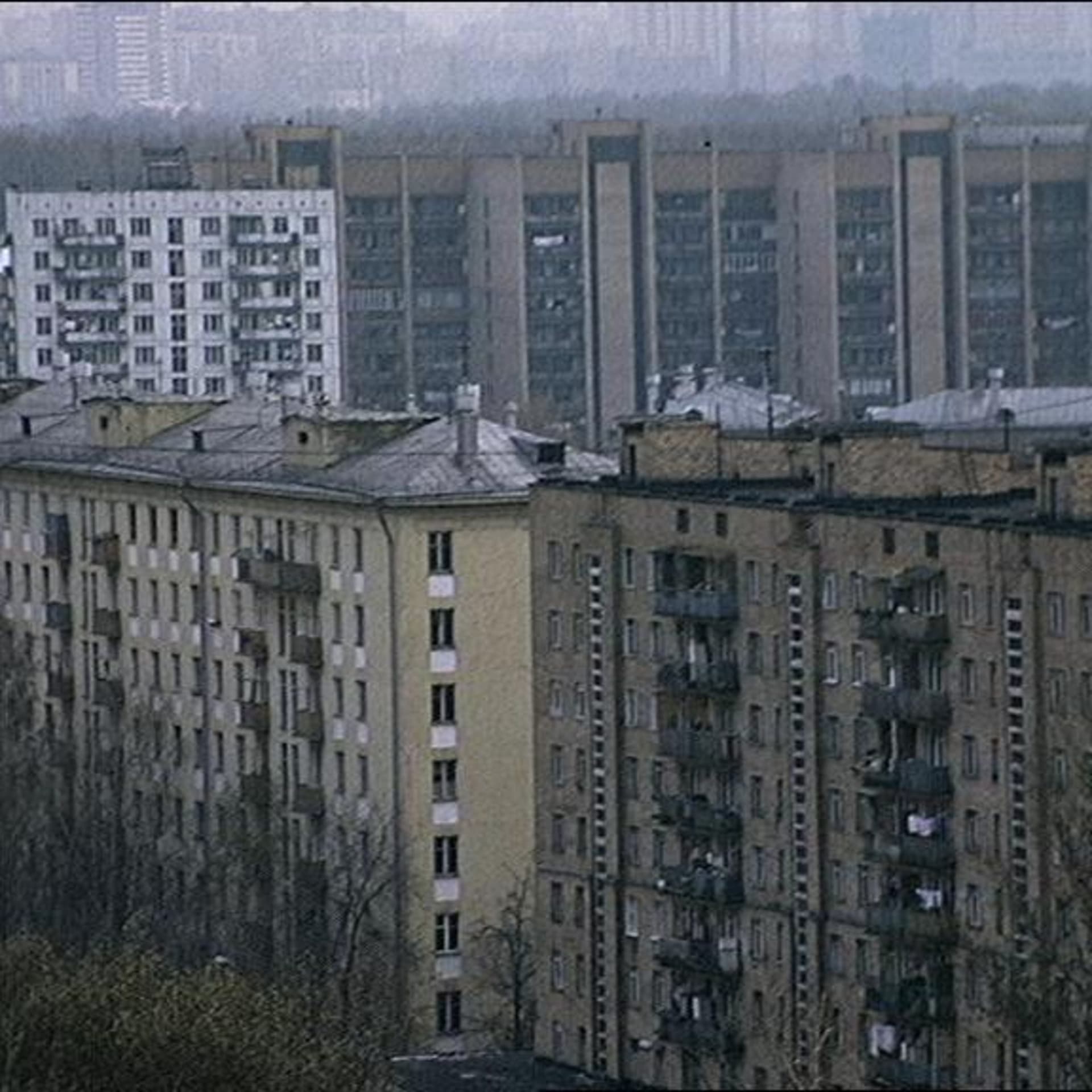
Producers: Viv Jones Executive producer: Bridget Harney Mix: Travis Evans Senior news editor: China Collins Photo: Moscow apartment buildings in the 1990s. (Credit: BBC)