In short
Global News Podcast Episode Summary
Episode Title
The Global Story: The Oil Lobbyist Who Tried to Sink the First Big Climate Deal
Episode Description This episode revolves around Don Pearlman, an influential American lawyer and oil lobbyist known for his significant impact on international climate negotiations, particularly during the Kyoto Protocol discussions in 1997. The podcast features insights from BBC climate journalist Jordan Dunbar, who explores Pearlman's legacy and the ongoing relevance of his strategies in contemporary climate summits.
Key Themes and Discussions
- Historical Context of Climate Negotiations
- Kyoto Protocol (1997): The first legally binding international agreement on climate change aimed at reducing greenhouse gas emissions.
- Role of the U.S.: The United States did not ratify the Kyoto Protocol, significantly impacting its effectiveness.
- Don Pearlman's Strategies
- Tactics: Pearlman was known for creating a "playbook" for stalling climate negotiations, employing psychological tactics to sow doubt among delegates.
- Lobbying Methods: Used handwritten notes to communicate with country representatives to influence wording and dilute proposed agreements.
- The COP Climate Summit
- Consensus Requirement: The COP meetings require unanimous agreement, providing ample opportunity for lobbyists to derail progress.
- Current COP30 in Brazil: Reflects on the complex dynamics of negotiating climate actions, with a particular focus on fossil fuel lobbyists.
- Modern Implications and Technological Changes
- Shift in Global Climate Action: From Kyoto to the Paris Agreement (2015), there has been a gradual evolution in how countries approach climate commitments.
- Emerging Technologies: Solar power becoming the cheapest energy source signifies a shift towards renewable energy solutions, regardless of political stances.
Key Takeaways
- Don Pearlman's Influence: Pearlman's legacy continues to resonate in current climate negotiations, showcasing the enduring nature of lobbying tactics.
- Lobbying Landscape: The presence of fossil fuel lobbyists has increased at COP summits, raising questions about the integrity of climate discussions.
- Technological Advances: Advances in renewable energy technology are changing the landscape of energy production, impacting policies and negotiations at climate summits.
Conclusion The episode provides a critical examination of how lobbying efforts, particularly by figures like Don Pearlman, have shaped the trajectory of international climate agreements. As the COP30 meeting unfolds in Brazil, the influence of both fossil fuel interests and emerging environmental advocates highlight the ongoing struggle within climate negotiations.
---
Producer and Production Team
- Producers: Aron Keller and Cat Farnsworth
- Executive Producer: James Shield
- Mixing: Travis Evans
- Senior News Editor: China Collins
Contact Information
For feedback and inquiries
[globalpodcast@bbc.co.uk](mailto:globalpodcast@bbc.co.uk)
Listening Platforms Available on BBC podcasts and various streaming platforms.
---
This summary encapsulates the major discussions and insights from the episode, offering a comprehensive look at past and present climate negotiation dynamics, with an emphasis on the influence of lobbying.
Written by AI. May contain mistakes. Listen to the episode to check what was said.
Transcript
Automatic transcript. May contain errors.0:00This BBC podcast is supported by ads outside the UK. If journalism is the first draft of history, what happens if that draft is flawed? In 1999, four Russian apartment buildings were bombed, hundreds killed. But even now, we still don't know for sure who did it. It's a mystery that sparked chilling theories. I'm Helena Merriman, and in a new BBC series, I'm talking to the reporters who first covered this story. What did they miss the first time? The History Bureau. Putin and the apartment bombs. Listen on BBC.com or wherever you get your podcasts. Hey there, I'm Asma Khalid. And I'm Tristan Redman.
0:45And we're here with a bonus episode for you from the Global Story podcast. The world order is shifting. Old alliances are fraying and new ones are emerging. Some of this turbulence can be traced to decisions made in the United States. But the US isn't just a cause of the upheaval. Its politics are also a symptom of it. Every day we focus on one story, looking at how America and the world shape each other. So we hope you enjoy this episode. And to find more of our show, just search for The Global Story, wherever you get your BBC podcasts.
1:22The big annual climate conference known as COP is happening in Brazil right now. And what you might not know about these talks is that everybody has to agree to everything. They run on complete consensus, which frankly does not seem that simple when I think of how my family can't even agree on what to eat for dinner. But what happens if someone around the table doesn't want there to be an agreement at all? Someone who's at the table precisely to be a spoiler. That's what happened right at the beginning of these climate meetings back in the 90s. And it set the tone for the summits that followed.
1:59It's why you might roll your eyes when you hear about a climate summit these days and assume that nothing will be agreed. From the BBC, I'm Tristan Redmond in London. And I'm Asma Khalid in Washington, D.C. And today on The Global Story, how an American oil lobbyist invented the playbook that would be used at these talks for decades to come.
2:27Our colleague Jordan Dunbar hosts this BBC podcast called The Climate Question. And that is the BBC's global climate change programme. We're a weekly programme that goes around the world looking at all of the people trying to deal with climate change on the front lines wherever they are. We wanted to speak to you because in Brazil right now, There's the COP30 Climate Summit. Now, COP stands for the rather unglamorous Conference of the Parties. Yeah. And it's the decision-making body of the UN Framework Convention on Climate Change, also not very glamorous. There have been big cops and little cops and cops that have passed by without noticing and ones that have kind of thunderous resonance all through the world.
3:12What's going on with this year's COP? Well, I would say COPs, while some people will think of them as just a United Nations negotiating meeting, you know, you get to see on TV the Plenary Hall, which is where you've got the guy with the gavel and all the different countries. But actually, these are huge. So in Dubai, so Conference of the Party 28, you had 80 ,000 people from all over the world. I was at COP 27, which was in Sharm El Sheikh in Egypt. I went there expecting, like most people, that it would be a negotiation. And obviously, you're going to have scientists, you know, delegations from countries.
3:45What I experienced was much more like a festival. So COP30 in Brazil is a different one because the ones that you've heard about in the past were all about creating the rulebook, like the framework. So we have decided on the scientific evidence that, yes, human-derived climate change is a problem, right? We are now at the stage in Brazil where it's less about, okay, how are we going to do this? It's now, when are you going to do it? What are you going to do? When you've been to COP, what's the thing that surprised you most about it? How much else is going on that you don't really see on the sides?
4:22Because this is the one place if you're in energy or climate action, you've got to be here, right? This is where everyone else is. You're there to network, to swap ideas. And one of the big criticisms that people have about the COP process, and there is a lot, is that it is moved away from the negotiation, right? And businesses got highly involved. And one of the biggest criticisms of the types of businesses there is the oil and gas lobby. So fossil fuel lobbyists and businesses. And according to campaign group Kick Big Polluters Out, fossil fuel lobbyists outnumber every country's delegation apart from Brazil at this year's COP.
4:59So they're saying 1 ,600 fossil fuel lobbyists are there this year. But on that list, you could quibble with who's classified as a fossil fuel lobbyist because it has two people apparently from Netflix, for example. But nonetheless, that is a wide criticism that there are a lot of business interests and fossil fuel interests actually at the COP, which people find odd because it's meant to be a climate change negotiation. What is the intention of oil lobbyists at these meetings? Why would fossil fuel lobbyists be here? So within the UNFCC, so the United Nations Framework Convention on Climate Change, that kind of oversees all of this, right, their events, their negotiations, while it is set up to deal with climate change, it also says, and I paraphrase, but essentially dealing with climate change while not limiting countries' economic developments.
5:51So that means in each country, quite a different thing. If you're a big Western country, you know, and you're developed, then you're looking at doing something quite different when it comes to mitigation, we call it, so reducing your emissions than you will if you're a developing country who still want to use their fossil fuel assets to develop. They feel like development is a bigger priority than climate change. And so that's the argument of why fossil fuel lobbyists have been allowed to go. Jordan, I want to follow up on that. You referenced 30 COPs. This is COP30 because we've now seen 30 years of these meetings.
6:27The first one took place, I believe, in Berlin. And it led to the Kyoto Protocol being agreed upon, which kicked this whole thing off. My understanding is you've been looking at one of the first lobbyists who operated at these meetings. And I am fascinated. So tell us more. So, Asma, we had the Rio Earth Summit. That was in 1992, which is where people got together and said, you know what, this is a problem, we should create some sort of mechanism to deal with it. And then we get to Berlin. So that's considered COP1, where this all starts. And scientists then, they had the Intergovernmental Panel of Climate Change, which is like the gold standards.
7:04These are global scientists around the world. And they agreed that human-derived climate change was a problem. So then the next one was in Geneva in 1996. And it was all about emissions reductions, OK, so getting countries to actually agree, not just to say, yeah, it's a problem, but like, how much are you going to reduce your emissions in the industrialized world? So we get to Japan, 1997, COP 3. The biggest bone of contention going into Kyoto was emissions reduction. So actually putting targets on it. So saying the UK are going to, you know, reduce by 7 percent. The US is going to go by 10 percent.
7:45should China have any emissions reductions? Because at this point, they are still very much a developing country. But, you know, they're industrializing so quickly. So that was the real thing was, are the industrialized countries going to sign up to actual targets? So I actually went to see a play all about the Kyoto Protocol, as it's known. So the narrator, surprisingly, was this legendary oil lobbyist or industry lobbyist, Don Perlman. Every day now, scientists try to tell us how to live our lives. Every day, they try to tell us that the oil that powers our lives is a threat to life itself. Don Perlman, some people believe, established the playbook of the fossil fuel lobby that still exists to this day.
8:44So having seen the play, I decided to look into the real story, the truth of Don Perlman and the oil lobbyists and what it can tell us about cops today. He is an incredible character. He goes to Harvard to study economics. He then gets a law degree from Yale. So very clever guy. He'd worked in the Reagan administration in the 80s. So he had been in the Department of Energy, the Department of the Interior as well. So he's an inside man. But by the time it gets to Kyoto, he's now becoming best known in climate circles because he works for a law firm called Patton Walsh. and they represent OPEC and different oil companies.
9:28OPEC being the, yeah, the world's biggest state oil producers. You know, it's said that no one knew these thousand page documents and the technicalities better than him. He was across everything. He went to all the meetings leading up to Kyoto before the main negotiations. He was at the meeting of the IPCC, so the scientists that were there, they say he was using country delegates, So using different countries to try and water down the science and make people doubt the science. Because the whole point of these UN negotiations is to reach consensus. And that's why the play is incredible, because you get to see that playing out with the different countries.
10:08They alleged that he was there to sow doubt. That very human thing of using psychology to say, well, what are they doing? What's this country doing? Oh, why isn't China doing more? And you're going to do, are you going to take that? like really sowing dissent. You know, the negotiations happening in the side room saying, well, they've said this and they might agree to this, but this won't happen. Well, can you walk us through exactly how Don Perlman did this during the proceedings? You're saying that all these various countries from around the world get together. They're trying to agree to some sort of climate agreement.
10:42How did he try to derail this process? So we dug through the BBC's archive and we found Don Perlman himself turns up in a BBC documentary. It's called Battle for the Planet from 1997. If you want to obstruct progress or slow down negotiation, there's no better environment than the United Nations. We caught up with Don Perlman in Geneva. From where? From BBC television. I was just wondering, could I briefly just have an interview with you? I'd be perfectly happy to do it, but for the fact that I'm in the process of trying to find somebody that I've got to meet. However, Mr Perlman eventually declined to be interviewed.
11:23So in the documentary, there's a representative from the Association of Small Island States, that was a block of low-lying islands made up across the world, this guy, James Cameron. I think it's fair to say he was not Don Perlman's biggest fan. He is rude, offensive, he uses foul language, he bellows and screams and rants and accuses, and all this from the cover of law practice. It's extraordinary. So if you imagine the treaty is going to be this long legal document, and semantics are so important to this, because at Kyoto, it was going to be legally binding, so it'd be real consequences. And for the first time, they were going to put numbers on the emissions reductions.
12:14And that was the most difficult thing for countries, because we're in 1997, so it's still very industrialized societies, even in the West, like lots of coal power. You've still got steel being made. So there's real economic effects from this. And so what lobbyists would try and do, including Don, is change the wording. But they're not allowed in the negotiating chamber. They can't get in there. And so he would use a nation like Kuwait, which is a petro state. And negotiators say that he would send handwritten notes because he didn't have phones or pagers. the only way to communicate was literally handwritten notes, saying things like delete paragraph four, change that word, move this across, looking for technicalities, procedural errors, anything that's going to slow things down or weaken the final agreement so you might be able to keep using fossil fuels longer or it's not clear how much you have to get rid of them.
13:13Well, who is he acting on behalf of when he's doing this? Who's actually invited him to this crucial COP meeting in Kyoto in 1997. So he was part of an NGO, so that's how he and other industries would actually be there. A non-governmental organisation. Non-governmental organisations. One was called the Global Climate Coalition, another called the Climate Council. Those NGOs allow you to get access then to where the negotiations are, because now you're a non-governmental organisation who can be invited by countries and get onto the list and be allowed in. Okay, so Mr. Perlman is not allowed in the main plenary room, as you describe it, but he can liaise with countries that act on his behalf or in concert with him.
14:00Is that right? Yeah, for the plenary, it's all about these notes going in. And so it's this dance, this dance of countries changing language, punctuation marks. It seems stupid, but it's actually incredibly important. So in the play, there's this brilliant bit where they illustrate it. where they're trying to urge countries to move away from fossil fuels. This sentence, countries are urged to take immediate actions to control the risks of climate change. Surely we can all agree on this. No, no, no, it's a strong... What does that even mean? Countries are urged. I'm sorry, it is urgent. I feel urged.
14:35I don't feel urged. Do you feel urged? I don't feel urged at all. Invited. You think about those two words, what's stronger? Urge or encourage? Urged is a red line for us. There's so much meaning behind them. Yeah, I mean, if you urged me to take some time off work, you'd be saying to me, take time off work, Tristan, you need a break. Whereas if you encouraged me, you're kind of leaving it up to me. Exactly. Countries are urged to take actions to control the risk of climate change. So the wording is so important. And those are the different bits that countries can change to make it stronger or weaker in the final agreement.
15:08And we saw in COP26 in Glasgow, India changing the words for coal from phase out, which is gone to me, to phase down. How long does that take? What does that mean? Are you still allowed to use some? So, Jordan, I just want to make sure I understand how this actually played out in real time. You're describing a guy, a lobbyist, a person you say who isn't really clearly identified as being with the oil industry, hanging out on the outskirts of this conference. He can't actually be on the floor. So he's swapping notes with different countries to get them to change minor phrases, minor wording in this all.
15:51And is that how it all played out? So there was this big article in German magazine Der Spiegel where he's called the high priest of the Carbon Club. And after that point, he is known that he's there. But that doesn't stop him. And so what is Don Perlman's actual role in the end at this crucial climate summit? How does he water down the agreement? So there's that scene we talked about in the play, which is talking about encouraging or urging. It's watering down the language and also making different countries worry about how it would be accepted at home. So for the US, there was massive domestic pressure on them not to put in emissions targets.
16:40There had been adverts running leading up to Kyoto talking about how, if they reduced the emissions and they agreed to it, the price of everything was going to go up. What do you know about the United Nations proposed climate treaty? Isn't that about global warming? It would force the US to cut energy use by over 20 percent. Gasoline prices could go up by 50 cents a gallon. You know, the price of energy and fuel, this was a bad thing for Americans. Meanwhile, countries like China, India and Mexico are exempt. We pay the price and they're exempt. It's not global and it won't work. So he's there reminding the US negotiators.
17:17He's also there working with petro-states to say, oh, if you agree to this, what's going to happen to you? Working across different delegations. And remember, we're trying to get consensus here. You have to get nearly 200 countries to agree. It therefore is very easy to derail it because it only takes one country or one block to slow things down or change things. But the Kyoto Treaty finally gets agreed. So they work late into the night. The interpreters have gone home because their contracts are over. They've run out of food. They eventually get consensus. And the chairman says, yes, we agree.
17:57The Kyoto Protocol is agreed. It's not until 2001 that George Bush Jr. officially pulls America out. So they don't ratify it. For the protocol to come fully into force, the pact needed to be ratified by countries accounting for at least 55 % of 1990 carbon dioxide emissions. Obviously, when America didn't ratify that, that makes that much harder. Australia also didn't. It was then Russia that's persuaded by the EU to ratify it. And Russia accounted for 17 % of 1990 emissions because you imagine a really, really, really industrial country back then. And so thanks to them, the Kyoto Protocol eventually did get ratified, but without the US.
18:46Is he the reason that the United States didn't ratify the Kyoto Treaty? I think it's difficult to lay it all on one person. Certainly, even people from the Green Lobby, you know, describe him as unbelievably tenacious, This unbelievably strategic. So even his adversaries had respect for him. Really, for the US, it was domestic pressure at home, right? That means that they don't ratify it.
19:23Slowing it down, splitting hairs, really making it unbelievably complicated. you're grinding everybody down and certainly that happened and Don Perlman was part of that.
19:40I don't know if you could completely blame him for that because remember this is the first time that we've ever put emissions reductions targets. This is a historic thing whether he was there or not. It was always going to be really, really difficult.
20:04If journalism is the first draft of history, what happens if that draft is flawed? In 1999, four Russian apartment buildings were bombed, hundreds killed. But even now, we still don't know for sure who did it. It's a mystery that sparked chilling theories. I'm Helena Merriman, and in a new BBC series, I'm talking to the reporters who first covered this story. What did they miss the first time? The History Bureau, Putin and the apartment bombs. Listen on BBC.com or wherever you get your podcasts. Do you have a sense, after your reporting and research, on what Don Perlman's real motivations were?
20:47It's quite difficult, and that's why he's such an interesting character, because it's not straightforward. Don Perlman passed away in 2005, And when you look at the descriptions of him, I think the idea of this supranational organization changing the lives of Americans and losing American jobs was just anathema to him, right? And I think he was ideologically driven rather than, say, just for money. I think he genuinely believed in what he was doing. You mentioned that eventually Kyoto was ratified with the assistance of Russia. So over the last 30 years, then, how would you characterize what's happened in terms of global climate action since that treaty was ratified?
21:39I mean, I think Kyoto creates this framework and puts us on the path to where we are now. We eventually get to Paris, COP21 in 2015, and that's the first time nearly 200 countries around the world come together and say, we are going to try and keep temperatures down under two degrees, as close to 1.5 degrees as possible. So we have had lots of success on these agreements, right, that couldn't have happened if we hadn't gone through this difficult path. Well, I was in Paris in 2015 when that agreement was made. I was covering the summit and And there was this, it felt like this hugely symbolic moment.
22:22There was Laurent Fabius, who was the president of the COP, who hit the gavel on the desk.
22:29And everyone burst out crying. There were, you know, massive tears all around the plenary room. Could you explain to us, are we likely to get the same kind of reaction at the end of this COP, or are some Cops more emotional and significant than others? Well, I think because this COP is not about those massive agreements you've seen in the past, like Paris, it's much more about, right, we've been given this framework, what are we going to do about it? The big thing that the countries that really want action are trying to do is create a pathway away from fossil fuels. So in Dubai, COP28, we agreed to transition away from fossil fuels.
23:11How do we do that? We've agreed to do it, but how do we do that? Are we going to get some sort of agreement where people say a timetable or a schedule or how much different people are going to do it? So that's one thing that people are looking out for. But this COP is also, it's known as a stock tick. And that's where you kind of mark the world's homework, which is like different countries have NDCs, nationally determined contributions, where they say, right, we're going to cut this by this, we're going to do this, and its ability to get together and go, oh, well, you've not actually done that.
23:42And you said you would do that. And that's a really important thing that COP does. It's this sense of, I've had it described as global shaming, right? Because for the first time, this is probably the only time that many people will have their leaders under the spotlight about climate adaptation or climate mitigation, reducing emissions or how we change to live with a warming world. While it might not have a huge headline grabbing agreement, it doesn't mean it's not important. So there are box office cops and then there are purist cops. And this is a purist cop, is it? Certainly, there has not been the huge sustained interests in other ones.
24:19I think COP26 in Glasgow was really, really big. That's when I started working on climate journalism. And there was a real sense there that celebrities were there, leaders were fighting to get in photos. You know, it was a big deal. People wanted to do it. It doesn't feel like the energy is quite there this year. Yeah, I mean, certainly the energy from the Trump administration's perspective is not at all at COP. We've heard the president use his platform at the United Nations to criticize European countries about sort of green scam and how their focus on alternative energy, in his view, was destroying their countries.
24:59He's called climate change a hoax. His energy secretary just bashed COP. I mean, they've made it very clear that they are snubbing this meeting. And so it is fascinating, Jordan, to hear you talk about some of the developments over the last 30 years, because here, I will say, at least at a federal government perspective, it very much feels like the United States is snubbing the organization. So really interesting going back to the Kyoto Protocol. One of the negotiators that was there was saying that it was designed that it could work without the US, right? Because they knew that the Senate would never allow it to pass the emissions target.
25:41So they actually agreed to 7 % cuts from 1990 carbon emissions. and they knew that that would never happen. So it was designed to work without the US. And it's interesting that we're now back in this situation now where the US, you know, they haven't sent a delegation. Are they going to try and officially pull out of the Paris Accord, which is actually quite a complicated thing to do. But the rest of the world hasn't given up. I mean, the world's biggest economy is extremely important. But as we've seen, China is such a massive both polluter and, you know, manufacture of these technologies. And if you look around the global south, the Chinese EVs, the solar panels that are being put up, all these technologies, they're just going ahead.
Read the full transcript
26:28Last year, solar power became the cheapest form of energy on Earth, right? It's beaten coal and the other fossil fuels. That's just a reality. So the politics is one thing, but what we've definitely seen in the world of climate is that technology's changed. The game has changed since 1997. We live in a different world. Back in 1997, it wasn't a reality that they could see that you could have alternatives. Now we have those alternatives. Maybe not enough of them, maybe not fast enough, but we have them. And we're seeing that around the world, with or without the US. When you look at an event like the COP Summit now in Brazil, who are the modern day Don Perlmans at today's summit?
27:10And what are they actually trying to do? Well, you know, there's more criticism at the minute about fossil fuel lobbyists being there. But you also have a green lobby now. So you have people there that are selling things and negotiating things on behalf of the green lobby, right? Green Don Perlmans.
27:30Have green lobbyists learnt hard-nosed tactics from the Don Perlmans of the hydrocarbon lobbying world? Are they able to fight their own corner in just the same way? I don't know about that, but certainly you can see that in public opinion, getting your message across on either side is one of the most important things.
27:55Thank you so much, Jordan. Thank you for having me.
28:03That was Jordan Dunbar, presenter of the Climate Question podcast on the BBC World Service. Just search for it on YouTube or wherever you listen to us. Please send us your thoughts and ideas on theglobalstory at bbc.com and rate us wherever you're listening. It helps others find us. This episode was produced by Aaron Keller and Kat Farnsworth. It was edited by James Shield and mixed by Travis Evans. Our senior news editor is China Collins. I'm Tristan Redmond, and my co-host is Asma Khaled. See you tomorrow. Cheerio.
28:42If journalism is the first draft of history, what happens if that draft is flawed? In 1999, four Russian apartment buildings were bombed, hundreds killed. But even now, we still don't know for sure who did it. It's a mystery that sparked chilling theories. I'm Helena Merriman, and in a new BBC series, I'm talking to the reporters who first covered this story. What did they miss the first time? The History Bureau, Putin and the apartment bombs. Listen on BBC.com or wherever you get your podcasts.
From the publisher
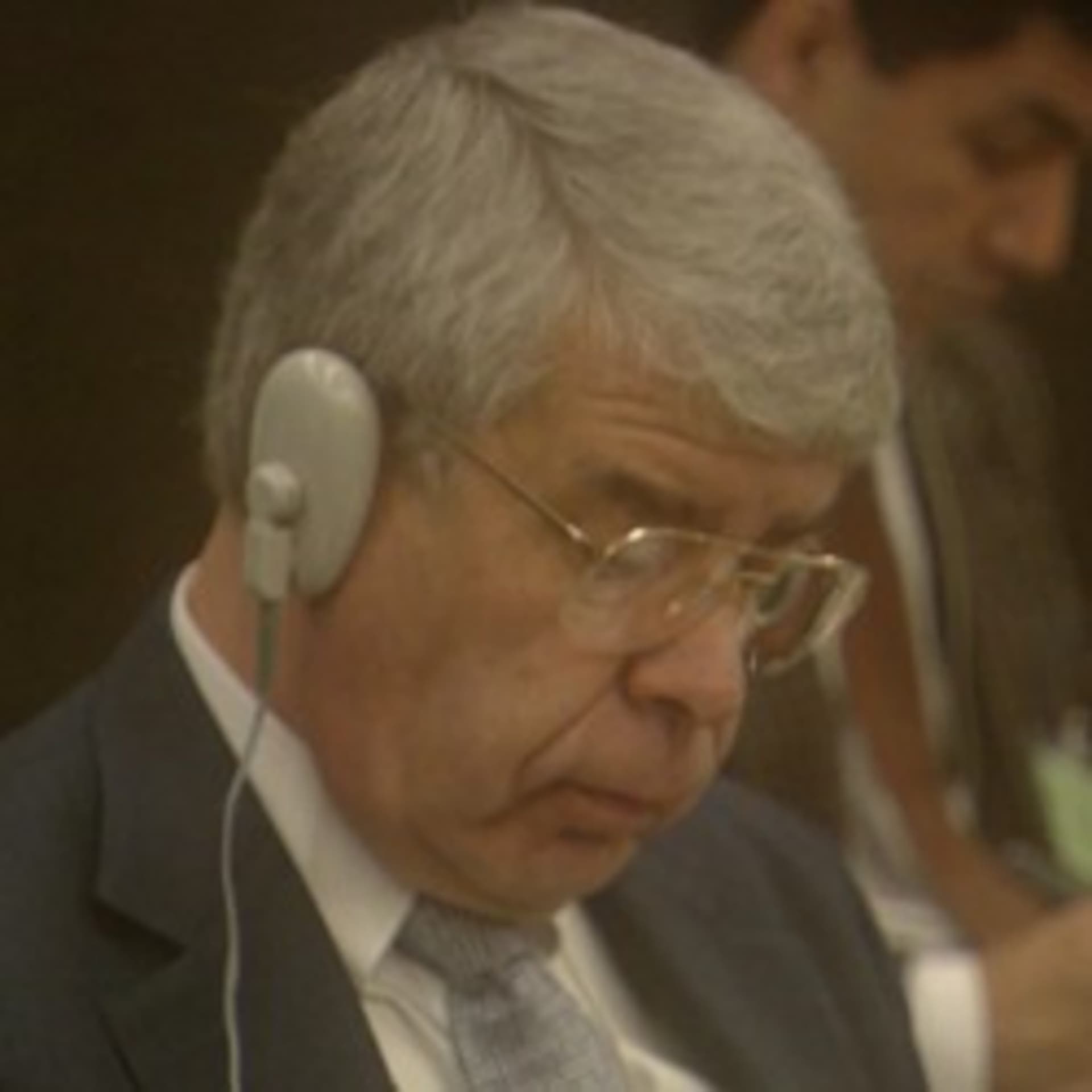
The American lawyer, oil lobbyist and master strategist Don Pearlman is said to have chain-smoked his way through almost every UN climate gathering from the early 1990s until his death in 2005. Some of those who saw Pearlman operate in Kyoto, where the first legally binding international agreement on climate change was agreed in 1997, say he created the playbook for stalling climate talks. The Kyoto protocol was never ratified by the United States, and Pearlman is now the subject of a major play, Kyoto, which has just transferred from London to the Lincoln Center in New York. As the COP30 climate summit takes place in Brazil, we speak to BBC climate journalist Jordan Dunbar, who’s been trying to piece together the true story of the man once nicknamed ‘the high priest of the carbon club’.
With Asma Khalid in DC, Tristan Redman in London, and the backing of the BBC’s international newsroom, The Global Story brings clarity to politics, business and foreign policy in a time of connection and disruption. For more episodes, just search 'The Global Story' wherever you get your BBC Podcasts.
Producers: Aron Keller and Cat Farnsworth Executive producer: James Shield Mix: Travis Evans Senior news editor: China Collins Photo: Don Pearlman at the Kyoto summit / BBC.