In short
A BBC Global Story episode on a late-stage clinical “personalized” mRNA skin cancer vaccine (Merck/Moderna), explaining how mRNA cancer vaccines work, why the breakthrough matters, and how U.S. politics—especially RFK Jr.’s skepticism and funding cuts—could affect adoption and future mRNA research.
Guests
Tom Whipple, science writer; host of BBC Radio 4’s Inside Science.
Guest background
Covers science and biotech; previously interviewed Moderna co-founders (Cambridge, Massachusetts).
Key claims
The vaccine trains the immune system to attack tumor cells after removal, aiming to prevent recurrence; it reached phase 3 and appears to improve recurrence-free outcomes and survival, but isn’t FDA-approved yet. RFK Jr.’s claims that mRNA fails for upper-respiratory viruses are disputed; the COVID data showed clear age-stratified fatality drops after vaccination. There’s no strong evidence mRNA is less safe overall, though rare myocarditis/pericarditis occurred.
Notable examples
Karikó’s mRNA work at University of Pennsylvania and BioNTech; Nobel Prize for Medicine (2023). RFK Jr. canceling about $500 million in mRNA funding (reported). FDA approval of Moderna’s first mRNA flu vaccine (context for “politics” around mRNA).
Written by AI. May contain mistakes. Listen to the episode to check what was said.
Chapters
Tap a time to open that second in VOThe Context of mRNA Technology
0:45 to 2:12
Discussion about the implications of mRNA vaccines amidst vaccine skepticism.
“The president of France has described the show as super positive for his country, soft power through cinema.”
Introducing the Cancer Vaccine Breakthrough
2:12 to 3:24
Overview of a promising mRNA cancer vaccine and its potential impact.
“It was 1997 at the University of Pennsylvania in Philly.”
Understanding the Mechanism of the Vaccine
3:24 to 4:36
Explaining how the new cancer vaccine works and its significance.
“Health and Human Services Secretary, RFK Jr., cut half a billion dollars of funding into mRNA research.”
Trial Success and Future Prospects
4:36 to 7:10
Details on the trial stages and future approval of the vaccine.
“Nonetheless, I'm hearing it described as a game changer.”
Comparing Traditional and mRNA Vaccines
7:10 to 8:05
Differences between traditional vaccines and the new mRNA approach.
“possibly used by the public in the near future.”
The Pioneer of mRNA Research
8:05 to 9:10
Story of Dr. Katalin Kariko and her contributions to mRNA technology.
“So all vaccines, the principle is that your immune system learns by seeing things.”
The Long Road to mRNA Applications
9:10 to 11:38
Discussing the challenges and developments in mRNA technology over the years.
“What they've done is they've serially bred the virus to make it weaker and weaker.”
Impact of COVID-19 on mRNA Technology
11:38 to 13:51
How the pandemic accelerated the development and acceptance of mRNA vaccines.
“And you can understand why investors would want to invest in this idea, which is effectively an idea that you can hack the body to do what you want.”
The Shift from Cancer to COVID: A BioNTech Story
14:00 to 15:04
Learn about BioNTech's pivot from cancer research to COVID vaccine development.
“I remember chatting to the CEO of BioNTech midway through 2020, and he described how he'd been reading the paper in early 2020, in January 2020, and decided then there's something happening.”
Cultural Impact of Television: Emily in Paris
15:04 to 15:26
Explore the debate on whether 'Emily in Paris' benefits or harms Paris.
“I'm Asma Khalid, and I host the Global Story podcast from the BBC.”
Show all 18 chapters
The Rise of mRNA Technology Amid Vaccine Skepticism
15:26 to 16:40
Discover the emergence of mRNA technology and the rise of vaccine skepticism during COVID.
“For more, listen to the Global Story on BBC.com or wherever you get your podcasts.”
RFK Jr.'s Claims on mRNA Vaccine Efficacy
16:40 to 19:12
Analyze RFK Jr.'s allegations regarding mRNA vaccine performance against respiratory viruses.
“And he went on to say that mRNA technology poses more risk and benefits for these respiratory viruses.”
Safety Comparison: mRNA Vaccines vs. Traditional Vaccines
19:12 to 22:04
Examine the safety of mRNA vaccines versus traditional vaccines and their side effects.
“I have another question here about an allegation surrounding these mRNA vaccines.”
The FDA's Approval of mRNA Flu Vaccine
22:04 to 23:10
Learn about the FDA's decision to review Moderna's mRNA flu vaccine and its implications.
“be pretty stonking in order for you not to take treatment for cancer.”
Political Conversations Surrounding mRNA Technology
23:10 to 27:36
Discuss the dual narratives of scientific progress and political disputes regarding mRNA technology.
“So there's less of an impetus to use something fancy and expensive like mRNA, or comparatively expensive.”
Future of mRNA Research in the U.S.
27:36 to 28:00
Contemplate the future of mRNA research in the U.S. amid funding cuts and public opinion.
“Say, look, a virus that doesn't kill many people comparatively, I don't think we should be giving them this new technology.”
Discussion on mRNA Research Funding
28:00 to 28:31
Learn about the ongoing support for mRNA research amid public scrutiny.
“Because I suspect that the US will want to keep on funding this stuff.”
Production Credits and Contact Information
28:31 to 29:17
Discover how to reach the podcast team and learn about the production team behind the episode.
“They responded in part, quote, Secretary Kennedy has been clear that he believes that mRNA products warrant heightened scientific scrutiny.”
Transcript
Automatic transcript. May contain errors.0:00This BBC podcast is supported by ads outside the UK.
0:36Is the hit Netflix show Emily in Paris just harmless, escapist TV? Or is Emily ruining Paris? I'm Asma Khalid, and I host the Global Story podcast from the BBC. The president of France has described the show as super positive for his country, soft power through cinema. But is TV tourism good for a city? For more, listen to The Global Story on BBC.com or wherever you get your podcasts.
1:28lot of baggage here in the U.S., a vaccine for skin cancer that has shown promising results in a recent clinical trial. What's notable is that this is an mRNA vaccine. And you all might recognize that term, mRNA, because it's the same technology that was used in some COVID vaccines. And that is what is making this new scientific breakthrough so politically tricky. The COVID vaccines led to the rise of vaccine skepticism within the highest ranks of the U.S. government, complicating the future of this potentially life-saving new research in America and around the world. So I hope you all take a listen to this episode.
2:05And if you enjoy it, you can always find more from us by searching for The Global Story wherever you get your podcasts. Now, on to today's show. It was 1997 at the University of Pennsylvania in Philly. A Hungarian-American scientist by the name of Dr. Katalin Kariko was wandering the halls looking for a copy machine. And when she found one, she came across another researcher. They struck up a conversation. And so I was bragging that I'm working with RNA, and then he was telling me that he want to develop a vaccine. And that's how, you know, we started. Dr. Carrico and her research partner would go on to spend years working together on what was sometimes a scientific dead end, an mRNA vaccine.
2:49For years, their efforts amounted to little. But in 2023, after the development of the COVID vaccines that used mRNA technology, they were awarded the Nobel Prize for Medicine. Together, they have saved millions of lives, prevented severe COVID-19, reduced the overall disease burden and enabled societies to open up again. Last week, there was another watershed moment from that same mRNA technology, a potential cancer vaccine. And yet the news comes in a tough climate for vaccines. Last year, the U.S. Health and Human Services Secretary, RFK Jr., cut half a billion dollars of funding into mRNA research.
3:32From the BBC, I'm Asma Khalid in Washington, D.C. And today on The Global Story, the new skin cancer vaccine and the promise and politics of mRNA technology.
3:51I'm Tom Whipple. I'm a science writer and I present Inside Science on BBC Radio 4 and the World Service. Well, Tom Whipple, welcome to The Global Story. It's a pleasure to have you with us. Thanks for taking the time. It's a pleasure. Today on the show, we want to dive into the health and policy debates around mRNA technology, particularly here in the United States, where I sit in this political moment. But the reason that we wanted to have this conversation today is because of a major medical breakthrough that made headlines just the other day. What is being described as a personalized cancer vaccine.
4:27Now, to be abundantly clear to listeners, it is not like you or I, Tom, could take a jab and have immunity from developing skin cancer. This is a different type of vaccine. Nonetheless, I'm hearing it described as a game changer. Can you explain what was actually announced and why it is being seen as so significant? Yeah. So as you say, this isn't you would get your summer booster shot and then not be able to catch skin cancer for that summer. It's absolutely not that. There is a reason which we'll get into why the word vaccine is still perfectly appropriate. it. But what this is, is that if you've got a skin cancer, or in theory, we'd like this to work for lots of cancers, you remove it.
5:12But the real worry is it comes back. We all know about metastases and the idea that cancer spreads in the body even after you've removed it. What this is doing is it is training your body to attack it. It's training it to attack the cancer cells that are there in the tumour so that your body's own defences take it out. And so in that sense, it's very much like a vaccine in that the idea of a vaccine is you show it a little bit of the thing, you show your body a little bit of the thing that you want to attack, and then your immune system is trained and away it goes and attacks it. This is a really big deal.
5:49So the caveats are we don't yet know how well this works. We know this has gone through stage three trials, which is the final stage of trials before you can introduce a drug or a treatment. We know that the companies that made it, Merck and Moderna, are confident that this is clinically significant and useful. It prevented cancer from returning in a significant number of patients. It helped them live longer. This isn't a magic bullet. But the reason it's so significant is because doctors have been trying to do this for 30, 40 years. They've been trying to make a cancer vaccine because it is such a simple and appealing idea, and it seems like it should work.
6:36And until now, largely, they've failed. So the fact that this has succeeded, and in particular succeeded using mRNA technology, which is this big coming technology, suggests that we could be on the cusp of having a new wing to our cancer treatments, and also a wing that's a lot more gentle than many of the treatments that we're used to. So just to make sure I'm following here, Tom, this has gone through all the necessary trials. It has not yet, this vaccine, received the approval here in the United States from the FDA, the Food and Drug Administration. But it looks like it's on track to be possibly used by the public in the near future.
7:16Yeah, once you've gone through phase three trials and been successful in your determination, that's when you gather together all of the data that you've got and you present it to the regulator and you say, da-da, we think we've made something that he will want. And then it is up to the regulator to say, yes, you have or yes, you haven't. But look, if you want a sense of the confidence in this, you just have to look at Moderna's share price. You know, this is something where people are betting a lot of billions that actually they've got something that works. So it sounds like we might need to be cautious still, but it sounds like we can be cautiously optimistic at this point.
8:01Can you walk us through exactly how this is different from the way that a traditional vaccine would work? So all vaccines, the principle is that your immune system learns by seeing things. Now, if I get infected by measles, my immune system will learn what the outsides of a measles virus looks like. And provided that measles hasn't killed me, when I then see measles again, my immune system will know exactly what to do with it. It will have the antibodies and T cells ready to chomp it up, get rid of it. And I am completely immune from measles. The principle of a vaccine is to do that without having the provided I'm still alive bit.
8:48Excellent, yes. It's to show you what a virus, a pathogen, some sort of bacteria looks like without actually getting you the infection bit. So there are lots of ways of doing this. Normally what you do, so you get an attenuated version of the virus. What they've done is they've serially bred the virus to make it weaker and weaker. And so it doesn't give you measles, but it looks similar enough to the measles virus that does give you measles that having had it, your immune system knows exactly what to do with the real thing when it turns up. You have to develop that specifically for that particular virus.
9:34But the thing that made mRNA different is that they were programmable vaccines. Okay. So there is something that's known as the central dogma of biology, and it is DNA makes RNA makes proteins. And what proteins do is make the body work. So I think almost all listeners will be familiar with DNA. It is very crudely the blueprint of you. DNA is like the instruction manual, the thing you get when you get flat-packed furniture. But the instruction manual isn't enough unless you have the person to read it and then turn the flat-packed furniture into the bookshelf. And that's sort of what RNA or messenger RNA, that's where it comes in.
10:22So there was this idea, could we hijack this process? One of the pioneers of this idea was a Hungarian scientist called Katalin Karako. I grew up in Hungary in a very sleepy small town. We did not have the running water television set, refrigerator and so on, but nobody had, so I didn't know we don't have. She'd been plugging away at this from 1985. You know, she studied this at university in Hungary. Quite dramatically, she couldn't do the research she wanted in Hungary. She left with$1 ,000 sewn inside a teddy bear along with her family to go and do the research she wanted to do. What we had is most important, loving family.
11:10And I learned from them that hard work is part of life. She moved to the States. She developed this really simple idea. Rather than having to make vaccine idiosyncratic to precisely the virus you're talking about, you effectively have this programmable technique to make the protein you want in the body when you want it and how you want it.
11:37And there was loads of work on this, and there was loads of promise. And you can understand why investors would want to invest in this idea, which is effectively an idea that you can hack the body to do what you want. It's been decades and decades of research, right? I mean, essentially, people have been thinking about mRNA ever since sort of when? Well, she's been going at it since the mid-80s. Yeah, it's an obvious thing to go for. And it is one of these very, very alluring ideas. But the truth is, it was very hard. Kathleen Carrico was at University of Pennsylvania, and she was, well, as she put it, look, she was demoted and forced to retire effectively.
12:18Before Christmas in 2012, I was told that because I did not get a grant so that I have to pack, and that's how I was terminated there. I could also agonise on 24 years, hard work, Saturday, Sunday, I was there, nobody appreciates. Don't do that. You have to focus on what next. So she left for this company called BioNTech. That didn't look like a sensible career move. They laughed at me and said BioNTech doesn't even have a website. In a sense, she left to go to a company that was full of true believers like her. And come 2019, there were mRNA companies, and all of them were working pretty much on cancer vaccines.
13:05And there was a lot of money going into this technology. And there were a lot of growing mutterings in the biotech community that it was a hype bubble, that actually this technology still hadn't produced anything or done anything good or useful. And they put billions into it. And maybe it would never happen. I think that most people who may have heard this news last week about a possible mRNA cancer vaccine may have recognised this term mRNA and thought, huh, does that have something to do with the COVID vaccine? Because that is, I think, the context in which so many of us first heard about mRNA technology.
13:46And so, Tom, how much did the pandemic accelerate the use of this all? We were hugely lucky and didn't realise it, that as it happened, all of that 30 years of development happened to have just about come to fruition in January of 2020. I remember chatting to the CEO of BioNTech midway through 2020, and he described how he'd been reading the paper in early 2020, in January 2020, and decided then there's something happening. This is something we can do something about. And he went and had a staff meeting and said, we are no longer a cancer company, we're a COVID company. they switched you know a lot of their research trying to make a rapid covid vaccine and but that's because they were believers in their technology a lot of people weren't because it's never done anything this has never been a useful technology until it was with covid until it was
15:03Is the hit Netflix show Emily in Paris just harmless escapist TV? Or is Emily ruining Paris? I'm Asma Khalid, and I host the Global Story podcast from the BBC. The president of France has described the show as super positive for his country, soft power through cinema. But is TV tourism good for a city? For more, listen to the Global Story on BBC.com or wherever you get your podcasts.
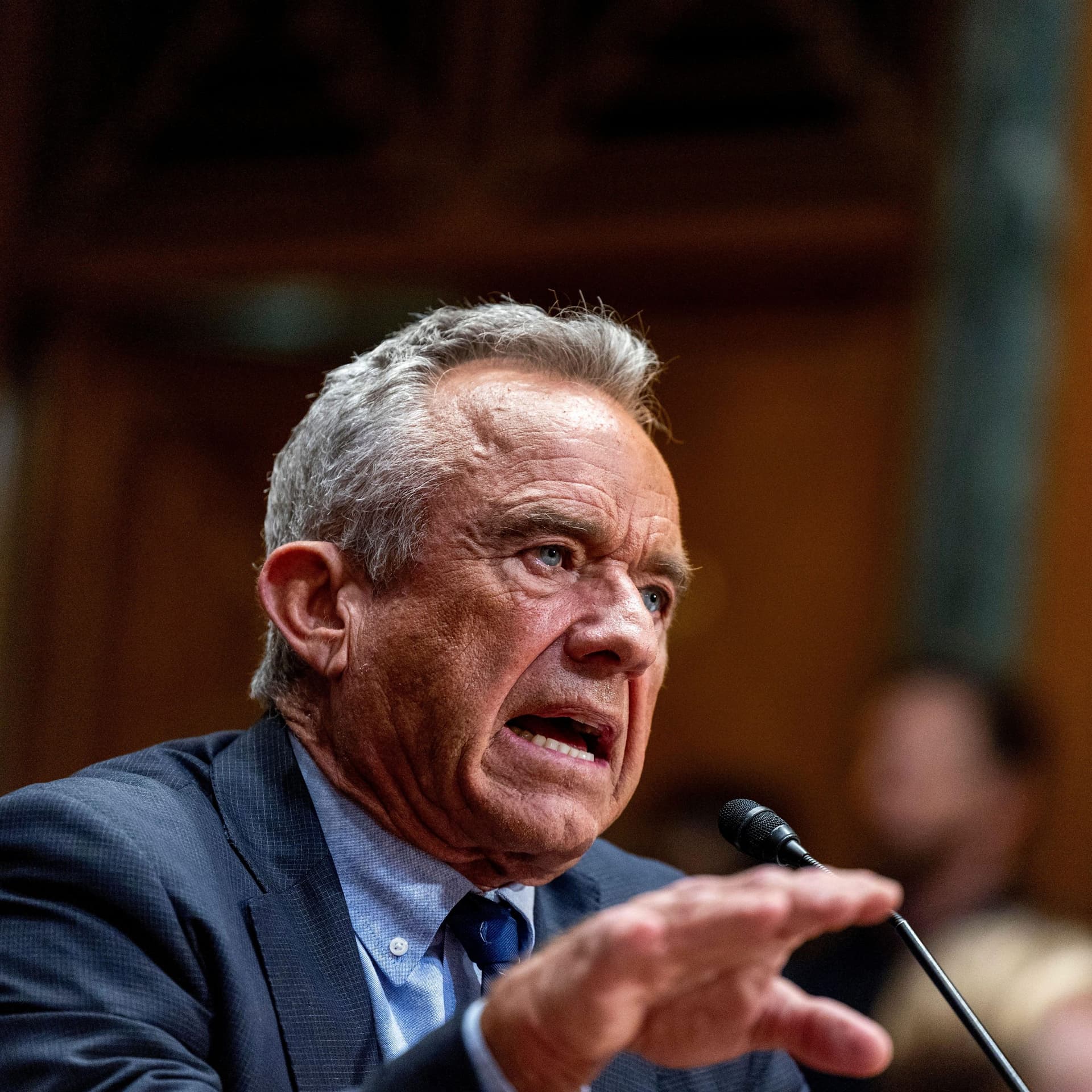
15:35Okay, so you have described a scientific environment in which mRNA seems to be a huge breakthrough success, not just here in the United States, but around the globe if we look at what happened with the COVID vaccine. At the same time with COVID, the development of the COVID mRNA vaccines. We also saw the rise of vaccine skepticism. And one man who really developed a big following during this time period and rose to prominence with his views is RFK Jr., who was appointed by President Trump as the Secretary of Health and Human Services. And we have seen him in recent months take direct aim at what he believes is the safety and efficacy of mRNA.
16:24In August of 2025, he announced that the U.S. government would cancel$500 million worth of funding for mRNA vaccines. He also posted a video online in which he said, As the pandemic showed us, mRNA vaccines don't perform well against viruses that infect the upper respiratory tract. And he went on to say that mRNA technology poses more risk and benefits for these respiratory viruses. Look, I come from a family in which there are many folks who work in science. I've certainly heard this widely disputed, and RFK is known as a vaccine skeptic. But can you explain this all to us and the allegations he is making specifically about the efficacy for upper respiratory viruses?
17:10Yeah, it's weird because we're talking about mRNA, which has received a huge boost from the pandemic scientifically in terms of prominence, in terms of the ability of these companies to make vaccines. But it's also the case that the yin and the yang of that has also had a huge boost. And I think probably RFK Jr. wouldn't be here either without the pandemic. I remember I was working at times during the arrival of those vaccines. And we were looking each day. The UK some of the best data in the world during the pandemic. There's a lot we did wrong, but the data was astonishing. And you could see the death rate by age group in each day's death data.
17:57So how many people have been infected and how many people have died. We also knew that we were vaccinating people starting at the oldest and then working down. And what you saw was this astonishing thing. In each age group, there would be this sudden dip in the over 85s, this sudden dip in the over 80s, this sudden dip in the over 75s. You could see in real time the effect of the vaccines. And you were saying you would see a drop in the data once the vaccine was given to that age group. Yes, you've got this sort of two, three, four-week lag for immunity, fatality rate. They've brought it down an order of magnitude.
18:39The Health and Human Services Secretary saying that mRNA vaccines don't perform well against viruses that infect the upper respiratory tract. And he is saying that the pandemic showed us this. It sounds like you are saying that is just not accurate. The pandemic actually showed us the efficacy of these vaccines. I've long since left the situation where I feel like I can change anyone's mind about anything to do with COVID. But it's just not true. The fact is, before the vaccines, in a Western country with the age stratification that you have in the US and the UK, you're looking at about a 1 % overall fatality rate.
19:22And afterwards, there wasn't that. I mean, look, I do think when you have somebody in a high position of authority in the health department in the United States saying one thing, and you have others in the medical community saying, no, no, this mRNA technology has been effective. It is a scientific breakthrough. People can get confused. I have another question here about an allegation surrounding these mRNA vaccines. And that is that, are they less safe than other forms of vaccines? And Tom, the reason I'm asking this is because when the funding for mRNA vaccine research was pulled, the Department of Health and Human Services here in the U.S.
20:07issued a statement that said, in part, that technology that failed to meet current scientific standards would be phased out in favor of evidence-based, ethically grounded solutions like whole virus vaccines and novel platforms. So are mRNA vaccines less safe than traditional vaccines? I don't think there's particularly good evidence for that. I mean, every intervention has some side effects. If it's going to work, it has side effects. Every intervention will vary on that. I mean, there's certainly going to be whole virus vaccines, which are far less safe. There were side effects to this. There's myocarditis, pericarditis effects on the heart.
20:51They were rare. They were normally not that severe, but they were present to an extent that in the fittest, youngest age groups at times of low prevalence for COVID, you could make the case that the cost benefit analysis didn't work. And these were very, very finely balanced arguments. Now, Well, what I would say is these were signals that were really hard to pick up until you started doing this at population scale. And that gives you a sense of how low the side effects were. But it would be completely irresponsible to say that they weren't there. But let's park this. So you might think, and I disagree with you, but you might think that the side effects of this weren't worth it for much of the population for COVID.
21:45Fine. But what about cancer? Because even if you think COVID isn't that bad, and for a lot of population isn't that bad, it would be my contention that cancer's pretty bad and that actually the side effects have to be pretty stonking in order for you not to take treatment for cancer. And that is indeed why we do surgery and chemotherapy and radiotherapy and all these things that you definitely wouldn't do for COVID, but do do them for cancer. Tom, if we can fast forward. Earlier this month, in August, the FDA, the Food and Drug Administration, approved the first mRNA flu vaccine made by Moderna, the same company that is being heralded for this new skin cancer vaccine.
22:38And my understanding is that initially the FDA had declined to even review Moderna's application for a flu vaccine developed through mRNA technology, but then seemed to reverse course. Why is that? It's slightly different with the flu vaccine in that we do have a flu vaccine that we use every year that changes every year with the strain of flu that's circulating. Flu changes a lot, so you have to tweak the vaccine each year. And that's done with a traditional vaccine-manufactured technique. So there's less of an impetus to use something fancy and expensive like mRNA, or comparatively expensive.
23:22But the mRNA does offer better strain matching. Sometimes you get the strain wrong. What you're generally doing is you have these flu surveillance people who are looking at what's happening in Australia during their winter and then trying to fast forward to what's happening in the Northern Hemisphere during its winter. And sometimes they get it wrong. Whereas with mRNA, you can match better and you can move more nimbly. So I think there was elements of politics. The word mRNA has become political in a way that isn't helpful. And I don't want to speak to the FDA's particular decisions on the flu vaccine, because I'm not across it.
24:07But I would say that there are advantages of the mRNA, but there's less of a compelling public health case than there might be in other uses of it. From where I sit in the United States, Tom, it seems like there are two conversations happening at one time around mRNA technology. There is the scientific conversation. And in a previous life, in fact, I used to cover some biotech. I was based in Cambridge, Massachusetts. And I remember interviewing one of the co-founders of Moderna. This was years ago. And there were many people in and around that ecosystem really excited about the potential of this type of technology.
24:50And that continues to exist, right? And then on the other side, as we've discussed, there's this political conversation we're having with RFK Jr. and his decision to cancel half a billion dollars worth of funding for mRNA research. You know, earlier, we mentioned Dr. Carrico, who helped develop this technology. She went on to later win the Nobel Prize, along with her research partner. And when these funding cuts were announced last year, she spoke with my colleagues here at the BBC, in which she said... It's a huge, huge mistake. It was based on misinformation and not evidence. He ignored evidence.
25:33He ignored facts. And the U.S. ability to develop vaccine during the next pandemic suffers tremendously. And in her view... I was moving to the United States from Hungary, from Hungary when I couldn't, here in the U.S., I couldn't do, I moved to another country. So it seems that, you know, scientists need to move to another country if they want to advance on this messenger RNA vaccine field. So it is a national security for the U.S. will suffer. So what does it mean for Americans if the government chooses not to fund these technologies? Look, she's devoted her career to this. So perhaps unsurprisingly, she was cross and baffled and she moved from Hungary in order to do her science.
26:21So there are plenty of other people who are far less constrained, who will pick up sticks and move to do the science where it works. But if there's another pandemic and it's a worse virus, and actually we can make a vaccine quite easily using mRNA, people are going to have to rather rapidly re-evaluate their views. And I suspect having a US that has pulled out of research, probably pulled out of the sort of manufacturing that would be required to make those vaccines at scale, will be bad for the US and ultimately very bad for the world as well. But you've got plenty of private companies and you've got, particularly in Cambridge, you've got the world's leading biotech scene with a bunch of investors.
27:12So I suspect you will find that there's plenty of money swilling around.
27:21I think a very easy argument for someone like RFK Jr. to make is actually, look, I don't think this works terribly well in viruses. I don't think it's worth the risk in viruses. And I will reflect, you know, I'm making this case, I disagree. And I want to say I disagree. But it's an easy argument to make. Say, look, a virus that doesn't kill many people comparatively, I don't think we should be giving them this new technology. It is a far easier argument to then say, but cancer is a different issue. Obviously, the risk benefit changes completely. So I suspect you might well see that pivot. Because I suspect that the US will want to keep on funding this stuff.
28:13Well, Tom, thank you for taking the time to walk us through this all and help us try to make sense of it. Appreciate it. Cheers.
Read the full transcript
28:24That was Tom Whipple, host of the BBC's Inside Science program and a writer for The Times of London. We contacted the Department of Health and Human Services for comment. They responded in part, quote, Secretary Kennedy has been clear that he believes that mRNA products warrant heightened scientific scrutiny. HHS continues to support mRNA research where the science shows promise, including for hard to treat cancers. As always, if you have questions, complaints, story ideas, you can reach us here at The Global Story anytime. Our email address is theglobalstory at bbc.com. Our episode today was produced by Lucy Paul and Sam Chantarasek.
29:04It was mixed by Travis Evans. Our digital producer was Sam Gruet. Our executive producer was James Shield. And our senior news editor was Chyna Collins. I'm Asma Khalid. Thanks as always for spending some time with us. And we'll be back again tomorrow.
29:29Is the hit Netflix show Emily in Paris just harmless escapist TV? Or is Emily ruining Paris? I'm Asma Khalid, and I host the Global Story podcast from the BBC. The president of France has described the show as super positive for his country. soft power through cinema. But is TV tourism good for a city? For more, listen to The Global Story on BBC.com or wherever you get your podcasts.
From the publisher
A new personalised vaccine given in combination with a drug has stopped skin cancer returning in patients during a trial, representing a potentially watershed moment in cancer treatment. Scientists used mRNA technology, which was used for some Covid-19 vaccines.
But that technology - and vaccines more generally - have become increasingly controversial in the United States since the Covid-19 pandemic. The Health Secretary Robert F Kennedy Jr, is a vaccine sceptic. In August 2025 cancelled $500m (£376m) in funding for mRNA vaccine research. The move impacted 22 projects being led by major pharmaceutical companies, including Pfizer and Moderna, for vaccines against bird flu and other viruses, according to Kennedy’s department.
We speak to Tom Whipple, host of the BBC’s Inside Science programme, about the science of this new vaccine. And we ask how funding cuts for vaccine research could impact health outcomes not just for Americans, but for the world.
For more episodes, just search 'The Global Story' wherever you get your BBC Podcasts.