
In short
A BBC “The Happy Pod” edition featuring uplifting real-life stories about AI, animal care, fitness, literacy, endurance, and reducing food waste.
Guests (people featured)
- Avtar Singh (66, born in India; Canadian resident; grew up unaware of his Kenyan-born mother’s identity; used AI to find family).
- Nikki Darmu (London jewellery designer; blog author; Kenyan-born; Avtar’s half-sister).
- Matt Fultz (director, Tanganyika Wildlife Park, Kansas; led the team caring for giraffe Malani).
- Mick Wodge (88; gym-goer after wife Margaret died; deadlifts 110kg).
- Ross Starkey (personal trainer; coaches Mick).
- Teresa Day (Oklahoma City; co-founded “library on wheels” bus for literacy).
- Tyler Heppel (British Columbia farmer; runs Ugly Potato Day).
- Sophie Woods (New Zealand ultra runner; fastest Via Alpina finisher in 29 days).
Key claims + notable examples
- AI search (name + age + links) led Avtar to Nikki; they confirmed Avtar is Nikki’s mother’s son, revealing three siblings.
- Malani the giraffe: first reported giraffe to survive emergency C-section; required oxygen and collaboration across 6–7 zoos.
- Mick’s strength training boosts bone density; trainer says older people shouldn’t be treated like “old.”
- Seize the Day bus: converted school bus into library with books/computers; featured in a Disney Christmas special; thousands of books donated.
- Via Alpina: Sophie faced heat waves (~37°C), storms, bugs, and wildfire diversions; “keep moving” mindset.
- Ugly Potato Day: Guinness record—546,000 pounds of produce given away in 24 hours; “ugly” tastes the same; distribution fixes food waste.
Written by AI. May contain mistakes. Listen to the episode to check what was said.
Chapters
Tap a time to open that second in VOAI Reveals Unknown Siblings
1:38 to 2:55
Avtar Singh shares his journey of finding siblings he never knew existed through AI.
“Nikki said, yeah, are you, you know, my mum's son?”
Emotional Reunion of Siblings
2:55 to 7:49
Avtar and Nikki recount their emotional discovery of their familial connection.
“A man in Canada has used AI to find three siblings who he never knew existed.”
The Miracle of Melani the Giraffe
7:49 to 12:23
The story of how a giraffe named Melani survived a C-section birth.
“Avtar and Nikki speaking to Julian Warica.”
Mick Wodge's Weightlifting Journey
12:23 to 14:01
At 88 years old, Mick shares his inspiring journey of weightlifting after loss.
“Joy, why do you think she's cheering so many people up?”
Mick's Fitness Journey and Training Insights
14:01 to 17:34
Learn about Mick's impressive strength training journey and the benefits of training at an older age.
“coming into the gym, enjoying every minute.”
Ugly Potato Day: Fighting Food Waste
17:34 to 18:30
Discover how Ugly Potato Day helps combat food waste and provides free produce to those in need.
“We've had people that have come to a dozen Ugly Potato Days and we've heard that it's the only time they can have or afford fruit in the summer.”
Sophie Woods: Endurance Running Across the Alps
18:33 to 24:40
Explore the challenges and triumphs of Sophie Woods during her record-breaking run across the Alps.
“I'm Asma Khaled, and I host the Global Story podcast from the BBC.”
Tyler Heppel and Ugly Potato Day's Impact
24:40 to 28:03
Hear Tyler Heppel's journey in creating Ugly Potato Day and its significant impact on food distribution.
“We end in Canada, where a farmer is on a mission to solve food waste.”
Finding Purpose Through Small Actions
28:03 to 28:38
Listeners will learn about the importance of perseverance and small daily actions in achieving greater impact.
“What do you hope that listeners of The Happy Pod take away from your story and everything you've managed to achieve with Ugly Potato Day?”
Transcript
Automatic transcript. May contain errors.0:00This BBC podcast is supported by ads outside the UK.
0:30No bouncing between tabs. And best of all, no spreadsheets. Stop managing software and start managing your business with one unified system. Try for free today at odoo.com. That's O-D-O-O dot com. Ever wonder why we make the choices we do? And how to make smarter ones? Introducing Choiceology, an original podcast from Charles Schwab. Join Wharton Professor Katie Milkman, an award-winning behavioral scientist and author of the best-selling book, How to Change, as she shares true stories from Nobel laureates, authors, athletes, and everyday people about why we do the things we do and how to make better choices to help avoid costly mistakes.
1:14Each episode covers the latest research in behavioral science and dives into themes like the power of self-control, shaping your mindset for success, navigating new beginnings, and why starting over can feel so hard. Listen to choiceology at schwab.com slash podcast or wherever you listen.
1:37This is The Happy Part from the BBC World Service.
1:46I'm Holly Gibbs and in this edition... Nikki said, yeah, are you, you know, my mum's son? then my mind switched and said oh my god I'm actually talking to my sister. The man who used AI to try and track down his mother only to discover he had three siblings. Also on this podcast. It's incredible I mean the care and and the passion of our team here at Tanganyika is is second to none. We have so many people working around the clock to make sure that she had the care that she needed. She is Melani the giraffe. We meet her and find out how her birth made history. Plus... It's a full workout. When we've finished, they carry me out and put me in my car.
2:30The 88-year-old who is channeling his grief into weightlifting and... One of the kids' dad visited, he increased his reading levels by two grade levels. It made us feel good, like we're actually making a difference in these child lives. The library on wheels getting children excited about reading.
2:55A man in Canada has used AI to find three siblings who he never knew existed. Avtar Singh, who was born in India and is now 66 years old, grew up not knowing his Kenyan-born mother. His father had separated from her and not told him anything about her, apart from her first name, which was Savinda. One day, Avtar typed her name, approximate age and links to Africa and India into AI and found a blog post by someone called Nikki Darmu, a jewellery designer in London. Avtar reached out to Nikki and after talking about their past, the pair realised they were actually half-siblings. My colleague Julian Warwicker has been speaking to both Avtar and Nikki.
3:37I grew up with so much influence, creative influence from my mum. About a year and a half or a year after she died, I think, I wanted to honour her creativity and honour the creative legacy that she's left me, which is what I express through my own work. And obviously her past, which included Avatar, wasn't something that had been discussed at all. Never spoken about it. She never once said anything in a direct sentence that I have been married before. And, you know, I became the detective when I needed to find Avtar for my mum because in her later years she was crying. She had dementia. She would say Mirabhachar and cry, but Mirabhachar in Punjabi means my child.
4:28Avtar, having read that article, what was the next step? I crafted an email that, yeah, I would like to learn more about your mother's life in India because I do feel just from reading the article that it touched me and we might have some family connection. And so I said that. I read this email and I was just like, whoa. My mind started thinking, is this, is this Tito? Is this mom's son? I must have read it a couple of times and I started getting quite emotional. I'm not surprised. And I sent him a very polite reply saying I'd be open to having a conversation. when we did actually speak. Bajji, why don't you tell them what you were asking me?
5:10So I said, you know, can you tell me about your mom's life in India? Then I did ask. I said, well, did she have any children? And Nikki replied with the answer that kind of made my heart kind of stop for a few minutes that she had a son. And that silent pause is where the next words that Nikki said to me just... How I said, are you? Yeah. Are you T2? Are you my mom's son? I just could not believe I heard that. And I just said, you know, pardon, could you kind of repeat that again? And, you know, she said the same name again. And this sheer flood of emotion that I could not control came out. And, you know, I was just in tears because it's a nickname of mine from childhood.
5:58But the pronunciation of saying T2, right, was done by my grandmother. when I lived in India. I said, this is my final confirmation. And he stopped crying. I think you both did, didn't you? I was crying. He was crying. I'm crying even right now. I mean, every time I replay that in my mind, tears come to my eyes. Yeah, even I'm choked up now. I mean, it's an extraordinary privilege to sit here listening to you telling that story. I wonder, sort of months on, how does it feel now? It is absolutely amazing. You know, I have a older sister. I'm the middle child. I have a younger brother. And now there's four of us.
6:38We have an older brother. You know, after I did come over, I did introduce him to my mom's younger brother, who remembered him as a child. And I remember my auntie saying, it's been so many years and finally the doors have opened. I didn't really expect to find kind of like, you know, my mother alive. I mean, That would have been a miracle. But what I did not expect at all, when Nikki said, yeah, are you, you know, my mom's son? Then my mind switched and said, oh, my God, I'm actually talking to my sister. And then you asked me, are there more of you? Yeah, exactly.
7:20Now my crying turned into laughter. I said, oh, my God, I can't believe I actually have this other family out there. I was very content and very happy. But look at this now. This is just like a bonus that I got of not just my three siblings over there, but I've got this large extended family of cousins and nieces and nephews. And the best thing is, you know, this family has just embraced me with all the love of the world. Avtar and Nikki speaking to Julian Warica. Our next story was sent to us by a listener. So thank you, Constanza, for this one. A giraffe called Malani was born last month at Tanganyika Wildlife Park in Kansas.
8:04But Malani isn't any giraffe. The zoo says she is the first ever to have survived being born by C-section. It was a team effort across multiple animal centres to keep her alive, which included around-the-clock care. I caught up with the director of Tanganyika Wildlife Park, Matt Fultz. And as you're here, we were also joined by Milani herself. Milani was born on July 11th and she was actually born by an emergency C-section that we had to do. Her mom had kind of fallen ill and we'd been treating her. But she got to a point where we weren't sure that she was going to make it. And so we chose to do the emergency C-section in hopes that we could save the baby.
8:47For people who can't see you, you are stood next to Malani, who was sat very nicely but is now stood up. Talk to me about the care that she received from the zoo. From the start, you know, it was a mad scramble once. I mean, we had to obviously cut mom open and pull her out. And at that point, she's not moving. She's not breathing. Her eyes aren't open. And so for giraffes, normally when they're born, they fall about six feet down to the ground. And that kind of signals to their body like, OK, it's time to be alive, right? It's time to wake up. And we had to try and recreate that with Milani. Finally, she kind of opened her eyes.
9:25She took a breath. And then immediately the team kind of went to work. We had oxygen for her. We had to get oxygen to her, get her cleaned up, get her kind of stable. And then once that was done, we got her moved to a stall that was a little smaller that we could continue care with her then. She's on the move. Yes, Melani's just walked off from the interview. Get a message with the camera. So then we just needed to get essentials. Like we were using an oxygen mask on her, but that wasn't going to work long term. So we had to find a way to essentially get a two oxygen tube that we could put down her and find a machine that could, you know, do constant oxygen.
10:03We scrambled. We were able to work with Dickerson Park Zoo and get some plasma from another giraffe. That was about a five hour round trip. But we finally got that and got that in her. I mean, initially she couldn't even hold her neck up. Two people with her around the clock. And a lot of it was just making sure we could keep her head in a position that would allow her to continue to breathe. Even just during our chat, Melania is up walking about trying to eat the camera. Tell us a bit about her personality. Yeah, so I mean, kind of remains to be seen still. I think she's I'm not sure exactly what the faces would be for drafts, but I feel like she's maybe kind of entering the terrible twos phase, you know, where I think she's now starting to kind of find her independence a little bit and, you know, do her own thing, assert herself.
10:48So we'll have to see as she continues to get a little bit older if she ends up being more friendly and loving of humans or is like, you know what, I've had enough of you guys. I was around you the first, you know, month of my life. Just leave me alone. And how does it feel to be part of a team that managed to keep this baby giraffe alive? It's incredible. I mean, the care and the passion of our team here at Tanganyika is second to none. I mean, like I said, we had so many people working around the clock to make sure that she had the care that she needed. And it literally was just, I mean, minute by minute initially to hour by hour.
11:26And finally, we got to maybe day by day and she's doing such a great job. But I really think it illustrates not only how awesome our team is, but just how much zookeepers and wildlife professionals really care about their animals at zoos around the country and around the world. Sometimes they get a hard time or it's a thankless job, but they really do care about their animals. And they give so much of themselves, blood, sweat and tears to make sure that these animals have amazing lives. And so just to be part of that, not only on our team, but just in the industry is incredible. Even though our team put a tremendous amount of effort and accomplished something that has never been done before.
12:02It definitely was a collaboration that made it possible. I mean, we worked with six or seven different zoos around the United States to make this happen. That was incredibly valuable because, again, this has never been done before. And so just having different resources to call upon to help make sure we had the best possible chance to help her survive played a critical role. She's bringing a lot of people. Joy, why do you think she's cheering so many people up? I mean, I think it's just it's an incredible, just heartwarming story. I think our social media team did an excellent job just really illustrating how much passion our team pours into these animals.
12:39It's an incredible story. Anytime you see humans doing amazing things for good to try and help preserve this world, it's very, very powerful. Our connection to animals is incredibly deep. And so I think this story really resonates with people. That was Matt Fultz. Here in the UK, an 88-year-old has gained hundreds of thousands of views on social media for sharing his weightlifting journey. Mick Wodge started going to the gym after his wife Margaret died shortly after their 60th wedding anniversary. His personal trainer, Ross Starkey, set up a TikTok account for him, where fans have called Mick an inspiration.
13:18He began by lifting a broom and milk cartons, but it escalated quickly. Hi, I'm Mick, I'm 88. One of my favourite exercises to build the shoulders is the lateral raises. A low weight to start with and build up as I go through the sets. It's just a number. I know, it's just a number. It's a number. But it's a bloody big number, that's the problem. Hi guys, we're going to try something different now called the piston press. Using one arm at a time pushing forward. Not done this before, so this is the first. Oh, this is hard. I keep coming into the gym, enjoying every minute. Mick and Ross have been speaking to the BBC's Henry Zeffman.
14:09I do four sessions a week, Monday, Wednesday and Friday, and Tuesday I'm coached by Ross we do like about an hour and a half we deadlift, we bench press we use the machines and it's a full workout so when we've finished they carry me out and put me in my car and it says here Mick I doubt you're being carried out because it says here that your personal best for a deadlift is 100 kilograms. Is that right? No. Yeah, you did one. No, we did 110. Oh, OK. Sorry, I'm understating your achievements. Hey, he's trying to knock them down here. No, we did 110. And one of my targets was the deadlift because I talked a friend of mine, who's 77, is he?
15:1077, yeah. 77. I talked him into coming and they went and lifted 120 on the deadlift. So that was my challenge. And I haven't been able to reach it. So I've fallen outweighed now. I'm sure it's just a matter of days, if not even hours after the motivation of having told that story. Ross, give us a sense of what it is like training somebody who is a little older, 88 in mixed case. Are there particular challenges that you need to be aware of? Well, I think this is the issue where a lot of people are doing it wrong. They treat old people like old people, and I've never treated Mick like that. I've never changed his training.
15:50That's why he's able to do what he can do. People are so scared of hurting old people that they don't ever challenge them, and then they never grow, and then you see them with these little plastic weights and these rubber bands. And Mick's older than a lot of these people, and he's deadlifting 100 kilograms of ease, but this is a journey, what we've done over three years, to get him to this point. You said 100 again, Ross. I think it's 110. I just want to correct you before Mick does. But tell me, what are the benefits for people? I'm going to smack him when he's doing it. What are the benefits for people, Ross, who are training when they're older in terms of their lifestyle at that stage of life?
16:26I think one of the most important things is bone density. As you get older, your bone density starts to decay. But you can actually prevent that with heavy strength training. So if Mick was to fall over, he's not going to break an ankle or a bone. is really robust now, so if it falls over, I can get back up. And Mick, you've been praised online by countless people who've seen the TikTok account, but no less than Arnold Schwarzenegger, who said he loved what you're doing, keep pumping. Tell me, what does it mean to get praised like that? Really, it's just amazing. I mean, Arnold was my favourite bodybuilder years ago.
17:06I've seen every one of his films dozens of times. And for him to contact us like that, it's just amazing. I mean, it's well worth all the effort I've put in just for what Arnold's done. He sent us a message. Just great. Mick Wodge and Ross Starkey speaking to Henry Zethman.
17:33Coming up on The Happy Pod. We've had people that have come to a dozen Ugly Potato Days and we've heard that it's the only time they can have or afford fruit in the summer. And so that warms our heart. You know, we have people that drive sometimes six hours to come to the event. How Ugly Potato Day is stopping food waste in Canada. Yeah.
18:23You can invest your way. No matter your goals or appetite for investing, Schwab has everything you need all in one place. Visit schwab.com to learn more. Is President Trump snubbing South Korea to reignite his friendly relationship with Kim Jong-un? I'm Asma Khaled, and I host the Global Story podcast from the BBC. The US and South Korea have been close allies since the 1950s. But this week, Trump announced that the US will substantially reduce joint military exercises with South Korea. He cited his very good relationship with North Korea's Kim Jong-un. For more, check out The Global Story on BBC.com or wherever you get your podcasts.
19:04You're listening to The Happy Pod. In the United States, three sisters have turned an old school bus into a library on wheels. It's equipped with dozens of books and computers to help children learn. The BBC's Matthew Carter has the details. When the big blue library bus rolls down the street in Oklahoma City, many children can barely contain their excitement. They know our schedule. They are standing outside waiting for us. They're jumping up and down. They're clapping. They're racing each other to the bus like it is the best thing ever. Teresa Day converted the bus in 2022 along with her two sisters in an effort to improve literacy levels among children in disadvantaged communities.
19:45We seen that it was a huge need here in Oklahoma City. So we just acted on that and expanded on what we experienced in our childhood. The areas that we serve, there's not very many after school programming for them. And if it is, the parents can't afford it or there's not transportation for them to get there. So that just gives us the inspiration to keep going. Once they're on board, kids have shelves of books to choose from, along with computers with learning games installed. Teresa says it's had a huge impact on some children.
20:45levels. Like he struggled really, really bad. And seeing that he was able to get his greeting scores up was just such an amazing thing. It made us feel good, like we're actually make a difference in these child lives. In December 2025, the seize the day bus was featured in a Disney Christmas special on TV. After that, thousands of books were donated by people across the United States. The three sisters ended up with so much extra stock that they put on a special book fair, giving away free books to children in need. Teresa says she's benefited from the mobile library just as much as the kids have.
21:20No matter how exhausted or tired I feel, it's always very rewarding, especially to see these kids experiencing things that they have never got to experience, especially seeing that they have an opportunity to have access to this stuff even without having to have any money. It's exciting. It just gives you that dopamine rush to keep it going. Teresa Day ending that report by Matthew Carter. The Via Alpina is one of the world's toughest endurance challenges. A 2 ,000 kilometre trail across the Alps spanning eight different countries. It runs from the Adriatic coast of Slovenia, rising the equivalent of climbing Mount Everest 12 times before ending on the Mediterranean coast in Monaco.
22:04Earlier this month ultra runner Sophie Woods from New Zealand became the fastest person to ever complete it taking just 29 days. The 42 year old spoke to my colleague Rajini Vardianathan. Every day was just really tough you know I think when we first planned it I actually expected to move faster than I did. The terrain was a lot more technical than I was expecting and we faced quite a few sort of crises along the way. What sort of extreme weather conditions did you personally encounter on your run? So we had two heat waves, which was awesome. I think it probably got up to about 37 degrees, which is a lot when you're at altitude running.
22:44And then we also had some storms to contend with. There were just all sorts of things like the van had a flat tyre at one point. We had to deal with huge swarms of bugs. And it was, yeah, it was a challenging time, not to mention the fact that there were wildfires happening at the same time that we had to actually divert away from because the route went right through them. How do you prepare for something like this? I've been running ultramarathons for the last decade. I've run in some of the most incredible races around the world. And I think that that really prepares you. It's spending long days out by yourself, learning how to be strong and capable in the mountains and have skills to effectively save yourself in these sorts of conditions.
23:33It's something that you build over years of experience. But leading into this, I was very aware that my body was going to take a pretty big hit. And so I was focusing a lot on my strength work, on making sure that I was eating like really well and making sure that I started with as many stores as I could. I've had the most amazing adventure, which is why I got into the sport in the first place, was to have adventures in incredible environments. And how do you mentally prepare for this? The mental side of it is really important. I just keep moving. No matter what happens, I just keep moving. There is always going to be that little voice in your head being like, oh, just have a wee seat.
24:13Why not? There's one there. you know nothing grows in the comfort zone so you just got to keep moving forward and I think if you practice that enough it just becomes conditioning and also the fact that I had so many people out there supporting me and cheering me on like that is invaluable to know that no matter what time of day I was out on the trail if it was the middle of the night there were people somewhere in the world checking on my little dot making sure that I was still moving. That was Sophie Woods. We end in Canada, where a farmer is on a mission to solve food waste. Tyler Heppel is a fifth generation farmer in Cloverdale, British Columbia.
24:49He got fed up of seeing produce that his family grew being rejected by supermarkets for being the wrong shape or size. So he came up with an idea to host Ugly Potato Day. Last month, the event broke the Guinness World Record for the most fruits and vegetables given away in 24 hours. The Happy Pod's Helena Burke spoke to Tyler about how he started Ugly Potato Day. I had around 50 ,000 followers and I posted to my community, inviting them to come out to our farm on a Saturday and just grab some free potatoes. And we had 12 people come out. And I remember feeling a little discouraged because it was over four hours in the sun.
25:28However, I had a really good conversation with one person who encouraged me to do it again. And so two weeks later, we did it again. And we kept kind of doing it that year every two weeks. And since then, we've done it 24 times. We've definitely cut down the amount of times we do it per year, but we just had 37 ,000 people out to our last event. And how does Ugly Potato Day work? People have to claim a free ticket. That's just to help us control the crowds. But the event is absolutely free. We allow 2 ,500 people in at a time, and then we clear out a big barn. We have these massive macro bins that hold 1 ,000 pounds of potatoes or 700 pounds of corn.
26:07And people can come and grab and fill up their bags. And then some of our higher value stuff, like the apples and the tomatoes, we have volunteers that are just monitoring how much people grab. We've had people that have come to a dozen ugly potato days. And we've heard that it's the only time they can have or afford fruit in the summer. And so that warms our heart. You know, we have people that drive sometimes six hours to come to the event. and we get an array of people, people who can't afford to feed their families of six and people that are doctors and they just want to be a part of it and they come grab a few potatoes and donate $50 to the cause.
Read the full transcript
26:43There's actually nothing wrong with this produce, is there? It looks strange, it's maybe a bit too big or a bit too small, but does it taste any different? No, and that's why we think it's the dumbest problem ever. It tastes the exact same. It's still as nutritious and delicious. It's just, it looks a bit weirder. At this year's Ugly Potato Day, you guys actually broke a Guinness World Record, didn't you? Yeah, we decided to go for the record this year. We were close last year, so we really pushed this year. And we ended up giving out 546 ,000 pounds of fruits and vegetables fresh. And then we actually gave a bit more than that too.
27:19But with the Guinness World Record, we had 24 hours to scan in what we are going to donate before we distributed it. It was very euthoric. I'm happy we did it. I know a lot of farmers and scientists are warning that the increase in extreme heat waves across the world will cause kind of wonky and misshapen vegetables to become more and more common. Do you think Ugly Potato Day could be a strategy for dealing with this? Yeah, I think Ugly Potato Day can really be a big solver of food insecurity. We should know now that we actually grow enough food to feed everyone. It's just a distribution issue.
27:51What we're trying to do here is show our community that just because produce isn't perfect doesn't mean it's not nutritious and delicious. And it's going to take a lot of work to do that globally. What do you hope that listeners of The Happy Pod take away from your story and everything you've managed to achieve with Ugly Potato Day? Don't give up on your beliefs. If I was to give up after 12 people came out to Ugly Potato Day, I would have never been here now and I wouldn't have found my purpose. Also, I think a lot of people, when they look at what someone has accomplished, you know, having 30 ,000 people out to their event, and they say, I can never have that impact.
28:29Well, you know what? You get the same feeling of gratefulness and helping someone, even if you have one conversation with someone at the grocery store and you go out of their way to help them. Don't underestimate the small actions every day because those can compound into doing something great. Tyler Heppel speaking to Helena Burke.
28:50And that's all from the Happy Pod for now. We'd love to hear from you. As ever, the address is globalpodcast.bbc.co.uk. The editor of this edition is Karen Martin. I'm Holly Gibbs. Until next time, goodbye.
From the publisher
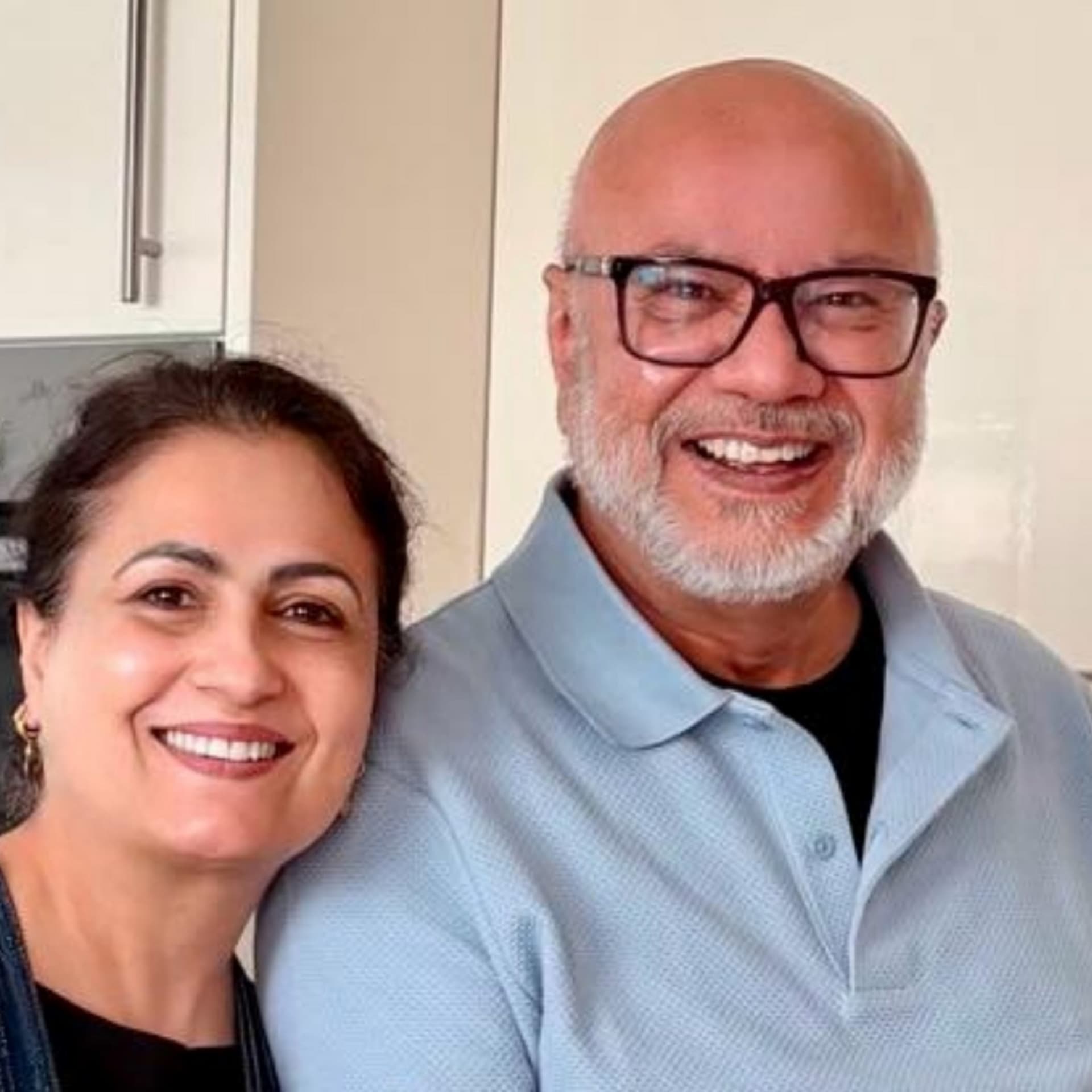
Avtar Singh, who was born in India and is now 66 years old, grew up not knowing his Kenyan-born mother, because his father had separated from her and not told him anything about her.
One day he typed the few details he had into AI, and found a blog by someone called Nicci Dhamu, who turned out to be his half-sister.
Also, viral baby Milani has become the first giraffe to survive a C-section birth. The team at Tanganyika Wildlife Park in Kansas gave her round-the-clock care to make sure she stayed alive.
Plus, 88-year-old Mick Wadge has gained hundreds of thousands of views on social media for sharing his weightlifting journey. He started going to the gym after his wife died.
Sophie Woods has become the fastest person to complete the Via Alpina, one of the world's toughest endurance challenges, and how one farmer in Canada is trying to stop food waste through an event called "Ugly Potato Day". Our weekly collection of inspiring, uplifting and happy news from around the world.
(Photo: Nicci and Avtar in their late mother’s kitchen. Credit: Nicci Dhamu)
Presenter: Holly Gibbs. Music composed by Iona Hampson