
In short
The Happy Pod episode “All aboard the Bike Bus” covers four main stories: a viral “bike bus” school commute, a kindness-focused cycling challenge, cervical cancer vaccine research, and dogs detecting an invasive insect, plus a brief World Cup joy moment. Guests/backgrounds: Charlotte Claydon leads the Camden bike bus (Primrose Hill Primary School head teacher Liam Frost describes the community impact); Sam Balto (Coach Balto) founded Bike Bus World after starting bike buses in Portland, Oregon in 2022; Nala Summers, who cycled over 3,000 km across Minnesota and Iowa on a quadricycle to promote kindness; Professor Peter Sasieni (Queen Mary University London) led the HPV vaccine study; Michelle Mitchell (Cancer Research UK) and BBC health correspondent Kath Burns discuss implications; Dr. Erika Feuerbacher (Virginia Tech) and Dr. Sally Dickinson explain dog-based detection of spotted lanternfly egg masses. Key claims/examples: bike buses build independence, improve focus and reduce car stress; Summers says her challenge sparked widespread emotional support; HPV vaccination shows near-zero deaths under 25 in fully vaccinated cohorts and could eliminate cervical cancer; detection dogs can scrape 50–60 egg masses at a time to stop spread.
Notable examples
celebrity-linked bike buses in Portland (Justin Timberlake, Zara Larsson) and a Cape Verde fan’s first-ever World Cup goal celebration.
Written by AI. May contain mistakes. Listen to the episode to check what was said.
Chapters
Tap a time to open that second in VOThe Popularity of Bike Buses
0:37 to 1:03
Discover the viral trend of bike buses and their community benefits.
“You know that one friend who always finds the best travel deals, picks the right credit cards, and somehow ends up in first class for the price of coach?”
The Popularity of Bike Buses
1:17 to 1:56
Discover the viral trend of bike buses and their community benefits.
“I love the bike bus because it's always really friendly and it's always really communal.”
Cervical Cancer Vaccine Success
1:56 to 2:14
Learn about new research on the effectiveness of the cervical cancer vaccine.
“Plus the success of the cervical cancer vaccine.”
The Bike Bus Phenomenon
2:14 to 6:20
Explore how bike buses began and their impact on children's independence.
“It's really, and specifically because it's this prize, because I feel it was for my mum.”
Experiencing the Bike Bus
6:20 to 8:20
Join Richard Hamilton as he experiences the excitement of a bike bus in London.
“But it became so popular that within three months, a third of the school was cycling in.”
Nala Summers' Kindness Challenge
8:20 to 11:41
Learn about Nala Summers' journey promoting kindness across the US.
“That was Richard Hamilton reporting and staying with bikes, a woman has just finished an unusual cycling challenge, spelling out the word kindness across the US states of Minnesota and Iowa.”
Tessa McWatt's Grief and Writing
11:41 to 14:01
Hear about Tessa McWatt's book that intertwines grief with climate change.
“It seems like there are almost two things happening here.”
Exploring Grief and Literature
14:01 to 16:45
A discussion on how writing a book helped navigate personal and planetary grief.
“And I became very depressed about that and had deep climate grief.”
Recognition for Literary Work
16:46 to 17:14
The author shares the joy of receiving a prestigious award for their book.
“And now this book has been awarded one of the highest prizes for Caribbean literature.”
The Essence of Grief
17:15 to 17:56
Exploring the meaning behind grief as a reflection of love.
“Do you have a favourite line in the book?”
Show all 17 chapters
The Essence of Grief
18:16 to 18:52
Exploring the meaning behind grief as a reflection of love.
“Take the leash off your laptop with the processor that gives you long battery life.”
The Essence of Grief
18:58 to 19:58
Exploring the meaning behind grief as a reflection of love.
“who treats airfare like a puzzle and somehow always ends up with a first-class upgrade.”
Cervical Cancer Vaccine Success
19:59 to 22:39
Discussion on the effectiveness of the cervical cancer vaccine and its implications.
“legendary cups with a FIFA World Cup meal at participating McDonald's for a limited time while supplies last all rights reserved 2026 McDonald's at FIFA World Cup 2026.”
Innovative Cancer Research
22:40 to 23:37
Exploring new vaccine trials aimed at preventing various cancers.
“And they are not seeing any new cases in women under 25.”
Canine Conservation Efforts
23:38 to 27:39
How dogs are being trained to detect invasive species to protect ecosystems.
“A team of researchers in the US are turning to our furry friends to help them tackle an invasive species.”
Joy in Sports
27:40 to 28:00
A heartwarming moment of joy during a World Cup match for Cape Verde.
“And before we go, we must bring you this moment of pure joy.”
Historic Goal for Cape Verde
28:00 to 29:18
Learn about Cape Verde's first-ever World Cup goal and its significance.
“when his team scored their first ever World Cup goal against Uruguay.”
Transcript
Automatic transcript. May contain errors.0:00This BBC podcast is supported by ads outside the UK.
0:30Snapdragon. That's how. Today's episode is sponsored by Smart Travel, a podcast from NerdWallet. You know that one friend who always finds the best travel deals, picks the right credit cards, and somehow ends up in first class for the price of coach? Smart Travel is like that friend, but in podcast form. NerdWallet's travel journalists sort out what's worth paying for, from lounge access to travel advisors to hotel loyalty programs. Make your travel dollars work harder. Follow Smart Travel on your favourite podcast app. This is The Happy Pod from the BBC World Service.
1:11I'm Holly Gibbs and in this edition, all aboard the bike bus. It's kind of fun because you can see like everyone riding, talking and riding with your friends and stuff. I love the bike bus because it's always really friendly and it's always really communal. It's good for the environment and it gives us so much energy. We hear about the success of this trend which has gone viral across the world. Also on this podcast, how one woman spelt out kindness across more than 3 ,000 kilometres. People were emotional about what I was doing and I have never had, in all of the challenges that I've done, I've never had the amount of support and emotion over what I was doing.
1:56Plus the success of the cervical cancer vaccine. The new research demonstrates that HPV vaccination works and saves lives, reduces the number of deaths from cervical cancer. And we have the possibility of eliminating cervical cancer. And? It's wonderful. It's really, and specifically because it's this prize, because I feel it was for my mum. The prize was awarded in Trinidad and she went to Trinidad every year. The writer awarded a prize for the book she wrote about losing her mother to dementia.
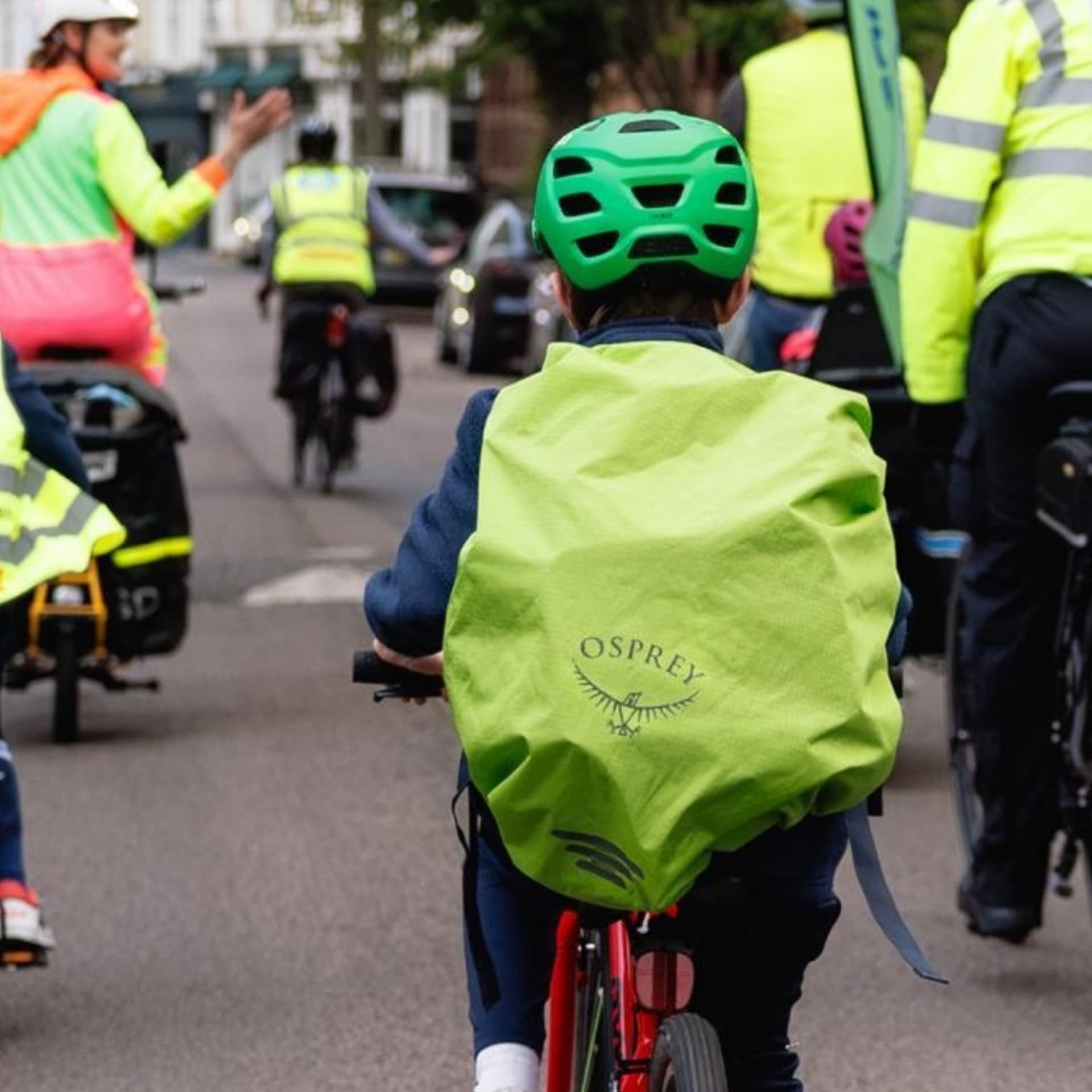
2:34Have you ever heard of a bike bus? It's a trend which is going viral on social media. It involves a group of children cycling to school in a large group following an adult for safety. And like a bus, the group makes stops along the way to drop people off. Bike buses started a few years ago in Spain and Portugal, and the movement has gathered momentum in the United States lately thanks to Sam, known as Coach Balto online. As well as hundreds of thousands of followers, he's also got various celebrities to join his bike bus in Portland. Take a listen to this. It's Friday, let's go ride in a bike bus.
3:10Four minutes till we leave. Does anybody want a sticker? All right, bike bus. I think bike buses are a really wonderful way to help build kids independence. We know that being physically active before school for children helps them focus better. They do better academically, they get in trouble less, they have better social relationships, and you get the fresh air. You're not in the backseat of a car being sedentary. It's good for the environment. There's so many benefits. So the bike bus is a great tool to help bring the community together and also to advocate for safer streets. Just finished the Camden bike bus.
3:46Now we're heading to Lisbon for the bike bus summit. I was telling someone the other day, you're so supportive. Thank you. So, yeah, I mean, I just, and I will tell you, I see more people biking. That's awesome. Well, we wanted to see what all the fuss was about. So we sent our very own Richard Hamilton to get on his bike and join a bike bus here in London. So there are two rules for the bike bus. Number one, you must stay behind me. I'm the leader. Clad in a fluorescent pink, yellow and green onesie, Charlotte Claydon leads the Camden bike bus. The second rule is... Bunk! Well done. Bike. Bike.
4:34Bike. Bike. Bike. Bike. Bike. Bike. Okay, we're ready to go. Let's go, let's stay safe and have some fun! Five, six, seven, eight!
4:50We're actually going along on the bike bus at the moment. Of course, it's not a physical bus. There's about 20 children with little fluorescent bibs on, all following Charlotte. It's a bit like a mother duck and her little ducklings following along behind. And it's great fun. It's perfectly safe because there's people stewarding at the back. And you can hear in the background all the chanting and the excitement and the whistles. And they all seem to be really enjoying it. The school run can be a bit of a headache for everyone. And I used to, I'm afraid, drive. And it just used to cause me enormous amounts of stress and anxiety.
5:28So I started cycling with my two daughters in the back of my cargo bike. Eventually, a lot of parents will know this, they suddenly get too big for the cargo bike. So I was looking at ways to take my older daughter independently on the road. and it was literally that day that my friend sent me a video of an old old old friend that I used to work with in Pennsylvania in 2008 called Sam Balto and he was doing these extraordinary this sort of images of this this guy with kind of two what looked like 200 kids shouting singing laughing it looked like a disco on wheels standing up on their bikes waving and shouting and screaming having the best time of their lives getting to school together it's so simple it's so obvious when you see it.
6:07Of course that's how we should be getting to school. Sam Balto, who's a PE teacher, set up his first bike bus in Portland, Oregon, back in 2022. He began with just five to ten children and a handful of volunteers. But it became so popular that within three months, a third of the school was cycling in. He has now founded Bike Bus World, which recently held a global conference in Lisbon in Portugal. And thanks to stars and celebrities like the American singer and actor Justin Timberlake and the Swedish pop star Zara Larsson, Bike Bus has gone viral on social media. And the kids in North London seem to love it too.
6:51It's kind of fun because you can see everyone riding, talking and riding with your friends and stuff. First, I thought it was going to be embarrassing But maybe it's going to be a bit fun If we have it with music I like how you can ride along with all your friends And you can chat And you don't have to be worried about all the cars Because they're always marshalling us To make sure there's no angry car drivers Yes, it's really good What do you like about it? Well, I like how when you go to school It wakes you up Instead of just like if you drive to school You just be really tired Okay, well enjoy this morning Thanks.
7:29And what do you like about it? You get to school faster and it uses less energy. Less energy than what? Walking. I love the bike bus because it's always really friendly and it's always really communal. It's good for the environment and it gives us so much energy because you can do it in a group and it gives us much more exercise. My name's Liam Frost. I am the head teacher at Primrose Hill Primary School. At a bike bus, the children are there with their whistles, they're smiling, they're going, hello, how are you doing? Good morning, Liam. Everyone stops in their tracks when they hear the children coming, the music, they turn around and then what you see is a wave of smiles go down the street as people realise what's happening.
8:16It's massively empowering for the children as well to be reclaiming the streets. That was Richard Hamilton reporting and staying with bikes, a woman has just finished an unusual cycling challenge, spelling out the word kindness across the US states of Minnesota and Iowa. Nala Summers completed the more than 3 ,000 kilometre journey on a quadricycle with four wheels and two seats, inviting strangers to join her. Nala says her research has shown a drop in levels of kindness, but she told my colleague James Copnell she was pleasantly surprised by the reactions to her challenge. People were emotional about what I was doing.
8:54And I have never had, in all of the challenges that I've done, I've never had the amount of support and emotion over what I was doing. There was many tears, many emotional connections after a very short period of time, over 24 hours, and people who would share how important they thought what I was doing was going to have on the world. I don't know whether that's true, but that's how they felt. I came to America not knowing anybody in this area. And now I know 100 people who have all supported and become part of this challenge. So while I can say it was me that was doing cycling over those 2000 miles, it wouldn't have happened without everybody coming on board.
9:39And there was a chap that I stayed with who talked about how he had done personality profiling. and he had seen a decline in the way that people felt within their mental health and the way they felt about themselves really in their personalities and we see that within the emotional intelligence as well as a decline it has an effect on the way that people feel the way that they interact the way that we manage difficult conversations conflict differences of opinion and unless we start focusing on that, we are only going to see a trajectory of decline. So yeah, those sorts of conversations, political conversations, they were deep rooted.
10:23And there's a real understanding that we need to come back together. You mentioned staying with someone. So on your mission to highlight kindness, did you yourself receive lots of little and perhaps big acts of kindness? It was, in fact, overwhelming and I'm continuing to receive it now. So I arrived, I had never ridden the bike before and got on it and started riding the route of kindness and the 2000 miles, untrained. So I wasn't really sure what to expect. And by day two, a couple had supported me through headwinds. And then they became this focal point for the K because they lived right in the middle of it.
11:10And they put me up, supported me, fed me. And that was really where the chain of kindness started. They then put me in touch with somebody they knew further down and then they put me in touch with somebody else further down. And so it continued through Minnesota and into Iowa. And it was quite incredible, really, the people coming together and us all really working together. And it was a real kind of symbolic thing for me around kindness. You know, we were literally and figuratively making kindness happen throughout America. It seems like there are almost two things happening here. From your research and work over well over a decade, you have real concerns about a lack of kindness, or at least the amount of kindness declining, and yet you also seem to encounter it a lot.
12:01So is it that we all have the capacity to be kind, but we're just not pressing the right button sometimes? We absolutely have the capacity to be kind and it's what people want to do first and foremost. But if we are feeding our minds with the division, people are fearful, scared, divided. But actually, when you're just two people in a room, kindness will always prevail. And particularly in those smaller communities which I've been going through, kindness is still very much prevalent. Nala Summers. A professor here in the UK has been awarded the highest prize in Caribbean literature for her book which explores her grief of losing her mother to dementia whilst also feeling the impact of climate change.
12:48Here's Tessa McWatt reading us some of her book, The Snag. Today is the last day of the hottest year in recorded history. I stare at the insect black letters of that sentence in my fresh notebook and wonder how many others are writing the same. to their friends, their lovers, on a screen, in diaries, in sand, on walls. The earth is vast, but black letters march purposefully like laden ants to connect us. Why bother? Why try to capture two years of events, bulletins, reports, and singed images, the cops 27 and 28, when scribbles on paper are fanciful and flammable? Why even try at the end of this first of the hottest years to come.
13:32Because although loss is immeasurable, words march in patterns towards meaning. I spoke to Professor McWatt and started by asking her why she wanted to write her book. The book started, first of all, during COVID in my head, really, because it became a time where, you know, everybody was grieving some loss in some way, I think, you know, just our daily lives were something that we were kind of had left and were grieving. But also the situation with the climate became much more acutely in our awareness. And I became very depressed about that and had deep climate grief. But at the same time, my mother was also losing her cognitive abilities to a certain extent that we had to move her out of her home where she had been living on her own for over 30 years.
14:23So it became something that I explored in tandem, this planetary global grief, as well as my personal grief and her grief as we started to lose her from dementia. Do you think that it helped your grief journey writing this book? Absolutely. Yeah, the book covers a trajectory of two years in which I would go back and forth to visit my mum from London to Toronto. And I would be looking after her to give my sister a break. She was sort of looming out of her house and then living with my sister. It allowed me to ground myself in something very, very whole and wholesome, my mom's spirit, even though she was losing her memory.
15:07So I was tracking all the things that I was experiencing on the planetary level, those negative things, and it helped to balance the love that came out of me caring for my mom over those two years. So the book kind of interweaves those things and ends up in a quite a hopeful space as a result, I think as a result of me tracing it along with my mum. Could you tell us a bit about your mum? My mum is this incredible spirit of a woman. Her essence, it was almost like the loss of her memory and the loss of that grief was counterbalanced by the fact that she's just a very happy person. So she didn't experience some of the anxiety that some people who get dementia do.
15:50She was very easygoing. I mean, one of the recurring statements in the book is that my mum would get up and go goody-goody to whatever we're doing next. Let's go to the store, mum. Goody-goody. What's the feedback been from your book? Because I imagine writing about things in a vulnerable way, you've probably helped a lot of people. that is true that seems to be what has happened I've had incredible responses from people saying oh my goodness this is all the things I've felt and you've put it into words and about the grief sort of a kind of global grief but also a lot from people who have parents with dementia or who have parents who are they're moving out of their homes and it seems to have really touched people's hearts, which is the best possible thing I can imagine for a book and what I wanted most about this book.
16:46It's incredible. It feels like the reason I'm a writer. And now this book has been awarded one of the highest prizes for Caribbean literature. How does that feel? It's wonderful. It's really, and specifically because it's this prize, because I feel it was for my mum. The prize was awarded in Trinidad and she went to Trinidad every year from Canada when we lived in Canada to carnival every year. And so for her, that's a special place. And so for me to have won that prize in that place was especially satisfying. Do you have a favourite line in the book? I'm just going to look for it here. It's what is the song that this howl will eventually become?
17:31It's a kind of dismantling of the purpose of grief. In other words, you know, grief is evidence of love. And so if we look at why we're grieving, then maybe we can understand the love that we need to hold or hold on to or recapture. Professor Tessa McWatt.
18:00Coming up on The Happy Pod. I think it can be overwhelming and you don't know where to step in and help your community. And I think these little things like teaming with your dog for a local detection target could be really useful. And you feel like we get enough of these together, right? And we can have a big impact. The dogs helping to protect America's ecosystems from an invasive species.
18:26Take the leash off your laptop with the processor that gives you long battery life. Work on the go. Jump between back-to-back calls. Stay locked in from brewing morning coffee to burning the midnight oil. Get maximum performance, even when unplugged. Finally, the freedom to move across the room or across the world is here. Snapdragon. That's how. Today's episode is sponsored by Smart Travel, a podcast from NerdWallet. Do you have a friend who treats airfare like a puzzle and somehow always ends up with a first-class upgrade. Smart travel is like that friend, minus the group texts. NerdWallet's travel journalists break down the pros and cons of travel decisions, like when lounge access is worth paying for and which hotel loyalty programs actually pay off.
19:17Make your travel dollars work harder. Follow Smart Travel on your favourite podcast app. Running a business shouldn't feel like surviving a software group project. One app for accounting, another for inventory, another for sales. And somehow, none of them talk to each other. That's where Odoo comes in. An all-in-one business management software that brings every part of your business together. From sales and accounting to inventory and marketing, all in one powerful platform. No messy integrations, no bouncing between tabs, and best of all, no spreadsheets. Stop managing software and start managing your business with one unified system.
19:55Try for free today at odoo.com. That's O-D-O-O.com.
20:22legendary cups with a FIFA World Cup meal at participating McDonald's for a limited time while supplies last all rights reserved 2026 McDonald's at FIFA World Cup 2026.
20:33You're listening to The Happy Pod. A vaccine designed to prevent cervical cancer has shown clear evidence of success. Since 2008 teenage girls in the UK have been offered the jab and a study has shown that those who took it have close to a zero risk of dying from the disease before the age of 30. Across the world, more than 2 ,000 women are diagnosed with cervical cancer every day. Professor Peter Sassany from Queen Mary University London is the lead author of the report. In 2008 is when we introduced the vaccine and it was really targeting 12, 13 year olds. So people born in 1996 and onwards are the ones who've fully benefited.
21:15And we've seen that Essentially, there were no deaths under the age of 25 in that group. And then there was also a catch-up campaign. So women born between 1990 and 1995 may have been vaccinated. They may have been vaccinated after they'd already been infected with the virus. It might not be quite as good. But we've seen a big fall in the number of those women who've been dying from cervical cancer, but it's not down to zero. Michelle Mitchell is the chief executive of the charity Cancer Research UK, which funded the study. It's a remarkable day. The new research demonstrates that HPV vaccination works and saves lives, reduces the number of deaths from cervical cancer.
22:02And we have the possibility of eliminating cervical cancer as a public health issue here in the UK. The BBC's health correspondent, Kath Burns, says the research also has wider global implications. It is so rare to hear experts or scientists talk about elimination. You want that kind of conversation, you just don't get it. And they're also calling it an incredible milestone. So they're saying that these figures are actually going to be the tip of the iceberg because as more generations get vaccinated and protected, more lives are going to be saved. I think really, though, the best example for us to look at is Australia because they were the first country worldwide to come up with this vaccine.
22:42And they are not seeing any new cases in women under 25. Their aim is to eliminate cervical cancer by 2035. And they think they're going to do it early. Well, cancer researchers will be looking at this vaccine and thinking, right, what are they doing? And we can copy it. So some of the clinical trials I can tell you about are also looking at preventative vaccines. So they're trying to stop cancer before it starts. One of them is for lung cancer. Now, this one is targeting people who are at high risk of developing lung cancer. It essentially uses the same technology as COVID vaccines, and it trains the immune system to recognise certain proteins that are linked to the disease.
23:21There's another one with ovarian cancer. And again, this is targeted at women who are at high risk of getting it. And it's going to prime the immune system to recognise certain abnormal cell changes before they turn into cancer. So there is a lot of work here and a lot of hope too. Kath Burns. A team of researchers in the US are turning to our furry friends to help them tackle an invasive species. The spotted lanternfly can threaten ecosystems and is thought to have reached America through international trade. The Happy Pod's Riley Farrell has been to Virginia to find out more. There's an invasion spreading across the United States that could cost millions.
24:04But today, standing on a berry farm in the Blue Ridge Mountains, I'm witnessing one of the most unexpected defenses against it. A group of very good dogs. Okay, so this is Fozzie. He was puppy trained to be a service dog and then washed out of the program. How are you? My dog is Finch. She is a lovely mixed breed dog that I rescued about eight years ago. Yes, good girl. Nice. This is Hermes, and he is almost 10 border collie. He has a birthday on Sunday. These pet pooches are trained to detect the egg masses of spotted lanternflies, an invasive bug species ravaging the U.S. Spotted lanternflies feed on plant sap, excreting a substance called honeydew, which causes the growth of thick black sooty mold.
25:05This mold ruins the vegetation. With basically no natural predators here and a broad diet, these insects threaten vineyards, orchards, hardwood forests, and urban ecosystems. This problem calls for a creative solution. And for Dr. Erika Feuerbacher, a professor at Virginia Tech, The idea struck her on a hike. So my background is in canine behavior, but I would go hiking with my dogs, and I knew about conservation dogs, and I always thought, me as a citizen, wouldn't it be fun if I could contribute to solving environmental issues while I'm playing with my dog? And I figured there were more people than just me that was interested in that.
25:48Any breed can be an olfactory detection dog, so they're all really useful. If our dogs are detecting one lanternfly at a time, it's kind of a slow process, but with the egg masses, we can get, you know, 50 or 60 that we can scrape off at a time. So we're going to get a little more bang for our buck. How do the dogs actually do it? Well, it comes down to stimulus pairing, which trains a dog to recognize a scent and signal it to their handlers. That's according to Dr. Sally Dickinson, who helped develop the citizen science model. Very simply, we say, okay, I want to be able to target this odor. The first job of the human is to isolate that odor.
26:27So after we've got that, then we say to the dog, what is your most favoritest thing in the whole wide world? I will give you that in conjunction with this odor. Show me. Yes, good boy. These dogs have their noses down, tails up. You see the animation? That's that excitement that comes with building. Yeah, good boy. The most favorite thing with the odor at the very beginning of the training. As soon as you hit that odor, his whole body language changed. He's like, oh, I know what I've got to do now. So what is Fozzie's most favorite thing? Food. He says, I will work for food all day long, forever.
Read the full transcript
27:06It honestly looks like a game, but it is early detection. Stopping them early can stop the spread. The egg masses are oftentimes how they are being moved around. So they've laid egg masses on a lumber shipment that's moving somewhere else. So if we can detect that egg mass on that lumber shipment and be able to scrape it off, we're going to prevent the lanternflies from spreading further. I think it can be overwhelming and you don't know where to step in and help your community. And I think these little things like teaming with your dog for a local detection target could be really useful. And you feel like we get enough of these together, right?
27:38And we can have a big impact. Good boy. That was Riley Farrell reporting. And before we go, we must bring you this moment of pure joy. The World Cup brings fans many different emotions, not to mention stress and disappointment, but it can also bring moments of elation. That's what happened to this Cape Verde fan when his team scored their first ever World Cup goal against Uruguay. The BBC's Paul Nguyen was speaking to him as it happened. What's your appraisal of the way the Cape Verde team has been playing so far? My personal thing so far, Cabo Verde has been playing great. He's been matching Uruguay's pressure.
28:20Goal! He's gone! That's a goal! That's a goal! Oh, what? The team has broken. He has made history tonight. Scoring a left goal here. And you can see, Marcelo. What can you do? Marcelo. We pass it to the next phase. History. We are going to the next phase. What do you make of that goal? We are leaving everybody wrong. Cabo Verde is going along, man. You just saw it. Amanda live on the BBC. Cape Verde has just made history scoring the first ever World Cup goal in the tournament. You can probably see from behind me the ecstasy, the exhilaration and the euphoria in this place. Amanda, a big deal for the Cape Verdeans.
29:02It's one that will go into the history books, I must tell you. Perfect timing there from Paul Njia reporting from a watch party in Cape Verde.
29:17And that's all from the Happy Pod for now. We'd love to hear from you. Let us know where you're listening from. As ever, the address is globalpodcast at bbc.co.uk. This edition was mixed and produced by Rachel Bolkley. The editor is Karen Martin. I'm Holly Gibbs. Until next time, goodbye.
29:45with the processor that gives you long battery life. Work on the go. Jump between back-to-back calls. Stay locked in from brewing morning coffee to burning the midnight oil. Get maximum performance, even when unplugged. Finally, the freedom to move across the room or across the world is here. Snapdragon. That's how.
From the publisher
We find out about bike buses - an increasingly popular way for children to cycle to school safely. They involve travelling in a large group, escorted by adults, and stopping for pick ups and drop offs along the way. The idea started in Spain and Portugal a few years ago, but has seen a recent boom - thanks in part to some celebrity supporters.
Also: the woman who's been encouraging acts of kindness by spelling the word in a cycle route across the US states of Minnesota and Iowa. Nahla Summers also encouraged people to join her on her two seated quadricycle to talk about the importance of being kind.
How the vaccine against HPV has almost eliminated cervical cancer among women in the UK.
The professor whose memoir on losing her mother to dementia and her grief over climate change has won the highest prize in Caribbean literature.
The dogs helping in the battle against an invasive species threatening crops and ecosystems in the US.
Plus a moment of pure joy for Cape Verde fans at the FIFA Men's World Cup.
Our weekly collection of inspiring, uplifting and happy news from around the world.
Presenter: Holly Gibbs. Music composed by Iona Hampson