
In short
Global News Podcast - Episode Summary
Episode Title
The Happy Pod: Diabetes Awareness Month Special
Episode Overview In this special episode of the Global News Podcast, presenters Harry Bly and Alex Ritson highlight various stories surrounding diabetes in honor of Diabetes Awareness Month. The episode discusses innovation, advocacy, and education relating to type 1 diabetes, featuring stories from individuals and projects aimed at supporting those with the condition.
---
Key Topics Covered
Understanding Diabetes
- Types of Diabetes:
- Type 1: An autoimmune condition typically diagnosed in childhood, with no known cause.
- Type 2: Often lifestyle-related and influenced by factors such as age and family history.
- Gestational Diabetes: Occurs during pregnancy and other rarer forms.
Featured Stories
- Lea Leleta Sümer's Children's Book:
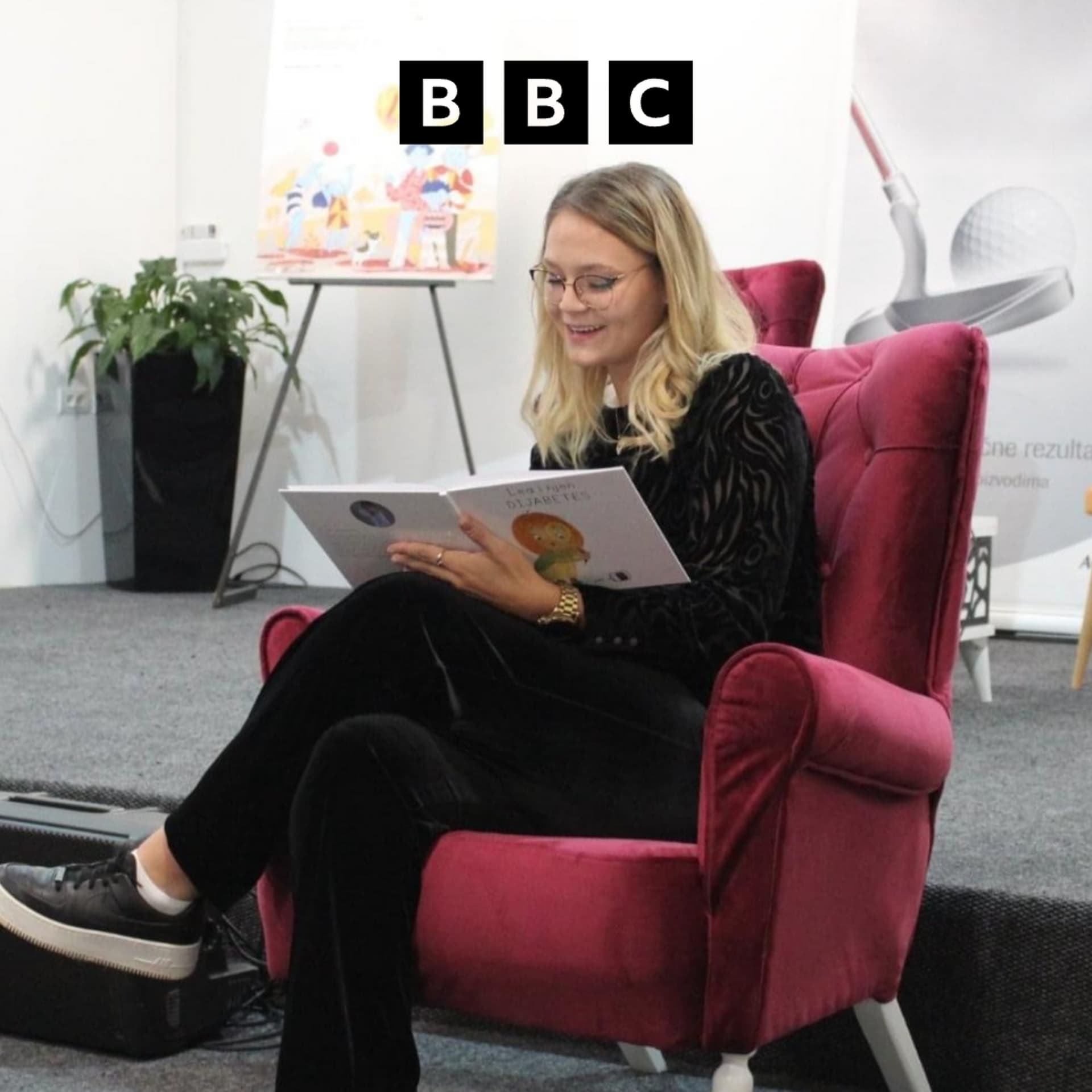
- Background: Lea, diagnosed with type 1 diabetes at age 2, created a book titled *Leia and Her Diabetes* to help children understand their diagnosis and reduce stigma.
- Impact: The book provides relatable content for children, encouraging openness about diabetes and fostering conversations among peers.
- Barbie Doll with Type 1 Diabetes:
- Innovation: Collaboration between Mattel and Breakthrough T1D to launch a Barbie doll that represents children with type 1 diabetes.
- Significance: The doll features an insulin pump and a glucose monitor, emphasizing visibility and normalizing diabetes.
- Sally TM (RuPaul's Drag Race UK):
- Advocacy: Diagnosed with type 1 diabetes at 10, Sally uses her platform to raise awareness and address stigma in the community.
- Artistic Expression: Incorporates her experiences with diabetes into her performances, fostering discussions around the condition.
- Italy's Nationwide Screening Program:
- Pioneering Effort: Italy is the first country to implement a nationwide screening program for type 1 diabetes, aimed at early detection and education.
- Expert Insight: Professor Emmanuel Bozzi explains the significance of screening in preventing complications from undiagnosed diabetes.
- World Record Marathon Runner:
- Nathan Kilcourse: A teacher who set the record for the fastest marathon by a male with type 1 diabetes, emphasizing the impact of diabetes on athletic performance and fundraising efforts.
Advances in Diabetes Technology
- Continuous Glucose Monitors (CGMs): Discusses how recent technological advancements are making diabetes management more efficient and safer, with insights from users about their experiences.
- Future Prospects: Experts express cautious optimism for new technologies and potential treatments that could improve quality of life for those living with diabetes.
Closing Thoughts
- The episode concludes with reflections on the emotional and social aspects of living with diabetes, the importance of community and support, and ongoing efforts to increase awareness and understanding of the condition.
---
Key Takeaways
- Awareness and Education: Education plays a critical role in demystifying diabetes and fostering a supportive environment for those diagnosed.
- Innovation: Creative initiatives like children's books and culturally relevant toys enhance visibility for those with diabetes.
- Advocacy: Public figures and community leaders are instrumental in changing perceptions and reducing stigma associated with diabetes.
- Technology's Role: Emerging technologies offer promise for better management and potential future treatments, reflecting a shift towards more automated diabetes care.
---
Contact Information For more information or to provide feedback, contact: globalpodcast@bbc.co.uk
---
This episode serves as a vital reminder of the importance of awareness, education, and innovation in the ongoing journey of living with diabetes, illustrating the strides being made to support individuals affected by this condition.
Written by AI. May contain mistakes. Listen to the episode to check what was said.
Transcript
Automatic transcript. May contain errors.0:00This BBC podcast is supported by ads outside the UK. If journalism is the first draft of history, what happens if that draft is flawed? In 1999, four Russian apartment buildings were bombed, hundreds killed. But even now, we still don't know for sure who did it. It's a mystery that sparked chilling theories. I'm Helena Merriman, and in a new BBC series, I'm talking to the reporters who first covered this story. What did they miss the first time? The History Bureau. Putin and the apartment bombs. Listen on BBC.com or wherever you get your podcasts.
0:46Hello and welcome to a slightly different Happy Pod from the BBC World Service.
0:56I'm Harry Bly. And I'm Alex Ritson. In this edition, we're marking Diabetes Awareness Month, highlighting stories about innovation, advocacy and education. Like Leia, whose children's book has helped children come to terms with diagnosis. The woman who inspired a type 1 diabetic Barbie doll. How one drag queen here in the UK is using her platform to raise awareness of diabetes. Plus Italy, which has become the first country to implement a nationwide type 1 diabetes screening programme.
1:32But before we get started, let's talk about what diabetes actually is. It's a range of conditions where there's essentially too much sugar in your bloodstream. It's estimated more than 9 million people around the world have type 1 diabetes, including me and Alex. But there are others, type 2, and the differences are, well, essentially type 1 is an autoimmune condition. We don't yet know, doctors don't yet know what causes type 1 diabetes. And then there's type 2, which is more lifestyle related. There are other factors such as age, family history and ethnicity. And then a couple of rarer sorts, gestational, people have it during pregnancy and other forms that develop during adulthood.
2:15And it's a condition that has many misconceptions. The symptoms of a low blood sugar attack are similar to drunkenness. and many a young person has suffered badly or even died because of that. And with pressure to avoid those low sugar attacks, many people allow their sugars to run high. But high sugars over time cause organ failure and make you go blind. As we'll hear in our first story, the most common treatment and the way many begin treating their diabetes is using a blood glucose meter and a finger pricker to test their levels and a pre-filled insulin pen to deliver insulin to the body to keep blood sugars stable.
2:53Now an increasing number of people, including us, use a patch usually worn on the upper arm or leg that continuously measures sugar levels and an insulin pump which delivers a steady supply of insulin to the body, mimicking a natural pancreas. So let's start in Bosnia and Herzegovina, a final year university project that's gone on to help children newly diagnosed with type 1 diabetes come to terms with their condition, as well as educate others about it. And it all started with a chance encounter. It was in September 2024 when Lea Laleta-Souma received this unexpected text message from a friend.
3:34I got a message from Jay, who I've met at one of the IDF, the International Diabetes Federation, Europe's camps for people with type 1 diabetes. And he just sends me this screenshot that Harry posted, saying like, like, hey, I'm on vacation in Sarajevo and I need a new sensor. And he just sent me the screenshot and he's like, do you have a spare sensor? Can you help out? And I was like, oh, yeah, sure. This Harry, who was travelling there and needed a glucose monitoring sensor, was me. I can imagine what kind of shock it must have been to be somewhere on vacation, especially in a country like Bosnia, where we don't have all of these things.
4:13In Bosnia and Herzegovina, there is limited availability of CGM sensors that people with diabetes use to monitor their blood glucose. In Sarajevo, we can get the bare minimum. Whenever I needed sensors, I would turn on the car and I would drive to Croatia. And not only me, so that's most of the people that live here with type 1. Luckily, Lea did have a spare sensor for me. And it was at this meeting, late one evening, in Sarajevo's old town, that I met Lea in person and learnt about the children's book she had written as a university student two years prior. Lea was diagnosed with type 1 diabetes when she was two years old and lived in the Netherlands.
4:51There she had been given books which helped her better understand her condition. But when researching for her own project, she found there were no such resources for children in Bosnia. That was kind of the initial push or spark for me to create something to help mostly children out there to understand, OK, this is what I have to live with and I'm not alone. Her book, Leia and her diabetes, is based on her own life, written in the first person, where the main character, Leia, talks about being diagnosed. Here's an extract from the book.
5:30I found out I had diabetes when I went to the doctor with my mum and dad. She pricked my finger with a special needle. I thought it was very scary and I felt afraid. But don't worry, it doesn't hurt. The doctor put a drop of blood in a little device to see if I was OK.
5:48This is called measuring the blood sugar and that's how I see if I'm OK. Most of the time I am, but if I'm not OK, my mum gives me a different injection in my leg and then I feel great again. The book also talks about what diabetes is in a way that children can understand and aims to combat the stigma associated with having it. Ask anyone who has diabetes, especially as a child. Coming to terms with a condition like this is hard and so is being open with those around you. This is an important message Lea wanted to convey in her book. There's one illustration when my friend is sitting across me and she's like, hey, you don't look quite well, maybe you should check your blood sugar, which immediately lets everyone who reads the book know that I was talking with my friends about it, so they knew.
6:36And that is a very, very important aspect, especially here in the Balkans and definitely in Bosnia. There's still this stigma about diabetes and that children shouldn't talk about it, not only children, but generally adults, kind of hiding the fact that they have diabetes. You do open up about some other hardships, about feeling upset about having diabetes. Yes. I really wanted to include that because it is, for me, it is crucial to mention, yes, I did feel sad. Yes, I did cry. I mean, till today, you know, I have moments when I'm like, why me?
7:09I don't understand why I have to do these things when most other children don't. I asked my sisters, Irina and Anita, why they don't have to do these things. They told me that I am special, so I have to do some special things. They also told me that my injections are actually magical, and others don't get to have these magical injections. To the little Lea in the book, when I was six, for me, that was so cool. Tell me about some of the reaction you've had. You've travelled around Bosnia, you've shared this book with children and with parents, also children without diabetes. They're looking at the book and they're like, is this you?
7:48And I'm like, yes, really? And I'm like, yeah. And then they start, I mean, of course, they start asking everything. And how is it in school? And do you drive a car? And do you travel? And do you do this? And then, you know how children are. And they really kind of were hugging the book as if it was representing them. And that was my goal. most of these children didn't talk about diabetes. They didn't tell their friends. I would get messages from parents and I keep them still who tell me, thank you. Thank you because my daughter or my son, they went to school with your book. They asked their teacher, hey, could I get 20 minutes to talk about something?
8:28And then they would read the book. And in the end, they would say, I have this too. Every message, believe me, I was crying because through this project, I also healed little me because I didn't know many people with diabetes growing up. Lea Lalehita Suma talking about her book Lea and Her Diabetes. And that is such a huge issue that I can relate to. You hate having an injection and you also you don't want to be different. And of course diabetes gets in the way of so many things particularly in the old days playing sports. It really hangs over that makes it so much more difficult. So it's good work.
9:04This year the toy manufacturer Mattel launched a Barbie doll with type 1 diabetes. One of the women behind the design was Emily Mazrekou who works for the international charity Breakthrough T1D. Emily says it was an honour to be part of the process and that the doll makes her feel seen as someone with diabetes who has the same wearable monitors. She's been speaking exclusively to Holly Gibbs and started by describing what Barbie with type 1 diabetes looks like. She wears an insulin pump right on her waist and that gives her insulin throughout the day as she needs it. She's carrying a purse with her continuous glucose monitor app on her phone and then you'll see that patch on her arm and so that patch will allow those glucose levels to be seen on her phone for her to treat herself and make those decisions throughout the day that you need to do with type 1 diabetes.
9:57And she also has a purse, which is really cool. It was a moment where the community, as part of the process, said type 1 diabetes is 24-7. It's a 24-7 condition that never stops. And those supplies that she carries in her purse are representative of that. So you are, Emily, the real woman behind Barbie with type 1 diabetes. Take us back to the beginning. Where did this idea come from? Mattel and Breakthrough T1D partnered together. Actually, Mattel approached Breakthrough T1D as the leader in the type 1 diabetes advocacy and research space to launch the first ever Barbie doll with type 1 diabetes.
10:34That was about two years ago now, a little over two years ago. And from that moment, it was just an incredible honor. It was an incredible moment for us at Breakthrough T1D because we knew just how much it would mean to the community. What is the one message that you want this Barbie to portray? We see you. So this collaboration is a shared commitment to make sure that the millions of people with type 1 diabetes are seen, heard and empowered with their condition. And so one message we would always want to put forth with this doll and always want to put forth with everything that we do is we see you.
11:12And Emily, how did you incorporate yourself and your own lived experience with this Barbie? I have lived with type 1 diabetes since the age of 22. I was diagnosed almost 10 years ago as an adult. So this experience was both a professional and personal honor for me. So as part of the design process, Mattel had asked as part of the design process for Barbie's continuous glucose monitor, her CGM, what a day with type 1 diabetes can look like? What does it feel like? and I was having a day, the type of diabetes, where it can sometimes feel like a roller coaster on my continuous glucose monitor graph with my glucose levels.
11:49And I said, I think I have an example. And I took a screenshot of my phone and that screenshot ended up on Barbie's continuous glucose monitor app on her phone to just show the true lived experience and what it can feel like from day to day with this condition. That is so cool. That Barbie is really personalized to you and your experience. How do you feel when you look at type 1 diabetes Barbie and see that? It's an incredible, indescribable, deep-rooted, meaningful feeling. It's something that I will never, ever forget. When I look at that doll, I see me. I see my daily burdens from mental to physical.
12:33I see that newly diagnosed 22-year-old not sure where she would go in life and what she would do and what this condition would mean for her life. I see that person and I see, wow, look at all of the things that we can do. Look at all of the things we've done. And we've seen and heard some really lovely reactions from little girls who have seen Barbie with diabetes. We actually have some of their reaction here that we can play you. It's a Barbie and it has a pump like me and a sensor on the arm there. I really like it. She's so amazing. She can teach you a lot about your diabetes. I've always wanted a doll that looks exactly like me and I'm sure other kids have too.
13:20Emily, how does it feel hearing that? No words. Absolutely no words. You really can't probably see me but I'm tearing up because that's the feeling that we knew it would mean so much to everyone living with type 1 diabetes. And these kids being able to talk about their condition and feeling empowered enough to do it, thanks to Barbie and feeling seen, there is no greater feeling than that. And we are so, so, so grateful that kids around the world are feeling this. Adults around the world are feeling this. People who are not even familiar with type 1 diabetes are seeing this, and it's an indescribable feeling.
13:57Emily Masreku speaking to Holly Gibbs and it's quite an achievement to have inspired a Barbie doll. And that Barbie doll actually reminds me of another thing which is that now we know who the other people with diabetes are. We see them around the office. In the old days we all had to hide in corners we thought were on our own. I even spotted a UK Prime Minister once with one of these things on her arm and realised she had diabetes because of that. So it has enabled that sense of community, I think, in a way that we never had before. Now, we've heard what it's like to live with type 1 diabetes, but what's it like to perform with it?
14:34You might be familiar with the TV series RuPaul's Drag Race. It's a competition that takes place all over the world to find a country's best drag queen. Sally TM is a competitor from this year's UK version of the show. She was diagnosed with type 1 diabetes at the age of 10. Sally has talked publicly and candidly about experiencing complications with diabetes, including problems with her vision. Now aged 27, she uses her art and her platform to advocate for young people living with the condition. I caught up with Sally TM and started by asking her what it was like to get her diagnosis. You can't really plan for it and prepare for it.
15:14It's such a life-changing thing. For me, I think back then I was just like, whatever. It was actually during more of my critical years where you have to have the responsibility. The thing that really snapped for me is when I said to myself, you've got this for the rest of your life. It was harrowing to think that like my diabetes was going to be there for the rest of my life. Tell me about the process that you went through to finally accept diabetes. It's something that we've been through. But what was that like for you? it's sad to say but it was when i started to get complications because of my errors with being frustrated by having diabetes within covid i think it was 2020 2021 i was diagnosed with macular retinopathy the nurses words were this could be reversible but it's looking very unlikely and the thing is i'm an artist and i produce art i do drag there's two things that you need to create you need your hands and you need your eyes so for for me not to be able to have my vision and share that vision with people scared me so i just made sure that i was doing the correct things to make sure that i was able to reverse what damage i've done to my body i'm not surviving with diabetes i'm living with diabetes it's nothing that's kind of like it's not holding me down as an individual tell me about what it's like to perform with diabetes because as anyone who's ever watched rupaul's drag race will know it's it's physically very demanding i did have a hypo doing that really um well you could be the peak top athlete but you know a hypo could easily take you out of it it's being aware of where am i going what am i doing in the moment i try not to make an excuse out of my diabetes for my skill set but I'm not going to cower behind the fact that I've got diabetes.
17:13Sally how have you incorporated diabetes and your your openness with being diabetic how have you incorporated that into your art into your drag? Do you know what I find really interesting it sounds so weird when I say it but like I adore get my eyes screened like I really do like I really enjoy seeing what like I can't see which is the small tiny blood vessels in my eyes i went to do a screening talk in drag and for my outfit i screen printed on fabric and created a dress my retinal screening i want to share my story and it to be from a very honest approach i think especially with drag race like i try to be so authentically myself and i wanted to be able to use my platform of drag to raise awareness what inspires you to do that to be an advocate and to raise awareness and also to quite literally the expression to wear it on your sleeve you you wore an outfit from a retinopathy screening people are so unaware of diabetes i think we were talking about world diabetes day with diabetes uk team and this year um they decided to go with the idea of stigma and it's still a massive campaign for stigma within diabetes people are so misinformed and often make jokes about it to the point where it's like, please read a book or like read some bomb of information around diabetes.
18:37I remember being a child and literally feeling so alone because no one around me had diabetes. So yeah, like the thing that I wanted to inspire is just there's more people out there than you think that have got diabetes. Sally TM. And I can relate to that hypo experience. You may remember, Harry, ages ago. It's probably the thing I'm most known for, infuriatingly. I had a low blood sugar attack actually on the air while doing a news programme on the BBC World Service. Yeah, a really, really scary experience. Yeah, it was horrible. And I came back after having had this low blood sugar attack later in the programme, explained to the listener what happened.
19:18And I did get lots of lovely messages from all over the world. The only plus side of that awful, awful morning, and it is one of the worst mornings of my life, is it shows just how quickly these things come on in audio form. I went from fully sensible to incoherent in less than a minute. And that tape, I am told, is used by doctors all over the world when they're trying to explain to someone who hasn't been through these things what a low sugar attack actually is. And for both of us working in live broadcasting, it's something extra that we have to think about before we come into work and go on air.
19:56And many other professions too.
20:03Coming up in this podcast, we'll find out what the future could hold in technology, treatment and beyond. There probably is a degree of cautious optimism from some of the studies coming out as to whether there finally could be that holy grail of the cure. So I think there's a lot of good work going on in this field.
20:30If journalism is the first draft of history, what happens if that draft is flawed? In 1999, four Russian apartment buildings were bombed, hundreds killed. But even now, we still don't know for sure who did it. It's a mystery that sparked chilling theories. I'm Helena Merriman, and in a new BBC series, I'm talking to the reporters who first covered this story. What did they miss the first time? The History Bureau, Putin and the apartment bombs. Listen on bbc.com or wherever you get your podcasts. Welcome back. There are some key symptoms that suggest someone might have type 1 diabetes, including constant and unquenchable thirst, frequently needed to pass urine and sudden and unexpected weight loss.
21:21But sometimes it can take a long while for a proper diagnosis leading to risks of complications. Now Italy has become the first country to implement a nationwide screening programme. I spoke to Professor Emmanuel Bozzi, Chief Physician of Diabetes at the San Rafael Hospital Clinical Research Institute who's pioneered the programme. Type 1 diabetes has a long pre-clinical period during which people are absolutely well. Blood glucose is normal, but there is a sort of incubation of the disease. It can last a few months or many, many years. This phase is characterized only by the presence in the blood of specific autoantibodies.
22:10And by doing a screening, we are able to know with a lot of advanced months or years who will develop type 1 diabetes. By knowing that we can educate the child or the adolescent and his or her family, if type 1 diabetes is not treated by insulin, it's a lethal disease. and there is still a residual mortality, even in developed countries, of a child die because type 1 diabetes is not recognised. Yeah, the classic symptoms that you go to your doctor with where your parents are having to say to the doctor, my child is drinking and drinking and drinking all the time. Most doctors ought to spot that, though.
23:02Well, the doctors know, but sometimes they under-evaluate. But in many cases, it is that the family is not going to the doctor. They think that the child is drinking because he's drinking, so with no specific reason. And it is a remarkable thing that you've achieved this, given all around the world there's such pressure on health budgets, but you've managed to convince the politicians that this really could make a difference. Yes, in my opinion, it is not very costly because, I mean, we are talking about procedures which are not expensive. Now there are studies which are trying to evaluate the cost-benefit ratio, because if on one side you spend some money to do the screening and to do the monitoring and follow up, on the other you have, if you have a dramatic onset of diabetes possibly associated with diabetic ketoacidosis, they invariably require hospitalisation and sometimes even in intensive care.
24:16So you think that your programme actually will save health services money in the long term? Yes, in the long term, certainly. In the short, I don't know. But of course, I'm a supporter of screening, so my opinion could be biased. that. Professor Emmanuel Bozzi, and if you take nothing else from this podcast, it's just that unquenchable thirst that I remember from before my own diagnosis. You're just so thirsty. And if ever someone in your life complains of an unquenchable thirst, it could well be diabetes. Do get them to go to the doctor right away. You could save their life. Absolutely, the three Ts, thirst, toilet, thinness.
25:04Here in the UK, a teacher has broken a world record by completing the fastest marathon by a male with type 1 diabetes. Nathan Kilcourse beat the record by two minutes when he completed the Yorkshire marathon in two hours, 28 minutes and five seconds. Nathan managed to double his fundraising targets, achieving just over$2 ,600 for the charity Diabetes UK. The achievement has now been officially verified by Guinness World Records. He spoke about this achievement, the preparation and the aftermath with the BBC's Samaya Moogle. Did you manage to do it? I did. Hey! Well done! Thank you. You're a Guinness World Record holder!
25:48Thank you. How does that feel? Yeah, amazing, amazing. I managed to run two hours 28 and five seconds, so just took over two minutes off the record. That's quite a lot. I mean, it doesn't sound like a lot, but it is a lot in running terms, isn't it? It is, yeah, yeah. It wasn't as easy as that sounds. It's shaving the two minutes off. I had a really tough last couple of minutes to the race, couple of miles, sorry, to the race. Yeah. Had to really dig deep to get to the finish line, but thankfully I was able to. And one of the things we were talking about, and the significance of this was, you were talking about your experience of living with type 1 diabetes, and I remember you saying that you just don't know what your body's going to be like on the day and there's things you can control in terms of your training but when you're living with diabetes there's things that you can't.
26:33How was it on the day? Yeah, really tough. On the morning of the race I had really high blood sugar levels. I think that was due to the stress and the anxiety of getting ready to run a marathon. Very close to the start of the race. I couldn't really make any adjustments to that so I just had to get into the race and go. my usual race strategy I'd have three or four gels throughout the marathon I had none on the day and I think that also impacted on why those last few miles was was so tough why didn't you have any gels just because it would have sent my blood sugar levels even higher than where they were at so I had to run pretty much the whole marathon on high blood sugar levels so yeah it was tough but thankfully I was able to like I say dig deep and how are you how's your body feeling now Okay, yeah, okay.
27:21The following day I was really, really sore, as you can imagine. But the past few days have been a lot better and I'm starting to recover. So hopefully a few more days and I'll be okay and ready to move properly again. Well done. I mean, just running a marathon, to be fair, it's like a massive achievement to get a Guinness World Record at the same time, to raise awareness for diabetes as you've done. What about your students? I know they were really backing you and really behind you. Yeah, well, we're on half term now, so I've not managed to see anybody. but hopefully by the time we go back the record will all be confirmed because it's under review at the minute from Guinness um so yeah really excited to see the kids and you are definitely going to be the coolest teacher in school just saying thanks another thing on top of that we've been able to raise nearly double the amount of money that we initially we targeted um which is also incredible and the support's been amazing family friends of everybody that's sort of been with me throughout the whole process.
28:14Nathan Kilcourse speaking to Samaya Moogle. Now since I was diagnosed the treatment options have advanced at great speed. I was the first patient ever in the hospital where I was diagnosed not to be given porkine insulin, that's insulin made from pigs. I've been lucky to see the great advancements in artificial insulins and blood glucose monitoring technology. Yes, wearable diabetes tech is advancing still. Let's hear from some of you about how it has changed your lives and your hopes for the future. I'm on a hybrid closed-loop system. It's really helped both me and my mum during the night because it changes the amount of insulin I need depending on my level.
Read the full transcript
28:59In the closer future, I hope not to need to tell the pump I'm eating as it's another thing to think about and I won't have any nasty, annoying highs when I forget to bolus myself. It did take me a bit of time to actually trust the insulin pump because I've had diabetes for 20-odd years before I actually got the pump. So I was used to doing everything myself. So to trust the technology was a massive, massive jump. Once I learnt to trust the pump, it just put my sugar levels within range overnight and then that in turn just improved my sugar levels drastically. Tech like this has really taken a lot of the background stress away.
29:32I think my hope for the future is that the tech keeps getting smarter and takes even more of the mental load off because reducing the constant decision making would make such a difference. If it wasn't for advancements in diabetes treatment and technology, I would never have actually stood a chance at being able to manage my type 1 diabetes properly. when it comes to the future of diabetes treatment and technology i hope that focus continues to be on things like quality of life and not just keeping us alive i hope so the future is that everyone can get access to these insulin pumps because obviously cost is always a massive massive thing for it but they just improve my day-to-day so much that makes my life a lot easier thanks Thanks George, Jai, Steph and Natalie for sending those.
30:20Professor Partha Carr is the UK's National Specialty Advisor for Diabetes. He spent his career leading the charge for patients across Britain to have easier access to technology to make the daily management of the condition easier and safer. The way I always looked at type 1 diabetes from the outside was that you had to prick your finger physically, you had to look at a number, then you had to do some mental maths with the number, whether you give insulin or glucose, and then he had to give it. And I think technology has now moved on to automating a lot of that, not fully yet. So you have sensors whereby, which will pick up your glucose readings, it's available on your phone.
30:59The insulin is mostly automated. You still have to put in a few things into the system about what you're eating, et cetera. But in general, about 70 to 80 % of what used to happen in type 1 diabetes is now but automated. So that's the huge leap, I would say, in technology, which has happened, is the best thing beyond a cure that at the moment science can provide to people living with type 1 diabetes. I've seen you speak at numerous conferences. You absolutely love what you do. You're not just a doctor who happens to treat people with diabetes. It looks like this is your life. You've been awarded one of the UK's top medals, the OBE, for your work in this area.
31:38What makes you want to do this? What makes you into this kind of diabetes superstar that you are? I think it always has bugged me that we don't provide the best care we can do. We are one of the top economies of the world and why not? So I think that's been a zeal. And I've been incredibly blessed to have incredible friendships and relationships in the type 1 diabetes world. And I think it gives you an insight that no medical textbook or universities teach you. And the fundamental philosophy I believe in, what can I do to make your life a bit better? And I think the final thing I always say to myself is that if any of my loved ones have type 1 diabetes, this is what I would want them to be on.
32:22And if that's what I want for my loved one, that's my job to get it to you. I feel lucky. I'm in a relatively wealthy country. For me, getting access to this excellent treatment is easy. there'll be people listening to this who aren't as lucky, who are in other parts of the world where the healthcare system's a bit more hit and miss. When's this kind of technology going to spread everywhere? I think the work of charities is quite important. So if you look at Breakthrough T1D, for example, so on the work that they do, for example, the work they're doing in India and other places is about raising awareness, is about trying to sort of talk to governments about how to improve type 1 diabetes care, get technology in there.
33:01So I am very grateful to charities, whether it's UK-based or global-based, of the work that they do. But the basic bottom line will come down to what voice the people with type 1 diabetes can get. And I think this is where clinicians like myself have a role to sort of use our privilege, for want of a better word, to open that door so that voice can be heard. So I think it will happen. It's a matter of time, I reckon. But as a global community, we are moving in the right direction, but more work needs to be done as ever. And of course, because of your role, you know better than I do what's coming.
33:37Where are we going with this? What are the bits of technology that people don't know about perhaps yet that really excite you? So I think technology-wise, the sensors probably will become smaller. It will become much more accurate. Exciting research, which is in the pipeline, When are people talking about, can you detect that you might have type 1 diabetes, talk about immunotherapy and that sort of thing. And there are finally, even though it's always spoken in hushed home, there probably is a degree of cautious optimism from some of the studies coming out as to whether there finally could be that holy grail of the cure.
34:10So I think there's a lot of, lots of good work going on in this field, as I said, led by many charities, including Breakthrough T1D. The holy grail of the cure. Professor Partha Carr.
34:24Now, this music is something which, unfortunately, I've heard a lot. I really identify with this. Yes, me too. This is the work of Sarah Warren. She produced this from samples of sounds from her insulin pump and other medical equipment she uses on a daily basis. She calls this the soundtrack of her reality. And she also composed the music you heard at the start of this podcast, using her own blood glucose readings every hour and mapping them onto a piano scale. And that is the end of this special edition of The Happy Pod. This edition was produced by Holly Gibbs and mixed by Lee Wilson. The editor is Karen Martin.
35:06I'm Alex Ritson. I'm Harry Bly. And until next time, goodbye.
35:19If journalism is the first draft of history, what happens if that draft is flawed? In 1999, four Russian apartment buildings were bombed, hundreds killed. But even now, we still don't know for sure who did it. It's a mystery that sparked chilling theories. I'm Helena Merriman, and in a new BBC series, I'm talking to the reporters who first covered this story. What did they miss the first time? The History Bureau, Putin and the Apartment Bombs. Listen on bbc.com or wherever you get your podcasts.
From the publisher
In this special episode we're marking Diabetes Awareness Month with a range of stories about innovation, advocacy and education -- including a book helping children newly diagnosed with Type 1 diabetes. It began as a university project for Lea Leleta Sümer, who's from Bosnia-Herzegovina and has lived with the condition since she was two years old. She wanted to help children like her come to terms with their condition, as well as educate others.
Also: The Barbie Doll with Type 1 diabetes - a collaboration from Mattel and the international diabetes charity, Breakthrough T1D. We meet the women who inspired the doll.
We speak to Sally TM, of RuPaul's Drag Race UK fame, who was diagnosed with Type 1 diabetes around the age of 10. Sally uses her art and platform to advocate for people living with the condition.
As Italy becomes the first country to implement a nationwide screening programme, we hear from the man who has pioneered it.
Plus a teacher who's broken the world record for the fastest marathon by a male with type 1 diabetes. And we find out how recent advances in technology have made the daily management of the condition easier and safer, and consider what's to come.
Our weekly collection of inspiring, uplifting and happy news from around the world.
Presenters: Harry Bligh and Alex Ritson. Music composed by Sarah Warren



