
In short
Global News Podcast Episode Summary
Episode Title
The Happy Pod: Getting engaged in the ashes of our home
Episode Description This episode features heartwarming stories, including a couple who got engaged amid the ruins of their home after the LA fires, grandmothers in Madagascar helping to bring solar power to remote villages, and a lost soft toy's journey back home through social media.
---
Key Themes & Discussions
- Couple's Engagement Amid Tragedy
- Brian McShay and Stephanie Rayner's Story
- Context
- Brian planned to propose to Stephanie by hiding the engagement ring in their home.
- Their house in San Gabriel Valley was destroyed in the LA fires.
- Discovery of the Ring
- Brian initially thought the ring was lost.
- Upon returning to the ruins, they found the ring among debris.
- The engagement proposal was unplanned and emotional, with Brian proposing amidst the destruction.
- Community Support
- The couple shared their gratitude for the support from their community during this challenging time.
- They are currently living with family while their home is being rebuilt.
- Empowering Grandmothers in Madagascar
- Solar Panel Training Initiative
- A program training grandmothers to install solar panels, aimed at bringing electricity to remote areas.
- The training not only focuses on technical skills but also encompasses women’s rights and entrepreneurship.
- Impact
- The initiative aims to empower over 700 women and provide electricity to approximately 630,000 homes by 2030.
- Testimonials highlight the significant change in their community dynamics and the benefits of having reliable electricity.
- A Lost Toy’s Viral Adventure
- Bunny the Cuddly Rabbit at Pittsburgh International Airport
- A lost soft toy caught the attention of airport staff, who documented Bunny's adventures on social media.
- The story garnered significant community interest and ultimately led to Bunny being reunited with its owner, a six-year-old boy named Waylon.
- This segment illustrates the power of creativity and community engagement in resolving lost item cases.
- Mental Health through Walking
- Walking as Mental Health Therapy
- Jack Glass and Billy Ann Mandeville founded a walking group in Glasgow to combat loneliness exacerbated by the COVID-19 pandemic.
- Participants share their experiences, emphasizing the importance of socializing and the mental health benefits of walking in nature.
- The initiative highlights the accessibility of nature activities and community bonding to alleviate feelings of isolation.
- Inspiring Stories of Resilience
- Craig Wood's Sailing Challenge
- Craig, a triple amputee, aims to become the first of his kind to sail solo across the Pacific Ocean.
- He emphasizes the importance of challenging perceptions of disability and hopes to inspire others.
- The Collision that Sparked Love
- An unexpected romance blossomed between a man and a woman following a car accident, leading to marriage after overcoming personal challenges.
- The couple’s story emphasizes the unpredictability of life and love.
---
Key Takeaways
- Resilience in Adversity: Stories of individuals and communities show how love and hope can emerge from tragic circumstances.
- Community Empowerment: Initiatives like training programs for women in Madagascar and local walking groups demonstrate the positive impact of community action.
- Creative Solutions: Using social media creatively can foster community engagement and resolve issues like lost items, as seen with Bunny the rabbit.
- Mental Health Awareness: Bringing attention to the mental health benefits of physical activity and community support can facilitate healing and connection.
---
Conclusion This episode of the Global News Podcast encapsulates a range of uplifting stories, showcasing the resilience of the human spirit amid adversity and the importance of community support in enhancing well-being and connection.
Written by AI. May contain mistakes. Listen to the episode to check what was said.
Transcript
Automatic transcript. May contain errors.0:00This BBC podcast is supported by ads outside the UK. If journalism is the first draft of history, what happens if that draft is flawed? In 1999, four Russian apartment buildings were bombed, hundreds killed. But even now, we still don't know for sure who did it. It's a mystery that sparked chilling theories. I'm Helena Merriman, and in a new BBC series, I'm talking to the reporters who first covered this story? What did they miss the first time? The History Bureau, Putin and the apartment bombs. Listen on bbc.com or wherever you get your podcasts. If you leave something behind at an airport, what are the chances you'll ever see it again?
0:47We have over 10 ,000 items that are lost yearly and only 30 % that actually end up making it back to the owner. But what if it's something really important, like a much-loved soft toy? Stay with us. Hi, I'm Stephanie Rayner. And I'm Brian McShay. And you're listening to The Happy Pod on the BBC World Service.
1:12This is Andrew Peach and On The Way, how Stephanie and Brian's engagement ring survived the LA fires. We're both kind of in the mess of our home. My tears under my goggles and glasses. I remember saying at least we got engaged in this house. We did, we were inside the house. The grandma's bringing solar power to parts of Madagascar. My daughter goes to school and now she has enough light to study after class. It's really changed a lot for us. And why a former soldier and triple amputee wants to set a solo sailing record. If someone said I didn't know if I could sail or I didn't know I could do something until I saw you and you really helped.
1:52I think that's where I'd be like, oh, wow, I really did what I wanted.
2:01Let's start with the story of a man who feared his marriage proposal plans had gone up in smoke in the LA fires. Brian McShay had been planning to pop the question to Stephanie Rayner and had hidden the engagement ring at their home in San Gabriel Valley until the right moment. But when their house and all their belongings were destroyed, he assumed the ring had been lost. The couple, who met at Music College in 2013, told their story to my colleague Harry Bly. I had bought the ring a little less than a month earlier. It had been a big thing I'd been planning all year, trying to find the ring.
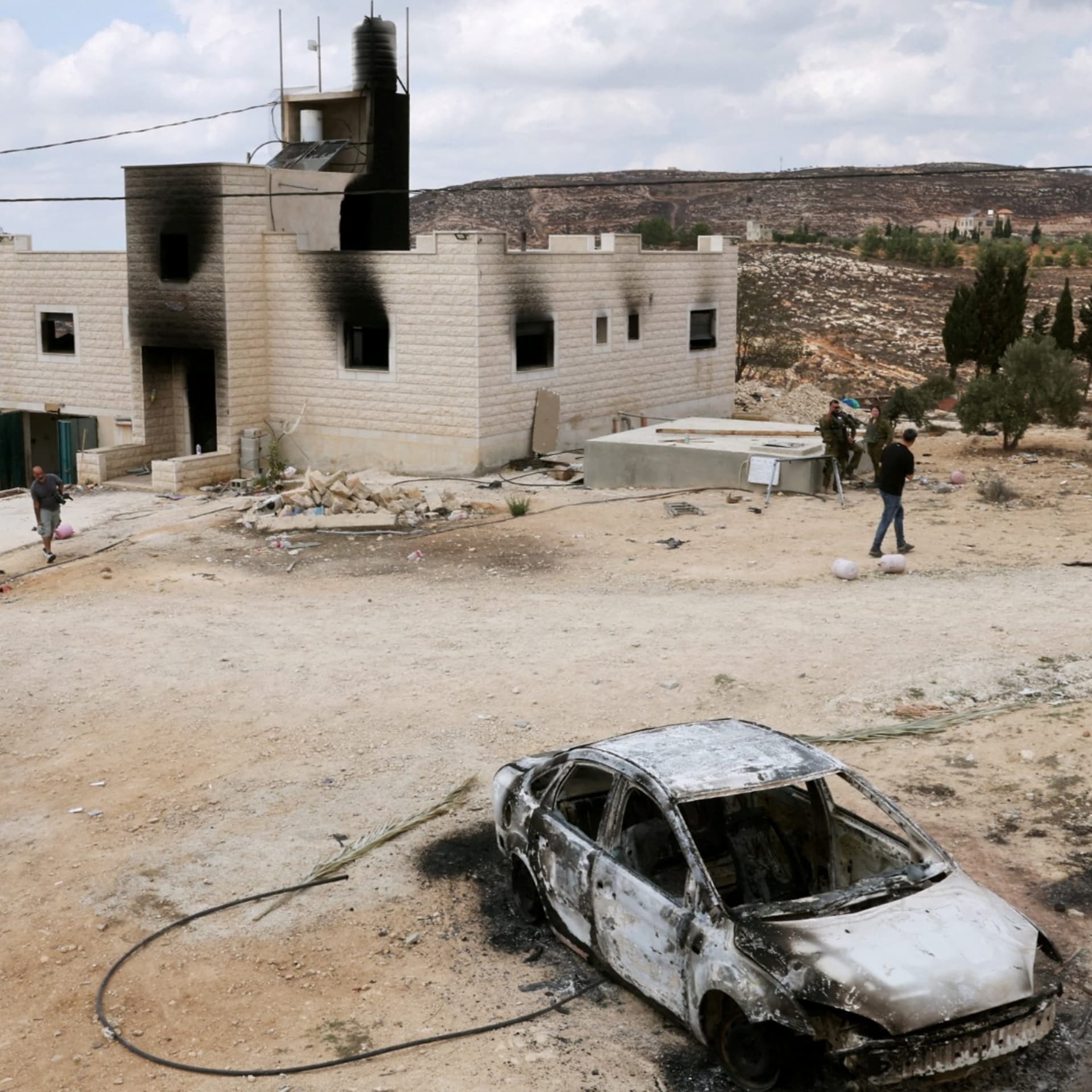
2:35I went shopping with her best friend to get the ring, and it was stashed in the corner of my desk drawer in my music studio. When the house went up, I was really scared about being back to square one on the proposal. I just thought that, like, if I'm super lucky, I'll be able to find a literal diamond in the rough. Stephanie, can you tell me what it was like to return to the house, or rather the remains of the house that day? It's just completely leveled, and I think both of us basically instantly were in tears. And it was pretty unreal, even though we're looking at it, just to see everything you own, everything you've gathered.
3:16I had stuff since childhood that wasn't there. just gone was an unreal experience. We had kitchen colanders from Target, like not even real sifters. We had just kitchen colanders. And we had all the PPE that the National Guard was giving out, these checkpoints in our house. And I went straight to the spot where my desk was. I'm digging through and you find it, you see like a ring hanging out from something. You pull it out and it's a washer. And it was just all of these like false alarms and weeds to dig through. But just really just one time you just pull in the ring and on the end there's a diamond.
3:54And I mean, it's all black except for the diamond. I was just in disbelief and I was already on my knees and I heard myself say, hey, showing her, will you marry me? And I also remember being like, ah, dude, hey. I had a big plan for this originally. Like you get one chance. I had a whole thought of how I was going to say this and hey was not what I had imagined presenting the ring with. But that's what you did. Came from the heart. It did. Absolutely. I just knew that I couldn't wait. So I am glad that it was automatic. Yeah. Well, I did hear him gasp first. And then hey, you know, we're both kind of in the mess of our home.
4:45And we kind of immediately hug and I obviously say yes. My tears under my goggles and glasses. It was a special, it was a really special moment. Perhaps not quite the proposal you were planning, Brian, but a very, very special one nonetheless. It was, in addition to being wonderful just because we're engaged now, that day could have been of digging through our house could have just been so morose it really changed the mood of the whole day and just weeks after because it had just been this numb feeling for a couple weeks at that point and it really just changed everything i remember saying uh at least we got engaged in this house at least we got engaged in this house yeah we did we were inside the house that's a lovely way of thinking about it and and how are things now you've said that your landlord is rebuilding your house but how is how are you guys first of all and how is your community community is spirited uh the community is trying is trying real hard which is one of the things that we love about them um you know the the businesses that have survived uh they've become places for the larger charities to have distribution points they've been making food themselves and giving it away which is just just insane and just becoming venues for community meetings and whatnot steph and i are living with my parents and sierra madre we're very close super fortunate we see the same mountains in the background yeah we're super for i mean of all things we really are fortunate to feel very grateful for a lot of things i would say it's been super nice to see so much kindness in today's you know current climate it's really hard to see good in people and kindness and helping others and we've seen a lot of that which is really encouraging when the time comes people people do want to do good yeah which is a great a great feeling congratulations to brian and stephanie we've been hearing recently about great advice people have had from their grandparents.
6:58But in the African island nation of Madagascar, a group of grandmas are also helping to bring electricity to their families and villages. They're being trained to install solar panels in remote areas, and grandmothers were chosen for this as they were thought to be the most likely to return and then stay in their villages after learning these skills. The scheme hopes to train more than 700 by 2030, bringing electricity to around 630 ,000 homes. Sira Thierry has been to meet some of those who benefited.
7:36The teacher is holding up different objects, a screwdriver, cables, lamps, and the students repeat after her to name them. This is a classroom full of grandmothers who are learning how to install lamps and solar panels. Most of the women never went to school or know how to read or write, but soon they will bring electricity to their villages.
8:03These classes are run by the World Wildlife Fund and an international NGO called Barefoot College, which trains communities worldwide to be self-sufficient. Nearly a hundred women have been trained here to install and fix solar panels, but they also learn about women's and children's rights, micro-entrepreneurship and health. Before the training, I didn't have a real job, but now I know how to spell my name. I learned how to read or write other words as well. That's really changed my life. When I came back from the training center, the other women admired me and have become an inspiration for them.
8:45At 43, mom has four children and two grandchildren. I visit her at home in Kivalu while she's peeling vegetables for dinner. The fishing village can only be reached with small wooden boats and only in the morning when the water between the mangroves is high enough to traverse it. Like most villages in Madagascar, it's very far off from the electricity grid. After finishing her training at the college, Mum has come back here to bring power to her community.
9:18So Mum is now installing a small solar panel on the top of a wooden hut. She can't climb up there herself, so she's instructing all the boys and men around her, and she knows exactly what she's doing.
9:35Before the WWF and the Barefoot College started training grandmothers in this village, people used petrol lamps, candles and torches to have at least a little bit of light after the sun sets. One family would easily burn through 30 batteries a month. That's expensive and creates a lot of waste. But that wasn't the only harm to the environment.
10:00People are now cutting fewer trees because we get our light from solar panels. Before, we often made fires to have enough light to prepare fish for dinner. The sun is shining all year round, even during the rainy season, so using solar panels is really good for us.
10:20Mom's neighbor, Nivo, a teacher, received a solar panel in May. It can only charge phones and small electronic devices. Yet for this family, having a reliable power source has been life-changing, Nivu tells me as she's preparing dinner for her family. My daughter goes to school and now she has enough light to study after class. And we can now eat without worrying about insects in our food or things like that. It makes my work easier too. I can prepare classes in the evenings. has really changed a lot for us. That report from Sierra Thierry and you can hear more about renewable energy projects on People Fixing the World wherever you get your BBC podcasts.
11:06Now, we all know how upsetting it can be for children to lose a much-loved soft toy. So when a cuddly rabbit got left behind at Pittsburgh International Airport, staff there were determined to reunite it with its young owner. Rather than simply adding it to the lost property pile, they made Bunny a social media star, documenting adventures from exploring baggage claim to taking escalator rides. Word soon spread and reached the relatives of six-year-old Waylon, who dropped Bunny on the way home from Florida. Rachel Carlson from the airport's social media team talked to my colleague Tony Livesey.
11:42It's crazy because we have over 10 ,000 items that are lost yearly and only 30 % that actually end up making it back to the owner. And so when my customer service team reached out to me and said, we should really put this on social and Bunny should go on some adventures, I was like, yeah, let's do this. So in my mind, I'm like, how can we do this in the most eye-catching, creative way possible? so bunny lived his best life his or her best life went out um on the baggage claim where they were found uh we went into our martini bar bunny was denied the martini i will say yes underage underage and then went around an airplane and just had a ton of fun all around the airport and then i posted it on social media and it was just incredible to see our community really rally around it.
12:41Comment after comment was, I am so invested in the story. I need to find, we need to find this owner. I kept seeing it on the news. I saw it being shared by even parent Facebook groups that I'm a part of. Like it was just a really special thing to be able to be a part of. So what clues did you have? You knew that the owner lived in the Pittsburgh area because they'd landed there from holiday. I had nothing. Oh, I see. Yeah, my customer service rep said, this bunny looks so loved. We really need to find its owner if we can. But I had no clue if they lived in the Pittsburgh area, which they ended up living about an hour and a half outside of the Pittsburgh area.
13:20The great grandparents who called and was like, do you have this bunny? We had, they had relatives that were commenting on the social feed and she left her phone there too and was like, I have this phone. Do you have this bunny? You know, her son-in-law was seeing someone that was commenting on it. So it was really, it was a magical affair. So, but has Bunny been, presumably, been reunited with Waylon? Yes. Yeah, so her great-grandmother came and picked up the bunny and she was just so emotional in terms of, she never thought that we would be able to reunite her with this bunny again. And she wasn't even sure if it was left in Orlando.
14:05She had no idea that it had been dropped in the baggage claim area. And, you know, I was showing her all the comments about how invested people were. And she got really emotional in terms of just how much people gravitated to this positive story. And we're just wanted it back in little Waylon's arms. Yeah. So Bunny effectively is retired now then, Rachel. Bunny won't be doing as much as he she was at the airport then. Quiet life. Retired for now Happy home with the little owner But I mean who knows what adventures Will have people go on Or have stuffies go on again I mean I as a parent Would be horrified if We left a stuffie at the airport Has Bunny been in touch since?
14:49Bunny has sent photos Yes of little Wylan With the bunny Yes we are all very invested in the story Still but really happy that the bunny was reunited with her owner. Rachel Carlson on the adventures of Bunny the Cuddly Rabbit.
15:08On the way in the happy pod, how going for a walk can improve your mental health. There are so many studies to show going on like a 20 to 30 minute walk, the difference it has on mental health but also your physical health. When you're walking you feel more inclined to talk about stuff.
15:31If journalism is the first draft of history, what happens if that draft is flawed? In 1999, four Russian apartment buildings were bombed, hundreds killed. But even now, we still don't know for sure who did it. It's a mystery that sparked chilling theories. I'm Helena Merriman, and in a new BBC series, I'm talking to the reporters who first covered this story. What did they miss the first time? The History Bureau. Putin and the apartment bombs. Listen on BBC.com or wherever you get your podcasts.
16:10Craig Wood was just 18 when he lost both of his lower legs and his left hand in a roadside bomb while serving with the British Army in Afghanistan. 16 years later, he's hoping to become the first triple amputee to sail solo, non-stop, across the Pacific Ocean from Mexico to Japan. Before setting sail, Craig talked to my colleague Shavnam Yunus-Jule and told her why he decided to take on this challenge. I want to try and change people's perception on what people with disability are capable of achieving. And when people look at me, they might not think that I could sail across an ocean, never mind on my own.
16:48So I'm hoping to dispel some of them's thoughts. Yeah, so why sailing then in particular? Was it something that's already been part of your life then? Yes, sailing was a really logical choice for me because I actually live on the boat that I'm sailing across the ocean. So I've been sailing around the world for the past eight years now. It just made so much sense. For example, we just did a 600 nautical mile passage from Costa Rica to Mexico. As the sun was setting, my son and daughter would sit next to me. We'd watch the sunset. There's dolphins in the background. It really is so magical. up we got to the marina and the guys in the marina were asking what planet it was amongst themselves and my son who's three oh it's venus because we've been looking at stars for the last six days and pointing out each one yeah so it is like learning it parrot fashion but he's learning it why is it that you decided to spend so much time on a boat then basically living your life out that what does it give you for me specifically it's a it's a leveling platform uh my skill set may equal able-bodied person's skill set so that completely levels the playing field for me it means I don't have to walk very far to do any of that sort of stuff I'm a water baby anyway so it all really just suits my lifestyle I like minimalist things and I don't feel like I need a 10 bedroom house to feel like I'm winning.
18:16I've got a four room catamaran and purely content. For this challenge, you're going to be on your own for quite a long time. So how are you preparing for that? I haven't been basically, because I don't think you really can. The only way you can prepare for it is do a little bit longer each time you're away. But I'm quite like, well, I may as well just stick it out and do the passage and then take it as it comes. I'm quite fortunate enough to be able to, when I feel like I'm missing my parents, for example, I'll just call them on video and that eases all that feeling. However, when it's with my children, it is very much, you know, daddy, where are you?
18:53I want to hug you. You know, when they're sad, it really pulls on the heartstrings. I'm not looking forward to saying goodbye to them off of the dock one bit, because yeah, I'll probably be a blubbering mess. But yeah, I'm very much looking forward to seeing them when I arrive 70 days later. But it's going to be difficult. Yeah. What do you think will be your biggest challenge then? Will it be missing the family or is there anything else that you think that is really going to test you out there? My biggest fear really is the unknowns. I think health and safety is probably the biggest thing. And then it's probably weather.
19:28If I hit some bad weather that's not being forecast. and then yeah then it'll be the pure emotional missing my family and um but that that just gives me more incentive to get there quicker and and doing one piece you know and do things correctly to be able to get there and see my family so I think that's more of a positive driver just how much of an achievement will you feel when you've completed it I think that's um specific part would be more feeding my ego and it will be a great sense of achievement don't get me wrong but I'm not aiming for that I think I'd feel a lot better and a lot more like I've I've achieved what I set out for if someone said I didn't know if I could sail until I saw you and then I tried sailing or I didn't know I could do something until I saw you and you really helped I think that's where I'd be like oh wow I really I really did what I wanted to but I mean hopefully I am inspiring and yeah it's really important if I can inspire people then I want to be able to do that effectively and inspire as many as possible yeah for sure it's quite important I think.
20:35Craig Wood talking to the BBC's Sports Hour programme which you can find wherever you get your podcasts. We heard earlier about Brian and Stephanie getting engaged in the unusual surroundings of their burnt out home. Our next story also involves a couple who found love in circumstances not normally associated with romance, a car accident. Our Asia-Pacific editor Celia Hatton has been telling Rebecca Wood the unexpected story. So we have to go back to December 2023 when a man whose name is Mr. Lee, he was driving through a city in China's central Hunan province and he suddenly crashed into a young woman who was riding an e-bike.
21:23And you can see photos that he took from the scene. She's shown on her back, lying in the road, and she's talking on a mobile phone. And she looks like she's in great pain. But what he says from that incident is that it struck him immediately how calm she was and how she didn't blame him. She wasn't yelling at him. In fact, she told him not to worry, even though it was clear she was in pain. She went to the hospital right after, and it was discovered that she'd broken her collarbone. And she was actually in hospital for quite a few weeks after that recovering. And so how did, from this accident, how did love then blossom between the pair?
22:07The man says that he committed to paying for the woman's medical care. But beyond that, he actually started visiting the hospital, not just once, but every single day for weeks. He would visit and he would bring her breakfast. And the couple started spending a lot of time together. And actually, after 10 days or so, the woman said to have professed her interest in this man, telling him that she liked him in a romantic way. But he has told Chinese media that he felt a little uncomfortable because he was actually 13 years older than her. She was around 23. He was around 36. So he just wasn't too sure.
22:51But shortly after getting out of hospital, she then asked if they could go and see a movie together. And he says that he thought that was the least he could do because he'd knocked her over. And he admits that he was starting to feel warm feelings for her as well at this point. And this wouldn't be the happy pod without a happy ending. So what happened next? Well, basically, the two became inseparable. And they admitted that they just really enjoyed their time together long after her broken bones had healed. And so the woman then found out that She was pregnant last fall and they just got married last month.
23:31And they say that they're really, really happy together. And the man admits that he was actually in debt when they first met, when he crashed his car into her. And her parents had offered him a dowry of around$26 ,000 when they were getting married. But he refused it because he just wanted to marry her. But they insisted to help him set up his business and to help pay off his debt. So financially, they're a little bit more secure. But they really talk about the fact that they really do love each other. And not surprisingly, this story has caught a lot of attention on social media. There have been quite a few well-wishers online as well, haven't there?
24:10Yeah, lots of comments on Chinese social media talking about how this is a collision that sparked love. some people joking that this man will pay eternally for this car accident that he got involved in some people even joking the fact that if you're single you should go out if you want to find love leave your house even if it means getting into a car accident. Celia Hatton reporting. Now to a group that's tackling loneliness and mental health issues all through the simple idea of going for a walk. It was set up by a Scottish couple in Glasgow to help people make friends and benefit from the restorative powers of getting out into nature.
24:52One of those who joined the group, Sam, explained what it meant to him. I think as I've gotten older and I've finished university, socialising is a lot more difficult. I think you have to take active steps to get involved and meet people and that can be really nerve-wracking. So I think loneliness can be almost like an epidemic as a result of just how much effort you have to take and when you're working as well you have so much responsibilities you have so much things to think of that it's hard to make time for it. I think making that first step to come out and connect with others is incredibly important to me it's helping me beat people that I otherwise wouldn't.
25:28Both coming and be able to socialise with new people but also knowing in your head that you've got something to look forward to at the end of the week it's critical to getting you through those hard days during the week. It was set up by Jack Glass and Billy Ann and Mandeville, who got the idea after they were left feeling isolated by the Covid pandemic. The social kind of anxiety that was caused by Covid, a lot of people are still recovering from that and maybe are a bit nervous to talk about it. Maybe you hit 30 and you're like, I don't have as many friends. Look on social media and obviously social media is real tinted glasses.
26:02And so you're seeing the best parts of people's lives and it makes you feel like, oh I'm not where I want to be. We really want to try and make sure we're removing the stigma and talk about being lonely and making it not feel embarrassed because I've felt it myself where I've felt embarrassed to say I don't have a friend that I could just message to say do you want to go for a coffee? And that is perfectly normal. So we started Walking is Mental really to get outside. It's something easily accessible for all. we make sure that we are near transport links so really find people who might feel isolated or they might have low incomes and it's free and that's really the main thing is that anyone and everyone can come and we do different kind of levels and ability level walks too and we get outside we get the fresh air and I think so many of us are stuck inside and it gets us out and talking to people and confidence building ultimately you know there are so many studies to show just that going on a 20 to 30 minute walk, the difference it has on your mental health, but also your physical health, and even stuff like, when you come home from a walk like this, you sleep better.
27:14When you're walking, because your endorphins are going to go and you feel more inclined to talk about stuff, it feels a bit less intense than sitting in a room. And sometimes if you're walking forward and you're talking to someone beside you, it feels a bit easier. It's absolutely made a change in my mental health I think I found my purpose and I think really it's finding that routine as well, helping others and really seeing other people and how positively they're impacted. It makes me keep wanting to do this. When me and Billy were starting it, our thing was like, if even one person comes to a group and they go away feeling great, that's one person that we've helped.
Read the full transcript
27:53And it's really, we get messages from people that have come to the group saying, this is exactly what I needed. Now, as the seasons change, for many of us, getting out into nature can bring extra happiness at this time of year with warmer weather and blossoming flowers of spring or a welcome autumn chill in the air after a long, hot summer. We'd like to hear what you love about this time of year. Hello, I'm Jean Lanham and I live up in Ayrshire in Scotland. I'm a garden designer. My studio is a converted outhouse in the garden. My desk sits up against a big picture window, looking onto the garden, which includes a very old, gnarled pear tree, and the bird box, which is often home to a family of blue tits.
28:37I never know if they'll return. The bird box is attached to the top of a post in a corner of the pergola, which is next to a weeping birch, and has a climbing rose and a honeysuckle clambering up it. At this time of year, after brushing my Labrador, I attach her fur to a branch on the pear tree with a clothes peg for premium nesting material for the birds. I'm not sure whether this is an added attraction to this particular nesting box, but I like to think so. As I worked at my desk yesterday, I was delighted to see a pair of blue tits flitting through the branches of the birch tree, landing on the tangled old climbing rose, and as one sat on a branch of the pear tree to look out, the other flew to the bird box and started the spring cleaning, ready for nesting this year.
29:25They're back again. Such an absolute joy. and if the changing seasons are bringing you joy in your garden or when you're out and about we'd love to hear about it drop us a voice note the email address is globalpodcast at bbc.co.uk
29:46and that's all from the happy pod for this week this edition was mixed by mark pickett the producers were holly gibbs and rachel bulkley the editor is karen martin i'm andrew peach thanks for listening and until next time goodbye
30:07If journalism is the first draft of history, what happens if that draft is flawed? In 1999, four Russian apartment buildings were bombed, hundreds killed. But even now, we still don't know for sure who did it. It's a mystery that sparked chilling theories. I'm Helena Merriman, and in a new BBC series, I'm talking to the reporters who first covered this story. What did they miss the first time? The History Bureau, Putin and the apartment bombs. Listen on bbc.com or wherever you get your podcasts.
From the publisher
We meet a couple who got engaged amid the ashes of the LA fires. The ring survived and was found in the ruins of their home. Also: grandmas bringing power to remote villages; and how going viral got a lost soft toy home.