
In short
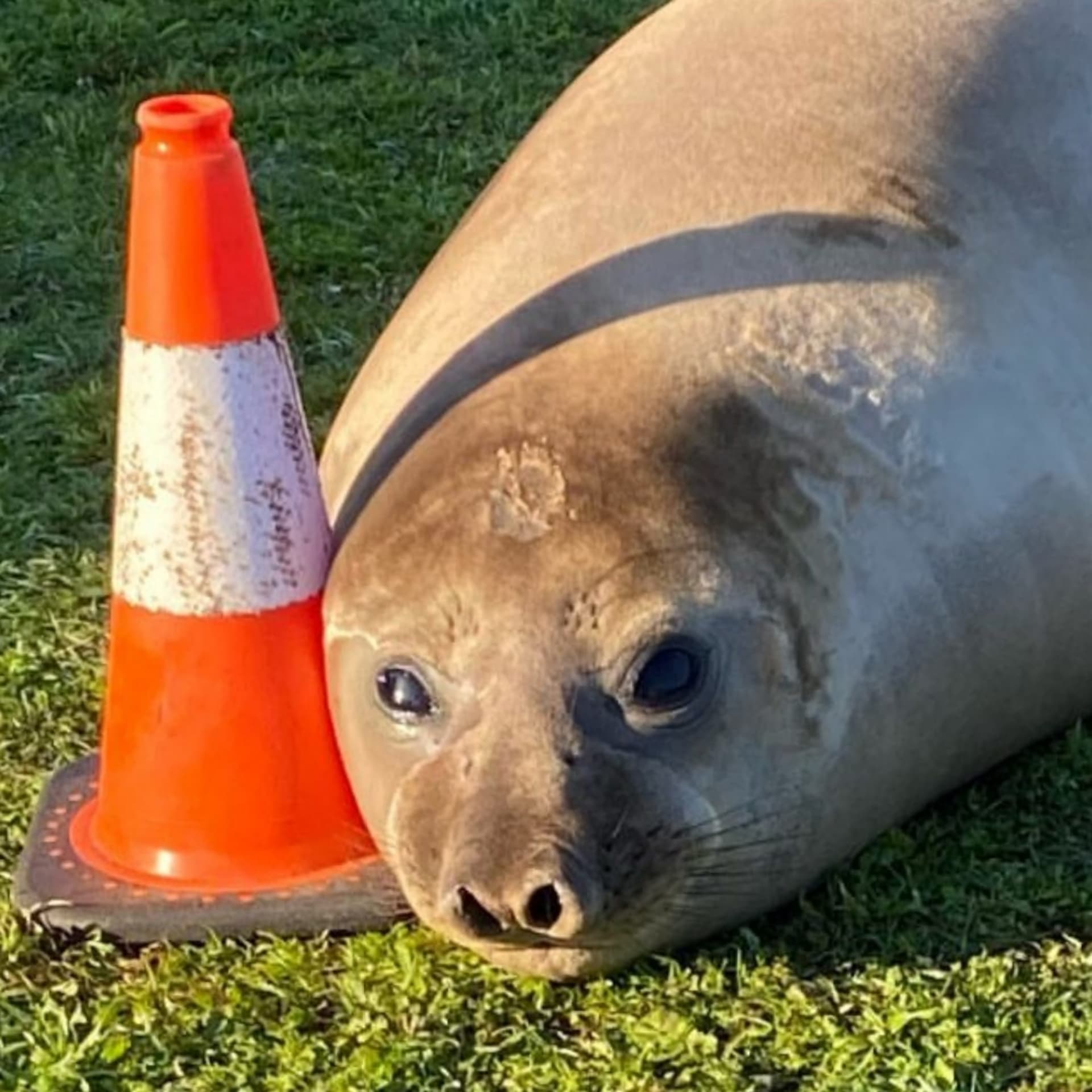
This Happy Pod episode mixes feel-good human-interest stories with science and policy. It opens with “Neil the Seal,” an adolescent elephant seal in Tasmania who repeatedly blocks roads and attacks street infrastructure (bollards, street signs, traffic cones), becoming a global viral tourism icon; reporter Jarno Gibson covers him, and seal expert Dr Jane Younger explains the behavior as normal adolescent wrestling redirected onto objects, while warning viewers not to approach a wild 1,000kg animal.
Key claims
elephant seals are declining (vulnerable) due to climate change and bird flu. Next: an Italian woman accidentally discarded a lottery ticket marked “non-payable,” then it was recovered from a rubbish dump by workers, yielding a $1.1m win. Also: UK scientists created “bio-loon” biodegradable party balloons by avoiding sulphur vulcanisation.
Guests
Jarno Gibson (ABC reporter), Dr Jane Younger (University of Tasmania seal expert), Chantal Hartle (BBC reporter), Majuban Arouzi (BBC reporter), Tim Franks (BBC colleague), Kate McGough (BBC reporter), Steve Drotter (Rosie’s owner).
Notable examples
Afghanistan women’s football team returning after FIFA rule changes; Italian free-diver Giacomo de Mola finding a Roman shipwreck with intact amphorae; Leeds play streets; dog surfer Rippin’ Rosie winning the World Dog Surfing Championships.
Written by AI. May contain mistakes. Listen to the episode to check what was said.
Chapters
Tap a time to open that second in VONeil the Seal: A Tasmanian Celebrity
1:12 to 2:32
Introduction to Neil the Seal and his antics in Tasmania.
“When we found it, there was an explosion of joy.”
Neil's Antics and Local Impact
2:32 to 4:25
Description of Neil's playful behavior and its positive impact on the community.
“We begin on the Australian island of Tasmania, where a giant seal is bringing laughter and joy to millions of people.”
Expert Insights on Neil's Behavior
4:25 to 7:31
Discussion with Dr. Jane Younger about the biology behind Neil's playful behavior.
“Can you tell me a bit about some of the antics that Neil gets up to when he's lying on the street like that and around people's houses?”
A Lottery Ticket Rediscovered
7:31 to 11:41
A story about a woman who accidentally disposed of her winning lottery ticket.
“Jane Younger, a seal expert at the University of Tasmania, about the biology behind the hijinks.”
Innovations in Biodegradable Balloons
11:41 to 13:40
Introduction to a new biodegradable balloon developed to reduce waste.
“From birthdays to weddings, balloons have long been part of life's biggest celebrations.”
Innovations in Biodegradable Balloons
14:00 to 14:21
Introduction to a new biodegradable balloon developed to reduce waste.
The Resilience of Afghanistan's Women Footballers
14:31 to 18:08
Explore the journey of Afghanistan's women footballers who reunite to represent their country.
“In the five years since the Taliban returned to power in the country, the rights of women and girls have been eroded.”
Discovery of an Ancient Roman Shipwreck
18:11 to 21:42
Learn about the significant archaeological discovery of a Roman shipwreck off Sicily.
“an ancient Roman shipwreck complete with its cargo.”
Creating Safe Play Spaces for Children
21:42 to 24:37
Discover how cities in the UK are transforming streets into safe play areas for children.
“But for many families, that's easier said than done.”
Rippin' Rosie: The Surfing Dog
24:39 to 28:01
Meet Rippin' Rosie, a dog who has become a surfing champion and internet sensation.
“The annual World Dog Surfing Championship in California sees pets of all breeds and sizes hitting the waves.”
Transcript
Automatic transcript. May contain errors.0:00This BBC podcast is supported by ads outside the UK.
0:30an award-winning behavioral scientist and author of the best-selling book, How to Change, as she shares true stories from Nobel laureates, authors, athletes, and everyday people about why we do the things we do and how to make better choices to help avoid costly mistakes. Each episode covers the latest research in behavioral science and dives into themes like the power of self-control, shaping your mindset for success, navigating new beginnings, and why starting over can feel so hard. Listen to choiceology at schwab.com slash podcast or wherever you listen.
1:12This is The Happy Pod from the BBC World Service.
1:21I'm Helena Burke and in this edition Sometimes he'll be trying to battle it out with bollards on the street Other times he'll be seen smashing street signs And he really loves chewing on traffic cones The elephant seal that's causing mayhem in Australia And winning the hearts of millions in the process He's naughty, he knocks down stuff And I like doing that too Also, the miraculous recovery of a lost lottery ticket. When we found it, there was an explosion of joy. We all hugged each other. It was truly very moving. How a team of women from Afghanistan returned to international football. I would be proud we made the history by being the first to get our recognition without the approval of the Taliban.
2:09Scientists say they've created the first truly biodegradable balloons. Plus. When I was there, yes, OK, it was a big emotion, but I was not sure that this could be so important, so amazing. How an Italian diver made one of the most important archaeological discoveries in decades.
2:32We begin on the Australian island of Tasmania, where a giant seal is bringing laughter and joy to millions of people.
2:46That's Neil the Seal. He's been visiting Tasmania for the past few years. Once on land, he likes to attack traffic cones, ram through fences and lounge his 1 ,000 kilogram body in the middle of the road, often blocking traffic. He's attracted a significant fan base of people who love to watch his antics. It's pretty exciting. He kind of just looks like a big lump of rock from over here, but he's very cute. He's naughty, he knocks down stuff. And I like doing that too. He's got a bit of a typical Aussie larrikin vibe to him. There's a lot of other stuff going on that's negative. And to have this bit of positivity, especially down here, it's wonderful.
3:25Jarno Gibson, a reporter at the Australian Broadcasting Corporation, has been covering Neil's visits to Tasmania for years. In fact, some might even consider him the ABC's Neil the Seal correspondent. I asked him why Neil keeps returning to the island. It's very unusual for elephant seals to show up in Tasmania. There are no longer any elephant seal colonies here. And the closest colony is over on Macquarie Island. Now that's about 1 ,500 kilometres south on the way to Antarctica. But he ended up being born here in Tasmania. And because seals are pre-programmed to return to the place of their birth, He's been coming back to Tasmania about twice a year to molt and to rest for a few weeks each time.
4:12And when Neil does come here, he has a tendency to find a nice sleeping spot and that's usually at the back of the beach, often on a suburban street right next to houses and cars. Can you tell me a bit about some of the antics that Neil gets up to when he's lying on the street like that and around people's houses? Because there are no other elephant seals here in Tasmania, he instead plays fights with whatever's around him. So sometimes he'll be trying to battle it out with bollards on the street. Other times he'll be seen smashing street signs. He's tried to level up with a telephone box and he really loves chewing on traffic cones.
4:53and many of these antics have been captured on video, they've been shared on social media and that's what's really turned him into a bit of a celebrity and there's this very funny story a few years back when a local resident at a seaside suburb near Hobart, she heard a commotion outside her house, she looked out her window and it was Neil the Seal, he'd galumped up her driveway and he'd knocked over a letterbox and he was blocking her access to her car. I heard a noise outside and I thought that somebody was trying to break into my car. So I looked out the window and then next minute I've got this big seal looking up at me in my bedroom window and I was like, oh, hello.
5:33I think it's going to go down in the books as the best excuse in history of not to go to work. So what's the reaction been to Neil and his antics in Tasmania? People adore Neil here. He's a larger-than-life character. He's been described as a wildlife icon, as a folk hero, as a tourism ambassador for Tasmania. We've even had the Premier and the opposition leader here in the state. They've commented on him at press conferences. And during his most recent visit to our shores, there were literally up to a thousand people a day, possibly more who were coming to see Neil. It's not just limited to Tasmanians though, is it?
6:12He's become a bit of a global sensation. People from around the world are now hearing about Neil. Yeah, there are social media videos of Neil LeSille getting up to mischief that literally have tens of millions of views. When you look at the comments, people say he's the highlight of their day, seeing Neil content, that he's an absolute menace, but they love him. And he's also been featured on international media. While I was down there doing some reporting, 60 Minutes was preparing a feature story. I saw the New York Times covered Neil LeSille, so did CNN, and I assume many more. And of course, because of his celebrity status, it spawned a bit of a market in Neil the Seal merchandise.
6:51So there are Neil the Seal stickers and toys and t-shirts. So he really has become quite the ambassador for Tasmania. Why do you think Neil is so widely loved and his antics have brought people so much joy? Well, I think it's a combination of his cuteness, his rebellious attitude, and also the absurdity of seeing this large animal behaving in the way he does in a suburban setting. And overall, he comes across as a very endearing, lovable character. And I think people are attracted to his carefree nature, in which he basically says it's his way or the highway. Jano Gibson. So why does Neil love to flip a fight with infrastructure so much?
7:35I spoke to Dr. Jane Younger, a seal expert at the University of Tasmania, about the biology behind the hijinks. All of Neil's behaviours that he's exhibiting are just normal things that elephant seals would do with their colony. So he's an adolescent, so he's like a teenage boy. And at this stage, he would be kind of wrestling and bumping chests with other males. And they're sort of practicing, fighting, testing their strength and playing a bit at the same time. And so he has all of that energy and instinct, but he doesn't have any other elephant seals to put that onto. So he, you know, does those behaviours with things like fences or traffic cones or whatever, bollards and things that might be around.
8:17Obviously, he's become a huge hit online. People love his antics, but actually it's really important that if people see him, they don't approach him. Is that right? Absolutely. So, I mean, it's tricky because Because you see a neal or an elephant seal and they're just lying there asleep 90 % of the time. So it feels like it's safe to be close to them. But actually, they're a wild animal. So they're a marine predator. They can be dangerous. He's, you know, a thousand kilos. So we advise everyone to keep a good distance, like give him lots of space. Do you think anything beyond just kind of humour that's good could come out of this?
8:53For example, people being more aware about southern elephant seals or seal conservation? Elephant seals were actually changed to vulnerable on the red list this year. They have been declining now over the past 10 years or so. We think that it's probably related to climate change and it's also the bird flu outbreak over the last couple of years has caused a lot of deaths in elephant seals. They've been hit really hard by that virus. So I think Neil is a great ambassador for his species because everyone can see him and engage with his story and learn a bit more about elephant seals, which is great.
9:27Dr Jane Younger. To win a million dollar lottery prize is already an exceptional bit of luck. To accidentally throw it away and then find it in a huge rubbish dump is good fortune on another scale. That's exactly what happened to one Italian woman, who has a lot to thank the waste collection workers for. The Happy Pod's Chantal Hartle has the story. Is this the luckiest woman in Italy? It certainly didn't seem that way at first. The woman, who's chosen to remain anonymous, took her ticket to a newsagent to check if she had won. After entering her numbers on a machine, a message popped up that read, non-payable.
10:05She thought this meant that there were no winnings and tossed the ticket in the bin there and then. It actually meant the prize was too large to redeem at the small shop. But then a relative pointed out the numbers that she always played had been drawn. Panicked, the woman returned to the newsagent only to find the waste had already been collected. Louisa LaRusso is the shop manager. It was truly horrible. I saw that the bag was missing from our rubbish bin, so the customer and her relatives went straight to the waste sorting facility. They were really worried. When she arrived at the waste site, the woman had another lucky break.
10:46It was a Sunday, so the bin lorry was found before its contents were dumped in a landfill and the workers agreed to help look for it. For two days they combed through mounds of rubbish which included numerous damaged lottery tickets. Eventually they found the winning slip, still in one piece, in a torn carrier bag. Waste collection worker Mimo Moretti said it was an incredible moment of celebration. When we found it, there was an explosion of joy. We all hugged each other. It was truly very moving. The lucky ticket holder can now claim her$1.1 million prize, minus the cost of the bin search, which she'd already agreed to pay.
11:29Inspired by the win, the team at the Waste Collection site bought a scratch card of their own as a memento. To their surprise, they won$58. Chantal Hartle reporting. From birthdays to weddings, balloons have long been part of life's biggest celebrations. But they take years to decompose. often releasing toxic chemicals and killing marine animals who eat the fragments by mistake. Now, scientists here in the UK say they've developed the world's first truly biodegradable party balloon. While other balloons on the market claim to be eco-friendly, they actually still take years to break down. The invention of the so-called bio-loon grew out of the concerns of party planner Charlotte Mellier.
12:14I was becoming incredibly frustrated with the large amount of balloon waste, and there was one day, one pivotal moment for me back in 2020. I was stood in a hotel ballroom surrounded by thousands and thousands of pot balloons and that was a straw that broke the camel's back. I thought I've had enough of this and that led me down a rabbit hole of research into latex, latex balloons and ultimately how they are not currently biodegradable. Charlotte then decided to fund PhD student Juliana Cumming to work on a solution at Imperial College London. Traditional balloons are made from natural latex, which is biodegradable, but they're put through a process called sulphur vulcanisation, and it's this process which prevents them from biodegrading.
13:00So instead of inventing a new material, what we decided to do was make a polymer blend of a modified natural latex and a biodegradable polymer and remove the sulphur vulcanisation process. So we showed that our material could reach the same bubble height as a natural latex balloon. It just required half the pressure in order to do so. So it looks the same. It feels the same. It functions the same as a balloon. It's just made in a different way. It's designed to fit into the existing infrastructure. So that sort of minimises its adoption into the industry. We've had a lot of interest from manufacturers.
13:36So we hope that it's going to take off fairly quickly. Juliana Cumming.
13:47Coming up in this podcast... She surfs on her own where I push her into waves and she rides them on her own. So we do it all and she's got so much experience and she's such a great swimmer. We hear from the winners of the World Surfing Championships for dogs.
14:12and build positive money habits. It's an account co-owned by you and your teen, so you can monitor and engage with the account while your teen learns how to invest and manage money. Learn more at schwab.com.
14:27You're listening to The Happy Pod. Now to a story of incredible resilience by a group of athletes from Afghanistan. In the five years since the Taliban returned to power in the country, the rights of women and girls have been eroded. But against the odds, Afghanistan's women footballers, who are now dotted across the globe, have found their way back together. They're now playing as a national team after FIFA changed its rules, allowing them to officially represent Afghanistan. The BBC's Majuban Arouzi followed their journey as they travelled to New Zealand for their first match since that rule change.
15:05A song for Afghanistan, sang by players who have travelled from across the world for two friendlies in Oakland against the Cook Islands. We want Afghanistan to be free and we want Afghan girls and women to be free, to be able to choose who they want to be. We want to prove that we are still here, we are still fighting for the rights that you took away from us. Forced into exile after the Taliban retook control of Afghanistan five years ago, Najma and her teammates were scattered around the world. Now they are back together, since FIFA allowed Afghanistan's team in exile back into international football.
15:52Good. Chill up just a bit. You're defying, OK? Good. as the players are presented with their matchday kid Najma reflects on the last five years we are getting older and older and we haven't got a new new generation that is very concerning for the new generation we want to be there wrong with us and we want the younger girls to look up at us and they were like they did it we want to do it as well we want to keep their dreams alive Good, nice and strong. I was bullied throughout high school and football gave me the confidence to be who I am today and to be able to speak loud. Morsal, who has settled in Australia, has painted her nails with various pictures.
16:35She tells us what they mean. I wanted to use this platform to advocate for the women of her grandson who haven't been allowed to study for the past five years. Obviously the book, the rose who is a representation of women, and the flags, and the date, August 15th, and the date that Afghanistan fell. Having won the chance to represent Afghanistan, for many of the players, football has become more than a game. A lot of my friends and family is back home, and I'm missing them every single day. and there is nothing I can do except playing football and using the football as the biggest platform with the media to be their voices.
17:19It is finally match day. The aim is to rebuild Afghanistan's team in exile and to compete for a place at the 2028 Olympic Games. Afghanistan lost both matches to the Cook Islands. Girls, I'm so proud of our young players who played today. After exile, simply wearing their country's colours again is a victory. I will be proud of the team and proud of myself that I was part of the journey and we made the history by being the first football team to get our recognition without the approval of the Taliban. We don't know when we're going to see each other again, but it's just always amazing to have the second family.
18:04One, two, three, Afghanistan! Medjuba Nerusi with that report. This week, there was a truly remarkable discovery just off the coast of Sicily, an ancient Roman shipwreck complete with its cargo. Italy's culture minister has described it as one of the most important underwater archaeological discoveries of recent years. And it was found purely by chance by a man called Giacomo de Mola, who was free diving without an oxygen tank in training for a spearfishing competition. He spoke to my colleague Tim Franks.
19:05area. And I decided to go down and check it out. Presumably, you didn't have very long down there. So how long was it before you realised, oh, my goodness, this is not a rock? Yes, of course, of course. Usually one dive in free diving for me in those depth is around two minutes 15, two minutes 30, maximum 240. And just to go down, it takes you around 50, 60 seconds. So, I mean, you don't have a lot of time down in the bottom. The visibility was not very good. And I see something that in the beginning, I was thinking was a big rock. But when I was more close, and I reached the bottom, and I realised that it was amphoras.
19:50Amphoras. Yeah, absolutely. I mean, and I've seen the pictures, it's a very distinctive shape, the jars that they used back in Roman era with the two handles and the narrow neck and the oval belly of the jar. And you could see what dozens of them. I was thinking around 300. But after when I called the Carabinieri and another archaeologist team and they measured the wreck that they say is 21 metres long, six metres wide, and around two, three metres of height. So they calculated that the amphoras could be like 800, 900, something like this. It's amazing, isn't it, Giacomo, that you can find a wreck like this with its cargo, a cargo-like amphora, still intact.
20:47Yeah, the thing exceptional is that they are intact. It's like the time has stopped. Most of the amphoras was down of the sand, of the mud. But last winter, they had very bad weather in Sicily. I think that could be with very big waves and currents. Part of the sand, of the mud, went away from the wreck and I was able to find it. It will be a moment that will stay with you for a very, very long time. For sure. I start now to realise also the dimension of the discoverer because when I was there, yes, okay, it was a big emotion. I mean, okay, but I was not sure that this could be so important, so amazing that all the journalists called me and, you know, it's strange also.
21:39Freediver Giacomo de Mola. Children are often told to spend less time on screens and more time outdoors. But for many families, that's easier said than done. A recent survey here in the UK found that nearly half of parents feel their child doesn't have a safe place to play outside. To combat this, cities across the country are now embracing play streets schemes, giving residents more power to close off roads to traffic and create temporary playgrounds right outside their doors. The BBC's Kate McGough went to one in Leeds to see the difference it's making. there's two ends of the street blocked off with wheelie bins and a sign saying road closed and we've got scooters we've got chalk basically kids just having a nice time playing in front of their house which normally they wouldn't be able to do beth tell us who you're here with today i'm here with my two daughters my son my brother and my two nephews what do you think of the idea of the play street?
22:43It's absolutely amazing. It is a safe environment. The roads are blocked off and there's no cars that can come speeding up and the children, they love it. Aidan, what do you think of the play street? It's very fun. Everyone can ride like scooters and play with chalk and the boys over there can play football. Tell me what your name is. Mohamed. And how old are you? Ten. And what would you say to someone about doing a player street like this? Good idea, because lots of children will come and their children will be excited and they'll have something to do in the summer holidays.
23:28Around 100 councils across the UK currently have player street policies in place, with over 1 ,600 streets taking up the chance to temporarily close to traffic. But Wales and Scotland have gone further and made it a legal requirement for councils to ensure there are enough opportunities for children to play across their local area. Campaigners like Play England want to see the same thing happen in England. In Leeds, the council is already factoring a child's access to play into many of its decisions. If you do this really hyper-local research... Jen Rutherford is Play Strategy Officer for the city.
24:06Play is everyone's business across the city because it feeds into how you design your streets and spaces. So we're working very closely with planning and leads about how we can make it so that developers, when we're building new spaces in our city, are focusing on children and young people and are designing through that lens of play as well. It's like, are we interested in happier, healthier childhoods? If we are, we need to prioritise play and we need to invest in play as well. What the humble way! Kate McGough. We end with the story of a dog that's become a pro surfer and an internet sensation.
24:44The annual World Dog Surfing Championship in California sees pets of all breeds and sizes hitting the waves. And the top prize for this year went to Rippin Rosie the Labrador, who carved her way to victory with a series of impressive rides. My colleagues Sean Farrington and Laura McGee spoke to her proud owner, Steve Drotter. I'm a lifetime surfer. I've been surfing for 40 years and I've always had the dream of surfing with my Labrador. Well, Rosie, I had my kids paddle around her on their standup paddle boards on a lake when she was seven months old. And she sat there and watched and said, okay, well, that's where I'm supposed to be with the family.
25:21She got on the board. We paddled on a lake for about three weeks and came back and caught little small waves and gradually got so we could surf all kinds of different waves. And we surfed together, oh my gosh, four or five times a week. So did you know about the World Dog Surfing Championships before you saw Rosie's Talents? I did. So once we started surfing, we're like, oh my gosh, we knew people that had been in these contests. So it's like, oh, we're surfing. We might as well do the contest too. So when she was one, we did our first contest. And, you know, she did well. We came home with some medals and we were quite proud of her.
Read the full transcript
25:57And just over the years, she's just gotten better and better and better. Can I ask, do you get nervous watching her out there doing her thing? Because I'm reading here that she was on waves one to two feet in height. Do you get a little bit concerned about how she's going to handle it out there? Well, I mean, she has so much experience. We surf together on a stand-up paddleboard. We surf together on a regular surfboard where I lie down and like traditional surfing. And then she surfs on her own where I push her into waves and she rides them on her own. And she's such a great swimmer. She's got a life jacket.
26:28So she's totally safe. And I'm not going to put her in a situation where she's in harm's way. I've got a lot of experience. So I know how to keep both of us safe. So in the competition, you're not on with her at all. In this competition, she surfed by herself and I pushed her into waves. And then we surfed together on a stand-up paddleboard. And then we surfed together on a regular prone board where we lie down. And on those times, she's on the end of the board and I'm on the back of the board. And when she's on her own, she's right in the middle, moving, positioning herself, however she works best on the wave.
27:00And what is it about Rosie, do you think, now that you've known her for so many years? Why, if people are thinking, I wonder if my Labrador fancy a bit of that. What works? What is it about her? Well, I think that the first thing you have to do is you've really got to develop a relationship with your dog. You know, where you train with your dog and develop that trust. Rosie and I did that going over obstacles, doing basic obedience training, and then never give your dog the bad experiences. Start out little, small waves. Don't push them too far too fast. And then they'll love what they're doing.
27:34Steve Drotter and Rippin' Rosie.
27:41And that's all from the Happy Pod for now. If you have a story you think we should cover, we'd love to hear from you. As ever, the address is globalpodcast at bbc.co.uk. This edition was mixed and produced by Rachel Bolkley. The editor is Karen Martin. And I'm Helena Burke. Until next time, goodbye.
From the publisher
Neil the Seal has captured the hearts - and laughs - of people across the world with his mischievous antics. The elephant seal keeps returning to the Australian island of Tasmania to chew traffic cones, attack street signs, and block traffic with his 1,000 kg body. His hijinks have made him a local icon and an internet celebrity. We find out why Neil keeps venturing to Tasmania's suburban streets to cause a ruckus.
Also: How a group of Afghan women defied the odds to return to international football. Despite opposition from the Taliban, the players -- now scattered across the globe -- reunited to form Afghanistan's new national team.
The woman who accidentally threw away a million dollar lottery ticket - and the incredible way she found it again.
Scientists say they've created the first ever truly biodegradeable party balloons. They say existing options kill tens of thousands of marine animals a year.
Plus: how an ordinary man in Italy made one of the most important archaeological discoveries in decades; and a world surfing championship - for dogs.
(Photo: Neil the Seal in Tasmania, Australia. Credit: @neiltheseal22)
Presenter: Helena Burke. Music composed by Iona Hampson.