
In short
The Happy Pod (BBC World Service) focuses on cancer breakthroughs and other “hope” stories. Topic: A DNA test (ProCigna/“Prosignor”) after breast-cancer surgery identifies patients unlikely to benefit from chemotherapy; in a study of 4,000+ women over 40 across six countries, about two-thirds in a low-risk range could safely skip chemo without worse outcomes. Key claim: doctors can “back off” treatment by predicting no benefit, avoiding unpleasant therapy.
Notable examples
Aileen Pritchard learns she’s in the low range and feels “weight lifting off your shoulders.” Another breakthrough: a daily pill for advanced pancreatic cancer (Daraxan Rakib) targeting a mutated gene; trial of ~500 patients shows median overall survival 13.2 months (about double chemotherapy) with fewer side effects. Guests/backgrounds: Professor David Miles (oncology researcher on the breast-cancer DNA test); Hugh Pym (BBC health editor); Rachna Shroff (University of Arizona Cancer Center, explains RAS-pathway targeting); Aileen Pritchard (breast-cancer patient participant); Sterling Nasser (21-year-old student who filled in as pianist during a La La Land concert with Justin Hurwitz); John McFall (UK Space Agency-supported, amputee Paralympian training for space); Victoria Chattambalala (Malawi agriculture/biology teacher running Slow Food Gardens); Chef Christopher Sandrak (Cooks Alliance chef); Dr Shauna Burke (Leeds professor with stage 4 breast cancer who climbed Everest).
Written by AI. May contain mistakes. Listen to the episode to check what was said.
Chapters
Tap a time to open that second in VOBreakthroughs in Cancer Treatment
0:30 to 1:36
Discussion about new treatments that spare patients from chemotherapy.
“Toppings sold separately while supplies last.”
Breakthroughs in Cancer Treatment
1:39 to 1:51
Discussion about new treatments that spare patients from chemotherapy.
“New episodes release every Wednesday on the iHeartRadio app or wherever you get your podcasts.”
Breakthroughs in Cancer Treatment
2:00 to 3:08
Discussion about new treatments that spare patients from chemotherapy.
“I'm Holly Gibbs and in this edition, two major medical breakthroughs for cancer patients.”
Patient Experience with DNA Test
3:08 to 4:35
Personal story of a patient relieved by new testing results.
“I'm in a position where I am assignable to a mission, should a mission become available.”
Expert Insights on Research
4:35 to 5:59
Professor David Miles discusses the implications of the research findings.
“To help everybody else, the only chance I was going to get of not having chemo.”
Understanding the Testing Process
5:59 to 8:02
Discussion on how the ProCigna test works and its implications.
“Now the DNA is a very early indicator of a problem ahead isn't it?”
Advancements in Pancreatic Cancer Treatment
8:02 to 9:26
Exploration of a new drug that significantly improves survival rates for pancreatic cancer.
“So you're right, the research is about escalating treatments and making small steps forward.”
Significance of New Cancer Therapies
9:26 to 12:06
Experts discuss the monumental impacts of new cancer treatments.
“was presented at a major conference in Chicago last weekend.”
Unexpected Performance Opportunity
12:06 to 14:00
Story of a pianist who stepped in during a concert to save the performance.
“Moving on now, what would you do if you were the conductor of an orchestra and midway through the performance, your pianist becomes too ill to continue?”
Sterling Nasser's Musical Experience
14:00 to 15:42
Hear about Sterling Nasser's experience performing with world-class musicians.
“so it wasn't like the first time you'd ever heard it.”
Show all 16 chapters
Inspiration from a Cancer Survivor
15:42 to 18:26
Explore the story of a woman who climbed Mount Everest while battling cancer.
“For you, save days are here now through June 23rd.”
Breaking Barriers in Space
18:31 to 21:48
Learn about John McFall's journey to become the first astronaut with a prosthetic limb.
“Availability and coverage vary by state and insurance plan.”
The Slow Food Movement in Malawi
21:48 to 26:31
Discover how slow food gardens are transforming local communities in Malawi.
“John McFall ending that report by Lewis Coombs.”
Dr. Shauna Burke's Everest Challenge
26:31 to 28:03
Follow Dr. Shauna Burke's journey to summit Mount Everest while living with cancer.
“And you can hear more about the benefits of slow living on People Fixing the World wherever you get your BBC podcasts.”
Shauna's Journey: Climbing Everest with Cancer
28:03 to 30:26
Learn about Shauna's inspiring journey as the first woman with incurable cancer to summit Everest.
“So at the moment, every three months, I do have an MRI.”
Shauna's Journey: Climbing Everest with Cancer
31:21 to 31:45
Learn about Shauna's inspiring journey as the first woman with incurable cancer to summit Everest.
“And you can cancel up to 24 hours in advance at no cost, no subscriptions, no long-term commitments.”
Transcript
Automatic transcript. May contain errors.0:00This BBC podcast is supported by ads outside the UK.
0:302326. Toppings sold separately while supplies last. Participating stores see out for full terms. Hey, it's Jacob Goldstein from Business History. In our new series, American Genius, we tell the stories of three great writers who changed the way business works in America. Our first episode is about Benjamin Franklin, who, among many other things, was a best-selling business writer. Take a listen. He's writing this much later in his life, consciously creating this image of himself. And I do want to emphasize how unusual this model is at the time, this self-made man myth, because you don't want to be self-made.
1:11It's low class to be self-made. You know, this idea that we have today is the opposite, right? And it comes from Franklin. Today, there is the derisive term nepo-baity. Well, exactly right. And these days, if you are a billionaire, You had better have a Benjamin Franklin story about starting in a garage, coming up with the idea from nothing. And here is Benjamin Franklin inventing it right before our eyes. This has been brought to you by Odoo. To listen to more of our American Genius series, listen to business history. New episodes release every Wednesday on the iHeartRadio app or wherever you get your podcasts.
1:50This is The Happy Pod from the BBC World Service.
2:00I'm Holly Gibbs and in this edition, two major medical breakthroughs for cancer patients. First, I just said, does that mean no chemo? She said, yes, no chemo. And I almost leapt for joy. If there'd been a bottle of champagne there, I would have opened it. That's how wonderful it was. It was one of the best feelings. The new DNA test, which could spare millions of people with breast cancer from having chemotherapy and the drug which doubles the survival time for patients with advanced pancreatic cancer. For us to be able to see a median overall survival of 13.2 months which is double that that we get with chemotherapy it's unprecedented in the world of pancreatic cancer.
2:43Also on this podcast is there a pianist in the house? I got into it embraced it and just thought look you're on stage it's an hour of music these are world-class musicians and a two-time Academy Award-winning conductor, just enjoy it, try your best, and I think it went pretty well. Find out how this audience member ended up on stage, plus the man trying to become Europe's first physically disabled astronaut to go into orbit. The dream is to fly to space. I would love that opportunity. I'm in a position where I am assignable to a mission, should a mission become available. And we hear about slow food, the opposite of fast food.
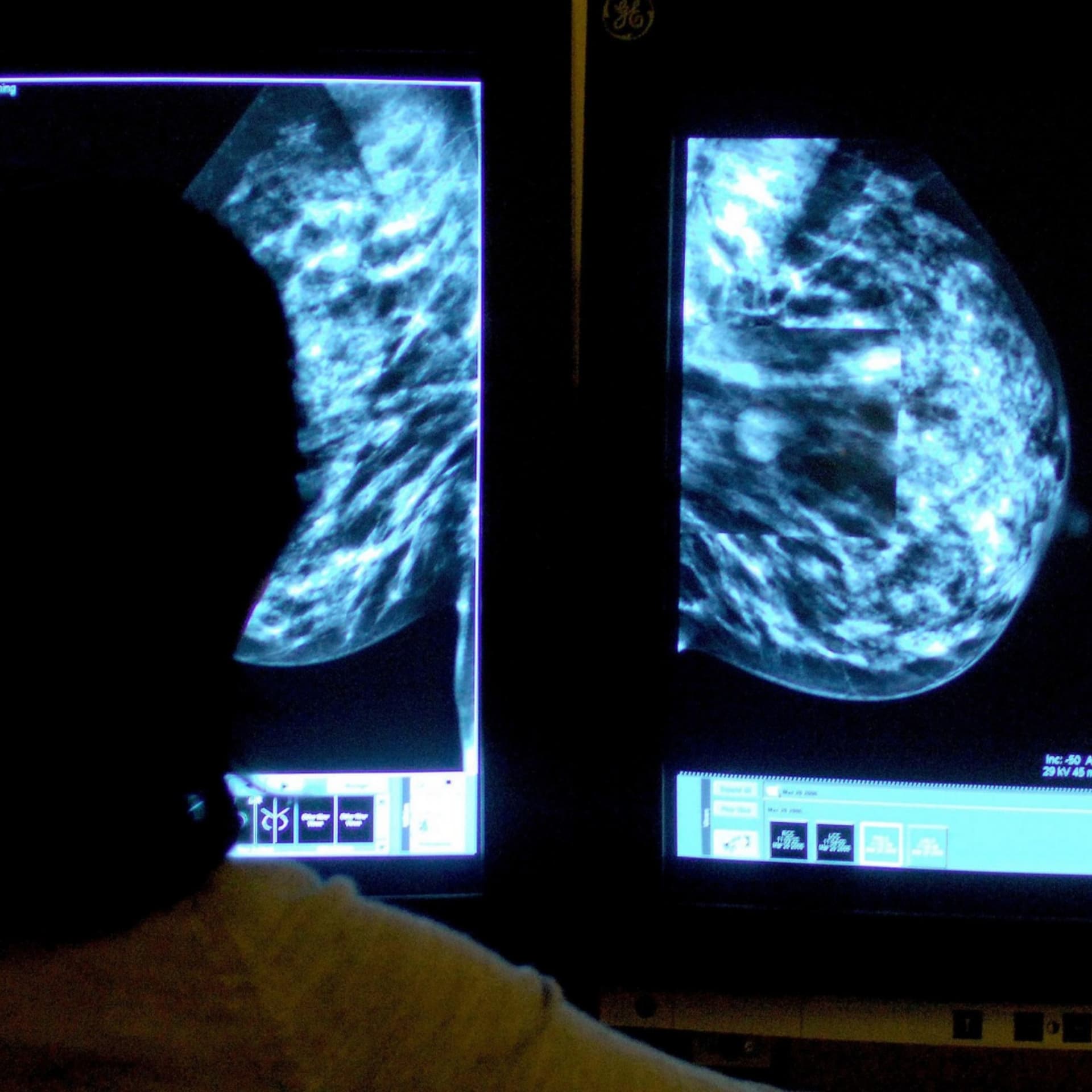
3:24We start with a breakthrough that is expected to save millions of people with breast cancer from having to go through chemotherapy. The new DNA test can distinguish between patients who are likely to benefit from the treatment and those who are not, meaning those who receive a low score can avoid chemotherapy and be treated in other ways. The study followed more than 4 ,000 women over the age of 40 in six countries with the most common form of the disease. It found two-thirds could safely skip chemotherapy with no change to their outcomes. Aileen Pritchard was one of them. I know exactly where I was standing.
4:00I can remember it like it was yesterday. The nurse telling me that I was in this low range. And I just said, does that mean no chemo? She said, yes, no chemo. And I almost leapt for joy. If there'd been a bottle of champagne there, I would have opened it. That's how wonderful it was. It was one of the best feelings. the weight lifting off your shoulders, just your whole life ahead of you back to normal again instead of worrying constantly. And I knew there were trials going on for various things all the time. So I just, I was very happy to join it. To help everybody else, the only chance I was going to get of not having chemo.
4:39So there was personal reasons and bigger reasons. You know, science needs everybody to join in wherever we can. So I'm very proud to have been part of it. My colleague Owen Bennett-Jones spoke to Professor David Miles, who was involved in this research. What this study will allow us to do is to say to patients that they can safely avoid the use of chemotherapy following surgery. And we can have a lot of confidence in that because essentially this test was tested in a very large study. It means that many, many women with breast cancer who were previously exposed to chemotherapy, knowing that there'd be a small benefit, we can now confidently predict many patients will get no benefit at all.
5:26And therefore, there's no need for them to have the chemotherapy. Either they're not getting a recurrence or their particular sort of cancer is not terribly sensitive to chemotherapy. We know from tests done on cancers, breast cancers, which cancers will respond to hormone treatment, which cancers will respond to Herceptin. But we have no idea who responds best to chemotherapy or, most importantly, who doesn't really need chemotherapy. And that's the key finding of this study. And I think it's going to change practice UK and worldwide. mind. Now the DNA is a very early indicator of a problem ahead isn't it?
6:07That's another point about this. That's exactly right and what really this test is doing, the ProCigna test, is taking a snapshot of the DNA of the cancer that is removed from the patient. So the patient doesn't need any additional tests, it's simply that the pathology department will send the tissue away for this test and it looks at various genes expressed in that tumour and helps us figure out who will not benefit from chemotherapy. Those with higher scores on this pro-signor test, they will need chemotherapy, but we can now confidently define a large population of women who simply aren't going to benefit and don't need to go through all that unpleasantness for no benefit at all.
6:53Enormous amounts of money have been spent on cancer research over, what, the last 30 years. And at the beginning, there was all this talk of a cure. And it's not been like that, has it? It's been lots of significant but not enormous advances, lots of little advances. Owen, I think you're absolutely right. I've been in the field of oncology for 40 plus years now. And the steps that we make are very, very small. And cure is a word that many of us still struggle with. I think what is really importantly developed in the last couple of decades is actually doctors doing less. So for example, the surgeons doing less radical surgery.
7:34And now we've got a stage where we used to fire chemotherapy to 100 women to benefit 10, knowing that 90 didn't need it, either because it wasn't going to help or because they were a good risk anyway. And now we are backing off. So what is so important about this study is that it's a test of the test. we can reliably say that with a low score on this test, chemotherapy is not going to be helpful. And that is a massively important step. So you're right, the research is about escalating treatments and making small steps forward. But at the same time, it's recognising and helping to recognise those patients who aren't going to benefit.
8:18And that's just as important. all this research has been presented in terms of breast cancer but if a breast cancer tumor gives off this dna you can detect surely every tumor would or am i wrong other tumors would do it as well i i think other tumors will do yes and i mean you know there's no doubt that these platforms are being applied in other tumor types as well so so the sense is you know let's not just keep piling and piling on treatments where we know in many cases they won't help so i think The step going forward really is very much about targeting our understanding of the biology of cancer as a whole, let alone breast cancer.
8:57And it's by exploiting that understanding that we can make better and more finessed decisions about treatment. How quickly will this be rolled out, do you think, that women who are facing chemo might think, you know, I might not need to do it? I would hope that in the coming months, you know, we're going to get approval for this, you know, get it costed, get it presented and understand what the impact for our patients is going to be. That was oncologist David Miles. And this study on limiting the use of chemotherapy was presented at a major conference in Chicago last weekend. It wasn't the only breakthrough announced by scientists gathered there.
9:36They also revealed they'd found a daily pill that could double the survival time for people with advanced pancreatic cancer. Here's the BBC's health editor, Hugh Pym. Pancreatic cancer can be diagnosed very late. It sometimes is because the symptoms are so hard to detect. So patients can, on occasions, be told they've only got months to live. So the new drug, Daraxan Rakib, that is a drug which targets a mutated gene. Now, that mutation gets the gene to get the cancer cells to spread, if you like. So the drug reverses that. So that is quite a significant piece of science. And what the trial found was that amongst 500 patients with advanced cancer, the spread to other organs had taken place.
10:25But the survival time of those who had the drug had more than doubled to 13 months, which was very significant. It doesn't sound very much, but a doubling is important. And there were fewer side effects than with chemotherapy, which is the only other option at that stage. And there are cancer experts in other fields saying there could be applications here for research on other cancers. Rachna Shroff is the chief of hematology oncology at the University of Arizona Cancer Center. She explains how the drug works. This drug in particular sends a signal, if you will. It basically blocks the overactivation of the RAS signaling pathway and prevents cancer progression.
11:08So it's a targeted therapy specifically targeting that really important cancer pathway. This is a absolutely monumental breakthrough for pancreatic cancer. You know, we don't normally see treatments that double survival rates. And so in the setting of stage four pancreatic cancer in patients who have already received chemotherapy, we normally have incremental gains with additional chemotherapy regimens that we use. And so for us to be able to see a median overall survival of 13.2 months, which is double that that we get with chemotherapy, it's unprecedented in the world of pancreatic cancer. The world of drug development is moving at a breakneck speed right now for cancer.
11:55thankfully. And so there's all kinds of different classes of drugs right now that all are attacking cancer cells in different ways to really get smarter than the cancers themselves. Rachana Shroff. Moving on now, what would you do if you were the conductor of an orchestra and midway through the performance, your pianist becomes too ill to continue? Appeal to the audience, maybe? Take a listen to this. Anybody like an amazing sight reader? You can sight read. Say it again. Wow. The hiccup came during a concert performance of the Hollywood musical La La Land, led by the Oscar-winning Justin Hurwitz.
12:36Luckily for its few thousand attendees, Sterling Nasser, a 21-year-old student, was in the audience and willing to take on the challenge. He spoke to my colleague Evan Davis. Well, I went to go see the movie La La Land in concert, conducted by Justin Hurwitz. They play the movie on a big screen and then have an entire philharmonic orchestra there to play the score alongside with it. It's a beautiful concert, beautiful movie, obviously. I've been a long-time fan of Justin Hurwitz's work. Got through the first act, got through a very long interval, which was about 40 minutes or so. And I think the audience could start to sense that perhaps something was a little off.
13:13And then Justin Hurwitz himself came out at the end of the interval and said that they had lost their keys to player. And then he asked the question, is anyone in the audience a good enough sight reader? Right. And you can play piano and sight read. Yes, I've been playing for a long time. And yeah, I guess to some degree, sight read. And I was lucky enough, I put my hand up for it. Did you have any reservations about putting your hand up? A few. I had a friend with me who I was going to see the movie with, my friend Scarlett, who championed me and put my hand up. And I really owe so much of it to her that I got down there.
13:49but you kind of just have to not think about it and just think, look, it's a great opportunity and just go for it, you know? Now, tell us how it went. So you know the film and you love the music, so it wasn't like the first time you'd ever heard it. But how did it go? No, no. I think it went pretty well. I was certainly a bit nervous for the first 10 minutes, but I got into it, embraced it and just thought, look, you're on stage, it's an hour of music. These are world-class musicians and a two-time Academy Award-winning conductor. just enjoy it try your best and i think it went pretty well the other musicians on stage were so so supportive and i got to have a chat with justin herwitz after and i think he seemed pretty appreciative of it and there's one little bit i think it's you had to kind of riff a little bit it was really let's call it the solo bit where you're kind of almost on your own and ryan gosling in the film and you can see his his hands on the keyboard yeah the bit you're referring to is uh in the John Legend number in that film, Start a Fire, where my seat that I filled in for has a big synthesizer solo that's meant to exactly mimic what Ryan Gosling is playing in the film.
14:54And it's this heavily notated, very technical solo that when I sort of turned the page and saw it there, I thought to myself, I'm not going to be able to sight read this correctly on the first go to that. So I took a bit of a creative liberty and just thought, I'm just going to improvise it. And that's what I did. I'm guessing the audience were appreciative of your efforts, Sterling. Oh, look, I guess so. Maybe, like, I'm just very grateful that I could contribute in some small capacity to, you know, keep the show going. Everyone's, you know, paid a lot of money to be there. It was their Saturday night, and it would be a shame if it had to be tainted or the show had to be cancelled.
15:29So I'm just very glad that I just got to keep it going and support such a great orchestra. Sterling Nasser.
15:41coming up on the happy pod anytime you go into the mountains you do know that there is a chance that you do not come home but i think at the same time my friends and family wanted me to fulfill my passions to live my dreams and to do you know what was important to me especially given my diagnosis the woman who didn't let incurable cancer stop her climbing mount everest
16:32We'll be right back. America's Social Casino. Download the Moto Casino app today. Hey, it's Ryan Seacrest for Jewel Osco. For you, save days are here now through June 23rd. Find hot deals throughout the store and earn four times the points. Look for in-store tags to earn on eligible items from Monster Energy, Cape Cod Chips, Kraft, Hellman's, and Kellogg's. Then, clip the offer in the app for automatic event-long savings. Stack up those rewards to save even more. Enjoy savings on top of savings when you shop in-store or online for easy pickup or delivery. Restrictions apply. See the website for full terms and conditions.
17:07Playing mobile games and not getting rewarded for it is a thing of the past. Why haven't you switched yet? If you're going to spend the time playing, you should be earning rewards doing it. With Misplay, you play what you love and earn points for gift cards and more. Plus, you can enter the MistPlay sweepstakes for your chance to win tens of thousands of dollars in cash, bundles, and gift cards every week. So yeah, keep playing games. Just maybe get rewarded for it? Download MistPlay today and enter for your chance to win. We're halfway through the year, and a lot of people are running on empty without fully realizing it.
17:43Grow Therapy helps you find care before burnout hits. Grow makes it easier to find a therapist who fits you, not the other way around. They connect you with thousands of independent licensed therapists across the U.S., offering both virtual and in-person sessions, including nights and weekends. You can search by insurance, specialty, identity, or availability and get started in as little as two days. And you can cancel up to 24 hours in advance at no cost, no subscriptions, no long-term commitments. Just pay per session. Whatever challenges you're facing, Grow Therapy is here to help. Grow accepts over 100 insurance plans.
18:20Sessions average about$21 worth insurance and some pay as little as$0, depending on their plan. Visit growtherapy.com slash try now today to get started. That's growtherapy.com slash try now. Availability and coverage vary by state and insurance plan.
18:42you're listening to the happy pod a british man is hoping he will become the first person with a physical disability to go and live and work in space john mcfall lost his leg when he was 19 but he hasn't let that stop him as lewis coombs reports when i was a kid i never actually dreamt of being an astronaut. Amazing! The fact that I don't fit that typical picture of what we all grew up thinking that astronauts look like, I think that's quite important. John McFall is already a man on a mission. This is about so many aspects of life, so many people in so many different roles where people think that they're just associated with able-bodied people and that's not the case.
19:25To be able to be part of that and communicate that and try and spread that word, And, you know, it's a great position to be in. After losing his right leg in a motorbike accident when he was 19, John has gone on to become a Paralympian at the Beijing Games, winning a bronze medal and an orthopaedic surgeon, helping others to fulfil their own dreams. Now heading into space would be a world first. We are setting a precedent. We have absolutely no idea how someone with an amputation will cope doing the day-to-day tasks, living and working and moving around the space station and that's going to be a huge part of learning and or our ambition to understand how that's going to work.
20:08With support from the UK Space Agency for the past three years John has been training at the European Astronaut Centre in Cologne. Ignition and liftoff. He's now been deemed medically fit to become the first astronaut with a prosthetic in space. It's really exciting it's really exciting for me but it's also really exciting for human spaceflight in general and it really represents this change in mindset that actually you know astronauts don't have to look like this typical perfect able-bodied individual. As part of his training John has received help from the AirAbility charity based at Blackbush airport in Hampshire.
20:47Here we are in the AirAbility hangar how crucial have they been in your training journey? Being able to fly light aircraft the The skills associated with that, there is a huge amount of crossover with those skills and the living and working as an astronaut. It's the judgment, the task prioritisation, the hand-eye coordination, the communication. There is so much overlap. And uniquely, AirAbility provides a fantastic platform for me to be able to do that. John's now waiting to be assigned a mission that will help break down barriers further for potential astronauts to come. The dream is to fly to space.
21:27It really is. And I would love that opportunity. I'm in a position where I am assignable to a mission should a mission become available. And I hope that in the next few years, or certainly by the end of the decade, we'll see the first European astronaut with a physical disability living and working on the International Space Station. John McFall ending that report by Lewis Coombs. let's take a moment to slow down and think of food slow food to be exact it's a term that's becoming increasingly popular to sum up the opposite of fast food locally grown ingredients cooked from scratch and enjoyed with no distractions across africa there are now three and a half thousand slow food gardens 350 of which are in malawi mari segula has been finding out more about them, starting with a visit to a school near the capital, at lunchtime of course.
22:23I see some students walking along the corridors of the school, some are having their lunch under a tree. I'm here to meet Victoria Chattambalala, who teaches both biology and agriculture. She has made it her mission to teach her students about slow food. As you can see here, Here we have examples of the local plants. Around 15 students are sitting in rows of desks. In front of them is a table loaded with local crops. Green wild spinach, purple turnips and brown cassava, which is a root vegetable. A year ago, her school joined the Slow Food Gardens in Africa scheme. The Malawi branch provided them with seeds, equipment and advice on how to create their own sustainable garden.
23:19Victoria takes me outside to show me the results. I'm standing right in the middle of this beautiful garden with about 20 beds with assorted vegetables. Sixty students volunteered to look after the garden. The students say they are growing traditional crops because these have evolved to survive in the region and so need less water than other vegetables. We grow sweet potatoes, cassava, pumpkins and also mustard. OK, so how do you prepare the soil? OK, simple. We clear the side, remove bushes and make the leeches so that they can be planted. As well as taking cartons to grow more plants, they use a plant called mpungabwe or camphor basil to keep away pests.
24:16For manure, they use chicken pellets collected from nearby villages. In most communities here in Malawi, most people like growing exotic plants. They contain a lot of chemicals. You talk of pesticides, harming the bodies of many people. So here they have taken the skill of growing local plants, which is something that slow food is encouraging. Their produce is used in school lunches and lots of the children say they have been inspired to start a garden at home. It seems the project has been very successful in inspiring the next generation. Do we have anyone among us that would like to be a farmer?
24:58Yes. 20 farmers? Yes. Slow Food has also started up something called an earth market right on my doorstep in Blantar in southern Malawi. It's actually a store in the middle of the main market. On the morning I visit, it is being run by Steve Banda, who shows me around. Everything you see here is the local variety. We have customers here from lodges and big restaurants that give us orders to supply local vegetables. Before this, we could only farm for consumption with no profit at all. Now we're able to realise profits. The store is shared by five rotating communities and sells produce from around 100 farmers over the year.
25:47Many of the customers are from local restaurants. These include chef Christopher Sandrak, who is part of another slow food network called the Cooks Alliance. It is made up of more than 1 ,000 chefs around the world who commit to using local, biodiverse produce. I loved to join the Cooks Alliance because of the privilege for me to gain more knowledge and insights from different professionals as well within our industry. This is a produce from the good motherland, so we believe that food is medicine. So we're not just giving them the food for them to eat and fill out their tummy, but we know we're taking good care of their health as well.
26:30Chef Christopher Sandrak ending that report by Mary Segula. And you can hear more about the benefits of slow living on People Fixing the World wherever you get your BBC podcasts. We end with a story about a woman who has reached the summit of Mount Everest despite living with stage four incurable cancer. Dr Shauna Burke becomes the first woman to do so, as Branka Lesedisar reports. Reaching the peak of Mount Everest is one of the most challenging of human feats. Sub-zero temperatures, high altitude, dangerous terrain. Many attempt it and fail. Others don't make it back at all. So naturally, when Shauna Burke, a professor at Leeds University, told friends and family she was planning to do it, the reaction was mixed.
Read the full transcript
27:20Not least because Shauna has stage 4 cancer. Any time you go into the mountains, you do know that there is a chance that you do not come home. But I think at the same time, my friends and family wanted me to fulfil my passions, to live my dreams and to do what was important to me, especially given my diagnosis. Shauna isn't a first timer. She successfully reached the summit in 2005, but that was before her diagnosis. In 2024, Shauna was told by doctors she had stage four breast cancer. Since then, she has undergone a double mastectomy, liver surgery and radiotherapy. Currently, I'm on maintenance therapy.
27:56So I'm on drugs that are helping to prevent the cancer from spreading further within my body. I'm monitored very closely. So at the moment, every three months, I do have an MRI. So, you know, we hold on to hope with new treatments, new advances in the treatments are happening every day. And so we just hope that I can live as long as possible with the disease. Shauna has accepted that she'll spend the rest of her life battling cancer, but she refuses to let it stop her from doing what makes her feel most alive. For her, that means climbing mountains. Mountains are a passion of mine. The Himalayas in particular, they're the most beautiful mountain range in the world.
28:36And when I received my diagnosis, it was very much about reprioritising my life and trying to figure out what was important to me. And returning to the mountains was definitely something that I wanted to do to fuel my soul. Together with researchers, Shauna underwent intensive training and monitoring. I spent 12 weeks in a high altitude chamber working very closely with colleagues at Leeds Beckett University, where I was very closely monitored to see what was happening to my body as I was acclimatising in preparation for climbing Everest. In addition, I also spent four days in the gym lifting weights and three days a week I spent doing aerobic-based exercise, exercise, building my endurance to ensure that I was ready both psychologically as well as physically.
29:21After that, it was time to make the climb. On May 23rd, 2026, Shauna successfully reached the peak of Mount Everest,
29:32becoming the first woman with incurable cancer to ever do so. It was just an incredible feeling. I couldn't believe it. To be honest, it's taken a while for me to process the fact that I managed to get back there 21 years later after I first stood on the summit. But it was an incredible feeling of just pure joy, excitement, and really a life affirmation. Now she is using her story to inspire others suffering from cancer. It's a physical test of epic proportions. It's also a psychological test. And for me very much, it's that challenge wanting to push myself to see what I'm capable of doing while living with stage four diagnosis and also using it as a platform to inspire other people in the hopes that if somebody else is diagnosed with this similar diagnosis or they have a loved one who is that they continue to have hope and they continue to put one foot in front of the other.
30:25Dr. Shauna Burke ending that report by Branka Lessa-Dissar.
30:34And that's all from the Happy Pod for now. We'd love to hear from you. As ever, the address is globalpodcast at bbc.co.uk. This edition was produced by Rachel Bulkeley. The editor is Karen Martin. I'm Holly Gibbs. Until next time, goodbye. Bye.
31:21specialty, identity, or availability and get started in as little as two days. And you can cancel up to 24 hours in advance at no cost, no subscriptions, no long-term commitments. Just pay per session. Whatever challenges you're facing, Grow Therapy is here to help. Grow accepts over 100 insurance plans. Sessions average about$21 worth of insurance, and some pay as little as$0, depending on their plan. Visit growtherapy.com slash try now today to get started. That's growtherapy.com slash try now. Availability and coverage vary by state and insurance plan.
From the publisher
A new DNA test can distinguish between patients who are likely to benefit from chemotherapy and those who are not, meaning many with the most common form of breast cancer can avoid the brutal treatment. Also, scientists have found a daily pill that could double the survival time for people with advanced pancreatic cancer. Daraxonrasib appears to be a breakthrough in managing a disease that has the highest mortality rate of all major cancers. Plus, we hear from Sterling Nasa, the student who ended up on stage during a concert performance of La La Land. A pianist was taken ill half way through the show, and the conductor appealed to the audience for help. A British man is hoping to become the first person with a physical disability to go to live and work in space. John McFall lost his leg when he was 19 -- but he hasn't let that stop him -- he has already become a paralympian and a surgeon. Finally, we meet Dr Shaunna Burke who has reached the summit of Mount Everest despite living with stage 4 incurable cancer. She becomes the first woman to do so Our weekly collection of inspiring, uplifting and happy news from around the world.
Presenter: Holly Gibbs. Music composed by Iona Hampson
(Picture: A doctor examining a mammogram to determine if a woman has breast cancer. Credit: PA)



