
In short
The Happy Pod roundup: a gene therapy restoring a girl’s night vision; Ethiopia quintuplets; David Attenborough’s 100th; music training for faster surgical skills; four Welsh grandmothers bonding with a pro wrestler after a flight mix-up; a choir song mixing human voices with recorded humpback whale song.
Guests/backgrounds
Safi Sanford (6-year-old, rare inherited retinal condition); Lisa Sanford (mother); Rob Henderson (consultant ocular gene therapy specialist, treated Safi); Bedria Adem (Ethiopian mother of quintuplets); Richard Kagoi (Nairobi reporter); David Attenborough (naturalist, 100); Michaela Strachan (TV presenter); Dr Michael Koh (University of Hong Kong assistant dean, study author); Jane McCubbin (reporter); Rebecca Douglas (WhaleWise trustee board president); Hughie Gavin (choir master).
Key claims/examples
Safi’s RPE65 gene therapy restored night vision enough for trick-or-treating and biking/swimming; quintuplets after 12 years (natural odds cited 1 in 55 million); Attenborough’s “Blue Planet” voice and influence; instrument practice improved surgical task speed by 25 seconds (~10%) and scores by 0.5/10 (~6%); “Nanners” reunion sparked by seat mix-up and viral search; “Wash Over Me” blends choir lyrics with humpback whale recordings from Iceland.
Written by AI. May contain mistakes. Listen to the episode to check what was said.
Chapters
Tap a time to open that second in VOSafi's Story Begins
2:22 to 3:21
The life-changing gene therapy that restored Safi’s vision is discussed.
“What about if mummy comes closer can you see mummy's face?”
Safi's Diagnosis and Family Experience
3:21 to 4:50
Safi's mother shares the emotional journey of her diagnosis and family fears.
“She was two and a half when she was first diagnosed with highly myopia, which is short-sighted to you and I.”
Understanding Gene Therapy
4:50 to 6:39
Rob Henderson explains the pioneering gene therapy process used on Safi.
“We are lucky to have this as the first and only at the moment ocular gene therapy.”
Life After Treatment
6:39 to 8:00
Safi's mother shares how her life has changed after the treatment.
“and that allows the retinal cells to start to turn light into an electrical signal much more efficiently.”
Ethiopian Mother's Journey
8:09 to 10:16
The story of a mother who gave birth to quintuplets after many years of trying.
“Yes, five babies after about 12 years of trying.”
Celebrating David Attenborough
10:16 to 11:11
David Attenborough's achievements and 100th birthday are celebrated.
“But she said deep down in her heart, she was deeply troubled.”
Legacy of David Attenborough
11:11 to 14:05
Michaela Strachan reflects on Attenborough's influence and legacy.
“You can fly across it non-stop for 12 hours and still see nothing more than a speck of land.”
David Attenborough's Enduring Influence
14:05 to 15:30
Explore the inspiration and impact of David Attenborough on wildlife lovers.
“I think anyone that's into wildlife, David is right up there as the most iconic wildlife presenter and he's influenced so many of us and inspired so many of us.”
Musical Training and Surgical Skills
16:25 to 20:08
Discover how musical training can enhance surgical skills among medical students.
“We love it when our listeners get in touch, and Dr Michael Ko has done just that.”
Unexpected Friendships in Vegas
20:08 to 22:47
Follow the heartwarming story of four women who found friendship in Vegas.
“That's what happened to four women in their 70s when they were travelling to Las Vegas from Wales.”
Show all 11 chapters
Whales and Choirs: A Unique Collaboration
22:47 to 27:38
Learn about a choir's project featuring humpback whale sounds to raise awareness.
“The Welsh nannas upstairs, they're currently viral.”
Transcript
Automatic transcript. May contain errors.0:00This BBC podcast is supported by ads outside the UK.
0:30all the great deals happening now.
0:35I'm Kai Wright. I'm Carter Sherman. Welcome to Stateside with Kai and Carter. We're a new show from The Guardian. We're talking to big thinkers and the best journalists, just trying to understand the world through smart conversation and honest reporting. We don't have billionaires telling us what to say. Stateside with Kai and Carter will come out three times a week, Monday, Wednesday, and Friday, starting May 13th. Subscribe on YouTube or wherever you get your podcasts.
1:04This is The Happy Pod from the BBC World Service.
1:14I'm Holly Gibbs and in this edition... I could never in a million years have imagined results like this. We were able to get trick-or-treating last October and she was running down the path in the dark, shouting, I can see, and we were just in floods of tears. The six-year-old girl who can see again, thanks to a groundbreaking gene therapy treatment. Also on this podcast, the woman in Ethiopia who has given birth to quintuplets. The globally renowned environmentalist David Attenborough turns 100. He's an inspiration and he's adored by all the different generations. I don't think there's anybody that doesn't like David.
1:53Plus, why childhood musicians make better surgeons? It looks like musical instrument training has helped our students to acquire surgical skills quicker and better. And there were all these men, they had beards down to their bellies, they were like young bullies with caps and baggy trousers. And there was us old dogs up like sex in the city walking in. Find out how four grandmothers befriended a pro wrestler.
2:21we start with a six-year-old girl who has had a life-changing treatment to restore her sight Safi Sanford was born with a rare inherited condition and without treatment she could have become blind by adulthood but thanks to a one-off gene therapy Safi has had almost all of her vision back here's the moment she could see in the dark after the operation much to the delight of her parents. What else can you see? Curtains and my tree over there. What about if mummy comes closer can you see mummy's face? Yeah. Tell me some of the... Mummy's whole face. What about now? Can you see mummy's face? No. You can't see mummy's face at all?
3:06No. You've got spidey vision in your new eye. I've got spidey vision. What else can you see? Can you see my face? My colleague Emma Barnett spoke to Safi's mum Lisa and to Rob Henderson, the consultant who treated Safi. She was two and a half when she was first diagnosed with highly myopia, which is short-sighted to you and I. She's a minus 10, that's when she first got her glasses. And obviously at first we thought, you know, we were really devastated about that, but we thought, well, OK, we were told when she was 18 they might be able to correct that, and we just kind of thought, you know, we'll just get on with it.
3:40But she'd always struggled seeing the dark, and I suppose if you're kind of naive to this sort of thing which we very much were we didn't understand why that was we were sent to Moorfields in London for some sort of brain scans back in summer 2024 and that's kind of when it all started to really become a lot more serious she was diagnosed with night blindness again we'd never heard of that as an actual you know term when you google it you find some some pretty scary stuff online which of course every parent's you know going to go straight to google and then our worst fears were confirmed that she had um retinitis pigmentosa which of course then we started to realize not only did she have a confirmed condition but actually it was going to get worse which we'd never really even considered before then we were transferred to great ormond street met rob henderson and given the news that she would go blind by the age of 30 which is i mean as a mother as the family and for her must have been terrifying yeah i mean the word i can't even put into words how we felt that sort of panic that you know deep knot in the you know bottom of your tummy that you're going to spend every day waiting for her that day to come um and just how how do you explain it of course you know she doesn't actually obviously know that she's got this condition that could ever get worse bless her um and just thinking how will she ever navigate through life you know she's an only child we're not going to be here forever um it was absolutely terrifying and you just wished it was you instead of her it just we felt so helpless really until we met rob and learned that we were one of the very very lucky few that happened to be eligible for for the gene therapy before we hear what happened and the impact on safi let's try and understand the gene side of things the gene therapy side of things rob henderson it's a pioneering moment isn't it It's a pioneering therapy.
5:26Yes, it's very exciting. We are lucky to have this as the first and only at the moment ocular gene therapy. From 2019 onwards, we've been able to treat patients with this particular gene. And what we've been showing in our most recent research is that actually treating younger children, we get results that are actually better than them were in the original published research. And how do you actually do it? How do you do gene therapy? So in this particular instance, we're trying to treat the retina. The retina is the film in the back of the camera, if you like. So what we're going to do is go into the back of the eye.
6:08So I go through tiny little incisions through the white part of your eye. And then I inject using a very tiny cannula, a very tiny needle, a solution of fluid containing billions of copies of viral particles that contain a healthy copy of, in this instance, the RPE65 gene. That was the gene? That was the gene that Safi has. And so what happens is that the cells in the retina now get a new healthy copy of this gene and the cells can start to manufacture a healthy protein and that allows the retinal cells to start to turn light into an electrical signal much more efficiently. That's incredible. I mean, I just love hearing the detail on that.
6:52Let's hear what it's like, though, in real life, Lisa, you know, with Safi. What can she now see and do that she couldn't do before? She can see pretty much everything now. She's just wandering behind me, you might see her. She was pretty much completely blind in the dark before. We had to rely on torches to do everyday things like, you know, eat a meal, do some colouring, go to a kid's party. It was really, really bad. She couldn't see at all in the dark. We couldn't go trick-or-treating. Life was really, really hard. She missed out on an awful lot. I could never in a million years have imagined results like this.
7:26We were able to go trick-or-treating last October and she was running down the path in the dark shouting, I can see. And we were just in floods of tears, the whole family, just thinking, you know, this has actually given our little girl her life back. Honestly, I can't even explain. you wouldn't even know now that she has this condition. She can do absolutely everything. Her peripheral vision is far improved. Her night blindness is so much better. And how's Safi doing now? Because it must just be so exhilarating still. She does after school clubs now. She's riding her bike, we're back on swimming lessons and she's just absolutely thriving.
7:59Rob, just final word from you if I can. Pretty amazing for you, I imagine as well. It's a huge privilege to be able to do this. Lisa Samford and Rob Henderson. To Ethiopia next, where a woman has given birth to quintuplets. Yes, five babies after about 12 years of trying. The chance of that happening naturally is about one in 55 million. The 35-year-old mother and her husband say they are overjoyed. Pete Ross has been speaking to our reporter in Nairobi, Richard Kagoy. The mother and the babies are currently under medical care. They are just at the Hiwata Fana Specialised Hospital. The doctors say that they are in good strength and health.
8:43And everybody's just overjoyed about the blessing that did visit them as a surprise. Quintuplets, five babies born at the same time. It's a pretty rare event, isn't it? Absolutely. It's not just a common occurrence. This is quite frequent, especially when you have children, maybe, who are conceived through in vitro fertilisation. But for children who were conceived naturally, this is just a very rare occurrence. And I think that's why this has really been an issue that's generated really a lot of interest, not just in Ethiopia, but also just even around the world with people just following and reading about this story.
9:23And we've heard that the parents have been trying for a child for quite some time. What have they been saying about their good fortune? Wow. I mean, if you just see what the mother, Bedria Adem, has said, they've been trying for 12 years. She says that really she's just overjoyed. It's a dream come true for her. They say that it's indeed been a prayer that has been answered. The mother, she was just really praying just for one child. But what she says is, you know, Allah surprised her and gave her five blessings through the children. And they say that really they are overjoyed. They felt like the wait has really been worth it.
10:03It's some sort of compensation because the husband really was trying to encourage the wife that, you know, it's OK because he'd got a child from a previous marriage. And they said, you know, this is just OK. This is one. And I think that's just enough. But she said deep down in her heart, she was deeply troubled. She just needed to have children, you know, a sizable family. And for them now, this is just a moment of celebration. You know, they can't hide their happiness and joy. A big surprise, but they were expecting to have more than one child, but not as many as five. Is that right? Based on the diagnosis the doctors had done at one point, that indicated actually they're expecting four.
10:43But then as we're going through, you know, the delivery process, then they just discovered they had five. So really quite came as a surprise, especially for her, she says. Pete Ross speaking to Richard Kagoi. Now to a name and a voice you might recognise. Our planet is a blue planet. Over 70 % of it is covered by the sea.
11:09The Pacific Ocean alone covers half the globe. You can fly across it non-stop for 12 hours and still see nothing more than a speck of land. This series will reveal the complete natural history of our ocean planet from its familiar shores to the mysteries of its deepest seas. David Attenborough speaking there in the first ever episode of Blue Planet. He celebrated his 100th birthday this week. David Attenborough has been the voice of natural history programmes for more than 70 years and his work has been broadcast in over 100 countries. And to mark this milestone, he's released this message. I had rather thought that I would celebrate my 100th birthday quietly, but it seems that many of you have had other ideas.
12:00I've been completely overwhelmed by birthday greetings, from preschool groups to care home residents and countless individuals and families of all ages. I simply can't reply to each of you all separately, but I would like to thank you all most sincerely for your kind messages. Michaela Strachan is a TV presenter inspired by Attenborough. She's been sharing her thoughts on him. I think one of my favourite moments from any of David's programmes that he's done is in the life of birds when he met the lyrebird. and it's a beautiful bird with a unique, elaborate and complex song and it's a bird that is a brilliant mimic and in the piece you hear it copy a kookaburra, a camera shutter, a car alarm and a chainsaw.
12:56He also, in his attempt to out-sing his rivals, incorporates other sounds that he hears in the forest. That was a camera shutter.
13:13And again.
13:18And now a camera with a motor drive.
13:27And that's a car alarm.
13:38and now the sounds of foresters and their chainsaws working nearby and for me that symbolizes David's life he inspired us with the beauty of wildlife the camera shutter is very symbolic of his work you know he spent his life filming and then the car alarm and the chainsaw shows the fragility and destruction of the natural world. So this clip went from beauty to a signal of destruction and I think that's why that clip has stayed with me for so long. I think anyone that's into wildlife, David is right up there as the most iconic wildlife presenter and he's influenced so many of us and inspired so many of us.
14:26But you know, it's not just the fact that he's inspired us to love wildlife and appreciate it. He's inspired me to grow old gracefully. Here's a man that is still so incredible in his, well, 90s, reaching 100 now. When David does a programme, when he puts his name on any natural history programme, it is like putting a real stamp on it. You know that it's going to be good. And for me, particularly in his latter life, it's his voiceovers that are still so incredible. His voice melts into the pictures. And I've often listened to his voice and tried to learn from it as a wildlife presenter myself and someone that does voiceovers.
15:11He's an inspiration and he's adored by all the different generations. I don't think there's anybody that doesn't like David. Everybody loves him. Michaela Strachan
15:29Coming up on The Happy Pod The piece ends with the humpback whales but also there's lots of moments within the piece that it's almost like they're singing with the choir An unusual musical collaboration to help protect our oceans
15:53I'm Kai Wright. I'm Carter Sherman. Welcome to Stateside with Kai and Carter. We're a new show from The Guardian. We're talking to big thinkers and the best journalists just trying to understand the world through smart conversation and honest reporting. We don't have billionaires telling us what to say. Stateside with Kai and Carter will come out three times a week, Monday, Wednesday, and Friday starting May 13th. Subscribe on YouTube or wherever you get your podcasts.
16:25You're listening to The Happy Pod. We love it when our listeners get in touch, and Dr Michael Ko has done just that. He's part of a team of researchers in Hong Kong who have found that playing a musical instrument could help trainee surgeons pick up the necessary skills. The Happy Pod's Rebecca Wood has been finding out more.
16:50The slight screech of a violin or the bash of a piano key. Early childhood music practice can be the sometimes grating background sound to many parents' lives. But perseverance may well be worth it later in life, especially if the child ends up in a medical career. Researchers at the University of Hong Kong have found that students who played a musical instrument when younger tend to master surgical skills more quickly. The study, published in the ANZ Journal of Surgery, looked at 200 medical students who had no formal training in surgery. After a two-hour lesson, they were then given a series of surgical tasks to complete.
17:32Dr Michael Koh was involved in the study and is Assistant Dean at the Faculty of Medicine at the university. We found that students were able to complete surgical tasks 25 seconds faster, which means 10 % quicker than their peers. And the second endpoint was the surgical skills score assessed by our surgical educator. And we found that students with previous musical instrument training achieve 0.5 marks out of 10 higher than their peers, which means 6 % higher score than their peers. So it looks like musical instrument training has helped our students to acquire surgical skills quicker and better.
18:11Around 60 % of the students involved in the study had played an instrument in the past and interestingly the results show it doesn't seem to matter whether it was the keyboard or cello or bassoon or to what level it was played at. Sien Gur is one of the students who took part. I grew up playing violin as a child. I started at the age of four and I think like many children I definitely went through a few years where it was more of a chore to practice that felt like my parents forced me to practice violin. But I think for me, it's definitely a bit of a relief that having so many years of musical instrument training does have some direct translation of skills to my current medical career.
18:55So why does putting in the hours playing like Sien did now help her out with suturing and incision making? Here's Dr. Koh again. First of all, both require good hand-eye coordination. and secondly both require the fine motor dexterity, the finger dexterity and also the ability to perform under pressure. And while the team are keen to point out that it doesn't make you any less of a surgeon not having a musical background, it could be a bonus to have it in your medical kit bag, something Dr Ko is putting into action in his own life. I've got a young daughter, four years old now and yeah I'm planning to to bring her to a musical school.
19:35I did used to play the cello throughout school and it's too late for me to be a surgeon but I'm wondering could it maybe benefit me elsewhere in life or there may be other things that I could apply it to? Yeah because this study is all about the muscle memory the association between the fine motor dexterity and the fine skills that you have developed over the time Perhaps something like handcrafts, for example, something that requires quite a lot of precision, hand-eye coordination. Better get out my cross-stitch. Rebecca Wood reporting. Have you ever boarded a flight and found someone already sitting in your seat?
20:12That's what happened to four women in their 70s when they were travelling to Las Vegas from Wales. But what started as an emotional trip to scatter the ashes of one of their late husbands turned into one of new friendships and a newfound love of wrestling, as Jane McCubbin reports. Woo-hoo! Yes! Vegas, baby! I lost my husband eight years ago. This is Rosalie. I thought it's time to say goodbye, so I got over to the girls and I said, how do you fancy a trip to Vegas? I need the support and the love of you all around me. We pre-booked the seats. That's Susie Matthews. And when we got to the row, there was a young man sat in my seat.
20:54And this is Lynne Crawford. An extremely lovely man. Definitely. Honestly, you couldn't wish to meet anybody nicer. Cue a ten-hour flight during which the Nanas were charmed. Got to passport control and he was outside waiting for us. And he said, I'd love you all to come to the rest, Lynne. And Rose and Lynne said, yeah, we will.
21:20I've never seen so much enthusiasm in all my life. And Dorese is... Oh, OK. I've never been to a wrestling match before. No, no, no, this is so dangerous! There were all these men, they had beard stuff to their bellies, they were like young bullies with caps and baggy trousers, and there was us old dogs up like Sex and the City walking in. Absolutely crazy. But you never expected to see Dereese again? Oh gosh, no. Dereese had other ideas and posted an appeal across social media to try and find them. You had to find the Nanners. Of course, of course. Everyone saw them, everyone was talking about them.
22:00They are special people. And by the time the Nanners landed back in Cardiff, his social media post to try and find them had gone viral. And then my granddaughter said there's 1.1 million views on Twitter. Are you ready to meet them? Yes, we found the nanners. And this is the reunion of dreams. You were touched. They put the effort in. I couldn't believe that they turned up, to be honest. They were there. With bells on. With bells on, going crazy in the crowd. Hello. Lovely to see you. So, one mad trip, one viral search. It's because you girls are stars. You girls are stars. And suddenly their story isn't over.
22:41It's just getting started. We've seen you in Vegas, now we're going to show you Cardiff. Let's do it! Let's go! First stop. B-I-N-G-O. Bingo! There's some superstars in the room. The Welsh nannas upstairs, they're currently viral. If your story is about anything, what's it about? Grabbing life and enjoying life, because life is too short. You've got to get up there and do it, you know. We're only here because of your Pete. You would find it highly amusing. Yeah, he said, I can't leave you for five minutes. And you're causing havoc. When I say O-1, you say T-1. You're on a plane to Las Vegas, the next moment you're the superstar.
Read the full transcript
23:27You would have lived it. When I say, when I say, when I say that. Just chat to the person next to you sometimes. It doesn't matter how young or old they are. Everyone likes to be silent. At times it's a missed opportunity to get to know more people outside of your bubble. That's a wrap. There is a saying that what happens in Vegas stays in Vegas. But this was a friendship we all needed to hear about. It's been unbelievable and it's down to this guy. Two words! That report was from Jane McCubbin. We end with an unusual musical collaboration between humans and animals. A choir here in the UK has created a song featuring the sounds of humpback whales off the coast of Iceland.
24:10Helena Burke has been finding out more.
24:18Over the past few years, a research team from WhaleWise has been studying and recording the humpbacks in a remote Icelandic fjord. Rebecca Douglas, the president of the Conservation Charities Board of Trustees, went to see the work firsthand. We're in the very, very remote northeast Iceland. We're in a town, Bacafjordia, that looks over an incredible fjord system. There are a few houses here, but importantly, there are humpback whales in this bay. And we're capturing research and evidence, basically, of the fact that they're here and they exist, because potentially there might be quite a large industrial port being put in.
24:58and it's important to know what's in the area and be able to advocate for the whales now that we know that they're here year on year. The team installs an underwater microphone to record whale song from the depths. So it goes down and we then hope for the best that when it's retrieved, A, we can find it and then B, when you actually start to unpackage it and get the data out that there's actually something there and recorded. And so that moment of release and relief when it's there is, I can't describe what that feeling must be like. When she's not helping to protect singing whales, Rebecca joins Singing Humans at a community choir in the town of Margate in England.
25:38It was there that the choir master, Hughie Gavin, had the idea of getting everyone involved in writing a song.
25:49There's 140 in the choir and what we did is create this portal and people could put their words that were inspired by the sea into that portal.
26:04And then I had this whole database of oceanic, watery words and I kind of wove together some lyrics based on those choir member suggestions. Huey then mixed the choir's song with the sounds captured from the deep.
26:25In the dark blue Under the surface This is the first whale I've had as a featured artist in the track, definitely. But it worked perfectly in the track, so the piece ends with the humpback whales, but also there's lots of moments within the piece that it's almost like they're singing with the choir.
26:52The song, which is called Wash Over Me, will be released later this year to coincide with World Ocean's Day. Rebecca says the experience has made her emotional and hopes it will help remind people of the importance of protecting marine life. We know how important this research is and then when you see the whales and you see the team's reaction and you just immerse in this place, I'm always blown away by that fact that we're a blue planet, 71 % of the planet is water. We're made up of a similar amount as humans. And so, you know, the kind of, the water is something that connects all of us through the cycles of life, no matter where we are.
27:26And I think that just sort of transcends and is that thread through World Ocean Day because it's vital for all of us.
27:37Rebecca Douglas and the song Wash Over Me, ending that report from Helena Burke.
27:45And that's all from the Happy Pod for now. We'd love to hear from you. As ever, the address is globalpodcast.bbc.co.uk. This edition was produced by Rachel Bolkley. The editor is Karen Martin. I'm Holly Gibbs. Until next time, goodbye.
28:07I'm Kai Wright. I'm Carter Sherman. Welcome to Stateside with Kai and Carter. We're a new show from The Guardian. We're talking to big thinkers and the best journalists, just trying to understand the world through smart conversation and honest reporting. We don't have billionaires telling us what to say. Stateside with Kyan Carter will come out three times a week, Monday, Wednesday and Friday, starting May 13th. Subscribe on YouTube or wherever you get your podcasts.
From the publisher
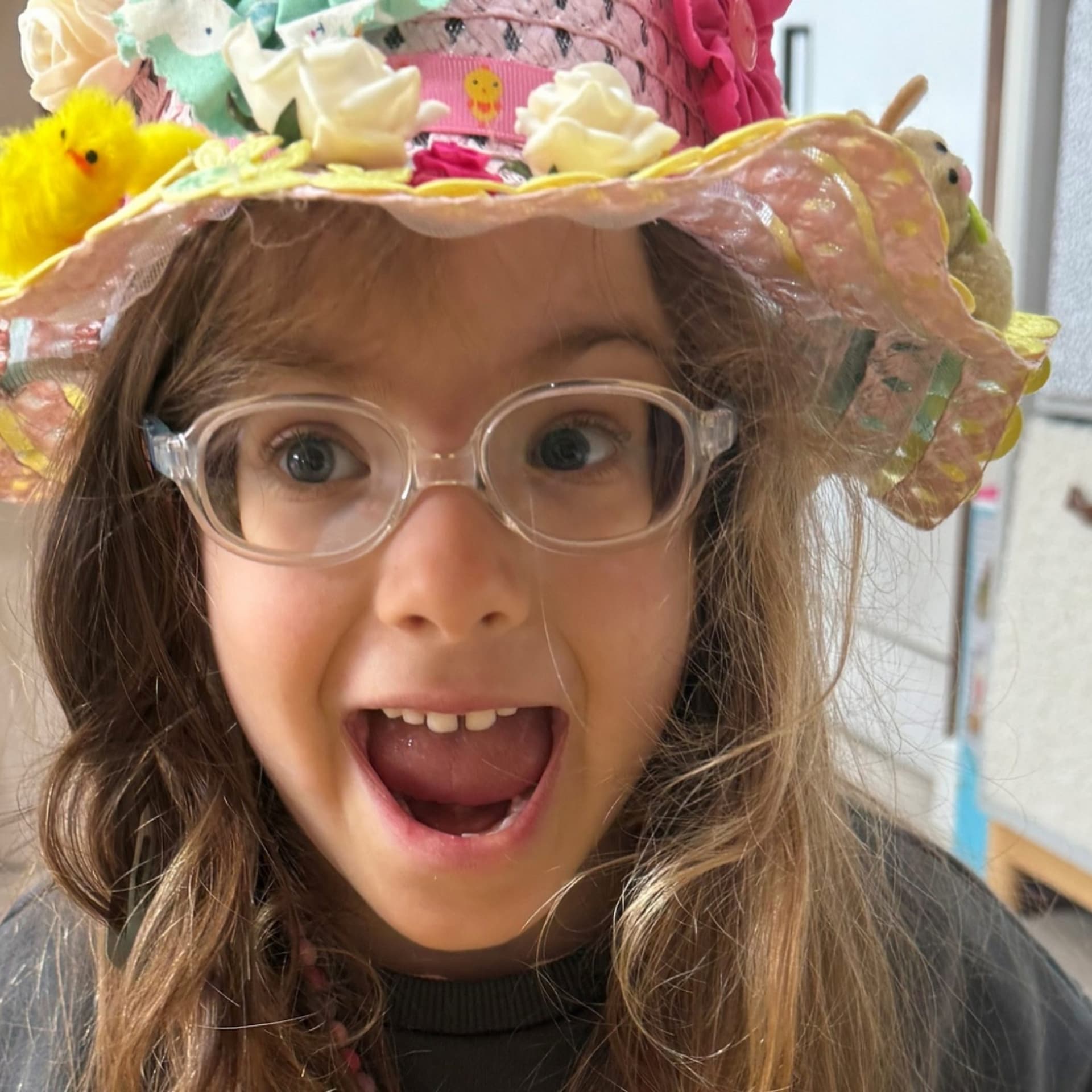
Six-year-old Saffie would have gone completely blind by adulthood, if not for a groundbreaking gene therapy. Her mother says she is now "thriving" and the results have been "incredible". Saffie was treated at Great Ormond Street Hospital in the UK.
Also, the woman in Ethiopia who has given birth to quintuplets. Bedriya Adem had been trying to conceive for 12 years. She says her five babies are a 'blessing'. Plus, the beloved natural history presenter, David Attenborough turns 100. Why childhood musicians make better surgeons; the human choir singing with whales; and find out how four grandmothers become friends with a professional wrestler in Las Vegas.
Our weekly collection of inspiring, uplifting and happy news from around the world.
Presenter: Holly Gibbs. Music composed by Iona Hampson
Image credit: PA



