In short
Global News Podcast: The Happy Pod Episode Summary
Episode Title
The Happy Pod: My Friends Made Me a New Hand
Episode Overview In this uplifting episode of the Global News Podcast, presenter Holly Gibbs shares several inspiring stories from around the world, including innovative projects and breakthroughs in health and technology. The key segments include a group of teenagers creating prosthetic limbs, an innovative drug for epilepsy treatment, AI technology for rescue efforts, and environmental conservation efforts.
Key Segments
- Prosthetic Hand Project
- Story of Lois Agnello
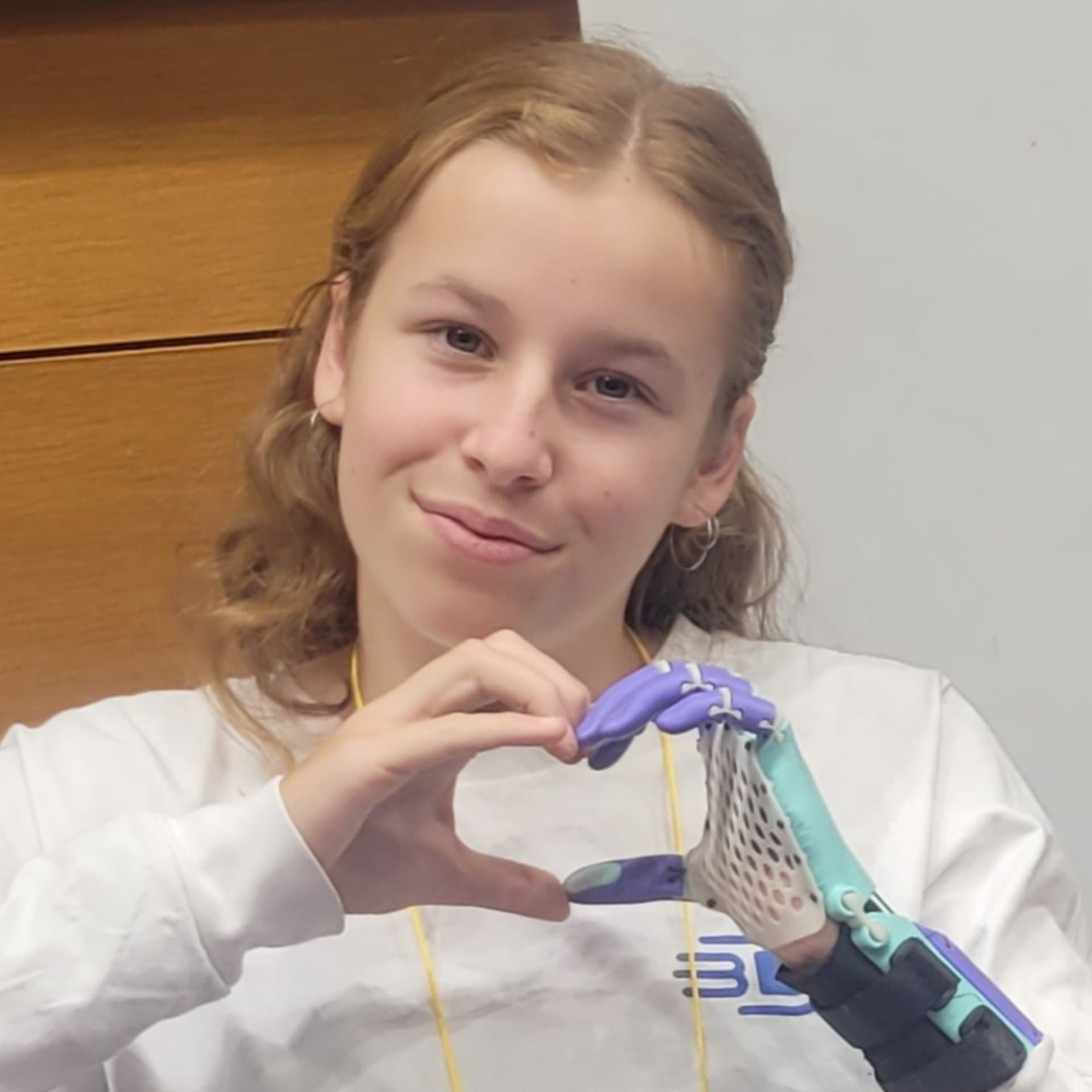
- Background: 14-year-old Lois was born without part of her left hand.
- Class Project: Inspired by a lesson on empathy, Lois and her classmates used a 3D printer to create a new prosthetic hand.
- Teacher's Insight: Lloyd Godson emphasized the project's growth from a single lesson into a collaborative effort among students.
- Outcome: Lois expressed pride and excitement about using the hand, highlighting her friends' support and intrinsic motivation.
- Breakthrough Drug for Epilepsy
- Treatment for Dravet Syndrome
- Patient's Experience: Lauren Truelove discussed her son Freddie, who experienced up to 90% fewer seizures after receiving a new treatment.
- Drug Mechanism: The drug works by injecting into the spinal fluid, targeting the underlying genetic cause of seizures rather than just the symptoms.
- Research Insights: Professor Helen Cross explained the complex nature of epilepsy and the importance of targeting the root cause for effective treatment.
- AI for Earthquake Rescue
- Invention by Turkish Students
- Innovation: Adil Ida and Ada Kanchal developed "ResCube," an AI system designed to locate trapped individuals under rubble after earthquakes.
- Motivation: Growing up in an earthquake-prone area fueled their passion to create a solution that could save lives.
- Future Goals: The students aim to refine their technology for practical deployment in disaster situations.
- Seagrass Conservation Efforts
- Importance of Seagrass Meadows
- Functionality: Seagrass meadows are vital for biodiversity and carbon absorption, but they are threatened by climate change.
- Scientific Research: A team led by Professor Stephen J. Tomasetti is focusing on genetic adaptations in seagrass to enhance resilience in warmer waters.
- Conservation Strategy: The team is harvesting seeds from heat-resistant plants to replant in deteriorating meadows.
- Cultural Highlight: The Harajuku Dog Walking Man
- Nobuaki Moribe's Unique Service
- Community Impact: Nobuaki became famous for walking multiple small dogs in Tokyo, creating joy and fascination among locals and tourists.
- Personal Motivation: His goal is to bring peace and happiness to those around him through his unique dog-walking service.
Key Takeaways
- Empathy in Action: The power of community and empathy can lead to meaningful projects that impact lives positively.
- Medical Innovations: Advances in medical treatments, such as the new epilepsy drug, showcase the potential for significant improvements in quality of life for children with chronic conditions.
- Technology for Good: The application of AI in emergency situations exemplifies how technology can enhance safety and efficiency in rescue operations.
- Environmental Awareness: Scientists are actively working to protect ecosystems vital for combating climate change, highlighting the urgent need for conservation efforts.
- Cultural Connections: Personal stories like that of the Harajuku dog walker illustrate how individual passions can create community joy and interest.
Conclusion This episode of The Happy Pod is a poignant reminder of the human capacity for innovation, compassion, and resilience in addressing challenges, both in health and environmental contexts. The stories featured leave listeners feeling inspired and motivated to contribute positively to the world around them.
---
*For more updates and information, you can reach out via email at globalpodcast@bbc.co.uk.*
Written by AI. May contain mistakes. Listen to the episode to check what was said.
Chapters
Tap a time to open that second in VOTeenagers Create a Prosthetic Hand
0:46 to 1:42
A group of teenagers collaborates to create a prosthetic hand for their classmate.
“It felt really special and like good to me like because showing my friends like this is what it feels like to make one and feel like what it feels like to have a prosthetic hand.”
Empathy in Technology Education
1:42 to 2:06
Lois discusses how her classmates used empathy to inspire their project.
“We start in New South Wales, Australia, where a group of teenagers have been working together to make a new hand for one of their classmates.”
Lois's Experience with the Project
2:06 to 4:40
Lois shares her feelings about the process and her classmates' support.
“with the students wanting to make more for people who need them.”
Impact of Creating a Prosthetic Hand
4:40 to 6:28
The students learn about the significant impact their project had on Lois.
“Lois how did you feel using your hand for the first time?”
The Transformation of Children with Epilepsy
6:28 to 8:10
Lauren Truelove shares how a new drug has dramatically changed her son's life.
“Lois, why is it important that we all embrace our differences?”
Understanding Dravet Syndrome and Its Treatment
8:10 to 10:32
Professor Helen Cross explains Dravet syndrome and the new drug trial results.
“He's able to enjoy life like any other child, which is, it's everything and more to me.”
Challenges in Pediatric Drug Trials
10:32 to 12:44
Discussion on the complexities of conducting drug trials in children.
“And so with that we're hoping to tackle all the problems not just the seizures but the other neurodevelopmental and walking problems as well.”
Innovation in Disaster Response: ResCube
14:05 to 18:03
Learn about ResCube, an AI-driven device designed to locate survivors in rubble after earthquakes.
“I caught up with Adil and Ada and started by asking them how it works.”
The Importance of Seagrass: Protecting Our Oceans
18:06 to 22:41
Discover the vital role seagrass meadows play in marine ecosystems and climate change.
“Seagrass meadows are one of the world's most valuable underwater habitats.”
Meet the Harajuku Dog Walker: A Tokyo Icon
22:42 to 28:00
Explore the life of Nobuaki Moribe, Tokyo's famous dog walker, and his impact on the community.
“And for more on this story, just search for People Fixing the World wherever you get your BBC podcasts.”
Show all 11 chapters
Geopolitical Upheaval and Intimidation
28:00 to 28:15
Discussion on the current geopolitical tensions and the implications of intimidation.
“dramatic geopolitical upheaval alongside threats of intimidation and imprisonment.”
Transcript
Automatic transcript. May contain errors.0:00This BBC podcast is supported by ads outside the UK.
0:30bbc.com and the bbc app. Visit bbc.com slash docs to learn more. This is The Happy Pod from the BBC World Service.
0:45I'm Holly Gibbs and in this edition... It felt really special and like good to me like because showing my friends like this is what it feels like to make one and feel like what it feels like to have a prosthetic hand. The teenager whose classmates helped make her new prosthetic hand. How a new drug is transforming the lives of children with a severe form of epilepsy. He's able to enjoy life like any other child which is it's everything and more to me. He has this vivacious lust for life. The students using AI to help rescue people trapped after earthquakes. We are very focused and we want to make it so that it can be used or deployed in actual like rubble zones because we want to have that impact.
1:34Plus the scientists saving a plant that's crucial in tackling climate change.
1:42We start in New South Wales, Australia, where a group of teenagers have been working together to make a new hand for one of their classmates. 14-year-old Lois Agnello was born without part of her left hand. During a lesson about empathy and technology, she asked her teacher whether the class could use their 3D printer to make an improved version of her prosthetic. The idea has now grown into a passion project, with the students wanting to make more for people who need them. I spoke to Lois and her teacher Lloyd Godson and started by asking Lloyd about the project. So it actually started out as just a normal technology lesson.
2:23And we were looking at how designers have to put themselves in other people's shoes to understand how the people feel when they're designing a product. So we're talking about empathy. And Lois said, I've got this really cool video I'd like to show the class. She brought up the ABC video of her receiving her first hand when she was six years old from Matt Botel. And the class watched this and there was probably about five or six members of the class who were just completely taken by this video and it was quite an emotional thing to see too see Lois as a young girl. After the class finished they said hey we've got a 3D printer can we not try making one ourselves and Lois formed a group of about 10 people that were about her age like 13 14 years old and we reached out to Matt at Free 3D Hands and yeah it was amazing.
3:14Lois can you tell me why you wanted to make a hand with your classmates? It just like came to me and I'm like hey Lloyd can we make a hand and he's like yeah sure let's do it. It felt really special and like good like to me like because it's just showing my friends like this is what it feels like to make one and feel like what it feels like to have a prosthetic hand and all that. I think for you, Lois, too, you were saying that you were quite surprised that your friends wanted to help you. Like you were saying how it felt really nice that... They actually cared. They actually cared enough to want to learn how to do this and make one for you.
3:55And Lois, can you tell me what your favourite part of the process was? My favourite part was probably actually getting the people to join, like, the project and stuff. seeing people like asking me, can I join this? It looks so fun. Like, and I'm like, yeah, sure. It was amazing watching all these young people being so intrinsically motivated to do something. It wasn't something that I set as a lesson. It wasn't something that they had to do for school. It was something that just grew out of a lesson that we taught on empathy. And then the students just ran with this idea and they kind of consumed us for the next six months.
4:40Lois how did you feel using your hand for the first time? I was shocked that we actually did it like and proud I was like I felt like I was in a dream I was like this is crazy it's actually working I'm crazy it's like I was going psycho and Lloyd what do you think that the students got out of this? oh I think you know they got to understand that just these small steps can make such a huge impact like their projects gone nationwide it's gone global they've you know directly impacted one of their peers and saw the difference it can make in someone's life just by taking you know half hour out of your day twice a week they're able to have such a huge impact now coming back to school this year one of the first things the kids did were come up to me and said can we run design for change again?
5:33Can we start our weekly meetings? And we've made a hand. And now the next step for us is to try printing an arm. The students are really keen to do more of this, basically. I mean, and this is why Matt does what he does. He said that the first time he made a hand for someone, he got a video back from the recipient. And he realized when he saw that video that this is what he wanted to do now, because the kid in the video that had received one of the hands was just so happy and he put a smile on this kid's face and that made him feel really good and I think this is what the students are experiencing now would I be right Loie but yeah the kids have just had that sensation that feeling of we've done this thing we've made Lois feel really good that feels really good we want to do that again and so I think that's why they're keen to now make an arm and find more people that they can print hands for and and really get that sense of satisfaction of helping people in the world.
6:29Lois, why is it important that we all embrace our differences? Because if everyone was the same, it'd be like a bunch of robots on Earth. We'd want everyone to be different. Everyone is good at what they do, and I think they shouldn't change that. Just be you. Yeah, be you. Yeah, that's good. And my final question is to you, Lois. Do you want to do something like this when you're older? I would love to be an engineer, but also my dream ever since I've been a kid has been I wanted to always be a pastry chef, like a French pastry chef. I think also being an engineer would be good, but I'm trying to decide.
7:10Lois Agnello and Lloyd Godson. Next to a drug that's transforming the lives of children with a severe form of epilepsy. He was having hundreds, up to thousands of seizures in a day from the moment we started on the trial. Seizure length, we went from minutes to seconds. So that enabled us to start living our lives. That's Lauren Truelove, whose son Freddie was one of the first to receive the new treatment for Dravet syndrome, which also causes developmental delays and problems with movement and communication. The small trial in the US and the UK showed that patients had up to 90 % fewer seizures and the drug was safe for children and adolescents.
7:55Freddie, who's now eight, had been having seizures since he was six months old. Lauren says the change has been incredible. He's climbed mountains. We can go out walking with the dogs, walk around the lakes. And he's even been skiing. He's going to school. He's reading. He's able to enjoy life like any other child, which is, it's everything and more to me. when Freddie was diagnosed it was really difficult to know what that future looked like and we thought we had everything taken away from us and I think now with the alertness and the development that he's gone through in the past four years he's able to enjoy everything about life he loves being with his friends he loves being at school he has this vivacious lust for life, the trial has enabled him to find his own feet and his own path and his own mind.
8:52And that really is quite something. The new drug is injected into the spine and travels to the brain to manage the underlying cause of the condition, which in most cases is a faulty gene. My colleague Tim Franks spoke to Professor Helen Cross, one of the lead researchers from University College London. Epilepsy is a symptom. So there are many, many different causes of epilepsy. And Dravet syndrome is a particular early onset epilepsy. I say early onset, onset in the first year of life. And then they subsequently get very frequent seizures, frequent admissions to hospital, and get developmental slowing.
9:28So in the longer term, they have a lot of other problems, which include learning difficulty, walking difficulty, feeding difficulty, and behaviour problems. And these seizures that you're talking about, I mean, they can be really quite severe, can't they? They can. They have different types of seizure, but also they can be very frequent. And also they can be quite prolonged, needing emergency treatment to stop them. Tell me then about this drug. How does it work? We know that Dravet syndrome has a genetic basis and more than 90 % of those with Dravet syndrome have a particular abnormality. What our traditional treatments have done have only treated seizures they have not looked at the underlying cause of the problem.
10:10What Zeruva-Nursin does is by injecting it into the liquid around the brain, it increases the production of protein from the normal gene. All the Dravet have one abnormal copy and one normal copy. It doesn't do anything to the abnormal copy of the gene. It's increasing protein production from the normal copy. And so with that we're hoping to tackle all the problems not just the seizures but the other neurodevelopmental and walking problems as well. Can I ask about how you trial a drug such as this in children? Are there particular challenges for trialing a drug such as this? It is always challenging to do clinical trials in children but actually we have to think of it that this is the safest way to evaluate drugs in the fact that the children are very carefully monitored throughout the trial.
11:04I mean, it's challenging. We have to make sure that the families are very aware of the risks and the possible benefits, but they are very carefully monitored. This sample was, correct me if I'm wrong, it was relatively small. So where are you going to take this next to just, I guess, check on its efficacy and also its safety? So this was a small trial, but it was also variable in whether children had one dose or multiple doses and it was open. We knew that they'd all had the dose of drug. The double blind phase is that children are recruited and randomised to whether they receive the drug or they have what we call a sham procedure.
11:43So they don't have injection of the drug and then they are monitored. And eventually those who don't get the medication will get the medication. So they will at some point get it. so we need to recruit around 170 patients worldwide right before we came to you we heard a little clip from lauren the mother of freddie true love eight years old whose life she says has just been transformed for the better i mean i'm sure it's exciting the science that you're involved in but it just must be glorious to see the effect this is having i mean it is early days but it is tremendous to see benefits. This is a really complicated, very difficult epilepsy syndrome where the diagnosis is really devastating for the families because they don't see any progress in their children at all.
12:31So to see a real hope that we could do something about that cause, do something not only about the seizures but the neurodevelopment is incredibly exciting and actually something I never thought I would be embarking on when I started my career. Professor Helen Cross.
12:50Coming up on this podcast, we meet a Japanese man who's become famous for walking dogs. This is the happiest day of my life. I finally get to see the Harry Chucky Dog Walking Man. I just met a real-life Pokemon trainer. 22 dogs he's walking. If you live in Tokyo, you already know this legend. We'll hear more from that man about a dog later.
13:17Russia editor. In Our Man in Moscow, I'll show you what it's like being a news correspondent in Russia as the Russian authorities wage war on Ukraine and try to silence dissent. The sound of war has reverberated around Ukraine for three years. Dramatic geopolitical upheaval alongside threats of intimidation and imprisonment. Our Man in Moscow. Watch with a subscription to bbc.com and the BBC app. Visit bbc.com slash docs to learn more.
13:50When major earthquakes strike, quickly finding those trapped under the rubble can save countless lives. Two Turkish students have found a way to use AI to speed up the process by alerting rescuers to any signs of life. Adil Ida and Ada Kanchal's invention is called ResCube, and by winning a competition at their university in London, the pair have funding to develop it further. I caught up with Adil and Ada and started by asking them how it works. You place those sensors on a collapsed building and then we have an AI model that we have trained over the summer to understand the complex medium of a rubble site.
14:28The signal is processed through that model and then as a result it tells you if there is anyone trapped, if there are any survivors. And then the next step we want to work on is to be able to locate these people. A very, very simple version of it is like an app on your phone. And let's say your phone has a microphone. And basically the sensor that we use is a microphone, but for signals or waves traveling through like physical media, which is like rocks or like concrete, rather than just air. And what we do is basically pick up those and then using our app, take out, extract noises that are created by humans that are under the rubble to be able to say, oh, there is someone here or not.
15:11Why did you want to create this device? We've always grown up with the fact that there has been earthquakes and there will be earthquakes. And after the 2023 earthquake, there has been a very big amount of losses in terms of both lives and a lot of buildings have collapsed as well. But also one of the provinces that has been affected the most is actually where my dad is from, where I visit every summer and where I have most of my family at. Yeah, it's really hard to grasp, I think, like the notion of like growing up with earthquakes when you're not coming from a country that doesn't have them like that much.
15:48But I think like people who are coming from like earthquake prone zones will understand that you just grow up knowing that earthquakes can happen. And you have that fear inside of you as if like it's like innate because like you grow up hearing these stories, even since like you're a kid. You hear about your grandpa, you hear about your dad. Everyone, like almost every generation has experienced like a big earthquake, at least in Turkey, I can say. So like you hear about these stories about the losses they had. So you grow up knowing and fearing them. And what's been the reaction of your families who must be very proud that you have taken, like you say, their experience and turned it into something really, really positive?
16:29my family my dad's side who are from hattai has been really supportive and they're really proud about what we're even not about what we've achieved but what we are trying to achieve they have been very supportive and very motivated about the cause as well obviously so well that brings me on to my next question which is what is next for res cube we're right now like trying to expand our reach we're right now in the process of like making our hardware better and we're also looking to focus on our models and our software side over the summer and we're working on it like all the time like during school after school every weekend it's just like we're very focused and we want to make it so that it can be used or deployed or at least people can start using it in pilot tests in actual rubble zones because we want to have that impact.
17:26The only reason we're doing this is to be able to help in the process. So we just want to have that as soon as possible. On a personal level, how does it feel to be working on something that is going to help people? It's incredibly exciting. Anytime we sit down to work or do something, it doesn't feel like work, but rather a personal motivation that we're chasing. It's very enjoyable and I'm willing to put in a lot of efforts and do sacrifices if necessary to bring it into a level where it can actually be deployed for earthquakes and hopefully save lives. Adil Ida and Arda Kanchal. Seagrass meadows are one of the world's most valuable underwater habitats.
18:10As well as providing food and shelter to thousands of species, the plants play a vital role in tackling climate change by absorbing carbon dioxide. But seagrass is also under threat from global warming, with most species unable to tolerate water above 25 degrees Celsius. Now, though, scientists have discovered that some plants are evolving to survive at higher temperatures. Ben Wyatt has been finding out more. given the recent snowstorms it's an icy path that leads to the paul sabane's coastal ecology center in the asseteak national park of maryland
18:51the team here are preparing to take me across the lagoon of the sinne poxin bay so we can get up close to the seagrass meadows they've been working so hard to restore while the boat thaws outside in the Midday Sun, I sit down with leader of the Seagrass Project, Professor Stephen J. Tomasetti of the University of Maryland Eastern Shore to learn more about its focus. We're, as a team, working on eelgrass. It's the foundational seagrass species of the U.S. East Coast, essentially. We can find it anywhere from North Carolina up through Canada. But here in Maryland, we're near to the southern edge of its range.
19:30They're not the flashy coral reefs, but they serve a lot of the same function. This is Katie Tanner, a PhD student working on the project under Stephen's guidance. These vegetated ecosystems provide the physical structure for a lot of biodiversity. We have seahorses, I've seen sharks out in the eelgrass meadows. It's a lot of shellfish, but also a lot of culturally important fish species. All in all, it's a very useful plant to have around, only it's fast disappearing. Stephen's team turned to genetic science for help. My name is Stephanie Kamel, and I'm a professor in the Department of Biology and Marine Biology at the University of North Carolina, Wilmington, and I'm the genomics lead on this project.
20:13So, in some meadows challenged by higher temperatures, a small number of plants have been mutating or changing genomically. When we're talking about genomic change, at the very basic level, we're asking, have there been changes to that DNA sequence? Does that change enable me to be taller, live longer, be more heat resistant? So when I go out and sample seagrasses, I sequence the genome, and I will find change has occurred in a gene that regulates heat shock. By comparing the DNA of the variants with that of normal eelgrass, Stephanie is able to isolate the exact genes associated with heat resistance.
20:52The team using Stephanie's data can now focus their attention on harvesting just the seeds that contain heat-resistant genes before replanting them in dying meadows. It was this technique that Katie used to seed her new eelgrass meadows last year. Around March, when all the pollination has occurred and seeds are developing, we then go out and we pluck these reproductive shoots. They kind of look like green beans and then hold on to them until they're ready to germinate, to grow. Then it's just a matter of moving them to where they need to be. So our hand in the genetics is very low-tech. It's really just moving seeds around at the right time.
21:31And to find out how those meadows were coming along, it was time to put on some waders. It's coming up to my hips. And this water is at zero degrees Celsius. So just praying there are no leaks in the waders. The eelgrass, what kind of depth does that normally grow in? anywhere from like a couple inches to six feet maybe the water today is too murky to see the sprouting grass but katie hopes the meadow will not only have regrown but will then also flourish in the hot temperatures of the summer if it does the team of that bit closer to securing the future of eelgrass meadows in maryland the effort here is costing three hundred thousand dollars over five years.
22:21But for Stephanie, it's taxpayer money well spent. We need to take a much more active role in managing our ecosystems. We're really not sitting back. We're like, OK, we're going to try these things because of the absence of that is we're just going to what, just let seagrass loss continue. I mean, we can't let that happen. Professor Stephanie Camel ending that report from Ben Wyatt. And for more on this story, just search for People Fixing the World wherever you get your BBC podcasts. We end in Tokyo with a man who is not your average dog walker. If you've been to the city's famous Harajuku district, there's a good chance you might have seen and taken a photo of a man who spent years walking up to 32 small dogs around the area every day.
23:08Will Leonardo went along to find out more about this social media sensation. This is the happiest day of my life. I finally get to see the Hedricky Dog Walking Man. I just met a real-life Pokemon trainer. 22 dogs he's walking. If you live in Tokyo, you already know this legend. For anyone coming to Tokyo, one of the first things you might notice is the fact that there's so many little dogs everywhere, and they're all so well turned out. Many of them wearing little coats, especially because it's the middle of winter here now, and they all look like they get groomed more than the human owners. One of the people that's most famous for walking their dogs around the city centre of Tokyo is Nobuaki Moribe.
23:47He is known as the Harajuku Dog Walker. He's often seen interacting with tourists and local people. Well, he runs a groomer salon on a quiet street in central west Tokyo, and I've come down to have a quick chat with him. You've picked a very famous area to walk around, which is full of a lot of tourists. People go there to shop. I'm just wondering if that was maybe a deliberate choice or something that just kind of happened naturally.
24:13When I started walking these dogs, I was suddenly inspired to take this route. And that's it, really. And then, before I realised, there were lots of tourists, people from all over the world, taking photos of my dogs getting on well, which really made me joyful. But originally, the walks were during Covid in 2020, when there was absolutely no one around. I think from a foreign perspective, dogs in Tokyo tend to be very small. They're very well-groomed. Why do you think that is? Compared to the rest of the world, Tokyo is known for its small dogs. I think that's because people's homes are smaller.
24:50Most dog owners live in apartments. And globally, there aren't that many people like me who walk large numbers of small dogs. That's why I think I've stood out. The most popular breed here is the poodle, and most of them get a cut once a month, which is why I think Tokyo dogs look especially stylish. Nobuaki's told me to meet him in a corner of Yoyogi Park, which if you've been to Tokyo you might know is next to the big Meiji shrine and just up against Harajuku where he's going to continue his four-hour walk. He's told me to meet him a bit into his walk partly because he says he doesn't walk me around while the dogs do their business.
25:29How many dogs do you have today?
25:3422! too.
Read the full transcript
25:39He's now completely encircled by people taking photos. The lights are turned green.
25:49Well, every other person is turning around to take a photo of Nobuyaki as he glides past in the centre of his sea of dogs. Let's talk to some of them and see what they made of the spectacle. They're very well behaved. They are very well behaved, aren't they? They don't seem to bark at all. I don't quite know how it's done. behaved. I just, what happens when they go to the toilet, do you know? I hear that he gets that done in the first hour of the walk. I've seen before, so I used to come to Tokyo, but I walk this street, 100 % I see him. I actually find it quite inspirational. Back home, we don't have anything like that.
26:21They all seem happy, they're not fighting each other. We've been in China and then come to Japan, but everyone's got dogs. In other countries, those who walk lots of dogs tend to focus on larger breeds and big dogs are easier to handle they move around in a more precise way what's the kind of interactions you've had that stuck in your memory the most every day is interesting and every day there's different people the fact they all enjoy themselves so much makes me feel great and some even remember me they say oh i saw you a year ago before showing me a photo So I'm very happy that I've stuck in people's memory.
27:05I really hope I'm making everyone feel peace and love.
27:13Nobuaki Morabe, ending that report from Will Leonardo.
27:22And that's all from the Happy Pod for now. We'd love to hear from you. As ever, the address is globalpodcast at bbc.co.uk. This edition was produced by Rachel Bulkeley. The editor is Karen Martin. I'm Holly Gibbs. Until next time, goodbye.
28:00dramatic geopolitical upheaval alongside threats of intimidation and imprisonment. Our Man in Moscow. Watch with a subscription to bbc.com and the BBC app. Visit bbc.com slash docs to learn more.
From the publisher
Lois, 14, and her classmates used a 3D printer to create her new hand as part of a school project. Now they want to make prosthetic limbs for other people who need them, using the same method.
Also: We find out how a new drug is transforming the lives of children with a severe form of epilepsy. A trial found it significantly reduced their seizures and also helped with overall development and movement.
We meet two Turkish students using AI to help locate people trapped under rubble after earthquakes. They hope their invention will help rescuers reach survivors more quickly.
Plus the teams working to save seagrass meadows, which are vital in tackling climate change. And the Harajuku dog walking man - who's become famous for leading dozens of small dogs around Tokyo.
Our weekly collection of inspiring, uplifting and happy news from around the world.
Photo: Nature School
Presenter: Holly Gibbs. Music composed by Iona Hampson