
In short
The Happy Pod episode focuses on animal welfare and conservation, plus a few global human-interest stories. Topic 1: Portugal’s last circus elephant, Julie (a 40-year-old African elephant), is rehomed to the Pangaea Trust sanctuary in Portugal after Portugal banned wild-animal circus acts.
Key claims
Julie has settled quickly, shows reduced stereotypical anxiety behaviors, uses a mud wallow for skin care, and is forming relationships with the care team; the sanctuary is restoring biodiversity on a former cattle farm/eucalyptus plantation and aims to expand elephant habitat. Topic 2: Scientists confirm a new Congo rainforest monkey species, Lekweli/Lekweli colobus (Colobus l’quali), found in Lumami National Park. Topic 3: Kenya’s Eco-Mamas restore mangroves and coral reefs; one woman plants mangroves (200,000+ trees since 2018) and another rebuilds reefs using cement structures and live coral fragments.
Notable examples
Julie’s mud wallow; the monkey’s orange-cream lips and black fluffy coat; mangrove seedlings, coral fragments, and community benefits like desalination and microfinance.
Guests
Grasa Fonseca (Pangaea Trust board; former Portuguese Minister of Culture); Ryan Hockley (Pangaea Trust sanctuary manager); Professor Kate Detweiler and PhD student Junior Amboko (Florida Atlantic University, monkey discovery team); Zulfa Hassan and Wanasha Mwana (Eco-Mamas in Kenya).
Written by AI. May contain mistakes. Listen to the episode to check what was said.
Chapters
Tap a time to open that second in VOJulie the Elephant's Journey
0:00 to 0:45
Follow Julie, Portugal's last circus elephant, as she settles into her new sanctuary.
“This BBC podcast is supported by ads outside the UK.”
Julie the Elephant's Journey
0:59 to 2:19
Follow Julie, Portugal's last circus elephant, as she settles into her new sanctuary.
“She's exploring the outside more and more each day.”
Inside the Sanctuary
2:19 to 4:09
Explore the sanctuary's efforts in restoring biodiversity and preparing for elephants.
“She'd been with a circus in Portugal since 1988, almost her entire life, until the country banned the use of wild animals for entertainment two years ago.”
Julie’s Adjustment and Health
4:09 to 6:21
Insights into Julie's health and behavior as she adapts to her new environment.
“and she's exploring the outside habitats more and more each day.”
Plans for More Elephants
6:21 to 8:11
Discussion on expanding the sanctuary and bringing more elephants to Pangaea.
“What was it like the day that Julie arrived?”
Discovery of a New Monkey Species
8:11 to 10:35
Learn about the new species of monkey discovered in the Congo rainforest.
“We're going to make sure that we develop a Habits app that's capable of, you know, supporting way more elephants than that.”
Eco-Mamas in Kenya
10:35 to 14:01
Explore the efforts of Eco-Mamas in restoring Kenya's coastal ecosystems.
“This was so emotional to see that I started from the very beginning to collect data.”
Mangrove Conservation Success
14:01 to 15:27
Learn about the impact of mangrove conservation on local economies and communities.
“Because the coral is alive, it grows gradually over time.”
Introduction to the Happy Pod
15:57 to 16:49
Get introduced to a heartwarming story about a teenager's piano achievement.
“and some of the world's best chefs to create professional quality cookware, knives, and kitchen tools.”
Heartwarming Moments from the World Cup
16:59 to 23:02
Explore the most touching stories from the recent World Cup, highlighting unity and culture.
“The men's football World Cup reaches its conclusion this weekend.”
Show all 12 chapters
Freya Teres: A Remarkable Pianist
23:03 to 28:01
Hear the inspiring story of Freya Teres, who passed a piano exam using only one hand.
“And finally, the story of a history-making teenage pianist.”
Conversations with Pianists Freya and Nicholas
28:01 to 28:33
Learn about the ambitions and future plans of young pianists Freya Terrace and Nicholas McCarthy.
“And, you know, I'll be coming to one of your concerts soon.”
Transcript
Automatic transcript. May contain errors.0:00This BBC podcast is supported by ads outside the UK.
0:30Need more data? Add it right from the app. Done? Go back to free. No long-term contracts, no pressure, no surprises. Just wireless that works around you. TextNow. We've got your back. Download TextNow in your app store today. Wireless plans require the purchase of a SIM card. Visit textnow.com for terms and conditions. This is the Happy Pod from the BBC World Service.
0:58I'm Chantal Hartle and in this edition, Portugal's last circus elephant reaches her forever home. She's exploring the outside more and more each day. She's using the mud wallow. We couldn't be happier with the progress that she's making. Scientists discover a new species of monkey hiding in the Congo rainforest. Having a new monkey species come to light after all these years of being in the landscape is just really extraordinary. A summer of sport that led to new and unlikely friendships around the world. It's really what the World Cup is about. People from other countries winning each other and loving the time they spend together.
1:40And I began planting mangroves in 2018. Since then, we've restored about 75 % of the mangrove forest. Seeing it come back to life fills me with pride. The women restoring Kenya's vital coastal ecosystems. We start with a sanctuary giving retired circus elephants the freedom to roam. The site in Portugal, run by the Pangaea Trust, covers around 1 ,000 acres and aims to give elephants the closest possible alternative to their natural habitat. It now has its first resident, Julie, a 40-year-old African elephant. She'd been with a circus in Portugal since 1988, almost her entire life, until the country banned the use of wild animals for entertainment two years ago.
2:29In a moment, we'll hear how Julie is settling in to her new surroundings. But first, the BBC was given a tour of the sanctuary last year, as it was preparing to welcome its first elephants. we might be in the middle of portugal but the landscape is very reminiscent of africa it's just the flat-topped acacia trees have been replaced by cork oak trees and it's not difficult to imagine elephants wallowing in this little water hole it's a really beautiful site actually it used to be a cattle farm and a eucalyptus plantation and we've spent the last one to two years basically trying to restore the biodiversity on site to get ready for elephants.
3:10It's going to be closed visitors, so we will have the odd open day for local communities. But no, this is all about the welfare of the elephants. Grasa Fonseca is on Pangaea's board. As a former Portuguese Minister of Culture, she's passionate about the project. You know, one of the first visits I did here, and we were passing through a really small cafe, and the lady was like, ah, you are the person that are going to bring the elephants. And we were, yeah, yeah, we are bringing the elephants. Yes, you know, I thought all my neighbors here, they wouldn't believe me, but now they believe me. You are bringing the elephants.
3:47It's really interesting the way that the community here engaged with the project, because it's about, really, elephants here? Well, they might just believe it now. Pangaea's sanctuary manager, Ryan Hockley, told me how Julie, their first resident, is getting on. She's doing really well. We're really pleased with the progress that she's making. She seems to have settled in quickly. So she's very comfortable with the inside space and she's exploring the outside habitats more and more each day. She's using the mud wallow,
4:23which is vitally important for any elephant, captive or wild, for skin care. But she's behaving just like a wild elephant And insofar as, you know, on the particularly hot days, she'll put a protective layer of mud on to obviously shield her from sun and also biting insects. We couldn't be happier with the progress that she's making. In modern terms, this was one of the last areas of elephant habitat. So it's just a lovely story. I think that Pangaea chose this place to develop their sanctuary. And as I look out of my window across the rolling countryside, if I just use my imagination, I could be in Tanzania or Kenya, somewhere like that.
5:07Particularly, you know, for the African elephants that are arriving here, I'd like to think that choosing the Iberian Peninsula has really given us a chance to give them a habitat as close as you can get to Africa as you possibly could do without stepping foot back. Were you expecting her to take so well to this new environment? Because she's been in the circus for nearly 40 years. You would think it would be difficult to adjust, but it sounds like things are going really well. Yeah, exactly. I'm pleasantly surprised the speed that she's settled in forming relationships with the care team. And there are some patterned behaviours that she has naturally brought across from that life, you know, stereotypical behaviour.
5:53So maybe people have seen videos of elephants where they sort of rock backwards and forwards or sway from side to side. It's performed by animals to reduce anxiety and stress levels. We've already seen with Julie a marked reduction in stereotypical behaviours. She's clearly feeling less anxious or stressed than she previously was. So really happy for her. What was it like the day that Julie arrived? What was going through your mind and how you felt seeing her finally at Pangaea? I guess maybe the overriding emotion was relief. Fortunately for us, her journey from where she was located to Pangaea, I'm going to say, was I think less than two and a half hours from start to finish.
6:47It's still, you know, an elephant out on the open road in the back of a transporter. There is some jeopardy that surrounds that. But yeah, that initial one, definitely relief. Now, obviously moving forward with her, there's a lot of hope for the future with her. Seeing her transform into a much bolder character, that's wonderful to see. I just feel immensely proud and happy for her. And now you have Julie safe and secure. What's the plan for bringing more elephants to Pangaea? so originally we had hoped that an elephant in a belgium zoo cariba would have been our first arrival the logistics surrounding cariba's potential transport was a lot more complex than than julie's ever was so i mean we're just you know we're happy that we have julie here of course our ambitions go way beyond way beyond just one or or two elephants hopefully this later from this year we'll be extending into uh into a new area so actually we could be increasing that that initial space by up to 10 times so we're really excited for that you know we always want to push forward and it's our ambition to over the coming years you know to bring more elephants and develop more habitats so even though maybe we only have julie kariba and possibly one more in September as well.
8:12We're going to make sure that we develop a Habits app that's capable of, you know, supporting way more elephants than that. Ryan Hockley from the Pangea Trust. While staying with animals, there was more good news this week with the discovery of a new species.
8:37the roar of the lakweli monkey an elusive character with peach colored lips and a black fluffy coat it belongs to the wider group of colobus monkeys and lives in the dense tropical forests in the democratic republic of congo the monkey was first spotted back in 2008 but it's now been confirmed as a previously unknown species and it's only the fifth new type of African monkey to be identified in the past 75 years. Professor Kate Detweiler and PhD student Junior Amboko from Florida Atlantic University were part of the team that made this amazing discovery. The new Colobus l 'Quali is a medium-sized monkey but it's the smallest colobus and it's covered in dark hair.
9:24And then on its face, it's got this really magnificent orange cream-colored lips and area under the nose that sticks out, especially when it roars. And then it's got this really spiky black hair around the side of the face and on the top of the head. The Lomami National Park is really a very remote place, difficult to access and also high. And And probably this is why it took a long time to actually discover the species and also collect more data on it. Remember that Lomam is a new park. It was officially established in 2016. So almost everything needs to be studied, not just primates. But I keep reminding people that we have over 50 species of mammals in general.
10:07We have over 200 species of birds. Having a new monkey species come to light after all these years of being in the landscape is just really rare. We had an earlier discovery in 2012 from the same landscape on the west side of the Lumami River, and now we're on the east side. So we're really excited to have the next steps for learning more about what Likwele, its ecology is and its evolutions. It's really, really extraordinary. This was so emotional to see that I started from the very beginning to collect data. We didn't know anything about the species. and at the end I was actually the one who gave the name because we kind of had three names suggested and my name was actually picked up by the team, which is Kolobis Kongwesi.
10:58This was actually from my suggestion and just it's so amazing for me and I'm just proud to see that this naming is coming from me. The Lumami National Park is incredible. So I've done the full transect. Juniors lived there for years. People should go to Lumami National Park and see Lekweli. Well, let's head to Kenya now, where a group of women have been leading efforts to restore the country's vital coastline. The Eco-Mamas, as they're known, are rebuilding mangrove forests and coral reefs, and even farming octopus, reviving fragile ecosystems and boosting the blue economy that their communities rely on.
11:36Jirogi Muigai reports from Lamu Island off Kenya's northern coast.
11:43It is 6.30 in the morning in Mtangawanda village on Pate Island, one of the 65 islands that make up the Lamu Akipelago. The tide has retreated. A group of women walk along the ocean shore carrying bundles of tiny mangroove seedlings for planting. They are called Icomamas, and they help marine conservation efforts along this coastline. Zulfa Hassan is one of them. Fish stocks have declined and the mangrove forests have been badly damaged. People cut down mangroves to produce lime, destroying large areas of the forest. Mangrove timber was also exported to Arab countries. Climate change has only made the situation worse.
12:26Lamu's islands are surrounded by mangrove forests, coral reefs and rich fishing grounds that have sustained communities for generations. The mangrove's tangled roots hold the shoreline together and provide safe nurseries where young fish, crabs and other marine life begin their lives. But lately, mangrove forests have been cut and fish stock has decreased. Coral reefs are also struggling to survive. I began planting mangroves in 2018. Since then, we have planted more than 200 ,000 mangrove trees, restoring over 20 hectares of coastline. We've restored about 75 % of the mangrove forest. Seeing it come back to life fills me with pride.
13:12Today, the mangroves are thriving and the forest is healthy once again. A short boat ride away in Shanga Ishakani village, Wanasha Mwana is rebuilding a different part of the ocean. She is known as Mama Matumbawe, mother of corals. She teaches at a local primary school on the island. But before going to class, just before sunrise, she dives into the ocean carrying small fragments of coral. Piece by piece, she secures them onto damaged reefs, hoping they'll grow into thriving underwater habitats. When we restore coral reefs, we first build structures using cement here on the shore. Then we go out to the healthy coral reefs in the sea, carefully collect small coral fragments, attach them to those structures and return them to the ocean.
14:04Because the coral is alive, it grows gradually over time. It can take about a year and a half to two years. But if the corals thrive and aren't affected by bleaching, they continue to grow well. As they recover, fish return to the reefs and in turn, the local economy improves. The benefits of this conservation now stretch far beyond the environment. Zulfa says healthier mangroves mean more fish returning to local waters. Restored reefs support more biodiversity, promoting tourism, and creating better opportunities for people on the island. Through mangrove conservation, we've been able to install a desalination machine that turns seawater into freshwater, something that has greatly benefited our community.
14:52young people have found employment as community rangers and women have become financially independent. We've even started our own microfinance groups using income generated through mangrove conservation. For Zulfa, Monasha and the women working alongside them they hope that with continued support and wider adoption of such initiatives within the continent's coastal communities more mangroves will take root, coral reefs will recover fish will return to populate these waters and more women will become guardians of Africa's coastline. Jirogi Mwigai reporting.
15:33Still to come in the happy pod, the teenager who passed a piano exam using just one hand. It's a bit crazy, actually. It's very cool and I'm very grateful it was something they could do for me.
15:53This podcast is sponsored by Made In Cookware. Made In partners with multi-generational artisans and some of the world's best chefs to create professional quality cookware, knives, and kitchen tools. Their products are trusted in Michelin-starred restaurants worldwide and designed to perform just as well in your kitchen. From five-ply stainless clad to carbon steel, every piece is built to last and made to actually make you a better cook. Discover award-winning cookware at madeincookware.com.
16:49just the king of the attention economy. Find out on Good Bad Billionaire. Listen on BBC.com or wherever you get your podcasts.
16:59You're listening to The Happy Pod. The men's football World Cup reaches its conclusion this weekend. There is no bigger global sporting event, economically, socially, and in terms of the number of people who watch the games, which are often debated for decades. But unlike the club game, it's the outsiders who can often be the real winners off the pitch as well as on it. Siobhan Leahy looks back at the most heartwarming moments from the last five weeks. Early on in June, an unlikely friendship blossomed in the American Midwest. Not far from Kansas City in Missouri, the university town Lawrence became base camp for Algeria's national team and locals pulled out all the stops.
17:44Hundreds of them showed up to the airport to welcome the squad. And for residents, there were sessions to learn the rules of football as well as Arabic language classes. Kansas artist Stan Hurd created a giant Algeria flag on the university campus using mulch and sand. The perception in the United States these days, internationally, that people are very friendly here, that we're a little nervous about foreigners coming in. Well, that's not the case here. We will be connected with Algeria for centuries, I think. how amazing this moment is. Some Algeria fans felt so welcome in Lawrence that they didn't want to go home.
18:21It's really what the World Cup is about. People from other countries meeting each other and loving the time they spend together. They really learn about the Algerian altar. Cooking classes, history classes. I was planning on staying for one week and I extended it. This was a tournament for the underdogs. Debutantes Kate Verde took their fans on a fairytale journey through the group stages to a thrilling knockout match against Argentina. Goalkeeper Vozinha quickly became a cult hero after his relentless saves. His 50 ,000 Instagram followers ballooned to more than 17 million overnight. We grow up with a lot of difficulties.
19:01Our grandparents and our parents, they sacrificed a lot to educate all of us. So I think we show the resilience of Kapverdian people and we are small but we have big hearts and we are fighters. We are fighters. He began the tournament with no club. Now he's being linked to teams like Inter Miami and if that wasn't enough, he's even had a new species of sea mollusk named after him. The Caribbean island of Curacao also won many hearts. Home to fewer than 160 ,000 people, it was already proud to be the smallest nation to ever qualify for a World Cup. Ultimately, they were thrashed 7-1 by Germany.
19:43But the Curacao fans were just happy to be there. We scored against Germany. We are very glad and very proud. I'm happy and it means a lot to me. It means a lot to my nation. For every children that sees this game, they know exactly that the future is without any limits. A young Mexican fan became another internet star of this World Cup. Unlike most of the children around him, the boy didn't have an official Mexico shirt to wear for the team's opening match. So he wore a bright green Christmas jumper featuring Santa Claus, as well as white shorts and red boots to match the colours of the national flag.
20:19His improvised kit caught the attention of the Mexican striker Santiago Jiménez, who surprised him with a personalised Mexico shirt and a video message.
20:34Ximénez said he was sending the boy a big hug and that he hoped he liked the gift. Mexico supporters were also keen to share their culture with other countries.
20:52Here they are outside a stadium teaching Swedish fans how to line dance to the popular Mexican song No Rompas Mas. It was difficult to miss the presence of Scotland fans known as the Tartan Army during their stay in Boston. Locals appreciated their commitment to placing orange traffic cones on the city's many statues, which is a tradition back home in Glasgow. Scotland has now gifted Boston a special traffic cone, covered in messages and drawings celebrating their new bond. The governor of Massachusetts, Maura Healy, said it had been an unforgettable summer. I have to admit, this is probably, yes it is, my first official welcoming ceremony for a traffic cone.
21:38But it's a pretty special one, isn't it? Because this cone tells the story of what happened this summer. Special thanks to the Scots for drinking all the beer. We knew we were going to see a lot go, but we didn't know quite it was going to go as quickly. Argentina supporters in Dallas successfully reunited a man with a wallet he'd lost in a crowded stadium by turning the owner's name into a football chant to help track him down.
22:12And Japan supporters continued their tradition of clearing rubbish in the stands. Ever since Japan competed in its first World Cup back in 1998, fans have consistently stayed behind after matches to collect cups, wrappers and anything else left behind. This is kind of like culture and traditional things, I think. And this is also like Japanese identity, kind of. We are very proud of this tradition. A tradition that seemed to inspire Paraguay supporters who were filmed also tidying up in their part of the stadium after the match against Turkey. Like all World Cups, this one has been mired in controversy.
22:50But on the margins, it's proven once again that for millions of people around the world, it's more than just a game. It's the most important of the unimportant things in life. Siobhan Leahy. And finally, the story of a history-making teenage pianist.
23:18That is 17-year-old Freya Teres playing the piano with just her left hand. Until an injury two years ago, she played with both hands. But she was determined not to give up, and she's just achieved the top qualification for many aspiring musicians. Not only that, but the exam board, which covers more than 90 countries, believes she's the first person to pass its grade 8 piano exam using only her left hand. The BBC's James Kumarasamy brought her together with professional concert pianist Nicholas McCarthy, who was born without a right arm. Nicholas recently helped to create a dedicated exam syllabus for one-handed pianists.
23:58First, let's hear from Freya about the injury that gradually left her unable to play with her right hand. I would have played with two hands and I'd noticed that I was in pain. But at the start, it was very much, you know, if I practice for two hours, I have to stick an ice pack on for 20 minutes afterwards and it would then go away and I'd be absolutely fine. And it took about eight months maybe for it to get to a point of I couldn't pick up a pen. I couldn't hold a hairbrush to do my own hair in the morning and then finally gave in to get it treated. And at the start, we didn't really know what it was.
24:31It took me about a year before we heard that it would be unlikely that I would be back to playing with two hands again. Nicholas, can I bring you in at this point? Because I understand you were pretty instrumental in Freya being able to take her grade eight. Well, yeah, I mean, Freya, it's lovely to get to chat to you and congratulations. I mean, obviously, I know how much hard work goes into preparing anything concert or a grade. So huge congratulations to that. But yes, it was lovely to be following your story, Freya. I was very keen to create this syllabus alongside my colleagues. When I was young and doing my grades, it just didn't exist.
25:08You know, I stopped at grade four, but I didn't want, you know, other people to have to necessarily jump through those hoops that I had to jump through and have awkward conversations about, you know, in my case, being born without my right hand and going into an exam room. You know, there were some quite awkward conversations and moments. So this one-handed syllabus project with ABRSM is something I'm incredibly proud of and very thrilled. Freya has passed wonderfully at grade eight. I was very keen as well about not just having a left-hand alone repertoire. You know, there's a huge wealth of repertoire for left-hand alone.
Read the full transcript
25:40There's very few pieces for right-hand alone so that anyone with a limb difference or an acquired disability, you know, stroke, car crash, etc., they can still go and take these grades. I am going to come back to you, Freya, but I'm just fascinated, Nicholas, in why there are so many more left-hand only repertoires than right-hand only. Yeah, so it really started in the 19th century. If you think most people in the world are right-handed, so your left hand tends to be your slightly weaker hand. And back then, you know, concert pianists were like rock stars in the 19th century. Take the great fans list, for example.
26:15and often as a way to wow their audiences further, they would play on irony a little bit. You know, you thought I was good with two hands. Wait till you see what I can do with my weaker hand. And they'd play a left hand alone work and drive the crowd wild. And then we fast forward in time to the 20th century, the First World War happened. And because of a similar statistic, if you're in a wartime scenario, a battle scenario, most people are right-handed. Therefore, you're probably statistically likely to injure or lose your right limb. therefore leaving the left hand. And there was one particular man, Paul Wittgenstein, and he came back from battle after losing his right arm in the First World War and he commissioned all the leading big celebrity composers of the 20th century to write left hand alone works for him.
27:01You name it, if they were a name in the 20th century, Wittgenstein was there commissioning them. Leaving, you know, right hand repertoire to not do a great deal. You know, there really isn't many major works for right hand alone. Sounds fascinating. And Freya, Nicholas talking there about rock star musicians of the past. I think it's fair to call him a rock star pianist, certainly amongst the one handed pianist community. Has he inspired you? Has his technique inspired you? very much so actually funny that you say that i was going to to say nicholas i'm sure you remember coming to belfast maybe two years ago and on a very personal level for me it was sort of as i was just coming to the conclusion that you know i wouldn't be getting back to playing with two hands and this was sort of me really in the world of left-hand repertoire and i was coming to grips with that i still very fondly remember that concert i've still got the program sitting in my room you were absolutely phenomenal oh thank you well it's lovely to have you there and hopefully you know, our paths will cross in person, I hope.
28:01And, you know, I'll be coming to one of your concerts soon. That would be a treat for me. Well, I was going to ask, Freya, your ambitions now. You know, Nicholas could have some competition. Well, Nicholas, she'll be glad to hear. I don't think I'm anywhere near your level. So you're very safe, hoping to apply to universities to study music. So, yeah, just see where the wind takes me. Pianists Freya Terrace and Nicholas McCarthy.
28:33And that's all from the Happy Pod for now. If you have a story that you think we should be covering, we'd love to hear from you. As ever, the address is globalpodcast at bbc.co.uk. This edition was mixed by Rob Fanner and the producer was Rachel Bulkeley. The editor is Karen Martin. I'm Chantal Hartle. Until next time, goodbye.
29:01How did a boycott Jimmy become a billionaire from posting videos? On Good Bad Billionaire, we're going to find out how the world's most popular YouTuber, Mr Beast, made his fortune. He's buried himself in a coffin for days. Counted to 100 ,000 on camera. And even recreated Squid Games, all in an attempt to go viral on the internet. But it all started when he gave a homeless man$10 ,000. So is he a philanthropist reshaping capitalism? Or is he just the king of the attention economy? Find out on Good Bad Billionaire. Listen on BBC.com or wherever you get your podcasts.
From the publisher
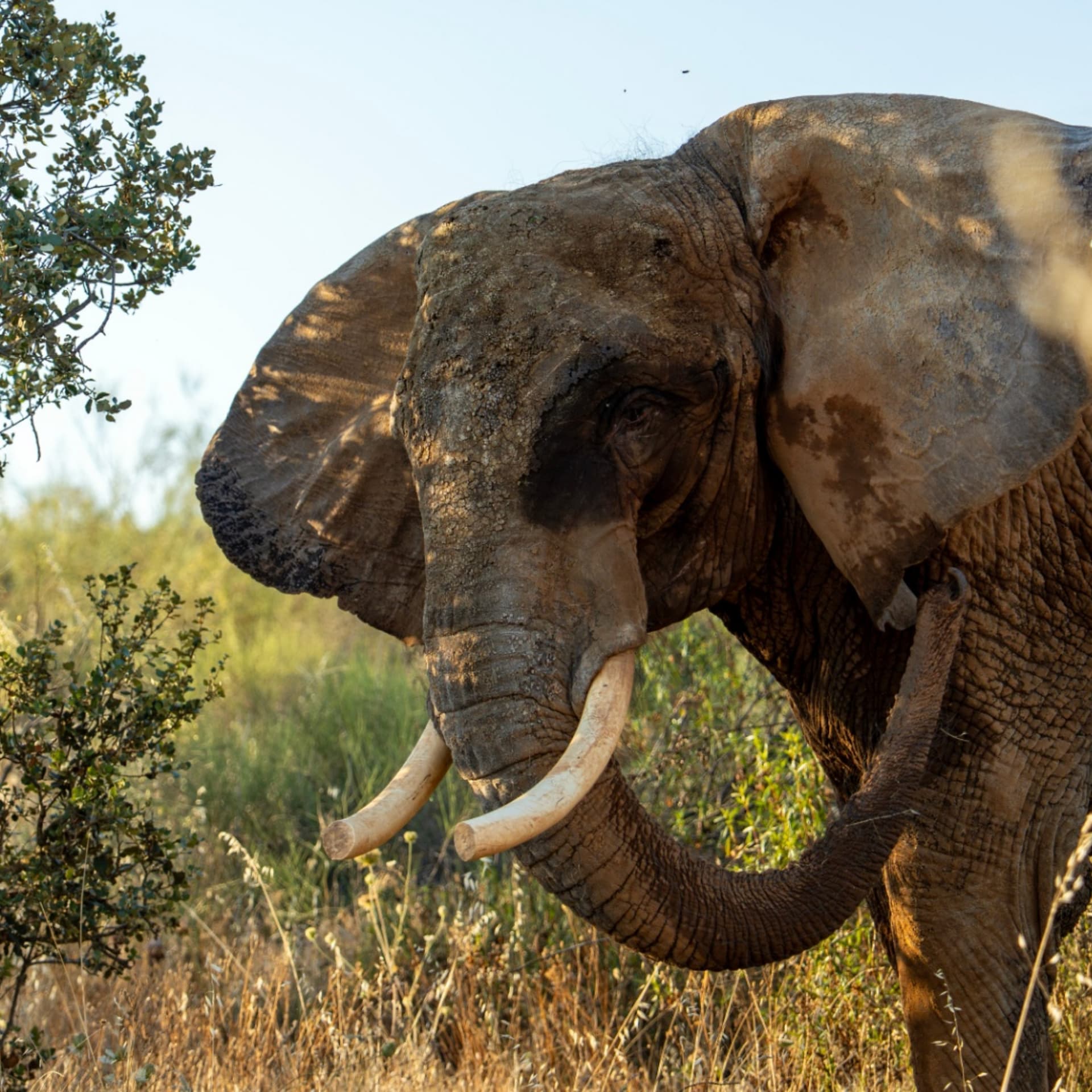
For 40 years, an elephant named Julie performed as part of the Victor Hugo Cardinali circus in Portugal.
But after a law change banning wild animals for entertainment, Julie has now been given a new life in a dedicated sanctuary.
She is the first elephant to begin her retirement at the 400-hectare site in Alentejo in southern Portugal, run by the UK-based charity Pangea Trust.
Staff say Julie has adjusted very well to her new home, and is enjoying splashing around in the mud.
Also: A mysterious monkey with orange lips discovered deep in the forests of the Democratic Republic of the Congo is confirmed as a new species.
A look back at the heartwarming moments of the FIFA World Cup that resonated with both fans and those not so keen on football.
We meet Kenya's ''Eco Mammas'', a group of women leading vital marine conservation efforts.
Plus the teenage pianist Freya Terris who made history by passing a highly technical piano exam using only her left hand.
Presenter: Chantal Hartle Music: Iona Hampson
(Photo:Julie the African elephant arrives at Pangea elephant sanctuary in Portugal. Credit: Pangea Elephant Sanctuary)



