In short
World Refugee Day special edition of BBC World Service “The Happy Pod” featuring former refugees who rebuilt their lives and communities through business, leadership, creativity, and mental-health support.
Guests (backgrounds)
- Tam Patachako, BBC journalist; born in Nyarugusu refugee camp in West Tanzania (lived there 8 years), moved to England in 2009.
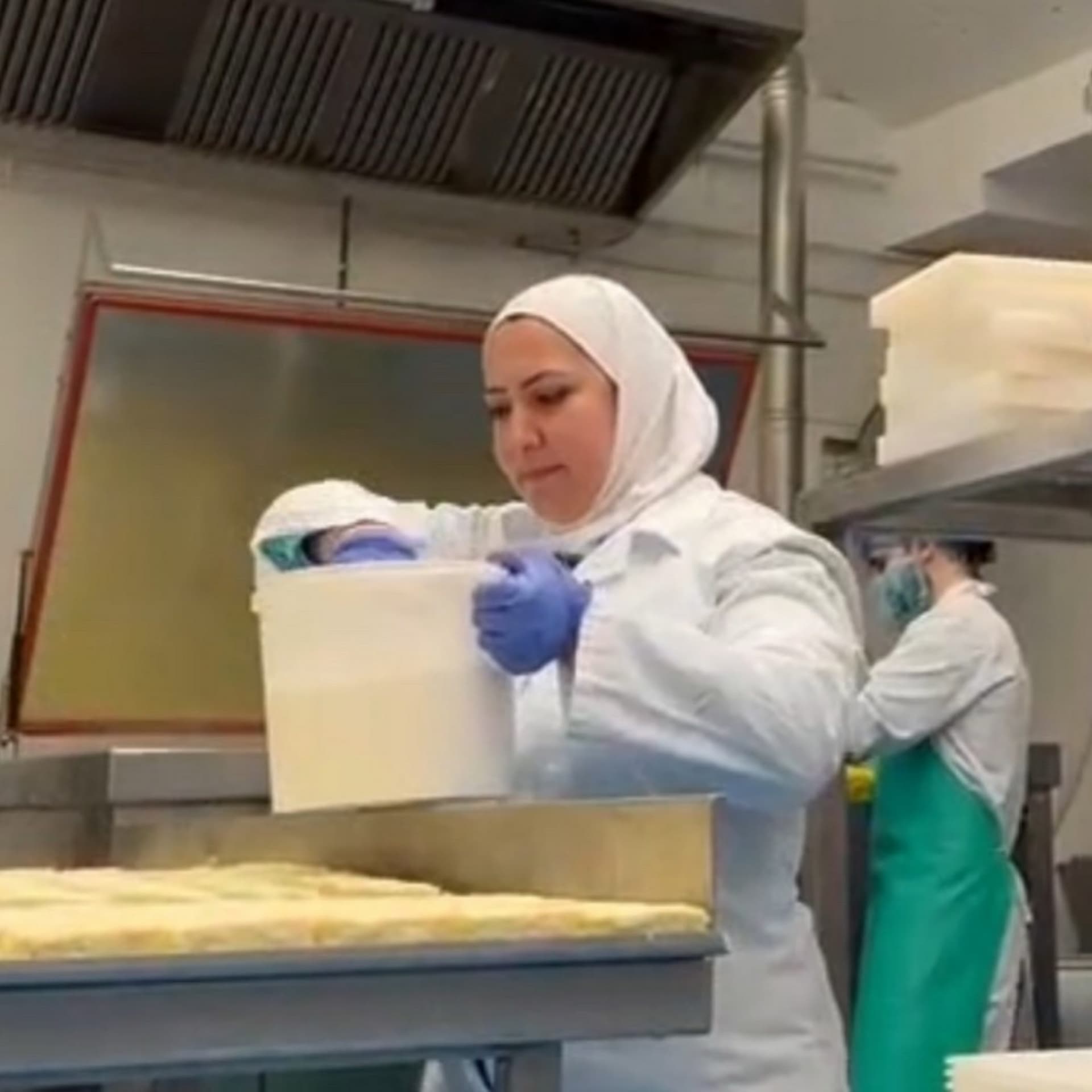
- Razan Alsous, Syrian refugee; fled to Yorkshire, later built a cheese business.
- Mohamed Semra, Sudanese refugee; moved to Australia at 3; became Melbourne’s first sub-Saharan African mayor.
- Leo Ikech, Bosnian refugee; fled during the Croat–Bosniak war; grew up in Norway, became a TV personality/hip-hop figure.
- Viola Minala, South Sudanese refugee; started a hairdressing business in Uganda’s Bidi Bidi camp.
- Jin Daoud, Syrian Kurdish refugee in Turkey; created an online therapy platform.
Key claims
Refugees can thrive with support, education, and opportunity; mental health access matters; “your circumstances do not define your future.”
Notable examples
- Razan’s “squeaky” halloumi (World Cheese Award; expanded factory opened by Princess Anne).
- Mohamed’s election to Melbourne City Council and later mayoralty after racism and barriers.
- Leo using hip-hop/online videos to claim identity and belonging.
- Viola’s salon expansion enabling school fees, houses, and land investment.
- Jin’s “Peace Therapy” reaching 70,000+ people across 26 countries in 4 languages.
Written by AI. May contain mistakes. Listen to the episode to check what was said.
Chapters
Tap a time to open that second in VOTam's Refugee Camp Memories
2:27 to 3:33
Tam shares personal experiences growing up in a refugee camp in Tanzania.
“And for those listening, can you describe what the camp looks like?”
Introducing Razan Alsous
3:33 to 4:47
The story of Razan Alsous who fled Syria and started a cheese business in the UK.
“So at night, under that starry sky I mentioned, you do also get to hear wolves howling in a distance.”
Razan's Journey to Success
4:47 to 7:16
Razan shares her journey from fleeing Syria to opening a successful cheese factory.
“and this is where the character of the cheese is developed and you will have the sounds of squeakiness when you eat it.”
Razan's Return to Syria
7:16 to 8:31
Razan reflects on her visit back to Syria after many years.
“And I've got still friends since day one when I remember when I was telling them, oh, you know what, I'm thinking of doing this and that and starting this business.”
Connecting Stories: Tam and Razan
8:31 to 10:03
Tam relates to Razan's story and reflects on her own experiences as a refugee.
“being in different locations will act in different ways.”
Mohamed Semra's Inspiring Journey
10:03 to 13:20
The story of Mohamed Semra, who became the first mayor from sub-Saharan Africa in Australia.
“He moved to Australia at the age of three and, aged just 27, has become the country's first mayor from sub-Saharan Africa.”
Tam's Childhood Memories and Early Creativity
16:13 to 20:15
Hear Tam share nostalgic memories of his childhood and his love for filmmaking.
“Tam, what's one of your favourite childhood memories?”
Leo Ikech's Journey from Bosnia to Norway
20:15 to 23:51
Leo shares his experiences of fleeing war and his cultural identity in Norway.
“Tam, there must have been things that you've changed about yourself over the last 17 years.”
Viola Minala's Transformation in Uganda
23:51 to 28:01
Viola discusses her journey from struggling in a refugee camp to starting a business.
“Tam, you've given us some fond memories of your childhood, but it must have been difficult too.”
Empowerment Through Adversity
28:01 to 29:36
Learn how experiences as refugees can shape identity and inspire positive change.
“So hold on on your dreams, invest in your education and believe that your story can become a source of positive change for others.”
Transcript
Automatic transcript. May contain errors.0:00Mohamed Semra:This BBC podcast is supported by ads outside the UK.
0:30Leo Ajkic:Valid through 624. While supplies last. Selection varies by location.
0:36Leo Ajkic:It's called soccer. It's called football. Uh, soccer. Football. Domino's best deal ever lets you get any pizza, including stuffed crust, with any toppings for$9.99. We can agree on that. Yeah, fully. So, pineapple? Don't ruin it. Get any pizza, including stuffed crust, with any toppings for$9.99. Finally something everyone can get behind. And if the refs disagree, that's between them and Domino's. Which means the only thing left to fight over is who's ordering. Domino. Prices higher for some locations. Excludes XL and specialty pizzas. Select this offer from 615 to 726. Online only. Size availability varies by crust type.
1:17Leo Ajkic:Max 7 toppings. 6 for pan and New York style crust. Minimum purchase required for delivery. Prices participation delivery area and charges may vary.
1:26Razan Alsous:This is the Happy Pod from the BBC World Service
1:35Razan Alsous:I'm Holly Gibbs and in this special edition we are marking World Refugee Day We'll be bringing you some extraordinary stories of people who have fled their homes in search of safety and have thrived despite their difficult beginnings
1:52Razan Alsous:I'm joined by Tam Patachako, a BBC journalist who's recently joined our team. Tam, tell us why this episode is particularly relevant to you.
2:01Mohamed Semra:Well, I was actually born in a refugee camp. I lived in Yarugusu, which is one of the biggest refugee camps in the world, according to the UN, and I lived there for the first eight years of my life. We all used to listen to the radio, and one of the most popular radio stations that we used to listen to was BBC Swahili. For the first eight years of my life, I just thought the BBC was a Tanzanian broadcasting channel. And so to be sitting here today, it's kind of like a full circle moment for me.
2:27Razan Alsous:And for those listening, can you describe what the camp looks like?
2:30Mohamed Semra:Well, Nyarugusu is, you know, in the middle of the savannas in West Tanzania. So whenever I close my eyes, the first thing I can see is the red soil. You know, everything is red from the mud brick houses to the thatched roofs. And I can actually almost smell the ripe fruit. We had mango trees on every single corner. You know, at night, it was so beautiful because we didn't have streetlights. And so each night, you would have a full set of stars in the sky. And it was honestly something I took for granted. But whenever I close my eyes and picture Nyarugusu once again, those are the first things that come to mind.
3:04Mohamed Semra:It wasn't perfect, but it was beautiful for what it was.
3:07Razan Alsous:You've painted quite a happy picture there. But for some people, they might imagine a refugee camp to be quite a scary place.
3:13Mohamed Semra:The thing that you have to understand is that refugee camp was one big family. Everyone there was from the same part of the DRC. We all were basically somewhat related. We all spoke the same language. We all ate the same food. And we all had just each other to help each other out. And yes, it was in the middle of a savannah. So at night, under that starry sky I mentioned, you do also get to hear wolves howling in a distance. And sometimes you would hear them outside of your house sniffing. But it was a beautiful place because we had each other.
3:46Razan Alsous:And as you say, you moved here 17 years ago. What is your first memory of arriving to England?
3:53Mohamed Semra:The first thing was how cold it was. And it's shocking that I'm talking about how bad English weather was. But that is genuinely the first thing I can remember when I came off the plane was the hairs on my body kind of just rose because I felt so cold. And bearing in mind, this was in the middle of spring in 2009. So for the first couple of days after we arrived in England, we were in a small hotel in South London. And every single morning we would be obviously we were given breakfast and it was a full English breakfast and it was baked beans. I wanted something that reminded me of Tanzania again.
4:26Mohamed Semra:I wanted something that was comforting, something that I'd been used to for the first eight years of my life.
4:31Razan Alsous:Well, that brings us onto our first story of Razan Alsous, who fled Syria and moved to Yorkshire in the north of England. Like Tam, she wanted a taste of home and now runs a cheese business.
4:46Holly Gibbs:So what makes the squeaky cheese different from other cheeses, we coagulate the milk first, then cook it. and this is where the character of the cheese is developed and you will have the sounds of squeakiness when you eat it. Razan told us what gave her the idea. So I had my residency within a month but for my husband it took him around two years. So basically after a year searching for a job and no one hired me or were interested in hiring me I just thought I need to do something and I started to think how to become a self-employed I came across different ideas until I spotted once that halloumi was seasonal product in supermarket at the same time I loved the milk in the UK and from this point the idea started to sparkle and I start to think about how about making halloumi cheese I applied for startup loan and we managed with this 2 ,500 pounds to find second-hand equipment not being made to make cheese here where my husband support because he's an engineer he managed to change the usage of this equipment to make cheese and after four months we had the first award which was the World Cheese Award.
6:20So we arrived to the UK in 2012, 2013 when I started to think about my business idea
6:28Holly Gibbs:and in 2014 when we had the approval that was in June and by like October time we had the
6:36Razan Alsous:cognition. In fact, Razan was so successful that by 2017, she needed to expand her business with a new factory. And in recognition of her achievements, it was opened by a member of the British royal family, Princess Anne.
6:55Razan Alsous:Razan proudly showed her around in front of TV cameras and press photographers. Razan says the business has also helped her feel part of a new community.
7:04Holly Gibbs:The local people were really, really amazing and supportive. Whenever I told anyone about my business idea, they were always amazed. They loved what I'm doing or what I'm planning to do. And I've got still friends since day one when I remember when I was telling them, oh, you know what, I'm thinking of doing this and that and starting this business. They were very supportive and I'm friends with them until today. I went back to Syria last Christmas after the regime has been collapsed, after 14 years being away. And the first impression, I was very sad to see how Damascus became. But you know what?
7:51Holly Gibbs:Again, you just go to the old places which you loved in the past. You start to memorize your childhood. and the most amazing part when I took my children I start to tell them the story about each place and I love to see Syria or Damascus from my kids point of view because they've looked at it from British perspective because they grown up in here so they looked at it in different angle and I loved that view. I love to see it from different angles. And I found how humans are just the same, but being in different locations will act in different ways.
8:35Razan Alsous:Razan Alsous there. And listening to that, Tam, is there anything that you relate to?
8:40Mohamed Semra:One of the things that really struck out to me was what she said towards the end, she talked about how she took her children back to Syria. I've never had the sort of like opportunity to go back to Tanzania or to Nyarugosu to kind of see what it was like. And I always kind of like wonder you know what sort of different memories would I unlock if I were to go back I mentioned earlier that I can remember certain like smells and sort of like the atmosphere but that only scratches the surface right imagine how many more memories I would unlock if I actually went there and I could actually smell those things in person it's beautiful that sort of connection that she wants her children to have with where she came from and I don't know maybe in the future I might go back there with my own children.
9:16Razan Alsous:So then you came to the UK how did that happen?
9:20Mohamed Semra:Well I'm going to tell you how it happened from the perspective of an eight-year-old um from what i remember one day my mother told me that we would be moving to a country called the uk i remember like one of the first few things me and my brothers did is that we got out a little atlas and we sort of started to kind of like search where the uk was on the map and then we found it it's like you know somewhere in northern europe and you know really far away i was kind of just thinking we're just gonna go on a little trip somewhere you know to some far away country where it snows and there's ice and there's all these mystical things.
9:53Mohamed Semra:I didn't really have any sense of a notion of, you know, migrating to a different country.
9:58Razan Alsous:That brings us on to Mohamed Semra, who fled Sudan with his mother and six siblings. He moved to Australia at the age of three and, aged just 27, has become the country's first mayor from sub-Saharan Africa. It's now my great pleasure to introduce our mayor, Councillor Mohamed Semra.
10:18Tam Patachako:On behalf of the City of Melbourne, I welcome you all, especially those becoming Australian citizens today. Congratulations. So when we came to Australia, we were lucky that we had strong support. But withstanding, my mum had a lot of barriers, right? There was a language barrier. There was an employment barrier, obviously. And so she struggled immensely because the Sudanese community wasn't as established as it is now. But my mom has shown immense courage, leadership and compassion. And, you know, she helps out wherever she can. Growing up as a visibly African, visibly different person of colour, it did come with its challenges.
11:02Tam Patachako:You know, I faced a lot of instances of racism. You know, Australia is one of the most diverse places in the world. But, you know, that's not represented in our leaders. And so I joined my local youth advisory committee in my local council. I joined debating at my school. I joined leadership team, became school captain. You know, I volunteered in different spaces. And I began to see that decisions are being made for the community without the community being there. Young people like me aren't supposed to run for office. vote for our community vote for change vote one Muhammad Sama and I decided to put my hands up and I put my hands up initially as a statement a statement that young people are ready to lead but also to encourage others to do the same because you can't be what you can't see I ran in 2020 during COVID and I lost because like you couldn't door knock you couldn't letter box and I kept forgetting that no one really knew who I was it was a public statement that my community didn't want me to represent them And I told myself I was never going to run for politics again.
12:08Tam Patachako:And I'm never going to get elected with a name like Mohammed. I'm never going to get elected being obviously visibly African. Come 2023, I get invited to a business leaders lunch with President Barack Obama. And when I went there, Obama had spoken about how he lost his first congressional race. I had left that conference saying to myself that I owed it to myself. I owed it to my community to give it another shot. Hey guys, my name is Mohamed Semra. I'm currently running as an independent for the upcoming Melbourne City Council elections. So come 2024, the campaign elections were approaching and I had backed myself and said, you know, the mission is still the same.
12:46Tam Patachako:There are challenges facing our community. There are national debates that aren't depicting our community in a positive way. I hereby declare Mohamed Semra as elected councillor. Hey guys, Mohamed Semra here. Just got sworn into Melbourne City Council with my wonderful councillors. Then, you know, I got elected as a councillor and six months ago I was elected mayor. Before I put up my hands for this role, I sat with three questions. Can I do it? Should I do it? And will Melbourne be better off for it? The answer is yes. The first mayor for sub-Saharan Africa in Australia.
13:23Razan Alsous:You don't really see people that look like us in higher places. That's really important.
13:27Tam Patachako:But African mums, they always point him out and say, this is Mohammed, he's the mayor, he's a role model. I wish I was in high school seeing that my mayor looked like me
13:40Leo Ajkic:and looked like one of my brothers, because it means that that now opens a door that maybe I didn't even know was available to me.
13:45Tam Patachako:And I get so many young people that come up to me, you know, from refugee backgrounds, from migrant backgrounds, or young people more broadly, that tell me that they want to run in the future, that they want to be a part of shaping decisions.
13:57Razan Alsous:Mohamed Semra.
14:27Leo Ajkic:Welcome bonus. Moto Casino, America's social casino. Download the Moto Casino app today. Hey, it's Ryan Seacrest for Jewel Osco. For you, save days are here now through June 23rd. Find hot deals throughout the store and earn four times a point. Look for in-store tags to earn on eligible items from Kinder, Ghost Energy, Cottonelle, Ben & Jerry's, and Popsicle. Then clip the offer in the app for automatic event-long savings. Stack up those rewards to save even more. Enjoy savings on top of savings when you shop in-store or online for easy pickup or delivery. Restrictions apply. See the website for full terms and conditions.
Read the full transcript
15:06Leo Ajkic:Transform your home in one weekend and save big money at Menards. Protect and enjoy your outdoor living space with Thompson's Semi-Transparent Wood Sealer. It maintains wood's natural color and provides durable, year-round protection from water and sun damage in just one coat. Save big money on Thompson's Water Seal products. Our knowledgeable team is ready to help bring your dreams to life one gallon at a time. Stop by your local Menards today. Save big money at Menards. Shop the Sherwin-Williams sale and get 30 % off Super Paint, Super Deck, and Woodscapes products June 12th through the 22nd.
15:44Leo Ajkic:Whether you're refreshing your interior or exterior, we've got the colors to bring your vision to life. And with delivery, getting everything to your door is easier than ever. Shop online to have it delivered or visit your neighbourhood Sherwin-Williams store. Click the banner to learn more. Retail sales only, some exclusions apply. See store for details. Delivery available on qualifying orders.
16:10Razan Alsous:You're listening to The Happy Pod. Tam, what's one of your favourite childhood memories?
16:16Mohamed Semra:Gosh, there's so many. One of my favourites is after church on Sundays. basically one family had a projector and that kind of served as like a cinema for us in front of that projector our eyes would kind of just be glued there watching hollywood films and some locally made films as well and this love of films actually translated even after we moved to the uk one of the first things that me and my brothers did is that we bought ourselves a camera obviously it's not going to be winning awards anytime soon but it was something that we love to do as a family and as brothers is to make our own low-budget films.
16:50Razan Alsous:Well, that brings us nicely on to Leo Ikech. After fleeing from Bosnia, he started posting videos online of rappers that he'd met.
17:06Holly Gibbs:I grew up very liberal. I'm like what you call a mixed kid. Half of my family side is considered Croats and Catholics. even though they're not religious. Same with the other side. They are Bosnians and Muslims, but they are not religious, so very liberal. When we proper had to move to Norway, it was when it became a three-headed war. Especially in my region, it happened a conflict between Croats and Bosnians. Most of Bosnians, we flee to the neighboring countries because you want to go back home. At the end of the war, my father went to Croatia, but there was this paramilitary group who came to our house in Croatia I wanted to maybe take my father back to Bosnia and put him in a camp or just kill him.
17:50Holly Gibbs:I don't know how he made it, but suddenly he was in Norway. It's not like jobs are waiting for you and the jobs people don't want are waiting for you. So I'm still today, I know how important education is, but I couldn't see it, you know. So that motivated me maybe to follow my dreams and do something else.
18:12Holly Gibbs:What I see in common in many countries is this third culture. So hip-hop culture was very important because it's like being poor. It's one of the few cultures that it can be advantage.
18:25Holly Gibbs:I started hip-hop like just helping my friends as a youth to achieve their goals because we didn't have so much other things to do. Something we was doing became so popular that people started liking us.
18:43Holly Gibbs:Same like today with Instagram. We did our own culture and our culture became so popular that established things like we have a BBC here. It's called NRK. They needed to be a part of that culture because they need to show the reality and show the youths and not just push music and culture that the grown-ups before us liked. I always felt like a guest. But one day you have to stop. You have to become like, this is my house.
19:16Holly Gibbs:I used to grow up in Norway like this doesn't concern you. No, don't tell them nothing. You are not Norwegian. You don't even vote. It doesn't matter. Your vote doesn't even count. That's a wrong way of thinking. And I'm a TV personality. That's my number one. Number two is management. And I don't want to leave that because I'm working with people who are like me 20 years ago. foreigners, artists, people who it's more than just a song in a contract. It's like we want to go somewhere. We want to show something. Because when you do something wrong, you get reminded that you are maybe Muslim, you are Bosnian, you are, oh, no reason he does wrong.
19:53Holly Gibbs:He's this and he's that. But when you do fine things and good things, they claim you. And also it's important to me to not be like, I was 50-50, now I'm 60-40. No, I'm 100-100. I'm 100 % Bosnian. and I'm also 100 % part of Norway.
20:10Razan Alsous:I am from Bergen, produced by Leo Aikic. Tam, there must have been things that you've changed about yourself over the last 17 years.
20:19Mohamed Semra:One of the things I noticed when I moved to the UK is the different types of hairstyles that people have. So when I lived in Yarugusu, in our culture, men are not really supposed to have hair past a certain length. And so as a child, whenever my hair grew past a certain length, that my mum would kind of get out the razor and just shave it all off herself. And if you look at pictures of me from when I was a kid, you would see that my head is really shiny. So in the last couple of years, I've sort of like started experimenting with my hairstyles. I've had twists, I've had dreads, and, you know, it's just been fun to experiment with all those different things.
20:58Razan Alsous:We're going to hear from Viola Minala from South Sudan next. She started her own hairdressing business in the Bidi Bidi refugee camp in Uganda.
21:31Holly Gibbs:From there, our lives start changing slowly.
21:36Razan Alsous:Viola says she then had help from the non-profit organisation Village Enterprise and the aid group Mercy Corps.
21:42Holly Gibbs:They start giving us the training about savings, how to manage money, how to write record keeping, how to keep poultry and many other things. they have changed our lives because they come up with money. Your group, you select your business that you want. Then they give you the money, you do the money, and they keep also monitoring the money. How is the business going? And then from there, really, they have changed the community. They have changed many people who are suffering. For us, we believe that. They are the ones who raised us up. Really, our lives are now OK.
22:29Razan Alsous:Viola said she started out running a shop, but then decided to branch out and open a hair salon.
22:35Holly Gibbs:People should not go far. They will not use also money for transport. And that's the reason why we picked a retail shop and the salon. Since they have given them that knowledge and the skills. Nowadays, the women, they need to make themselves also smart.
22:54Razan Alsous:She says being able to earn money has changed her life.
22:58Holly Gibbs:Since I got the business, the life is now OK, very good. I can pay the children in school. Then I constructed good houses at our home. I also buy land in town where I'm planning to construct it. My kid, right now she's studying in high school and I will keep supporting her till she completed her school. I wanted her to be a minister. I wanted to expand my business and I need to put more branches. And I also need to construct that plot I bought. I need to construct it very well and I put it on rent where I will also invest on it.
23:47Razan Alsous:Viola Minala speaking to us from Bidi Bidi in Uganda. Tam, you've given us some fond memories of your childhood, but it must have been difficult too.
23:56Mohamed Semra:Yeah, of course, there's always difficult ones. I kind of, fleeing a war is, you know, it's quite tricky. Not only do you lose a lot of your material possessions, but it takes a heavy toll on you mentally as well going forward. And I think even after we moved to the UK, you can actually still feel these effects, you know. So the first winter we spent in the UK was, you know, it was pretty. It was nice. I saw snow for the first time. I got to wear 50 layers of clothing, which is something I'd never done. But then there was also this thing I wasn't familiar with, which is called Bonfire Night in the UK, which involves a lot of firework.
24:28Mohamed Semra:And fireworks make that pop sound every time they go off. And my mother used to shudder every single time she heard that sound. I think all parts of my family have these moments where they're kind of taken back to those things that they saw when they were back in the DRC. And this is trauma. You know, this is what happens when you witness something that the human mind should not be witnessing. It's a shadow that kind of follows you wherever you go. And this trauma, the collective trauma that my family experienced, has motivated my brother to pursue a career in clinical psychology. He's now actually studying for his doctorate.
25:04Mohamed Semra:fingers crossed very soon we could have a very own Dr. Patachako.
25:09Razan Alsous:Well there's parallels there with our next story. Jin Daoud is a Syrian Kurdish refugee living in Turkey. Her trauma led to her creating an online therapy platform that is now available in four languages and in more than 20 countries.
25:24Holly Gibbs:Like millions of Syrians we did not like leave because we wanted a different life. All we wanted is to find a safe place to be able to live. but the moment we crossed the borders we had like a phone call from a neighbor because our apartment had been destroyed like if we stayed for a few more hours or days we would not be able to be living now as a family for almost a year I struggled to leave the house because of what I had experienced. You leave behind memories, friends, routines, the sense of belonging. But what helped me was the access to supportive people like my family. Being a refugee taught me empathy.
26:12Holly Gibbs:It taught me how much potential exists within displaced communities when people are given opportunities. And the idea of peace therapy came from a problem I witnessed repeatedly people were struggling emotionally but could not access support because of the language barriers, the stigma and the cost. So as a computer engineering student, I began asking myself, what can I do? Because we are the ones who really know what exactly is needed. I decided that through technology we can help to make a bridge to this gap. We want to help people find their inner peace, to also help the communities to rebuild themselves.
27:04Holly Gibbs:Through peace therapies we've supported more than 70 ,000 people across 26 countries until today. Mental health should not be a privilege based on geography, based on income or on legal status. I also believe that mental health is closely connected to peace building. We often talk about peace between countries and communities, but sustainable peace begins within people. When individuals heal, families become stronger, communities become more resilient, and societies become more peaceful. Mental health is not only a health issue. It is so connected to education, to employment, to social cohesion, to protection, to integration and to long term stability.
27:54Holly Gibbs:One lesson I have learned is that your circumstances do not define your future. They influence your journey, but they do not determine your destination. do not let anyone reduce your identity to a label and you are more than a refugee you are a student you are anything you decide to be and your experience may have given you challenges that others do not face but they also given you strengths that the thing that made you who you are today and see this as an advantage. So hold on on your dreams, invest in your education and believe that your story can become a source of positive change for others.
28:42Holly Gibbs:Jindoud.
28:48Razan Alsous:That's nearly all from us here. Tam, it's been great to hear your story. What message do you have for people listening?
28:55Mohamed Semra:There is a common saying in African cultures, it takes a village to raise a child. And I think some of these stories kind of harken back to that point because it's about people who have been raised in difficult conditions, but they're doing some extraordinary things to make their communities as best as they can be. And if there is a child out there who's listening to this in a refugee camp, or if you're a child that's listening to this and you're not in a refugee camp, just take that in mind. You don't have to change the world, you don't have to fix the world, you just have to make your community just slightly better and that's something that I hope listeners can take away from this episode.
29:36Razan Alsous:And that's all from this special edition of The Happy Pod for now. We'd love to hear from you. As ever, the address is globalpodcast at bbc.co.uk. This edition was mixed by Rachel Bolkley and the producer was Jacob Evans. The editor is Karen Martin. I'm Holly Gibbs.
29:52Mohamed Semra:And I'm Tampat Chakot.
29:54Razan Alsous:Until next time, goodbye.
29:56Mohamed Semra:Or as we say in Swahili, kwaheri.
30:22Leo Ajkic:don't forget to check out our weekly flyer on Menards.com for all the great deals happening now. Save big money at Menards.
From the publisher
The Happy Pod is celebrating World Refugee Day. We hear from Razan Alsous, who fled from Syrian to the UK and wanted a taste of home. She now runs a successful cheese business. Also, Mohamed Semra has become Australia's first mayor from sub-Saharan Africa. Plus, the woman who started a hairdressing business in a Ugandan refugee camp and, Leo Ajkic on finding success in radio and television after fleeing from Bosnia.
Our weekly collection of inspiring, uplifting and happy news from around the world.
Photo: Razan Alsous making cheese. Credit: Razan Alsous
Presenter: Holly Gibbs and Tam Patachako. Music composed by Iona Hampson