
In short
Global News Podcast - Episode Summary
Episode Title
The Happy Pod: The chance encounter that became a lasting friendship
Episode Description This episode explores the unique friendship between two women, Neena and Carol, who met through a lost subway card, highlighting their intergenerational bond and the lessons they learn from each other. Additionally, the episode covers various uplifting global stories, including environmental conservation efforts and the mental health benefits of connecting with nature.
---
Key Themes and Topics
Friendship Across Generations
- Chance Encounter: Neena, a 26-year-old, found Carol's lost subway card on Christmas Day in 2021, leading to an unexpected friendship.
- Age Gap: The 58-year age difference allows both women to share insights and perspectives, enriching their lives.
- Mutual Benefits:
- Neena appreciates Carol's joy and perspective, while Carol enjoys the youthful energy and tech skills Neena brings.
- Their friendship challenges societal norms about age and friendship, emphasizing the importance of connections beyond superficial similarities.
Environmental Conservation Efforts
- Giant Tortoises in the Galapagos:
- The Floreana Tortoise, extinct for nearly 200 years, is being reintroduced using a closely related species.
- Dr. Evelyn Jensen discusses the ecological importance of tortoises as "ecosystem engineers" and the efforts needed to restore Floriana Island.
- Coral Restoration in Indonesia:
- Gen Z women work as "underwater gardeners" to restore damaged coral reefs in the Coral Triangle.
- The challenges faced in coral restoration are highlighted, along with community involvement and the importance of maintaining healthy reefs for the ecosystem and local economies.
Mental Health and Nature
- Nature's Impact on Well-being:
- Recent research supports the mental health benefits of spending time in nature.
- Dr. Alison Greenwood explains how observing natural fractals increases relaxation and reduces stress.
Stories of Reconnection and Support
- Veterans Reunited: Two WWII veterans reconnect after 82 years, reminiscing about shared experiences and the camaraderie formed during their service.
- Transformative Donations: A Scottish gym owner donates a tandem bicycle to help visually impaired cyclists in Kenya, symbolizing international solidarity and community support.
---
Insights and Reflections
- Intergenerational Friendships: Highlighting the value of friendships across age groups, emphasizing the learning and growth that occurs when individuals from different backgrounds connect.
- Environmental Awareness: The episode advocates for active involvement in environmental conservation, showcasing how individual actions can contribute to larger ecological goals.
- Mental Health Recognition: Acknowledges the significance of nature in promoting mental health, encouraging individuals to find solace and perspective through natural environments.
---
Conclusion The episode illustrates stories of hope, friendship, and renewal, reminding listeners of the interconnectedness of human experiences and the environment. It underscores the importance of nurturing relationships and taking action towards a healthier planet and well-being.
Contact Information
For feedback or inquiries, reach out at
[globalpodcast@bbc.co.uk](mailto:globalpodcast@bbc.co.uk)
Written by AI. May contain mistakes. Listen to the episode to check what was said.
Chapters
Tap a time to open that second in VOUnconventional Intergenerational Friendship
0:45 to 1:52
Explore the friendship between two women from different generations.
“I like to learn what she's up to and get a perspective on the world that I don't get.”
Chance Encounter on Christmas Day
1:52 to 3:09
Discover how a lost wallet led to a lasting friendship.
“We start in New York, where two women have developed an unconventional friendship after a chance encounter on Christmas Day.”
The Joy of Friendship
3:09 to 5:20
Learn about the joy and lessons from Nina and Carol's friendship.
“It was probably, I think it was probably the day after Christmas at this point.”
Value of Intergenerational Connections
5:20 to 6:40
Understand the importance of intergenerational friendships.
“We consistently go to people who are our age, seeking advice, failing to remember that we're all kind of in the same boat.”
Reflections on Impact and Joy
6:40 to 8:13
Hear reflections on how their friendship has enriched their lives.
“It makes you remember your earlier life.”
Galapagos Tortoises' Return
8:13 to 9:26
Learn about the reintroduction of giant tortoises to the Galapagos Islands.
“I've introduced her to many of my friends.”
Reintroduction Efforts and Challenges
9:26 to 11:22
Discover the challenges and efforts involved in tortoise reintroduction.
“Tortoises are hugely important, especially in the Galapagos.”
Coral Restoration Initiatives in Indonesia
11:22 to 14:06
Explore efforts by young women to restore coral reefs in Indonesia.
“On the other side of the Pacific Ocean, the waters around Indonesia's Spermonde Islands lie within one of the most biodiverse marine regions on Earth, part of the Coral Triangle.”
Coral Restoration Efforts
14:06 to 16:05
Learn about the importance of coral restoration and individual actions to preserve marine ecosystems.
“Corals need a gentle touch because the polyps are very sensitive.”
Nature's Impact on Wellbeing
18:10 to 22:06
Scientific insights into how observing nature can enhance our mental health.
“James Kumrasamy went to a small park near London's Heathrow Airport to meet psychologist Dr Alison Greenwood, who runs a charity that promotes the mental health benefits of getting out into nature.”
Show all 13 chapters
Reunion of Military Veterans
22:06 to 23:51
A heartwarming story of two veterans reuniting after 82 years.
“To a tale of friendship that has spanned more decades than most, two military veterans in the United States have been reunited by chance 82 years after they fought alongside each other.”
Transformative Tandem Bike Donation
23:51 to 27:49
The journey of a donated bike that fosters paracycling opportunities in Kenya.
“And finally, to a simple donation of a used bicycle that's making a big difference thousands of kilometres away, opening up a new chapter for Kenyan paracycling.”
Post-Episode Teasers
28:27 to 29:08
Discussion about upcoming episode topics and listener engagement.
“And join me for a separate episode where I answer listener questions on how to make those markets work for you.”
Transcript
Automatic transcript. May contain errors.0:00This BBC podcast is supported by ads outside the UK.
0:30to make those markets work for you. Follow Merrin Talks Money on Apple Podcasts, Spotify, or wherever you listen. This is The Happy Pod from the BBC World Service.
0:45I'm Alex Ritson and in this edition... I like to learn what she's up to and get a perspective on the world that I don't get. Our friendship has given me an opportunity to slow down and to be grateful. It's a great experience for older people and younger people to get together. I recommend it. Two women whose chance meeting led to an intergenerational friendship tell us why it's something we all need in our lives. The giant tortoises returning to an island in the Galapagos after nearly two centuries. This really is the start of a new species. So as an evolutionary biologist, this is very exciting because here we are repopulating the island and it's really a new start.
1:25Plus the Gen Z divers restoring Indonesia's coral reefs. Seeing the changes in growth of the coral from when we first transplanted it until it grows gives us a sense of pride. Why getting out into nature can be so good for our mental health and the US veterans reunited more than 80 years after serving together.
1:52We start in New York, where two women have developed an unconventional friendship after a chance encounter on Christmas Day. Back in 2021, 26-year-old Nina was showing friends around the city during the holidays. She was on the subway when she saw a leather wallet on the seat next to her, belonging to a then 84-year-old woman named Carol. Instead of handing it in, Nina decided to find Carol and personally return it to her. They've been friends ever since. Five years later, one of Nina's posts about how they met has gone viral on TikTok. Have a listen. On the surface, it may not seem like we have much in common, but why do we have to seek surface-level likeness and everyone we look to as a friend?
2:34We both see the world through a critical but hopeful lens and share the same dark, sarcastic sense of humour. Her unbridled joy reminds me that everything eventually will be OK. and she appreciates my cultural commentary on Bad Bunny's Super Bowl performance. She told me I give her hope for the future, which is nice to hear on my hardest days. And who's going to complain about a home-cooked meal that ends with cookies and ice cream every time? Now aged 30 and 88, Nina and Carol have been speaking to the Happy Pod's Tamsin Selby about why their bond is so special. Nina began by explaining what it was like meeting for the first time.
3:06It was really nice. She was so sweet. And so she came, it was cold outside. It was probably, I think it was probably the day after Christmas at this point. She handed me a card and the card basically said me finding her wallet was the best Christmas gift. Subsequently, she asked me, you know, if you're ever in the city or, you know, in her neighborhood to come by and maybe have a cup of tea together. And so I thought that was really nice. And it felt like a genuine offer. She said that had I been her age, she would have thought it was an empty invitation. But because I was older, she thought it was a real invitation, which it was.
3:45And she followed up on it. And we became friends after that. Carol, what's your favorite thing to do with Nina? Well, I love to go to her concert. She's a singer and she sings in Farsi, Spanish and English. And I also just like to talk to her. I like to learn what she's up to and get a perspective on the world that I don't get too often. I don't have children. And they also can help you a lot with problems with your computer and your telephone. The tech thing, by the time you're 88, is almost getting away from you. You know, it changes so often and it's hard to keep up with it. So you need a younger person in your life in this modern world.
4:24What would you say is the best thing about having a friend who is slightly younger than you? Oh, the company. I mean, the information, the view of the world that they have, which is, you know, it's pretty different. They're probably more positive about the world than I am at this point and more ambitious, I'd say. I think the way that Carol lives her life is very ambitious and inspiring. Her social life, her friends, the way she keeps up with people, how active she is, how much she travels at her age. And then also like everything that she accomplished in her younger years, you know, coming to New York City as a single woman in the 50s and what you built for yourself and everything you accomplished.
5:09I think, I think, and that's why I think it's important for people to have these intergenerational friendships is because we have so much to learn from the people who are older than us. We consistently go to people who are our age, seeking advice, failing to remember that we're all kind of in the same boat. Why not go to somebody who has seen it, who's done it, and who can offer you insights that come from a world of experience? I'm starting to work on a children's book with one of my friends that's inspired by Carol and I's story. Because I want younger people from the time of their children to see value in those who are older than them.
5:46Nina, what would you say is the biggest lesson that you've learned from Carol? I think that in the end, everything is going to be okay. Life is going to happen how it's going to happen. And some mistake you make or something that you don't do to the level that you want, you know, in the earlier part of your life is not going to determine whether or not you can be happy 50 years down the line. She didn't do everything traditionally. She did it in the way that made sense for her and that brought her happiness. She also brings a lot of joy to others. And it reminded me that there are a lot of roads to joy and I just have to decide which path will be mine.
6:27I would encourage people to make intergenerational friendships. There should be some sort of society in every community in which young people meet older people because it's very important to have that connection. It makes you remember your earlier life. It makes you see life the way you saw it when you were younger. And it's very comforting. I grew up in a culture that has a lot of reverence for people who are older than us and sees a lot of value in people who are older than us. And I think that has been a little bit lost on American society. I think what you really need is to see people as more than just their age.
7:04And finally, rather than speaking to me, we're speaking to each other. What would you say about how the last five years, how the other person has impacted you? Nina, do you want to go first? Our friendship has given me an opportunity to slow down and to pause and to be grateful. I think every time I come to your home, I feel such a sense of calm and safety and love. And it feels a bit like an escape because I feel like I can just kind of rest in who I am when I'm around you. And I don't need to perform. The experiences that we've had together are so special and unique and are things that have enriched my life so much.
7:50And you've also brought joy to the lives of the people in my life. I'd like to reiterate what she said, that she's brought a lot of joy into my life. And I just hope our friendship continues. It's a lot of fun. She's a really smart, amazing person, a great friend. I'm so happy to have met her and that she's accepted me into her life and into her circle of friends. I've introduced her to many of my friends. They love her. It's a great experience for older people and younger people to get together. I recommend it. Nina and Carol speaking to Tamsin Selby. The Galapagos Islands, a thousand kilometres off the coast of Ecuador, are home to many species found nowhere else on Earth.
8:34And the unique wildlife of the archipelago has faced a number of threats, with some animals becoming extinct, including a species of giant tortoise, which disappeared from Floriana Island more than a century ago following the arrival of humans. But now, more than 150 young reptiles from a closely related species have been reintroduced there. My colleague Leila Nathu spoke to Dr Evelyn Jensen, an evolutionary biologist who's been involved in the breeding programme. The Floriana tortoise went extinct around 1840, but in the early 2000s it was discovered that there was a living population of hybrids on one of the other islands.
9:12And so those hybrids were brought into captivity and their offspring are, you know, not the same species, but they have ancestry to the original extinct species. And so the hope is that they will have the best chance of survival and doing well on Floriana Island. Tortoises are hugely important, especially in the Galapagos. They're the only large-bodied herbivore that's native to the environment. And so they really are the ecosystem engineers doing the grazing, the seed dispersal, the trampling, and basically making habitat for all of the other species. And just talk me through what reintroducing them to Floriana would entail.
9:50How would scientists go about doing that? Well, I mean, they've spent years preparing the island for this. So there's been huge campaigns to try and reduce or eliminate some of the key invasive species like feral cats and rats and that kind of thing. And then, of course, for almost 15 years now, they've been captive breeding to get this population of juvenile tortoises. It is kind of an experiment, right? We are expecting huge shifts in the structure of the whole community. And nobody's really sure how it's going to play out. But it can only be a good thing. The Galapagos Islands have suffered from lots of invasive species.
10:30And having the native ecosystem engineers back there should help restore balance and move the environment back towards a more natural state. And so the hope is that over the coming decades, other species will have their populations increase as Floriana becomes more like it used to be. And presumably these tortoises are now going to be tracked and monitored and hopefully they will then breed and the species will sort of run its course. So they have GPS trackers on them so they can look and see their movements and where they're going. It's a relatively small group of young tortoises right now, 8 to 13 years old.
11:08and so they're not going to be reproducing themselves for at least another 15 years, if not more. But this really is the start of a new species. So as an evolutionary biologist, this is very exciting because here we are repopulating the island and it's really a new start for not the same Floriana tortoise, but a new Floriana tortoise. Dr Evelyn Jensen. On the other side of the Pacific Ocean, the waters around Indonesia's Spermonde Islands lie within one of the most biodiverse marine regions on Earth, part of the Coral Triangle. Many locals rely on the health of the oceans for their livelihoods from both fishing and tourism.
11:48But the reefs have been badly damaged from heavy shipping traffic, illegal fishing methods such as explosives and poisons, and coastal development. So, as Les Thea Kato-Patti reports, a group of young women decided to take action, planting new coral colonies on the seabed. They call themselves underwater gardeners. Working together, they collect broken coral fragments that can still grow and then tie them onto metal frames, which they then place on the sandy patches of ocean floor where the reef wants to arrive. Dila is one of the volunteers.
12:29Seeing the changes in growth of the coral from when we first transplanted it until it grows gives us a sense of pride, especially for us women who can be directly involved and work hands-on in the field. Divers must carry heavy oxygen tanks, descend in currents, and spend hours underwater securing fragile fragments, as another volunteer, Iam, explains.
12:54It's actually not that difficult. We are already used to carrying tanks. They're not too heavy. Collecting coral fragments and tying them underwater are still relatively easy for us to do. Muda Sir Zainuddin, a conservation activist, also promotes reef recovery through a programme he calls coral adoption, inviting the public to participate by supporting coral planting and monitoring its progress over time.
13:23Transplantation and adoption both involve replanting coral. Now we focus more on adoption because it involves the community. They help guard and care for the reefs. Videos of the divers working underwater have spread widely on social media. Conservation groups say women often play a key role in spreading environmental messages because audiences respond strongly to their storytelling and visuals. Despite restoration work, reef health across the region remains fragile. Safyuddin Yusuf from Hassanuddin University studies local reef and say that thriving coral cover is now difficult to find.
14:05Live coral cover above 50 % is now very rare. What we mostly see is below 50%. Corals need a gentle touch because the polyps are very sensitive. These young women provide careful handling when planting them, which makes a very positive contribution. But the divers say restoration alone is not enough.
14:34I invite young people to channel their energy into useful activities such as coral transplantation. Even if it looks like a small activity, it can have a very big impact and benefits for society and the future.
14:51Start with small things. When snorkelling, be careful your fins don't break coral. Another way is by not throwing rubbish into the sea. Healthy reefs are not only important for marine life. They also protect coastlines from waves, support fisheries, and attract visitors whose tourism spending sustain island economies. Our biggest hope is that coral reefs will not be damaged again. Another hope is that tourism here does not disappear. People come to places like this to snorkel and enjoy underwater beauty. If the reefs are damaged, there will be no more tourists coming. For these underwater gardeners, the work is far from finish.
15:34But with patience and persistence, they believe the reef can bloom again.
15:42We should start with ourselves to contribute to transplant activities to protect existing ecosystems, so that future generations can feel what we feel today and can continue these transplant activities for our children and grandchildren.
16:02Coral Restoration Volunteer Dealer ending that report from Les Thea Kurtopati.
16:12Coming up on The Happy Pod, how an unwanted tandem bike travelled thousands of kilometres to transform paracycling in Kenya. There was no ladies for tandem, so I started searching where I can get bikes. I really wanted to give the bike to Alice and we just had to work out how to get it across to Kenya.
16:39I've spent the last three decades trying to better understand money across the boardroom, the newsroom, and the trading floor. That's longer than most podcast hosts have been alive. But even though I've got questions, join me, Merrin's Upset Web, every week for my show Merrin Talks Money from Bloomberg Podcasts, where I have in-depth conversations with fund managers, strategists, and experts about how markets really work. And join me for a separate episode where I answer listener questions on how to make those markets work for you. Follow Merrin Talks Money on Apple Podcasts, Spotify, or wherever you listen.
17:15Welcome back to The Happy Pod. We're often told the best way to shed off life's stresses and relax is to immerse ourselves in the beauty of nature. It's advice which was put into verse by the Welsh poet William Henry Davis more than a hundred years ago. What is this life, if full of care, we have no time to stand and stare, No time to stand beneath the boughs And stare as long as sheep or cows No time to turn at beauty's glance And watch her feet how they can dance No time to wait till her mouth can Enrich that smile her eyes began A poor life this, if full of care We have no time to stand and stare.
18:10Well now, new research has provided some scientific backing to this, finding that simply observing or standing and staring at one thing in nature every day for two weeks can significantly boost our wellbeing, especially if we take the time to write down how we feel. James Kumrasamy went to a small park near London's Heathrow Airport to meet psychologist Dr Alison Greenwood, who runs a charity that promotes the mental health benefits of getting out into nature. Birds, a bear, sky. We're in south-west London. We'll hear some aeroplanes. But that really helps us with our model because it kind of points out we still respond instantly, very negatively, to the sound of an aeroplane because it's a foreign sound.
18:59Here we are. We're sitting in a very modest environment, small environment, but it is full of the patterns of nature. So tell us, what should we be looking at? What is it doing to us when we're out here? You're looking at the fractal patterns of nature and fractals are self-repeating patterns. When we look at the fractal patterns of nature, it increases our alpha waves in our brains and alpha waves are an indicator of a wakefully relaxed state. These are the patterns that you only get in nature, isn't it? Absolutely. You go on a walk, you'll see the patterns on a leaf are very similar to the branches of a tree and they exist in very small bits of nature.
19:36They're also in the big bits of nature, so ocean waves, coastlines. And the very exciting thing about fractals is that they exist in us as well. If you look at the palm of your hand, you'll see the patterns on your hand quite similar to the patterns of the branches of a tree or on the back of a leaf. And it's just a lovely reminder that we're not like nature. We are nature. We're part of the same natural world made up of the same natural fractals.
20:04most people's favorite sound is water and again it does not too difficult to imagine why our brains respond so positively to something that is so so much a sign of survival what we are water as well indeed yes i mean psychologists often call the fractal patterns of nature soft fascination the impact on the autonomic nervous system in terms of switching us from our sympathetic nervous activation so that's our fight flight processes into our parasympathetic nervous activation that's our rest digest it's kind of instant when we go outside and there's that instant reaction physiologically that our body goes into now this i recognize
20:51hi my name's tom i came here about three years ago having struggled with my mental health for the best part of my adult life. It wasn't until I came here that it all started to click and I started to realise there was a reason why I would have that day where I'd spontaneously go to Bushy Park and just spend hours... It was there subconsciously, but now it's conscious. Yeah. What difference does that make? It's huge. I now feel like I have some sovereignty over my own mental health. there's a lot of brilliant emerging science about when we feel that sense of awe and wonder in nature one of the theories is a kind of construct of small self so when we are under a huge starry sky or on top of a mountain we can feel quite small now i love this construct as a psychologist because we spend all of our time bigging people up you are important you do matter and actually in the natural world, quite often we feel quite small and tiny and insignificant.
21:56And rather than making us feel bad, it actually is quite reassuring. We're just this tiny little part of this natural world and it's okay. Dr Alison Greenwood speaking to James Kumrasami. To a tale of friendship that has spanned more decades than most, two military veterans in the United States have been reunited by chance 82 years after they fought alongside each other. The Happy Pod's Holly Gibbs has more. You were in the tank corps, right? Yes. Yes. Robert Miller and Willard Smith both live in a care home in Naperville in Illinois. That's me in the service. It's from basic training at Camp Roberts, California.
22:41I was probably about 18, 19 years old. But while looking through old photos as they share their war stories. Willard noticed they had worn the same uniform. You notice our hats are very similar and of course you wanted to wear it jauntily and also you're looking sharp. Robert and Willard had both served in the Pacific during World War II when they were teenagers, including fighting in the Battle of Luzon in the Philippines in 1945. They said you look too young to fight this war and it probably was true. 18 years old. Willard recently turned 100, and Robert will do the same next month. Oh man, didn't think I'd make it that far.
23:23I'm looking forward to it, to a certain degree. After leaving the military, both men got married, had children and became teachers. Reconnecting after more than eight decades means the pair can now enjoy reminiscing about all their shared history. And it brings back a lot of good memories. We had a good run, I think, for a couple of soldiers. Willard and Robert ending that report by Holly Gibbs. And finally, to a simple donation of a used bicycle that's making a big difference thousands of kilometres away, opening up a new chapter for Kenyan paracycling. Carrie Ruxton, a gym owner in Scotland, offered her daughter's old tandem bike online, an offer seen by Alice Maringu, who'd been struggling to find a tandem to race with visually impaired cyclists.
Read the full transcript
24:16Five months later, with some help from the Scottish Kenyan community, the bike finally arrived in Nairobi on Valentine's Day and is now being prepared for international competition. My colleague James Copnell has been speaking to Carrie and Alice. I put it onto this tandem Facebook page and I had quite a few enquiries, inquiries. But when I read Alice's story, and she told me that she sometimes had three people trying to use one bike, I really wanted to give the bike to Alice. And we really just had to work out how to get it across to Kenya. But luckily, Alice had a contact in Glasgow, a Kenyan, and he came to pick up the bike.
24:55And then it started its journey. In fact, last September, I almost lost hope a couple of times. And then suddenly she contacted me on the 15th of February and said it arrived yesterday, which is Valentine's Day, the day of love. And so I thought, that's amazing. It's been sent from Scotland with love to Alice. In fact, the bike even had a little tartan ribbon tied to it for good luck. And so Alice told me she decided to call the bike Valentine. And Alice, tell us about why you got in touch in the first place. Is it pretty difficult to get a a good tandem bike in Kenya? Actually, no tandem bikes in Kenya.
25:34So when we started this cycling for people with disabilities and people with eye problems, we didn't have enough bikes. Only one gentleman who had the bike. I was at the EBO cycling. So I decided to quit to join the paracycling because there was no ladies for tandem. There were no bikes at that moment so I started searching where I can get bikes. As Carrie said it took quite a long time several months for the bike to arrive in Kenya that must have been quite a nervous wait I guess. We were waiting for it for sure. This year we have a para-track race in Nigeria and we are hoping to use it because now we have the bike we won't share it.
26:22And Carrie you mentioned sending it off with love and that little tartan ribbon around it what will it be to see it in international competition. Will you be proud? Will you be emotional? How will you feel, do you think? Yeah, I'll definitely feel proud. I'm going to keep in touch with Alice and I want to follow everything that she's doing. I'm absolutely passionate about getting women involved in sport. And so Alice is going to send me pictures and I'm going to keep in touch with her team. And Alice, is one of the big goals to qualify for the Commonwealth Games, which are going to be in Scotland this time?
26:53Yeah, we are hoping that Nigeria will bring good results. Unfortunately, in Africa, we are only having two teams for tandem bikes, that is Nigeria and Kenya. So we are hoping as well here in Kenya to bring up more ladies so that we can have more teams there. And a question for both of you, really, this story has captured quite a lot of attention around the world. And I guess there's something quite powerful about that sort of sporting solidarity across borders, across different cultures, Carrie. Yes, absolutely. And this story through the BBC has already done a lot of good because I was contacted by another person in Edinburgh offering a tandem bike to Alice.
27:36So she's going to get two bikes. Oh, wow. Alice, that's great. Yeah, I felt so nice. We have already contacted him and we are organising how it will be in Kenya. If you do qualify for those Commonwealth Games in Scotland, if Valentine the Bike makes it, the two of you might be able to meet in Glasgow. Probably. Yes, I would very much like to meet Alice. Yeah, I would be proud. I would be very much proud to meet her.
28:26Martin. I'm Alex Ritson. Until next time, goodbye.
28:56about how markets really work. And join me for a separate episode where I answer listener questions on how to make those markets work for you. Follow Merrin Talks Money on Apple Podcasts, Spotify, or wherever you listen.
From the publisher
We hear how two women who met because of a lost subway card forged an unconventional friendship. Carol and Neena say their 58 year age gap allows them to learn from each other.
Long: unlimited duration We meet two women who have forged an unconventional friendship after meeting by chance more than four years ago. Neena found Carol's lost subway card in New York and they went on to build a close intergenerational bond. They say their 58 year age gap allows them to learn from each other, slow down and appreciate what's important.
Also: How decades of work have brought giant tortoises back to an island in the Galapagos for the first time in nearly two hundred years. The Floreana Tortoise became extinct after the arrival of humans, but now dozens of young reptiles bred from a closely related species have been released there.
Across the Pacific, we meet the Gen Z women working to restore damaged coral reefs on an Indonesian archipelago. The underwater gardeners recover broken fragments and help them grow.
Plus, the science behind why getting out into nature can boost our well being; the veterans reunited more than eighty years after they fought together in World War Two; and how an unwanted bike in Scotland has opened up new possibilities for para-cyclists in Kenya.
Our weekly collection of inspiring, uplifting and happy news from around the world.
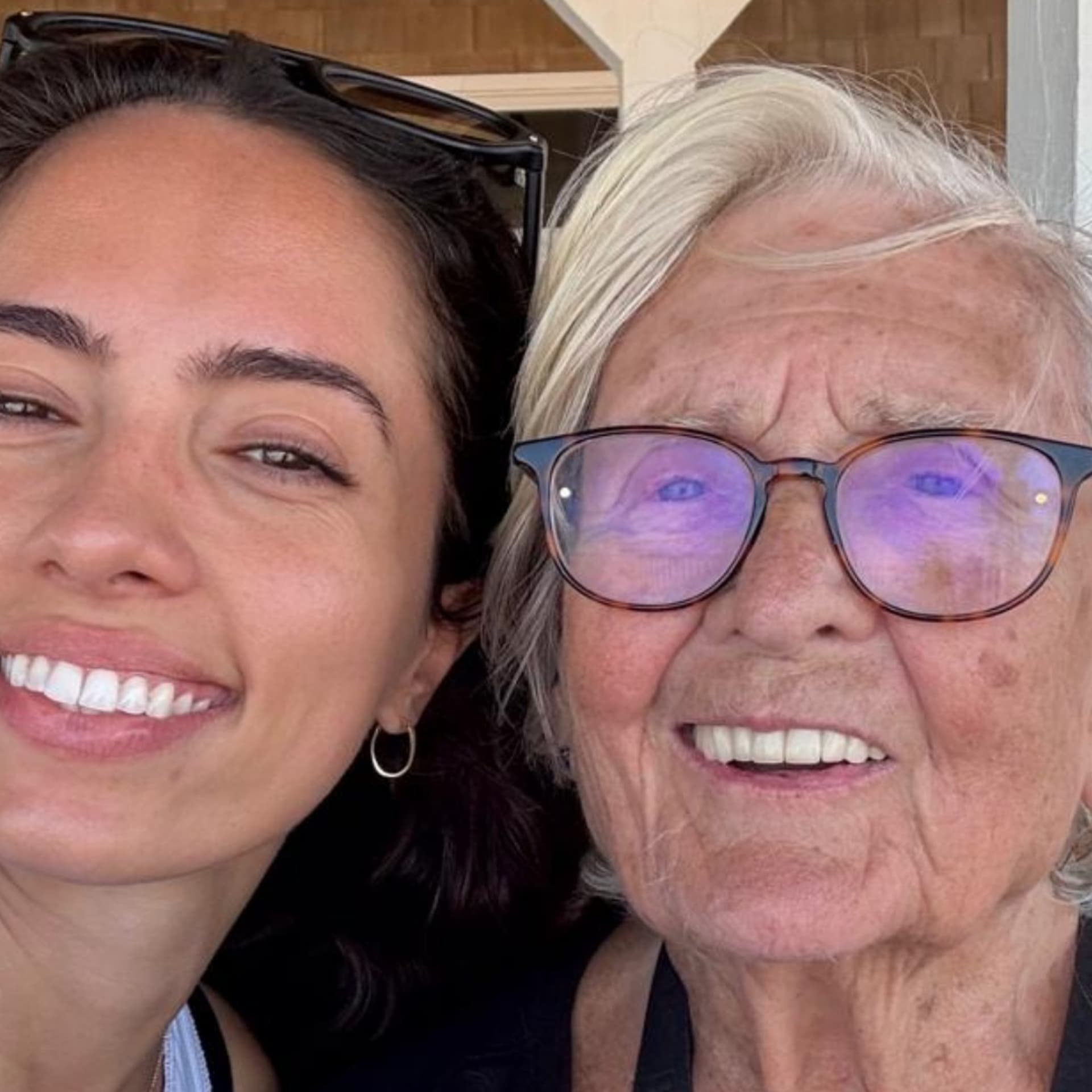
(Photo: Neena and Carol, who became friends after Neena returned Carol's lost subway card. Credit: Neena Roe)