
In short
Global News Podcast - Episode Summary: The Happy Pod: The 'game changing' test for ovarian cancer
Episode Overview In this episode of The Happy Pod, hosted by Bernard Ecchio, the podcast highlights several groundbreaking stories, including:
- A revolutionary blood test for early detection of ovarian cancer.
- The inspiring journey of Khadijah Mellah, the first British Muslim woman jockey.
- The transformative impact of the Homeless World Cup on individuals experiencing homelessness.
- A woman’s remarkable recovery following a rare triple organ transplant.
- Innovative solutions like a hand-cranked washing machine aiding communities.
Key Segments
- Revolutionary Blood Test for Ovarian Cancer
- Key Insight: A new blood test can detect ovarian cancer in its early stages in about 90% of cases, which could significantly enhance survival rates.
- Research Details:
- Developed by researchers in the US and UK.
- Analyzes proteins and lipids in the blood using AI technology for accurate detection.
- Current survival rates for later-stage ovarian cancer patients are around 20%; early detection can increase survival to 80-90%.
- Expert Commentary:
- Dr. Kian Babacht and Professor Emma Crosby discuss the importance of this test and its impact on patient lives.
- Feedback from patients emphasizes the excitement around this advancement.
- Khadijah Mellah: Breaking Barriers in Equestrian Sports
- Profile: Khadijah Mellah made her amateur jockey debut after previously winning the Market Magnolia Cup while wearing a hijab.
- Journey:
- Started riding through low-cost lessons and now mentors youth from disadvantaged backgrounds.
- Advocates for perseverance and overcoming societal stereotypes in the equestrian world.
- The Homeless World Cup
- Background: A global tournament using football to combat homelessness and social isolation.
- Personal Story:
- David Duke shares his experience transitioning from homelessness to establishing Street Soccer Scotland, highlighting the power of community support through sports.
- Impact: The tournament promotes awareness and offers a supportive environment, showcasing homelessness in a different light.
- Remarkable Recovery from a Triple Organ Transplant
- Patient Story: Jessica Lopez, who underwent a triple organ transplant, shares her life post-surgery and plans for her future, including her upcoming wedding.
- Medical Insights:
- Dr. Benjamin Briner explains the complexity of the surgery and ongoing care.
- Jessica highlights her newfound ability to engage in activities she was previously limited from due to her health.
- Innovation: Hand-Cranked Washing Machines
- Invention Story: British engineer Navjot Sawney created a low-cost, manual washing machine to alleviate the burden of hand-washing clothes, particularly in rural areas of India.
- Community Impact:
- Nearly a thousand machines distributed across 11 countries, improving the quality of life for many women.
- Focus on helping those in similar situations as the engineer's friend, Divya.
- Music Venue with a Twist
- Story: Irvon Watkins and Kasabian drummer Ian Matthews are renovating an old chapel in Wales to create a unique music venue.
- Innovative Approach:
- Plans to live-stream performances to generate revenue while providing free access to the local community.
- Snoop Dogg's investment in their music tech venture highlights the broader connections in the music industry.
Conclusion The episode of The Happy Pod encapsulates stories of hope, innovation, and perseverance across various fields—from healthcare breakthroughs to social change through sports and community initiatives. The focus is on inspiring narratives that highlight the resilience of individuals and the potential for transformative change.
---
For more details or to share feedback about the podcast, listeners can reach out via email at [globalpodcast@bbc.co.uk](mailto:globalpodcast@bbc.co.uk).
Written by AI. May contain mistakes. Listen to the episode to check what was said.
Transcript
Automatic transcript. May contain errors.0:00This BBC podcast is supported by ads outside the UK. If journalism is the first draft of history, what happens if that draft is flawed? In 1999, four Russian apartment buildings were bombed, hundreds killed. But even now, we still don't know for sure who did it. It's a mystery that sparked chilling theories. I'm Helena Merriman, and in a new BBC series, I'm talking to the reporters who first covered this story. What did they miss the first time? The History Bureau, Putin and the apartment bombs. Listen on bbc.com or wherever you get your podcasts. This is The Happy Pod from the BBC World Service.
0:51I'm Bernard Ecchio and in this edition... We really have a bright light on the horizon. We have a new test that could really be a game changer for women that are diagnosed with this disease. To actually be involved in a research study that can help to diagnose people at a much earlier stage where their chance of cure is greater, the chance that they will live and see their children grow up is absolutely fantastic. A blood test that could dramatically improve survival rates for ovarian cancer. Also, the female jockey breaking new ground. The international football tournament helping homeless people turn their lives around.
1:34And... I had the realisation that I want to make a washing machine that works for you, Divya, and I will bring this washing machine to you. An invention inspired by a friendship that's now helping thousands of people.
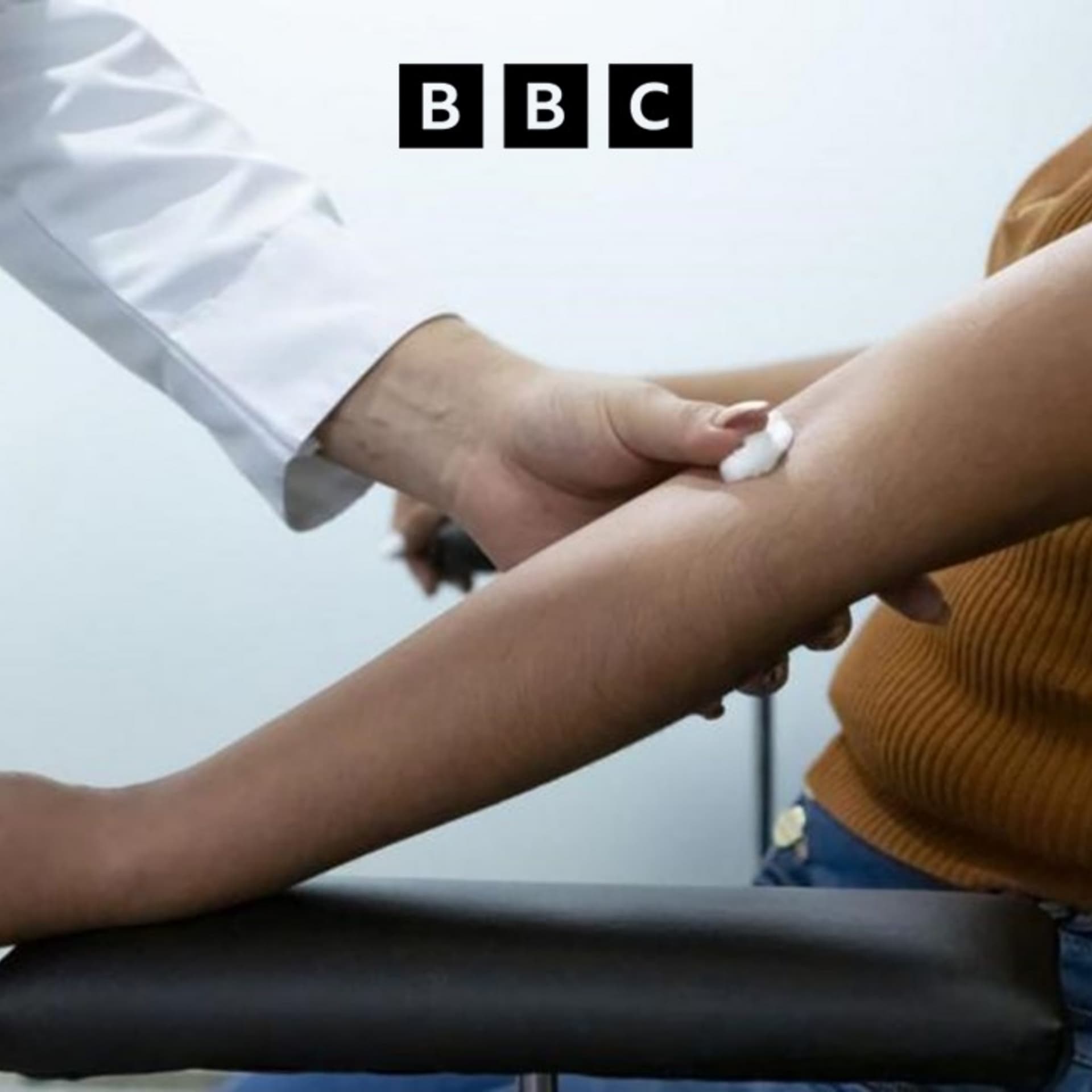
1:54We start with a discovery that could help save the lives of tens of thousands of women around the world. Every year, more than 300 ,000 are diagnosed with ovarian cancer, and it's often not detected until it's in the later stages, leading to low survival rates. But now researchers in the US and the UK have created a new blood test that detected the disease in its early stages in around 90 % of cases, allowing for earlier treatment and potentially improving the chances of survival dramatically. It works by looking at the types of proteins and lipids in the blood and teaching AI to spot the pattern found in ovarian cancer.
2:39The Happy Pod's Holly Gibbs spoke to Dr. Kian Babacht from the University of Colorado and Professor Emma Crosby from the University of Manchester. At the moment, we don't have very good blood tests for ovarian cancer. There is one that's been around for about 50 years, but it's not that good at discriminating between patients who do and do not have cancer. But this new blood test measures several proteins and a whole range of other molecules in the blood called lipids. And when you use this big range of different lipids and proteins, you're able to discriminate much better between patients who do and don't have ovarian cancer.
3:18And Dr. Baybacht, could you tell us why a blood test like this is so important? 7 ,500 women in the UK, over 20 ,000 in the US will be diagnosed with ovarian cancer every year. And unfortunately, the survival is about 20 % for the later stages. And we know that if we can find this cancer earlier that the survival goes up to about 80 to 90 percent. We have been trying and trying and trying, as Dr. Crosby says, for 50 years. We have had tests and we keep applying them. Here now, we really have a bright light on the horizon. We have a new test that could really be a game changer for women that are diagnosed with this disease.
4:07This is tremendously important. Imagine coming up with a QR code that tells you that there's a chance of ovarian cancer, the amount of information that this test relays, and most importantly, the technology to adequately assess it. Professor Crosby, what's the feedback been like from the patients who have taken part. I've been contacted by numerous patients, their family members by telephone, by email, by text saying how excited they are. People who are having symptoms who are very keen to have access to this new test and people whose loved ones have been diagnosed with ovarian cancer in the past who'd struggled to get a diagnosis and we're just really delighted to see the progress that's being made in this area?
4:57Yeah, this is a game changer. You know, we have jumped leaps ahead in technology. The patients are well aware of this. And similarly, our patients that are enrolled in the prospective trial that's going on now are very excited that they may not have to suffer. So what's next for this blood test? We are focused on women with these symptoms. The symptoms are difficulty eating, abdominal pain or bloating, trouble with urination. When you apply these symptoms as an upfront screen to this QR test, you dramatically increase the power and the effectiveness of detection. And on a personal level, how does it feel to work on a blood test that you know could save lives in the future?
5:47I mean, it's absolutely brilliant. It's what we get up for every day. We're here for the patients. So we unfortunately do manage patients who have got ovarian cancer, and perhaps it's been diagnosed at a late stage, people who are essentially devastated by this new diagnosis and have to go through very challenging treatment. So to actually be involved in a research study that can help to diagnose people at a much earlier stage where their chance of cure is greater, The chance that they will live and see their children grow up is absolutely fantastic. It's essentially why we became doctors and researchers, is to see these exciting research ideas being put into practice and actually making a difference for our patients.
6:35I have a journal where I log the daily wins on my professional career. And my professional career has been trying to eliminate ovarian cancer, putting it in the rearview mirror. And very happily, recently, I've had a lot of journal entries about things that have happened that have moved the needle that have gotten us to that place where we can historically talk about ovarian cancer. and then both Dr. Crosby and I will be out of a job and we'll be very happy about it. Dr. Kian Baybacht and Professor Emma Crosby. The first British Muslim woman jockey to win a horse race in Britain has just made her amateur debut at Goodwood Racecourse.
7:22As an 18-year-old back in 2019, Khadija Mellor made history by winning an all-female charity event, the Market Magnolia Cup, wearing a hijab. She learned to ride through low-cost lessons at a community stables in London and has helped set up an academy to help other young people from disadvantaged backgrounds get involved in horse racing. I went along to Hyde Park Stables in central London to meet her.
7:53Khadija, congratulations on your recent debut as an amateur jockey at Goodwood. How did it go? It was surreal. It's a long time coming, a lot of training, two years of work, and I'm very, very grateful to have the opportunity to race. It went in a flash and I can't wait to race again, but it's taken me a while to be back in business. Tell us how you started off with horses in your life. For me, it's just a love of animals, love of animals and a love of sport. And I was obsessed with horses before I'd even met any horses. And I started at Ebony Horse Club in Brixton, rode there once a week and then eventually got offered to train as a jockey.
8:30so that's how it transitioned into horse racing. The transition is almost like going from a standard Ford Fiesta or a Fiat 500 to suddenly being in a Formula One car. It's like long jump and high jump. It still jumps but it's a different form so I had to start from scratch basically. Well you grew up in inner London. It's not normally associated with horse riding. How important has it been to you and your development as a person? I learnt a lot from learning to ride in an inner city but I definitely say it was strange to speak to people at school and meet people and tell them that that was my hobby because they immediately assumed I was wealthy which obviously isn't the case I came from a very working class background my parents are immigrants that came to this country about 30 years ago with nothing and it's such a privilege to be able to be part of the equestrian world it's really hard to break into so it was a bit of a journey it still is to this day hard to sometimes progress and open doors it's a lot about who you know what you know and and obviously i'm a bit of an outsider when it comes to horse racing and the equestrian world so you have to forge those connections the long way but patience is a virtue and some doors are finally opening and what would you say to children from a similar background keep pushing perseverance honestly like if you keep knocking on doors eventually one or two of them will open and you know you've got to have to literally tolerate getting thrown off a horse and getting back on trying something new and being out of your comfort zone as well that's something that I would recommend trying to be brave and not letting people's sort of biases or their preconceived stereotypes of who you are and what you are dictate your narrative and of course you must be a great role model for the children in Brixton now attending the stables that you learned at?
10:20I mean, I literally just sent an email earlier today because one of the students from Ebony, I've helped him join the Riding a Dream Academy and now he's working in a racing stable and we're trying to get him involved in some races and a lot of the kids that I grew up with at Ebony are now trying to get involved in the horse racing world and, you know, the academy that we set up with Naomi and Ollie are giving them a great place to facilitate their growth and a safe space for them to learn to ride racehorses. So, yeah, it's been really positive and really beautiful being able to give back and seeing the next generation progress alongside me.
10:55For me, I really struggled to transition to racing alone. It was quite scary and really overwhelming. But to do that with other people and creating a pathway where, as a group, people could progress together, I think that was the best and most successful route to maintain that stream of talent. because I was a one-off, but who's to say there aren't many other young people with talent in the horse racing world that just haven't had the opportunity or the incentive to try it? Khadijah Mellor. Amid a busy summer of international football and the start of the English Premier League season, there was a small tournament you may have missed, the Homeless World Cup.
11:35It brings together organisations from across the globe that are using the sport to tackle homelessness and social isolation. The event was held in Norway last weekend, with Uganda winning the women's title and Egypt taking the men's. One man who knows all about the difference it can make is David Duke, the chief executive and founder of Street Soccer Scotland. He told my colleague Katie Smith he was sleeping rough and living in hostels when he saw an advert for the Homeless World Cup back in 2004. It came at a time for me when I didn't really have anything to look forward to I was just trying to get through day by day No hope, no sense of purpose And then suddenly this football tournament arrived I went along And then I was asked to be part of the squad And so for the next three months I had purpose And I had something to look forward to Because I was looking forward to going playing twice a week When you're in that position Sometimes it's hard to find pieces of hope And something to look forward to and I suppose about a purpose, you know, and that became my purpose and, you know, went to the tournament in Sweden, in Gothenburg.
12:45And that experience really became a catalyst for me to kind of start moving forward, you know, trying to keep myself busy. And I started volunteering, doing kids' football coaching. And that took me back into housing, education, employment. And then having did that for, you know, worked in homelessness and youth work and football coaching. In 2009, I realised that if we could provide something every week, it could be a real turning point, you know, because it can become quite isolating. And also you don't sometimes know where to turn for help. And actually, if you can start that healing process on the football pitch, I mean, the coaches aren't coaches.
13:27They're support workers, they're community workers, they're mentors, you know, they're role models. And start to build those relationships, then it allows people to access additional support that they might need. So explain to us who might not have heard of the Homeless World Cup, what is it and who takes part? The tournament's all about using the power of football to change lives. So there'll be 64 countries taking part this year and all those countries will be represented by organisations who are using football to tackle homelessness and social isolation. And then, you know, once a year, players from these projects get taken to represent their country at an international tournament.
14:09It's an amazing experience. You know, it's full of colour, full of joy, full of hope. With helping people who are experiencing homelessness, do you feel like the Homeless World Cup is the best use of resources to do that? Because I just wonder if other people might look at it and think, you know, are there other ways to tackle this sort of problem in society? I think it's a complex issue, which means that there has to be many, many solutions to actually solve it. You know, so the Homeless World Cup and street soccer, we help people find a community and find belief and find access to additional support and a safe and friendly environment.
14:49You know, which is when it comes to kind of looking at tackling homelessness, housing has to be part of it all the time. But it can't only be housing. It has to be how do you build support networks for people, etc. because when homelessness affects someone, it's normally because of a crisis and because of a lack of support. And what we're trying to do is make sure that support's there for when people can move out of homelessness. So I think things like the homeless workup raises awareness of the issues. It shows people experiencing homelessness in a different light as well, rather than that stereotypical guy sitting begging under a bridge.
15:24Homelessness can often be seen as a kind of hopeless situation, but actually we need to find hope within that, that homelessness can be ended. People can live the life that they want to live and be happy and proud of, you know, and I think Homeless World Cup and Street Soccer Scotland and Street Soccer London are a vehicle for that. David Duke was speaking to Katie Smith for Not By The Playbook, available wherever you get your BBC podcasts.
15:55Coming up in this podcast, the remarkable recovery of a woman who underwent a rare triple organ transplant. Life is great. I mean, I'm able to enjoy everything that I always wanted to continue doing and I feel that I'm able to keep up with my family now.
16:21If journalism is the first draft of history, what happens if that draft is flawed? In 1999, four Russian apartment buildings were bombed, hundreds killed. But even now, we still don't know for sure who did it. It's a mystery that sparked chilling theories. I'm Helena Merriman, and in a new BBC series, I'm talking to the reporters who first covered this story. What did they miss the first time? The History Bureau, Putin and the apartment bombs. Listen on BBC.com or wherever you get your podcasts.
17:00Now to an invention that began as a way to help a friend and has gone on to help thousands. Around the world, an estimated 5 billion people still wash their clothes by hand, often spending hours a day and suffering aching joints and skin irritation. So after seeing the problem during a year volunteering his skills in southern India, British Sikh engineer Navjot Sawney was determined to find a solution. As Nkem Ifadjuku found out, the result was a hand-cranked washing machine named after Nav's neighbour in that Tamil Nadu village. The most beautiful friendship that I have on the street is with a lady called Divya.
17:45She has two kids. She wants to feel like she's providing more than she already is. But she feels like the thing that's keeping her back is the household chores. She washes clothes every single day, sometimes for two to three hours a day. And I have conversations with her all the time about why does she wash clothes like this? I'll buy you an electric washing machine. And she says to me, Nav, I wouldn't be able to power this electric washing machine. I don't have running water all the time. Your electric washing machine wouldn't have any effect on my life. This is the exact moment where I had the realization that I want to make a washing machine that works for you, Divya, and I'm going to promise you that I will come back here and I will bring this washing machine to you.
18:45Nav signed up for a master's degree in humanitarianism, conflict and development and in 2018 less than two years after his revelation in india he joined forces with his fellow students to get the washing machine project started we're eating our samosas in my mom's kitchen thanks mom and we see the salad spinner we're like why don't we just create a salad spinner but with clothes and we take off our socks and we literally start washing our socks in the salad spinner and it's funny because the salad spinner has never been used for food ever again. The machine is a big steel drum standing about one meter twenty off the ground.
19:27Mounted on wheels it's really light. You put the clothes, water and detergent into a door on the top and there's a handle on the front which you turn to do the wash and a tap where you empty out the water once you've finished. They're made from very thin sheets of steel, easy to transport and fold into shape, and easy to dismantle. They have now distributed nearly a thousand machines to 11 countries around the world. That includes Tamil Nadu in India, the place where the idea was born. Sarasu Murugan is 42 and has three jobs as well as doing all the household chores. When I used to wash clothes, sitting or squatting, I would get severe pain in the bones around my hip and shoulder.
20:12I spend my free time now with my children. Spending such time with the children gives me happiness. For her daughter Ishwarya, it means more time to pursue her dream of becoming a diplomat. She's at school at the moment, but also has to help her mother with the chores. It helps us in many ways, like time-consuming, and even my sister can do that work, my father can do. he can't wash clothes by his hands, but he can do it in the washing machine. She wants to become a government official so she can help other women and girls. I, as a girl kid, have to do housework, even my studies. So if I became an officer, I'll get schemes like this to introduce in my country to help those child.
20:59It has changed my life. It can also change girls' life like me. Seven years after his promise to his neighbour Divya, Nav returned to the village where it all started. And there Divya is waiting outside her house and everyone is so emotional and she turns to the washing machine for the first time and everyone starts clapping and crying.
21:32And she says, Nav, there are millions of people like me around the world. Go find them. And that's what we do. And you can hear more about the Washing Machine project in a special episode of People Fixing the World, wherever you get your BBC podcasts. Now for a story that links a world-famous indie band one of the most iconic rappers of all time, and the renovation of an old chapel in a tiny town in Wales. Will Chalk takes up the story. When Irvon Watkins' daughter started school in Bristol in England 20 years ago, it's fair to say he wasn't actively looking to make any new friends at the school gate.
22:19But Irvon's a huge music fan, so imagine his surprise when one of those parents turned out to be Ian Matthews, the drummer from the band Kasabian. And after getting chatting at a school event, Irvon and Ian have been best friends ever since. The parent-teacher's evening that we sort of really bonded over was sponsored by a brewery, which sounds really weird for a primary school. We're sitting in little children's chairs drinking pints of real ale, eating curry. And that was our introduction to each other. It was a rock and roll parent-teacher's evening. I mean, what goes on tour stays on tour, is that right?
22:57Yeah, it's correct. Irvon's originally from Clenortid Wells in Wales, and with a population of just 850 people, it claims to be the smallest town in the UK. If it's famous at all, it's for hosting the annual Bog Snorkelling World Championships, which, as you might expect from the name, is where people snorkel through a bog. So, a tiny town in the middle of nowhere famous for its bogs. In other words, the last place anyone would pick to open a music venue. One day, everyone gave me a call and said, the chapel in my hometown has come up for sale, set up for auction. I'm going to go for it. Are you interested in getting involved if we win it?
23:41And I went, yeah, of course, absolutely. The pair bought a 250-year-old chapel, which they're now in the process of renovating, and they do want to turn it into a venue, but with a difference. Knowing they'll never make any money from ticket sales in such a tiny town, they plan to let local people come to the shows for free. Irvon is a music technology entrepreneur and thinks they can instead make money by live streaming the gigs in the metaverse and selling virtual tickets to fans around the world. We use the chapel as a place of experimentation. What the community get out of that as a benefit is the chapel renovated.
24:16That chapel is going to be there for another 250 years. And this is where the iconic rapper joins the story because the music tech side of the business has since had investment from a company owned by none other than Snoop Dogg. So in effect, Snoop Dogg owns a bit of the chapel. Even though he is inadvertently funding its restoration, he probably isn't even aware that this chapel exists. He would have no idea. He'd have no idea. I'd be very, very surprised if he knew it existed. And as for Ian and Irvon, they think they're about six months away from being able to put on their first gig. And if only you knew a world famous indie band who could play the opening night.
24:53Ian, can you think of any? I'm trying to think. Well, I haven't spoken to them about that yet. Kasabian drummer Ian Matthews, ending that report by Will Chalk. A woman in the US is looking forward to the simple pleasure of dancing at her own wedding after recovering from an extremely rare triple organ transplant. As a child, Jessica Lopez had leukaemia and the eye cancer, retinoblastoma, which made her blind. Years of chemotherapy left her needing a new heart, liver and kidney. Then in February this year, she received all three in a single operation and just surviving the lengthy procedure is something to celebrate.
25:39But Jessica, who's now 32 and from Chicago, says she's also now planning her wedding. She spoke to my colleague Victoria Owankunda, along with her surgeon, Dr. Benjamin Briner of Northwestern Memorial Hospital in Chicago. We talked a lot about what to expect beforehand and about the great team that we have for doing transplantation. We, of course, frequently do single organ transplants, sometimes do double organ transplants, either heart and liver or liver and kidney. So we do have experience working with multiple teams together. But of course, this was one more step of complexity. But we talked through everything that we had planned and all the ways we communicate and what would be happening when, and did our best to reassure her.
26:24At any moment, there were probably 12 or 13 people in the operating room, but different people rotated in and out as their expertise was required at different stages. This is one of the rarest operations, if I'm not mistaken. There've only been 59 triple transplants in the United States to date. How long would you say that this took, and how big was this? The phase to implant the liver and the heart took probably a total of 10 or 11 hours and then the kidney transplant was separate and took another three to four hours. Jessica, under all that, I imagine you were under anesthetics. Tell us what it was like waking up from those hours, waking up and knowing that you had a new heart, you had a new liver, you had a new kidney?
27:13Yes, as soon as I woke up, the first thing I remember was asking what day it was and what time it was. Another thing that I noticed as soon as I woke up was how warm my hands were and my feet as well. Before the transplant, I used to actually always have very cold hands and feet. How is life now? Life is great. I mean, I'm able to enjoy everything that I always wanted to continue doing and I feel that I'm able to keep up with my family now and we're able to go places where before we would actually have to kind of think about traveling to. One of those things was working out in the gym or exercising as well as walking for long distance, going to a park or just enjoying nature outside as well as traveling and being able to keep up with family.
28:01Dr. Briner, were the organs from different people or from one person? No, from one donor. That's the best way to ensure good matching and minimizing the chances of rejection so that there's only one sort of set of foreign antigens that the recipient's body is exposed to. And how is she doing today? How is Jessica today? I imagine that you keep following her up. Yeah, of course. She's doing terrific, doing even better, I think, than we hoped. She bounced back even faster. than we hoped, from our standpoint, doing remarkably well. Jessica, when is the wedding? We are aiming, hopefully, for next year.
28:38Next year. And then part of the things that you said that you couldn't do before are going to the gym. I imagine top of the list then at the wedding is dancing. Definitely. That is one thing I'm looking forward to. Jessica Lopez and transplant surgeon Dr. Benjamin Briner.
Read the full transcript
28:59and that's all from the happy pod for now if you have a story you think we should cover or a comment on anything you've heard we'd love to hear from you just send us a voice note or an email to global podcast at bbc.co.uk and you can now watch some of our interviews on youtube Just search for The Happy Pod. This edition was mixed by Derek Clark and the producers were Holly Gibbs, Harry Bly and Rachel Bulkeley. The editor is Karen Martin. I'm Bernard Ecchio. Until next time, goodbye.
29:40If journalism is the first draft of history, what happens if that draft is flawed? In 1999, four Russian apartment buildings were bombed, hundreds killed. But even now, we still don't know for sure who did it. It's a mystery that sparked chilling theories. I'm Helena Merriman, and in a new BBC series, I'm talking to the reporters who first covered this story. What did they miss the first time? The History Bureau, Putin and the apartment bombs. Listen on BBC.com or wherever you get your podcasts. you
From the publisher
A new blood test could dramatically improve survival rates for women with ovarian cancer by detecting it much sooner. The researchers tell us it's a game changer that could go on to save tens of thousands of lives around the world every year. Also: we meet the female Muslim jockey breaking new ground and inspiring the next generation. Khadijah Mellah has just made her amateur debut. Plus the woman who underwent a rare triple organ transplant talks about the joy of getting back to normal life; how a hand-cranked washing machine is saving thousands of people from hours of back breaking work; football's Homeless World Cup; and why a member of indie band Kasabian is opening a new music venue in a tiny Welsh town. Our weekly collection of inspiring, uplifting and happy news from around the world.