
In short
Global News Podcast Episode Notes
Episode Title
The Happy Pod: The injection that saved my sight
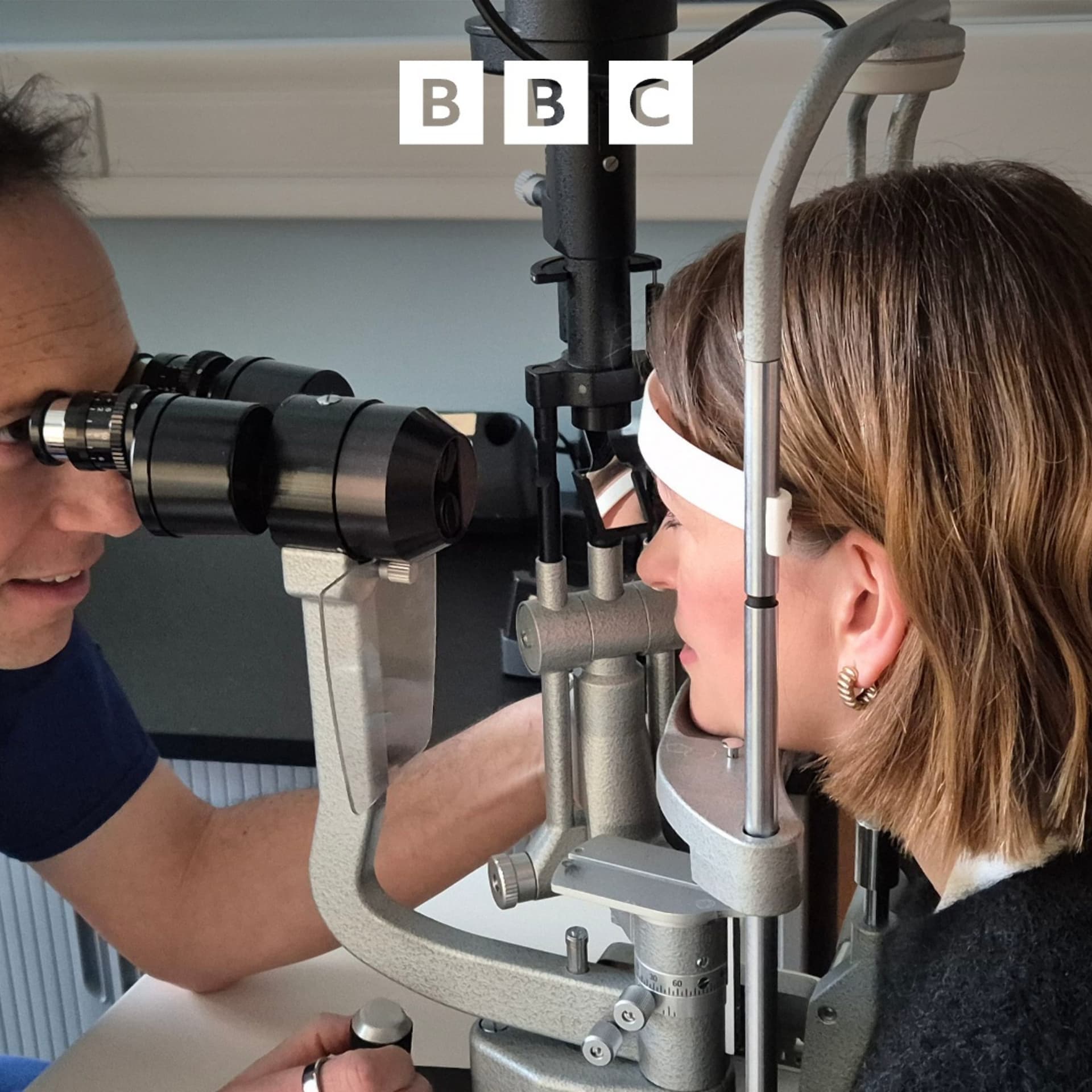
Overview In this episode of the Global News Podcast, presenter Valerie Sanderson covers a range of uplifting stories, from groundbreaking medical treatments to heartwarming community connections. The central narrative features Nicki Guy, a woman whose fight against blindness has led to the development of a revolutionary eye treatment.
Key Highlights
- Revolutionary Eye Treatment
- Subject: Nicki Guy's journey from potential blindness to recovery.
- Condition: Hypotony, a rare eye condition causing the eyeball to collapse.
- Treatment:
- Involves injecting a low-cost, water-based gel into the eye.
- Developed at Moorfields Hospital, London.
- Trial results show 7 out of 8 patients experienced success with the treatment.
- Impact: Nicki expressed a profound sense of gratitude, stating that the treatment has allowed her to regain her vision and participate fully in her child's life.
- Autism Awareness Through Doll Design
- New Release: Mattel has introduced an autistic Barbie.
- Significance:
- Aimed at promoting understanding and acceptance of autism among children.
- Features include sensory accessories like fidget spinners and ear defenders.
- Expert Insight: Ellie Middleton, a neurodiverse writer, emphasizes the importance of representation for autistic girls and hopes the doll will foster self-acceptance and understanding.
- Groundbreaking Cancer Treatment
- Focus: CAR-T therapy for treating aggressive forms of leukemia.
- Details:
- Personalised treatment that modifies patients' own T cells to combat cancer.
- Clinical trials report a 77% remission rate, with half showing no signs of cancer after 3.5 years.
- Testimonial: Oscar Murphy's story illustrates the life-changing potential of CAR-T therapy as he seeks a normal life post-treatment.
- Community Connection: A Heartfelt Rescue
- Story: Charlie Hicks, a regular diner, was rescued after falling ill at home.
- Narrative:
- Restaurant staff noted his absence and took action to check on him.
- His regular eating habits led to his rediscovery after he had been incapacitated for days.
- Community Impact: The connection between Charlie and the restaurant staff showcases the importance of community vigilance and support.
- Environmental Stewardship
- Profile: Tarika Christian, 24, oversees the protection of nearly one million square kilometers of the Pacific Ocean.
- Background: A descendant of Fletcher Christian, she discusses the unique lifestyle and environmental responsibilities on the remote island of Pitcairn.
- Underdog Triumph in Sports
- Event: Macclesfield Football Club, an amateur team, achieved a stunning upset by defeating Crystal Palace in the FA Cup.
- Significance: The victory is celebrated as a classic underdog story and highlights the joy and possibilities in sports.
Conclusion The episode encapsulates stories of resilience, innovation, and community spirit. From medical breakthroughs to personal triumphs and social awareness, each segment serves to inspire and uplift listeners.
Additional Notes
- Host: Valerie Sanderson
- Producers: Holly Gibbs and Rachel Bulkeley
- Editor: Karen Martin
- Contact: globalpodcast@bbc.co.uk
Listen to the Episode Available on BBC platforms and various podcast streaming services.
Written by AI. May contain mistakes. Listen to the episode to check what was said.
Chapters
Tap a time to open that second in VOThe Flawed Draft of History
0:05 to 0:30
Explore the mystery behind the 1999 Russian apartment bombings.
“If journalism is the first draft of history, what happens if that draft is flawed?”
A Determined Journey to Regain Sight
0:51 to 2:06
Hear Nikki Guy's inspiring story of determination in fighting for her vision.
“I'm Valerie Sanderson and in this edition...”
Innovative Eye Treatment Explained
2:06 to 6:28
Learn about the groundbreaking treatment using a water-based gel for eye conditions.
“It involves injecting a low-cost water-based gel into the eyes of patients with a rare condition called hypotony, which can cause the eyeball to collapse and lead to blindness.”
Autistic Barbie: Representation in Toys
6:28 to 8:04
Discover how the new Barbie doll helps raise awareness for autism.
“What does it mean to you now to have this vision?”
Understanding Autism Through Play
8:04 to 11:35
Explore the impact of an autistic Barbie on children's understanding of autism.
“to be able to use the Barbie doll as a way to explain autism to other children.”
A Life Saved by Gumbo
11:35 to 13:23
Listen to the story of Charlie Hicks and how his restaurant visits saved him.
“Now to a remarkable story of how one man's frequent visits to a local restaurant may well have saved his life.”
Upcoming Features: Protecting the Pacific
13:23 to 14:01
A teaser about a young individual’s role in ocean conservation.
“I would say the oceans around our islands are very pristine and full of life.”
Intriguing Medical Advances
14:01 to 14:23
Learn about a revolutionary cancer treatment being offered in the UK.
“I'm Helena Merriman and in a new BBC series I'm talking to the reporters who first covered this story.”
Oscar's Journey with CAR-T Therapy
14:23 to 18:19
Follow Oscar Murphy's experience with CAR-T therapy for leukemia.
“Welcome back to another medical advance now and for the first time a revolutionary way of treating some cancers is being offered to people in the UK with an aggressive form of leukaemia.”
Life on Pitcairn Island: Tarika's Story
18:19 to 22:40
Explore the unique lifestyle and responsibilities of Tarika Christian on Pitcairn Island.
“I can't wait to be quite honest with you.”
Show all 11 chapters
Macclesfield's FA Cup Triumph
22:40 to 25:52
Discover how Macclesfield's amateur team shocked the football world.
“They say everyone loves an underdog and this is a story that sporting dreams are made of.”
Transcript
Automatic transcript. May contain errors.0:00This BBC podcast is supported by ads outside the UK. If journalism is the first draft of history, what happens if that draft is flawed? In 1999, four Russian apartment buildings were bombed, hundreds killed. But even now, we still don't know for sure who did it. It's a mystery that sparked chilling theories. I'm Helena Merriman, and in a new BBC series, I'm talking to the reporters who first covered this story. What did they miss the first time? The History Bureau, Putin and the apartment bombs. Listen on bbc.com or wherever you get your podcasts. This is The Happy Pod from the BBC World Service.
0:51I'm Valerie Sanderson and in this edition... I was just like, I'm not giving up. I refuse to accept that this is how it's going to be. There has to be something else we can do. There's got to be another way. It's incredible. It's life-changing. It's given me everything back. How one woman's determination led to a new treatment that's giving people their sight back. A new form of cancer therapy is extended to help people with an aggressive form of leukaemia. We are able to offer them years and potentially a cure. So this is, of course, revolutionising the way we tackle this cancer. A new doll designed to help understanding and acceptance of autism.
1:30It was brilliant. It was such a proud moment. And just knowing that so many other children are going to have that exact same reaction and that so many little girls are going to be able to see themselves in a doll. Also, how one man's routine of having gumbo twice a day may have saved his life. Plus, you can be an underdog in any story. You can achieve whatever you want to achieve. And things that seem completely impossible might just become a reality because that's exactly what happened on Saturday. One of the biggest upsets in English footballing history.
2:05We start with a life-changing new treatment that's giving people their sight back. It involves injecting a low-cost water-based gel into the eyes of patients with a rare condition called hypotony, which can cause the eyeball to collapse and lead to blindness. In a trial, seven out of eight patients responded well to the treatment, which was developed at Moorfields Hospital here in London, after one patient challenged the doctors, who said they couldn't stop her going blind. Nikki Guy had already had the previously standard treatment of steroids and silicon oil injections in one eye, but they don't restore much vision.
2:43Nikki told our health correspondent Sophie Hutchinson that when her other eye was affected, she was determined not to give up. I think I allowed myself to dwell maybe for half a day, a day. I was just like no this isn't it like there has to be hope there has to I have to move forward I can't sit still I mean there's no denying it was challenging I couldn't see to get around my house I found it incredibly tough to get outside my husband's a chef so he's really not around very much at all I was the primary caregiver to our child so it's things like that we were living by the sea how am I going to see my child if he runs off he was quite young at that point so there's there were so many things suddenly I couldn't cut a slice of cucumber or a bagel um so it was exceptionally hard.
3:27How did you cope? Determination, grit I was just like I'm not giving up I refuse to accept this is how it's going to be. So in your determination what happened? The only reason I couldn't see was because the eye had kind of collapsed the structure of the eye the vision is still behind it and it soon got to the point where it's like this isn't tenable and we had to have the conversation where the doctors thought that I would need to have silicone oil put into the left eye and when it became evident it wasn't going to fix itself. Obviously it hasn't given me my vision back in my right eye, the silicone oil, and that's when I said no.
4:06I was like there has to be something else we can do, there has to be something else, there's got to be another way. And so what then happened? Well I'm incredibly fortunate that my doctor listened to me, He really took on board what I was saying. And to his credit, he went off. He did a lot of research. He took it to the board at Moorfields and to the other doctors. And they came back and they said, because it's you and because we know that you won't let this go, we've come up with this idea and we're happy to try it on you. So instead of filling the eye up with the silicone oil, they wanted to fill it up with a clear jelly.
4:45therefore it meant that it would hopefully have more longevity and what the eye is, what the vision is looking through is a clear substance rather than oil. Did you have any hesitation? No. I think at one point my doctor called me gung-ho. I was like, let's go, let's do it now. And it was just amazing every week or every month coming back to hospital and slowly being able to read one line further down on the site chart. I'd gone from counting fingers and everything being really blurry to being able to see. It's incredible. And I think currently, I think last time I had my eyes checked in clinic, I think I was one line below driving standard.
5:27So, I mean, other than saying it's incredible, I don't know what else I can say. I'm interested in how you feel about your doctor and what was done for you. I genuinely don't think I can put it into words. I think I am so incredibly fortunate that I was referred back to Moorfields from living overseas. I'm so fortunate that I happened to get his clinic. I'm so fortunate that he's listened to me every single step of the way and that he let me be stubborn and he was stubborn with me. And he agreed that more had to be done and more could be done. And let's fight together. Let's find a solution. What can we do?
6:07He's pushed as much as I have pushed. When he told me that other patients were receiving the same treatment, that was mind-blowing. At one check-up he said to me, before you patients were going blind, and again, you just can't fathom that. So the fact that patients have now had this treatment and have had some kind of success is absolutely wonderful. What does it mean to you now to have this vision? It's incredible. I mean, I keep saying the word incredible. But I mean, it's life changing. It's given me everything back. I mean, I used to take loads of photographs and be a keen photographer. I can do that again.
6:45I can see my child grow up at every birthday. I can make him a birthday cake. I can go skiing again. I mean, not without mishaps, but I can ski. So, yeah, I mean, if my vision stays like this for the rest of my life, it would be absolutely brilliant. It'd be wonderful. Nicky Guy. A few weeks ago on the Happy Pods Diabetes Special, we spoke to the woman who inspired the Barbie doll with the condition. This week, the toy maker Mattel released another doll, Barbie with autism. Holly Gibbs has more on the story. Wow. Look what I've got. Wow. Wow. That's the sound of five-year-old Penelope seeing autistic Barbie for the first time.
7:34Do you want to feel them? look the fidget spinner moves wow wow tonya is her mother it was brilliant it was such a proud moment and just knowing that so many other children are going to have that exact same reaction and that so many little girls are going to be able to see themselves in a doll did you like it penelope yes yes did you love all the accessories yeah yeah it's huge for children to have a barbie that represents them it helps with inclusion and it will help with opening conversations also so between children, adults and educators, to be able to use the Barbie doll as a way to explain autism to other children.
8:09I see ear defenders, which helps the noise get blocked out. Some of the doll's features include loose clothing, headphones and a fidget spinner. Autistic Barbie also has eyes that look slightly to the side to represent how some members of the autistic community might avoid eye contact. Look at this, a fidget spinner. I used to have one at some, didn't I? Autism includes a wide range of conditions which influence how people experience and interact with other people and their surroundings. According to the World Health Organization, around 1 in 127 people across the globe have some level of autism.
8:47Oh, she's so nice. I feel like I'm actually going to cry. She's so nice. I spoke to the autistic and ADHD creator and author Ellie Middleton. She was diagnosed at the age of 24. As a child teenager, I struggled a lot, but it was always kind of put down to being mental health. Although like I did, I really struggled socially. I really struggled with kind of getting really overwhelmed. I kind of always knew that I was different and always really struggled, but never got that diagnosis and that understanding. Do you hope that having things like the autistic Barbie will raise awareness of autism so that people like you could have got the diagnosis a lot younger?
9:29Yeah, I think it's huge of just the fact that like Barbie is a woman. I think we've even, you know, 10 years ago when I was growing up or 20 years ago, we just didn't consider autism to be something that was present in women and girls. We kind of had the theory of autism being the extreme male brain. It was it was called at one point. Even just the fact that such an iconic woman figure, Barbie, is autistic just kind of will be such a massive education piece for people that actually, yeah, women and girls can be autistic. I think will help people maybe join the dots earlier on, which was kind of what didn't happen with me.
10:08How do you feel personally to see autism reflected in a Barbie doll? Yeah, so emotional. So emotional to see it. I think it's so nice to like see those parts of myself that, you know, maybe I am still learning to be proud of. And it can be a bit of a learning process to be like, OK, with, you know, wearing the air defenders when I need the air defenders, using a fidget toy when I need the fidget toy. So seeing those in Barbie, I think, is a reminder of like, actually, they're not something that I need to be embarrassed of. they're something that I can wear with pride, they're something that are okay to show publicly.
10:43How does it feel knowing that young autistic girls will grow up with a Barbie doll that represents them? I think knowing that they won't hopefully have to go through all of those why, why, why, why, why questions because they'll just have the context of oh that's why I work a little bit differently because I'm autistic and then kind of the extra layer added on of knowing that autism is a neutral thing. It's not something to be ashamed of. It's not a bad thing. It's not something to hide away from because they can see that represented in Barbie. I think, you know, it just takes away all of that, that self-blame, I think, for things going wrong or that shame for the way that you are.
11:21And we'll hopefully let these girls, you know, accept themselves as they are and love themselves as they are and forgive themselves for the things that they find slightly more difficult or need a bit more support with. Ellie Middleton ending that report by Holly Gibbs. Now to a remarkable story of how one man's frequent visits to a local restaurant may well have saved his life. Staff was so used to seeing their most regular customer, that when he stopped coming in, they knew something must be wrong. Riley Farrell has the story. For the last decade, 78-year-old Charlie Hicks has visited the shrimp basket in Pensacola twice a day.
11:57He always sat in the same seat and his order never changed. Gumbo, light rice, hold the cracker. That constant presence is why Charlie's sudden absence in September was so jarring. Mr. Hicks don't miss no day. I knew then something was wrong. Danelle Stallworth was so worried he left in the middle of his shift, drove straight to Charlie's apartment, and knocked on the door. There was no answer, but he kept knocking until... I heard a voice just like, help! And then I opened the door. He was laying on the ground and I didn't know what his conditions was. That's what's the scariest part right now.
12:36It's thought Charlie Hicks had been there for days. He was dehydrated and had two broken ribs. The restaurant employees brought his gumbo to the hospital. Then they even found him a new apartment right next to the shrimp basket so that they could keep an eye on their favorite customer. Three months after the accident, Charlie was back at the restaurant, picking up his routine right where he'd left off. I'm glad to have you back though, buddy. He's that uncle. He's that grandfather. He's that best friend. He all in one. We made a connection. We made a connection. The life-saving power of gumbo and looking out for one another.
13:15Riley Farrell reporting.
13:22Coming up in this podcast, the 24-year-old responsible for protecting part of the Pacific Ocean. I would say the oceans around our islands are very pristine and full of life. It just makes you want to get in it and then never come out.
13:45If journalism is the first draft of history, what happens if that draft is flawed? In 1999, four Russian apartment buildings were bombed, hundreds killed. But even now, we still don't know for sure who did it. It's a mystery that sparked chilling theories. I'm Helena Merriman and in a new BBC series I'm talking to the reporters who first covered this story. What did they miss the first time? The History Bureau, Putin and the apartment bombs. Listen on bbc.com or wherever you get your podcasts.
14:23Welcome back to another medical advance now and for the first time a revolutionary way of treating some cancers is being offered to people in the UK with an aggressive form of leukaemia. It's one of a growing number of personalised treatments which work by genetically modifying the patient's own cells so that they can recognise and target the cancer. Doctors say it can extend people's lives or in some cases cure them completely. Here's the BBC's medical editor Fergus Walsh. You've done some ops, he's ready to go? Yes. He's had any pre-meds? Yes. This is a huge day for 28-year-old Oscar Murphy and the medical team at Manchester Royal Infirmary.
15:04His aggressive blood cancer, acute lymphoblastic leukaemia, has come back despite extensive treatment. Oscar says it's time for something new. The leukaemia that I've got is so fast active. it needs an even quicker response to stop it and we've now got an answer for that. A few weeks ago some of Oscar's T cells, a key part of his immune system, were sent to a lab in Stevenage. There scientists genetically modified the cells so that they'll recognise and lock on to Oscar's cancer. The cells have been reprogrammed to form a treatment known as CAR-T therapy. In a clinical trial, 77 % of patients went into remission after treatment, with half of those showing no signs of cancer after three and a half years.
16:04Oscar's hematologist, Dr Eleni Thaluli, said the CAR-T therapy was safer than existing treatments and was much more effective. Usually this type of leukemia, patients don't live beyond six to eight months with this therapy, we are able to offer them years and potentially a cure. So this is, of course, revolutionising the way we tackle this cancer. So when the infusion's finished, I'll just be doing your rubs. One of the nurses hooks the treatment bag onto a stand. There are only three teaspoons of liquid inside, yet it contains 100 million CAR T cells. It's very sci-fi, but it means that it gets rid of it permanently and my own cells can do it.
16:58It's just fantastic.
17:02Oscar got married last month in hospital. There's a lovely video of his wife Lauren wheeling him past all the staff on the ward. Chris Williams, who's 29 and from Belfast, had the same aggressive form of leukaemia as Oscar. He received the CAR-T therapy when it was still an experimental treatment and has been cancer-free for nearly three years. I feel very grateful because a few years ago I was very, very unwell and now, a couple of years later, I'm able to live a full life. I was able to go back to work. I met Chloe and now we're engaged. I have fantastic support from my family and they're over the moon as well.
17:47It's a big day, isn't it? Yeah, and it's been a tough road, hasn't it? Yeah, to say the least. The success of Chris's treatment is precisely what Oscar is hoping for. He's just had a second and final infusion of CAR T cells and should be discharged from hospital in a couple of weeks, hopefully putting his cancer treatment behind him. I want children. I want the white picket fence with my amazing wife. And I just want that normality. I want to go back to my job that I love and just be back normal. This is my gateway to doing it. I can't wait to be quite honest with you. Oscar Murphy ending that report by Fergus Walsh.
18:32For many of us, our early 20s are spent deciding what we want to do or taking on fairly junior jobs. But Tarika Christian, who's 24, is already in charge of protecting nearly a million square kilometres of the Pacific Ocean. She's one of fewer than 50 people living on the tiny island of Pitcairn and a direct descendant of Fletcher Christian, who led the British sailors who settled on the previously uninhabited island after the mutiny on the bounty way back in 1789. Tarika spoke to our reporter Jacob Evans about living and working in one of the most remote inhabited places on Earth. So I oversee the tourism department, natural resources department and our borders department.
19:17Three people in the department can't speak for all of the islands so we make sure we involve our community very heavily in decision making. What makes Pitcairn so important? What's so good about the oceans around Pitcairn? I would say the oceans around our islands are very pristine and full of life. It just makes you want to get in it and then never come out. And I was wondering if I could ask you about being a pit kenner. What's it like to go up on one of the most remote places on Earth, really? It's a different lifestyle growing up here. It's one that's free. There's not very many places where you have your grandparents, your great-grandparents, your aunties your great aunties and and all of that living like in such a close area if that makes sense but also like you grow up in nature so you automatically learn to to love it and when was the first time you left bitken so i was 12 when i left so i thought there was something wrong with new zealand's water you even just notice a difference in like the air it's something you get used to over time the more time you spend overseas but um there's definitely a difference in the noise pollution light pollution the the water i don't know how people can drink water from a tap in the outside world like the taste of like chlorine and fluoride is just disgusting is there anything you miss about new zealand or anywhere else in the world oh yeah fast food definitely it took us a little while to get used to it though you notice that like the lettuce wasn't fresh but then it's like so easy to just go out and get a burger whereas here you kind of have to like make your patties go get your lettuce from the garden go get your tomatoes like it's great having things that are like fresh and delicious and everything but along with it comes work and everything like that too so it's not something that like i miss terribly but it's something that every now and then you're like man I wish I could just go down the shop and get Chinese for dinner or something like that yeah I see you're quite big on social media as well talk to me about that yeah I've got a TikTok and YouTube Facebook things like that I suppose growing up as a young person I've had the opportunity to experience Pitcairn in its natural environment with such blue waters and green trees and also had the opportunity to experience New Zealand and how networking and social media and all of that works there.
21:50And so I realised what a gem Pitcairn was to actually share with the world. And not very many people actually know Pitcairn for what it actually is, just what they read on the net and everything like that. but nobody's actually really heard of life on picture and from an islander and actually seen it and experienced it through the eyes and lifestyle of an islander that's one of the things that I was really into for doing that and so are you going to stay on pitcairn do you reckon your whole life what's your goals for the future what my goal is before thinking about anything else is that there's actually a pit ground to come back to.
22:32If I ever did decide to go off island, what I would want to make sure is that there's a pit ground to come back to. Tarika Christian. They say everyone loves an underdog and this is a story that sporting dreams are made of. A team of amateurs from a small town taking on highly paid professionals from a huge club and winning. The match was in the third round of English football's main knockout tournament the FA Cup and non-league Macclesfield beat the current title holders Crystal Palace in a remarkable 2-1 win. Celebrations erupted in the small town in northwest England but some of the players had to get back to their day jobs as Frankie McCamley reports.
23:14In a century and a half of FA Cup history there has never been a result like this one. Macclesfield Football Club are in the sixth tier of English football and sit 117 league places below Crystal Palace, who are the current title holders. But last weekend, Macclesfield beat Crystal Palace 2-1, knocking them out of the competition. Their coach, John Rooney, says he never dreamed of a result like this. It was nerve-wracking, especially when they scored late on. I was thinking, oh, please, not now. But the lads defended incredibly them last couple of minutes and got us through to that next round.
23:49You need to enjoy them moments because they don't come round very often and thought they needed to enjoy that night and I'm sure they did. For the fans, as the shock sank in, celebrations went well into the night. All we said was, if we score first, this could be the dream, couldn't it? And we've actually done it. I'm just the proudest moment of being a MAAC FC fan. It's ridiculous where we are going to be in a few weeks' time, in the fourth round of the FA Cup. It's brilliant. Can't believe it. Heart rate still just calming down in the moment. Absolutely fabulous second-out performance. Yeah, absolutely loved every single second of it.
24:28Even the mayor of Macclesfield, Emma Gilman, joined in. It means people coming to our town, visiting our town, spending money in our town. All of those things are fantastic. But for some of the players, there wasn't much time to celebrate. Macclesfield defender Sam Heathcote had to head home and get back to teaching young children sports, his day job. Straight back to it this morning, back down to reality. But now I'm looking forward to see all the kids. A few of them might have watched it. And with this reception, they clearly did. Including the headteacher, who admittedly didn't know much about the game.
25:03It was a Premier League team, is that right? It was. So that is a team that plays in the Premier League every single week. And I believe at one point when I was watching the game, they said there were 10 international players on their team. Is that right? so 10 people who play for their country, for the best in their country, but they couldn't beat Mr. UK's team. Should we give him a huge, even louder round of applause? I never thought I'd be in this position to come back in on a Monday having won that game, so I still can't get over it now, to be honest. It's amazing. I'm so happy for everyone and everyone involved with that football club.
25:39He hopes his success will inspire some of his students. You can be an underdog in any story. You can achieve whatever you want to achieve and things that seem completely impossible might just become a reality because that's exactly what happened on Saturday. The club now hope to build on their incredible win, but whatever happens next, this FA Cup shock will be going down in the history books. Frankie McCamley.
26:07And that's the final whistle from the Happy Pod for now. We'd love to hear from you if you have a story you think we should cover. As ever, the address is globalpodcast at bbc.co.uk. And you can watch some of our interviews on YouTube. Just search for The Happy Pod. This edition was mixed by Craig Kingham. The producers were Holly Gibbs and Rachel Bulkeley. The editor is Karen Martin. I'm Valerie Sanderson. Until next time, bye-bye.
26:41If journalism is the first draft of history, What happens if that draft is flawed? In 1999, four Russian apartment buildings were bombed, hundreds killed. But even now, we still don't know for sure who did it. It's a mystery that sparked chilling theories. I'm Helena Merriman, and in a new BBC series, I'm talking to the reporters who first covered this story. What did they miss the first time? The History Bureau, Putin and the apartment bombs. Listen on bbc.com or wherever you get your podcasts.
From the publisher
We hear from a woman whose determination to avoid going blind has inspired her doctors to develop a new treatment for a rare eye condition. Nicki Guy says the injection of a low cost, water-based gel has been life changing and given her the chance to see her son grow up. The treatment has already helped restore the eyesight of dozens of other people with hypotony - which can cause the eye to collapse, leading to blindness.
Also: the new Barbie doll that's designed to help improve understanding and acceptance of autism. A neurodiverse writer says she hopes it will help young girls understand it's not something to hide or be ashamed of. A revolutionary way of treating some cancers is being offered to people in the UK with an aggressive form of leukaemia for the first time. Research has shown genetically modifying the patient's own cells to recognise the blood cancer, can extend their lives or, in some cases, offer a cure. Plus, how one man's regular habit of having gumbo at the same restaurant twice a day may have saved his life; the 24-year-old in charge of protecting the Pacific Ocean around the remote Pitcairn island; and the amateur football team who pulled off one of the biggest upsets in English footballing history by beating a side from the Premier League.
Our weekly collection of inspiring, uplifting and happy news from around the world.
Presenter: Valerie Sanderson. Music composed by Iona Hampson Picture: PA



