
In short
```markdown Global News Podcast - Episode Summary
Episode Title
The Happy Pod: The Model Redefining Beauty Norms
Episode Overview In this episode of The Happy Pod, host Ankur Desai highlights uplifting stories that challenge societal norms and promote positivity. Featured stories include the journey of Abena Christine Jon'el, a Ghanaian model redefining beauty standards, initiatives supporting mental health in Brazil, rehabilitation projects for prisoners in the UK, and innovative ways museums engage younger audiences.
---
Key Stories
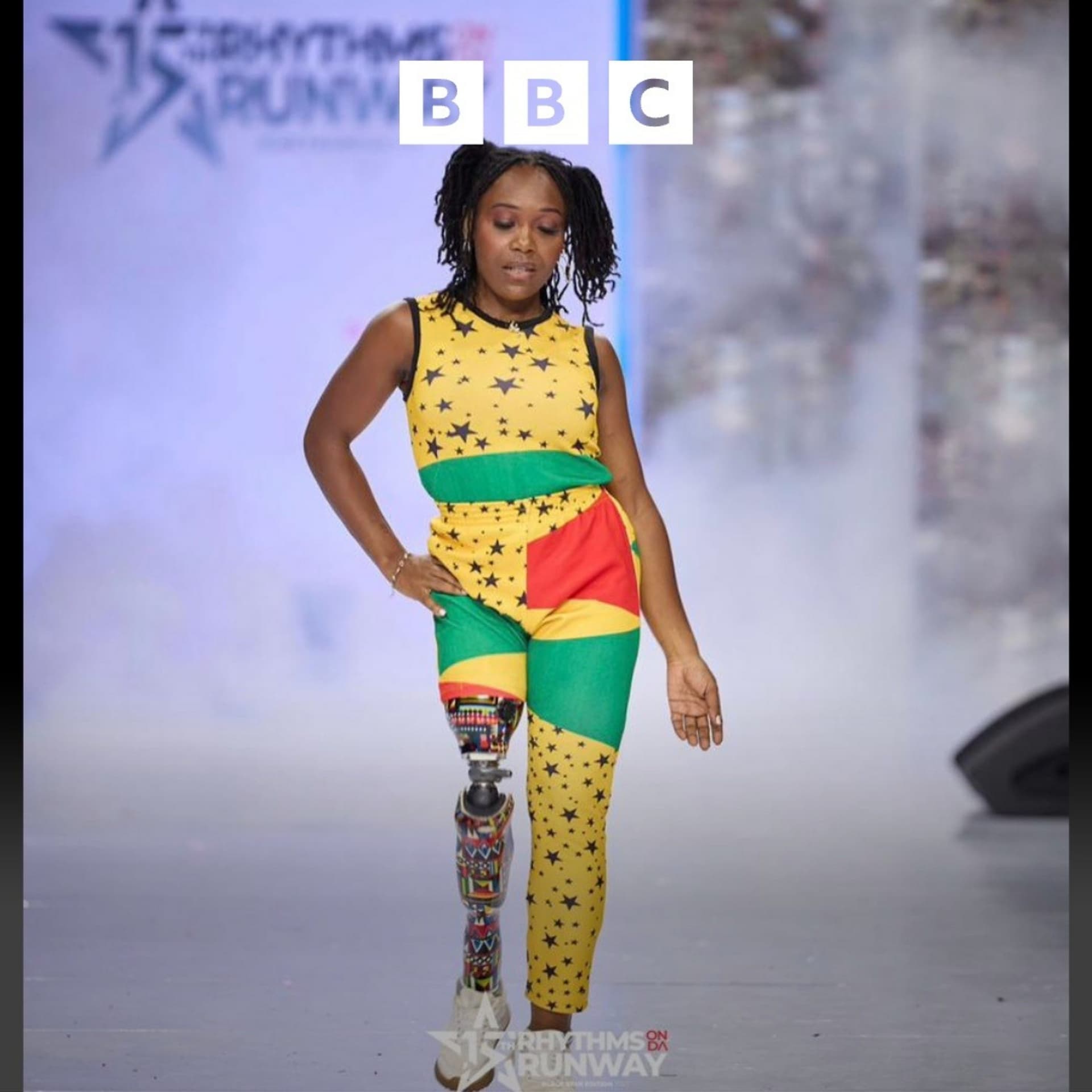
- Abena Christine Jon'el - Redefining Beauty and Disability
- Background:
- Abena, who lost her leg to cancer at age two, now models with her prosthetic leg adorned in colorful kente fabric.
- She aims to challenge stereotypes surrounding disabilities and promote confidence and beauty in disability.
- Key Points:
- Abena’s journey includes overcoming cancer and societal stigma.
- She emphasizes the importance of representation and fighting for those who feel defeated.
- Highlights the significance of her recent runway experience in Ghana, aiming to provoke thought on inclusivity and beauty standards.
- Mental Health Support Through Gaming in Brazil
- Initiative:
- A mobile app developed collaboratively by researchers from Brasilia University and the University of Oxford teaches teens how to support friends with mental health issues.
- Functionality:
- The app, titled "Where is Kaui?", offers interactive scenarios where players learn to identify and assist peers facing various challenges, including anxiety and social issues.
- Impact:
- Over 5,000 Brazilian teenagers have engaged with the app, reporting increased motivation to discuss and support mental health issues.
- Gardening Initiative for Prison Rehabilitation in the UK
- Program Overview:
- Charities implement gardening projects within prisons to help inmates acquire skills and reduce recidivism rates.
- Benefits:
- Engaging with nature serves as therapy and aids in developing employable skills.
- Inmates report improved mental health and a sense of achievement through gardening.
- Museum Engagement: Using Gen Z Slang
- Innovative Approach:
- Alison Luchs, a curator at the National Gallery of Art, gains viral attention by using Gen Z slang to attract a younger audience to classical art.
- Success:
- Videos using contemporary language have garnered millions of views, effectively breaking down barriers and encouraging young people to explore art.
---
Additional Uplifting News
- Llamas as Unlikely Heroes
- A herd of llamas helped apprehend a suspected thief on a farm in England, showcasing their protective instincts.
- Community Transformation by a Local Family
- The Parikhs, who took over a village post office in Wales, fostered community spirit through initiatives such as free Welsh lessons and support groups for individuals facing health challenges.
---
Key Takeaways
- Empowerment Through Representation: Abena’s story highlights the importance of visibility and challenging preconceived notions of beauty.
- Innovative Solutions for Mental Health: Utilizing technology to foster connections among youth is a proactive step towards combating mental health issues.
- Rehabilitation through Horticulture: Practical skills training in prison settings can significantly impact reoffending rates.
- Engaging Younger Audiences: Using humor and modern language in cultural institutions can bridge generational gaps and revitalize interest in the arts.
- Community Spirit: Simple acts of kindness and involvement can transform communities and support individuals in need.
---
Conclusion The Happy Pod continues to deliver stories that inspire and uplift, showcasing how individuals and communities can make a positive impact in a world often focused on challenges rather than solutions.
For feedback or suggestions, listeners can reach out at: [globalpodcast@bbc.co.uk](mailto:globalpodcast@bbc.co.uk) ```
Written by AI. May contain mistakes. Listen to the episode to check what was said.
Chapters
Tap a time to open that second in VOChallenges and Resilience
0:45 to 1:41
Discussion on overcoming life's challenges and building resilience.
“Hello, I'm Ankur Desai, and in this edition...”
Abena's Journey with Cancer
1:41 to 2:40
Abena Christine Jonel shares her experience with cancer and amputation.
“The family who took over a village post office and used it to bring the whole community together to help each other.”
Life After Diagnosis
2:40 to 4:10
Abena discusses her life post-diagnosis and the impact of her mother's choice.
“I was diagnosed at stage three, almost stage four.”
Redefining Beauty and Confidence
4:10 to 5:50
Abena explains her mission to redefine beauty norms for people with disabilities.
“It shaped who I am because I'm stronger.”
Experiencing Acceptance
5:50 to 7:39
Abena shares how public acceptance has shifted her self-perception.
“We got in touch with you because we obviously saw you walk this runway in Ghana looking beautiful with your leg wrapped in of colourful African print.”
Prison Rehabilitation Programs
7:39 to 12:00
Overview of rehabilitation programs in UK prisons aimed at reducing reoffending.
“Prison overcrowding is a problem faced by many countries around the world.”
Museum Curator's Social Media Success
12:00 to 14:00
Alison Lux uses Gen Z slang to engage a younger audience in art appreciation.
“To Washington now and a rather unusual internet star, a museum curator.”
Engaging Gen Z with Art
14:00 to 16:50
Learn how art institutions are adapting to attract younger audiences.
“This is our concerted effort to specifically reach younger audiences and primarily Gen Z.”
Mental Health Gaming Initiative in Brazil
16:50 to 17:48
Explore a gaming app designed to help young people support mental health.
“Coming up on this podcast, how an intruder was apprehended by llamas.”
Interactive App: Where is Kaui?
17:48 to 21:52
Discover how an app teaches teens to identify and support friends in need.
“To Brazil now, where a gaming app is teaching young people how to help each other with mental health issues.”
Show all 12 chapters
Llamas as Unlikely Guardians
21:52 to 23:24
Find out how llamas helped capture an intruder and their role as guard animals.
“Now it's time for a quick update on a story we brought you a few weeks ago.”
Community Impact of the Parikh Family
23:24 to 28:00
Learn about a family's efforts to uplift their community through connection.
“I think it evolves from, well, steps from them evolving in countries like South America where there's lots of predators and are very open spaces.”
Transcript
Automatic transcript. May contain errors.0:00This BBC podcast is supported by ads outside the UK.
0:30to make those markets work for you. Follow Merrin Talks Money on Apple Podcasts, Spotify, or wherever you listen. This is The Happy Pod from the BBC World Service.
0:45Hello, I'm Ankur Desai, and in this edition... This is for those kids, anybody who has just ever felt like, I just want to quit. This is for the people who feel like that, like they have no choice but to just lay down and let life beat you because I get it. I decided no. But Garnetian model on a mission to change perceptions of disability and beauty by proudly showing off her prosthetic leg. Also, could gardening help reduce the number of prisoners who commit further crimes? The gaming app teaching young people how to support others with mental health issues and why a museum curator has gone viral.
1:22Chad, peep this bus and clay dish from the 16th century. Look how Bro glazed it. He went goblin mode with all these colours. And we can't make a difference on a global scale, but we can definitely and we are making a difference here, which is what counts. Be positive, be helpful, be kind. It doesn't cost you anything. The family who took over a village post office and used it to bring the whole community together to help each other.
1:56We start in Ghana where one woman is on a mission to redefine how the country views people with disability. Abena Christine Jonel was just two years old when she developed a rare aggressive cancer called Rabdomyo-Sakuma in one leg. Her mum was faced with a difficult decision, radiation therapy, which could have left her needing to use a wheelchair or amputation. She chose the latter. Now aged 33, Abana is a writer and model, walking runways proudly displaying her prosthetic leg, which is wrapped in kente. That's a colourful Ghanaian fabric, with the aim of showing people with disabilities as confident, powerful and beautiful.
2:33The happy pod, Tamsin Selby, has been speaking to Abana, starting with what it was like for her to have cancer at such a young age. My diagnosis was delayed. I was diagnosed at stage three, almost stage four. It was very aggressive. So it was in my right calf. I feel the size of a grapefruit. My mom had a lot of apprehensions about amputating my leg because she didn't want me to hate her, basically. She didn't want me to be mad at her for the decision. And so when I was older and she told me the options were between that and then me doing radiation, which would have had me as a full-time wheelchair user.
3:09When I look at everything that I have accomplished, how I've done cheerleading, I've done basketball, I've done track, I've climbed trees. Jesus, there's nothing that I do that I could have done if she not made this decision. Talk to me about how that event has shaped your life from two onwards, the things that you were able to do and the things that maybe were more difficult to do. Being alive was difficult to do. One of the reasons why I didn't understand that I had cancer until age five or six posted was because no one wanted to talk about it. And because my family didn't talk about it, I didn't talk about it, which means that the schools didn't talk about it and the kids didn't talk about it.
3:51And I struggled very much in every way to find community, to find safe space. It brought negative attention to me. While at that same time, I have always had this like fire and gusto about me that I am probably going to yell at you for treating me wrong. And I'm going to stand my ground and tell people that this is not the way that you're going to treat me. It shaped who I am because I'm stronger. Because I feel like as a kid, you have this romanticized idea of what life is. And I didn't get that opportunity. Life showed me its ugliness from the start. But I just continue to just keep going no matter what life just kept throwing at me.
4:34And life continued to throw stuff at me for a very long time. I'm just now living. I suppose in your career now as, you know, you're a model, you're a public speaker, I guess a lot of that is to counter so many of the negative views that people had towards you. I don't think it's fair for people who have disabilities or challenges or just look different than, you know, the cookie cutter status quo of what society likes. I don't think we should have to fight to exist in those spaces. I will happily fight. I have all this passion and fire inside of me. So especially when it's directed towards me, I will happily fight to help others open the door and usher what change can look like, especially because I know that I do push back on the stereotypes.
5:15But most importantly, this is for those kids, for the girls, the little boys, anybody who has just ever felt like, I just want to quit. Like, this is for the people who feel like that, who feel like they have no choice but to just lay down and let life beat you because I get it. It was kicking my ass for decades. And I decided, no, this is my life. I fought through so much to be here. And I started living for me. So it's to show people, yes, this is what disability can look like. This is what accessibility can look like. This is what inclusion can look like. But also this is what life looks like when you get past the hard spot.
5:53We got in touch with you because we obviously saw you walk this runway in Ghana looking beautiful with your leg wrapped in of colourful African print. What did that experience mean to you? And what do you think it meant for people seeing you? The experience was really big for me. I'm being the 15 year anniversary, Kente edition. My leg is a Kente. Like, let's do something new. I don't think anybody knew what to expect. Even when I walked down the runway, no, everyone was just like, pause and awe and shock. They didn't know what to expect. And that's what I wanted. I wanted you to question your boundaries, what you view as beautiful, what you view as welcome, what you view as inclusion, and then see me and see that I'm going to make space for myself.
6:39Sharing my truths, my vulnerabilities, and getting love back is really beautiful. And often I find myself just needing to take a step away because it's like, oh my gosh, me, me? Like, are you for real? Like me? And I struggle with still taking positivity and things like that. I mean, someone couldn't tell me I was beautiful five years ago without me feeling uncomfortable about it. So yeah, it's been nice. It's been very, very positive. I've been crying every day in case you can't tell. What would you say to say, you know, 10-year-old you? I wouldn't say anything first. I think first I would really just hug myself.
7:21Just say, You're so powerful. You're so strong. You're so beautiful. And you are going to inspire the world, girlfriend. You are going to do it. Let her know, girl, we're going to do some things. Wait till you get older. And I'm happy that I'm happy I lived. I'm happy I survived. That was Abana Christine Janel speaking to The Happy Pods, Tamsin Selby. Prison overcrowding is a problem faced by many countries around the world. Here in the UK, prison populations have reached record highs. Charities campaigning for prison reform describe a crisis of unprecedented proportions of which high rates of re-offending are seen as one of the main contributing factors.
8:01Some prisons are running rehabilitation projects to break the cycle of recidivism. Now, Peter Goffin has been finding out about a program that gives prisoners the skills and confidence they need to rebuild their lives after they're released. Their names have been changed for privacy reasons. This is peppermint, my beetroot and my parsnips. It's a chilly afternoon in the English countryside, but I'm protected from the elements in this polytunnel, a kind of greenhouse made of plastic sheeting. Mary is giving me the grand tour. The last time I put in the air was green peppers, aubergines, marrow.
8:42You could forget, almost, for a moment, that all of this is happening behind the walls of a women's prison. Mary is serving a sentence here. HMP Send, near London, gives inmates the option of working in ornamental and vegetable gardens on site. And it hosts a scheme, run by a charity called The Clink, that helps prisoners gain professional qualifications in horticulture. Steve Head is the garden manager for the program. We are rebuilding an individual. We are helping them see that this is probably what will be the worst place they're going to be. And we're providing them with an opportunity to say, right, you're a rock bomb.
9:24This is your chance to rebuild and to redevelop. That training, having a vocation and being employable can mean the difference between leading a successful life after prison and returning to a life of crime. Data from the UK shows that people who found work within six weeks of being released were 50 % less likely to re-offend. We have a lot of individuals in this estate who have mental health issues, they've recovered from addiction, they've been subject to physical, mental, sexual abuse. our program with the clink and in particular clink gardens we're using horticulture as a therapy. Students take part in classroom lessons and get hands-on experience designing, planting, tending and harvesting their own gardens.
10:09All of the fruit and veg they grow is served up by the prison kitchen. I just remember doing my first lettuce where I'd done it from seed it grew and I just remember going up to like Steve and that look look what I grew and it was a lettuce Yes, and I was so happy. Susan has already completed her qualifications with the Clink. I think the program and the Clink is a brilliant idea because, as I say, I've come down here broken. With the help, support, and everything, and for your mental health to be out in the open is a brilliant thing to do. They treat you as an individual, no judgment. They treat you as a person.
10:51The Clink charity has trained thousands of at-risk people inside and outside prisons in horticulture and hospitality skills. At Brixton Men's Prison in London, students cook and serve at a restaurant on site, which is open to the public for posh lunches. For the people completing these programs, it's a chance to prepare for life after prison. Yeah, it's my potato area. I won't be growing anything out there because getting the roots of potatoes out is... Mary is responsible for everything that grows in this polytunnel, one of 15 at Send. She's still working towards her qualifications, but she's already thinking about the future.
11:34I love growing. It's such a perfect rehabilitation process for me. It's certainly a stepping stone for you. You know, you can go into a different area of your future work. I cannot go back to where I was and this is my way forward basically. That was Mary ending that report by Peter Goffin. To Washington now and a rather unusual internet star, a museum curator. Alison Lux, who works at the National Gallery of Art, has racked up more than 9 million views on Instagram with just two videos. That's more than double the number of people who visit the gallery in a year. She teamed up with an intern to explain the beauty of ancient artefacts to a young audience.
12:21And as The Happy Pod's Riley Farrell has been finding out, the secret to her success lies in her unusual choice of words. Chad, peep this bussing clay dish from the 16th century, made in the workshop of an Italian rizzler named Orazio Pompei. That is Alison Lux, a 77-year-old curator at the National Gallery of Art, diving into Gen Z slang to meet a new audience where they live. online. They asked if I'd be willing to make a social media video speaking in Gen Z slang, and I was kind of bewildered. I wasn't sure exactly what they meant or why or who would want it, but I thought, well, if it's a chance to bring a new audience for the Sculpture and Decorative Arts Collection and for the early works in the collection, why not?
13:10We could give it a try. Look how Bro glazed it. He went goblin mode with all these colors. High-key, tough materials to work with. The language is so new and young, and I guess hearing somebody with my white hair speaking this way is funny. Some traditionalists might say humor risks oversimplifying or trivializing art. I think it's a fair concern. For this particular format or medium, I think you do simplify because it's an introduction. I think I'm a gateway drug for a new audience. Sydney Myers is the museum's senior manager of social media. People are delighted by this because it's kind of breaking their brains in a fun way.
13:57Some people are even asking if she was AI. I'm happy to report she is not. This is our concerted effort to specifically reach younger audiences and primarily Gen Z. We notice that they come here, but we see that they aren't returning at the rates that we want them to. This goaded red-purple stone called porphyry was yoinked out of a mountain in ancient Egypt. Then the Romans snatched it and turned it into a column. And then Renaissance artists leveled up and turned it into an urn. Some of the comments we were really delighted by, people saying, I did not expect to be served this in the ALGO today.
14:35And wow, it's crazy that this is coming from the National Gallery of Art. So I think really helping people to see that we don't take ourselves too seriously, we can have fun and embrace the things that they're interested in, is appealing to people and resonating. I asked a few younger visitors for their takes. I kind of like it in an ironic way. If it hadn't been Alice and it was somebody else delivering it, I probably would have brushed it off, I'm not going to lie. But using it in that context, especially around classical art, I thought was pretty creative. I thought it was very interesting because I just wouldn't expect her to use that language, so it immediately made me pay attention.
15:10Honk is mewing. He's looking low-key chopped, but the lion does not concern himself with the opinions of sheep. Doing that and putting it on social media makes me want to go see the mewing urn that was turned into a column and then returned. Between the Renaissance artists, the Romans, and the ancient Egyptians, this piece represents the ultimate collab over thousands of years. All facts, no printer. People have been remixing art from day one. I don't know, like, all the art history lingo, so sometimes I feel like I can't really approach it, but she definitely captured me. If you could debunk one myth young people have about museums or classical art, what would it be?
15:54Maybe that museums are stuffy or formal or that you should be intimidated by them. I think instead it's an adventure. Museums are doorways into a new world. They can open whole new kinds of knowledge and experience to you. The experience of people hundreds of years ago, which might turn out to be not totally different from yours. Pick an artwork from our collection. Send us your ideas for how you'd aura farm it. No cap. The 50 Vibia submissions will receive$3 ,000 each. They'll be featured right here on the Algo and IRL inside our museum. So smash that link in our bio and magus with your creativity.
16:38Do you think that worked? Will they do it? I hope so. Alison Lux, ending that report by Riley Farrell.
16:50Coming up on this podcast, how an intruder was apprehended by llamas. They let out a warning cry. so he was captured in the middle of a circle with llamas hockering around him.
17:12If there was a big red button that would just demolish the internet I would smash that button with my forehead. From the BBC this is The Interface the show that explores how tech is rewiring your week and your world. This isn't about quarterly earnings or about tech reviews. It's about what technology is actually doing to your work, your politics, your everyday life, and all the bizarre ways people are using the internet. Listen on bbc.com or wherever you get your podcasts.
17:48To Brazil now, where a gaming app is teaching young people how to help each other with mental health issues. Academics at Brasilia University and the University of Oxford worked on a joint project to develop an interactive game that gives young people the skills to support their friends. Myra Anubi has been talking to some of those involved. For us it's really important that we equip young people with skills so how to identify that a friend is unwell. For example young people are really well placed to identify whether there is a problem with a peer. Professor Gabriela Pavarini at Oxford University in the UK.
18:24She joined up with Dr Sheila Marta at Brasilia University and a team of young people to come up with a solution. Rafa Ribeiro is one of those students. I got really happy. I was really excited because I grew up in a javela in the outskirts of Brasilia and doing a project with Oxford was amazing. And the whole idea was to create an intervention applicable in public high schools from Brazil that could engage young people towards promoting mental health. So incredible. Together, they developed an interactive app where players can learn about common issues affecting their friends and how to assist them.
19:03It's called Where is Kaui? So young people choose from predefined options. So it's a scripted adventure, if you like. And through interactions with different online characters, they learn how to support others in their communities. The team surveyed loads of teenagers to find out what issues were most affecting them and incorporated them into the app. So issues like sexism, racism and exam pressure. Now, I enjoy a good game, so I decided to have a go. In the game, I assume the character of one of the students in a high school. We voiced the characters to give you an idea of how it all works. It's the morning of the school play and your best friend, Cauê has disappeared.
19:47You see Gisele on her phone. You look around the room and see a costume hanging up. Gisele. The designers made a mistake with the size, you know. It's quite close-fitting and I'm curvy. It kind of glues to my body and some guys started staring at me, you know. Now even though all this was happening on the app, I did empathize with Gisele and her situation. If you continue playing the whole thing, the missing student, Kauai, is found hiding in the school bathroom, struggling with anxiety. The students in the game then decide to cancel the play and put on a new show about mental health instead. According to Rafa, who we heard from earlier, there are many other characters in the game addressing different problems.
20:33Characters like Priscilla. So Priscilla is a young teenage black woman. She takes care of her siblings. and she's studying really hard to get to university. That was based on the information we got from other young people. They always have like a Priscilla, that is a friend that goes through a lot of hard stuff and problems with family, especially related to poverty. And there's another character in the app that the team thought was crucial. So we had teachers who helped us develop the story as well. So we had within the story also a teacher character and one of the skills that they practice is how to reach out to an adult.
21:14Over 5 ,000 Brazilian teenagers have played the game so far and on average they said they felt more motivated to support their peers and to talk about mental health. The project has also secured further funding to refine the story and create teaching resources to go with it so it can be used in class. Here is Rafa again. In the future, and that's my dream, when we prove that it can be effectively used in schools in Brazil for mental health, I believe we can present it to the Education Ministry. It is something that we can apply in schools all over Brazil. And you can hear more on People Fixing the World wherever you get your BBC podcasts from.
21:57Now it's time for a quick update on a story we brought you a few weeks ago. The pregnant elephant at the Smithsonian National Zoo in Washington has now given birth to a female healthy calf. It's the first Asian elephant to be born there for 25 years and staff say the new arrival has filled them with joy. The calf will make her public debut in a few weeks and the zoo is inviting people to vote on what to name her. Now while elephants are perhaps most associated with having a good memory, what does your mind conjure up when you think of a llama? An expressive face, long neck, cuddly looking wool.
22:33Well, I imagine security guard wouldn't be high on the list. But you might be surprised to hear that a herd of the herbivores have helped to catch a suspected thief. Heidi Price says she and her partner were alerted to the presence of an intruder at their farm in central England and found the terrified suspect encircled by their llamas before the police arrived and arrested them. I was told that my llamas were heroes. they let out a warning cry. So he was captured in the middle of the circle with llamas hockering around him. So basically, the llamas made the citizens arrest. Guard llamas are actually already used in farming, especially in North America, to protect sheep, goats and other livestock from predators.
23:21Scarlet Moon, who also owns llamas, says their response to danger is rather unusual for a herbivore. I think it evolves from, well, steps from them evolving in countries like South America where there's lots of predators and are very open spaces. So they've had to adapt to survive. So, yeah, they're fantastic guard animals. They're very aware of their surroundings at all times. They don't tend to run or flee like many other prey animals. They stand their ground. They stand tall and they would attack mostly with their front legs and they do chase as well. So they've had to be brave to evolve. They're very territorial.
24:00They'll know what to expect in their surroundings. And an intruder could be a risk to any of the herd, whether they're guarding other animals or not. They're still protecting each other as a herd animal. So in order to protect themselves, they've obviously worked together to stop the intruder. We end with a family who have been praised for transforming the lives of everyone in their community. The Parikhs run a local post office and shop in the small Welsh village of Capelhendra. Jane McGovern went along to find out more. They are very passionate about their post office in this little corner of South Wales.
24:35There's too much nastiness in the world, isn't there? Which is why Hilary Jones wanted to share the story of Vipulparek and his family. I am locally known and by every very friend's family as Vips. What can we do for you, Hilary? You know why we're here? Oh, Hilary, come on, you're going to get me crying now. You've been wonderful. You were the heart of our community. You were the beating heart. Oh, come over here. They were the strangers who moved into their local post office during the quiet of the pandemic and quickly made everyone feel less alone. Well, when we first came into the post office, there was a gentleman behind the counter with a mask on and they'd only just taken over the post office.
25:18There was a baby in arms. They'd come from Birmingham to live down here, didn't know a soul. And within weeks, they knew everybody by their first name. They knew the background of people. They were interested in all their customers. And friendships developed within the community.
Read the full transcript
25:42And this is how they did it. They opened a cafe and asked if anyone could help teach them Welsh. that turned into free weekly Welsh lessons for the whole community. They organise a reward scheme for local school children. Oh, they're different. They're definitely special. You know, you always hear of the bad people. What about the good people? And they are good, you know. Vips saw their customers' lives and he wanted to help. I was diagnosed with Parkinson's three years ago. Vips had noticed Hilary's decline and when her symptoms improved he noticed that too. Vips could see the difference in me and he said I've got to ask you Hilary what have you been doing?
26:27She had been making a 20 mile round trip to play table tennis in another village but it was working. He said I've got an idea. What if I get some table tennis tables? Will you help me out? It's gone from one day a week to one morning a week and two evenings a week. We have Lois, she's also a superstar. You get a lot of fun because we're chasing balls everywhere. Have you got Parkinson's too? I've got Parkinson's and Crohn's and I've got an 18-month-old hip, new hip. You're looking good on it. Yeah. Are we having a laugh? We're sharing memories and life is about caring and sharing. And this is what this community has done.
27:12caring and sharing for each other. That's it. Go on, Jane. There's such a lot of love in this. You've seen it today. We've seen it. Yes. And it's touching to see that amount of love. They don't have to. They could come and just do their transaction and go. But they choose to give us that love and we choose to give that back. We can't make a difference on a global scale, but we can definitely make a difference together with Hillary, all our volunteers. We can definitely, and we are making a difference here, which is what counts. We're part of Kapalendhre and Saran. We don't see it as a place of where we do our business, we see it as our home.
28:00Be positive, be helpful, be kind. It doesn't cost you anything. Vipal Parak ending that report from Jane McGovern.
28:13And that's all from the Happy Pod for now. And if you have a story you'd like to share or a comment on anything in this episode, then we would love to hear from you. As ever, the address is globalpodcast at bbc.co.uk. This edition was mixed by Ben Andrews and the producers were Holly Gibbs, Tamsin Selby and Rachel Bulkeley. The editor is Karen Martin and I'm Ankur Desai. Until next time, goodbye.
28:45If there was a big red button that would just demolish the internet, I would smash that button with my forehead. From the BBC, this is The Interface, the show that explores how tech is rewiring your week and your world. This isn't about quarterly earnings or about tech reviews. It's about what technology is actually doing to your work, your politics, your everyday life. and all the bizarre ways people are using the internet. Listen on bbc.com or wherever you get your podcasts.
From the publisher
We meet a Ghanaian woman who is challenging stereotypes of beauty and disability by modelling with her prosthetic leg wrapped in colourful kente fabric. Abena Christine Jon'el had her leg amputated when she was just two years old because of an aggressive form of cancer. She says she's fought through so much to survive that she's determined to fight for anyone who's ever felt defeated by life.
Also: A mobile gaming app that's helping teenagers in Brazil learn how to support their friends with mental health issues.
A scheme teaching gardening skills to prisoners in the UK to help cut the numbers who reoffend after their release.
The Washington museum curator who's adopted Gen Z slang to get younger people interested in its works of art. Alison Luchs has attracted over nine million views with two social media posts, and is challenging others to submit similar videos about other exhibits.
Plus big baby elephant news, some unusual guard animals, and how one new family helped bring an entire community together, just by showing they cared.
Our weekly collection of inspiring, uplifting and happy news from around the world.
(Photo: Abena Christine Jon'el on the catwalk in Ghana. Credit: Vino Studio / Nineteen57 Events)